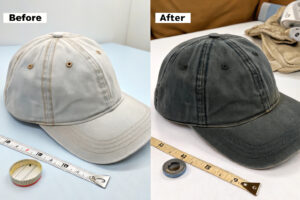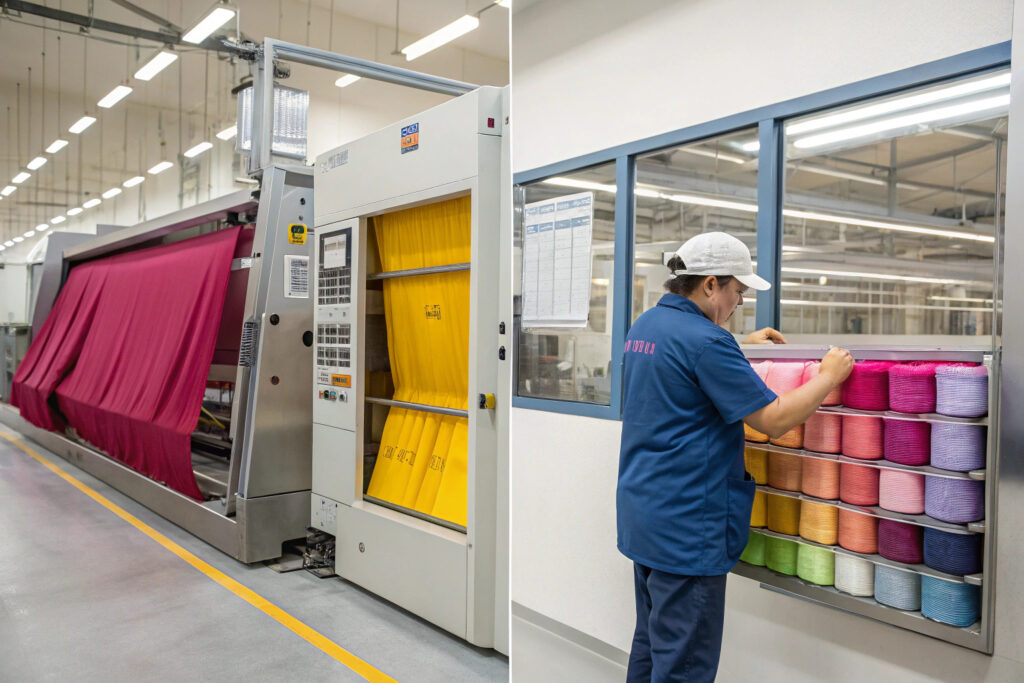
You approve a lab-dip for your new cap collection. The color is a beautiful, muted sage green. It perfectly matches the Pantone chip you specified. You sign off. Weeks later, the bulk production arrives. You open the cartons, and your heart sinks. The caps inside are not sage green. Some are a muddy olive. Some are a pale celadon. Within the same carton, you can see three slightly different shades. You lay them out on a table under the warehouse lights, and the inconsistency is undeniable. You call your supplier. They apologize. "The dyeing was done by our subcontractor. They had a problem with the batch. We will improve next time." Next time is too late. This order is already unshippable to your retail partner, who has a strict color consistency policy.
Color inconsistency is one of the most common and most damaging quality failures in headwear. It can destroy a brand's shelf presentation, trigger retail chargebacks, and erode consumer trust. The root cause is often found not in the sewing room, but in the dyeing process. When a hat supplier owns and operates its own dyeing facility, the entire control system for color changes. The variables that cause inconsistency, batch-to-batch variation, water quality differences, process timing, and communication delays, are brought under a single roof. I run Global-Caps, and I have seen the difference that integrated dyeing makes. In this article, I will explain the technical, logistical, and quality control advantages of a supplier-owned dyehouse and how they translate directly into the color consistency of your finished caps.
What Are the Technical Advantages of an In-House Dyeing Process?
The technical advantage of an in-house dyehouse begins with the dye recipe development. When a supplier sends fabric to an external dyeing subcontractor, the communication of the color target is typically a Pantone code and a physical lab-dip swatch. The subcontractor's lab technician interprets this target, selects dyes from their own inventory, and develops a recipe on their own equipment. This recipe is then scaled up to production volumes. At every step, there are translation errors. The subcontractor's water quality, the subcontractor's specific dye lots, the subcontractor's machine calibration, and the subcontractor's operator's judgment all introduce variables that the hat supplier does not control.
When the dyehouse is owned by the hat supplier, the dye recipe development happens in the same facility, often in the same building, as the hat production. The lab technician who develops the recipe can walk to the production dyeing machine and observe the first bulk batch. If the color is slightly off, the correction is immediate. The recipe can be adjusted, documented, and stored in the supplier's own database for future reorders. This closed-loop learning is impossible with an external subcontractor, where each order is a new transaction and the recipe knowledge lives in a different company's files.
The second technical advantage is control over the dyeing parameters. Color in textile dyeing is not just about the dye recipe. It is a function of time, temperature, pH, liquor ratio, and the specific mechanical action of the dyeing machine. An in-house dyehouse can standardize these parameters for the specific fabrics used in hat production. The technical team knows that the cotton twill for caps requires a specific ramp rate to achieve level dyeing, or that the polyester mesh for trucker caps needs a specific disperse dye cycle for optimal colorfastness. An external dyehouse may run hundreds of different fabric types for different customers. They use generic cycles that are "good enough" for a range of fabrics. "Good enough" for a generic fabric is not good enough for a premium cap brand that demands exact color.
How Does Water Quality Control Affect Color Consistency?
Water is the medium in which dyeing occurs. Its quality, its hardness, its mineral content, its pH, its chlorine level, directly affects how dyes bond to fibers. An external dyehouse draws water from the local municipal supply, which can vary seasonally or even daily. A sudden change in water hardness can shift the shade of a dye batch.
A supplier-owned dyehouse can invest in a dedicated water treatment system that delivers consistent, specification-grade water for every dye batch. The water is filtered, softened, deionized, or otherwise treated to remove variables. The pH is controlled. The temperature is controlled. This water consistency removes a major source of batch-to-batch color variation. It is a significant capital investment, and it is an investment that a subcontractor serving many small customers cannot easily justify. When I walk a client through our dyehouse, the water treatment plant is one of the first stops. It is not glamorous, but it is where color consistency begins.
What Role Does Spectrophotometer Integration Play in Closed-Loop Color Control?
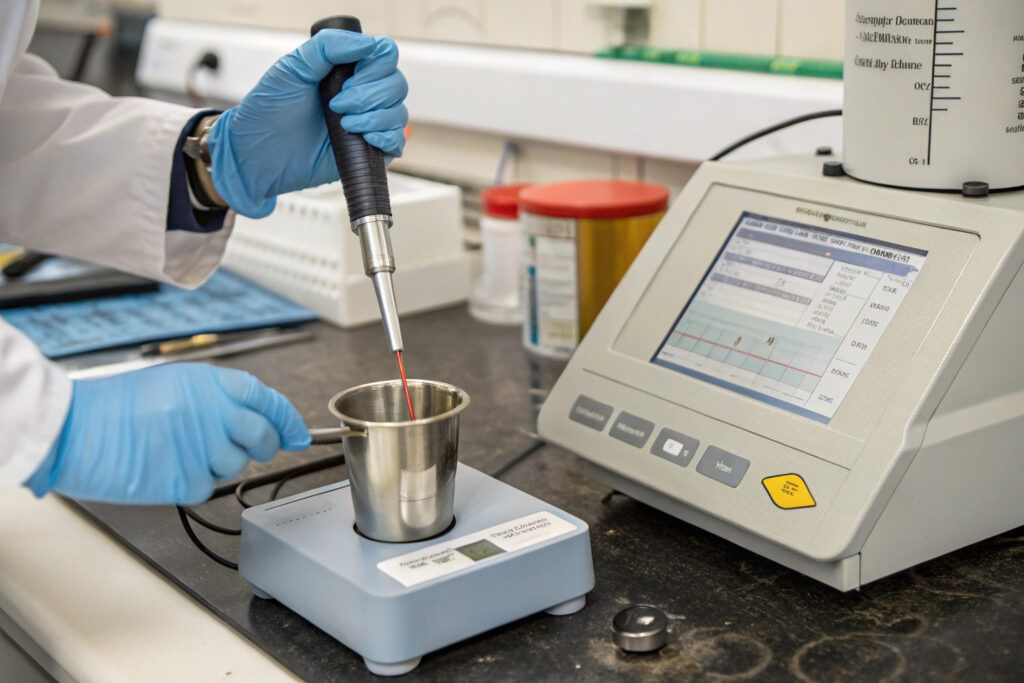
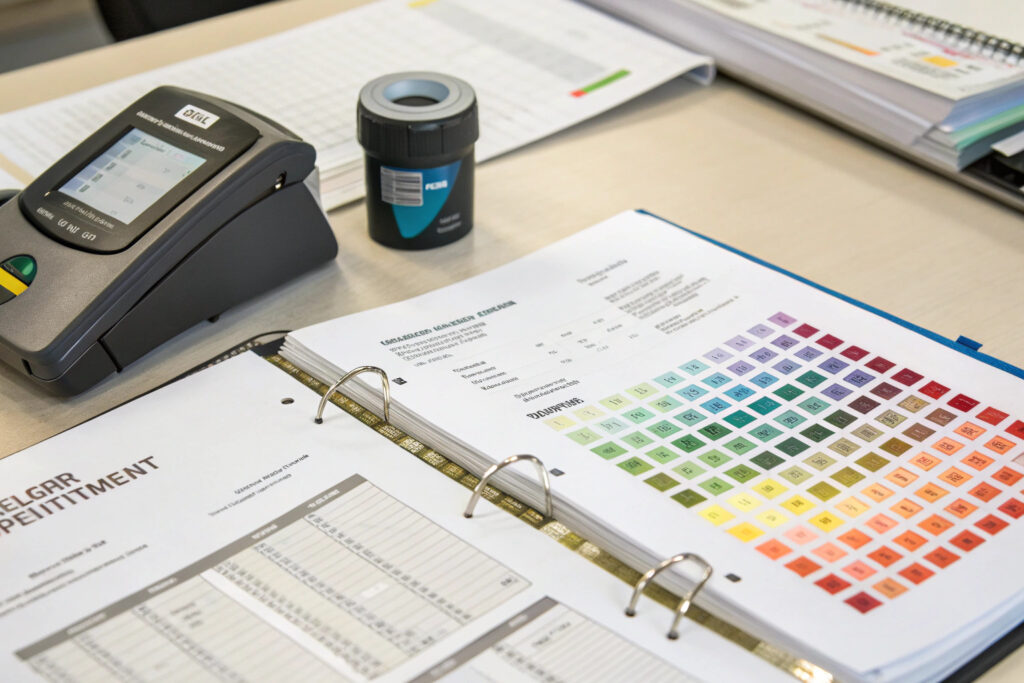
Modern dyehouses use spectrophotometers, instruments that measure the full reflectance spectrum of a color, to digitize color standards and verify production batches. In a supplier-owned dyehouse, the spectrophotometer is integrated into the production workflow. The target color is measured as a digital fingerprint. The bulk production batch is measured against that fingerprint. The software calculates the precise dye additions needed to correct any deviation, a process called color matching or shade correction.
This closed-loop digital color control eliminates the subjective human eye from the critical pass/fail decision. The machine says whether the color is within the agreed tolerance, typically a Delta E of less than 1.0 or less than 0.8 for critical colors. This data is stored and can be provided to the buyer as objective proof of color consistency. An external subcontractor may have a spectrophotometer, but the data does not automatically integrate with the hat supplier's quality system. The result is a paper report that may or may not be reviewed. In an integrated system, the spectrophotometer data is part of the production release. The batch is not released for cutting until the color data is approved.
How Does Integrated Dyeing Reduce Color Variation Across Different Production Batches?
Batch-to-batch color consistency is the most persistent challenge in textile manufacturing. A brand orders 5,000 caps in navy blue. Six months later, they reorder the same style, same color. The new batch arrives, and the navy is slightly redder or slightly darker than the first batch. The brand cannot sell the two batches together because the color mismatch is visible on the retail shelf.
An in-house dyehouse solves this problem through retained recipe and retained sample libraries. The exact dye recipe used for the first batch, including the specific dye manufacturer, the specific dye lot numbers, and the exact process parameters, is stored in the dyehouse's database. The physical retained sample of the approved batch is stored in a climate-controlled library. When the reorder comes in, the dyehouse technician retrieves the recipe and the retained sample. The new batch is dyed to match the retained sample, not just the original Pantone code. This ensures that batch two matches batch one, even if both are slightly different from the original Pantone standard. The critical relationship for the brand is consistency between their own orders, not fidelity to a chip in a book.
An external dyehouse cannot easily provide this service. They may dye the first batch, but six months later, their retained sample may be lost, their recipe may have been purged from the database, or the specific dye they used may have been discontinued without their knowledge. They treat the reorder as a new color match, starting from the Pantone code. The result is often a visible shift between batches. The integrated dyehouse treats the reorder as a continuation of the original production.
How Does Lot-to-Lot Fabric Preparation Prevent Shade Creep?
Even with a perfect dye recipe, fabric itself varies from lot to lot. The cotton fibers may have a slightly different maturity, whiteness, or absorbency. The polyester yarn may have a slightly different luster or heat history. These variations affect how the fabric accepts dye. An integrated dyehouse can perform a pre-dyeing scouring and bleaching process that normalizes the fabric substrate before dyeing. The fabric is brought to a consistent base white, removing natural variations in the greige goods.
An external dyehouse receives fabric from many different mills. They may not have the time or the chemical capability to thoroughly pre-treat each lot. They dye over the existing substrate variations, and the resulting color shifts. The integrated dyehouse's control over the entire wet processing chain, from greige preparation to final dyeing, eliminates the substrate variable. The color is built on a consistent foundation.
What Is the Value of a Digital Color Library for Repeat Orders?
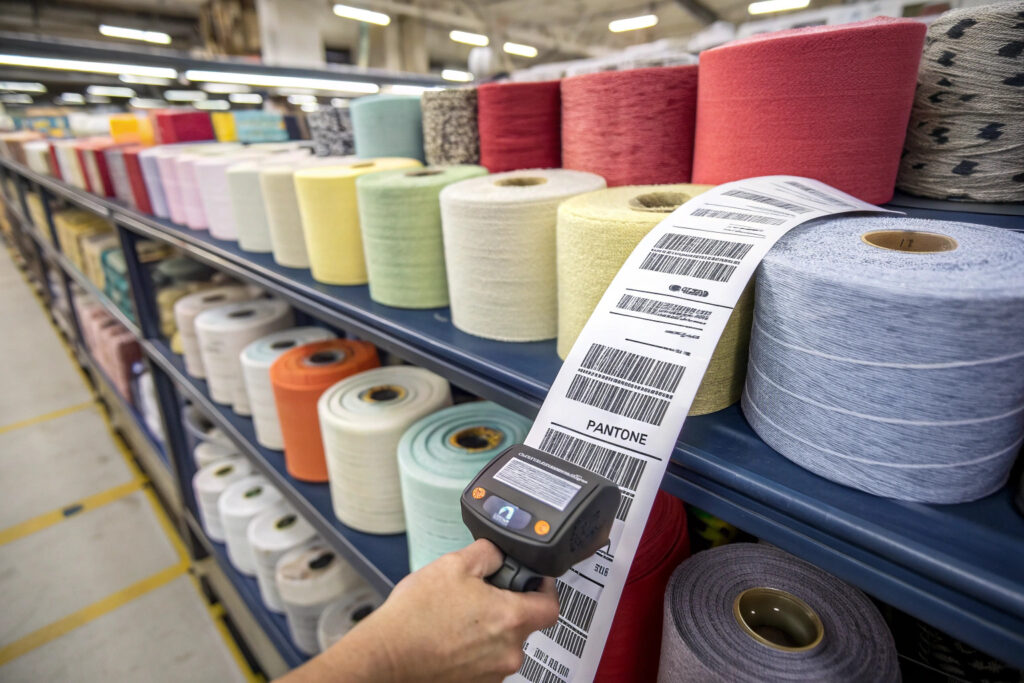
A digital color library stores the spectrophotometric data for every approved color the dyehouse has ever produced. Each color has a unique identifier linked to the recipe, the process parameters, and the physical retained sample. When a buyer says, "I want the same navy as order PO-2023-045," the dyehouse technician types in the PO number, retrieves the digital color standard, and formulates the recipe to hit that exact digital target.
This digital library is a strategic asset for a brand. It means that the brand's signature red will be the same red in 2026 as it was in 2024. The brand can build a color identity that consumers recognize. This is a level of color management that is simply not available from a supplier who outsources dyeing. The digital library is the institutional memory of the supplier's color expertise.
How Does In-House Dyeing Speed Up the Development and Problem-Solving Cycle?
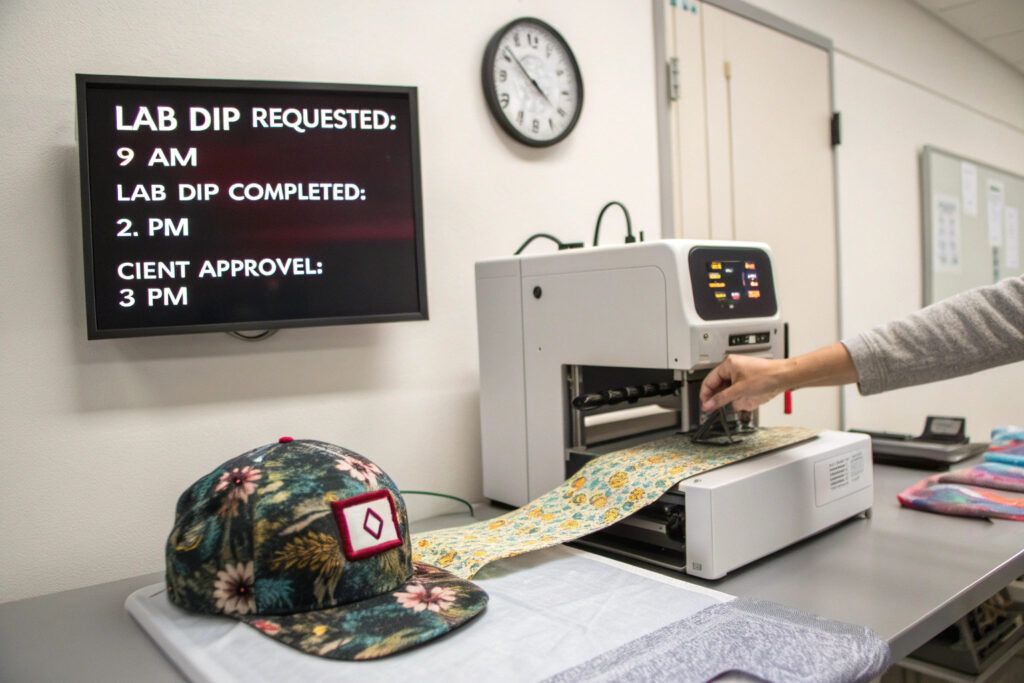
Color development is often the bottleneck in new product sampling. The traditional outsourced dyeing workflow is slow. The buyer requests a lab-dip. The hat supplier sends the request to the external dyehouse. The external dyehouse schedules the lab-dip into their queue, which may take two to three days. They produce the lab-dip. They courier it back to the hat supplier. The hat supplier couriers it to the buyer. The buyer reviews it, requests a tweak. The request goes back through the same chain. Each iteration can take a week. A three-round color approval can consume three weeks of the development timeline.
An in-house dyehouse collapses this timeline. The buyer requests a lab-dip. The hat supplier's internal lab produces the dip on the same day, often within hours. The digital photo of the lab-dip, with a spectrophotometer reading, is emailed to the buyer for initial review. The physical swatch is couriered the same day. If a tweak is needed, the lab adjusts the recipe and produces a new dip the next morning. A three-round approval that took three weeks with an external dyehouse can be completed in three days with an integrated dyehouse. This speed is a competitive advantage for brands that need to respond quickly to trends or meet tight launch windows.
The same speed advantage applies to problem-solving during bulk production. If a bulk dye batch comes out slightly off-shade, the in-house dyehouse can diagnose and correct the problem immediately. The batch is re-dyed, or a small addition of dye is made to bring the shade within tolerance. The hat production line experiences minimal downtime. With an external dyehouse, the same problem triggers a chain of phone calls, a return shipment, a re-dyeing slot that may be days away, and a complete disruption of the hat production schedule.
How Does the Physical Proximity of Dyeing to Cutting and Sewing Reduce Errors?
When the dyehouse is in the same facility as the cutting and sewing operations, the dyed fabric moves directly from the dyeing finish line to the cutting room. There is no packing, no shipping, no receiving inspection at a different location. The fabric is cut by the same team that will sew it. The cutting team can immediately see the fabric and flag any visual inconsistencies.
If a fabric roll has a dyeing defect, a color streak, or a shaded selvage, the cutting team identifies it on the cutting table, quarantines the roll, and the dyehouse is alerted within minutes, not days. This immediate physical feedback loop is impossible when the dyehouse is a separate entity in a different city or country. The fabric is packed, shipped, and received before anyone at the hat factory sees it. By the time a problem is discovered, the entire batch may have been processed into finished caps.
Can an In-House Dyehouse Offer More Flexibility for Small-Batch and Custom Colors?
External dyehouses have high minimum order quantities per color. They are optimized for large, continuous runs. A small brand that wants 300 caps in a custom lavender will struggle to find a dyehouse willing to dye a small batch of fabric at a reasonable cost. The MOQ for a custom color at an external dyehouse can be hundreds of kilograms of fabric, far more than needed for 300 caps.
An in-house dyehouse, because it is dedicated to supporting the hat factory's production, can be set up to handle small-batch dyeing efficiently. The lab-scale dyeing equipment can be scaled up to small production machines that handle 20 or 50 kilograms of fabric. This allows the hat supplier to offer custom color matching for relatively small order quantities, a service that is highly valued by boutique brands and promotional orders. The integrated dyehouse makes color customization accessible to a wider range of clients.
What Quality Certifications and Documentation Should an In-House Dyehouse Provide?
An in-house dyehouse is only as good as its documented quality system. The ownership of the facility is an advantage, but that advantage must be proven through certifications, test reports, and transparent data sharing. A buyer evaluating a supplier with an in-house dyehouse should request a specific set of documentation that demonstrates the dyehouse's technical competence and quality discipline.
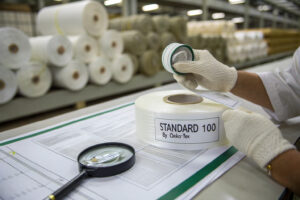
The foundational certification is OEKO-TEX Standard 100 for the dyed fabric. This certification verifies that the dyes and chemicals used in the dyehouse are free from harmful substances and that the finished fabric is safe for human skin contact. The dyehouse should also hold an environmental management certification, such as ISO 14001, or be compliant with the Zero Discharge of Hazardous Chemicals program. Dyeing is a chemically intensive process. A responsible dyehouse treats its wastewater and manages its chemical inventory transparently. For the hat brand, the dyehouse's environmental compliance is part of the brand's own supply chain responsibility.
Colorfastness is the other critical quality dimension. The dyehouse should provide test reports for wash fastness, perspiration fastness, light fastness, and crocking fastness. These tests, performed according to ISO or AATCC standards, verify that the color will not bleed, fade, or transfer during consumer use. An in-house dyehouse can perform these tests as part of its standard quality release because it has the testing equipment and protocols integrated. An external dyehouse may provide these reports only upon request and at additional cost.
What Is a Color Consistency Guarantee and How Is It Documented?
A professional in-house dyehouse should offer a written color consistency guarantee. This guarantee states the acceptable color tolerance, typically Delta E CIE Lab of less than 1.0 under D65 illumination, and the measurement method. It states that every dye lot is measured against the approved standard and that the spectrophotometer data is recorded and available for audit.
The guarantee is documented in a Certificate of Analysis for each dye lot. This COA lists the dye lot number, the fabric specification, the target color, the measured color, the Delta E value, and the pass or fail result. The COA is signed by the dyehouse quality manager. When the hat supplier ships the finished caps, the relevant dye lot COAs are included in the compliance documentation package. This gives the buyer objective, third-party-verifiable evidence that the color was controlled at the source.
How Can a Buyer Verify the Dyehouse's In-House Status During a Factory Audit?
A supplier may claim to have an in-house dyehouse when in reality they own a small sample dyeing lab but outsource bulk production to an external dyehouse. The buyer can verify the claim during a factory audit. The audit should include a tour of the dyehouse facility. The auditor should look for production-scale dyeing machines, not just lab-scale beakers. The machines should be actively dyeing fabric that is identifiable as the buyer's order. The auditor should check the water treatment plant, the chemical storage area, the color lab with the spectrophotometer, and the retained sample library.
The auditor should ask to see the dye lot records for a previous order from the same buyer. The records should show a continuous chain from the lab-dip approval to the bulk dyeing production to the fabric cutting. If the dyehouse is genuinely integrated, these records will be in a single database, and the physical fabric flow from dyeing to cutting will be visible. If the dyehouse is a separate, outsourced facility, the records will show a gap, a handoff to an external entity. A legitimate in-house dyehouse welcomes this audit. It is a showcase of the supplier's technical capability and a differentiator that justifies the supplier's quality positioning.
Conclusion
A hat supplier's ownership of its own dyeing facility transforms color consistency from a hope into a controlled, measurable, and repeatable process. The technical advantages begin with closed-loop recipe development, where the same team that matches the color also scales it to production, using standardized water quality and integrated spectrophotometer verification. The batch-to-batch consistency advantages come from retained recipes, retained physical samples, and a digital color library that ensures a reorder matches the original order, not just the Pantone book. The speed advantage collapses the lab-dip development cycle from weeks to days and enables immediate, on-site problem-solving when a bulk batch drifts off-shade.
For the brand, these advantages translate directly into confidence. Confidence that the caps on the retail shelf will be a uniform, professional color. Confidence that a reorder six months later will be visually identical to the first order. Confidence that the dyeing process is chemically safe and environmentally responsible, supported by OEKO-TEX and ISO certifications and documented by lot-specific Certificates of Analysis. The in-house dyehouse is a significant capital investment and a mark of a supplier that is serious about quality.
If you are sourcing caps and color consistency is a critical requirement for your brand, I invite you to evaluate Global-Caps as your manufacturing partner. Our integrated dyehouse allows us to control color from the water supply to the finished cap. We can provide you with a tour of our dyeing facility, a sample of our color consistency documentation, and a demonstration of our lab-dip turnaround time. Reach out to our Business Director, Elaine, at elaine@fumaoclothing.com with your color specifications. Let's build a color standard for your brand that stays true, batch after batch, season after season, because the dye is in our hands, not outsourced to a stranger.