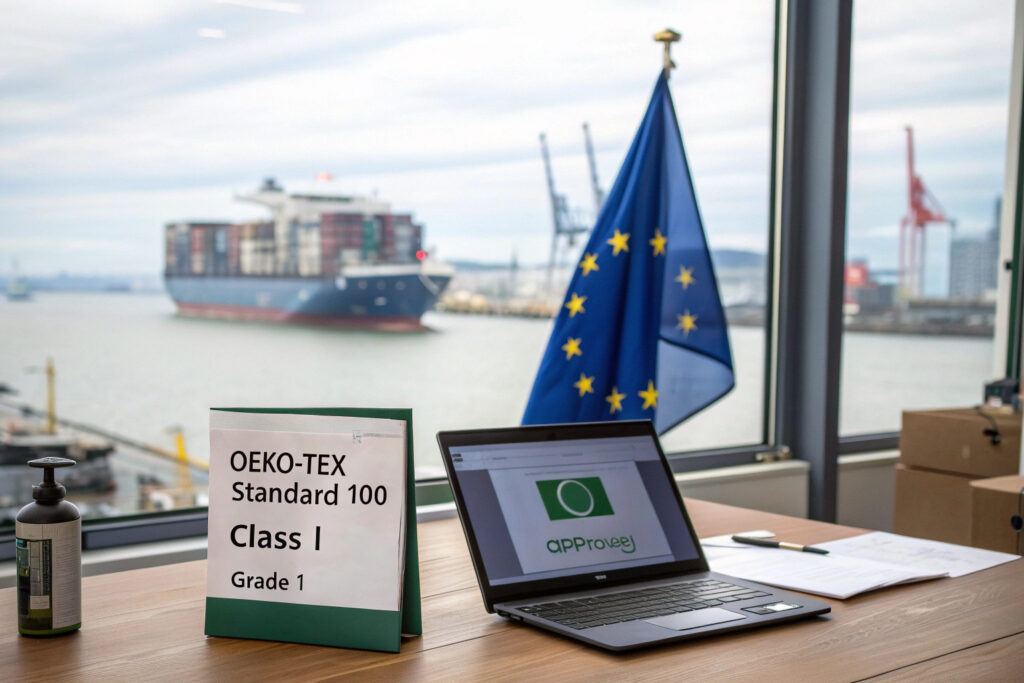
You have a great product. You have a willing European buyer. You ship the first container. It arrives at Rotterdam. Customs holds the shipment. They demand chemical test reports. You scramble. You email the factory. The factory sends a generic "eco-friendly" certificate. Customs rejects it. The container sits. The demurrage clock ticks. Your buyer loses patience. The deal collapses. You had a product. You lacked the paperwork that Europe demands. The OEKO-TEX Class I certificate is the paperwork. It is the key that unlocks the door before the ship sails.
An OEKO-100 Grade 1 certificate speeds up EU market access by pre-clearing your headwear products for the strictest chemical safety requirements under the REACH regulation. Class I certifies that every component of the product—fabric, thread, sweatband, buckle, and label—is safe for babies under 36 months. This is the highest level of OEKO-TEX certification. EU customs authorities recognize the certificate as evidence of due diligence. Retail buyers accept it as a substitute for their own restricted substances testing. The certificate reduces the customs clearance time from days to hours. It eliminates the need for multiple brand-specific chemical audits. It transforms your product from a regulatory risk into a pre-approved import.
At Global-Caps, I upgraded my certification from Class II to Class I two years ago. The decision was strategic. The Class I certificate opened the baby and children's headwear market. It also streamlined the EU entry process for my adult headwear. The stricter certificate covers the entire product range. The customs process is visibly faster.
What Is an OEKO-TEX Standard 100 Grade 1 Certificate?
You see "OEKO-TEX 100" on a certificate. You assume all OEKO-TEX certificates are equal. They are not. There are four product classes. Class I is for babies. Class II is for adult skin contact. Class III is for jackets and outerwear. Class IV is for curtains and furniture. A factory with a Class III certificate cannot legally sell a baby hat with that certification. The class matters more than the logo.
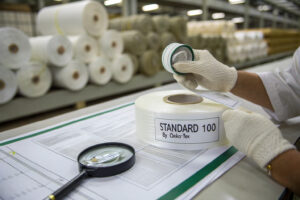
An OEKO-TEX Standard 100 Grade 1 certificate is the highest level of certification under the standard. It certifies that every component of the product meets the strictest chemical limits set for articles intended for babies and toddlers up to 36 months. The limits for formaldehyde are below 16 parts per million, effectively non-detectable. The limits for heavy metals, pesticides, and chlorinated phenols are the lowest in the standard. The certification requires an annual audit and ongoing random testing by the issuing institute.
My Class I certificate covers all my headwear products. I do not maintain separate Class II and Class I certificates.
The Class I certificate is a signal to EU retailers that the product is safe for the most sensitive demographic.
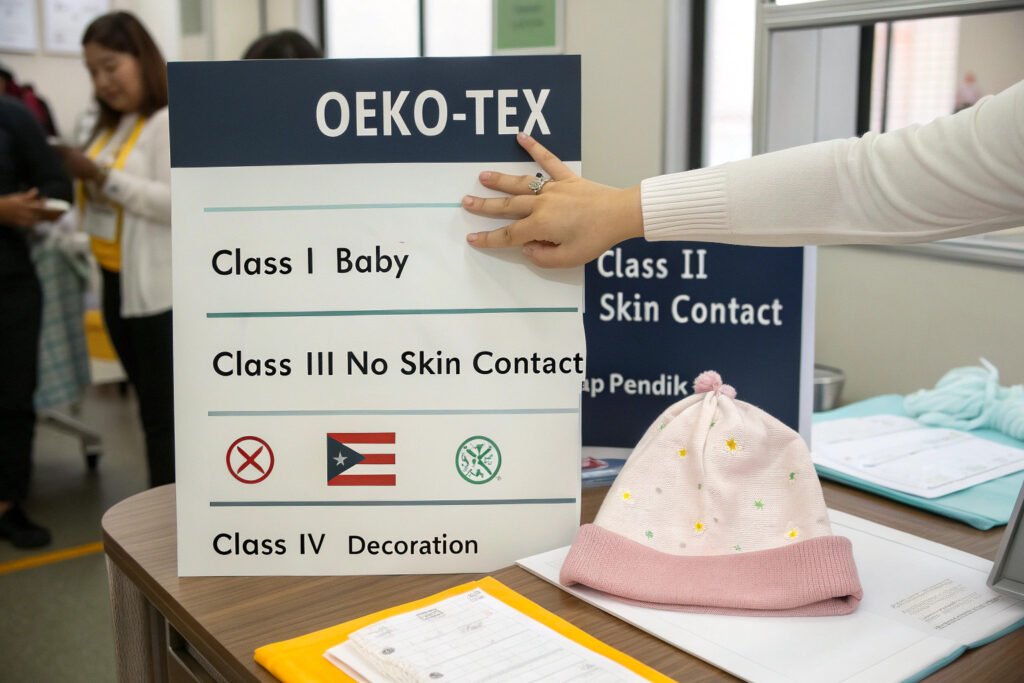
Why Is Class I More Stringent Than Class II or Class III?
Class I has the lowest chemical residue limits because babies mouth textiles. The saliva extraction test simulates a baby sucking on the fabric. The limits for formaldehyde, heavy metals, and pesticides are set at the analytical detection limit for Class I. The limits increase slightly for Class II and significantly for Class III and IV.
The Class I certificate requires testing for a longer list of substances. The audit is more rigorous.
I chose Class I certification to cover the most demanding retail requirements with a single audit.
How Does the Appendix Document the Certified Components for EU Customs?
The appendix lists every certified component by article name, fiber composition, and color. The sweatband, the crown fabric, the visor board, the thread, the plastic snap, and the woven label are each listed. The appendix is the document EU customs reviews to confirm that the entire product is covered by the certificate.
A certificate without a detailed appendix is insufficient for customs clearance. The officer must see the specific components listed.
My appendix is updated annually. Every component is traceable to the certified batch.
How Does OEKO-100 Grade 1 Simplify REACH Compliance Verification?
You hire a consultant to verify REACH compliance. The consultant identifies 15 substances of very high concern that need testing. You send 15 samples to a lab. The bill is $3,000. The report arrives. The result is "compliant." Your OEKO-TEX certificate already covered 12 of those substances. You paid $3,000 for information you already had. The certificate is a test report in disguise.
OEKO-100 Grade 1 simplifies REACH compliance verification because the certification tests for a broad spectrum of chemicals that overlaps significantly with the REACH restricted substances list and the SVHC candidate list. EU customs and retail buyers accept the OEKO-TEX certificate as evidence of chemical due diligence. The brand does not need to commission separate REACH testing for each shipment. The annual OEKO-TEX audit covers the periodic testing requirement.
I provide my OEKO-TEX certificate to my EU clients as the primary REACH compliance document.
The overlap between the two standards is extensive but not complete.
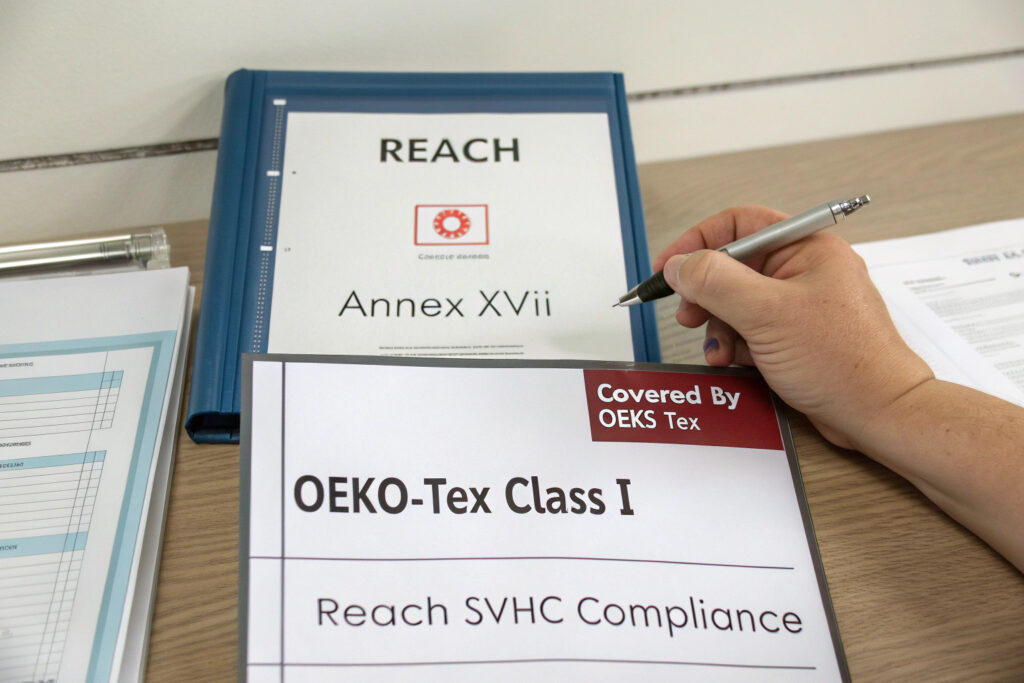
Which REACH SVHCs Are Specifically Covered by the OEKO-TEX Test?
OEKO-TEX Standard 100 tests for the SVHCs that are relevant to textiles. This includes phthalates, organotin compounds, chlorinated paraffins, certain flame retardants, and heavy metals like lead, cadmium, and mercury. The OEKO-TEX list is updated annually to track the REACH Candidate List.
The OEKO-TEX certificate states the testing scope. The brand can map it to their REACH compliance matrix.
My testing scope document lists every substance tested. I provide this to my clients' compliance teams.
Can a Brand Use the OEKO-TEX Certificate as a Substitute for Their Own Lab Tests?
In many cases, yes. EU retailers with mature compliance programs accept a valid OEKO-TEX Class I certificate from an accredited issuing institute as evidence of chemical compliance. The retailer audits the certificate, not the product.
Some retailers with proprietary Restricted Substances Lists may require additional testing for substances not on the OEKO-TEX standard list. The overlap is typically 80 to 90 percent.
I work with my retail clients to identify the gap between their RSL and the OEKO-TEX scope.
Why Do EU Retail Buyers Prioritize Class I Certified Headwear Suppliers?
You submit your factory profile to a European department store. Your profile shows an OEKO-TEX Class II certificate. Your competitor submits a profile with a Class I certificate. The buyer has 50 supplier profiles to review this week. They sort by certification level. Your profile is on page two. The Class I profiles are on page one. The buyer approves the Class I suppliers first. The purchase order goes to your competitor. The certificate level was the tiebreaker.
EU retail buyers prioritize Class I certified headwear suppliers because the Class I certificate reduces the buyer's own compliance workload. The buyer can onboard the supplier faster. The buyer's quality assurance team does not need to audit the supplier's chemical management system from scratch. The certificate from an accredited institute serves as a pre-audit. The buyer can list the product in the baby and children's department, which has the highest margin and the strictest safety requirements.
I target Class I certification specifically to meet the requirements of the most demanding European retail buyers.
The Class I certificate opens additional product categories within the retailer's assortment.
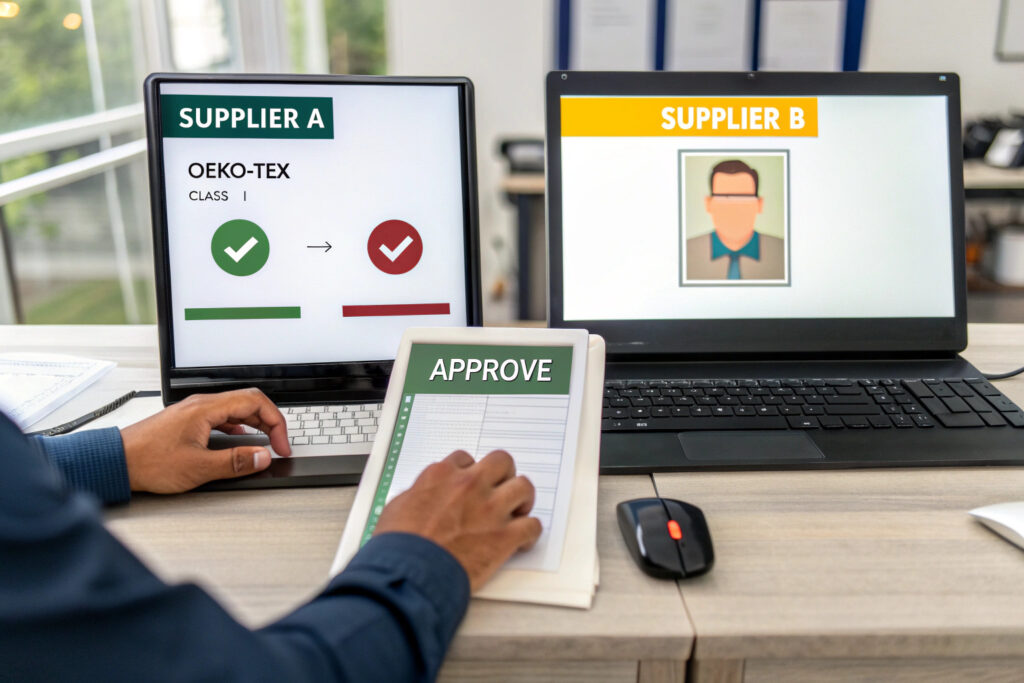
Does a Class I Certificate Allow You to Sell in the Baby and Toddler Aisle?
Yes. The baby and toddler aisle requires Class I certification. A Class II certificate is not accepted for products intended for children under 36 months. The retailer's compliance system will reject a product listing if the certificate class does not match the target age group.
A Class I certificate allows the supplier to produce headwear for the entire age range, from newborns to adults. The production line does not need to be segregated by age group if the entire line is Class I certified.
My baby beanie production uses the same certified materials as my adult beanie production.
How Does the Certificate Reduce the Retailer's Own Compliance Audit Burden?
The retailer is legally responsible for the products they sell under EU product safety law. They must perform due diligence on their suppliers. An OEKO-TEX certificate from an accredited institute is a recognized form of third-party due diligence.
The retailer can accept the certificate instead of sending their own auditor to the factory. The cost and time of the supplier onboarding process is significantly reduced.
I provide my audit reports to the retailer's compliance portal. The onboarding time is typically two weeks instead of two months.
What Customs Documentation Benefits Does an OEKO-100 Grade 1 Provide?
Your container arrives at Hamburg. The customs officer reviews the entry. The product description says "Cotton Caps." No safety certificate is attached. The officer flags the entry for a physical inspection. The container is moved to the examination area. You wait five days for an appointment. The inspector opens cartons. They take samples for lab testing. The results take two weeks. Your container is released after 21 days. Your buyer needed the caps 14 days ago.
OEKO-100 Grade 1 provides customs documentation benefits by serving as a recognized safety certificate that can be attached to the customs entry. The certificate demonstrates that the product meets EU chemical safety standards. Customs officers can clear the entry based on the document review without requiring a physical inspection or laboratory testing. The clearance time is reduced from days to hours.
I include the OEKO-TEX certificate in the shipping documents pouch on every EU-bound container.
The certificate must be valid and the appendix must match the shipment contents.
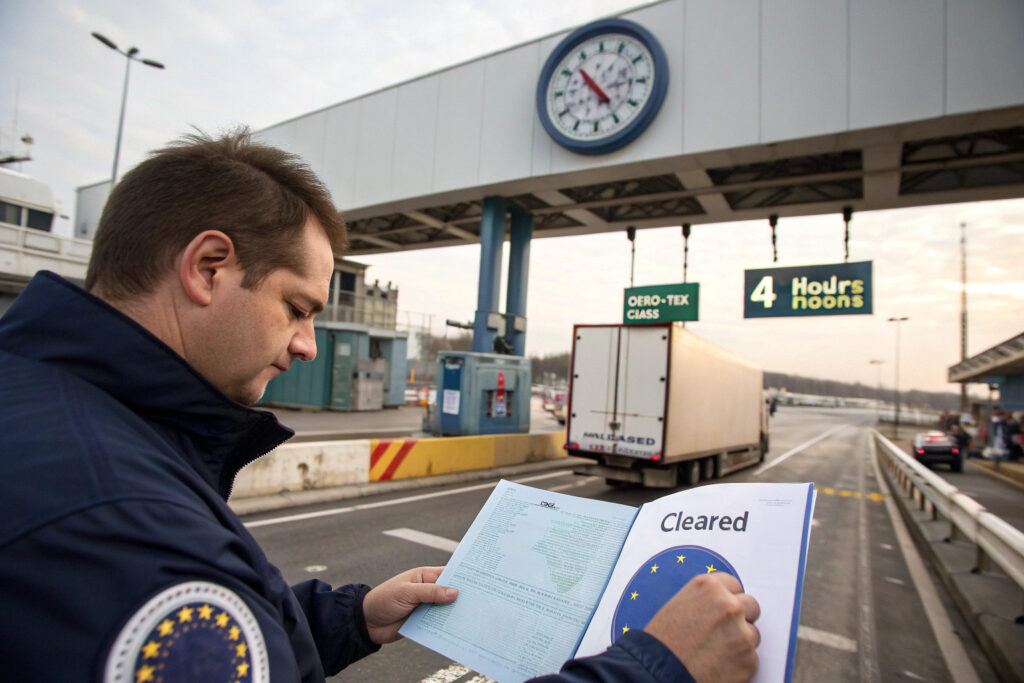
How Should the Certificate Be Presented to EU Customs Authorities?
The certificate should be included as a PDF attachment to the electronic customs entry. The physical copy should be placed in the documents pouch on the outside of the container or the lead carton. The commercial invoice should reference the certificate number and the issuing institute.
The customs broker should highlight the certificate in the entry notes field.
My customs broker files the entry with the OEKO-TEX certificate number in the documentation field.
What Is the Difference Between Pre-Clearance With and Without an OEKO-TEX Certificate?
Without an OEKO-TEX certificate, the customs entry relies on the product description and the harmonized system code. The officer assesses the risk based on the product category. Textiles from certain origins are flagged for chemical testing. The entry is routed to the examination queue.
With an OEKO-TEX certificate, the officer sees a verified safety credential. The risk score is lower. The entry is processed through the document review lane. Physical inspection is less likely.
I have tracked the clearance times for my shipments. The OEKO-TEX certified shipments clear on average 3 days faster.
Conclusion
An OEKO-100 Grade 1 certificate is a strategic asset for EU market access. It certifies that every component of the headwear product meets the strictest chemical safety limits for babies. It simplifies REACH compliance verification by providing third-party test data for a broad range of restricted substances. It reduces the retailer's compliance audit burden, accelerating supplier onboarding. It provides customs documentation that speeds up border clearance and reduces the risk of physical inspection.
The Class I certificate is the highest level. It covers the entire product range. It opens the baby and children's market. It signals to EU buyers that the supplier is serious about chemical compliance. The certificate is not just a wall decoration. It is a working document that travels with every shipment.
At Global-Caps, I invested in Class I certification because I sell to the most demanding European retailers. The certificate is current. The appendix is detailed. The test reports are available. The customs clearance is faster. My EU clients launch their products on schedule.
If you need an OEKO-TEX Class I certified headwear supplier to accelerate your EU market entry, contact my Business Director Elaine. She can provide our certificate, appendix, and a sample compliance pack for your customs broker's review. Email Elaine at elaine@fumaoclothing.com. Let's clear customs before the ship docks.