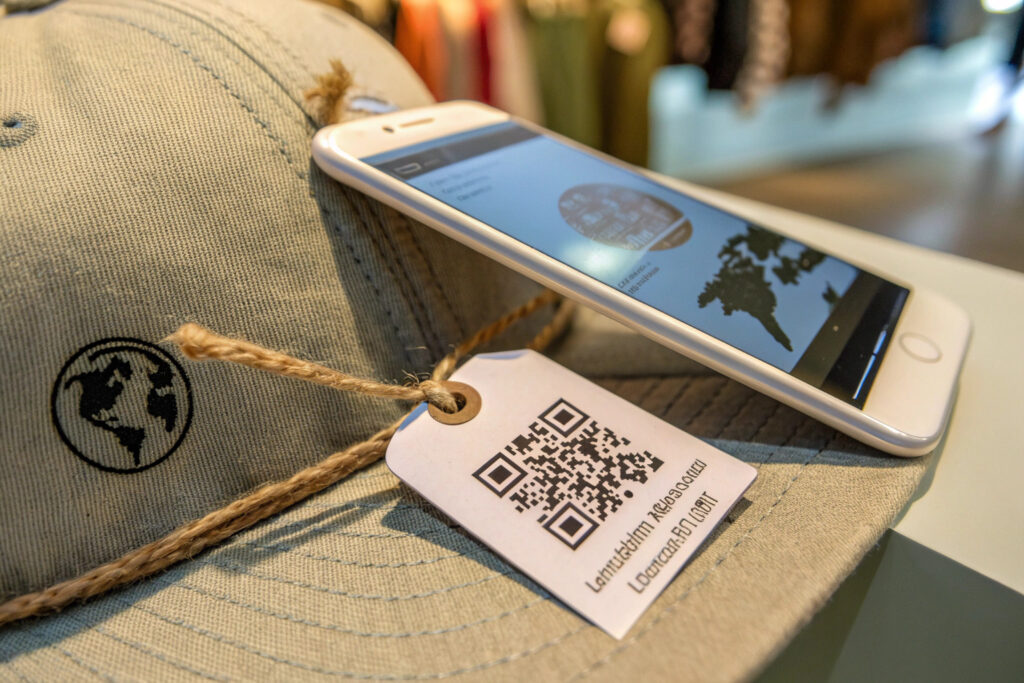
A buyer from Hamburg once told me that her customers kept asking the same three questions: Where was this hat made? Who actually made it? And was it produced in a way I can feel good about? Her hangtag said "Designed in Germany" but stayed silent on everything else. She lost sales because the story ended at the cash register. Customers did not want just a hat. They wanted proof of the journey. She asked me if we could attach a QR code to the hangtag that would answer those questions directly. We did. And her return rate dropped because her customers finally trusted the product they were buying.
A digital QR code on a hangtag tells the full story of a hat's journey by transforming a static piece of packaging into an interactive, traceable digital passport. When a customer scans the code with their phone, they can see the factory location, the materials used, the production timeline, the quality control checks performed, the certifications held, and the shipping route. This transparency builds trust, justifies a premium price, and satisfies the growing consumer demand for supply chain visibility.
At AceAccessory, we have implemented QR code traceability for several of our European and North American brand clients. It is not a gimmick. It is a practical tool that answers the exact questions modern consumers are asking. Let me walk you through how the system works, what information the QR code can reveal, and how it protects both the brand and the factory in an increasingly skeptical marketplace.
What Information Can a Hangtag QR Code Reveal About the Production Journey?
The QR code is just a key. The real value is behind it, in the digital story you choose to tell. The most effective hat traceability pages are not dry technical dumps. They are visual narratives that walk the customer through the product's life, step by step, in a way that feels personal and honest. The information behind the code must be specific, verifiable, and emotionally engaging.

How Do You Showcase the Raw Material Origins and Certifications?
The story begins long before the hat takes shape. The QR code landing page can show the origin of the cotton, wool, or polyester yarn. For a cotton bucket hat, we can display the region where the cotton was grown, the spinner that turned it into yarn, and the certification documents that verify organic or recycled content. A customer can tap on a material icon and see the GOTS certificate or the Global Recycled Standard certificate. This is not abstract marketing. It is scanned documentation. The page can also show the dye lot number and the dyestuff supplier, proving that the color was achieved with certified, low-impact dyes. For a brand that markets sustainability, this raw material transparency is worth more than any slogan printed on a swing tag. It gives the customer the ability to independently verify the claim, which is exactly what the modern skeptical consumer wants. Resources on textile traceability standards are available from organizations like Textile Exchange.
What Factory Floor Details Build Trust with the End Customer?
Customers are increasingly curious about the human side of production. The QR code page can include photographs and short video clips of the actual factory floor where the hat was made. We provide our brand clients with approved images of our cutting tables, sewing stations, and quality control areas. We also provide a brief profile of the factory itself, including its location in Zhejiang, its years in operation, and its worker welfare policies. Some brands choose to include a short interview with the specific line supervisor who oversaw the production run. This humanization transforms the hat from a commodity into a product with a face and a place. A customer who can see the clean, organized factory where their hat was sewn is far more likely to feel good about the purchase and to recommend the brand to others. This is especially powerful for direct-to-consumer brands that compete against faceless marketplaces.
How Does the QR Code Document the Quality Control and Inspection Process?
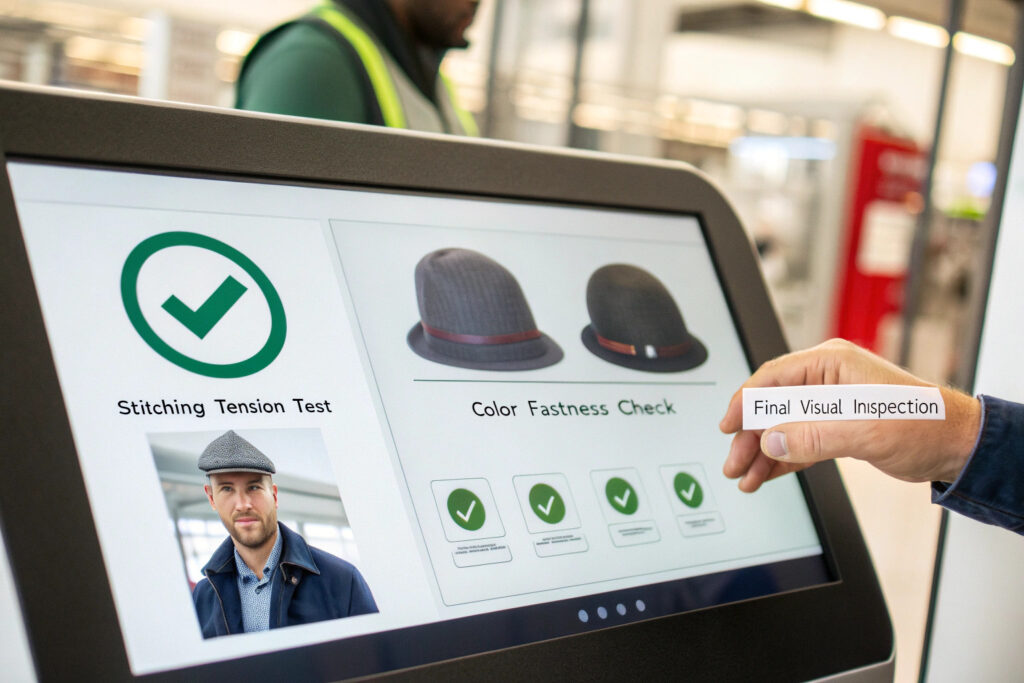
The most common question a skeptical customer asks is: "How do I know this product will last?" The QR code can answer that question with evidence, not promises. By linking the hangtag to the actual QC records for that specific production batch, the customer can see the tests that were performed before the hat was packed. This turns quality assurance from an internal process into a customer-facing proof point.
Can the Customer See Batch-Specific Inspection Dates and Results?
Yes, and this is where the system becomes genuinely powerful. Each production batch at our factory is assigned a unique batch number. That batch number is printed on the hangtag and embedded in the QR code URL. When a customer scans the code, the landing page retrieves the QC records for that exact batch. The customer can see the date the batch was inspected, the number of units inspected, the AQL sampling standard used, and the specific tests performed. For a knitted beanie, the record might show a stitch density check, a color fastness to perspiration test, and a dimensional tolerance measurement. For a sun hat, it might show a UV protection factor test and a brim stiffness test. The results are displayed as pass or fail, with the pass criterion clearly stated. This level of transparency is rare and highly persuasive. It tells the customer that the brand is confident enough to open its inspection reports to the public.
How Do Certification Links on the QR Page Reduce Return Rates?
Returns are often driven by unmet expectations. A customer buys a hat expecting organic cotton, and when the tag feels different from what they imagined, they doubt the claim and return the product. The QR code eliminates this doubt at the point of purchase or immediately after unboxing. The customer scans the code, sees the organic certificate, sees the fiber composition test report, and their expectation is confirmed with evidence. The doubt disappears. We have heard from our brand clients that products with traceability QR codes have measurably lower return rates and higher customer satisfaction scores than identical products without them. The QR code is not just a marketing tool. It is a risk reduction tool that pays for itself by preventing the most expensive form of customer service: the return.
What Role Does the QR Code Play in Anti-Counterfeiting and Brand Protection?
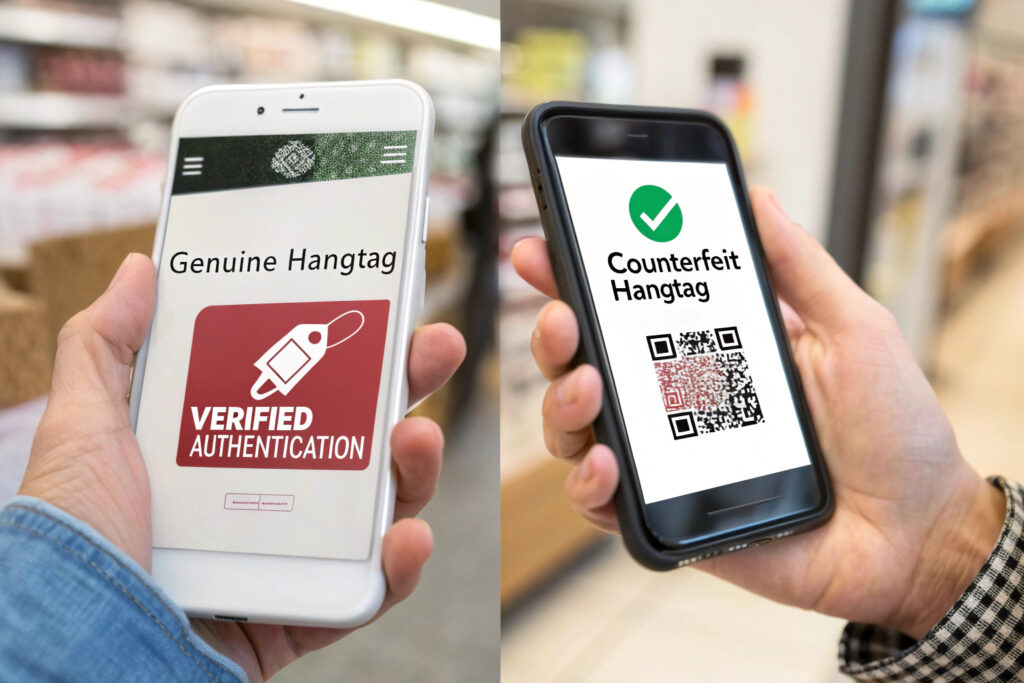
Counterfeit accessories are a growing problem for brands that sell in global online marketplaces. A copied hat can be produced in an unauthorized factory, attached to a fake hangtag, and sold as genuine. The QR code, when implemented correctly, becomes a powerful authentication tool. It gives the brand a way to verify that a product is genuine, and it gives the customer a way to avoid being scammed.
How Does a Unique Serialized QR Code Differ from a Generic One?
A generic QR code printed on every hangtag is just a link to a website homepage. It tells the customer nothing about that specific hat. A serialized QR code is unique to each individual product. The code contains a unique identifier, such as a 12-character alphanumeric string, that is generated by a secure database. When the code is scanned, the database checks whether that identifier has been scanned before. The first scan shows a message that says "This product has been verified as genuine." A second scan from a different location within a short time frame triggers a warning that says "This code has already been scanned. If you did not scan it, this product may be counterfeit." This serialization process turns the hangtag into a one-time-use authentication token. The per-unit cost of serialized QR code generation is negligible, but the brand protection value is substantial.
What Happens When a Customer Scans a Copied Code?
A counterfeiter can copy a genuine QR code from a real product and print it on thousands of fake hangtags. The first customer to scan a fake code will see the genuine verification page because the code itself is valid. However, the database records that the code was scanned. When the second customer scans another fake product with the same copied code, the system detects the duplicate scan and displays a warning. This does not catch the first counterfeit sale, but it does alert the brand to the presence of counterfeits in the market. The brand can then investigate the source and take legal action. The serialized QR code is not a perfect anti-counterfeiting solution, but it is a significant deterrent and a valuable intelligence-gathering tool. Combined with covert security features like invisible UV ink or micro-printed text on the hangtag, it creates a layered defense that makes counterfeiting expensive and risky.
How Does the QR Code Enhance the Brand's Sustainability Story?
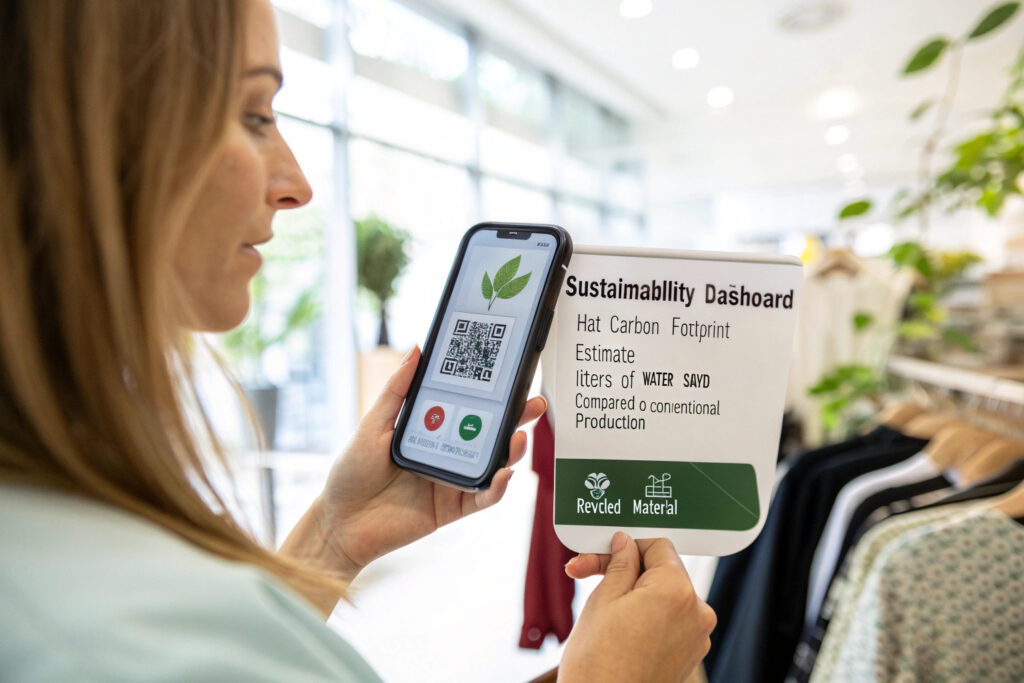
Sustainability is no longer a niche concern. It is a core purchasing criterion for a large and growing segment of the market, particularly among younger consumers. The QR code gives a brand the space to tell a rich, data-backed sustainability story without cluttering the physical product with bulky labels. A small QR code on a hangtag unlocks a full digital sustainability report that lives online.
What Environmental Impact Data Can Be Linked to a Hat's Journey?
The QR code page can display a range of environmental metrics for the specific hat. We can calculate and display the recycled material content percentage, the water consumption of the dyeing process compared to a conventional baseline, and the energy mix used in the factory. Some of our brand clients choose to display a simplified carbon footprint estimate, calculated using a standard lifecycle assessment methodology. Others focus on social impact metrics, such as the number of workers employed, the percentage of female workers, and the factory's compliance with fair labor standards. The key is that every data point must be verifiable. A vague statement like "eco-friendly" is worthless. A specific statement like "made with 60 percent GRS-certified recycled polyester" is powerful. The QR code provides the space for the specificity that sustainability claims demand. Organizations like Sustainable Apparel Coalition provide tools and frameworks for measuring and communicating environmental impact that many of our clients use as a reference.
How Does the Digital Passport Position the Brand for Future Regulations?
The European Union is moving toward mandatory digital product passports for textiles and accessories. The coming regulations will require brands to provide detailed information about the materials, production processes, and environmental impact of their products. A brand that adopts QR code traceability now is ahead of the regulatory curve. When the mandate takes effect, they will already have the data collection and digital delivery infrastructure in place. A brand that waits until the last minute will be scrambling to build a system under deadline pressure. The QR code on the hangtag is not just a current marketing advantage. It is a future-proofing investment that prepares the brand for the regulatory landscape of the next five years.
Conclusion
A digital QR code on a hangtag transforms a simple hat into a product with a fully documented, transparent, and interactive story. The customer can scan the code and see the raw material origins, the factory where the hat was made, the quality control tests that were performed, the certifications that are held, and the environmental impact of the production process. The code can be serialized to provide anti-counterfeiting protection, and it can be linked to batch-specific inspection records that prove the product's quality with evidence rather than marketing language.
The benefits flow to everyone in the chain. The customer gains trust and confidence. The brand gains differentiation, reduced returns, and protection against counterfeiting. The factory gains recognition for its labor standards and production quality. And the entire supply chain becomes more transparent and more accountable.
At AceAccessory, we have developed a QR code traceability system that is ready to deploy for any hat order. We provide the digital content, the batch-specific QC data, the certification documents, and the factory imagery that populate the traceability page. Our brand clients simply attach the QR code to their hangtag and let the story tell itself.
If you are interested in adding QR code traceability to your next hat collection, please reach out to us. We can share a live example of a traceability page so you can see exactly what your customers will experience when they scan your hangtag.
To discuss implementing digital product passports for your hats, please contact our Business Director, Elaine. You can reach her directly at elaine@fumaoclothing.com. Let us give your customers the truth they are looking for.