I recently lost a valuable lead because a potential European client thought a factory could not hold two certifications at once. He assumed that a focus on "organic" under the Global Organic Textile Standard naturally covered the "safety" aspects of OEKO-TEX Standard 100. He was wrong. That assumption cost him a delay in securing a safe, sustainable supply chain for a line of baby bucket hats. Misunderstanding these certificates is a trap that keeps distributors out of the most profitable niche markets.
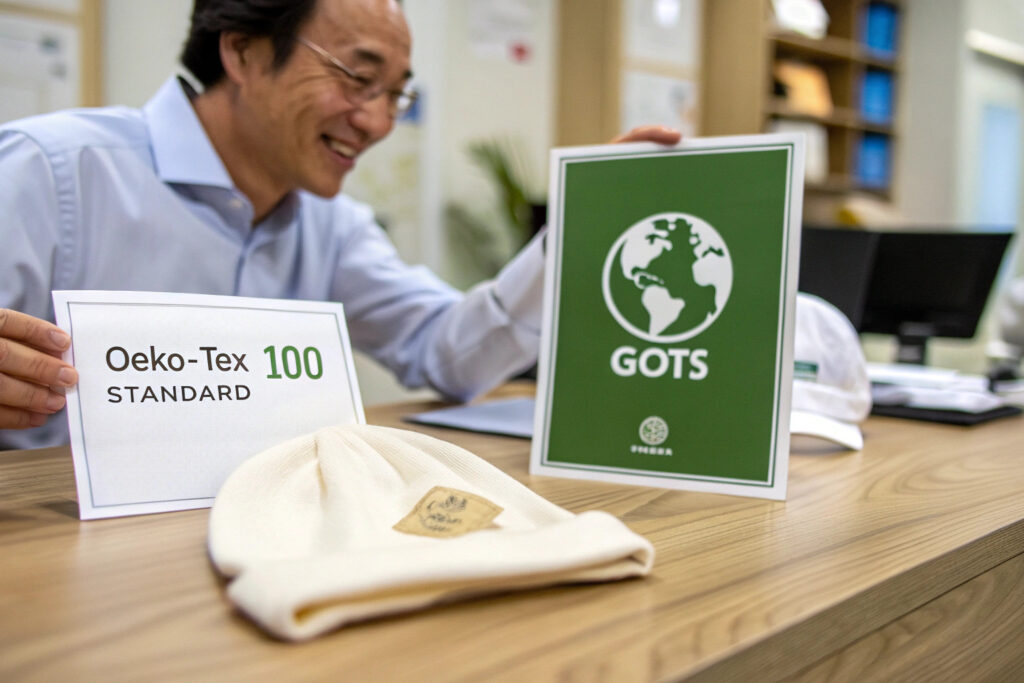
Yes, a hat factory can hold both OEKO-TEX Standard 100 Grade 1 and GOTS certifications at the same time. In fact, the two certifications are complementary, not redundant. GOTS guarantees the organic origin of the fiber and sets strict social standards for the factory. OEKO-TEX focuses purely on chemical safety, checking every thread, button, and snap for harmful substances. A baby hat certified to both standards offers a dual guarantee. It is made from organic materials under fair labor conditions. It is also completely safe against the saliva and sweat of an infant.
I have spent the last decade navigating the exacting demands of European and North American safety regulations. Our facility in Zhejiang has invested heavily in this dual-compliance approach. I want to break down exactly why a dual-certified factory is not a myth, but a necessary reality for serious brands. This is what protects your business from a product recall.
What Is the Difference Between OEKO-TEX 100 Grade 1 and GOTS?
The confusion in the market is staggering. I have heard procurement managers refer to "that chemical certificate" and "that organic one" without knowing the specific boundaries. This leads to risky sourcing decisions. Imagine ordering a "GOTS-certified" hat for a luxury toddler brand. Later you discover the elastic band contains prohibited phthalates. The organic label was real, but the safety was absent. The brand owner's trust in you evaporates instantly.
The core difference is simple. GOTS tracks the supply chain from farm to finished product. It focuses on the "input." OEKO-TEX 100 tests the finished product directly. It focuses on the "output." Grade 1 is the strictest level of OEKO-TEX. It is specifically designed for items worn by babies and toddlers up to 36 months. It accounts for items that go in a child's mouth. GOTS does not automatically test for every compound the way Grade 1 does on the final composite article. They are two distinct tools. A factory needs both to be a true one-stop shop for the juvenile and eco-conscious market.
This distinction is not academic. It is the practical difference between a product that is "ethically grown" and one that is "medically safe." Let us dig deeper into the specific testing protocols that separate them.
Why Does OEKO-TEX Grade 1 Require Saliva and Sweat Testing?
Grade 1 is unforgiving by design. The scientific logic here is grim but necessary. Babies chew on hats. They drool on them. The lab tests simulate this reality. A standard GOTS audit does not always include a simulated saliva test for the composite accessory. Yet OEKO-TEX mandates a specific pH value and formaldehyde level. These levels are lower than what is legally allowed for adult clothing. This is a critical distinction for hats. A baseball cap for an adult has a stiff buckram in the front panels. A baby sun hat cannot have that chemical stiffener.
We send our baby hat samples to an independent OEKO-TEX institute. There they undergo a "worst-case" immersion test. The fabrics are soaked in artificial sweat and saliva solutions. If a single chemical leaches out above the 0.1% limit, the certification fails. This is why dual certification is essential. A factory can have beautiful organic cotton. But if it uses standard polyester thread to sew the button on a beanie, that thread might contain antimony. It would pass a fiber purity test. But it would fail a Grade 1 toxicology scan.
How Does GOTS Verify Social Compliance in a Hat Factory?
GOTS is not just about the soil the cotton grew in. It demands social criteria based on the International Labour Organization standards. The auditors do not just sit in an office looking at paperwork. They walk the production floor. They check if the sewing machine operators have clean drinking water. They verify that the fire exits are unobstructed. They do confidential worker interviews. This is a massive commitment for a factory.
I remember our first GOTS audit vividly. The auditor spent two hours privately talking to our line supervisors about overtime payments. This is a costly and complex process. But it separates the serious manufacturers from the small workshops. When you combine this with OEKO-TEX certification, you are not just auditing the hat. You are auditing the human system that made the hat. The combination tells a European buyer that their brand DNA is safe on all fronts.
Why Would a Hat Factory Need Both Certifications?
Some factory owners ask me why I pay for two audits when one might be "enough." The answer is market access. A mid-tier brand might just ask for a "safety certificate." A top-tier Scandinavian organic brand needs an organic supply chain trail. If you only have one, you reject the other client segment. That is a business bottleneck.
A factory holding both certificates signals internal discipline. It means we have segregated storage areas for certified raw materials. This prevents cross-contamination. It means we use approved lubricants on our knitting machines that do not contain mineral oils. For a distributor, sourcing from a dual-certified plant means you can pivot instantly. You can sell a standard OEKO-TEX Grade 1 hat to a supermarket chain worried about liability claims. Simultaneously, you can pitch a GOTS plus OEKO hat to a premium eco-brand. You gain flexibility without auditing a second factory.
The business case for dual certification goes beyond the factory floor. It directly impacts the financial and legal safety net protecting the distributor and the retail brand.
How Does Dual Certification Reduce Brand Legal Liability?
In the US and EU, "greenwashing" lawsuits are on the rise. A brand might claim a product is "safe for children" based purely on a GOTS organic label. If a child develops a skin reaction from a chemical dye fixative, the brand is exposed. OEKO-TEX Grade 1 is a legal shield. It is a third-party, scientific proof that the item is chemically innocuous.
I explain this to our partners clearly. GOTS is the story of the fiber. OEKO-TEX is the chemistry report of the finished hat. When a customer asks you for "proof," you hand them two separate, verifiable public certificates. You cannot be accused of hiding behind a vague "organic" claim. This combination often reduces product liability insurance premiums for large US retailers.
Can One Audit Process Streamline the Other?
There is a dirty little secret in the industry. A smart factory uses the two certificates to tighten operations. We do not prepare for them as separate events. Our in-house compliance team merges the requirements into a single "Master Quality Manual." The OEKO-TEX requirement for traceable metal detection supports the GOTS requirement for contamination control. The GOTS list of approved chemical inputs directly feeds the OEKO-TEX testing parameters.
This integration means our pre-audit anxiety is low. An uncertified factory scrambles to hide cheap chemicals. Our workflow is permanently compliant. We use digital inventory software to lock non-certified dyes. If a purchase order is for a "GOTS baby cap," the software physically prevents the warehouse from issuing standard polyester thread. This reduces human error and speeds up supply chain management.
How Does a Factory Maintain Compliance for Both Standards?
A paper certificate on the wall means nothing if the daily reality is a mess. I know factories that frame their certifications in the lobby. But they use banned chemicals on the night shift. That is fraud. Real compliance is a living process. It costs money and demands rigorous discipline. I view it as an insurance policy for my clients' supply chains.
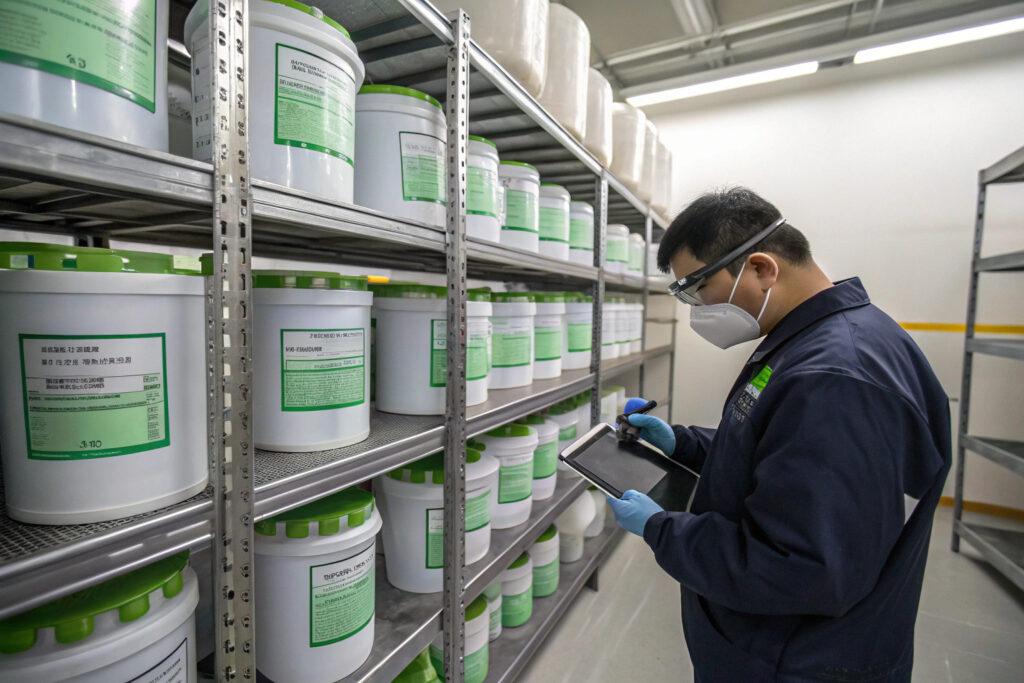
Maintaining both certifications requires a strict incoming goods inspection protocol. Every single roll of organic cotton that enters our facility is held in quarantine. We do not take the supplier's word for it. We cut a swatch and run a quick internal scan before releasing it to the cutting table. Our QC team maintains a physical "approved substance list" glued to the wall of the mixing room for inks. We take this list from the latest GOTS positive list and the OEKO-TEX restricted substance list. We then cross-reference them. If a chemical is on the GOTS list but not the OEKO list, we default to the stricter standard. This conservative approach keeps us audit-ready at all times.
The line between compliance and contamination is drawn by the people on the floor and the records they keep. This is where the human element of manufacturing overrides the technical specs.
What Training Is Required for Factory Workers?
Machines do not make mistakes here. People do. You cannot implement a dual-standard system if the sewing line workers do not understand why they cannot use their personal scissors to cut organic cotton. We conduct a mandatory 4-hour onboarding session for every operator. They learn to identify the special orange bins designated for organic waste. They understand that a simple mix-up of a polyester logo backer with an organic cotton hat body can fail a GOTS transaction audit.
I train my project managers to be "compliance police." They have the authority to stop a production line if they see a material anomaly. This empowerment is critical. The worker is not afraid to raise a red flag. A reward system is in place for catching contamination early, not a punishment system. This culture of vigilance is what a distributor buys into when they partner with a factory like ours. It ensures consistent quality control across every order.
How Are Traceability and Documentation Managed?
In a digital age, a paper trail is a liability. Paper gets lost. We use a cloud-based ERP system that issues a unique batch number for every dual-certified order. This number links the original farm certificate to the specific box loaded onto the vessel. When a customer needs a transaction certificate for a shipment to clear EU customs, I do not need to dig through files. I generate a digital batch history report in 15 minutes.
This traceability extends to the hat components. A woven label on a baby hat often contains a thermal adhesive for ironing. That adhesive must be certified, too. We map the supply chain for every accessory. If a snap button supplier changes their glue formula without telling us, our system triggers a request for a new OEKO-TEX certificate. This proactive chain mapping is the only way to guarantee that the Grade 1 status holds true for 100% of the product. We use this data to ensure full product traceability for our clients.
How Can Distributors Verify Genuine Dual Certification?
The rise of counterfeit certificates in Asia is a real threat. A sales agent might send you a PDF with a beautiful logo. But the factory name does not match the invoice. Or the certificate expired six months ago. This fraud is a direct assault on your brand's integrity. It makes you complicit in selling unsafe goods without your knowledge.
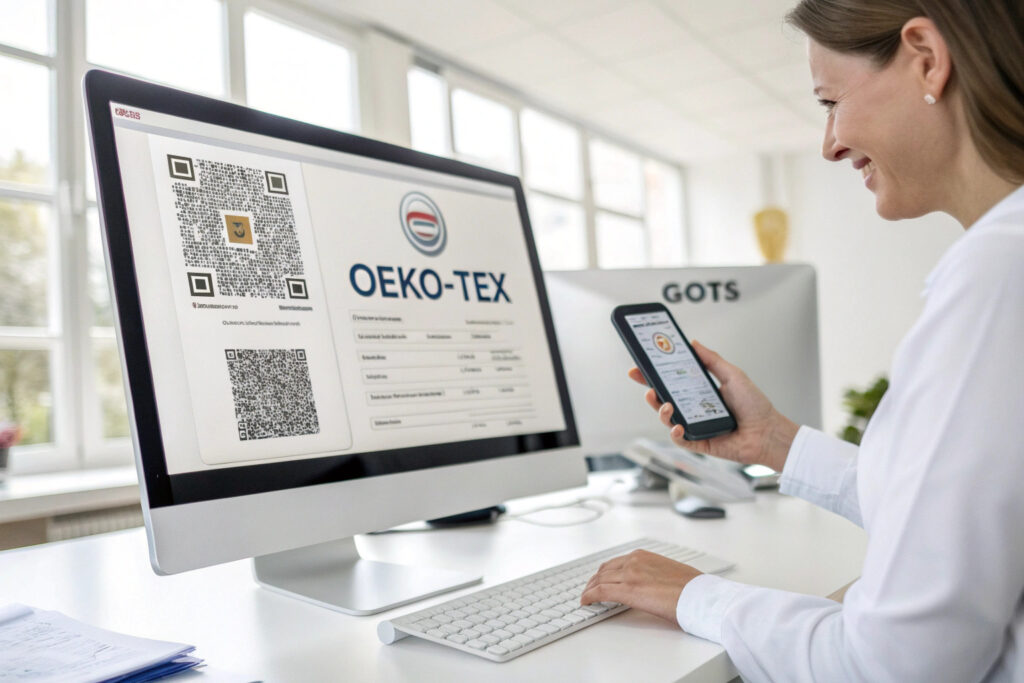
You must treat a certification claim as unverified until you independently audit it on the issuing body's public database. I always tell my prospects a simple rule. If a factory cannot provide you with a "Scope Certificate" number that you can look up yourself, do not send a deposit. For OEKO-TEX, the official website has a "Label Check" tool. You enter the certificate number, and it instantly reveals the factory name and the product scope. For GOTS, the public database allows the same search. A genuine dual-certified factory encourages this check. We proactively print a QR code on our business cards that links directly to our live certification status. This transparency is how we build confidence with American importers who cannot fly to China every month.
Verification is not just about a quick database check. It involves a forensic look at the physical products and the specific regulations of the destination country. This separates a careful buyer from a naive one.
What Are the Visual Clues on the Physical Product?
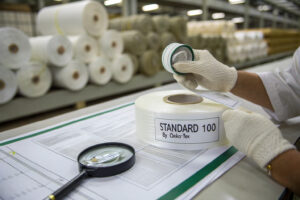
Aside from the digital trail, the physical hat tells a story. A genuine OEKO-TEX Grade 1 label often includes a specific logo variant with the words "Confidence in Textiles" and a distinct code. The label itself must feel durable. It should not feel like cheap paper that will fade after the first wash. For GOTS goods, look at the seam thread. Organic cotton thread has a different sheen. It has slightly less perfect uniformity than mercerized conventional cotton. It looks natural, not plastic-shiny.
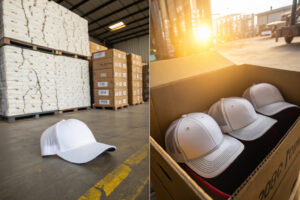
You should also check the internal packaging. Dual-certified factories cannot use standard plastic polybags that are not certified. We ship our Grade 1 hats in biodegradable or certified polybags. These bags are tested for hazardous phthalates, too. If a "certified" hat arrives wrapped in a standard cheap plastic bag with a strong chemical smell, that factory is cutting corners. The packaging must match the product's promise. A responsible headwear manufacturer will ensure every detail is consistent.
How Do I Read a Scope Certificate Correctly?
A common trap is looking at the certificate's validity date but ignoring the "Scope." A factory might be certified for woven cotton bags, not hats. You must check that the product category explicitly lists "headwear." I direct our clients to look at the precise product codes. We ensure our scope covers "knitted headwear" and "woven headwear," including the accessories we attach.
Do not hesitate to contact the certification body directly if the listing is vague. I have given customers the phone number of our auditor's local office to verify our legitimacy. That might seem extreme. But in an industry full of shortcuts, that level of openness is the only true proof. A factory that gets defensive about a direct call to their certifier is a factory hiding a gap. You need a supplier who understands the value of a valid GOTS certification.
Conclusion
The journey to securing a trusted supply chain for infant and toddler headwear is paved with strict chemical tests and rigorous social audits. You cannot rely on a single label to cover every gap. OEKO-TEX Standard 100 Grade 1 provides the toxicological safety net for the most vulnerable users. GOTS provides the ecological and ethical guarantee of the fiber and the labor. These are not competing badges. They are two halves of a complete shield that protects a child's health and a brand's integrity.
Every time I see a baby happily gnawing on the brim of one of our caps, I am reminded why this dual compliance is non-negotiable. It is about genuine safety, not marketing spin. The investment in dual certification is heavy. But it filters out factories that are not serious about long-term partnerships. A factory that navigates this complexity successfully is a factory that can handle your most delicate designs with precision and care.
If your product line is moving into the organic juvenile space or you need a partner who can back up safety claims with verifiable certificates, let us connect. Our Business Director, Elaine, is available to walk you through our specific certification numbers, scope details, and lab reports. You can reach out to her directly to discuss your next development project. Send a note to elaine@fumaoclothing.com, and we will show you exactly how a dual-certified manufacturing process works without the guesswork.