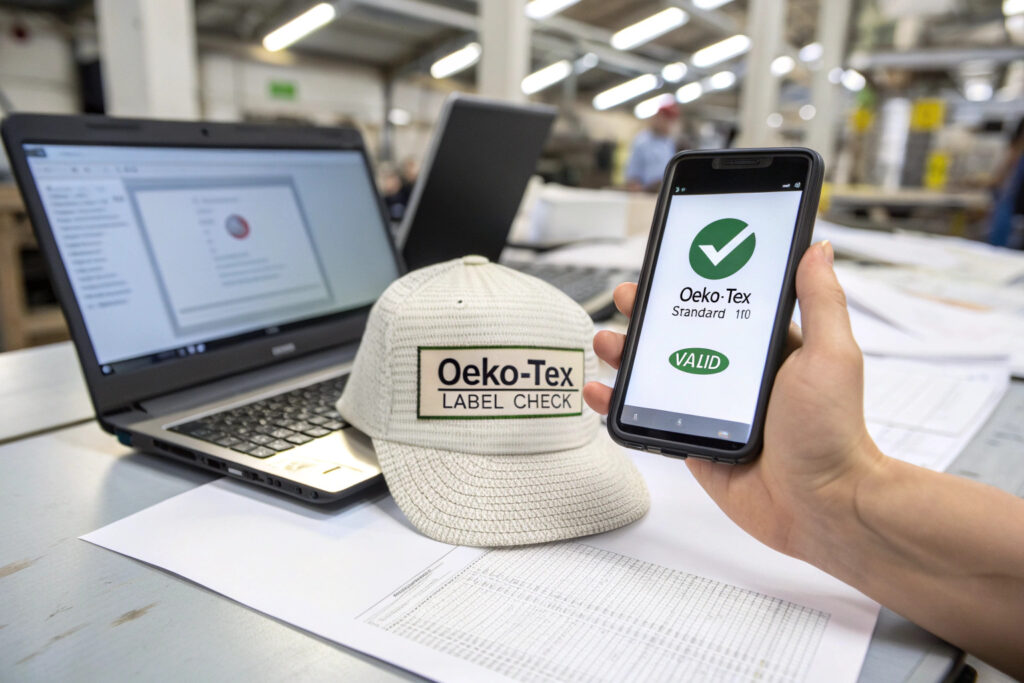
You ask the factory for their OEKO-TEX certificate. They email a PDF. The logo looks real. The stamp looks official. The date is current. You accept it. You ship the caps to your EU retailer. The retailer's compliance team runs the certificate number through the OEKO-TEX Label Check database. The number returns "Not Found." The PDF was a Photoshop job. The logo was copied from Google Images. The stamp was a digital fake. The factory that sent you the PDF knew you would not verify it. They were right.
A Chinese factory can prove its OEKO-100 certificate is genuine by providing the certificate number and inviting the buyer to verify it independently on the official OEKO-TEX Label Check website. The verification takes thirty seconds. The buyer enters the certificate number. The database returns the certificate holder name, the issuing institute, the product class, the validity dates, and the product description. The buyer confirms that the holder name matches the factory's legal entity, the product scope covers headwear, and the certificate is active. A factory that proactively invites verification is confident in its certification. A factory that makes excuses is hiding something.
At Global-Caps, I send my certificate number to every client in the first email. I include the direct link to the Label Check page. I invite the client to verify the certificate on their own phone before they respond to my email. I do not ask for trust. I ask for verification.
How Does the OEKO-TEX Label Check Database Provide Instant Verification?
You receive a certificate number. You type it into Google. The search results show a random trade forum where the factory posted the number. You think this verifies the certificate. It does not. A factory can post any number on any forum. The only legitimate verification source is the official OEKO-TEX Label Check database hosted on the OEKO-TEX website. Any other website is unverified and could be part of the fraud.
The OEKO-TEX Label Check database provides instant verification by connecting the certificate number to the live certification record maintained by the issuing certification body. The database is the single source of truth. When a certification body issues, renews, suspends, or revokes a certificate, the database is updated. The buyer's query retrieves the current status in real time. A certificate that was valid yesterday but suspended today will show as suspended. The database reflects the present reality, not the historical document.
I demonstrate the Label Check process on video calls with new clients. I share my screen. I enter the number. The result appears. The trust is built in real time.
The certificate number has a specific structure that reveals information about the issuing body and the year of certification.
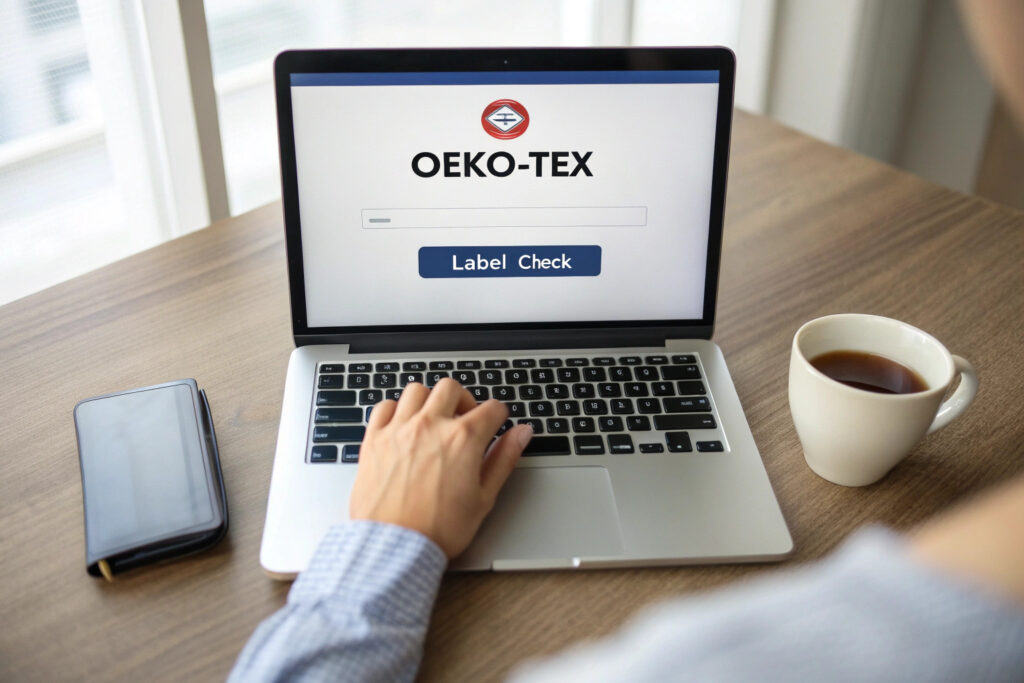
What Is the URL Structure of the Official OEKO-TEX Label Check Page?
The official URL is https://www.oeko-tex.com/en/label-check. The page is accessible globally without a login. The user enters the certificate number in the search field and clicks "Check." The page is mobile-responsive and works on any smartphone browser.
Any other URL claiming to be an OEKO-TEX verification page is fraudulent. The domain must be oeko-tex.com. A URL like oeko-tex-verify.com or oeko-tex-check.net is a phishing site designed to validate fake certificates.
I bookmark the official URL on my browser and share the link directly with clients. No copy-paste errors. No phishing risks.
How Do You Confirm the Certificate Holder Name Matches the Factory's Legal Entity?
The certificate holder name displayed in the Label Check database must exactly match the legal entity name of the factory. If the factory's legal name is "Fumao Clothing Co., Ltd." but the certificate holder name is "Fumao Garments Trading Company," the certificate does not belong to the factory. It belongs to a different legal entity, possibly a related company, a former name, or a completely unaffiliated entity.
The buyer should request the factory's business license and compare the legal entity name on the license with the certificate holder name in the database. A mismatch indicates the certificate is borrowed, outdated, or fraudulent.
My business license and my certificate holder name are identical. I provide both documents together so the client can verify the match.
What Are the Common Tricks Factories Use to Fake an OEKO-100 Certificate?
You think a fake certificate looks obviously fake. It does not. A skilled forger can produce a PDF that is visually identical to a genuine certificate. The logo is high-resolution. The signature is convincing. The stamp is accurate. The only way to detect the fraud is to verify the data on the PDF against the independent database. The visual inspection of the PDF is not verification. It is a first impression.
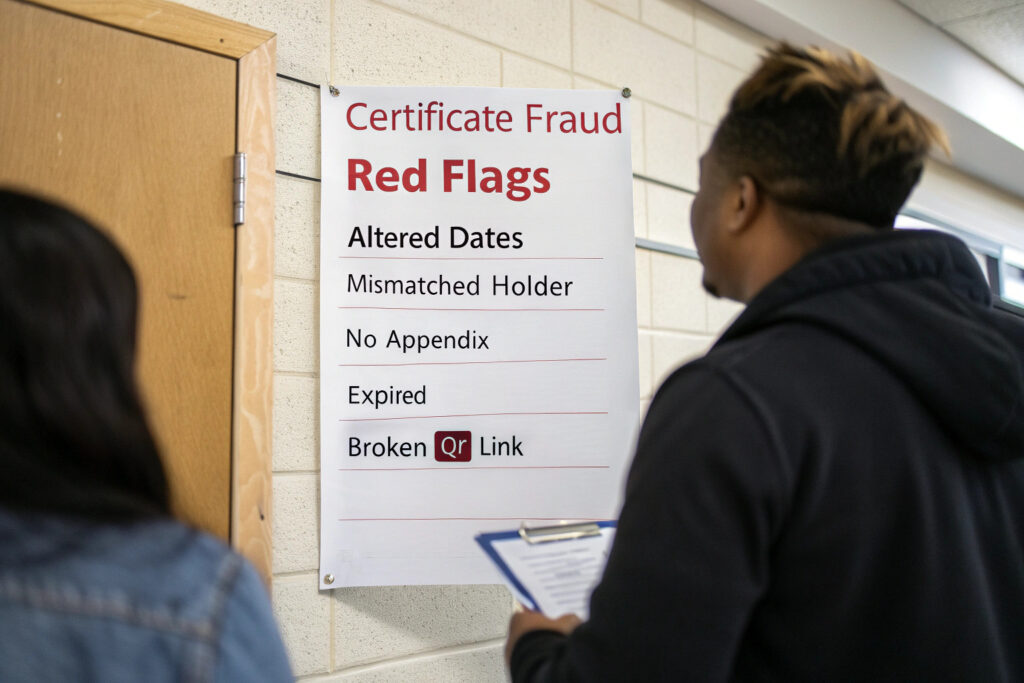
Common tricks factories use to fake an OEKO-100 certificate include altering the validity dates on an expired genuine certificate using PDF editing software, presenting a certificate that belongs to a different factory with a similar name, presenting a certificate that covers only the raw fabric but claiming it covers the finished hat, and fabricating a completely fake PDF using copied logos and a non-existent certificate number. The most sophisticated fraud is the borrowed certificate, where the factory has a genuine certificate number that belongs to a sister company.
I teach my clients the certificate fraud detection method: ignore the visual appearance of the PDF. Verify the number in the database. Confirm the holder name matches. Confirm the product scope covers hats. Confirm the certificate is active.
The expired certificate with altered dates is the most common and easiest-to-detect fraud if you verify the database.
Why Do Some Factories Show a Certificate for "Fabric" Instead of "Finished Hats"?
An OEKO-TEX certificate is issued for specific product categories. A certificate for "Cotton Woven Fabrics" certifies the raw fabric. It does not certify the finished hat. The hat involves additional processing—cutting, sewing, embroidery, adding a sweatband, adding a plastic snap—that introduces new materials and chemicals not covered by the fabric certificate.
A factory that only holds a fabric certificate cannot legally label their finished hats as OEKO-TEX certified. The finished hat requires its own certification that covers all the additional components and processes. The factory may present the fabric certificate, hoping the buyer does not understand the product scope limitation.
My certificate appendix explicitly lists "Finished Headwear" as a certified product category, not just the raw materials.
Can a QR Code on the Certificate Itself Be Faked?
Yes. A QR code printed on a certificate PDF can be generated to link to any website, including a fake verification page designed to look like the OEKO-TEX site. The buyer scans the QR code and arrives at a page that displays a "Valid" result. The page is a clone. The data is fabricated. The QR code is a shortcut to a deception.
The buyer should never scan a QR code on a certificate PDF as the sole verification method. The buyer should navigate independently to the official OEKO-TEX Label Check page and enter the certificate number manually. Independent navigation eliminates the risk of a fake QR link.
My verification instructions to clients state: "Do not scan the QR code on the PDF. Go to oeko-tex.com/label-check and type the number yourself."
How to Cross-Reference the Certificate Appendix With Your Specific Cap Order?
You verify the certificate number. The certificate is valid. The factory name matches. You think the verification is complete. It is not. The certificate is valid for the factory. It is not necessarily valid for your specific cap. The certificate appendix lists the specific materials and components that are covered. If your cap uses a component that is not on the appendix, that component is not certified. The verification of the certificate number is step one. The cross-reference with your spec sheet is step two.
You cross-reference the certificate appendix with your specific cap order by first obtaining the complete appendix document, then creating a list of every component in your cap—crown fabric, sweatband, embroidery thread, visor board, snap closure, woven label—and checking each component against the appendix article groups. Each component must match an appendix entry by material composition, processing stage, and color range. A component that does not match any appendix entry is uncertified.
My spec-to-appendix cross-reference is a standard part of my pre-production process. I provide the completed cross-reference to every client for review and approval.
The sweatband is the most commonly uncertified component because it is often sourced from a different supplier than the crown fabric.
What Does the Appendix's "Article Groups" Section Tell You About Coverage?
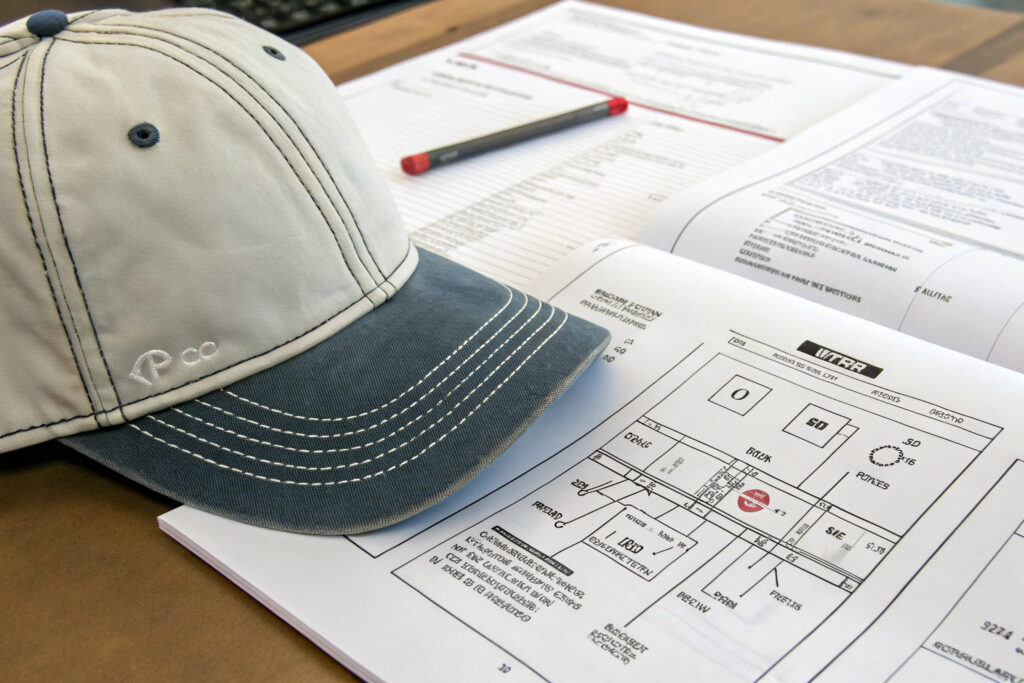
The article groups section of the appendix is a table that lists each category of certified materials. Each article group has a group number, a product description, a fiber composition, and a list of processing stages covered. For example, "Article Group 3: Sewing Threads - 100% Continuous Filament Polyester - Dyed."
The article group description tells you exactly what is covered. "Dyed" means colored thread is covered. "Yarn Dyed" means the yarn was dyed before knitting. "Piece Dyed" means the fabric was dyed after knitting. The specificity is the evidence. A vague description like "Textile Accessories" is a red flag.
My appendix article groups are written with precise, specific descriptions that leave no ambiguity about what is covered.
How Do You Verify That the Stitching Thread and Sweatband Are Included?
You locate the article group in the appendix that corresponds to sewing threads. The description should read something like "Sewing Threads - 100% Continuous Filament Polyester - Dyed." If no such article group exists, the thread is not covered. You then check whether the thread supplier has their own OEKO-TEX certificate that covers the specific thread lot used in your order.
You locate the article group for the sweatband. The sweatband may be listed under "Knitted Fabrics" if it is a knit sweatband, or under "Woven Fabrics" if it is a woven sweatband. The fiber composition must match: a polyester/spandex sweatband must be listed under an article group for polyester/spandex knitted fabrics. If the sweatband material does not match any article group, it is uncertified.
My component certification matrix identifies gaps where a component is not covered by my OEKO-TEX certificate. I either source a certified component or disclose the gap to the client.
What Questions Should You Ask the Factory During a Live Video Call?
You email the factory. "Is your certificate genuine?" The factory replies, "Yes, of course. Here is the PDF." You accept the PDF and the verbal assurance. You never asked a follow-up question. You never tested their willingness to prove the certificate live. The email exchange was a comfort ritual, not a verification process.
You should ask the factory specific, testable questions during a live video call. Ask them to share their screen and navigate to the OEKO-TEX Label Check page. Ask them to enter the certificate number while you watch. Ask them to show you the physical certificate document and hold it next to the screen display. Ask them to show you the appendix and point to the article groups that cover your specific components. Ask them to show you a finished cap and point to where the OEKO-TEX label is sewn. A factory that answers all these questions live and without hesitation is a factory with nothing to hide.
My video call verification protocol is a standard part of my new client onboarding. I offer the live verification before the client asks for it.
The screen-share demonstration of the Label Check database is the single most powerful trust-building exercise.

How Can Screen Sharing the Live Database During a Call Prevent Fraud?
When the factory shares their screen and navigates to the official OEKO-TEX Label Check page, the buyer sees the URL in the browser bar. They see the factory type the certificate number. They see the database return the result. The process is transparent and unscripted. The factory cannot substitute a fake page if the buyer is watching the navigation in real time.
A pre-recorded video can be edited. A screenshot can be manipulated. A live screen share with the buyer directing the navigation is much harder to fake. The buyer can ask the factory to refresh the page, to click on specific details, to scroll through the appendix. The interactivity confirms the authenticity.
I screen share the Label Check verification on every introductory call. The client sees the live result. The trust is established in the first five minutes.
What Should You Look for When the Factory Shows the Physical Certificate on Camera?
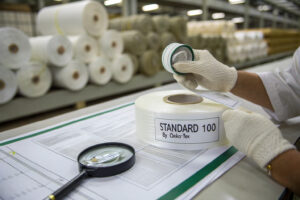
The physical certificate should be an original printed document, not a photocopy. The paper should have a quality weight and texture. The OEKO-TEX logo should be sharply printed, not pixelated. The certification body's stamp or embossed seal should be visible. The signature should be an original ink signature, not a printed facsimile. The certificate number on the physical document should exactly match the number entered in the Label Check database.
The factory should be able to show the certificate in a well-lit environment, holding it steadily for the buyer to inspect. The factory should be willing to flip through the pages, showing the full appendix, not just the cover page.
My physical certificate is kept in a protective sleeve in the conference room. I hold it up to the camera on every video call.
Conclusion
A Chinese factory can prove its OEKO-100 certificate is genuine by inviting the buyer to independently verify the certificate number on the official OEKO-TEX Label Check database, by providing the complete appendix for cross-referencing with the buyer's spec sheet, and by demonstrating the live database verification during a video call with screen sharing. The certificate number is the key. The database is the lock. The buyer turns the key.
Common fraud methods include altered expiry dates, borrowed certificate numbers, fabric-only certificates presented as finished hat certificates, and fake QR codes linking to clone verification pages. These methods are defeated by independent database verification, legal entity name matching, product scope review, and manual URL navigation.
The verification is not a single step. It is a layered process. Verify the number in the database. Confirm the holder name matches the factory's legal entity. Confirm the product scope covers finished headwear. Cross-reference the appendix with every component of your cap. Test the factory's transparency with a live video call. A factory that passes all these layers has proven its certificate is genuine.
At Global-Caps, I do not ask for trust. I ask for verification. My certificate number is in my email signature. The Label Check link is in my first message. The live screen share is on my introductory call. The appendix cross-reference is in my pre-production package. The proof is not a PDF. The proof is the independent database.
If you need OEKO-100 certified caps from a factory that proves its certification before you place the order, contact my Business Director Elaine. She can provide our certificate number, walk you through the Label Check verification on a video call, and provide the complete appendix cross-referenced to your spec sheet. Email Elaine at elaine@fumaoclothing.com. Let's verify first, then trust.