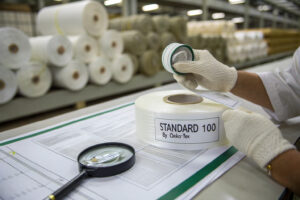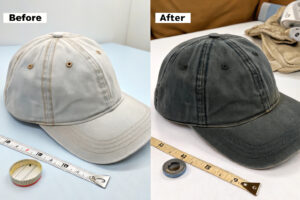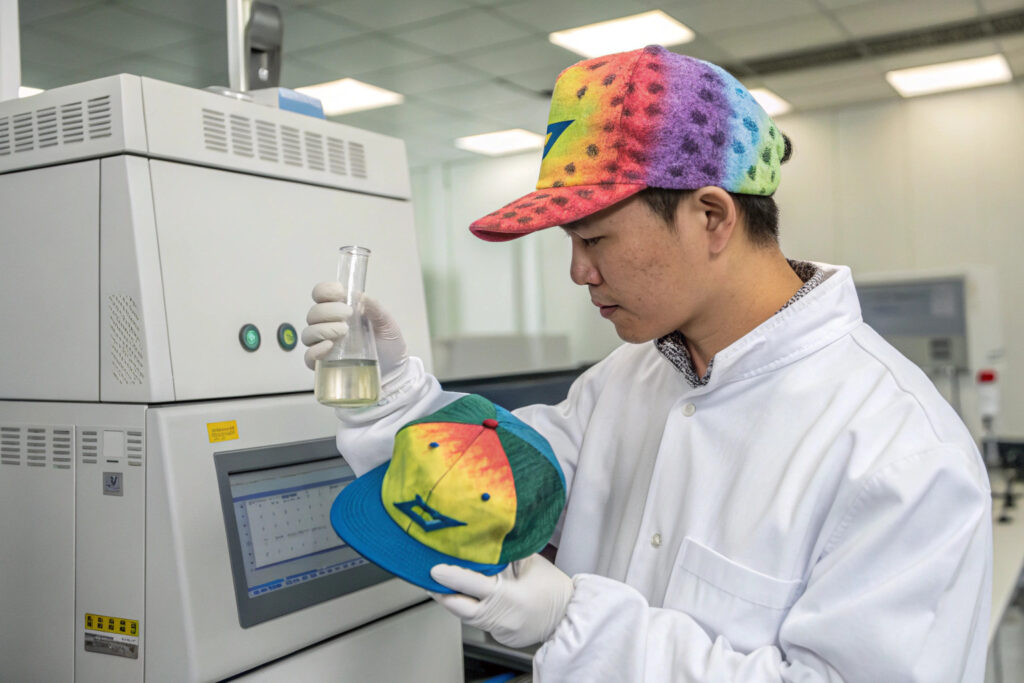
You find the perfect shade of deep navy blue for your new European streetwear cap line. The sample from the factory looks amazing. You are ready to place a bulk order. Then your compliance officer in Germany sends an urgent email. She asks for the azo dye test report. You forward the factory's generic lab certificate. She replies in five minutes: "This is insufficient. Specific azo amines are restricted. We need the breakdown." Your heart stops. You realize you do not know the exact chemistry of the blue dye. You just liked the color. If that dye contains a restricted aromatic amine above 30 mg/kg, your container gets seized at Rotterdam. You lose the stock and you get fined.
Chinese headwear factories are allowed to use dyes, but they are absolutely forbidden from using specific azo dyes that release any of the 24 listed carcinogenic aromatic amines under the EU REACH Annex XVII regulation. The rule is not an outright ban on all azo dyes. It is a ban on specific azo colorants that break down into toxic amines when they touch human skin. This affects mainly the sweatbands on caps, the inner linings of beanies, and any dyed cotton fabric that touches the forehead. Any factory exporting to Europe must treat this rule as black-letter law. The testing limit is strict. If your textile component contains more than 30 parts per million of a restricted amine, the entire product is illegal for the EU market.
I have managed the dye compliance for hats heading to the strictest retailers in Berlin and Paris. The confusion often comes from the difference between a legal azo dye and a banned one. I will walk you through that chemical line now and show you how we keep your supply chain clean.
Which Azo Dyes Are Specifically Banned by the EU REACH Annex XVII?
Many factory owners in Asia make a dangerous shortcut. They think "azo-free" dye is just a marketing term. They do not drill down into the specific chemistry. You fear the factory used a standard reactive dye that looks perfect but contains a hidden time bomb. The fear is justified. Europe does not ban all 2000+ azo dyes on the market. That would stop the textile industry entirely. They ban a specific subset.
The ban targets azo dyes that can reductively cleave. This means when the dye touches skin moisture and bacteria, it snaps apart and releases one of 24 specific aromatic amines. The list includes benzidine, 4-aminobiphenyl, and 2-naphthylamine. These are proven human carcinogens. The rule covers any textile article that comes into prolonged contact with skin. A winter beanie liner is in continuous contact with the forehead. A baseball cap sweatband is in direct contact with skin for hours. These are not borderline cases. They are absolutely within scope. The banned amines list is public and found in Entry 43 of Annex XVII. If a lab report mentions even a trace of 4-aminoazobenzene, it is a fail.
The legal language in the regulation is very technical. It is easy to misread the scope if you are not careful. Let's clarify the specific chemicals and the context that often traps importers of custom headwear.

What Is the Full List of the 24 Restricted Aromatic Amines?
You do not need to memorize them all, but you need to check the lab report against them. The most commonly detected ones in cheap dyes are benzidine, 4-chloro-o-toluidine, and 2,4-diaminoanisole. If you are producing colorful bucket hats with complex prints, you have to watch out for o-aminoazotoluene and 4-aminoazobenzene. These often hide in bright reds, oranges, and deep blues. The full list is in the official REACH Annex XVII entry. I always keep a printed copy in our dyeing workshop. When we buy dyestuff, we demand the supplier signs a guarantee that the dye does not contain any of these 24 amines above the legal threshold. Not 23. All 24. A missing checkmark on a single chemical can void your shipment.
Are Leather or Synthetic Leather Hat Adjusters Included in the Ban?
Yes, and this catches people off guard. A fabric baseball cap might pass the azo test, but the leather backstrap fails. Leather is dyed too. Synthetic leather often uses a polyurethane base that is colored with dyes. Entry 43 of REACH covers leather and coated textiles. I recall a shipment of trucker hats with a faux leather snapback strap. The cotton part was clean. The strap, sourced from a cheap accessory vendor, contained restricted amines. The rule treats the whole hat as one article. If the strap fails, the hat fails. We test the leather adjuster separately now. We cut it into tiny pieces and run a separate extraction. This adds a bit to the lab cost, but it seals the legal loophole.
How Can I Test for Banned Amines in Custom Baseball Caps Before Shipping?
You know you need a test. But you don't know if the factory's in-house report is fake. You are afraid of receiving a PDF that was edited in Photoshop. You worry that the sample they sent to the lab was specially prepared, while your bulk production used a cheaper, dangerous dye. This asymmetry of information is the biggest source of risk in the headwear trade.
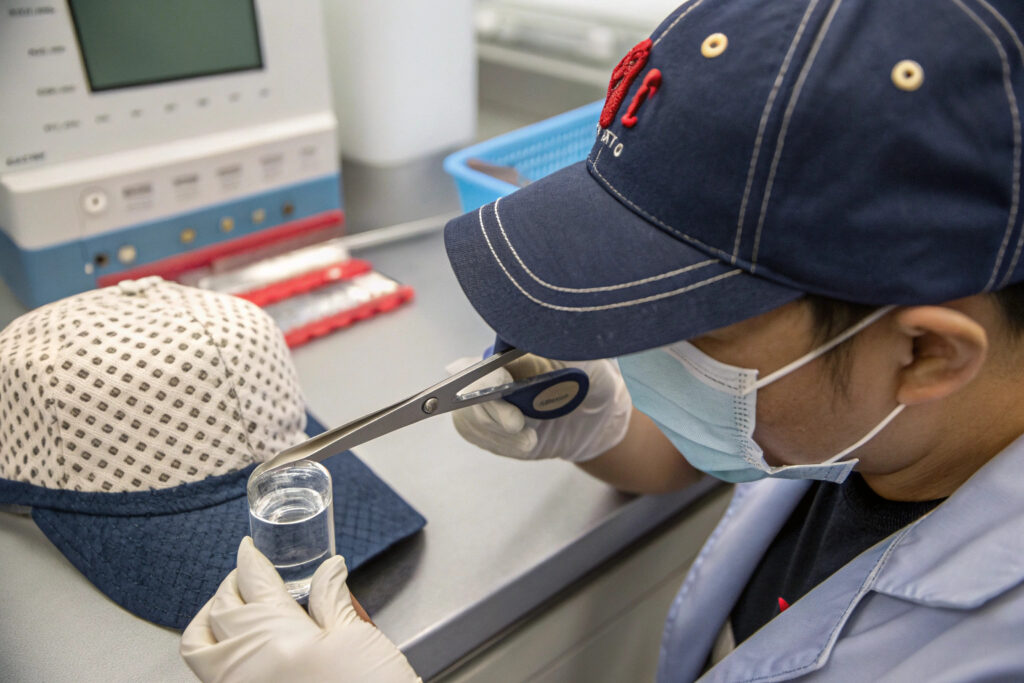
You must use third-party testing. Do not accept an in-house certificate for azo dyes unless the factory owns an ISO 17025 accredited lab, which most do not. You should instruct the factory to send a randomly picked sample from the bulk production line to a recognized agency. The standard method is EN 14362-1. This test simulates the chemical reaction that happens on your skin. The lab puts the fabric in a sealed vessel with a citrate buffer solution. They heat it. They add sodium dithionite. This breaks the azo bonds. Then they run the liquid through a GC-MS machine to sniff out the individual amine molecules. You need the report to show each of the 24 amines with a result of "Not Detected" or a number safely below 30 mg/kg.
Knowing the test method helps you avoid scams. Some cheap labs use an older, less sensitive method. You need to specify the latest standards and verify the chain of custody of the sample to be fully protected.
What Is the Difference Between EN 14362-1 and EN 14362-3 Testing?
The number after the dash changes everything. EN 14362-1 is the standard test for direct contact textiles. It is the one you need for cotton, wool, and polyester fabric on a baseball cap. EN 14362-3 is for leather. Leather requires a different extraction process because the dyes are bound inside the hide structure differently. If you only test with Part 1, but your cap has a leather patch or a leather strap, you missed the dangerous part. I always ask the lab to issue a combined report or two separate reports. A smart QC manager will cut up the composite hat sample into its component parts. The main fabric follows Part 1. The leather visor or strap follows Part 3. This technical detail separates a professional supplier from a careless one.
Why Is "Reductive Cleavage" the Key Mechanism in the Lab Test?
The chemistry matters. The dye does not contain the free amine inside the factory. It contains a bound molecule. The danger is on the wearer's skin. Bacteria on the skin and sweat create a reducing environment. This environment snaps the chemical bond and releases the carcinogen. The lab test simulates this exactly. It is not just dissolving the dye. It is chemically forcing that bond to break. If the factory argues that "the dye is stable and doesn't contain the amine," they misunderstand the law. The law cares about the simulation result. If the test releases the amine, the product is illegal. This is why you cannot just ask the dye seller. You must test the finished hat in the reactive state. It is the only proof that matters to EU customs.
Why Do Some Recycled Polyester Fabrics Fail the Azo Dye Test?
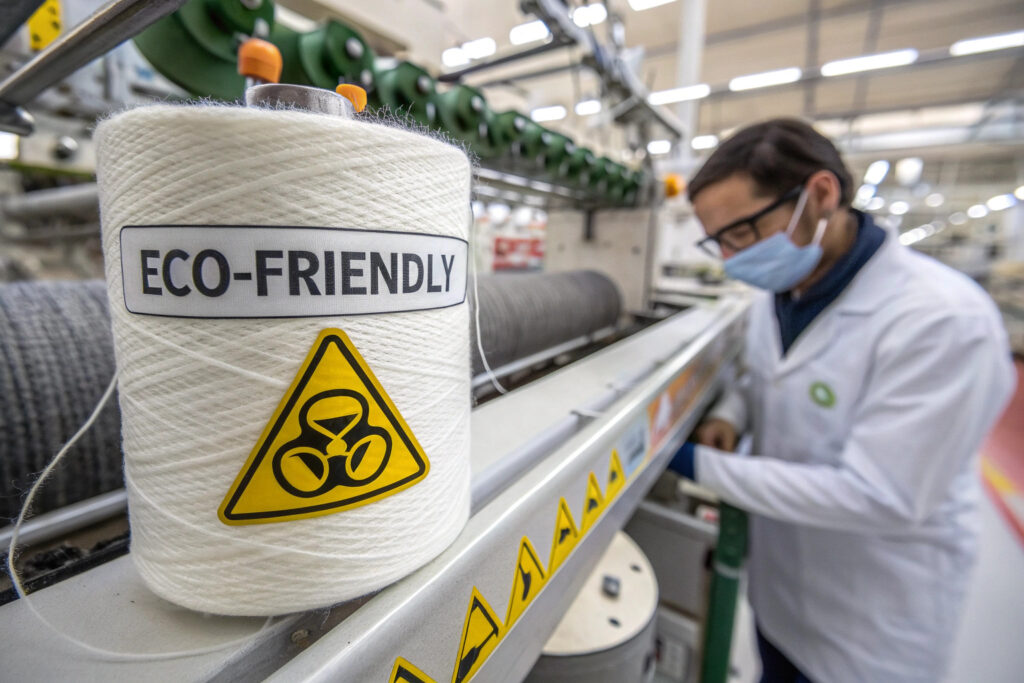
Sustainability is a huge trend. Brands love to put "Made with Recycled Polyester" on the hangtag. It feels good for the planet and the marketing. You assume the recycled fiber is chemically cleaner because it is "green." That is a dangerous myth. The recycled content sometimes carries the toxic legacy of its past life.
Recycled polyester often fails azo tests because it is made from melted-down plastic bottles or old textile waste. The original plastic might have been colored with non-food-grade dyes. Old textiles in the recycling stream might contain banned amines from a time before the regulations existed. The recycling process melts these contaminants into the core of the new fiber. Standard washing cannot remove them. They are locked in the polymer matrix. When a lab does the extraction test on a recycled polyester beanie, the solvent can pull those legacy amines out. The result is a positive hit for a chemical that the hat factory never intentionally added. This is a huge blind spot for sustainable brands who skip the chemical test because they trust the eco-label.
The circular economy creates a chemical recycling loop that is very hard to break without testing. The supply chain for recycled materials is often opaque, mixing clean and contaminated waste streams.
Can PET Bottle Flakes Contain Restricted Amines?
Pure PET bottles are generally clean. The contamination comes from the sorting facility. Plastic bottles have colored caps, labels, and glue residues. If a red cap was colored with a cheap azo pigment, that pigment enters the flake stream. During the extrusion of the yarn, this pigment decomposes. It can form restricted amines under heat stress. I have seen lab reports where a pure white recycled fleece beanie showed traces of 4-chloroaniline. It came from a few magenta bottle caps mixed in with clear flakes. We solved this by switching to a recycled yarn supplier that uses a spectroscopic sorter to remove colored flakes before extrusion. If you are buying custom eco-hats, ask the fabric mill for the sorting technology specification. Do not just accept the "recycled" label.
How Does Dope Dyeing Technology Help Avoid Azo Contamination?
Dope dyeing is the solution for recycled polyester. Instead of dyeing the yarn in water after spinning, the color is added directly to the molten plastic mass. This sounds technical, but it is simple. You mix the pigment into the liquid polymer before the fiber forms. You bypass the traditional water-based dyeing process where azo dyes are normally used. The pigments for dope dyeing are usually inorganic or high-temperature-stable organic pigments. They do not break down into amines easily. We have moved 90% of our recycled polyester caps to dope-dyed yarns. The color fastness is better, the water usage drops, and the azo risk falls close to zero. If you want a bulletproof black recycled baseball cap for the EU market, demand "dope dyed black yarn" from the factory.
Is There a Difference Between Azo-Free and "Non-Detectable" Amine Limits?
Salespeople love the word "azo-free." It sounds absolute. It sounds safe. But chemistry does not deal in absolutes. It deals in detection limits. You worry that a test result showing "trace" amounts will still get you into legal trouble. You fear the European buyer has a stricter internal standard than the legal limit. That is often the case.
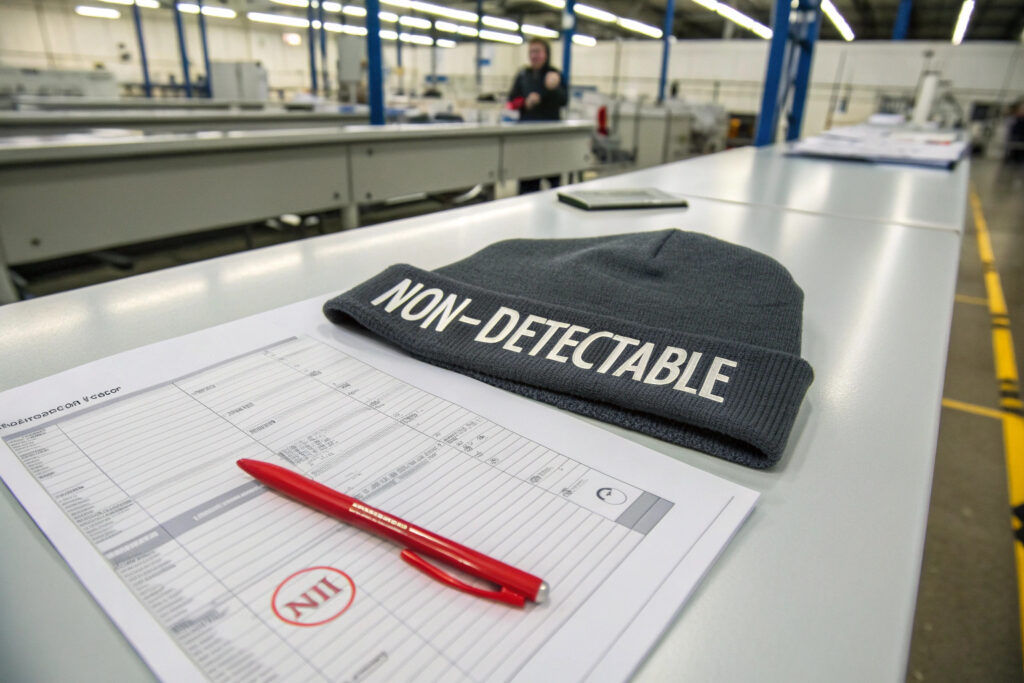
There is a huge legal difference between "azo-free" and a certified non-detectable result. The EU legal limit is 30 mg/kg for each individual amine. A result of 5 mg/kg is legal. But many high-end European brands impose a private "Zero Tolerance" policy. They demand "Non-Detectable," which means the lab equipment did not see even a shadow of the molecule. This is usually below 5 mg/kg. "Azo-free" is a marketing term with no legal definition. A factory can call a hat "azo-free" if the result is 20 mg/kg. But that hat will fail a rigorous brand audit. You must check the specific numeric limit in your buying contract.
The sensitivity of the testing machine determines the final verdict. You need to align the detection limit with the brand's specific RSL before production starts to avoid a commercial, not just legal, rejection.
What Is the Typical Detection Limit of a GC-MS Machine for Amines?
The Gas Chromatography-Mass Spectrometry machine is the judge. Most modern GC-MS machines have a limit of quantification around 5 to 10 mg/kg. This means if the machine reads "Not Detected," the actual amount is very likely less than 5 mg/kg. It is effectively zero for practical purposes. Some high-resolution machines can go down to 1 mg/kg. If a brand demands "zero amines," you actually need to test on a high-resolution machine. This costs more money. I always ask the client's compliance team directly: "Is <5 mg/kg acceptable, or do you need <1 mg/kg?" The answer changes the lab we use. If you agree on a 30 mg/kg legal limit in the contract, but the brand secretly expects 5 mg/kg, you will have a fight later. Align the Limit of Detection before cutting the fabric.
Why Are "RSL" Lists Often Stricter Than EU REACH Regulations?
A Restricted Substances List from a brand like Zara or H&M is a private law. It is always stricter than the government law. REACH says 30 mg/kg for amines. A brand RSL might say 10 mg/kg or even "Not Detected." This is because brands do not want to sit on the edge of the legal limit. They want a margin of safety. If a customs lab makes a slight error and reads 31 mg/kg, the brand is busted. So they push the limit lower. As the factory, we have to follow the strictest rule in the room. If the purchase order references the brand's RSL, that document overrides the standard REACH limit for your production. I keep a folder of major brand RSLs on my desktop. Before we dye the first sample lot, we check the client's specific list against our standard operating procedure.
Conclusion
EU REACH rules do not ban every azo dye, but they draw a hard red line at 24 specific carcinogenic amines. The legal limit of 30 mg/kg is just the starting point. The actual expectation from many brands is a clean sheet with non-detectable results. You cannot rely on marketing phrases like "azo-free." You need the raw chemistry data. Recycled materials bring hidden risks from old contaminants, so they need even sharper testing. The test method must fit the product, whether it is leather straps or cotton sweatbands. And you must specify everything in the contract before the yarn hits the knitting machine.
The responsibility for this sits on the factory. We have to know the chemistry of the dye, the sorting of the recycled chips, and the detection limits of the lab. Guessing is not allowed when the fine is a container seizure.
I run my factory on the principle that documentation is just as critical as the stitching. We manage the chemical certification chain from the dyestuff supplier to the shipping pallet.
If you want a partner who speaks the precise language of EU compliance and can deliver hats that clear customs without drama, please contact our Business Director, Elaine. She keeps our compliance library up to date and can answer your technical questions. Email her at elaine@fumaoclothing.com. Let's keep your brand safe and your supply chain green.