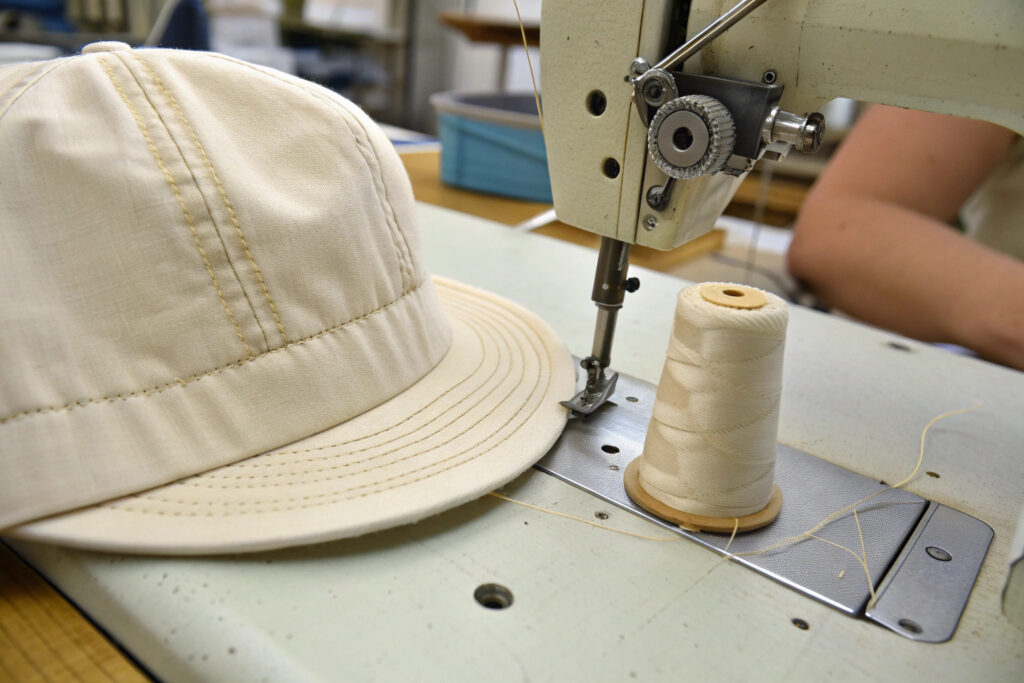
A buyer from Copenhagen once rejected a sample cap because the thread did not match the story. The fabric was beautiful certified organic cotton. The trims were recycled. The hangtag told a lovely sustainability story. But when she looked closely at the stitching, she saw the thread was a bright white, chemically treated polyester. The entire product was almost perfect, and that one invisible detail broke the whole promise. She said to me, "If you are going to be organic, be organic everywhere." She was right.
The advantage of using organic cotton thread for the entire hat construction is that it creates a truly consistent, fully compostable, and chemically clean product. The thread shrinks and stretches at the same rate as the organic cotton fabric, which reduces seam puckering after washing. It eliminates the hidden polyester content that undermines a pure natural fiber claim. And it ensures that every component of the hat, down to the stitching, meets the same strict ecological and skin-safety standards.
At AceAccessory, we have converted several of our high-end and eco-focused hat lines to full organic cotton thread construction. It was not a simple swap. It required re-engineering our sewing parameters, sourcing new thread suppliers, and retraining our sewing team. But the result is a product that is honest through and through. Let me explain exactly why this matters and what you need to know before you spec it for your own brand.
How Does Organic Cotton Thread Differ from Conventional Sewing Thread?
Not all thread is created equal. Conventional sewing thread is almost always made from polyester or a polyester-wrapped cotton core. It is chosen by most factories because it is cheap, strong, and consistent. Organic cotton thread is a different animal entirely. It has a different fiber structure, a different strength profile, and different behavior during sewing. Understanding these differences is essential if you are going to specify it for production.
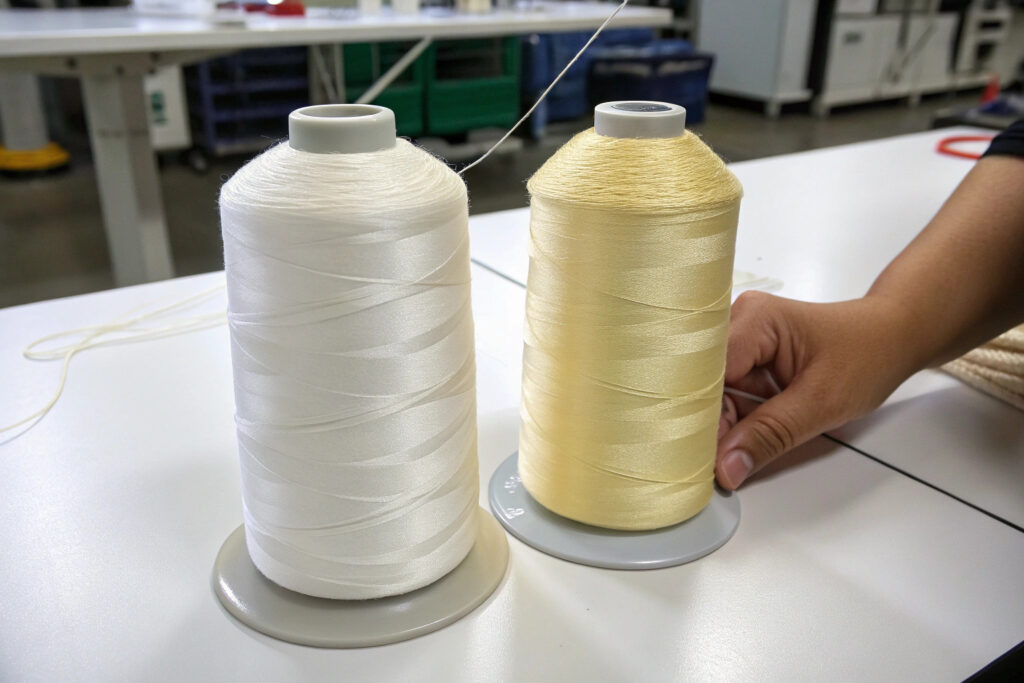
What Are the Chemical Inputs Avoided in Organic Cotton Thread Production?
Organic cotton thread starts with cotton fiber that is grown without synthetic pesticides or fertilizers. That is the agricultural story. But the processing story is just as important. Conventional cotton thread is often bleached with chlorine compounds, mercerized with caustic soda to create a shiny finish, and coated with synthetic lubricants to run smoothly through high-speed sewing machines. Organic cotton thread avoids these harsh chemical inputs. It is usually whitened with hydrogen peroxide, which breaks down into water and oxygen and leaves no toxic residue. It is not mercerized, which means it has a softer, matte appearance instead of a glossy, synthetic shine. And it is finished with natural or food-grade lubricants instead of petroleum-based spinning oils. The result is a thread that is chemically cleaner and safer for the workers who sew with it and for the customer who wears the final product against their skin.
Why Is the Tensile Strength Different and How Do You Manage It?
Organic cotton thread is generally weaker than polyester thread of the same thickness. Polyester has a higher tensile strength and better abrasion resistance. This does not mean organic cotton thread is weak. It means you must use a heavier thread weight to achieve the same seam strength. For hat construction, we typically use a Tex 40 or Tex 60 organic cotton thread, which is thicker than the Tex 27 polyester thread commonly used in standard hats. The heavier thread compensates for the lower fiber strength. We also reduce the sewing machine speed by about ten to fifteen percent to prevent thread breakage. The needle selection matters too. Organic cotton thread creates more lint than polyester, so we use needles with larger eyes and clean them more frequently. These are small adjustments, but they are critical. A factory that simply swaps polyester thread for organic cotton without changing the machine settings will produce weak seams and frustrated sewers. The technical know-how is part of the value a professional factory provides.
Why Does Matching Thread and Fabric Shrinkage Matter for Hat Quality?
One of the most common quality problems in hats is seam puckering after washing. The customer washes the hat, and the seams suddenly become rippled and distorted. This happens because the fabric and the thread shrink at different rates. When a polyester thread is used on a cotton fabric, the cotton fabric shrinks during washing, but the polyester thread does not shrink at all. The thread is now too long for the seam, and it buckles and ripples. The same problem happens in reverse if a cotton thread is used on a polyester fabric. Mismatched shrinkage is a hidden defect that only appears after the customer has already bought and washed the product.
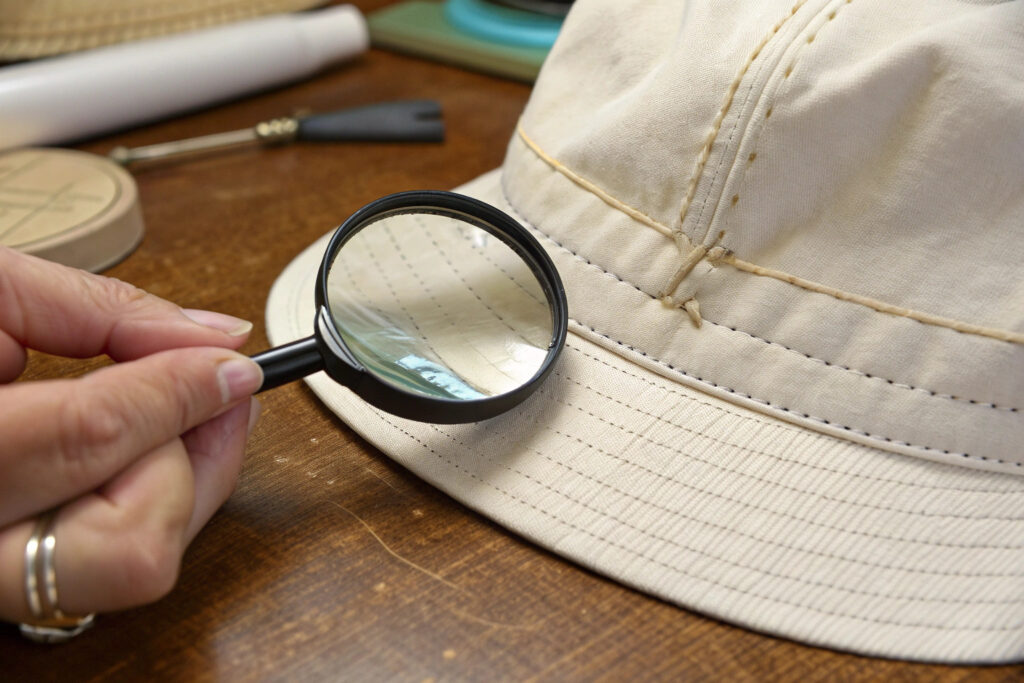
How Does a Fully Organic Cotton Hat Behave Differently in the Washing Machine?
When the fabric and the thread are both organic cotton, they shrink together. The entire hat contracts slightly and evenly, with no differential stress at the seams. The seams remain flat and smooth because the thread and the fabric are moving in perfect sync. This is one of the most practical advantages of full organic cotton construction. It is not just about ideology or marketing. It is about creating a product that looks better and lasts longer through repeated washing. The customer's post-wash experience is better, which means fewer returns and fewer complaints. For a brand that sells hats as durable, everyday accessories, this wash performance is a concrete, measurable benefit.
What Happens at the Seams When You Mix Polyester Thread with Organic Cotton Fabric?
The mixed-material approach creates a weak point at every seam. The organic cotton fabric is soft, breathable, and hygroscopic. The polyester thread is stiff, non-absorbent, and dimensionally stable. When the hat gets wet, the cotton fibers swell, but the polyester thread does not. This differential swelling creates friction and stress at the stitch holes. Over multiple wash cycles, the polyester thread can actually saw through the cotton fibers, causing the seam to weaken and eventually fail. A hat that is marketed as 100 percent organic cotton but sewn with polyester thread is not actually 100 percent organic cotton. It contains hidden synthetic content that the customer cannot see but will eventually feel when the seams begin to fail. Full organic cotton thread construction eliminates this hidden weakness.
What Role Does Thread Choice Play in the Compostability Story?
The end of a product's life is becoming as important as its beginning. Brands that market sustainability are now being asked by consumers: "What happens to this hat when I am done with it?" A hat made from organic cotton fabric but sewn with polyester thread cannot be composted. The polyester thread will remain intact in the compost pile for decades, leaving a web of synthetic microfibers in the soil. The customer who tries to compost the hat will find the seams still intact after the fabric has broken down. This is a betrayal of the sustainability promise.
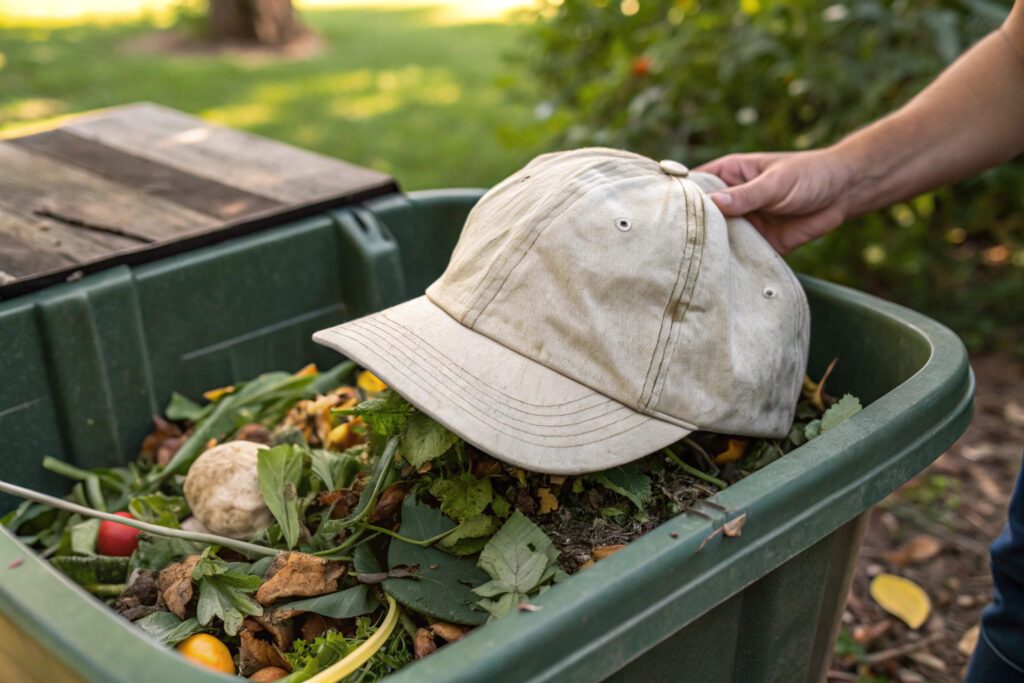
Why Does Polyester Thread Prevent True Biodegradability?
Polyester is a petroleum-based synthetic polymer. It is not biodegradable in any reasonable timeframe. When a hat with polyester thread is placed in an industrial composting facility, the organic cotton fabric will break down into organic matter within a few months, but the polyester thread will remain as a tangled synthetic skeleton. In a home compost bin, the polyester will persist for decades. This means the product is not truly compostable, even if the fabric is. The thread contaminates the compost and undermines the brand's environmental claim. For a brand that markets its hats as compostable or biodegradable, using polyester thread is a factual error that could lead to greenwashing accusations if a customer or a regulator notices.
How Does Full Organic Cotton Construction Support a Circular Lifecycle?
A hat made entirely from organic cotton, including the thread, can be returned to the earth at the end of its useful life. The entire product will biodegrade into organic matter, leaving no synthetic residue. This is the strongest possible end-of-life story. It supports a circular lifecycle where the product is made from natural materials, used by the customer, and then returned to the soil to grow new materials. A brand that can make this claim honestly has a powerful differentiator in the eco-conscious market. The challenge is that the claim must be accurate. The thread must be organic cotton. The fabric must be organic cotton. The labels, if any, must also be natural fiber. Even a small polyester care label sewn into the hat will break the compostability promise. Full product purity requires attention to every component.
What Are the Production Challenges of Switching to Organic Cotton Thread?
If switching to organic cotton thread were easy, every factory would already be doing it. The reality is that organic cotton thread requires a different approach to machine setup, maintenance, and operator training. A factory that treats it as a simple material swap will produce defective hats. A factory that invests in the proper adjustments will produce a superior product. This is where the skill of the factory becomes visible.
What Machine Adjustments Are Required for Organic Cotton Thread?
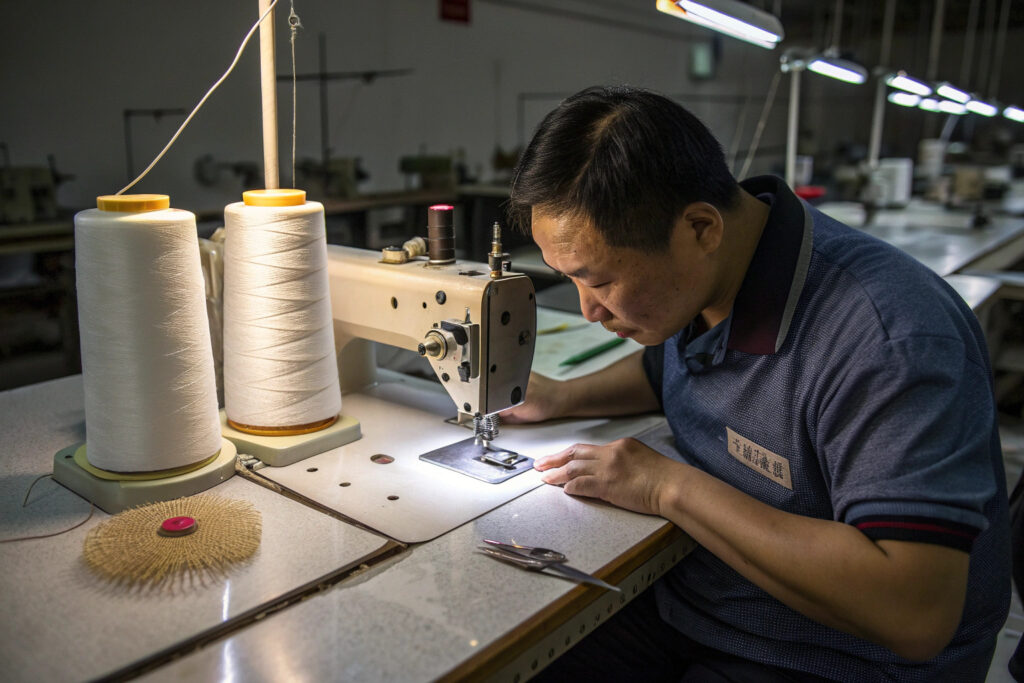
Organic cotton thread is softer and more lint-generating than polyester. It requires a lower machine speed to reduce friction and heat buildup. It requires a different needle type, typically a needle with a larger eye and a polished groove to reduce thread friction. The thread tension must be carefully calibrated, because organic cotton thread is less elastic than polyester and can snap if the tension is too high. The bobbin tension and the top thread tension must be balanced precisely. Our sewing technicians spend time on each machine, running test seams and inspecting the stitch quality before production begins. We also increase the machine cleaning frequency. The lint from organic cotton thread accumulates around the bobbin case and the feed dogs, and if it is not cleared regularly, it can cause skipped stitches and thread jams. These adjustments are not difficult, but they require discipline and experience.
How Does Thread Cost Compare and When Does It Make Sense Economically?
Organic cotton thread is more expensive than conventional polyester thread, often two to three times the cost per cone. It also breaks more easily during sewing, which slows down production and increases waste. The total production cost for a fully organic cotton hat is therefore higher than for a conventional hat. The economic question is whether the market will pay the premium. In our experience, the answer is yes, for the right brand positioning. A hat that is marketed as fully organic, fully biodegradable, and skin-safe can command a retail price premium of fifteen to thirty percent over a conventional hat. The customer who cares about these values is willing to pay for them. The higher production cost is absorbed by the higher retail margin, and the brand builds a loyal following among eco-conscious consumers. For budget hats sold at discount prices, full organic cotton thread construction makes less sense because the customer is not paying for the story. The factory's job is to help the buyer understand the cost-benefit trade-off for their specific market.
Conclusion
Using organic cotton thread for the entire hat construction is not a marketing gimmick. It is a manufacturing decision that affects the product's quality, durability, wash performance, skin safety, and end-of-life story. The thread shrinks and swells in sync with the organic cotton fabric, eliminating seam puckering and seam failure after washing. It avoids the hidden synthetic content that undermines a pure natural fiber claim. It makes the entire hat truly compostable, supporting a circular lifecycle. And it ensures that the product's ecological promise is consistent from the outer fabric to the final stitch.
The switch requires technical skill. The factory must adjust machine speeds, tensions, needle types, and cleaning schedules. The thread cost is higher, and the production speed is slightly slower. But for a brand that serves the growing market of eco-conscious and skin-sensitive consumers, the investment pays off in premium pricing, customer loyalty, and a brand story that is honest to its core.
At AceAccessory, we have made this investment. Our sewing floor is equipped to handle organic cotton thread production, and our QC team verifies the thread composition on every batch. We provide our buyers with the thread certificates and the wash test reports that prove the product will perform as promised.
If you are considering a fully organic cotton hat line and want a factory that can execute it properly, please reach out to us. We can send you a sample hat made entirely with organic cotton thread so you can inspect the seams yourself.
To discuss your organic cotton hat project, please contact our Business Director, Elaine. You can reach her directly at elaine@fumaoclothing.com. Let us sew a product that is honest in every stitch.