I remember a panicked phone call from a buyer named Marcus who ran a mid-sized outdoor gear e-commerce brand. It was early October. He had ordered 8,000 fleece-lined winter caps from a new supplier on FOB terms to save what looked like a few hundred dollars on the unit price. The goods arrived at the Port of Savannah, and that is when the invoices started hitting his inbox like artillery fire. Terminal handling charges. Customs brokerage fees. A duty rate he had miscalculated by 3 percent. A exam hold that racked up storage fees for eleven days. By the time the caps reached his warehouse, his actual landed cost per unit had blown past his retail margin. He had priced the hats for a Black Friday promotion, and now he was losing money on every sale. He told me, "I would have paid extra just to see one number and be done with it." That is exactly what DDP terms do.
DDP, or Delivered Duty Paid, simplifies cash flow forecasting by consolidating every logistics cost into a single, fixed per-unit price that you agree upon before production begins. Under DDP, the supplier is responsible for the goods, the export clearance, the ocean or air freight, the import customs clearance, the duties and taxes at the destination country, and the final delivery to your named place, usually your warehouse or fulfillment center. You receive one invoice with one price. That price is your total landed cost. There are no surprises, no drayage invoices arriving three weeks after delivery, and no customs bills that your accounting team forgot to accrue. When you are planning a large seasonal purchase, where your selling price is locked into a catalog or a website months in advance, knowing your exact landed cost to the penny is not a luxury. It is a survival requirement.
I run Global-Caps as a factory, not a logistics company. But I have learned over two decades of exporting headwear that my buyers do not just need hats. They need certainty. They need to know that the cost they plug into their margin calculator in April is the same cost they will pay when the goods land in September. DDP terms provide that certainty. They move the logistics risk from the buyer to the supplier, and a reputable supplier with experience in international freight knows how to price that risk accurately.
What Is the Difference Between FOB, CIF, and DDP When Importing Bulk Headwear?
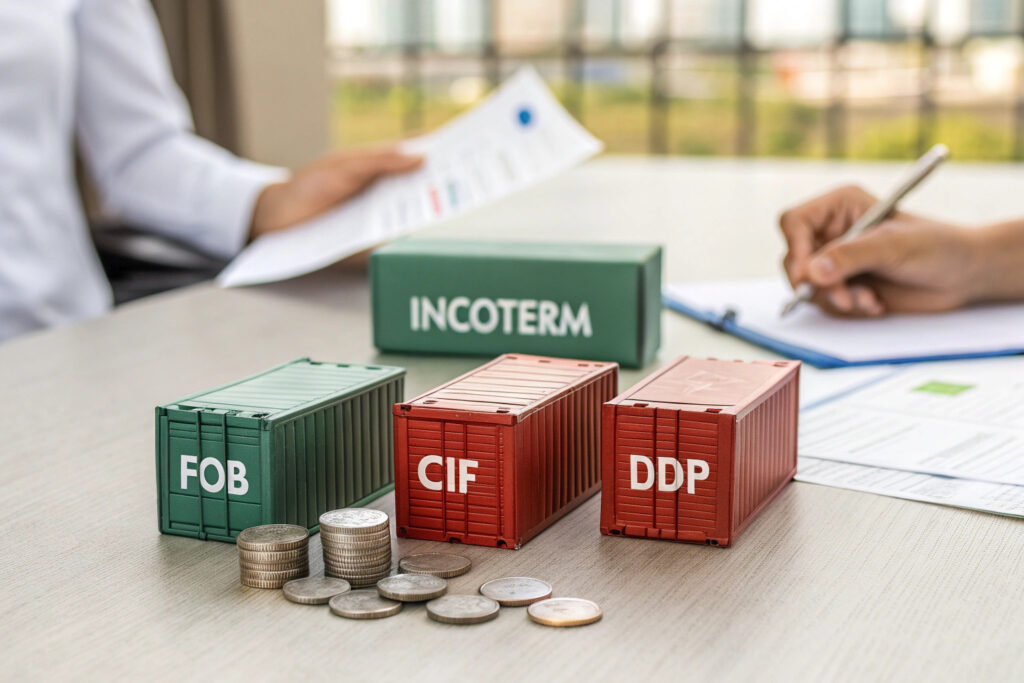
The difference between these three Incoterms is about where the supplier's responsibility ends and where the buyer's begins. Understanding this boundary is critical because it defines whose money is at risk during each phase of the journey from our factory floor in Zhejiang to your warehouse in Dallas or Dusseldorf.
Under FOB, Free On Board, the supplier's responsibility ends when the goods cross the ship's rail at the port of origin, which in practice means when the container is loaded onto the vessel. We, as the factory, pay for the hats, the export packaging, the trucking to the port, and the export clearance in China. The moment the container is on the ship, the risk and the cost transfer to you. You pay the ocean freight, the insurance, the import customs clearance, the duties, the taxes, and the trucking from the destination port to your warehouse. You also bear the risk of any delays, damage, or additional inspections at the destination. FOB appears cheap on the supplier invoice because that invoice only shows the product cost and the local Chinese charges. But the total landed cost is unknown until the goods actually arrive.
Under CIF, Cost, Insurance, and Freight, the supplier takes on more responsibility. We pay for the goods, the export clearance, and now also the ocean freight and the marine insurance to the destination port. The risk still transfers to you at the origin port, but we are paying for the main carriage. The buyer is still responsible for import customs clearance, duties, taxes, and final delivery. CIF is a middle ground. It gives you a more predictable cost because the freight is included, but you still face an unknown duty bill and potential customs delays at the destination.
Under DDP, Delivered Duty Paid, the supplier handles everything door-to-door. We are responsible for the goods until they arrive at your named place, cleared for import, all duties and taxes paid. This is the maximum obligation for the seller. For you as the buyer, it is the simplest transaction. The price we quote you is the final price. It includes the hat, the packaging, the export fees, the freight, the insurance, the customs bond, the brokerage, the duties, the taxes, and the final mile delivery. If the shipping line raises rates mid-transit, we eat that increase. If customs assesses a higher duty rate than expected, we pay the difference. Your cash flow forecast has one variable instead of ten.
How Do Incoterms Affect My Landed Cost Calculation for a Seasonal Cap Order?
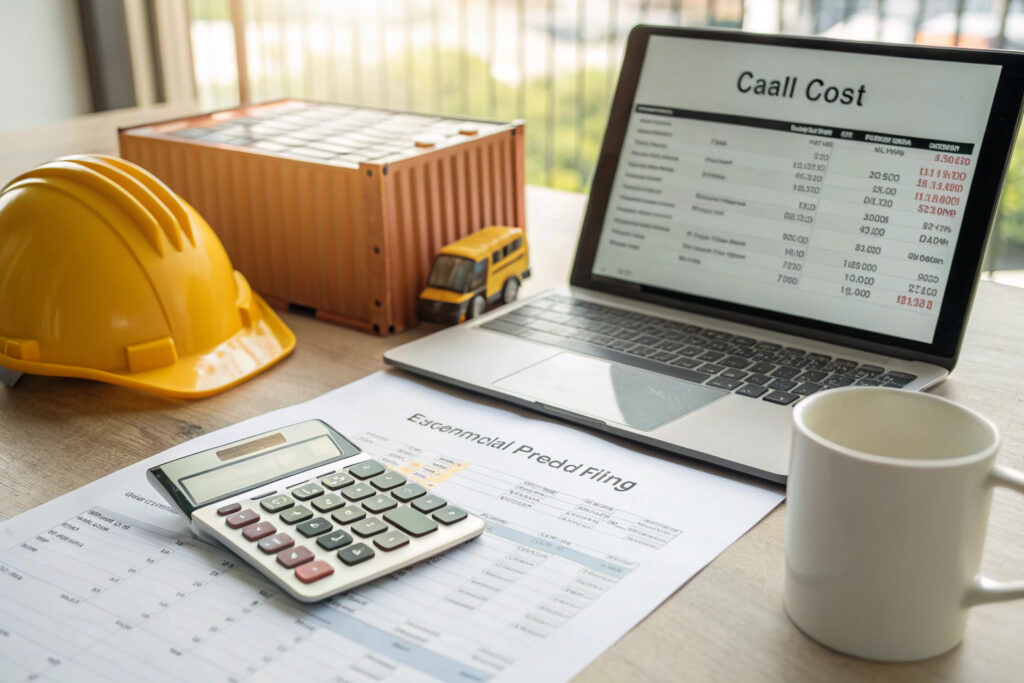
Landed cost is the total cost to get one hat from our loading dock to your warehouse shelf. It is the only number that matters for your margin calculation. A common mistake I see importers make is comparing supplier quotes based on the FOB unit price alone. A factory quoting a cap at $1.50 FOB might seem cheaper than our quote at $1.80 DDP. But when you add the hidden FOB costs, ocean freight, insurance, brokerage, duties, port fees, and trucking, that $1.50 FOB cap often lands at $2.10 or more. The DDP quote at $1.80 is the real, final number.
The seasonal timing amplifies this effect. Large seasonal orders, like winter caps for holiday delivery or summer straw hats for spring break retail, ship during peak freight seasons. Peak season surcharges from shipping lines can add hundreds of dollars to a container. Under FOB, that surcharge hits your freight forwarder's invoice unexpectedly. Under DDP, we have already factored the peak season rate into our price because we book freight regularly and know the carrier's surcharge schedule. Your landed cost remains unchanged despite the market volatility. This predictability allows you to set your retail price with confidence, knowing your margin is protected against logistics cost swings.
Why Does DDP Eliminate Surprise Port Fees and Demurrage Charges?
Port fees and demurrage charges are the silent killers of import profitability. Demurrage is the fee a shipping line charges when a container sits at the terminal beyond the free days, typically 4 to 7 calendar days. Storage is the fee the terminal itself charges. These fees accrue daily and can reach hundreds of dollars per day per container. Under FOB, you control the customs clearance and the container pickup. If your customs broker is slow, if a document is missing, if customs places a random exam hold, the clock keeps ticking. You pay the demurrage and storage. You have no control over the exam, but you pay for the delay.
Under DDP, the supplier controls the customs clearance and the pickup. We have a contractual obligation to deliver the goods to your door. Any demurrage or storage charges incurred at the destination port are our responsibility, not yours. This creates a powerful incentive alignment. We select customs brokers who are fast and reliable because delays cost us money. We prepare documentation meticulously because a missing HS code or a vague product description triggers exams that cost us money. The risk of these fees is transferred to the party best positioned to prevent them, the supplier who handles the paperwork. For your cash flow forecast, this means you can safely assume zero budget for unexpected port charges.
How Does a Single Landed Cost Per Unit Improve Seasonal Budgeting Accuracy?
Budgeting for a seasonal purchase is an exercise in locking down variables. Your retail price is fixed months in advance by your catalog, your website, or your wholesale line sheet. Your marketing spend is committed. Your warehouse receiving window is scheduled. The only variable that can destroy your margin is an unpredictable landed cost. A single DDP unit cost transforms this variable into a constant.
When I negotiate a DDP price with a buyer, we agree on a number that includes every conceivable cost from raw material to final delivery. That number is documented in the purchase contract. It does not change. If ocean freight spot rates spike because of a canal blockage or a port strike, our quoted DDP price holds. If the U.S. Customs and Border Protection decides to apply a different HTS classification than we anticipated, we pay the difference. The buyer's cost per unit is contractually frozen. This allows the buyer to build their seasonal budget with absolute precision. They can calculate their total inventory investment for the season by multiplying the DDP unit cost by the order quantity. There is no contingency line for "unexpected logistics costs." The budget is clean, defensible to their CFO, and accurate.
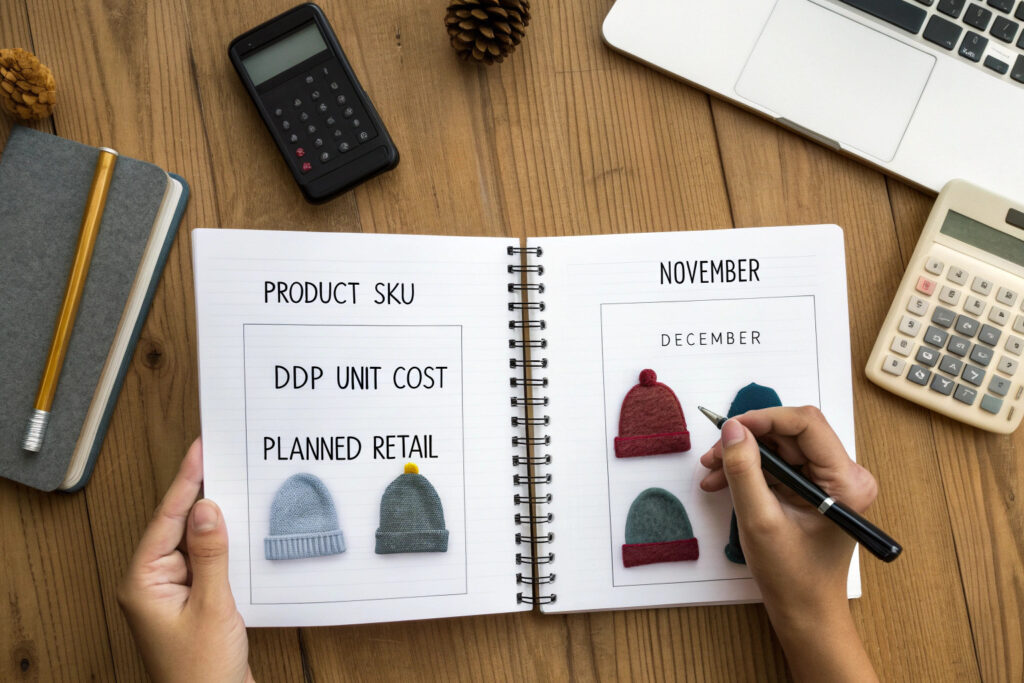
This accuracy extends to profitability forecasting. A buyer knows that a cap with a DDP landed cost of $2.25 and a planned retail price of $14.99 will generate a specific gross margin percentage and a specific dollar profit per unit. They can forecast their seasonal revenue with confidence. Under FOB, the same buyer might budget $2.25 as an estimate, but actually land at $2.65. That $0.40 difference on a 20,000-unit order is an $8,000 margin loss that was not forecasted. For a small to mid-sized brand, $8,000 can be the difference between a profitable season and a break-even one. DDP turns your inventory purchase into a fixed-cost line item, just like your warehouse lease or your software subscription. It becomes predictable.
Why Is Fixed-Cost Inventory Easier to Finance Than Variable-Cost Shipments?
Inventory financing, whether through a bank line of credit, a purchase order financing company, or your own working capital, depends on predictable collateral values and predictable repayment amounts. A lender providing a letter of credit for an FOB purchase faces uncertainty. The loan amount covers the supplier's invoice, but the borrower still needs additional working capital to pay the freight forwarder, the customs broker, and the duty bill upon arrival. The lender cannot easily collateralize those future, unknown costs.
Under DDP, the supplier's invoice represents the total acquisition cost of the inventory. A lender can issue a single payment against a single invoice and know that the goods will be delivered to the borrower's warehouse with no additional cash outlay required. This simplifies the trade finance process. The borrowing base calculation is straightforward. The inventory value is the DDP invoice amount. There are no accruals for freight or duty because those costs are already capitalized into the inventory unit cost.
For a brand using their own cash, DDP simplifies internal cash flow management. The finance team wires one payment for the goods. They do not need to hold a reserve for a duty bill that will arrive 30 days after the goods land. They do not need to track multiple invoices from multiple logistics vendors to reconcile against a single purchase order. The administrative burden of accounting for an FOB shipment, matching freight invoices, duty statements, and broker fees back to a specific PO, consumes staff time and creates opportunities for errors. DDP reduces the transaction to a single payable, a single reconciliation, and a single entry in the inventory costing system.
How Does DDP Protect My Gross Margin During Peak Freight Season Volatility?
Peak freight season, roughly August through November for holiday goods, is a period of extreme rate volatility. Shipping lines announce General Rate Increases, or GRIs, of $400 to $1,000 per FEU, forty-foot equivalent unit, with weeks of notice. Spot rates can double or triple from trough to peak. An FOB buyer who books freight at the spot market during peak season is gambling. They might lock in a rate in July that looks reasonable, only to have the carrier roll their container to a later vessel because higher-paying cargo took the space. The rolled container misses its delivery window, and the buyer pays for air freight on a portion of the order to keep the shelves stocked. The cost spirals.
A supplier offering DDP has a different relationship with freight. We ship containers every week. We have annual or quarterly contract rates with carriers that are negotiated based on volume commitments. These contract rates are more stable than the spot market and include guaranteed space allocations. When we quote a DDP price, we use our contract rate, not the volatile spot rate. The buyer's unit cost is insulated from the chaos. The risk of a GRI or a peak season surcharge sits with us, and we manage it through our volume leverage and our carrier relationships. The buyer's gross margin for their seasonal promotion is protected, not subject to the whims of the transpacific freight market.
What Logistics Risks Transfer to the Supplier Under DDP Shipping Terms?
When you buy on DDP terms, you are not just buying hats. You are buying a risk transfer service. The supplier assumes several categories of risk that you would otherwise carry. Understanding what you are paying to offload helps you evaluate whether the DDP premium is worth it. In my experience for large seasonal programs with fixed delivery deadlines, it almost always is.
The first risk is customs clearance risk. Every country's customs authority has the power to detain, examine, and reclassify imported goods. A customs exam can be a simple document review, which takes a day, or an intensive physical exam, which can take weeks. During an exam, the goods sit in a bonded area, and storage fees accrue. If customs reclassifies your hats under a different Harmonized System code with a higher duty rate, they issue a bill for the difference plus potential penalties. Under FOB, you receive that bill directly. You can dispute it, but you pay first and argue later. Under DDP, the supplier receives the bill. We handle the dispute. We pay the difference. The buyer is not involved.
The second risk is freight damage and loss. Under FOB, your risk starts when the container is loaded on the vessel. If the container falls overboard, if the reefer unit fails and the goods get moldy, if a forklift punctures a carton during unloading, you file a claim with the insurance company. The claim process is slow, often taking months. You still have to pay for replacement inventory to meet your seasonal demand. Under DDP, the supplier bears the risk of loss or damage until delivery. If the goods are damaged, we replace them or credit you. We deal with the insurance claim on our own time. Your season is not disrupted.
The third risk is regulatory change risk. Trade policy can shift quickly. A new tariff on Chinese-origin goods could be announced while your shipment is on the water. Under FOB terms with a shipment already at sea, the buyer is responsible for any tariffs in effect at the time of importation. That means a surprise tariff hits your landed cost after you have already paid for the goods. Under DDP, the supplier is responsible for paying whatever duties and taxes are due at import. If a new tariff is announced, we pay it. Our quoted DDP price is your price, regardless of what happens in the political arena between production and delivery.
Who Handles Customs Clearance and Duty Payments on a DDP Hat Shipment?
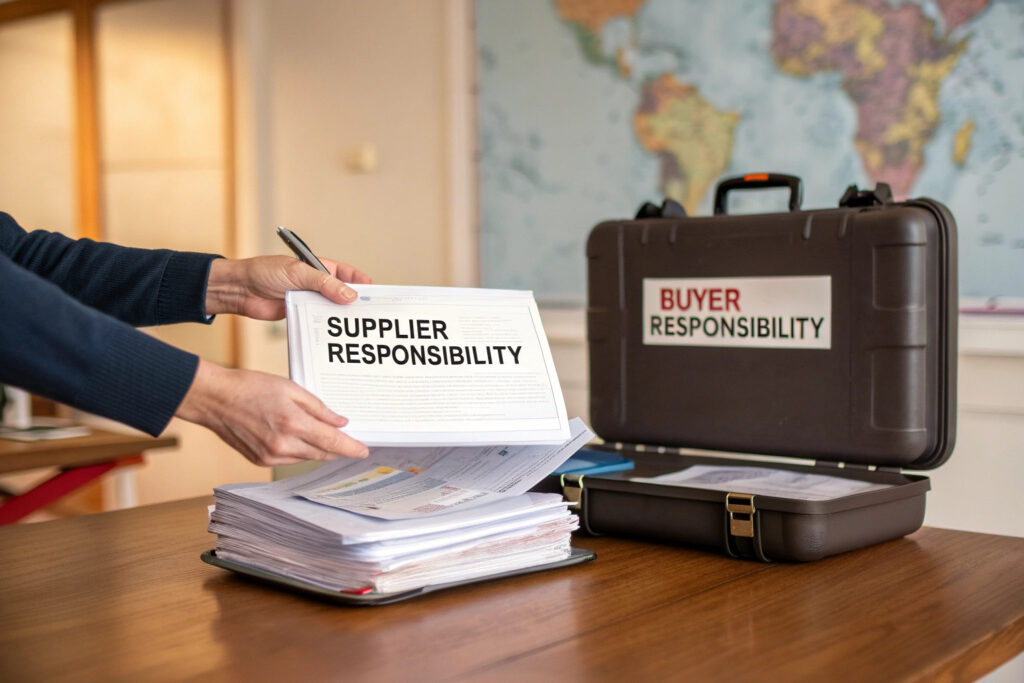
Under DDP, the supplier handles everything. We engage a licensed customs broker at the destination country. We provide the broker with the commercial invoice, the packing list, the bill of lading, and any certificates of origin or compliance certificates required. The broker classifies the goods under the correct Harmonized System code, calculates the duty and tax liability, and files the entry with customs. The broker pays the duties and taxes on our behalf, and we reimburse them. The goods are cleared for import, and we arrange the trucking from the port to your warehouse.
The buyer's only responsibility is to provide any information the broker needs, such as your importer of record number, your tax ID, or your power of attorney authorizing the broker to act on your behalf. Even this can be minimized. We can use our own importer of record in many countries, which means the buyer does not need to be involved in the customs process at all. The goods are delivered to the buyer's door as a domestic shipment, fully cleared. This is the ultimate hands-off importing experience.
What Happens If a Hat Shipment Gets Stuck in Customs Under DDP?
If a shipment gets stuck, the supplier fixes it. The supplier has the contractual obligation to deliver, and the customs delay is an obstacle to that obligation. We contact the broker, identify the reason for the hold, and provide whatever additional documentation or information customs requires. If a physical exam is ordered, we wait and we pay the exam fees and the storage charges. The buyer does not need to make panicked calls to a broker they have never spoken to. They do not need to negotiate with CBP or HMRC.
The value of this risk transfer becomes clearest during a crisis. I had a DDP shipment to the UK held because the Border Force wanted to verify the fiber content labeling on our wool blend caps. The goods sat for two weeks. The storage charges and the exam fee totaled over £600. Under FOB, the buyer would have received that bill and felt frustrated and powerless. Under DDP, we paid it. We had factored a customs exam buffer into our DDP pricing. The buyer received their goods, late but intact, and their cost did not change. The delay was our problem to manage and our relationship to protect.
When Does Paying a DDP Premium Make More Sense Than Managing My Own Freight?
The DDP premium is the difference between the DDP price and the sum of the FOB price plus your estimated self-managed logistics costs. The question is whether that premium buys enough value in terms of reduced risk, reduced administrative labor, and improved forecast accuracy. In my experience working with brands placing orders of 5,000 units or more for seasonal programs, the premium almost always pays for itself in avoided costs and protected margin.
The simplest case for DDP is when the buyer lacks an established import infrastructure. Setting up customs bonds, vetting freight forwarders, learning HTS classification, and building an internal process for duty reconciliation takes time and money. A brand doing two or three large seasonal purchases a year may not have the volume to justify building this capability in-house. The DDP premium is essentially an outsourcing fee for the import function. It is cheaper than hiring a logistics manager.
Another strong case is when the seasonal window is tight. If you are launching a line of summer straw hats for a resort retail program, and the ship window is narrow, any delay at customs kills your sell-through. The DDP supplier has maximum incentive to clear the goods fast because their money is on the line until delivery. A self-managed FOB shipment might sit in customs for an extra four days while the buyer's broker works through a backlog. Under DDP, the supplier's broker is pushing because the supplier is pushing. The supplier relationship with the broker, built on repeated high-volume business, often yields faster clearance.
A third case is currency and tariff uncertainty. If the political environment suggests potential tariff increases, locking in a DDP price transfers that risk to the supplier. We saw this during the U.S.-China trade tensions. Buyers on FOB terms were hit with tariff increases on goods already in production. Buyers on DDP terms had their prices honored. The DDP premium in that environment was an insurance policy against trade policy volatility.
How Do I Calculate Whether a DDP Quote Is Competitive Against My Current FOB Costs?
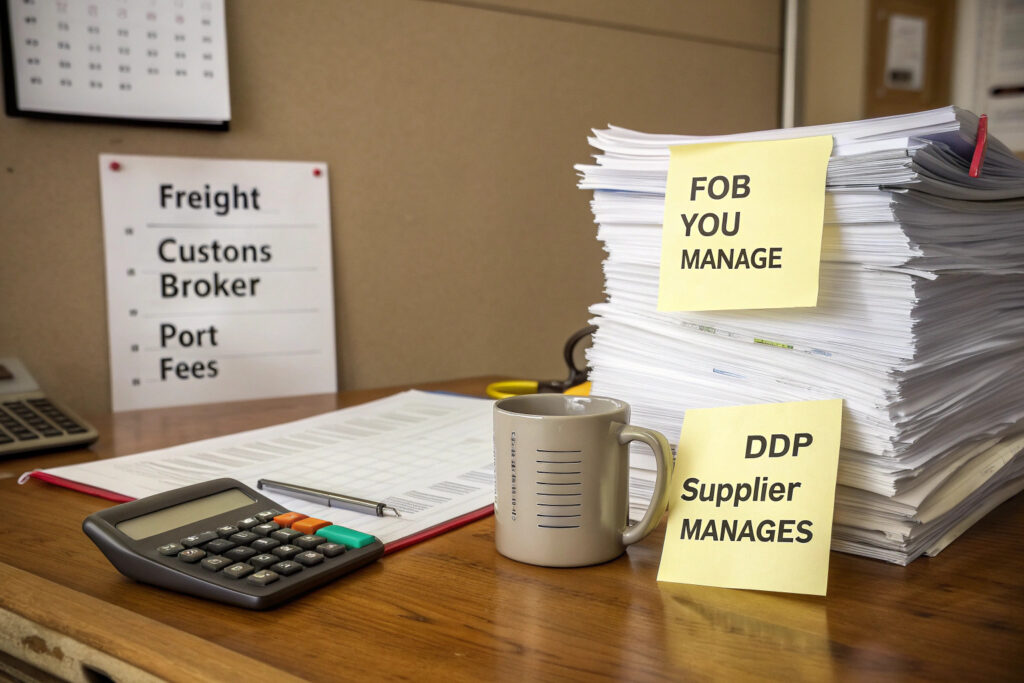
Calculating competitiveness requires an honest total-cost comparison. Most buyers underestimate their FOB landed cost because they forget indirect costs. The direct costs are FOB price, ocean freight, marine insurance, customs bond, brokerage fee, duty, and domestic trucking. Get actual quotes for each line item for your specific shipment size and route.
Then add the indirect costs. What does your staff time cost to manage the three to five separate vendor relationships per shipment? What is the cost of capital for the inventory while it is in transit and you cannot sell it? What is the cost of a stockout if the shipment is delayed a week? What is the cost of markdowns if late arrival means you miss the peak selling window? These are real costs that DDP eliminates or reduces.
Compare the total FOB landed cost including indirects to the DDP quote. If the DDP quote is within 3 to 5 percent of your calculated FOB total, DDP is almost certainly the better financial decision because your FOB calculation is an estimate with upside risk, while the DDP quote is a fixed ceiling with no upside risk. The total cost of ownership framework consistently favors DDP for seasonal programs where timing and cost certainty are critical.
Why Would a Hat Factory Prefer to Ship DDP Rather Than FOB?
Some buyers assume factories prefer FOB because it is less work. That is true for factories that do not have export logistics capabilities. But for a factory like Global-Caps that ships hundreds of containers a year, DDP is actually a competitive advantage. We have the freight buying power, the broker relationships, and the compliance expertise that individual buyers lack. We can buy logistics services cheaper than a buyer buying one container at a time, and we can mark up those services slightly while still delivering a total landed cost lower than the buyer's self-managed FOB cost.
DDP also gives us more control over the customer experience. Under FOB, a buyer might choose a cheap freight forwarder who delays the shipment, and then the buyer blames the factory for late delivery. Under DDP, we control the entire chain. We select reliable carriers and brokers. The delivery experience is consistent. The buyer associates that smooth experience with our factory, not with a random logistics company. DDP allows us to own the entire customer journey from production to doorstep. That control builds loyalty. A buyer who knows our DDP shipments always arrive on the promised date with no surprise bills will keep placing orders. The DDP premium is not just a logistics markup. It is an investment in our brand reputation as a reliable partner.
Conclusion
DDP terms transform the chaotic, multi-variable world of international logistics into a single, predictable line item on your purchase order. For large seasonal hat purchases, where pricing decisions are locked in months before delivery and retail windows are unforgiving, this predictability is not a convenience. It is a competitive necessity. Knowing your exact landed cost per unit allows you to price with confidence, budget with accuracy, and sleep without worrying about what invoice is arriving next.
The risk transfer is comprehensive. Customs clearance problems become the supplier's problem. Freight rate spikes become the supplier's problem. Port congestion and demurrage fees become the supplier's problem. Duty miscalculations become the supplier's problem. You trade a small, known premium for insulation against a large, unknown loss. The supplier who offers DDP is betting on their own logistics competence. They are confident they can manage the chain more efficiently than you can, and they are willing to put their margin on the line to prove it.
At Global-Caps, we have shipped DDP to warehouses across the United States, the United Kingdom, Germany, France, Canada, and Australia. We maintain active customs bonds, established broker partnerships, and annual freight contracts that give our DDP pricing stability and competitiveness. We quote DDP as our standard option because we believe our buyers should focus on selling hats, not managing freight forwarders.
If you are planning a seasonal hat program and want to explore DDP pricing that gives you total landed cost certainty, we can prepare a detailed quote within a few business days. We will need your delivery address, your order quantity, and your target delivery window. Our Business Director Elaine manages our DDP quoting process. She can walk you through the Incoterms, the insurance coverage, and the delivery timeline so you know exactly what you are paying and exactly when your goods will arrive. Contact her at elaine@fumaoclothing.com and let us take the logistics burden off your plate. You design great hats. We will get them to your warehouse. One price. One invoice. No surprises.