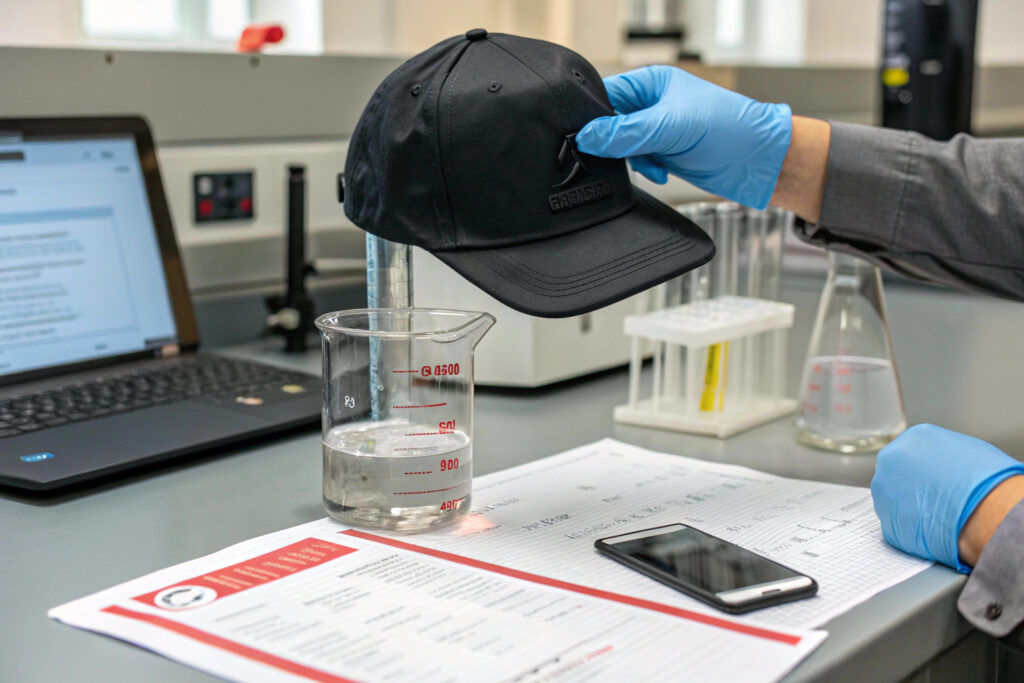
I will never forget the afternoon my phone rang with a compliance officer from a major American department store chain on the other end. His voice was calm but firm. Their third-party lab in Hong Kong had found 1,200 parts per million of DEHP, a restricted phthalate, in the plastic snapback adjuster of our hats. The shipment was already on the water. If we couldn't resolve this within five business days, the entire container would be refused at the port of Long Beach, and we would be liable for the destruction costs, the freight, and the lost retail shelf space. My stomach dropped. But I didn't panic. I had a system for exactly this moment. Over the next 72 hours, we traced the contamination, isolated the bad component, and saved the client relationship. That experience taught me that a failed phthalate test is not the end of your business. It is a stress test of your quality control infrastructure.
If a third-party lab finds trace phthalates in your hat's plastic adjuster, your first response must be containment, not denial. Immediately acknowledge the report. Do not argue with the lab about their testing methodology in your first communication. That makes you look guilty and unprofessional. Instead, request the full test report with the specific phthalate identified, the CAS number, the concentration detected, and the test method used. Common test methods include CPSC-CH-C1001-09.4 in the United States and EN 14372 in Europe. The specific phthalate matters because different regulations have different restriction limits. DEHP, DBP, BBP, DINP, DIDP, and DNOP are the six most commonly restricted phthalates. You need to know exactly which one exceeded the limit and by how much.
Next, you isolate the source. A hat is a multi-component product. The plastic adjuster, the sweatband, the brim insert, the sewing thread, the back mesh, and the front buckram could all theoretically contain phthalates. But the plastic adjuster is almost always the culprit. Phthalates are plasticizers. They make rigid PVC plastic soft and flexible. If your adjuster is made from flexible PVC rather than solid polypropylene or polyethylene, it almost certainly contains phthalates unless specifically formulated without them. You need to trace the batch number of the adjuster back to your raw material purchase order and contact your plastic component supplier immediately.
What Immediate Steps Should I Take When a Lab Report Shows Phthalates in My Hat Components?
The moment that lab report lands in your inbox, a clock starts ticking. Your customer's compliance team is already flagging your shipment in their system. Every hour of delay increases the risk that your goods get quarantined, refused, or publicly flagged in a regulatory database. The first 24 hours are critical. I have managed over a dozen phthalate-related incidents in my career, and the pattern for a successful resolution is always the same. Act fast, act transparently, and act surgically.
The very first step is to stop the bleeding. Contact your freight forwarder and ask if the container can be held at a bonded warehouse or a CFS, container freight station, near the port of entry rather than delivered directly to the retailer's distribution center. This gives you physical access to the goods for rework without contaminating the customer's clean inventory. Simultaneously, inform your customer's quality assurance contact in writing that you have received the report, you take it seriously, and you are launching an immediate root cause investigation. Do not make promises about the outcome yet. Just confirm receipt and action.
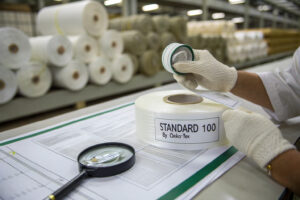
Then you begin the forensic trace. Pull your incoming quality control records for the plastic adjuster batch used in that specific purchase order. A responsible factory keeps a retain sample of every plastic component batch for at least 12 months. Retrieve that retain sample. Send it to an accredited third-party lab yourself, preferably the same lab that flagged the issue, for confirmatory testing. If your retain sample tests clean but the finished hat tests dirty, the contamination happened during assembly, perhaps from a lubricant or a contaminated work surface. If your retain sample tests dirty as well, your component supplier shipped you non-compliant material. Either way, you now have data to act on.

How Do I Isolate and Document the Contaminated Component Batch for My Supplier?
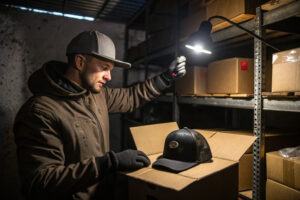
Isolation is a physical and a procedural process. Physically, you need to quarantine every unit of finished goods that contains the suspect adjuster batch. In our factory, we use a lot traceability system that links every finished hat carton back to the specific incoming plastic component delivery. The plastic adjuster supplier delivers in labeled bags with a production date and batch code. Our incoming warehouse team logs that batch code into our ERP system against the raw material receipt number. When the adjusters are issued to the production line, the batch code is recorded on the production work order.
If your factory does not have this traceability system, you will be forced to quarantine the entire shipment, not just the bad batch. That is an expensive lesson. With proper traceability, you can isolate only the affected cartons. Document everything with photographs. Photograph the original packaging from the plastic component supplier showing the batch code. Photograph the retain sample. Photograph the failed lab report. Compile a single PDF incident file that tells the story: this batch of adjusters, from this supplier, delivered on this date, used in these POs, tested positive for this phthalate at this concentration. Send this file to your plastic component supplier along with a formal non-conformance report. Demand a written explanation and a certificate of analysis for the replacement material within 48 hours.
Why Should I Request a Retest from a Different Accredited Lab Before Disposing Inventory?
A single lab result can be wrong. Labs make mistakes. Samples get cross-contaminated during preparation, instruments drift out of calibration, and data entry errors happen. I have personally seen a lab report show a phthalate violation that turned out to be a phthalate from the plastic bag the sample was shipped in, not the hat adjuster itself. Before you commit to the enormous cost of destroying a container of goods or reworking thousands of hats, you need a confirmatory test from a second independent lab.
Choose a lab with equal or greater accreditation. If the first lab was an Asian branch of a global testing company, send your confirmatory sample to their European or American headquarters lab. This eliminates any localized procedural inconsistencies. Use the exact same test method so the results are comparable. If the second lab confirms the violation with a similar concentration, you have a validated problem and must proceed with rework or destruction. If the second lab reports a clean result, you have a basis to challenge the first finding with your customer. I always recommend ISO 17025 accredited labs for this type of dispute testing. Their accreditation provides a recognized standard of competence. Your customer's compliance team will accept a result from an ISO 17025 lab far more readily than from an in-house test or an unaccredited local lab.
Where Can I Find Phthalate-Free Plastic Adjusters That Comply With REACH and CPSIA?
When a phthalate failure happens, you need a compliant replacement component source fast. The global supply chain for plastic hat adjusters is concentrated in a few manufacturing clusters in China, primarily in Zhejiang and Guangdong provinces. The good news is that phthalate-free alternatives are widely available and often cheaper than the problematic PVC versions. The bad news is that many small component suppliers will tell you their product is "phthalate-free" without actually having test data to prove it. You cannot take their word. You must verify.
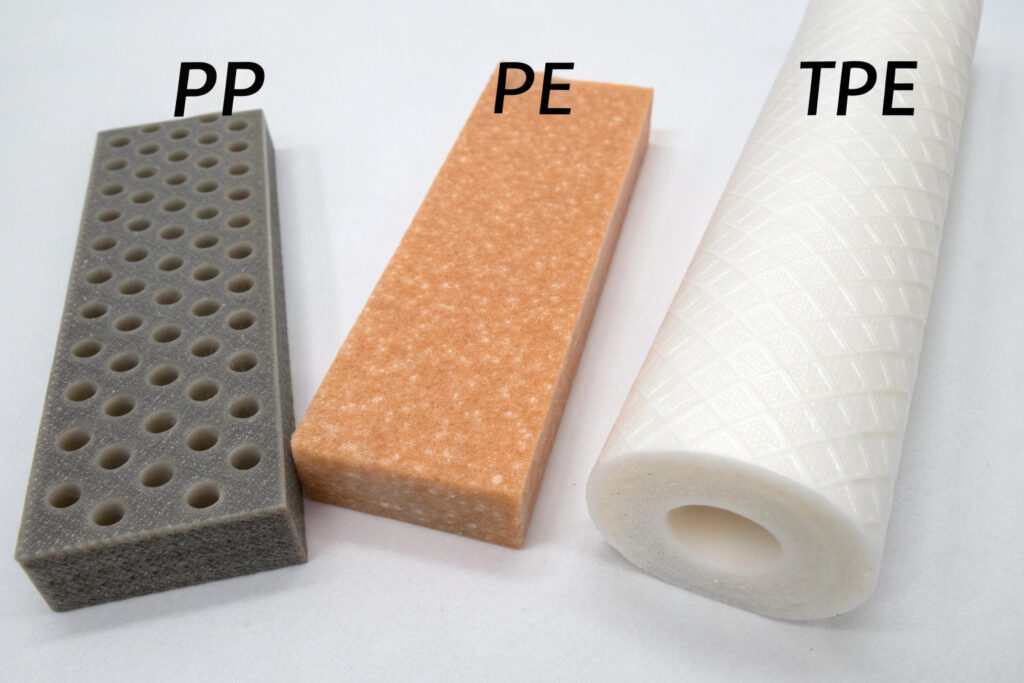
The first compliant material option is polypropylene, abbreviated as PP. PP is naturally rigid and does not require plasticizer additives to achieve flexibility. Because no plasticizer is added, there is no phthalate risk at all. PP is also lightweight, chemically inert, and recyclable. The snapback posts made from PP have a satisfying, crisp click when they engage. The second option is polyethylene, PE, which offers similar inert properties with slightly more flexibility. The third option, and the one growing fastest in popularity, is thermoplastic elastomer, TPE. TPE provides a soft, rubbery feel similar to flexible PVC but achieves that flexibility through a physical polymer blend, not through phthalate plasticizer chemicals. TPE can be formulated to be completely phthalate-free and still feel premium to the touch.
When you contact a new adjuster supplier, do not ask them simply "Is your product phthalate-free?" They will always say yes. Instead, ask for a third-party lab test report dated within the last six months that specifically tests for the six restricted phthalates under CPSIA or REACH. Ask for the lab name and report number. Verify the report with the lab directly if the order volume justifies the effort. Require a new test report for every production batch you order, not just a one-time certificate. Chemical formulations can drift between production lots if the supplier changes their raw material source without informing you.
How Do Polypropylene Adjusters Compare to PVC in Durability and Cost?
Polypropylene adjusters are, in my experience, superior to PVC adjusters in every functional metric except one: softness. PP is a harder, stiffer plastic. When a customer snaps a PP adjuster closed, they feel a sharp, precise engagement. PVC feels mushier, with a softer, more rubbery click. This softness is the only reason PVC was ever used in hat adjusters. Some brands mistakenly associate the soft feel with higher quality. But that softness comes directly from phthalates, the very chemicals that are now heavily restricted.
In durability testing, PP outperforms PVC. PVC plasticizers migrate over time. The adjuster slowly becomes brittle as the phthalates leach out into the air or onto the wearer's skin. After a year of use, a PVC adjuster can crack when flexed. PP does not have this aging problem. It remains dimensionally stable and flex-resistant for the functional life of the hat. In cost comparison, PP is typically the same price or slightly cheaper than PVC. The raw resin cost for PP is lower, and the injection molding cycle time is faster because PP cools and solidifies more quickly in the mold. For a standard seven-post snapback adjuster, the piece price difference between PP and PVC is negligible, often less than half a US cent per unit. There is no cost excuse to use PVC anymore. The liability risk far outweighs any imaginary savings.
How Can I Verify That a New Adjuster Supplier's Compliance Certificates Are Genuine?
Verification is where most importers fail. They receive a PDF certificate from a supplier, file it away, and consider the job done. I have collected a folder over the years of falsified lab reports. Some are photoshopped copies of old reports with the date changed. Some are reports for a different product entirely, with the product name cropped out. Some are from testing labs that do not actually exist. You need a verification protocol.
First, check the lab's accreditation. Look up the lab name on the accrediting body's website. For CPSIA testing, the lab must be accredited to CPSC standards. The CPSC maintains a public list of accepted third-party labs. If the lab on the certificate is not on that list, the certificate is worthless for U.S. imports. For REACH compliance, check if the lab is ISO 17025 accredited by a recognized national body like UKAS, DAkkS, or ANAB.
Second, call the lab. Every legitimate test report has a unique report number and a contact phone number for the lab. Pick up the phone and call that number. Say you are verifying the authenticity of a test report you received from a potential supplier. Give them the report number and the product description. The lab will confirm or deny whether they issued that report for that product on that date. Most labs will do this verification as a free service. If the supplier refuses to provide the report number or if the phone number on the report does not connect to a real lab, you have caught a fraudulent certificate. Do not do business with that supplier.
How Can I Rework an Existing Shipment of Hats That Failed a Phthalate Test?
A failed phthalate test on a shipment already at sea or in a warehouse is a logistical crisis, but it is a solvable one. The solution is called rework. Rework means opening every single hat, removing the non-compliant plastic adjuster, and installing a certified compliant replacement. This is labor-intensive, expensive, and stressful. But it is vastly cheaper than destroying the entire shipment and remanufacturing from scratch. I have managed rework operations in bonded warehouses in Los Angeles, Rotterdam, and at our own factory in Zhejiang. The key to success is detailed planning and rigorous segregation of compliant and non-compliant components.
The first decision is where to perform the rework. If the goods are still at your factory or at a forwarder's warehouse in China, rework there is the cheapest option. Labor costs are lower, and you have your trained production staff available. If the goods have already arrived at the destination port, you will need to hire a third-party rework service at the bonded warehouse or CFS. These services exist in every major port city and specialize in exactly this type of product salvage operation. They charge per-unit rates that include opening, component removal, new component installation, re-inspection, and repacking.
The rework process itself is straightforward for a snapback adjuster. A skilled sewer cuts the threads holding the adjuster to the hat, removes the old adjuster, positions the new compliant adjuster, and sews it into place using the original stitch holes. This is critical. You must use the original needle penetration points to avoid creating visible stitch marks that would make the hat look damaged. The removed non-compliant adjusters must be collected, counted, and sealed in labeled waste bags. These bags must be disposed of according to local hazardous waste regulations for phthalate-containing plastics. You cannot simply throw them in the general trash. Documentation of proper disposal is part of your corrective action report to the customer.

What Is the Step-by-Step Process for a Phthalate Rework in a Bonded Warehouse?
A bonded warehouse rework is a tightly supervised operation. You cannot just send a few temp workers in with scissors. The warehouse operator, the customs authority, and your customer all have requirements. Here is the sequence I have used successfully multiple times.
First, you file a warehouse entry amendment with customs, declaring your intent to manipulate the goods under bond. This allows the goods to remain in the bonded area without duty payment while rework occurs. Second, you submit a detailed rework procedure document to the warehouse operator and your customer for approval. This document specifies the exact unit count, the work steps, the tooling required, the quality checkpoints, and the waste disposal method. Third, you ship the compliant replacement adjusters to the warehouse ahead of time. Ship them with full compliance documentation so the warehouse can verify they are receiving the correct parts. Fourth, you send a supervisor from your company or hire a third-party inspection agency to be physically present during the rework. This person spot-checks the work, counts the removed non-compliant parts, and verifies that no cross-contamination occurs. Fifth, after rework, you commission a final third-party inspection of the finished goods, including a new phthalate spot test on the replaced adjusters. Only when that final test is clean do you release the shipment from the warehouse.
How Do I Ensure the Replacement Adjuster Matches the Original Color and Stitch Pattern?
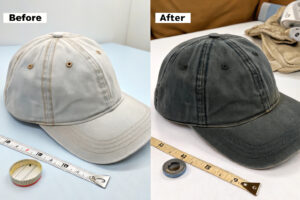
Color mismatch is a subtle but serious problem in rework. A hat originally made with a soft cream-colored PVC adjuster cannot be reworked with a stark white PP adjuster. The difference will be visible, and the customer will rightfully complain that the reworked goods look like seconds or repaired defects. You need to source a replacement adjuster that matches the original color under multiple lighting conditions.
We use a spectrophotometer in our factory to read the Lab color values of the original adjuster. Then we send those values to our compliant adjuster supplier and require a color match within a Delta E of 1.0 or less. A Delta E under 1.0 is imperceptible to the human eye. We also request a pre-production sample of the replacement adjuster sewn into a scrap hat crown for a visual approval under daylight, fluorescent, and LED lighting. Metamerism is a real risk. Two materials can match under one light source but look completely different under another. For the stitch pattern, our rework sewers use a seam gauge preset to the original stitch length. They follow the original stitch path precisely. If the original adjuster was attached with a box stitch with four rows, the replacement must be attached with an identical box stitch with four rows of identical SPI, stitches per inch. We keep photographic records of the original stitching from the approved reference sample and compare every reworked unit against that reference.
What Preventative Quality Control System Stops Phthalate Contamination Before Production?
The most expensive phthalate failure is the one you never catch before it leaves your factory. I decided years ago that I would rather invest in prevention than pay for crisis rework. A preventative quality control system for phthalates is built on three pillars: supplier qualification, incoming material screening, and production lot isolation.
Supplier qualification is the first gate. Before we ever place a purchase order with a new plastic component supplier, we require a full material disclosure. They must tell us exactly what polymer they use, what additives are in the formulation, and which factory in their supply chain produces the raw resin pellets. We do not accept vague answers like "environmentally friendly PVC." That phrase means nothing legally. We require the specific chemical abstract service number for the polymer and a negative phthalate test report from an ISO 17025 lab for that specific formulation. If a supplier cannot or will not provide this documentation, we do not onboard them. There are plenty of compliant suppliers available. No supplier is worth the risk of a container rejection.
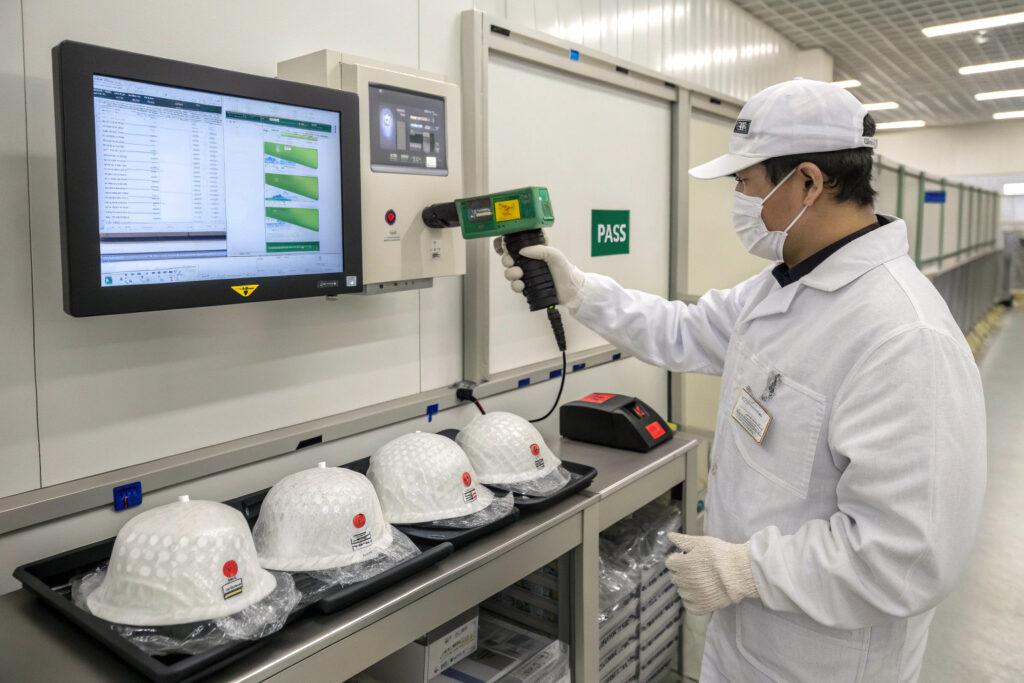
Incoming material screening is the second gate. We invested in a handheld XRF, X-ray fluorescence, analyzer for our incoming QC department. This device is not as sensitive as a full GC-MS lab test, but it can screen for total chlorine and total bromine content in seconds. PVC contains chlorine. If our XRF gun detects high chlorine in a plastic adjuster that is supposed to be PP or TPE, we know immediately that the material is suspect. We flag the batch, quarantine it, and send a sample to our external lab for full phthalate quantification. This rapid screening catches mislabeled materials before they ever reach the production floor. It costs a few thousand dollars for the equipment, but one prevented container rejection pays for it a hundred times over.
How Does an Incoming Material Traceability System Prevent Phthalate Cross-Contamination?
Traceability is the digital backbone of phthalate prevention. Without it, a contaminated batch of adjusters gets mixed into your general inventory, and you cannot tell which finished hats are affected. You end up having to test everything, which is slow and expensive. A proper traceability system assigns a unique batch code to every incoming delivery of plastic components. This code stays with the components through warehousing, issue to the production line, and installation into the finished hat.
Our ERP system links the incoming batch code to the production work order. When a sewing line operator collects a bag of adjusters from the component supermarket, they scan the bag's barcode. The system records that this specific batch of adjusters was used on this specific production order for this specific customer. If a lab test later finds a phthalate in that batch, we can instantly pull up every PO that used it. We can email those customers proactively, before they ever test the goods themselves. That proactive notification builds enormous trust. It transforms you from a supplier that got caught into a partner that caught the problem and owned it. The traceability data also allows you to return to the component supplier with an irrefutable claim. You have the batch code, the date, and the lab result all linked. There is no room for the supplier to argue that it was someone else's material.
Why Should I Require a Pre-Production Phthalate Test Before Bulk Hat Manufacturing?
A pre-production test is the final safety net. You have qualified your supplier. You have screened the incoming raw material with XRF. Now, you sew one complete hat using all the actual production components. Send that hat to the lab for a full phthalate screen. This tests not just the plastic adjuster in isolation, but the assembled product. It catches cross-contamination from other components or from the sewing process itself. A contaminated cutting table, a plastic storage bin that contains phthalates, or a sewing machine lubricant can theoretically transfer phthalates to the hat during manufacturing. A pre-production test of the finished assembly catches all of these vectors.
The cost of a pre-production phthalate test is modest, typically a few hundred dollars. The peace of mind it provides is priceless. If the pre-production sample passes, you proceed to bulk with confidence. If it fails, you catch the problem before you have manufactured 10,000 units of contaminated inventory. I require a pre-production phthalate test for every new customer order, even if we have used the same components before. Formulations change. Supplier raw material sources change. A test from six months ago does not guarantee that today's production is clean. The pre-production test is a snapshot that validates your entire preventative system is working correctly at this moment for this batch. In our factory, we treat it as a mandatory gate in the quality control plan, not an optional extra for nervous buyers.
Conclusion
A trace phthalate finding in your hat's plastic adjuster is a serious business event, but it is not a catastrophe if you manage it correctly. The pattern of a successful response is always the same: contain the affected inventory immediately, confirm the result with a second accredited lab, trace the root cause back to the specific component batch, and implement a corrective action that prevents recurrence. Whether you need to source a compliant PP or TPE adjuster, rework a shipment in a bonded warehouse, or build a preventative incoming screening system, the solutions exist and are cost-effective.
The days of claiming ignorance about phthalate regulations are over. Retailers have zero tolerance. Their lab partners are testing randomly and frequently. The only viable strategy for a headwear factory or brand is to build phthalate prevention into the core of your quality management system. This means supplier material disclosures, XRF screening at incoming, batch-level traceability through production, and pre-production finished product testing. The investment is small compared to the cost of a destroyed container, a lost retail contract, or a public compliance violation notice.
At Global-Caps, we have lived through the painful transition from flexible PVC adjusters to phthalate-free polypropylene and TPE alternatives. We have the supplier relationships, the testing protocols, and the traceability systems already in place. We do not wait for a lab failure to think about chemical compliance. It is baked into how we source and how we manufacture. If you are currently managing a phthalate issue in your headwear supply chain, or if you want to redesign your product to eliminate this risk before it becomes a crisis, our team can guide you through it step by step.
For immediate support on a compliance incident or to discuss switching your production to certified phthalate-free plastic components, contact our Business Director Elaine. She has handled these exact situations with major retailers and can coordinate the testing, rework, and preventative measures you need. Reach her at elaine@fumaoclothing.com. We will help you get your shipment cleared, your customer reassured, and your quality system strengthened against future risks.