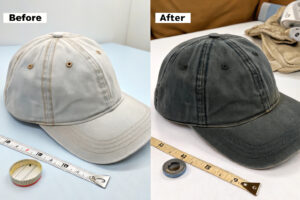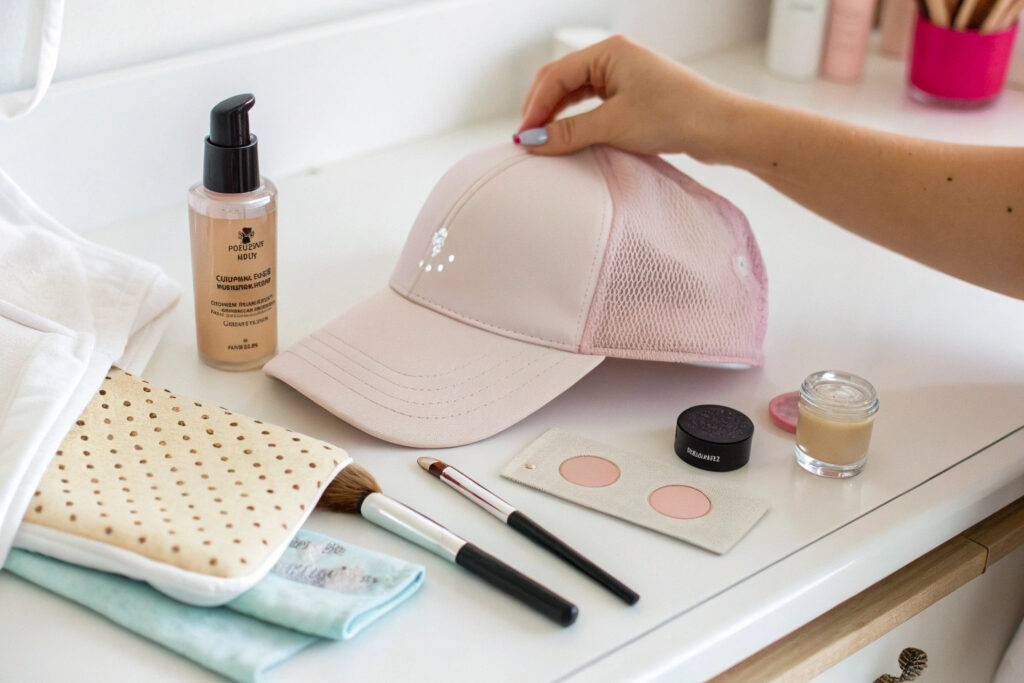
Your women's fashion cap is a hit. The silhouette is perfect. The color palette is on-trend. Influencers are posting photos wearing it. Then the reviews start trickling in. "Cute cap, but after one wear, the inside is smeared with foundation and bronzer." "I can't get the makeup stain out of the sweatband." "I love it, but it looks dirty after two uses." The cap that looked flawless on the rack now has a permanent, ugly stain on the inside front panel. Your customer is embarrassed to take it off in public because the interior tells a different story than the exterior. Returns are increasing. Your brand's quality perception is being silently eroded by a strip of fabric that was an afterthought in your design process.
The sweatband is the hardest-working, least-glamorous component of a cap. On a women's fashion cap, it has a specific, demanding job: it must sit directly against the forehead, often over a layer of foundation, concealer, or sunscreen, and it must not absorb, transfer, or display the cosmetic products it contacts. It must also be soft against the skin, breathable, and washable. I run Global-Caps, and I have engineered sweatbands for women's fashion brands that solve this exact problem. In this article, I will show you how to specify a makeup-resistant sweatband at the material, construction, and color level so that your caps stay looking clean inside and out, wear after wear.
What Material Properties Make a Sweatband Resistant to Makeup Absorption?
Makeup is a complex cocktail of oils, waxes, silicones, pigments, and water. Foundation and concealer are designed to adhere to skin. They will also adhere aggressively to absorbent, textured fabrics. A standard cotton twill sweatband is essentially a cosmetic blotting paper. It is hydrophilic. It absorbs the oils and water from the makeup. The pigments, iron oxides and titanium dioxide, become mechanically trapped in the cotton fibers. Once trapped, they are extremely difficult to remove with normal washing. The stain is a combination of oil binding and pigment entrapment.
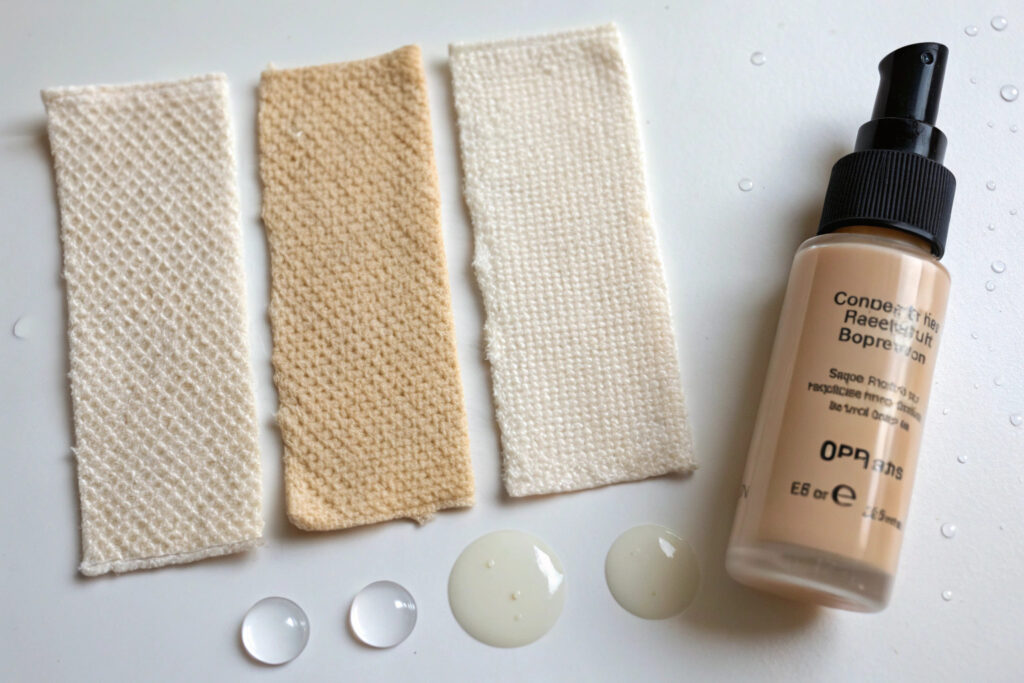
The first principle of a makeup-resistant sweatband is hydrophobicity. The material must repel, not absorb, the liquid and oil components of makeup. Polyester microfiber fabrics are inherently hydrophobic. They have a tight, smooth surface structure with very small interstitial spaces between fibers. The capillary action that pulls liquid into cotton is greatly reduced. A liquid foundation droplet placed on a high-quality polyester microfiber will bead on the surface. It can be blotted away with a tissue without leaving a significant stain. However, polyester alone is not enough. The polyester microfiber must be specifically finished for moisture management. A hydrophilic wicking finish will actually increase makeup absorption. The finish should be durable water repellent, a fluorocarbon-free DWR treatment, or the fiber should be inherently hydrophobic, such as a polyester with a modified cross-section.
The second principle is surface smoothness. A rough, napped, or brushed surface provides mechanical grip for pigment particles. The sweatband surface should be as flat and smooth as possible. A tightly woven microfiber with a satin or calendared finish has a smooth, almost slick hand feel. Foundation cannot get a mechanical grip on this surface. It sits on top and can be wiped away. The third principle is color. The sweatband should be dark or strategically colored. A white sweatband will show every trace of makeup, even if the material is repellant. A black, charcoal, or dark navy sweatband will visually mask any minor residue that does adhere. The color choice is a crucial secondary defense.
How Does a Polyester Microfiber Sweatband Compare to Traditional Cotton?
Traditional cotton twill sweatbands are the industry default. They are inexpensive, soft, absorbent, and comfortable. They are excellent for athletic caps where the primary function is absorbing sweat. For a women's fashion cap worn with makeup, that absorbency is a liability. Cotton loves to hold onto oil-based stains. Every makeup wear is a permanent addition to the sweatband's color.
Polyester microfiber, in a fine denier with a dense weave, is the functional opposite. It is non-absorbent, quick-drying, and stain-repellent. The hand feel can be engineered to be very soft, comparable to a brushed cotton. A suede-like microfiber, produced by splitting and brushing the fibers, provides a luxurious, soft touch against the forehead while maintaining its hydrophobic properties. The cost is moderately higher than basic cotton, but the performance difference is absolute. For a premium women's fashion cap, the upgrade is almost mandatory. I have guided dozens of clients through this material transition. The initial concern is usually about comfort. The feedback, once they feel a properly finished microfiber sweatband, is that it is softer and cooler against the skin than the cotton they were using.
What Role Does a Moisture Barrier Membrane Play?
For the ultimate makeup protection, a thin moisture barrier membrane can be laminated to the back of the sweatband fabric or inserted as a separate layer between the sweatband and the cap front panel. This membrane is typically a breathable thermoplastic polyurethane film. It is waterproof and oilproof. Makeup, sweat, and skin oils cannot penetrate through the sweatband into the cap's front panel fabric.
This is a particularly important detail. Even if the sweatband surface repels makeup, the oils and moisture from prolonged wear can migrate through the sweatband into the cap fabric. This causes a ghost stain on the outside of the cap, a darkened, greasy-looking patch on the front panel that is visible to everyone. The barrier membrane prevents this through-migration. The stain stays on the sweatband surface, where it can be wiped away. The cap structure remains pristine. I recommend a moisture barrier for any light-colored fashion cap, such as pastel pink, cream, or white, where through-migration stains would be highly visible.
What Construction Techniques Keep the Sweatband Clean and Comfortable?
The material is the foundation, but the construction is what makes the sweatband perform as a system. A poorly attached sweatband can negate the benefits of the best material. The construction details to specify include the seam type, the fold and finish, the attachment method, and the integration of any additional functional layers. The sweatband is not just a strip of fabric sewn into the hat. It is an engineered interface between the cap and the wearer.
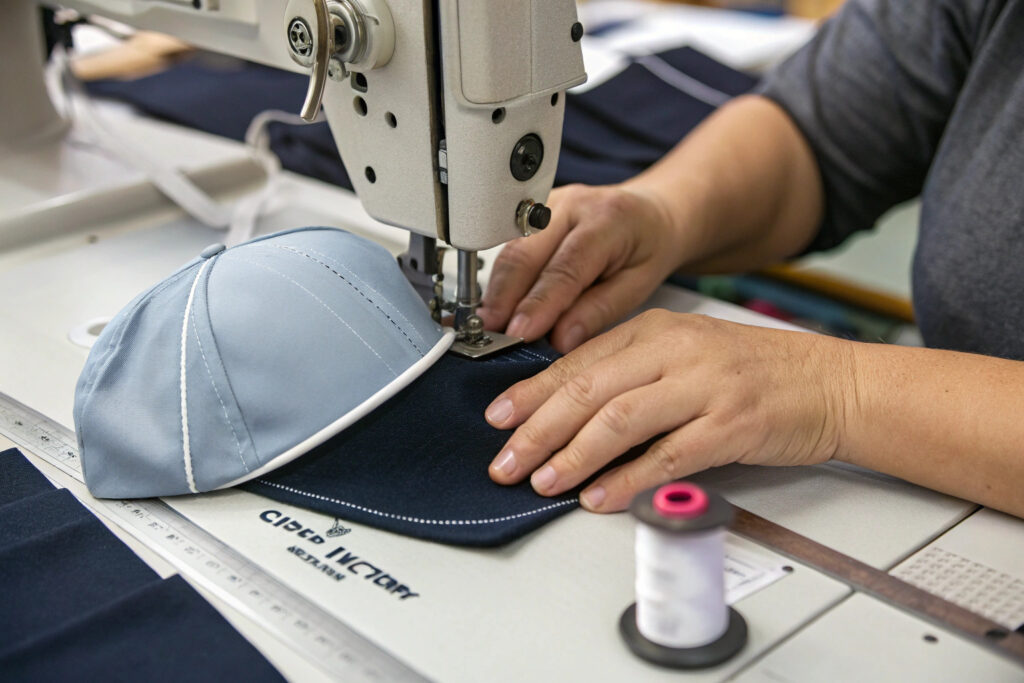
The seam that attaches the sweatband to the cap crown must be a clean-finished seam that does not create a ridge or a rough edge against the forehead. A folded and top-stitched application is standard. The sweatband fabric is folded in half lengthwise, encasing the raw edge, and then sewn to the cap with one or two rows of stitching. This creates a smooth, rounded edge that sits comfortably against the skin. No raw fabric edges should contact the forehead. Raw edges fray, absorb more makeup, and feel scratchy. The fold should be consistent in width along the entire circumference of the cap. A varying fold width creates pressure points and uneven wear patterns on the makeup.
The sweatband ends, where the band meets at the back of the cap, are a critical detail. A bulky join at the center back seam will dig into the forehead or the back of the head, depending on how the cap is worn. The join should be a flat, smooth butt join or a neatly overlapped and top-stitched join with no hard lump. This is a small detail that a rushed factory will overlook. A quality factory will get it right. The sweatband label, the brand or care label sewn onto the sweatband, must also be considered. A stiff, scratchy label sewn with polyester thread onto a soft sweatband is an irritation point. I recommend printed label information directly onto the sweatband fabric, or a very soft, thin woven label with the edges folded under to eliminate any scratchy perimeter.
How Should the Sweatband Edge Be Finished to Prevent Makeup Wicking?
The cut edge of the sweatband, the edge that is not folded, is a potential wicking point. If this edge is left raw, or if it is finished with a simple overlock stitch, the capillary channels between the yarns will wick makeup and skin oils up into the sweatband from the edge. This creates a creeping stain line along the bottom edge of the sweatband, even if the main surface is clean.
The edge finish should be a turned and stitched hem, or the sweatband should be cut from a fabric that is laser-cut to seal the edge. A laser-cut edge on polyester microfiber melts the fibers together, creating a sealed, smooth edge that cannot fray or wick. This is a premium finish that is worth the incremental cost. If the sweatband is folded over and the folded edge is the exposed edge, the fold itself provides the seal. The raw edge is concealed inside the fold. This is the most common and cost-effective construction. The key specification is that the fold is crisp and permanent. A fold that relaxes and opens after washing exposes the raw edge.
How Can You Integrate a Non-Slip Feature Without Compromising Stain Resistance?
A women's fashion cap is often worn on styled hair, which is smooth and slippery. The cap needs to stay in place. A traditional solution is a silicone grip strip applied to the inside of the sweatband. The concern is that the silicone strip could absorb makeup oils or discolor over time. A high-quality, fully cured silicone strip is non-porous and will not absorb oils. It can be wiped clean.
The silicone strip should be applied as a thin, continuous bead or a printed pattern on the inside face of the sweatband, not as a thick, bulky tape. The placement should be at the center front, where it contacts the forehead, and optionally at the sides. The color of the silicone should match the sweatband color so that any visible edge is unobtrusive. I recommend a clear or tone-on-tone silicone print. It provides grip without being visually obvious. The combination of a hydrophobic sweatband fabric and a non-porous silicone grip creates a makeup-resistant, stay-put system that performs beautifully.
What Color and Aesthetic Specifications Minimize the Visible Impact of Makeup?
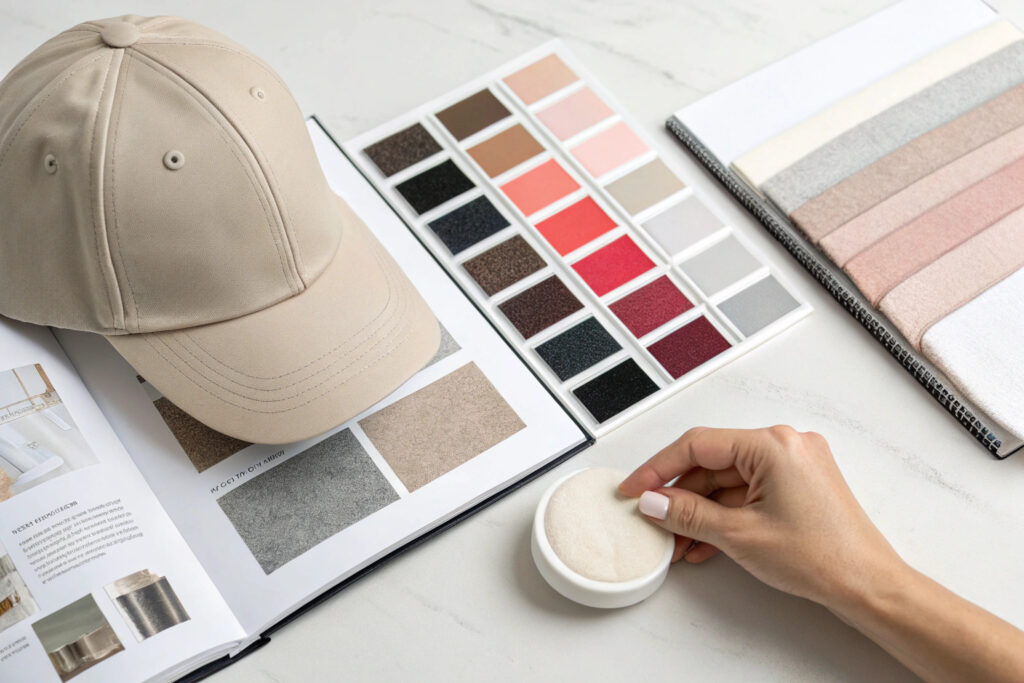
The color of the sweatband is the second line of defense after the material. A perfectly makeup-repellent sweatband may still show some residue over time, especially if the wearer applies a heavy, full-coverage foundation. The color of the sweatband determines whether that residue is invisible or glaringly obvious. The rule is simple: the sweatband should be a dark, saturated color that visually masks the common pigments in foundation and concealer.
White and cream sweatbands are the worst choice for a women's fashion cap. Every trace of makeup, skin oil, and sweat will show as a yellow-brown stain. The cap looks dirty after one or two wears, even if the sweatband material is technically stain-repellent. Light pastel sweatbands, blush pink, baby blue, lavender, are almost as problematic. The stains contrast with the light background. A dark sweatband, black, charcoal, espresso brown, deep navy, is the most practical choice. The pigments in foundation, even lighter shades, will not visibly contrast with a dark background. The sweatband looks clean wear after wear.
However, fashion is not always practical. Some designs require a light sweatband to match a light cap interior or to achieve a specific aesthetic. In these cases, the material and construction specifications become even more critical. A light sweatband must have the maximum possible hydrophobic and oil-repellent properties. It must have a moisture barrier to prevent through-migration. It should be removable or washable, perhaps attached with a Velcro strip so the consumer can take it out and wash it separately. I also recommend including a care card with the cap that explains how to wipe the sweatband clean with a makeup remover wipe or a damp cloth. This consumer education turns a potential complaint into a brand engagement moment. "We designed this cap with a special cleanable sweatband. Here is how to keep it looking fresh."
Should the Sweatband Match the Cap Color or Be a Contrast Feature?
The traditional rule in headwear manufacturing is that the sweatband should match the cap color or be a standard black. This rule was driven by inventory efficiency, not by performance. A fashion brand can choose to make the sweatband a deliberate contrast feature. A cap with a light exterior and a dark interior is a common and accepted design choice. It signals that the brand has thought about the practical user experience.
I advise my clients to select a dark sweatband as the default for women's fashion caps. If the cap exterior is a light color, the dark interior is a functional design element. If a light sweatband is absolutely required for aesthetic reasons, we have a serious conversation about the trade-off and we implement every technical countermeasure available. The specification should be an active, intentional choice, not a default to "whatever white sweatband material is on the shelf."
How Can Printed Branding on the Sweatband Be Executed Without Compromising Performance?
A printed logo or brand name on the sweatband is a premium detail that adds perceived value. It also introduces a potential performance issue. The ink used for printing must be as resistant to makeup oils as the sweatband fabric. A standard plastisol ink can absorb oils and become tacky or discolored. The ink chemistry must be specified. A silicone-based ink for a silicone grip print, or a water-based, cure-bonded ink that is oil-resistant, is appropriate.
The print should be located away from the center front, which is the highest makeup contact zone. Place the print at the side or the back of the sweatband. This preserves the clean performance at the forehead while still providing the branding moment when the cap is taken off. These small, thoughtful placement decisions are what differentiate a well-designed women's fashion cap from a unisex athletic cap with a fashion color applied.
How Can I Test and Validate a Sweatband's Makeup Resistance Before Production?
You do not have to wait for customer reviews to find out if your sweatband resists makeup. You can perform simple, repeatable tests on a pre-production sample in your office. These tests simulate real-world wear and will expose material failures before you commit to a 10,000-piece order. The tests are low-tech but highly predictive.
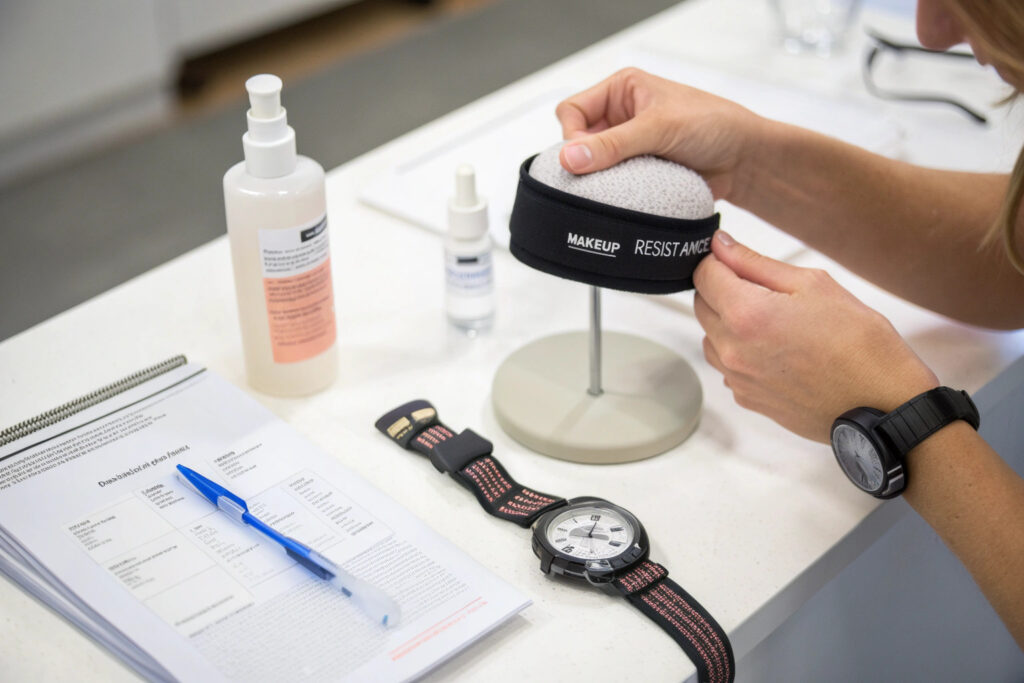
Test One is the direct application and blot test. Apply a pea-sized amount of a standard liquid foundation to the center front of the sweatband using a makeup sponge. Use a foundation that your target customer is likely to wear. Let it sit for 30 minutes, simulating a commute or a coffee date. Take a clean, dry tissue and blot the area firmly. Do not rub. Assess the residue. A good sweatband will release most of the foundation onto the tissue, leaving minimal visible stain. A bad sweatband will hold the foundation, and blotting will remove only a small fraction. Test Two is the wear simulation wipe test. Rub the foundation-treated area with a dry microfiber cloth in a circular motion for 10 seconds, simulating the wiping a wearer might do with their finger or a sleeve. Assess whether the foundation smears and spreads or lifts away cleanly.
Test Three is the through-migration test. Apply foundation to the sweatband as in Test One. Place a piece of white blotting paper on the outside of the cap front panel, directly over the treated area. Apply a gentle, even pressure with a weight, a book, for one hour. Remove the blotting paper and check for any oil or color transfer onto the paper. Any transfer indicates that the sweatband and cap fabric assembly is not adequately preventing through-migration. This is a critical test for light-colored caps. Test Four is the wash test. After performing the application and blot tests, wash the cap according to the care label instructions. Air dry. Assess the residual stain. A good sweatband should show no visible stain after washing. A poor sweatband will retain a shadow stain, indicating the makeup has permanently bonded with the fibers.
How Can I Standardize Makeup Testing Across Different Suppliers?
If you are evaluating multiple suppliers, you need a standardized test protocol so you can compare results objectively. Create a simple test kit. Include a specific brand and shade of foundation, say a medium-coverage liquid foundation in a medium beige shade that is widely available. Include a standardized blotting paper. Include a test procedure document with photos of each step. Send this kit to each supplier and require them to perform the test on video, with no edits, and send you the unedited video and the physical test sample.
This levels the playing field. You are not comparing the supplier's claims. You are comparing their physical test results under identical conditions. A supplier that is confident in their sweatband engineering will perform the test willingly and transparently. A supplier that makes excuses about the test being unfair or unnecessary is revealing that their sweatband will likely fail in real-world use. I have performed these standardized makeup tests for clients and provided the video documentation as part of the sample approval process.
What Are the Care Labeling Requirements for Makeup-Resistant Sweatbands?
Your carefully engineered makeup-resistant sweatband can be undermined by incorrect consumer care. If the consumer washes the cap in hot water with a harsh detergent that strips the DWR finish, the performance will degrade. The care label must provide clear, specific instructions. "Wipe sweatband clean with a damp cloth and mild soap after each wear. Machine wash cold, gentle cycle, as needed. Air dry. Do not bleach. Do not use fabric softener." Fabric softener is a particular enemy of hydrophobic finishes. It coats the fibers with a waxy residue that attracts and holds oils.
The care label can also be a marketing touchpoint. Add a small, friendly message. "We designed this sweatband to resist makeup stains. A quick wipe keeps it fresh." This tells the consumer that the feature exists, how to maintain it, and that the brand thought about her real-world experience. The care label becomes part of the product story, not just a legal requirement.
Conclusion
Specifying a sweatband that prevents makeup stains on women's fashion caps is an exercise in material science, thoughtful construction, and strategic color choice. The material must be hydrophobic, a tightly woven polyester microfiber with a smooth, calendared surface that repels rather than absorbs the oils and pigments in foundation. The construction must eliminate raw edges that wick, provide a clean-finished, comfortable seam against the forehead, and optionally include a moisture barrier to prevent through-migration onto the cap exterior. The color must be dark, black, charcoal, or deep navy, to visually mask any minor residue, unless a light color is an absolute design requirement, in which case every technical countermeasure must be maximized.
You can validate these specifications before production with simple, standardized makeup application, blot, through-migration, and wash tests. The investment in this testing is a fraction of the cost of a wave of returns and negative reviews. A women's fashion cap with a makeup-resistant sweatband is a product that understands and respects its customer. It allows her to wear it with confidence, knowing that when she takes it off, the inside looks as fresh as the outside.
If you are developing a women's fashion cap line and want a manufacturing partner who understands the engineering of makeup-resistant sweatbands, I invite you to contact Global-Caps. We have a library of tested, performance-verified sweatband materials and construction methods. We can provide you with our makeup resistance test video protocol and a sample set of caps with different sweatband options for your own evaluation. Reach out to our Business Director, Elaine, at elaine@fumaoclothing.com with your design concept. Let's build a cap that stays as flawless on the inside as it is on the outside, wear after beautiful wear.