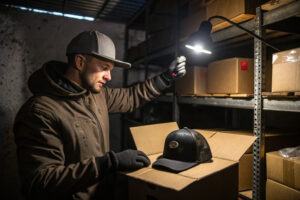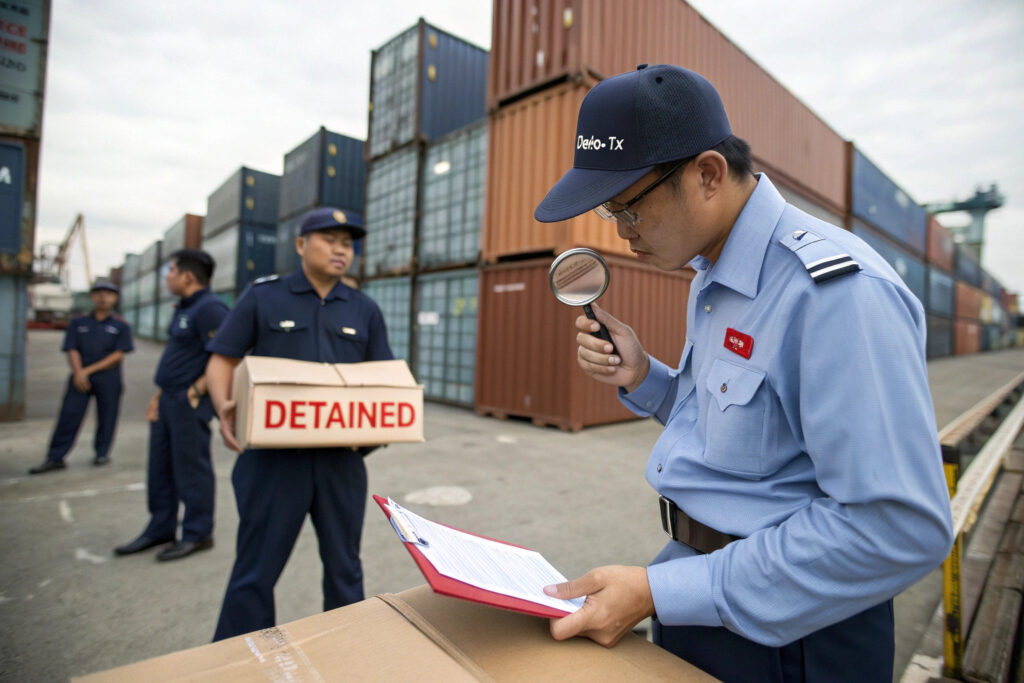
Your phone rings. It is your freight forwarder. The news is bad. Your container of 15,000 custom caps has been flagged by customs at the port of Rotterdam. The reason stated on the detention notice is "Suspected counterfeit OEKO-TEX labeling." Your mind races. You ordered those caps from a new supplier who promised OEKO-TEX certification. You paid extra for that green label. You printed your marketing around it. Now your entire shipment is sitting in a bonded warehouse, accruing demurrage fees by the day, and the authorities are treating you like a counterfeiter. Your retail launch date is in three weeks.
This is one of the most serious crises a headwear importer can face. A customs seizure over suspected fraudulent certification is not a routine delay. It is an accusation of a legal violation. The consequences range from shipment destruction and fines to criminal investigation and a permanent flag on your importer record. I run Global-Caps, and while we have never had a shipment seized, I have guided clients through this exact scenario when their previous suppliers failed them. The key is to act immediately, follow a precise sequence of steps, and demonstrate transparency and good faith to the authorities. In this article, I will walk you through the exact protocol to follow, the documentation you must gather, and how to resolve the detention with the least possible damage to your shipment, your finances, and your brand reputation.
What Immediate Actions Must I Take Within the First 48 Hours of a Seizure Notice?
The first 48 hours after receiving a seizure or detention notice are critical. Your actions in this window determine whether the situation escalates into a formal seizure with penalties or is resolved as a documentary check that clears your goods. Do not panic. Do not call the customs office and make angry, unscripted statements. Do not ignore the notice hoping it will go away. Demurrage charges are accruing daily on your container. Every day of inaction costs you money and increases the authorities' suspicion that you have something to hide.
Step one is to read the detention notice with absolute precision. Customs documents use specific legal language. Determine exactly what the notice says. Is it a "detention," a temporary hold for further examination, or is it a "seizure," a legal determination that the goods are contraband? A detention is an investigation. A seizure is a legal action. Your response pathway differs. Note the specific legal basis cited. In the EU, it will reference the Union Customs Code and the specific regulation on intellectual property rights or product safety. Note the deadline for response. Customs notices always include a strict timeline, often 10 working days, within which you must respond or the goods are automatically classified as abandoned or seized by default. Note the contact details of the case officer. This is the person you will be communicating with directly.
Step two is to immediately contact your customs broker and your freight forwarder. The customs broker is your legal representative at the border. They understand the local customs procedures and can communicate directly with the case officer in the local language. Instruct your broker to request a detailed explanation of the suspicion. What exactly triggered the flag? Was it a visual inspection, a random document check, or a tip-off? Ask for the specific evidence the customs office is relying on. Step three is to place an immediate hold on any further shipments from the same supplier. If you have other containers on the water or in production, stop them. Do not bring more suspect goods into the customs territory. Step four is to notify your product liability insurer. Many commercial general liability policies cover customs legal expenses and mitigation costs. Open a claim immediately so the insurer can appoint legal counsel if necessary.
How Should I Communicate With the Customs Case Officer?
Your communication with the customs officer must be professional, respectful, and fact-based. This officer is not your enemy. They are a government official enforcing the law. Their job is to protect the market from counterfeit products. Your job is to demonstrate that you are a legitimate importer who has been a victim of supplier fraud, not a knowing participant in counterfeiting.
Your initial written response, drafted with your broker's help, should acknowledge receipt of the notice, state that you take the allegation seriously, and request a detailed specification of the suspected violation. It should state that you are conducting an urgent internal investigation with your supplier and will provide a full evidentiary response within the stated deadline. Do not make admissions of guilt. Do not say, "I had no idea the label was fake." That is an admission that the label is fake. Instead, say, "We are gathering the certification documentation from our supplier to verify the authenticity of the labeling." This preserves your position while demonstrating cooperation.
What Information Must I Gather Internally Within 48 Hours?
While your broker communicates with customs, you must assemble the complete documentation trail for the detained shipment. Gather the purchase order, the proforma invoice, the commercial invoice, and the packing list. Gather all communication records with the supplier, especially emails, WhatsApp messages, or WeChat messages where they claimed OEKO-TEX certification. Screenshot these and save them as PDF files with metadata. Gather the supplier's OEKO-TEX certificate that they provided to you. Note the certificate number, the issuing body, and the validity date. Gather any product samples from the same production batch that you may have in your office. Do not ship these to customs unsolicited, but have them ready.
Finally, verify the OEKO-TEX certificate yourself. Go to the website of the certification body, Control Union, Hohenstein, Testex, or whichever body is listed on the certificate. Use their online certificate validation tool. Enter the certificate number. If the certificate comes back as invalid, expired, or registered to a different company, you now know the truth. Your supplier provided a fraudulent certificate. Document this verification result with a screen recording. This evidence is crucial for your defense. It proves you relied on a document that appeared genuine but was not.
How Do I Prove That I Am a Victim of Supplier Fraud, Not a Counterfeiter?
Customs authorities distinguish between a knowing counterfeiter and an unknowing victim of supplier fraud. The difference is evidence of due diligence. If you can demonstrate that you took reasonable steps to verify the supplier's certification claims before importing the goods, you are a victim. If you cannot, you may be viewed as negligent or complicit. Your defense strategy must focus on proving your due diligence and your supplier's deception.
The most powerful document you can present is the pre-shipment verification trail. Show that you requested the OEKO-TEX certificate from the supplier during the sourcing process. Show the certificate they provided. Show that you checked the certificate on the certification body's website at the time and that it appeared valid. If the supplier provided a fake certificate that mimicked a real one on a fake website, show the steps you took. The point is to demonstrate a systematic, documented sourcing process. If you simply accepted a verbal claim of "yes, we are OEKO certified" without any documentary verification, your due diligence defense is weak. Customs may conclude that you were willfully blind, which is not a complete defense but is better than knowing fraud.
The second pillar of your defense is to immediately terminate the supplier relationship and cooperate with the authorities in any investigation of the supplier. Send a formal legal notice to the supplier, documenting their breach of contract, the provision of fraudulent certification, and the resulting customs seizure. State that you are holding them liable for all costs and damages. Share this notice with customs. It demonstrates that you are not protecting the supplier and that you are taking legal action against them. This posture transforms you from a potential co-conspirator into a cooperating witness. Customs authorities are far more lenient with importers who actively assist in identifying the upstream source of fraudulent goods.
How Should I Document My Sourcing Due Diligence Process?
Your due diligence documentation should tell a story. The story begins with your supplier selection criteria. Did you have a written supplier code of conduct that required third-party certifications? Did you perform a factory audit or a virtual tour? Did you have a quality agreement that specified the certification requirements? Provide these documents. The story continues with the certification verification. Show the email where you requested the OEKO certificate. Show the certificate file you received. Show your internal record of verifying the certificate number. If you did not verify it, be honest, but explain what other steps you took, such as relying on a third-party sourcing agent or an online B2B platform's verification system.
The story concludes with your quality control process. Did you order a third-party pre-shipment inspection? Did the inspector check the labeling? Provide the inspection report. The more documentation you can produce that shows a structured, professional procurement process, the more credible your claim of being a victim of fraud becomes. Customs officers see many cases of deliberate counterfeiting. They can distinguish between a professional buyer who was deceived by a sophisticated fraudster and a casual importer who bought the cheapest goods available and did not care about the labels.
What Role Does Your Purchase Contract Play in the Defense?
Your purchase contract with the supplier is a key piece of evidence. If the contract contains a clause stating that all products must be certified to OEKO-TEX Standard 100 Class 1, and that the supplier warrants the authenticity of all labeling, then the supplier's breach of contract is clear. This clause transforms your commercial dispute into a documented legal violation by the supplier.
If your contract did not contain such a clause, your defense is weakened. The customs authority may ask why a buyer concerned about OEKO-TEX certification did not write it into the contract. Going forward, every purchase contract I issue includes a detailed compliance warranty clause. The supplier warrants that all certifications and labels are genuine and valid, and the supplier accepts full financial liability for any customs penalties, demurrage fees, or legal costs resulting from fraudulent documentation. This clause does not prevent a determined fraudster, but it provides an indisputable contractual basis for your victim defense.
How Can I Obtain a Retroactive or Replacement OEKO-TEX Certificate Quickly?
If the goods themselves are genuinely compliant but the documentation was fraudulent, you may be able to obtain a legitimate OEKO-TEX certificate for the detained goods. This is called retrospective certification or a post-production audit. It is not always possible, but it is a pathway to releasing the shipment that you should explore immediately. Contact an OEKO-TEX accredited testing institute, such as Hohenstein, Testex, or SGS, and explain the situation. Ask if they can perform an emergency audit and testing on the detained goods.
The testing institute will need access to the goods. This requires the permission of the customs authority. Your broker can request that customs allow a representative of the testing institute to draw samples from the detained shipment. The samples are tested for the full OEKO-TEX Standard 100 substance list. If the goods pass the testing and the factory's production process can be audited, the institute may issue a valid OEKO-TEX certificate. This certificate can then be presented to customs as evidence that the goods are compliant, even though the original label was unauthorized. The counterfeit label issue becomes a labeling violation, which is a less severe infraction than importing dangerous goods. The goods may be released upon payment of a fine and the correction of the labeling, rather than being destroyed.
This pathway is expensive and time-sensitive. The testing fees, the auditor travel costs, and the expedited processing can run several thousand dollars. The testing timeline, even on an emergency basis, is typically 5 to 10 working days. You must balance this cost against the value of the detained shipment and the escalating demurrage charges. If the shipment value is high, retroactive certification is often the most economically rational solution. I have assisted clients in coordinating emergency lab testing by providing the OEKO-TEX institute with the factory's material specifications and processing records. As a certified factory ourselves, we maintain a full material library with test reports that can expedite the certification process.
What If the Goods Fail the Retroactive OEKO-TEX Test?
If the emergency test reveals that the goods contain restricted substances above the OEKO-TEX limits, the situation is serious. The goods are not just mislabeled; they are dangerous. You have a legal obligation to not place them on the market. The customs authority will likely order the destruction of the goods at your expense. You may also face additional penalties for importing non-compliant products.
Your recourse is entirely against the supplier. You must pursue a full claim for the value of the destroyed goods, the shipping costs, the customs duties and fees, the testing costs, and any legal penalties. This is a worst-case scenario, and it underscores why factory certification audits, not just paper certificates, are the true foundation of supply chain safety. A fake OEKO label on a genuinely safe product is a commercial fraud. A fake OEKO label on a chemically dangerous product is a public health risk. The difference is everything to the customs authority.
Can the Factory Itself Obtain a Legitimate Certificate to Release the Shipment?
If the factory is actually capable of producing OEKO-compliant goods but simply never obtained the certification, you can push them to apply for an emergency certification. The factory must contact an OEKO-TEX institute, undergo the audit, and submit product samples for testing. This process is the same as retroactive certification but is driven by the factory rather than you as the buyer.
The factory's willingness to do this tells you a lot about their integrity. A factory that genuinely believes their production is compliant will cooperate. A factory that knows their production is dirty will make excuses, delay, or go silent. Your purchase contract should require the factory's full cooperation in any customs investigation, including applying for retroactive certification at their own cost. If the factory refuses, you have clear grounds for a legal claim and can present their refusal to customs as further evidence of their fraud.
What Are the Long-Term Consequences and How Can I Prevent a Recurrence?
A customs seizure over a fake OEKO label has long-term consequences that extend beyond the immediate detention and fines. Your importer record is now flagged in the customs database. Future shipments from your company will face a higher inspection rate. Your brand's reputation with your retail partners may be damaged if the detention becomes public or causes a stockout. Your product liability insurance premiums may increase. This event is a wake-up call to overhaul your supplier verification process.
The first permanent change you must make is to verify every certification at the source, not just on a website. An OEKO-TEX certificate is a piece of paper. The actual factory capability is what matters. Before placing an order, commission a factory audit that includes a review of the OEKO-TEX certification. The auditor should verify that the certificate is valid, that it covers the product categories you are ordering, that the factory's material purchasing records align with certified suppliers, and that the factory has a documented chemical management system. A paper certificate without a physical audit is not sufficient due diligence for a brand that stakes its reputation on chemical safety.
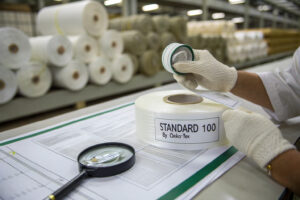
The second permanent change is to implement a label verification system for incoming shipments. Before the goods are loaded into the container, your third-party inspector should check the OEKO-TEX labels. The inspector should verify that the label design matches the official OEKO-TEX label artwork, that the certification number on the label is present and correctly formatted, and that a random sample of labels is photographed and sent to you for verification against the OEKO-TEX online database. This is a five-minute addition to a standard pre-shipment inspection. It closes the gap between the factory's paperwork and the physical labels sewn into your caps.
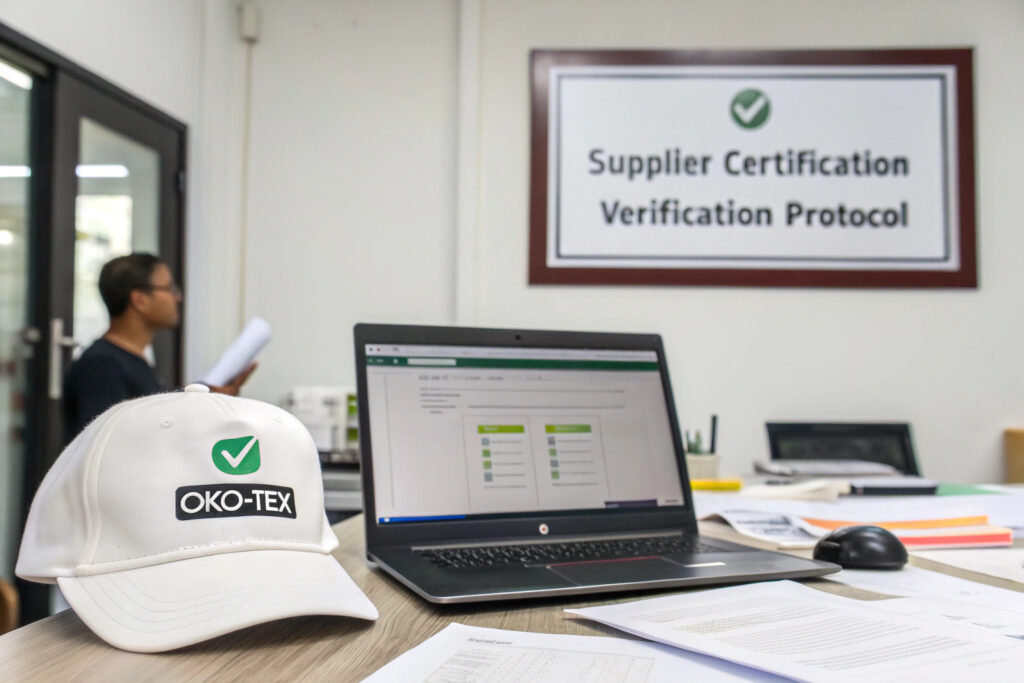
How Can OEKO-TEX Made in Green and QR Code Labels Prevent Future Seizures?
OEKO-TEX now offers a "Made in Green" label that includes a unique QR code. When the QR code is scanned, it links directly to the OEKO-TEX database, showing the valid certificate and the product information. This is a powerful anti-counterfeiting feature. A customs officer can scan the QR code on the label and instantly verify its authenticity.
I recommend that all brands using OEKO-TEX certification transition to QR-code-enabled labels as soon as possible. The label itself becomes a verification tool. A counterfeiter cannot fake a QR code that links to a genuine, active certificate because they do not control the OEKO-TEX database. This technology shifts the verification burden from you to the label itself. It gives customs authorities a simple, instant check. It gives your customers transparency. It protects your brand from the risk of fake label seizures. At Global-Caps, we have integrated QR-code labeling into our certified organic and OEKO-TEX product lines. It is a small incremental cost with a large risk-reduction benefit.
How Should I Rebuild Trust With My Retail Partners After a Seizure?
If the detention caused a shipment delay that affected your retail partners, you must address the issue proactively and transparently. Do not wait for them to hear about it from a third party. Contact your buyers directly. Explain the situation factually: your shipment was detained due to a supplier's fraudulent documentation, you have taken immediate legal action against the supplier, you have implemented new verification protocols, and you have either secured the release of the goods or are sourcing replacement goods from a certified factory.
Provide your retail partner with documentation of your corrective actions. Show them your new supplier verification protocol. Show them the valid OEKO-TEX certificate from your new supplier. If possible, introduce them to the new supplier via a video call. The goal is to transform a crisis into a demonstration of your brand's integrity and commitment to compliance. A brand that handles a customs crisis professionally, transparently, and decisively can actually strengthen its relationship with a retail partner. The retailer sees that you are a responsible business partner who fixes problems rather than hiding them.
Conclusion
A customs seizure over a suspected fake OEKO label is a high-stakes crisis that requires immediate, structured action. Within the first 48 hours, you must read the detention notice precisely, engage your customs broker, stop further shipments, and notify your insurer. Your defense rests on proving due diligence: showing the certificate you received, the verification steps you took, and the supplier's contractual warranties. Your goal is to establish that you are a victim of supplier fraud, not a knowing counterfeiter.
The pathway to releasing the goods involves exploring retroactive certification through an accredited OEKO-TEX testing institute, cooperating fully with the customs investigation, and demonstrating the supplier's breach of contract. The long-term solution is to redesign your supplier verification process around physical factory audits, pre-shipment label inspections, and QR-code-enabled authenticable labels. A fake OEKO label is not just a paperwork problem. It is a direct threat to your brand's integrity, your customer's safety, and your business's financial health.
If you are sourcing caps and need a manufacturing partner whose certifications are audited, verified, and authentic, I invite you to contact Global-Caps. We are a fully OEKO-TEX Standard 100 Class 1 certified factory. Our certification is renewed annually, audited by a major accredited institute, and verifiable online. We provide our clients with a complete compliance package that includes our valid certificate, a QR-code-enabled labeling system, and full traceability documentation. Do not leave your brand's compliance to chance with unverified suppliers. Reach out to our Business Director, Elaine, at elaine@fumaoclothing.com. Request a copy of our current OEKO-TEX certificate and a sample of our authenticable labeling. Let's ensure your next shipment clears customs without question and arrives at your retail partners with every label genuine, verified, and trustworthy.