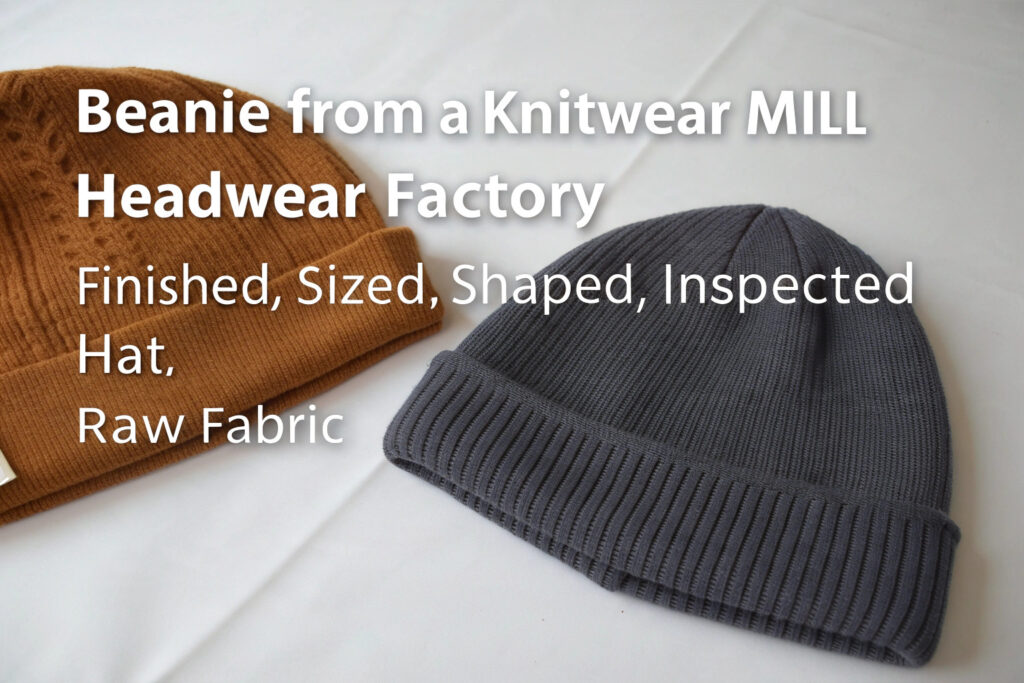
You have a successful line of fashion beanies. Your current supplier is a knitwear mill that also makes sweaters and scarves. The price is decent. But you keep noticing small issues. The crown shape is inconsistent. Some beanies are too pointy. Others are too round. The cuff fold-over depth varies by half an inch. The size label says "One Size," but some beanies are tight on a small head and others are loose on a large one. The colors between your ribbed beanie and your cable-knit beanie from the same order do not match perfectly. You assumed any factory that knits can make a beanie. After all, it is just a tube with a closed top, right?
Wrong. A beanie is a headwear product, not just a knitted textile. The difference between sourcing from a knitwear mill and a headwear factory is the difference between buying fabric and buying a finished, sized, shaped, and inspected hat. I run Global-Caps, and we are a headwear factory. We do not make sweaters. We do not make scarves. We only make hats. And a beanie, in our world, is not a knitted tube. It is a carefully engineered three-dimensional shape designed to fit the human head correctly, look consistent on a retail shelf, and maintain its form through washing and wearing. In this article, I will walk you through the real, practical differences between these two supply chains and why choosing the wrong one can cost you more than just the unit price.
What Are the Core Production Capabilities of a Knitwear Mill vs. a Headwear Factory?
A knitwear mill is built to produce fabric and garments from that fabric. Its core competency is yarn management, knitting, and linking. It has a deep understanding of stitch structures, gauge, and yarn blending. A mill can take your yarn specification and knit it into a jersey, a rib, a cable, or a jacquard pattern. But once the knitted panel or tube comes off the machine, the mill's relationship with the product often diminishes. The finishing steps, cutting the crown, closing the top seam, attaching a label, might be done quickly and generically because the mill's business model is built on volume of knitted fabric, not on precision of hat shaping.
A headwear factory that specializes in beanies operates differently. The knitting is just the first step. The factory's true expertise lies in the finishing processes that turn a knitted tube into a hat with a specific crown shape, a specific cuff length, a specific size, and a specific hand feel. We own specialized beanie finishing equipment that many knitwear mills do not invest in. This includes beanie-specific linking machines for flat-lock seams, steam blocking machines with aluminum head-shaped forms in multiple sizes, and crown finishing templates that ensure every beanie has the same dome curve. A knitwear mill might finish a beanie by simply hand-steaming it on a generic rounded form. A headwear factory uses a heated hydraulic press with a precisely machined aluminum head mold that sets the shape permanently. The difference is visible on the retail shelf. The mill's beanie looks homemade. The headwear factory's beanie looks like a branded product.
The difference extends to lining and trimming. Many fashion beanies now include a fleece or sherpa lining for warmth. This is a complex sewing operation that requires attaching a stretchable fabric lining to a stretchable knit shell without causing the outer beanie to pucker or the lining to sag. A knitwear mill typically does not have a dedicated sewing line for this specific operation. They might outsource it to a local sewing workshop, losing control of quality and timeline. A headwear factory has the lining attachment integrated into its production flow. Our sewers specialize in matching the stretch characteristics of the shell and the lining. They know the exact differential feed setting on the sewing machine to prevent seam grinning. This integration is why a headwear factory can offer a fully finished, retail-ready beanie without relying on subcontracted processes.
How Does the Knitting Gauge and Machine Type Affect Beanie Quality?
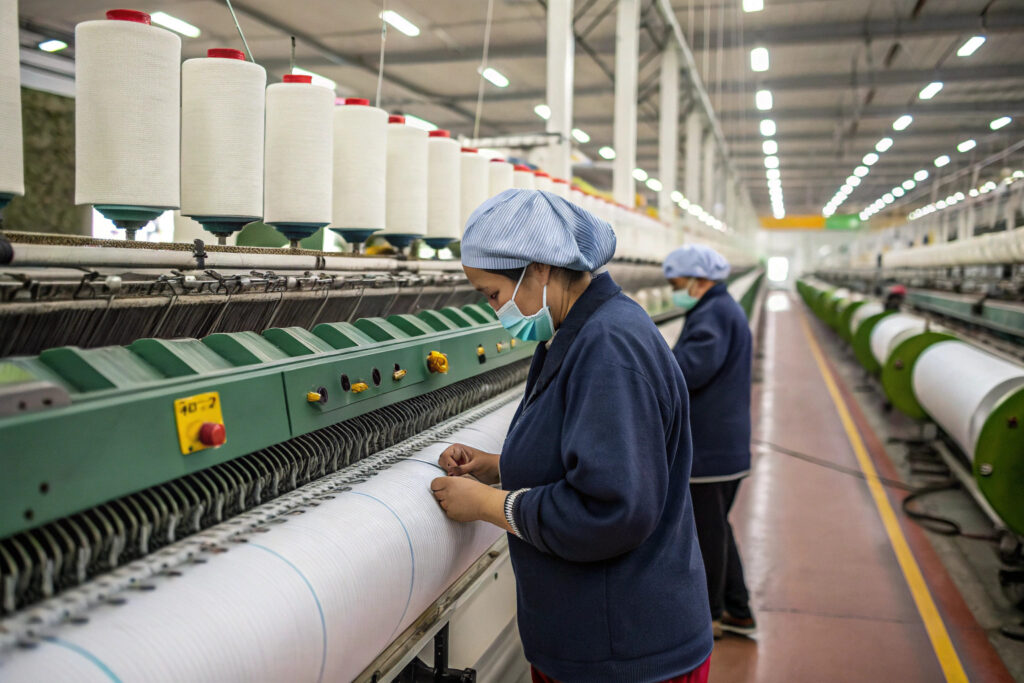
The gauge of a knitting machine determines the fineness of the knit. A 12-gauge machine produces a chunky, heavy stitch. A 18-gauge machine produces a finer, smoother fabric. A knitwear mill will often have a wide range of gauges because they knit everything from heavy cardigans to fine-gauge tops. This is an advantage in yarn flexibility. However, a mill might run your beanie on whatever machine has open capacity, not necessarily the optimal gauge for your specific design.
A headwear factory, which runs beanie production continuously, will have its machine fleet optimized for the most common beanie gauges. We know that a classic cuff beanie works best on a 12 or 14-gauge machine for structure. A slouchy, drapey beanie works best on a finer 16 or 18-gauge machine. We also maintain specific cam settings and stitch cams for beanie knitting. The stitch length, the tension, and the take-down pressure on the knitting machine are dialed in for hat body shapes, not flat sweater panels. When a mill switches from knitting a sweater back to knitting a beanie, the operator must reset the machine parameters. If this changeover is done hastily, the first few dozen beanies can have distorted stitches or incorrect tension. A dedicated headwear line eliminates this variability.
How Does the Closing and Seaming Process Differ?
The top closure of a beanie is its most visible seam. A poorly closed crown creates a pointy, lumpy, or asymmetrical top. A knitwear mill often uses a generic overlock or linking machine to close the crown. The operator gathers the top stitches and sews them shut in a single, quick pass. This can result in a bulky, gathered "butthole" closure that sticks up under the knit fabric.
A headwear factory pays meticulous attention to the crown closure. We use a specific technique, either a hand-linking process that joins each stitch individually for a truly seamless look, or a precise flat-seaming method that lays the seam flat and invisible. For lined beanies, we use a hidden closure method where the outer shell closure and the lining closure are sewn separately and then nested together, so there is no visible seam bump at all. This is a specialized skill. It requires a dedicated workstation and a trained operator who only does crown closures. A knitwear mill operator who closes five sweater necks and then closes a batch of beanies will not develop the muscle memory to produce a consistently flat, invisible beanie crown.
Why Does Sizing and Shaping Consistency Differ Between the Two Types of Suppliers?
"One size fits most" is the most common claim on a beanie hangtag. But the definition of "one size" varies wildly between suppliers. A knitwear mill often defines size by the flat width of the knitted tube. They cut the tube to a certain length, sew the crown, and call it done. The finished beanie is never placed on a head form. The sizing is flat and two-dimensional. The problem is that a knitted fabric stretches. Two beanies with the same flat width can fit completely differently if the stitch tension, the yarn elasticity, or the finishing treatment differs.
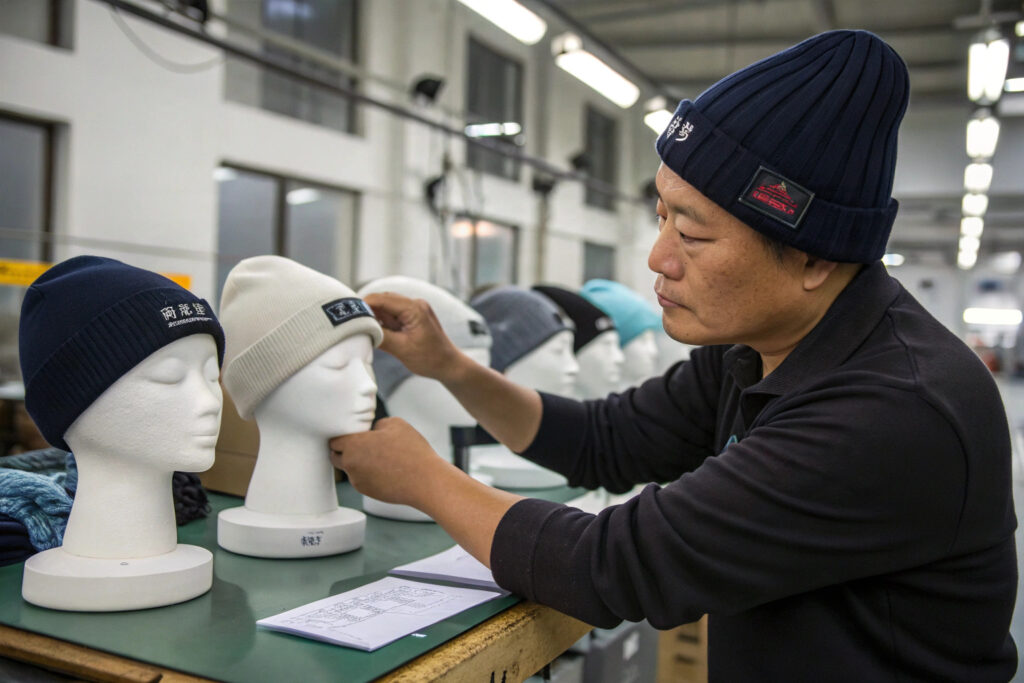
A headwear factory defines size three-dimensionally. We use a set of rigid head forms that correspond to specific head circumference ranges. After the beanie is finished and blocked, we place it on a head form to verify the fit. The beanie should cover the form fully without excessive tension that causes the knit to become transparent, and without excessive looseness that causes it to slip. We also measure the crown height from the bottom of the cuff to the tip of the crown while the beanie is on the form. This ensures that the slouch or the dome profile matches the design specification. A mill that does not use head forms cannot guarantee this. They are shipping flat textiles. We are shipping shaped headwear.
Shaping consistency is equally critical. A cuffed beanie should have a cuff that lies flat and stays folded without being tacked down. This requires the knit to be relaxed and set in the folded position during the steam blocking process. If the blocking is done on a flat table instead of a contoured head form, the cuff will want to spring open. The beanie will look sloppy on the retail shelf. Our blocking process uses steam heat and pressure on a form that has the cuff fold built into its shape. The wool or acrylic fibers are thermally set in this position. The beanie comes off the form with the cuff naturally wanting to stay folded. This is a headwear-specific finishing technology.
How Does the Blocking Process Create a Permanent Shape?
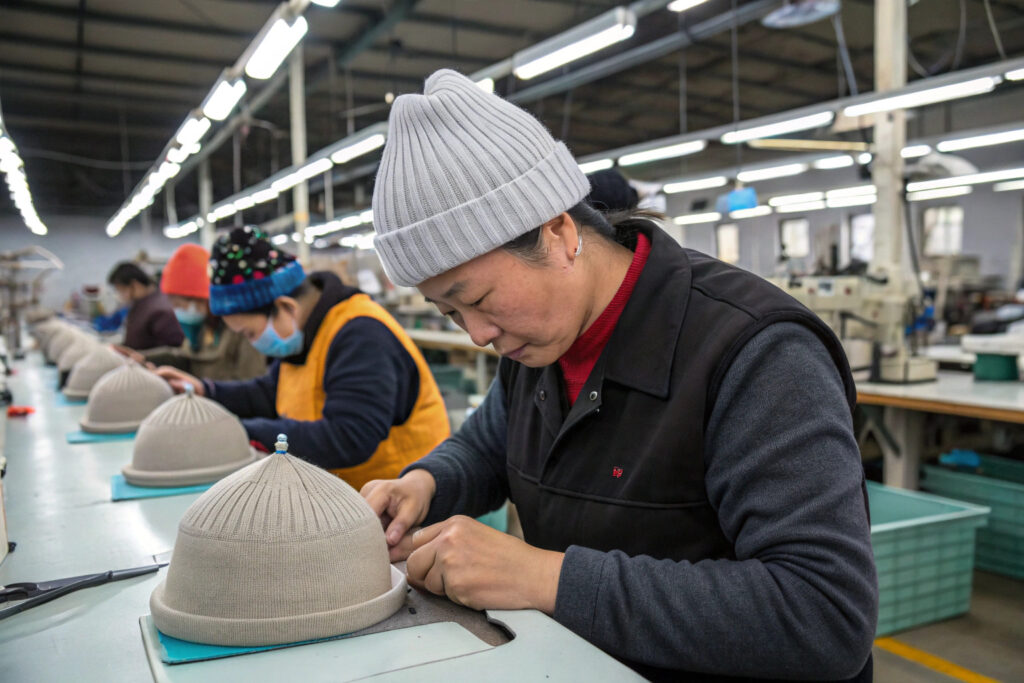
Blocking is the process of using heat, steam, and pressure to set the fibers of a knitted fabric into a desired shape. It is analogous to the brim pressing on a baseball cap. For beanies, the blocking process is what transforms a wrinkled, shapeless knitted tube into a crisp, defined hat. A knitwear mill might have a small hand steamer and an ironing table for blocking. The operator hand-shapes the beanie, which introduces human variability.
A headwear factory invests in specialized beanie blocking machinery. We use a carousel-style or shuttle-style blocking machine with heated aluminum head molds. The beanie is stretched over the mold, the mold closes under controlled temperature and pressure for a precise dwell time, and then it cools. The result is a beanie with a set shape that will survive washing. The crown is perfectly round. The cuff is crisp. The surface stitch is even and relaxed. This industrial blocking process is not typically found in a general knitwear mill because it is a dedicated headwear technology. The blocking mold itself is a precision-machined tool that costs thousands of dollars per size. A mill that makes beanies as a sideline will not make this capital investment.
How Do You Measure and Specify Beanie Fit Accurately?
The method I teach my clients is to specify fit based on a head form circumference, not a flat measurement. We work with head form sizes that align with industry standards: Infant, Toddler, Child, Youth, Adult S/M, Adult L/XL. Each of these corresponds to a specific head circumference range in centimeters. The beanie is designed to stretch comfortably to fit that range.
The contract specification should state the target head form size and the acceptable fit tolerance. For example, "Beanie shall fit securely on a 58cm head form without fabric transparency due to over-stretching, and shall not rotate freely on the form." This is a functional, testable specification. Our QC inspector simply places the beanie on the specified head form and checks these criteria. A knitwear mill, if asked to meet this specification, would have to buy head forms and integrate them into their QC process. Most are unwilling to do this for a product category that is not their core business.
What Are the Supply Chain Implications of Choosing a Mill Over a Specialized Factory?
The supply chain for a beanie is not just the factory that makes it. It is the network of raw material suppliers, trim vendors, and finishing subcontractors that feed into that factory. When you choose a knitwear mill, you are often entering a fragmented supply chain. The mill knits the body. A separate workshop sews the lining. A third vendor prints the label. A fourth does the folding and bagging. The mill coordinates these subcontractors, but each handoff introduces risk: communication errors, delivery delays, quality inconsistencies.
A specialized headwear factory internalizes this entire chain. We buy the yarn directly from the spinner. We knit the body. We sew the lining. We print or weave the label. We block the shape. We fold, tag, and poly-bag the finished beanie. All of these steps happen under one roof, managed by a single production control team. There are no subcontractor handoffs. This vertical integration reduces lead time, eliminates finger-pointing between vendors when a problem occurs, and ensures that the quality standard is applied consistently at every step. When a client emails me with a question about their beanie order, I can walk onto my production floor and look at the exact work-in-progress. A mill owner might have to call three different subcontractors to get an answer.
The material supply chain is also different. A knitwear mill buys yarn for its entire product range. It might aggregate yarn orders for sweaters, scarves, and beanies to get volume pricing, which can be a cost advantage. But the yarn inventory is not beanie-specific. A color that works beautifully on a heavy sweater knit might look dull or stripy on a fine beanie knit. A headwear factory buys yarn specifically for beanie applications. We test the yarn on our beanie knitting machines and evaluate the color and hand feel on the actual finished product, not on a generic knit-down. Our yarn library is curated for headwear performance. We can advise a client that a particular merino blend is too itchy for a next-to-skin beanie because we have direct experience with that yarn in that application.
How Does Minimum Order Quantity Differ Between the Two Channels?
Knitwear mills often have high MOQs, sometimes 1,000 to 2,000 pieces per style per color, because their business model is built on large-volume runs of basic garments. Setting up a knitting machine for a small batch is less economically attractive to them. If you are a brand that needs 300 beanies in a custom color, a mill might decline the order or charge a high surcharge.
A headwear factory, especially one that serves the promotional and boutique brand markets, is structured to handle smaller, more frequent runs. Our production lines are designed for changeover. We can dye yarn in small batch kettles, and we can run a beanie order of 500 pieces in three colors without breaking the production flow. This flexibility is built into our machine park and our workforce training. For a brand testing a new market or offering seasonal limited editions, the specialized factory's MOQ flexibility is a significant strategic advantage. It allows you to manage inventory risk and avoid the cash flow burden of large, slow-moving stock commitments.
How Does the Development Process and Timeline Compare?
Developing a new beanie with a knitwear mill often follows a linear, slow process. You send a design sketch. The mill sources a yarn. They knit a panel for approval. You wait. They knit a sample. You wait. Each iteration involves the mill's sample room coordinator fitting your project into a schedule that prioritizes their main sweater clients. The timeline can stretch to weeks.
A headwear factory's development process is parallel and accelerated. Our in-house design team has a physical library of yarns, stitches, and beanie blocks. When a client sends a concept, we can immediately pull three candidate yarns and two candidate stitch patterns from our library. We knit a prototype on our sampling machines, which are dedicated to development and not shared with bulk production. We can turn a concept into a physical sample in days, not weeks. Because we control the entire process, we can also be more creative in suggesting improvements. We might recommend a different cuff construction to better hold the fold, or a different linking thread to improve crown durability. A knitwear mill is more likely to simply execute your spec as given, even if they know it will result in a flawed product, because their sample room is a service center, not a product development partner.
How Can I Verify Whether My Supplier Is a True Headwear Specialist?
Many knitwear mills market themselves as headwear suppliers. Their website will show beanies and caps alongside sweaters. You need a verification method to determine whether beanies are a core competency or a side hustle. The physical assets on the factory floor are the most honest signal. You cannot hide a lack of investment.
I recommend requesting a live video tour with a specific request. Ask the tour guide to walk you directly to the beanie blocking area. A true headwear specialist will walk you to a dedicated station with heated blocking machines and a rack of aluminum head molds in graduated sizes. You will see the forms. You will see the steam rising. You will see finished beanies coming off the forms. A knitwear mill will either not have this area at all, or they will show you a small, hand-operated steam station that looks like a laundry corner. The difference is visually unmistakable. Next, ask to see the beanie crown closing station. Look for dedicated machines with specialized fixtures for crown seaming. If you see operators hand-gathering the crown with a needle and thread on a standard sewing machine, they are not specialists. Specialists use linking machines or specialized blind-stitch closers that produce a flat, professional finish.
Ask about the head forms used for QC. A specialist will have a calibrated set of head forms that are numbered and correspond to a size specification sheet. Ask the tour guide to place a finished beanie on a head form and show you the fit. If they fumble or cannot find the forms, they do not use them regularly. This simple, live demonstration reveals more about the factory's daily quality practices than any certificate or brochure.
What Questions Reveal the Depth of Beanie-Specific Knowledge?
During the call, ask open-ended technical questions. For example, "What blocking temperature and dwell time do you use for a 100% acrylic beanie versus a wool blend?" A specialist will answer instantly with a specific range. They might say, "Acrylic blocks at 110 degrees Celsius for 15 seconds; wool we block at a lower temperature with more steam to prevent felting." A generalist will pause, say it depends, or give a vague answer.
Ask, "How do you prevent the crown closure from creating a visible bump under the knit?" A specialist will describe their specific linking or seaming technique and might show you a close-up of a finished crown. Ask, "What is your standard cuff depth tolerance for an adult beanie?" A specialist will say, "Plus or minus a quarter inch," and they will show you the measuring template they use. These questions go beyond "can you make it" and into "how do you control it." The answers differentiate a factory that has wrestled with beanie-specific problems and solved them from a factory that simply cuts and sews knitted tubes.
How Can a Sample Audit Reveal the Supplier's True Capability?
Order a sample, but do not just order your design. Order a test beanie that stresses their process capability. Ask for a beanie in a solid, light heather grey color, which shows every stitch irregularity. Request a specific cuff depth and a specific crown shape, like a "round, non-pointy dome." Do not send a photo of a beanie to copy. Give them a simple performance specification and see what they deliver.
When the sample arrives, inspect the crown under a bright light. Is it perfectly round and symmetrical? Look at the cuff edge. Is the fold line crisp and permanent? Turn the beanie inside out. Look at the crown closure seam. Is it flat and unobtrusive? Look at the lining attachment, if applicable. Is the lining smoothly nested inside without twisting? Stretch the beanie over a ball or a head form. Does it conform smoothly, or does it pucker at the crown? These are the tests of a true headwear manufacturer. A sample from a knitwear mill will often fail one or more of these because they do not view the product through a headwear quality lens.
Conclusion
The choice between a knitwear mill and a headwear factory for your beanie is a choice between a textile supplier and a hat maker. The mill will give you a knitted tube, competently produced, at a potentially attractive price. But the shape, the fit, the crown closure, the lining integration, and the retail presentation are your responsibility to figure out. The headwear factory takes ownership of the entire product, from yarn to finished hat. It uses specialized blocking equipment to set a permanent shape, head forms to verify consistent fit, and integrated finishing lines to deliver a beanie that looks professional on the shelf and feels right on the head.
The price difference, if any, reflects this gap in finishing and quality control. A cheaper mill beanie that arrives with inconsistent sizing, pointy crowns, and springy cuffs will cost you more in customer returns and brand perception than you saved on the invoice. Your beanie is a hat. It deserves a hat factory.
If you are looking for a supplier that treats beanies as a core product, not a sideline, I invite you to contact Global-Caps. Our factory is purpose-built for headwear finishing, with dedicated beanie blocking lines, trained crown-closing specialists, and a QC system built around head form fit testing. We can take your beanie concept from yarn specification to a retail-ready sample in a matter of days. Reach out to our Business Director, Elaine, at elaine@fumaoclothing.com. Send us your design brief, and we will show you what a professionally finished beanie looks like. Your brand deserves a hat that fits.