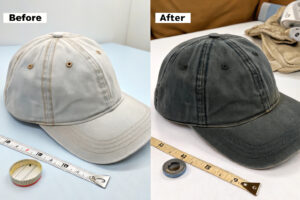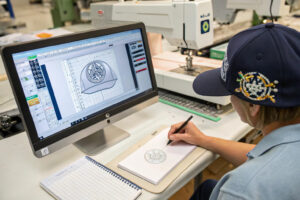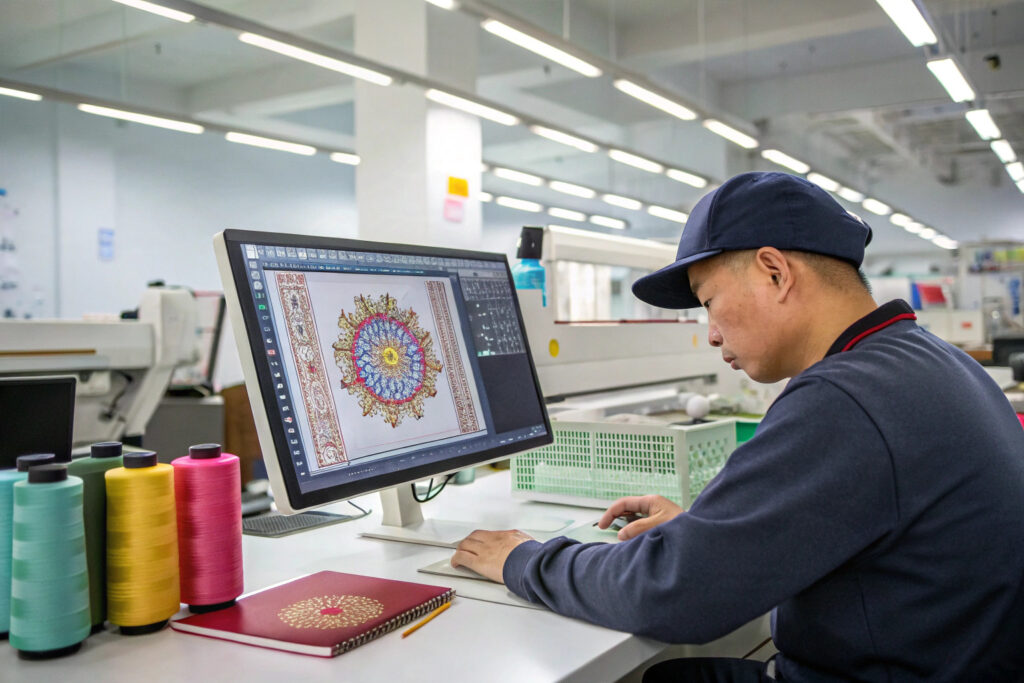
You have just sent a complex logo to your new cap supplier. It has fine text, a gradient effect, and a specific requirement for 3D puff. The digital proof comes back, and it looks clean on the screen. You approve it. Then the physical sample arrives, and it is a mess. The small letters are chewed up. The puff foam peeks out from under the stitches. The logo looks dense and bulletproof, pulling the cap fabric into a wrinkled pucker. You realize the beautiful digital proof was just a simulation. The person who hit the "auto-digitize" button likely never sewed a cap in their life. You have just been burned by an outsourced digitizing service that the factory hid from you.
A real in-house digitizer does not just convert an image to stitches. They engineer the embroidery to respect the physical structure of a cap. An outsourced service, often a freelancer in a different country working for the lowest price, digitizes for a flat hoop. A cap is not flat. It has a curved seam, a stiff buckram backing, and a center front that fights the needle. I have been managing a cap factory for decades, and I can tell you that the difference between an in-house technician and an outsourced file mill shows up in the first three stitches of the sew-out. In this article, I will show you the clear, provable signs that reveal who really made your embroidery file.
Why Does In-House vs. Outsourced Embroidery Digitizing Matter for Caps?
Embroidery digitizing is often treated like a commodity. Buyers think a logo is a logo, and any service with software can convert it. But caps are the most unforgiving item in embroidery. A flat piece of fabric on a shirt gives you some room for error. A structured cap has a vertical seam running down the center. It has a tough fusible buckram backing. It has a curved surface that requires the hoop to hold the cap under extreme tension. An outsourced digitizer rarely understands these variables. They have never heard the sound of a needle snapping because the logo was placed too close to the center seam welt. They just drag and drop an EPS file, click an auto-digitize function, and email you a JPEG simulation that looks flawless but sews out like a disaster.
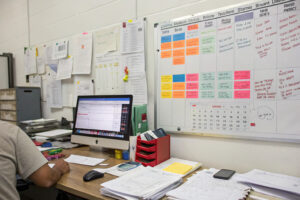
When the digitizing is done in-house, the technician is sitting maybe 20 meters from the embroidery machines. They see their files run on real caps every single day. They know that a particular thread brand has a slightly thicker twist this season and they need to adjust the pull compensation by 0.2mm. They know that the specific foam used for 3D puff in the factory needs a different stitch angle to cut cleanly. This feedback loop is instant and brutal. If an in-house digitizer makes a bad file, the production manager walks over and drops the puckered cap on their desk. An outsourced service never sees the failure. They just close your ticket. This direct accountability is why the distinction matters so much, and it is one of the first things a serious buyer should investigate before placing a bulk order for custom headwear.
How Does Cap Construction Affect Digitizing Logic?
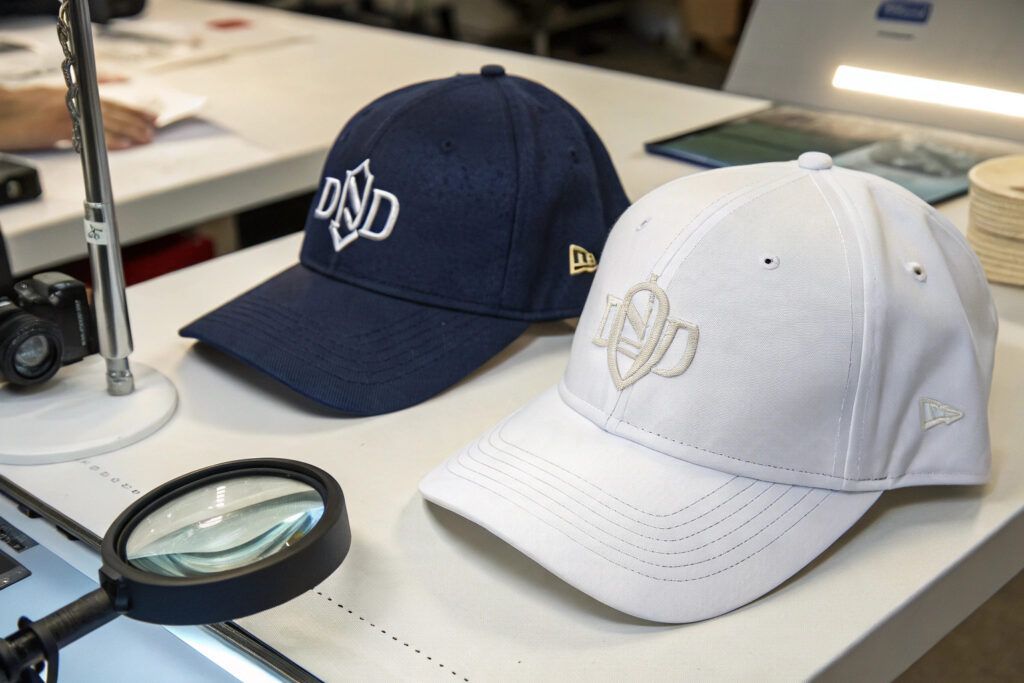
A 6-panel structured cap has a center seam that is a thick stack of fabric. The buckram, the fashion fabric, and the seam allowance are all pressed together. If a digitizer does not compensate for this ridge, the needle will land right on that hard surface. The needle deflects sideways, causing a shadow or a gap in the logo. An in-house digitizer knows to split the design slightly or to shift the start point away from the seam. An outsourced service applies a generic "cap" preset that often ignores the seam geometry entirely.
Then there is the issue of the backing. Caps use a tear-away or cut-away stabilizer hooped behind the needle plate. An outsourced file might use a stitch density of 4,000 stitches for a small logo, which is fine for a flat shirt with a heavy cut-away stabilizer. But on a cap, that needle is penetrating the fabric, the buckram, and the back stabilizer. Too much density creates a hardened, bulletproof patch that distorts the front panels. The fabric around the logo puckers because the thread is literally pulling the weave inward. A cap-specific digitizer will use a lighter underlay and wider spacing. They use the machine's cap frame driver settings to lift the needle just slightly on those tough seam crossings. These are not settings you can guess from a remote office. They are learned by standing next to a running Tajima or Barudan machine.
What Is the "Feedback Loop" Advantage?
This is the single biggest advantage of a factory with internal digitizers. In my facility, our digitizing team holds a 5-minute meeting at the start of every shift with the embroidery line leaders. They review the previous day's reject rate. If a specific logo style caused thread breaks or needle deflection, they tweak the file immediately. This is not a formal process that takes a week. It happens in real-time. For a buyer, this means your production run gets the V2.3 of the digitized file, the one that has already been stress-tested on dozens of caps.
Outsourced services work on a ticket system. You submit a logo. You get a file back. If it sews badly, you file a revision request. That request goes back to a queue. The outsourced digitizer might not even remember your specific file among the 30 they did that day. They make a blind adjustment, send it back, and hope for the best. They are not watching the machine run at 800 stitches per minute. They do not know that the thread is shredding because the stitch angle is fighting the twist of the yarn. They just see a screen. That time lag and lack of physical feedback costs buyers thousands of dollars in wasted caps and delayed shipments.
What Specific Test Files Expose an Outsourced Embroidery Digitizer?
You do not need to take a factory's word that they do digitizing inside their walls. You can send them a "torture test" logo and demand a physical sew-out on a cap as part of the pre-production sample. The test file should contain a few specific traps that an outsourced digitizer's auto-conversion software will always fail on. A true in-house expert will see these traps and manually draw vector-based stitch paths to avoid them. The physical sample you get back tells you everything about their capability. You are looking for an embroidery sample, but you are really auditing their engineering thought process.
I often tell buyers to send a test logo that includes small serif text at about 5mm in height, a sharp 30-degree angle in a geometric shape, and an area of high-density coverage next to a thin line. These elements force the digitizer to think about pull compensation and stitch direction. An outsourced service will likely run the file through an auto-digitizing engine. The software will just create a uniform grid of stitches. On the sew-out, the small text will be illegible lumps. The sharp angle will be rounded off. The dense area will warp the fabric, pulling the thin line into a wavy curve. An in-house digitizer will manually set the underlay stitches to be perpendicular to the final top-stitch on that sharp corner, locking it in place. They will reduce the density in the heavy areas and use a "contour stitch" method instead of a solid tatami fill to keep the cap front soft. When you unbox that test sample, you will immediately see if a human brain or a default algorithm made the file.
Why Does Small Text Immediately Reveal Digitizing Skill?
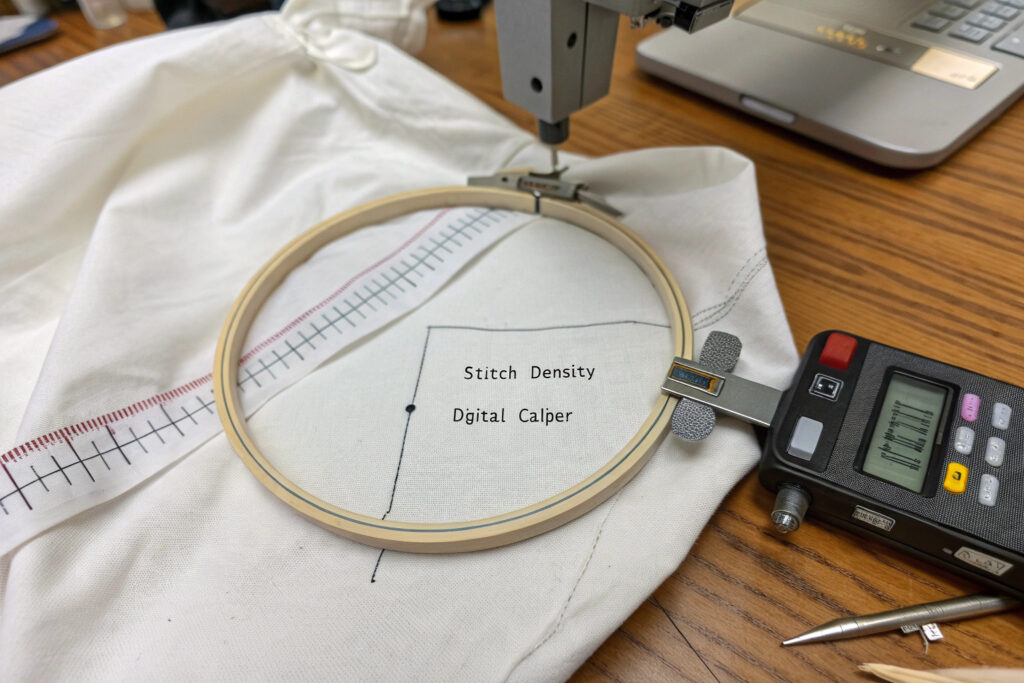
Small text is the ultimate enemy of cap embroidery. The center front seam of a cap is a hard, uneven surface. If you try to sew a 5mm serif letter like "e" or "a," the counter inside the letter can close up completely because the thread pushes outward. An in-house digitizer knows to use a center-out walking stitch sequence. They start the needle in the middle of the letter and stitch outward. This pushes the thread out rather than pulling the walls in. They also know to use a 60-weight fine thread for the details and reduce the machine speed specifically for that section of the logo.
An outsourced digitizer, or an auto-digitize program, will typically just draw an outline and a fill. The software does not know the letter is small. It applies a standard satin stitch width that is too wide for the column, and the needle oscillates in a fixed pattern that chews up the edges. The physical result looks like a blob. If you ask the factory why, the outsourced service will often blame the thread quality or the cap material. But thread does not close up a letter counter; poor stitch path planning does. A factory that owns its digitizing talent can show you a library of sew-outs with crisp small text, often using a specific "micro-font" digitizing technique.
How Do Complex Gradients Indicate Control Over Stitch Angle?
A gradient in embroidery, such as a fade from a dark color to a light color, is an advanced technique. It requires a manual blend of stitch densities, not colors. Auto-digitizing software does not create true thread-painted gradients. It just makes a cartoonish step-down of solid blocks. An in-house digitizer builds a gradient by manually varying the spacing between stitches in a tatami fill. They might change the stitch angle by 90 degrees in the transition zone to create a visual blending effect using the same thread color.
This is a test of the digitizer's ability to control "pull compensation." Different stitch angles pull the fabric in different directions. If the angle is changed without compensating for the fabric stretch, the gradient area will twist the cap panel. An outsourced service might send you a 3D simulation that shows a perfect blend. But when sewn, the fabric distorts because the underlay was not matched to the angle change. A true in-house artist will give you a physical sample that shows a smooth optical blend, and they will have documented exactly how they adjusted the tension and the pull comp for that specific file. This is high-level digitizing artistry, and it is nearly impossible to achieve through a remote, ticket-based service that charges by the thousand stitches.
How Do You Verify the Identity of a Factory’s Digitizing Team?
In the age of digital communication, it is easy for a trading company to claim they have an in-house team. They might share a polished photo of a digitizing office that they downloaded from an industry website. You need to force a live verification. This is not about distrust; it is about due diligence. If you are spending thousands of dollars on an order with embroidery, you have the right to meet the technician who will program your logo. A legitimate factory with a real in-house team will never hesitate to take you on a virtual walk. A middleman will start to make excuses about NDAs, security, or IT policies.
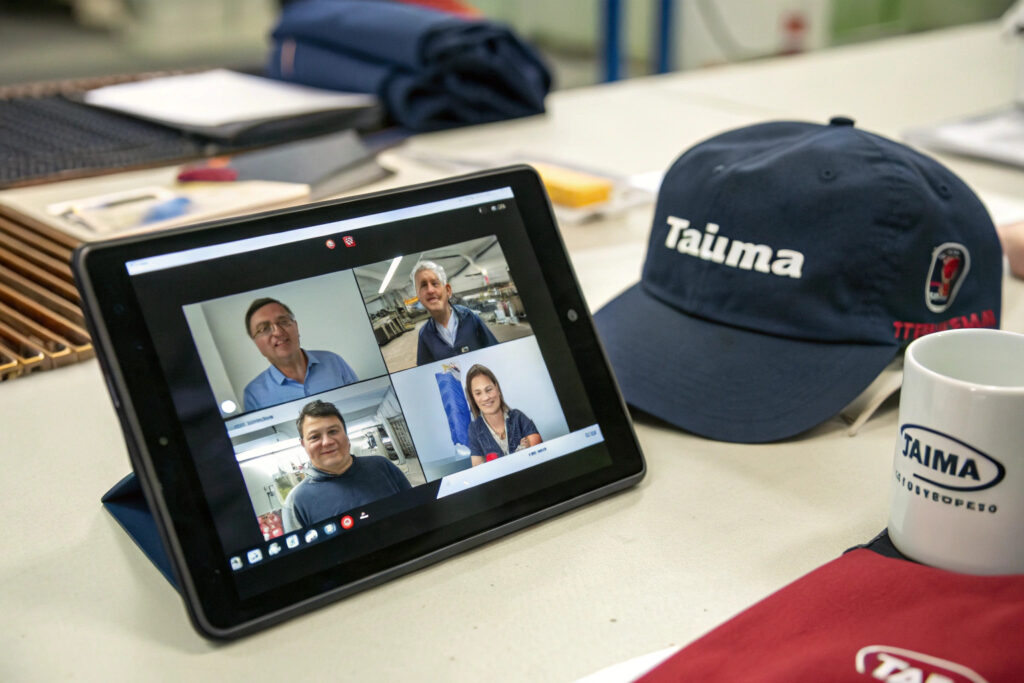
I encourage every new client to request a five-minute technical video call with the digitizer assigned to their project. During this call, do not just say hello. Ask to see the screen live as they open your actual file in their software. Watch how they navigate. A real digitizer who works solely for that factory will have a hard drive full of folders named after the factory's clients. They will instinctively zoom into the trouble spots of your logo and explain, unprompted, why they adjusted the underlay angle at the left corner. An outsourced freelancer who is just called in for a quick screen share will have a generic desktop, and they will struggle to answer specific technical questions about cap construction. They might be an expert digitizer, but they are not the factory's digitizer, and that is a critical distinction for quality control and timeline accountability.
What Questions Should You Ask During a Live Digitizer Interview?
You should ask questions that require on-the-spot screen interaction. Say, "Show me the stitch-out sequence simulation for the letter 'R' in my logo, and explain how you are handling the counter inside it." A real in-house cap digitizer will immediately click the stitch player, slow it down, and point to the screen. They will say something like, "I'm using a running stitch underlay at 90 degrees to the satin top to keep this small counter open, and I've reduced the stitch density here by 15% because of the center seam." They use specific technical vocabulary tied to cap sewing.
Then ask, "Can you show me a photo from your phone of a sew-out you fixed this week?" An in-house digitizer who works next to the machines has a camera roll full of sew-out photos. They capture failures and successes to document what works. An outsourced service might have a portfolio of vector images, but they rarely have a gallery of physical cap sew-outs from that specific factory's production line. The in-house person will show you a picture of a cap that had a stitch gap, and they can tell you the exact pull compensation value they added to fix it. This intimacy with the physical outcome proves their location inside the factory ecosystem.
Why Is It a Red Flag if the Digitizer Cannot Visit the Sewing Floor?
A simple but powerful test is to ask, "If I request a change right now, how long until you can run a new sew-out?" An in-house digitizer answers in minutes: "I can send this file to the machine right now, and we can have a photo for you within 20 minutes if the machine is free." An outsourced service answers in days: "Our revision window is 24-48 hours." This is because the outsourced digitizer has to email the file, the factory loads it, the factory sews it, the factory photographs it, and they email it back. The chain is long and disconnected.
I have sat in my office with a buyer on a video call, walked over to the digitizer's desk, asked them to rotate the logo two degrees, waited five minutes, and then walked the iPad to the embroidery machine to show the new sew-out running. That is logistical speed you cannot fake. If the digitizer has never physically stood in front of the exact brand of machine your hats will run on, say a specific model of Barudan with a cap frame, they are working blind. They are using generic machine settings that apply to a flat hoop, not the curved cap driver. A factory that outsources its digitizing is essentially guessing at the machine parameters, and your cap is the experiment.
How Do You Avoid Hidden Outsourcing of Embroidery Files in Bulk Orders?
Even if the factory has an in-house team, some will still outsource overflow work during busy seasons without telling the client. You approved a perfect sample based on an in-house file, but the bulk production file was secretly sent to a cheap external service to save time. The result is a shipment of 2,000 caps where the logos are slightly off-register, denser, or have thread breaks. The factory hopes you will not notice the difference between the sample and the bulk. You need to build a contractual and inspection process that prevents this switch.
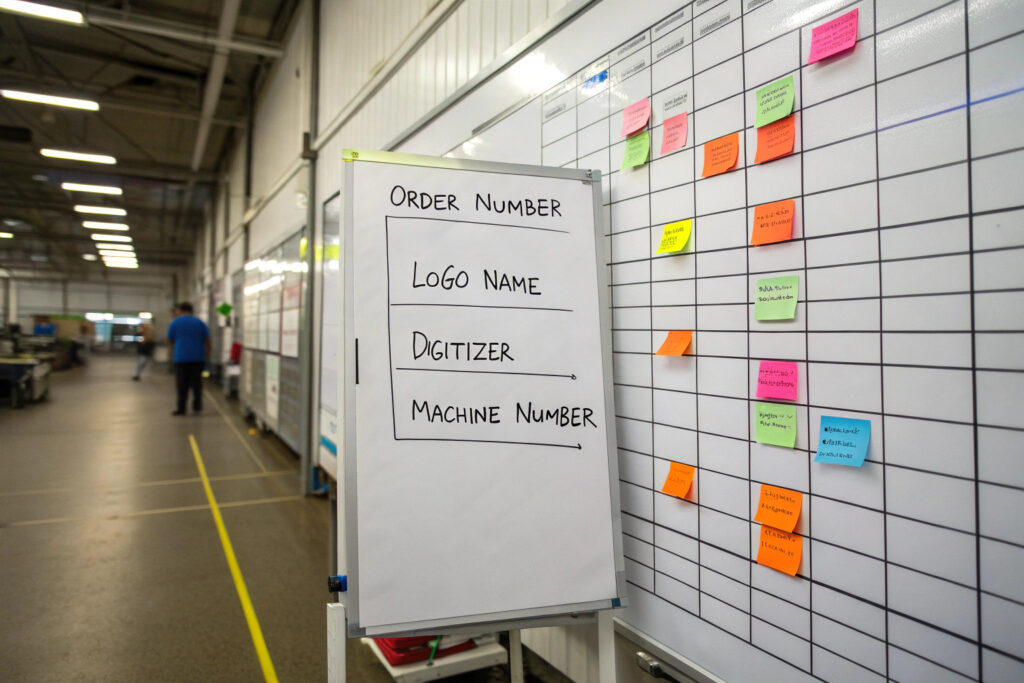
At Global-Caps, we assign a unique file code to every digitized logo. That code is embedded in the machine's software and printed on the production traveler that follows the cut panels through the factory. If a client suspects that the embroidery on their bulk caps does not match the approved sample, we can trace the exact file version that was loaded on the machine at the time of sewing. You should ask your supplier for a signed production confirmation that lists the file name and the digitizer's initials. This creates an audit trail. During a third-party inspection, the inspector can randomly pull a cap, unstitch a section of the embroidery, and count the stitch density. If it differs from the approved sample's spec sheet, someone swapped the file.
How to Use a "Production File Metadata" Clause?
I strongly recommend that buyers add a simple clause to their purchase orders: "Supplier guarantees that the embroidery digitized file used for bulk production shall be the identical file version approved in the pre-production sample, and supplier shall provide screen-shot metadata of the file creation date and last modified date upon request." This metadata is embedded in Tajima .dst files and other formats. An in-house file will show a creation date, a series of modifications during the sampling phase, and a final save date that matches the sample approval timeline.
An outsourced file bought after sampling might show a creation date that is three days before shipment. It will have no modification history. It was auto-saved once and emailed. This metadata is hard evidence of a bait-and-switch. I have shown clients how to read this metadata using free embroidery file viewers. It takes two minutes. If a factory hesitates to provide this data, it is because they know the metadata will reveal the true origin of the file. A factory that is proud of its in-house work will openly share the file history as proof of their rigorous version control.
How to Structure the Payment and Inspection Process to Protect Digitizing Integrity?
You can align financial milestones with the verification of the embroidery quality. Do not release the full balance until a defined number of bulk production caps have been physically pulled and compared to the gold-seal sample. This should be done by an independent inspection company, or you can do a live video inspection yourself. Ask the inspector to hold the bulk cap and the sample cap side-by-side under a magnifying glass. They should check the stitch density by eye, but also check the back of the embroidery on both caps. An outsourced file often uses a cheap, dense fill on the back, making the reverse side feel rough and stiff compared to the sample's clean, organized back-stitch pattern.
Another tactic is to require a "production load video." Ask the factory to take a 60-second video of the embroidery machines running your bulk order. The video should show a wide shot of the machines, then zoom in on the screen of one machine's control panel showing the file name and stitch count. This proves the approved file is loaded and running. Factories with nothing to hide do this willingly. It is a simple cell phone video. If a factory gives you endless excuses about why they cannot film the machine screen, it is a red flag that the digitizing process is not as integrated as they claimed.
Conclusion
Distinguishing an in-house embroidery digitizer from an outsourced service is about closing the physical distance between the design screen and the sewing needle. An in-house digitizer lives in the factory's ecosystem. They understand the specific stubbornness of a 6-panel cap seam, they adjust stitch angles based on how a specific Barudan or Tajima machine pulls thread that morning, and they have a camera roll full of failed sew-outs that taught them exactly what not to do. An outsourced service, no matter how talented, is disconnected from the visceral reality of a needle punching through buckram at high speed. They sell a file. An in-house digitizer delivers a guaranteed result on a curved cap.
When you are evaluating a supplier for your next custom cap order, you now have a clear set of diagnostic tools. The torture test file with small serif text and a sharp gradient will expose algorithmic thinking. The live video call where you ask to see the counter of the letter "R" will expose a lack of physical experience. The metadata check and the production load video will prevent a late-stage file swap. Use these tools, and you will never again accept a beautiful digital simulation as proof of embroidery competence.
If you are looking for a cap manufacturing partner where the digitizer and the embroidery machine are literally under the same roof, I invite you to start a conversation with us at Global-Caps. We embed our digitizing team right into our production flow so that your logo is engineered for a cap, not just for a screen. Reach out to our Business Director, Elaine, at elaine@fumaoclothing.com to request a sew-out of your test file. We will walk you through our process live, show you our machine screens, and prove that the file you approve is the file that runs on every single cap in your order.