You posted a video of your new recycled cap. It went viral overnight. 500,000 views. 10,000 comments. The top comment is a pinned question from a sustainability watchdog account with 200,000 followers: "Can you prove the recycled content claim? Post the GRS certificate." You have 24 hours before the algorithm moves on and the skepticism hardens into a reputation. You email the factory. It is midnight in China. No response. You have a marketing claim and no documentary proof. The claim that built your brand could destroy it. The clock is ticking.
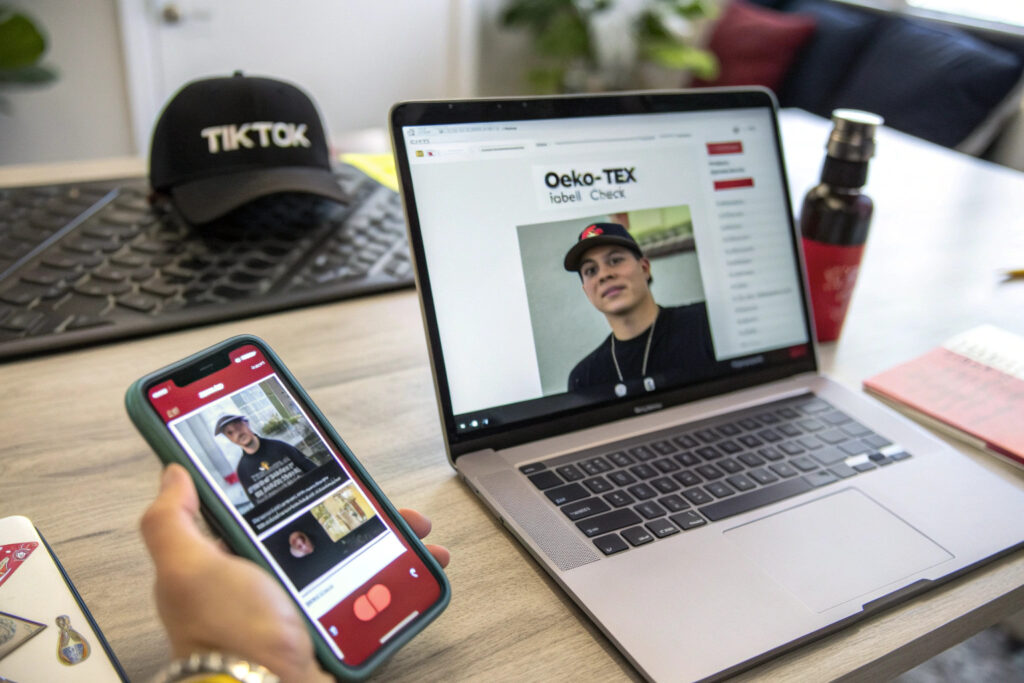
A TikTok-famous hat brand can verify its factory's sustainability claims quickly by following a three-step digital verification protocol that takes less than 60 minutes. Step one: request the certificate number—not the PDF—for each sustainability claim and verify it independently on the certification body's public database. The OEKO-TEX Label Check, the GOTS public database, and the GRS certification directory provide instant verification. Step two: request a live video call with the factory where the factory representative shares their screen and navigates to the verification database in real time, demonstrating the certificate is active and matches the factory. Step three: check that the certificate's product scope appendix lists the specific product and materials being claimed, not just the factory name. A certificate that covers "textile fabrics" does not cover your finished caps. The verification is fast. The response to the comment is faster.
At Global-Caps, my sustainability certifications are verified before the first sample is shipped. My certificate numbers are in my email signature. My product scope appendix lists every certified product category. I can complete a live screen-share verification in under five minutes. The TikTok brand that partners with me has the documentary proof ready before the video goes live.
What Digital Verification Tools Provide Instant Sustainability Proof?
You search Google for the certification body. You find five websites that look official. One has a verification portal. One requires a login. One is a blog about sustainability. You are lost in a maze of URLs. You lose 30 minutes finding the right page. The verification should take 30 seconds. The navigation should be bookmarked in advance. The digital tools exist. You need to know where they are.
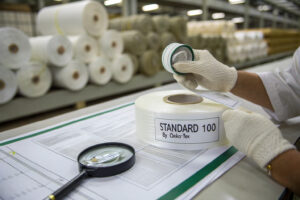
The digital verification tools that provide instant sustainability proof are the official public databases maintained by each certification body. The OEKO-TEX Label Check page allows verification of OEKO-TEX Standard 100 certificates. The Textile Exchange GOTS public database allows verification of GOTS scope certificates. The GRS certification directory allows verification of GRS certificates. Each tool is free, public, and returns a result in seconds. The tools are the single source of truth. A certificate PDF can be forged. A database record cannot.
I provide all verification URLs to my clients in a single document. The document includes the direct link, the certificate number, and the expected result. The client can complete all verifications in under 15 minutes.
The URL of the verification page is the first thing to verify. A fake verification page looks official but lives at a different domain.

What Is the Official URL for the GOTS and GRS Public Certification Databases?
The GOTS public database is accessible at https://global-standard.org/public-database. The user enters the company name or the certification body name. The database returns the scope certificate details, the certified product categories, and the validity status.
The GRS certification directory is accessible through the Textile Exchange website at https://textileexchange.org/standards/certification. The user searches by company name. The directory confirms the company holds a valid GRS scope certificate. Transaction certificate verification is typically handled through the certification body that issued the TC. Contact the certification body directly with the TC number.
My verification guide for clients includes the direct URLs, the certificate numbers, and the expected search results.
How Can a Simple QR Scan During a Factory Video Call Confirm Claims?
During a live video call, the factory representative can walk to the production floor, pick up a finished cap from the bulk carton, and scan the QR code on the hangtag with their smartphone. The scan result appears on the shared screen. The client sees the live certificate data, the product information, and the verification timestamp. The physical act of scanning a random production cap, live on camera, proves the QR code is functional and linked to valid certificates.
A pre-recorded video of a QR scan can be staged. A live scan of a random cap from the production line cannot be staged. The interactivity—the client can ask the representative to scan a different cap from a different carton—provides assurance that the system is genuine.
My live QR scan demonstration is a standard part of my video call protocol for new clients. The scan proves the digital certificates are linked to the physical product.
What Red Flags Indicate a Factory's Sustainability Claims Are Unsubstantiated?
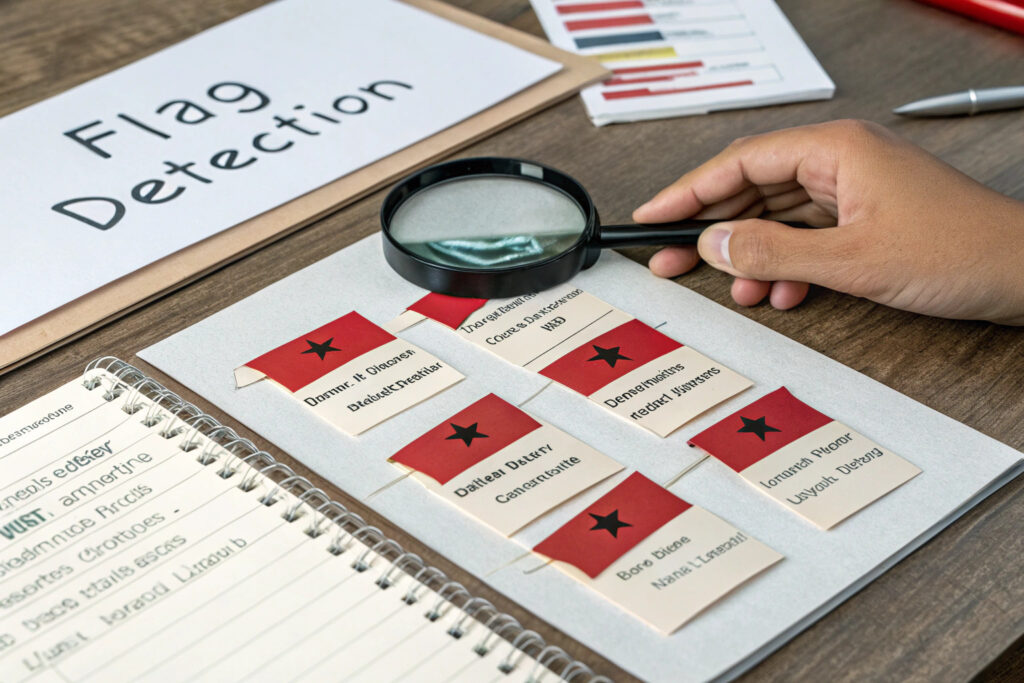
You ask the factory for their sustainability certificate. They send a "Supplier Sustainability Declaration" on their own letterhead. The declaration states they use "eco-friendly materials" and "ethical labor practices." It is signed by the sales manager. There is no third-party certification body named. There is no certificate number. There is no audit date. The declaration is a self-written essay. It is not a certificate. It is a red flag printed on company stationery.
Red flags indicating unsubstantiated sustainability claims include a self-declaration letter with no third-party certification body involvement, a certificate cover page with no appendix listing the specific products and materials, an expired certificate date, a certificate holder name that does not match the factory's legal entity, a product scope that covers only raw materials like "cotton fabric" rather than "finished headwear," and a factory representative who refuses or deflects when asked to provide the certificate number for independent database verification. A single red flag is suspicious. Multiple red flags indicate a pattern of deceptive claims.
My red flag checklist for clients is a one-page document. The client runs through the checklist during the first supplier interaction.
The self-declaration is the most common red flag. It is also the easiest to spot.
Why Is a "Supplier Self-Declaration" Letter Not Proof of Sustainability?
A supplier self-declaration is a document written and signed by the supplier themselves. It states that the supplier's products meet certain environmental or social standards. The statement is not verified by any independent third party. There is no audit. There is no testing. There is no certification body oversight. The declaration is a promise made by the party that benefits from the promise being believed.
A sustainability certification—GOTS, GRS, OEKO-TEX—is issued by an independent, accredited certification body after an audit of the factory's facilities, processes, and products. The certification is verified by third-party testing and annual re-audits. The certification is evidence. The self-declaration is a claim.
My sustainability documentation is exclusively third-party certifications. I do not issue self-declarations for certified product claims.
A factory that refuses to share the certificate number for independent database verification is hiding something. The certificate number is not confidential. It is the public identifier of a publicly verifiable credential. The purpose of the certificate is to be verified. A factory that withholds the number may be using a forged PDF, a borrowed certificate from a different company, or an expired certificate with altered dates.
The refusal to share the number is a definitive red flag. The buyer should not proceed without independent verification.
My certificate number is in my email signature, on my website, and on my business card. I want buyers to verify it.
How to Read a GOTS or GRS Certificate Appendix for Product Scope?
You receive a GOTS certificate. The cover page has the factory name and the GOTS logo. You think this proves the caps are GOTS certified. The certificate covers the factory's yarn spinning operation. The factory sells certified yarn. The factory also makes caps, but the cap manufacturing is not in the certified scope. The certificate you received does not cover the caps. You assumed the whole factory was certified. The certification is specific to the processing stage and product category.
You read a GOTS or GRS certificate appendix by locating the list of article groups. Each article group describes a certified product category and the processing stages covered. You look for an article group that describes your specific product: "Finished Headwear," "Caps and Hats," or "Made-Up Textile Articles." You check that the processing stages include "Sewing," "Making-Up," or "Manufacturing of Finished Products." You confirm that the fiber composition matches your product. If no article group covers finished headwear, the factory's certification does not cover the caps you are buying.
My GOTS appendix lists "Finished Headwear - Caps, Hats, and Beanies" as a certified article group. The processing stage is "Manufacturing of Finished Textile Products."
The appendix is a multi-page document. The article groups are typically listed on the second or third page.

How Can You Tell If the Certificate Covers "Finished Headwear" or Just "Fabric"?
The article group description tells you the processing stage. "Spinning" means the certificate covers yarn. "Weaving" or "Knitting" means it covers fabric. "Dyeing and Finishing" means it covers dyed fabric. "Making-Up" or "Manufacturing of Finished Products" means it covers finished caps. You need the finished product processing stage to be listed for the caps to be certified.
If the certificate only lists "Cotton Woven Fabrics" and does not include a making-up stage, the fabric is certified. The cap is not. The factory can legally sell certified fabric. They cannot legally sell a certified finished cap.
My appendix review guide for clients explains each processing stage and what it means for product certification.
Why Must the Certificate's Validity Date Be Within the Production Window?
The GOTS or GRS certificate must be valid—not expired—on the date the caps were manufactured. If the certificate expired before the production date, the caps manufactured after the expiry date are not certified. If the certificate was renewed after the production date, the caps manufactured during the gap are not certified.
The buyer should check the certificate validity dates against the production timeline. The production date should fall within the validity period. A certificate that was valid when the purchase order was signed but expired before production began does not cover the order.
My certificate validity is tracked in my compliance calendar. I ensure the production date falls within the validity period for every certified order.
How to Build a Quick-Response Sustainability Verification Kit?
The TikTok comment demands proof. You scramble. You search your emails for the certificates. You cannot find them. You email the factory. They are offline. You lose two hours that you did not have. The response window closes. The next time this happens, you are prepared. The verification kit is on your desktop. The certificates are pre-verified. The response template is written. The verification takes five minutes. The response is posted in ten.
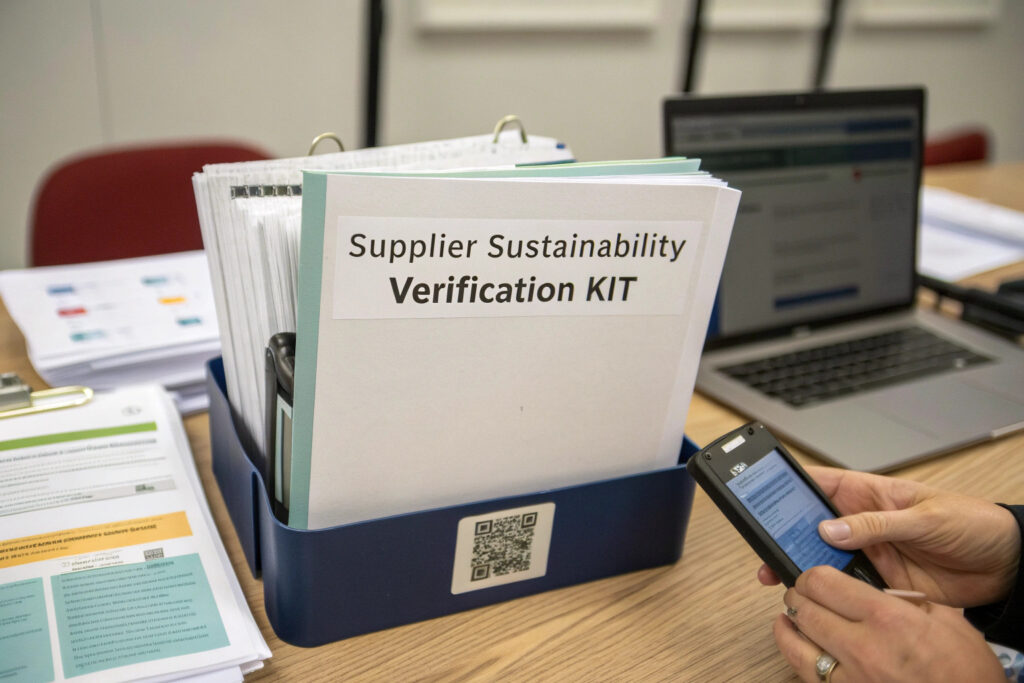
You build a quick-response sustainability verification kit by pre-verifying all supplier certifications before you launch the product, saving the verification results in a dated digital folder, writing a social media response template that links to the certification databases, and preparing a verification FAQ for your customer service team. The kit is built before the crisis. The kit is deployed during the crisis. The preparation transforms a 24-hour panic into a 10-minute response.
My client verification kit includes pre-verified certificate numbers, direct database links, and a co-branded verification page that the brand can link to in their social media bio.
The pre-prepared social media response is the capstone of the verification kit.
What Pre-Verified Documents Should Be in Your Brand's "Proof Folder"?
The proof folder should contain: the factory's OEKO-TEX certificate number with a screenshot of the Label Check verification result showing the valid status and the product scope, the GOTS or GRS certificate number with a screenshot of the database verification, the factory's business license showing the legal entity name matches the certificate holder name, a dated photo or video of a QR code scan on a production cap, and a signed letter from the factory authorizing the brand to publish the certificate numbers.
The documents are organized by certification type and dated. The folder is updated every six months or upon certificate renewal. The folder is accessible to the brand's marketing and customer service teams.
My proof folder for each client is a shared drive folder. The folder is updated when certificates are renewed.
How Can You Pre-Draft a Social Media Response Linking to Live Certificates?
The pre-drafted response should read: "Thanks for asking! Our caps are made with [GOTS-certified organic cotton / GRS-certified recycled polyester]. Here's the proof: [Link to OEKO-TEX Label Check result]. [Link to GOTS database result]. You can verify the certificate numbers yourself on the official databases. We believe transparency is the only sustainability claim that matters."
The response is drafted in the brand's voice. The links are tested and active. The response is saved in the social media management platform. When the question comes, the response is posted in seconds.
My social media response template is customizable for each brand. The links point to the live verification pages for the specific certificates covering the product.
Conclusion
A TikTok-famous hat brand can verify its factory's sustainability claims quickly by using the free, public digital verification databases maintained by the certification bodies. The OEKO-TEX Label Check, the GOTS public database, and the GRS certification directory provide instant verification of certificate validity, product scope, and certificate holder identity. A live video call with a QR code scan on a random production cap confirms the digital certificates are linked to the physical product.
The red flags of unsubstantiated claims are identifiable in minutes: a self-declaration letter with no third-party certification, a certificate cover page with no appendix, an expired date, a mismatched company name, or a refusal to provide the certificate number. A single red flag warrants investigation. Multiple red flags indicate fraudulent claims.
The quick response is enabled by preparation. A verification kit with pre-verified certificates, database screenshots, and a pre-drafted social media response transforms a crisis into an opportunity to demonstrate transparency. The brand that proves its claims in the comments section wins the trust of the audience. The brand that cannot prove its claims loses more than a comment thread.
At Global-Caps, my sustainability certifications are pre-verified and available for instant client verification. The certificate numbers are public. The database links are bookmarked. The QR codes on the caps link to live certificates. The proof is ready before the video goes live.
If you are a brand that needs verifiable sustainability claims from your hat factory, contact my Business Director Elaine. She can provide our certificate numbers, demonstrate a live database verification, and help you build your verification kit. Email Elaine at elaine@fumaoclothing.com. Let's make your sustainability claims scannable, verifiable, and comment-proof.