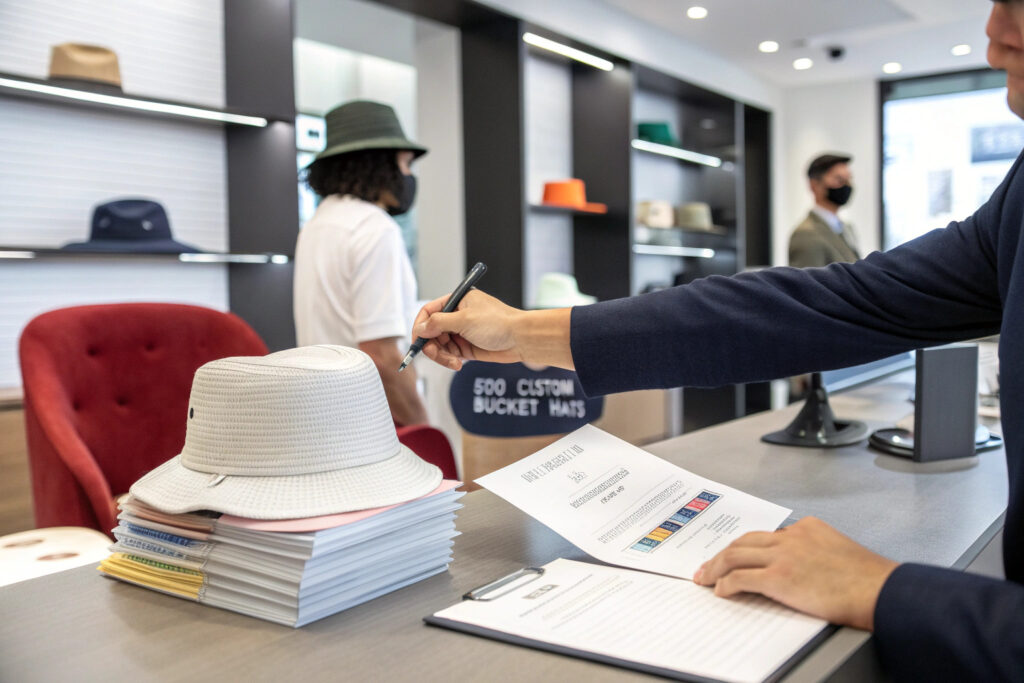
You need 500 bucket hats. You contact ten factories. Five say "MOQ 1,000." Three say "MOQ 500, but the price is the same as 1,000." Two say "MOQ 500 with a small order surcharge of $150." You feel penalized for not ordering enough. The factory's cost structure is built for large runs. Your 500 units are a small order in their world. The price penalty is their way of recovering the fixed setup costs from a smaller quantity. You are paying for the machine setup, the dye bath minimum, and the cutting table changeover. The penalty is real. But it is negotiable.
You source 500 pieces of custom bucket hats with no minimum order penalty by working with a factory that offers a graduated volume pricing tier where 500 units falls within a standard pricing bracket rather than below a minimum threshold, by selecting stock fabric colors instead of custom-dyed colors, by accepting a standard factory trim package instead of fully custom components, and by placing the order during the factory's standard production scheduling window rather than as a rush order. A 500-unit order is not a micro-batch. It is a small-to-medium production run for a specialized headwear factory. A factory that penalizes a 500-unit order with a surcharge is a factory optimized for orders of 5,000 units and above. You need a factory optimized for orders of 300 to 3,000 units.
At Global-Caps, my standard MOQ is 100 units per color for stock fabrics. A 500-unit order is firmly within my standard production range. The unit price at 500 units includes the volume discount. There is no small-order surcharge. The 500-unit order is a welcome order, not a penalized order.
What Is a "Small Order Penalty" and Why Do Factories Charge It?
You see a "small order surcharge" on the invoice. You think the factory invented it to extract more money. You are wrong. The surcharge is the factory's way of recovering the fixed setup costs that are the same whether you order 100 units or 10,000 units. The pattern maker spends the same time. The digitizer spends the same time. The cutting table is set up once. The sewing line is configured once. These costs are fixed. They must be paid. If you order 10,000 units, the fixed cost per unit is pennies. If you order 500 units, the fixed cost per unit is dollars. The penalty is the arithmetic of fixed costs divided by a smaller quantity.
A small order penalty is a price surcharge or a higher per-unit price applied to orders below the factory's standard minimum order quantity. It reflects the fixed setup costs—pattern making, embroidery digitizing, screen or printing plate setup, cutting table configuration, and sewing line changeover—amortized over fewer units. The penalty is not a punishment. It is cost recovery. However, a factory that frequently handles orders in the 300 to 1,000 unit range has optimized its setup processes to reduce these fixed costs, allowing competitive pricing at 500 units without a penalty.
My production setup is optimized for small-to-medium batch runs. The changeover time between orders is minimized through modular sewing cells and quick-change cutting templates.
The cutting table setup and the sewing line changeover are the two largest fixed costs in a hat production run.
How Do Fixed Setup Costs Like Digitizing and Cutting Affect Small Orders?
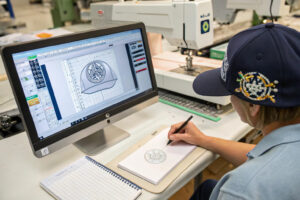
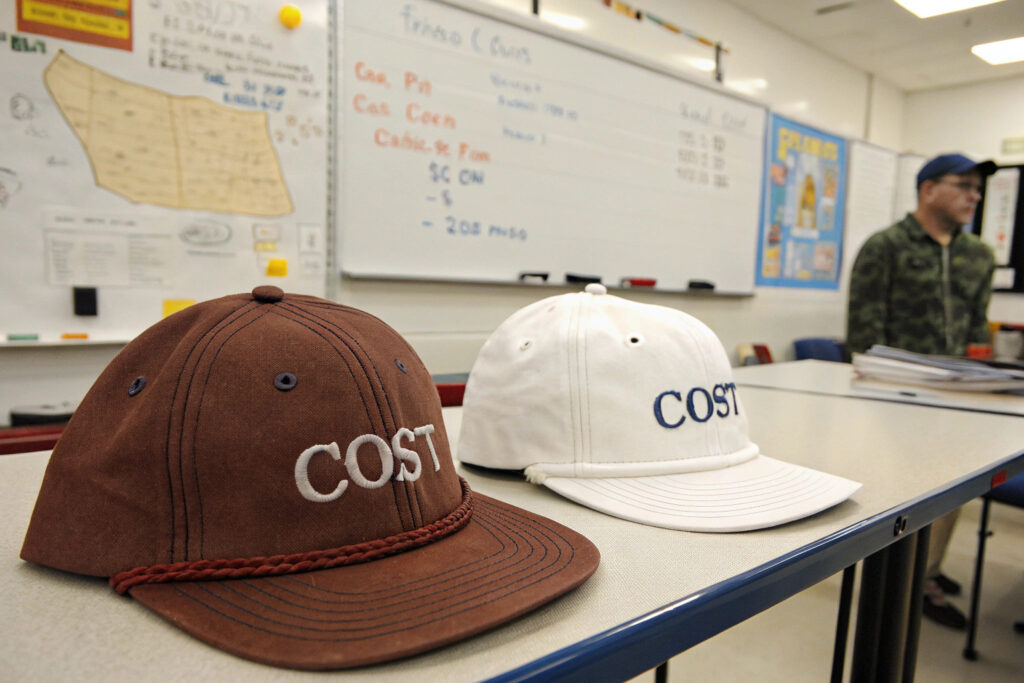
Embroidery digitizing is a one-time fixed cost. The digitizer spends 45 to 90 minutes mapping your logo. The cost is $40 to $60. Whether you order 100 caps or 10,000 caps, the digitizing cost is the same. At 100 units, the digitizing adds $0.50 per cap. At 500 units, it adds $0.10 per cap. At 10,000 units, it adds less than $0.01 per cap.
The cutting table setup involves laying out the fabric, positioning the pattern marker, and configuring the cutting machine. The setup takes 30 to 60 minutes. The cutting itself is fast. The setup time is fixed regardless of the order quantity.
My digitizing fee is quoted separately as a one-time NRE charge. It is credited against the bulk order for orders over 500 units.
Why Does the Dye House Minimum Push Up the Price on Colored Bucket Hats?
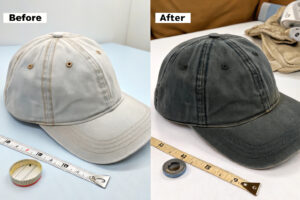
The dye house has a minimum batch size for custom colors. The dye machine must be filled to a certain level for the dye to circulate properly. The minimum is typically 30 to 50 kilograms of fabric, which yields 300 to 500 bucket hats depending on the fabric weight. If you order 500 hats in a custom color, you are at or above the dye house minimum. The dye cost is amortized across your entire order. No penalty.
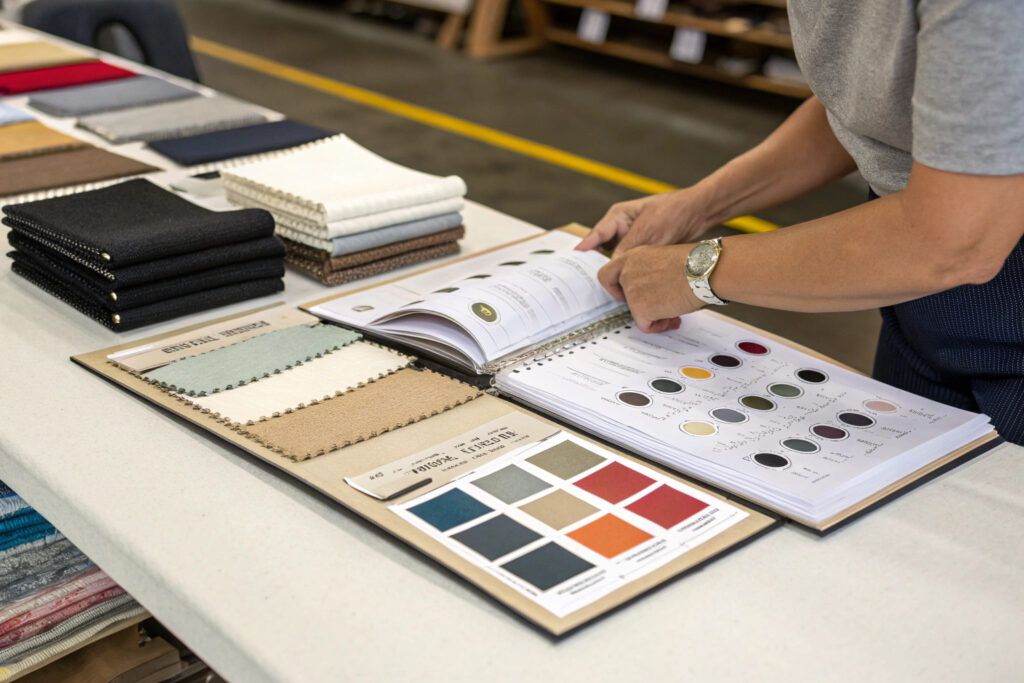
If you order 500 hats in stock fabric colors, the factory already has the fabric in inventory. The dye house minimum was absorbed when the factory purchased the stock fabric in bulk. Your 500 units ride on the factory's bulk fabric purchase. The stock color option eliminates the dye house minimum entirely.
My stock fabric program includes 20 colors in cotton twill and nylon. The stock colors have zero dye minimum. Custom Pantone matching is available with a 300-unit minimum per color.
How to Choose Stock Materials and Trims to Avoid Customization Penalties?
You want every component customized. A specific shade of green for the drawstring. A custom-shaped metal eyelet with your logo. A sweatband in a unique fabric blend. Each customized component requires a supplier MOQ, a setup charge, and a longer lead time. Your 500-unit order becomes a collection of 500-unit minimums on five different components. The price escalates. The factory calls it an MOQ penalty. It is actually five separate supplier MOQs stacking up on your order.
You avoid customization penalties by limiting customization to the areas with the highest brand impact—the fabric print, the embroidery, and the woven label—and selecting stock options for the structural components. The fabric can be custom printed. The logo can be custom embroidered. The woven label can be custom designed. The sweatband, the drawstring, the eyelets, the brim stitching, and the internal binding should be selected from the factory's standard trim library. Each stock trim avoids a supplier MOQ and a setup charge.
My trim library includes over 50 stock components. Clients can customize the visible, brand-facing elements while selecting stock options for the structural elements.
The drawstring, the eyelets, and the sweatband are the three trim items that most frequently trigger supplier MOQs.
Which Customizations Add Value Without Increasing the Unit Price?
Customizations that add value without significantly increasing the unit price include a custom woven label sewn onto the front or side of the hat, a custom screen print or embroidery on the crown fabric, a custom-printed internal sweatband tape with the brand name, and a custom hangtag. These customizations use the factory's existing equipment and do not require a separate supplier setup.
A woven label requires a one-time loom setup fee of $30 to $50 but adds only $0.25 to $0.40 per hat. Embroidery requires a one-time digitizing fee but adds $0.30 to $0.60 per hat. These customizations deliver high brand impact for a low per-unit cost and do not trigger supplier MOQs.
My branding customization guide shows the setup cost and per-unit cost for each branding option. Clients choose the options that fit their budget.
How Do Standard Sweatbands and Drawstrings Reduce the Overall Cost?
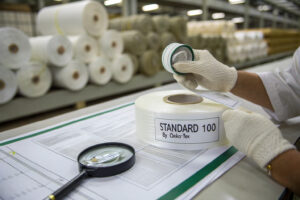
A standard cotton sweatband is a stock item. The factory buys it in bulk rolls from a sweatband supplier. The cost is $0.08 to $0.12 per hat. A custom sweatband—a specific color, a specific blend, a printed logo—requires a separate order from the sweatband supplier with a minimum of 1,000 to 5,000 yards. The cost is $0.20 to $0.35 per hat, plus a setup fee.
A standard polyester drawstring with a plastic toggle is a stock item. The cost is $0.10 to $0.15 per hat. A custom-dyed drawstring with a custom-shaped toggle requires separate MOQs from the drawstring supplier and the toggle supplier.
My cost comparison sheet shows the price difference between stock and custom for each component. Clients make informed trade-offs.
How Can Piggybacking on Larger Production Runs Reduce Your Per-Unit Cost?
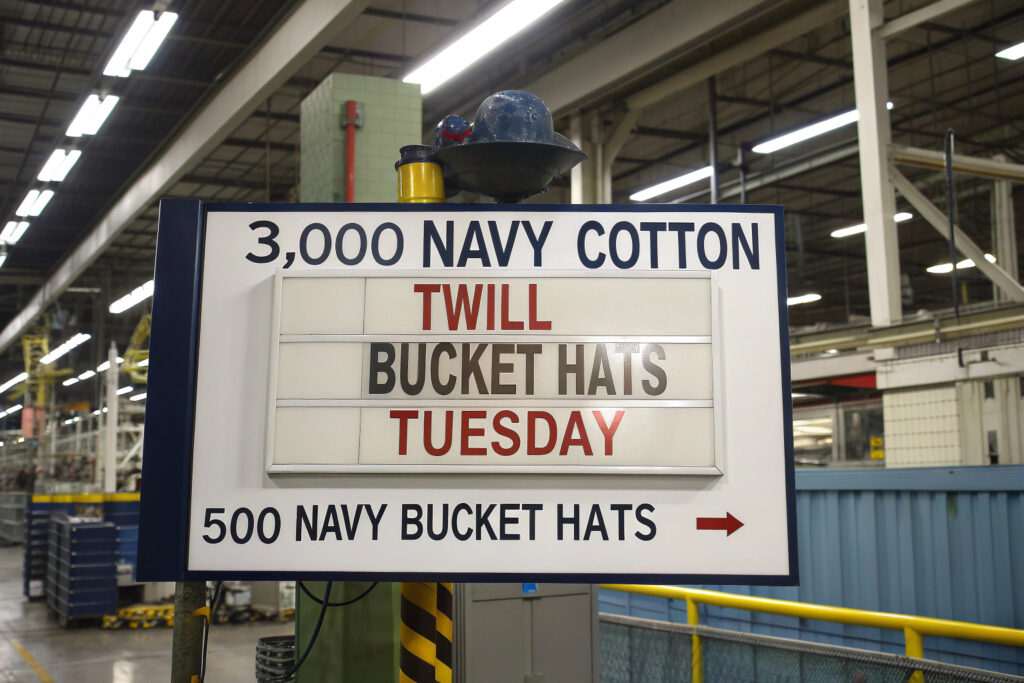
You place a 500-unit order. The factory schedules it as a standalone production run. The cutting table is set up for your order. The sewing line is configured for your order. The embroidery machine is threaded for your order. Every setup cost lands on your 500 units. You pay the full setup burden. You do not know that another brand placed a 3,000-unit order for the same base hat in the same color. Your order could have been produced alongside theirs, sharing the setup costs. The factory did not offer the piggyback. You did not ask.
Piggybacking reduces your per-unit cost by combining your 500-unit order with a larger order that uses the same base materials and similar production specifications. The cutting table is set up once. The sewing line is configured once. The embroidery machine uses the same thread colors. Your order is produced as a sub-batch within the larger run. The fixed setup costs are shared across both orders. Your 500 units benefit from the efficiency of the 3,000-unit run.
My production scheduling actively looks for piggybacking opportunities. When a client orders 500 units of a common base style, I check the production calendar for compatible larger orders.
Shared thread colors on the embroidery machine are one of the most impactful piggybacking efficiencies.
What Questions Should You Ask About the Factory's Production Calendar?
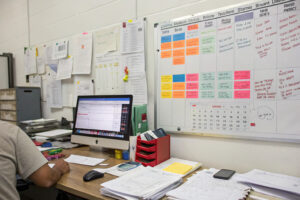
You should ask: "Do you have any larger orders scheduled in the next four weeks that use the same base fabric and color as my order? Can my order be scheduled alongside a compatible larger run? What thread colors are loaded on the embroidery machines for the upcoming production week? Can my logo use those colors to avoid a thread change fee?"
These questions signal to the factory that you understand piggybacking and expect them to offer the efficiency. A factory that cannot answer these questions is not managing production scheduling at the level required to offer piggybacking.
My production calendar is reviewed with every client during the order placement call. I identify piggybacking opportunities proactively.
Yes. If a large order for a sports team uses navy, white, and gold thread, and your logo uses navy and white, your order can be run immediately after the sports team order without a thread change. The thread colors are already loaded. The machine setup is preserved. The changeover time between the two orders is minimal.
The thread color compatibility is a significant cost and time saver. The factory should offer to share the upcoming thread schedule with you so you can align your logo colors.
My embroidery scheduling shares the weekly thread schedule with clients. Clients can adjust their logo colors to match the loaded threads and save on changeover costs.
How to Structure a 500-Unit Purchase Order to Lock In No-Penalty Pricing?
You send a purchase order. It says "500 bucket hats, custom color, custom drawstring, custom sweatband, custom packaging, rush delivery in 2 weeks." The factory quotes a price 40 percent above the standard rate. You are outraged. The price is high because your PO is a collection of premium requests, each of which triggers a cost. The PO structured the penalty. The PO can structure the no-penalty.
You structure a 500-unit purchase order for no-penalty pricing by specifying stock fabric colors, stock trims, standard lead times, and a logo design that uses the factory's currently loaded thread colors. The PO should state the expected unit price for the 500-unit quantity tier based on the factory's published pricing. The PO should confirm that no small-order surcharge applies. The PO should reference any piggybacking arrangement or shared production slot.
My purchase order template includes a pricing confirmation section where the per-unit price and any surcharges are explicitly stated. No surcharge means no surcharge.
The pricing tier confirmation is a simple but powerful clause in the purchase order.
What Clauses Should You Include in the PO to Prevent Hidden Charges?
Include a clause that states: "The per-unit price of $X.XX includes all setup fees, digitizing fees, and cutting charges. No additional surcharges for order quantity, rush production, or small-batch handling will be applied. Any additional charges must be approved in writing by the buyer before being incurred."
Include a clause that states: "The factory confirms that the materials and trims specified are stock items. Any substitution of a non-stock material or trim that incurs an additional charge must be approved in writing by the buyer before production."
My PO terms and conditions include these protective clauses. The price on the PO is the price on the invoice.
How Do Payment Terms Affect the Negotiation of a No-Penalty Order?
A 500-unit order with a 30 percent deposit and 70 percent balance before shipment is standard and does not trigger a payment term penalty. A request for net 30 or net 60 payment terms on a small order may cause the factory to increase the unit price to cover the financing cost.
Offering to pay the deposit promptly and the balance upon receipt of the pre-shipment inspection report signals to the factory that you are a low-risk, professional buyer. The factory is more willing to offer no-penalty pricing to a buyer who pays on time.
My payment terms for 500-unit orders are 30 percent deposit, 70 percent before shipment. The terms are stated in the PO.
Conclusion
Sourcing 500 pieces of custom bucket hats with no minimum order penalty is achievable by working with a factory optimized for the 300 to 3,000 unit range, selecting stock materials and trims, piggybacking on compatible larger production runs, and structuring the purchase order to lock in the volume tier pricing. The small-order penalty is the arithmetic of fixed setup costs divided by fewer units. You reduce the penalty by reducing the fixed costs through stock selections and piggybacking, not by negotiating the surcharge.
Stock fabric colors eliminate the dye house minimum. Stock trims eliminate supplier MOQs. Piggybacking on a larger run shares the cutting and sewing setup costs. A logo that uses the currently loaded embroidery thread colors eliminates the thread change fee. A standard lead time eliminates the rush surcharge.
At Global-Caps, a 500-unit order is a standard order. My stock fabric program includes 20 colors. My trim library has 50 stock components. My production scheduling actively looks for piggybacking opportunities. My purchase order confirms the tier price with no surcharges. The 500-unit order receives the volume discount, not the small-order penalty.
If you need 500 custom bucket hats with transparent, no-penalty pricing, contact my Business Director Elaine. She can provide our volume pricing tiers, our stock fabric and trim catalogs, and a confirmed quote for your 500-unit order. Email Elaine at elaine@fumaoclothing.com. Let's make your 500 hats feel like a big order.