You compare two factories. Factory A quotes $4.50 per cap. Factory B quotes $3.20. The unit price difference is $1.30. You multiply by 5,000 caps. The savings with Factory B are $6,500. You choose Factory B. The caps ship. Your EU retailer tests the sweatband. It contains formaldehyde above the legal limit. The shipment is rejected. You lose the $15,000 purchase order. You pay $2,500 for return shipping and destruction. Your brand is delisted from the retailer's vendor portal. The $6,500 savings cost you $17,500 and a retail partnership. The cheap cap was the most expensive cap you ever ordered.
You choose a factory with an OEKO-100 Grade 1 certificate over a cheaper supplier because the Grade 1 certificate is a pre-audited, independently verified chemical safety guarantee that eliminates the hidden costs of compliance failure. The cheaper supplier's unit price does not include the cost of third-party chemical testing, the cost of customs detention, the cost of a failed retailer compliance audit, or the cost of a consumer safety complaint. The OEKO-100 Grade 1 factory has already invested in the material sourcing, the chemical management system, the segregated production lines, and the third-party lab testing. Those costs are in the unit price. The cheaper supplier has not made those investments. The buyer will pay for them later, with interest, in the form of a compliance failure.
At Global-Caps, I chose to invest in OEKO-100 Grade 1 certification because my clients sell to the most demanding retailers in Europe and North America. The certification is not a marketing expense. It is a business infrastructure investment. The unit price reflects the cost of making a demonstrably safe product. The cost of a recall or a retail delisting is orders of magnitude higher.
What Is the True Cost Comparison Between a Certified and Non-Certified Factory?
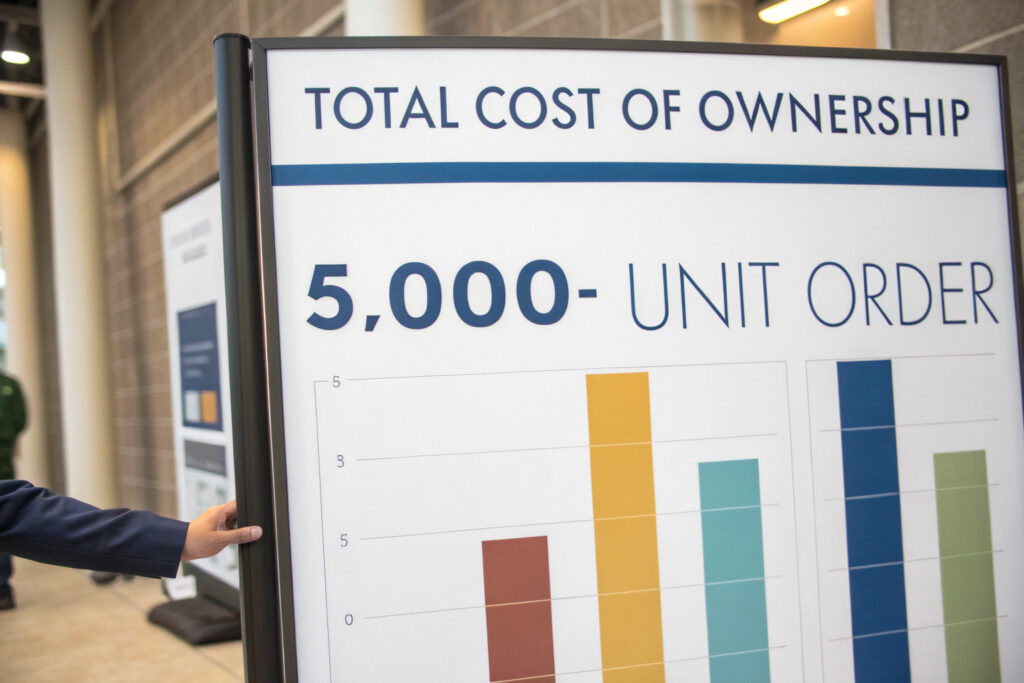
You compare unit prices. You think you are comparing costs. You are not. You are comparing the visible tip of a cost iceberg. The non-certified factory's unit price floats above the waterline. Below the waterline are the testing costs you will pay yourself, the customs delays, the retailer compliance rejections, the consumer returns, and the brand reputation damage. The certified factory's unit price includes most of the iceberg. The visible price is higher. The total submerged cost is lower.
The true cost comparison between a certified and non-certified factory must include the cost of third-party chemical testing, the cost of customs detention and laboratory analysis at the border, the cost of a failed retailer Restricted Substances List audit, the cost of consumer returns due to skin irritation or odor complaints, and the opportunity cost of lost retail partnerships. When these hidden costs are quantified, the certified factory's total cost of ownership is often lower than the non-certified factory's, even before accounting for the unquantifiable cost of brand reputation damage.
My total cost of ownership calculator compares the certified and non-certified cost scenarios for each client's order. The calculator quantifies the hidden costs based on industry data.
The third-party testing cost is the most immediate hidden cost. The non-certified factory does not pay it. You will.
How Much Does Third-Party OEKO-100 Testing Cost If You Arrange It Yourself?
If you buy from a non-certified factory and arrange third-party OEKO-100 testing yourself, the cost is approximately $500 to $1,200 per test, depending on the number of components and colors. A basic test for a single-color cap with standard components costs around $500. A test for a multi-color cap with multiple accessory components costs $800 to $1,200. The test must be repeated for each production batch and each new dye lot.
If you order 5,000 caps in two colors, you need two tests, costing $1,000 to $2,400. If you order four times per year, the annual testing cost is $4,000 to $9,600. The certified factory absorbs this testing cost as part of its certification maintenance. The unit price difference begins to shrink when the testing cost is factored in.
My testing cost schedule is published and shared with clients. The OEKO-100 Grade 1 certification covers the testing. The client pays zero additional testing fees.
What Are the Financial Penalties for a Failed EU Customs Chemical Inspection?
A failed EU customs chemical inspection triggers a series of costs. The goods are detained. Demurrage charges at the port begin accruing at $50 to $150 per day. A formal laboratory analysis is ordered, costing $500 to $1,000. If the failure is confirmed, the goods must be re-exported or destroyed, costing $1,000 to $3,000 in logistics and disposal fees. The importer may be fined by the national market surveillance authority. A RAPEX notification is issued, permanently damaging the brand's EU market access.
The total direct cost of a failed customs inspection ranges from $3,000 to $10,000 for a single container. The indirect cost of lost future sales is multiples higher.
My EU compliance guarantee is backed by the OEKO-100 Grade 1 certificate. My shipments clear customs without chemical detention.
How Does a Grade 1 Certificate Pre-Qualify You for Major Retailer Vendor Portals?
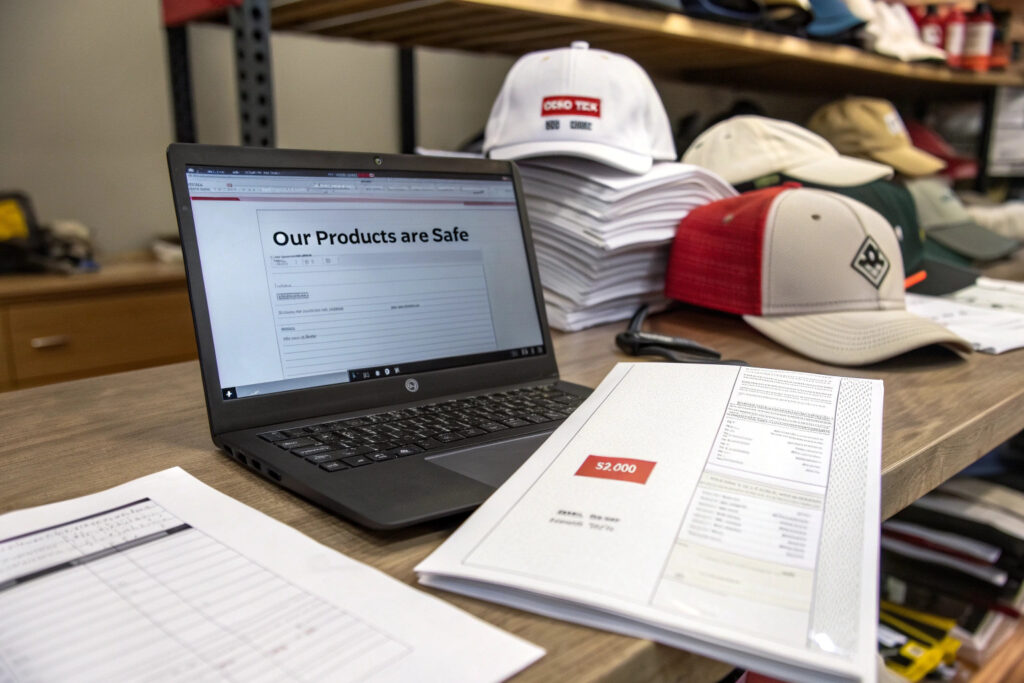
You apply to sell your caps in a major European department store. The vendor registration portal asks for your product safety documentation. You upload a generic "our products are safe" letter from your non-certified factory. The retailer's compliance team responds: "Please provide an OEKO-TEX Class I certificate or a full chemical test report from an ISO 17025 laboratory for every component." You do not have either. Your vendor application is suspended. You spend six weeks and $2,000 on testing. By the time your application is approved, the buying season is over. The shelf space went to a competitor who uploaded their OEKO-100 Grade 1 certificate on day one.
A Grade 1 certificate pre-qualifies you for major retailer vendor portals because it satisfies the retailer's chemical safety documentation requirement in a single, recognized document. The retailer's compliance team sees the OEKO-TEX Class I certificate from an accredited certification body, confirms it is valid on the Label Check database, and checks off the chemical safety section of the vendor approval. The approval process is fast-tracked. The product can be listed in the baby and children's department, which requires the strictest safety standards and carries the highest margins.
My retailer pre-qualification has opened doors with department stores that would not consider a non-certified supplier. The certificate is the key to the vendor portal.
The vendor manual of every major retailer specifies the required safety documentation. OEKO-TEX Class I appears on the first page.
What Specific Retailer RSL Requirements Does Grade 1 Automatically Satisfy?
A retailer's Restricted Substances List is a document specifying the chemical limits for all products sold in their stores. The RSL typically lists 100 to 200 individual substances with specific limit values. An OEKO-TEX Class I certificate from an accredited institute covers approximately 85 to 95 percent of the substances on a typical EU or North American retailer RSL.
The retailer's compliance team maps the OEKO-TEX test parameters to their RSL. The substances covered by OEKO-TEX are checked off. Only a handful of substances specific to that retailer's policy require supplemental testing. The OEKO-TEX certificate does 90 percent of the compliance work.
My RSL coverage analysis is documented for each major retailer. I provide the gap analysis to my clients so they know exactly which substances require supplemental testing.
How Much Faster Is the Vendor Approval Process With a Pre-Existing Grade 1 Certificate?
The vendor approval process for a supplier with a pre-existing OEKO-100 Grade 1 certificate is typically 5 to 10 business days for the chemical safety review. For a supplier without a certificate, the process is 20 to 40 business days, as the retailer must request, review, and verify individual test reports for every component.
The time difference is the difference between uploading one recognized document and uploading ten or more individual test reports that must each be verified. The fast-track approval means the product can be listed in the retailer's buying system before the seasonal buying window closes.
My vendor approval timeline for a new retailer is documented. The OEKO-TEX certificate is the first document I upload.
What Liability Protections Does a Grade 1 Certificate Provide to Your Brand?
A consumer sues your brand. They claim your cap caused a skin rash. Their attorney requests your chemical safety documentation. You provide the OEKO-100 Grade 1 certificate and the batch-specific test reports. The attorney reviews the documentation. The laboratory data shows no detectable restricted substances. The case is dropped. Without the independent test reports, your defense would be a verbal assurance from the factory owner. The verbal assurance loses in court. The test report wins.
A Grade 1 certificate provides liability protection by establishing a documented, independent standard of care. The certificate and the underlying test reports demonstrate that the brand took reasonable steps to ensure product safety. In the event of a consumer complaint, a regulatory investigation, or a product liability lawsuit, the documentation shows that the brand did not act negligently. The brand exercised due diligence. The liability is reduced or eliminated.
My product liability documentation is maintained for every production batch. The OEKO-TEX certificate is the foundation. The batch test reports are the evidence.
Due diligence is a legal defense. The OEKO-TEX certificate is the documentary proof of due diligence.
How Does the Certificate Demonstrate "Due Diligence" Under EU Product Safety Law?
Under the EU General Product Safety Regulation, an economic operator who places a product on the market must ensure the product is safe. The operator must maintain a technical file demonstrating the safety assessment. An OEKO-TEX Class I certificate from an accredited institute is recognized as evidence of a rigorous chemical safety assessment.
If a product is found to be unsafe, the operator may avoid penalties if they can demonstrate they exercised due diligence. The OEKO-TEX certificate, the batch test reports, and the supplier audit records collectively demonstrate due diligence. The operator did not blindly trust the supplier. The operator independently verified safety through a recognized certification system.
My technical file for each product includes the OEKO-TEX certificate, the appendix, the batch test reports, and the material traceability records.
Can the Certificate Reduce Your Product Liability Insurance Premiums?
Some product liability insurers offer premium reductions for products that carry recognized third-party safety certifications. The OEKO-TEX Standard 100 certification is a recognized risk mitigation factor. The insurer views the certified product as a lower risk for chemical injury claims. The premium reduction can be 5 to 15 percent.
The brand should discuss the certification with their insurance broker and provide the certificate as evidence of the enhanced safety management system. The premium saving partially offsets the higher unit cost of the certified product.
My insurance guidance to clients includes a recommendation to notify their broker of the OEKO-TEX certification and request a premium review.
Conclusion
Choosing a factory with an OEKO-100 Grade 1 certificate over a cheaper supplier is a decision to pay the visible cost of safety rather than the hidden cost of failure. The cheaper supplier's unit price excludes the testing, the customs risk, the retailer rejection risk, and the liability exposure. The Grade 1 factory has invested in these protections. The unit price includes them. The total cost of ownership is often lower for the certified factory.
The Grade 1 certificate pre-qualifies the product for major retailer vendor portals, fast-tracking the approval process from weeks to days. It satisfies 85 to 95 percent of retailer RSL requirements automatically. It provides a due diligence defense under EU product safety law and may reduce product liability insurance premiums.
The OEKO-100 Grade 1 certificate is not a cost. It is an asset. It opens retail doors. It clears customs faster. It protects the brand in court. It justifies a premium retail price. The cheaper supplier's lower unit price is a loan that comes due at the first compliance failure.
At Global-Caps, I invested in OEKO-100 Grade 1 certification because my clients are building brands that last. They need a supply chain that protects them, not one that exposes them. The certificate is the foundation of that protection. The unit price reflects the real cost of making a safe, certified, globally compliant product.
If you are weighing a certified factory against a cheaper supplier, contact my Business Director Elaine. She can provide our total cost of ownership calculator, our retailer RSL coverage analysis, and our batch test report package. Email Elaine at elaine@fumaoclothing.com. Let's compare the real costs, not just the unit prices.