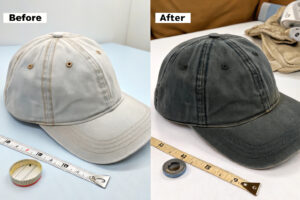
You find a cotton dad hat supplier in one day. You send a request on Alibaba. Ten quotes arrive by morning. The prices are similar. The lead times are short. You order samples. They arrive in two weeks. The quality is consistent. Now you want the same hat in corduroy. You send the same request. Three suppliers respond. Two quotes are 40% higher. One supplier says "MOQ 500 per color." The samples take four weeks. The colors are slightly off. The wale is wider than you wanted. The hat that was easy in cotton twill is suddenly impossible in corduroy. The fabric is the problem. The supply chain for corduroy is a different world from the commodity cotton market.
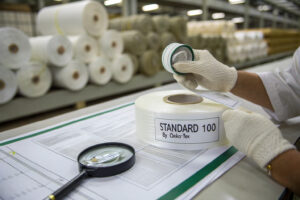
Corduroy dad hats are more difficult to source than cotton twill versions because corduroy is a niche fabric with limited mill production, higher raw material costs, and significantly more complex cutting and sewing requirements. Cotton twill is a commodity fabric produced by hundreds of mills in standard weights and colors. Corduroy is a specialty fabric produced by a limited number of mills, with long lead times for custom colors and high minimum order quantities for custom dyeing. The wale count, pile direction, and cutting layout all require specialized pattern-making knowledge that a standard cotton twill factory may not possess. A factory that cuts cotton twill cleanly may produce corduroy caps with twisted seams, mismatched wale lines, and distorted embroidery.
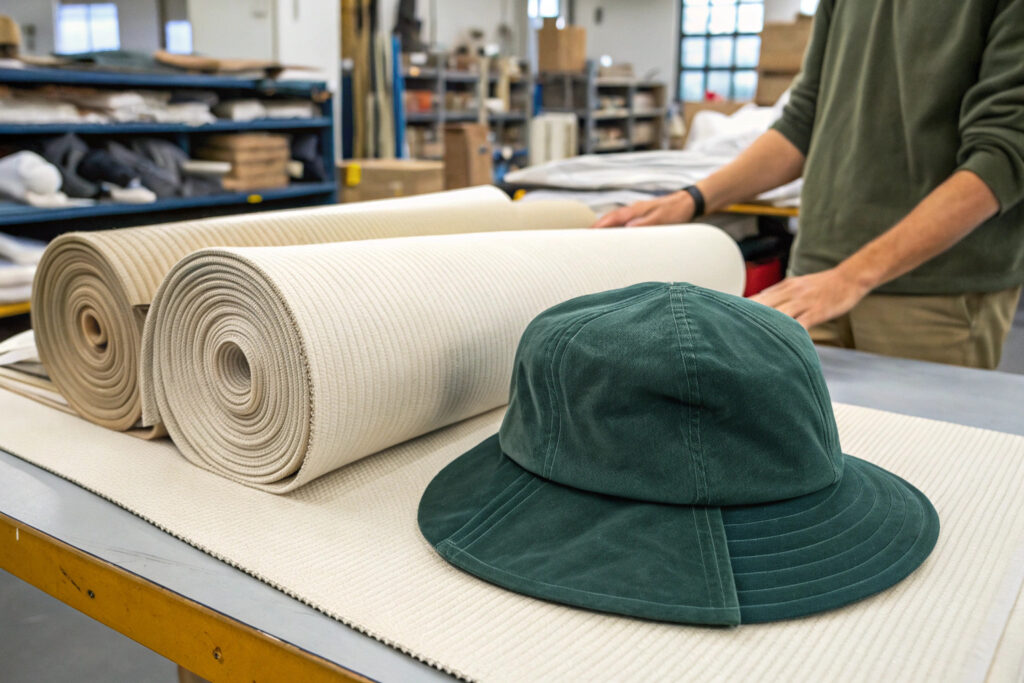
At Global-Caps, I source corduroy from a dedicated mill that specializes in apparel-grade corduroy. My pattern makers understand pile direction. My sewing line is trained on corduroy handling. The sourcing difficulty is real, but the difficulty is what makes the product premium.
Why Is Corduroy Fabric Less Available Than Cotton Twill for Headwear?
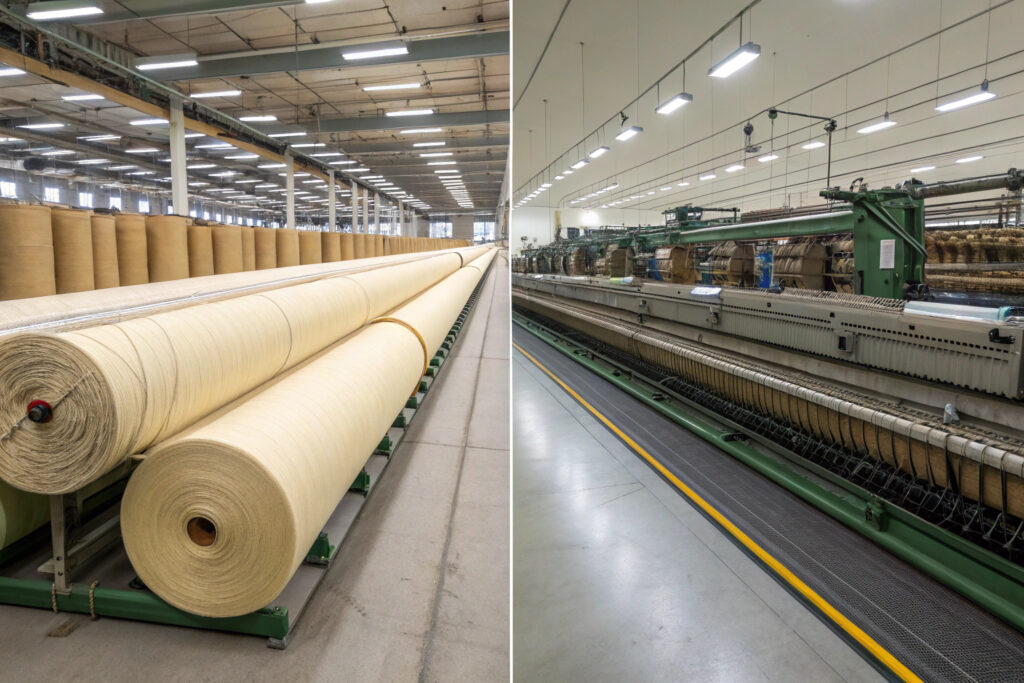
You assume all fabrics are equally available. Cotton is cotton. Fabric is fabric. You are wrong. Cotton twill is woven on a basic loom. Corduroy is woven on a specialized loom with an extra set of warp yarns and a cutting blade that slices the floats to create the pile ribs. The machine that makes corduroy is fundamentally different from the machine that makes twill. Fewer mills own the corduroy loom. Less machinery means less global production capacity. Less capacity means higher prices, longer lead times, and fewer stocked colors to choose from.
Corduroy fabric is less available than cotton twill for headwear because corduroy production requires specialized weaving looms with pile-cutting capability, which are far less common in the global textile industry. The production capacity for corduroy is a tiny fraction of the capacity for cotton twill. Cotton twill is a universal fabric used for pants, jackets, bags, and caps. Corduroy is a seasonal fashion fabric with fluctuating demand. Mills produce corduroy in limited production windows, often only during the spring for fall delivery. The yarn count, wale density, and pile height must be precisely controlled, which reduces the number of mills capable of producing consistent quality.
I maintain relationships with corduroy mills that produce consistent 8-wale and 14-wale qualities for apparel. I place my orders months in advance to secure capacity.
The wale count specification immediately narrows the available supplier pool. Only a handful of mills produce wide-wale corduroy.
How Does the Limited Number of Corduroy Mills Affect Lead Times?
There are approximately 10 to 15 major corduroy mills globally that produce apparel-grade corduroy, concentrated in China, India, and Turkey. Cotton twill mills number in the hundreds. When a corduroy mill receives bulk orders from large apparel brands for the fall season, their production capacity is fully consumed. A small headwear order competes with these large orders for machine time.
A custom-dyed corduroy color from one of these mills typically has a lead time of 4 to 8 weeks. A custom-dyed cotton twill color from a standard mill has a lead time of 2 to 3 weeks. The corduroy lead time is double.
I place my corduroy mill orders in February for July delivery to secure capacity before the large apparel brands book the fall production slots.
What Are the MOQ Differences for Custom-Dyed Corduroy vs Custom-Dyed Twill?
Custom-dyed cotton twill typically has a minimum order quantity of 100 to 200 meters per color. This yields approximately 500 to 1,000 dad hats. Custom-dyed corduroy typically has a minimum order quantity of 300 to 500 meters per color. This yields approximately 1,500 to 2,500 dad hats.
The higher MOQ is driven by the corduroy mill's dye machine setup. The dye bath for corduroy requires specific temperature controls to avoid crushing the pile. The setup cost is amortized over a larger batch. The mill simply cannot run small batches profitably.
I negotiate corduroy MOQs by combining orders from multiple clients into a single dye lot. This strategy requires coordination but lowers the barrier for smaller brands.
What Cutting and Sewing Challenges Are Unique to Corduroy Caps?
You send corduroy fabric to a cotton twill factory. You assume they can cut and sew it. The samples arrive. The crown panels have different shades because the pile direction was not aligned. The center seam is twisted because the thick fabric shifted under the presser foot. The embroidery is buried in the wales because no topping film was used. The factory cut and sewed corduroy like it was cotton twill. The fabric punished them for their inexperience.
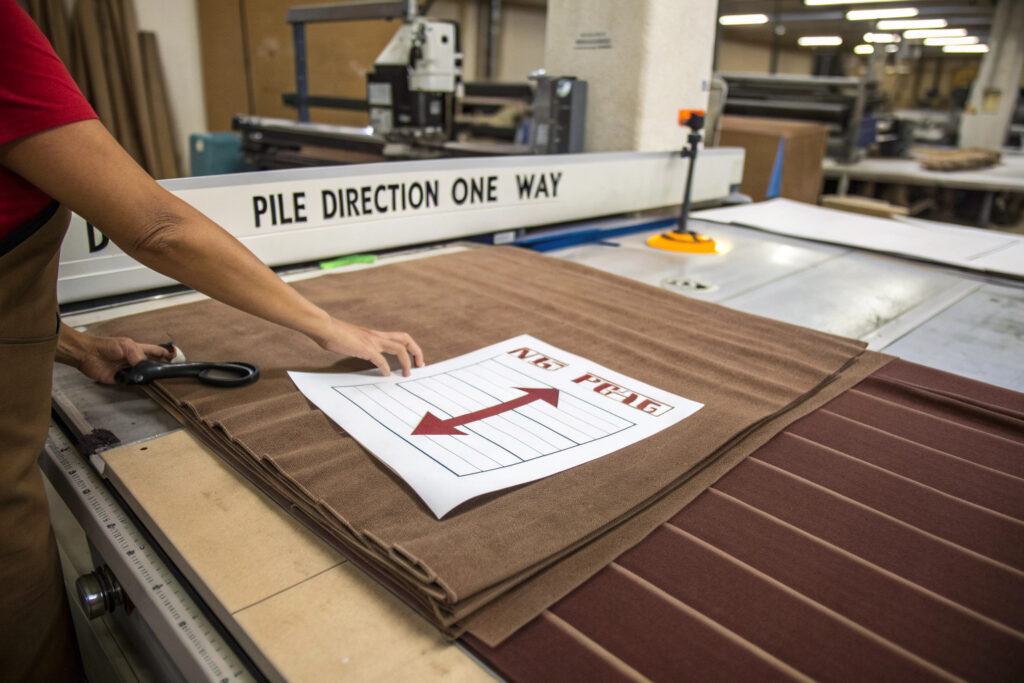
Corduroy caps require one-directional cutting layouts, pile-aligned pattern matching across panels, specialized presser feet and feed dogs on sewing machines, and embroidery techniques that prevent the stitches from sinking into the wale valleys. Cotton twill has no pile direction. The pattern can be nested in any orientation to maximize fabric utilization. Corduroy's pile creates a nap that reflects light differently depending on the viewing angle. Every panel must be cut with the pile running in the same direction or the finished cap will have panels that appear to be different shades.
My corduroy cutting protocol specifies a one-directional layout with the pile running upward on all panels. The protocol is non-negotiable.
The pile direction alignment is the most critical and most commonly violated cutting rule. A single misaligned panel ruins the cap.
Why Does the Pile Direction Require a One-Directional Cutting Layout?
The pile of corduroy is the raised rib surface. Light reflects off the pile differently depending on whether you are looking with the pile or against it. Looking with the pile, the color appears lighter. Looking against the pile, the color appears darker.
If the front panel is cut with the pile running upward and the side panel is cut with the pile running downward, the two panels will appear to be different colors when sewn together, even though they came from the same dye lot. A one-directional cutting layout ensures every panel has the same pile orientation and therefore the same apparent color.
My cutting markers for corduroy are printed with a directional arrow. The cutter must align the arrow with the pile direction on every panel. No exceptions.
How Does Corduroy's Thickness Affect Seam Allowance and Needle Selection?
Corduroy is thicker than standard cotton twill, especially wide-wale corduroy. A 300gsm corduroy can be 1.5 to 2 times thicker than a 200gsm cotton twill. The thickness affects the seam allowance folding, the seam bulk at intersecting seams, and the needle penetration force required.
The sewing machine must use a heavier needle, typically size 90/14 or 100/16 compared to size 75/11 for twill. The presser foot pressure must be reduced to avoid crushing the pile. The feed dog must be a fine-tooth type to avoid marking the fabric. The seam allowance at the center front seam must be trimmed to half width to reduce bulk where multiple panels meet.
My sewing specification for corduroy includes needle size, thread tension, and presser foot pressure settings that are completely different from the cotton twill settings.
How Does Embroidery Performance Differ on Corduroy vs Cotton Twill?
You embroider a logo on cotton twill. It is flat, sharp, and professional. You use the same digitized file on corduroy. The stitches sink into the ribs. The logo looks like it has stripes. The outline is wavy. The client rejects the sample. The embroidery file was fine. The digitizer did everything right. The fabric surface was the variable. Corduroy is not a flat canvas. It is a textured terrain. The embroidery must be engineered for the terrain or it will fail.
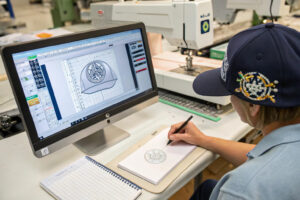
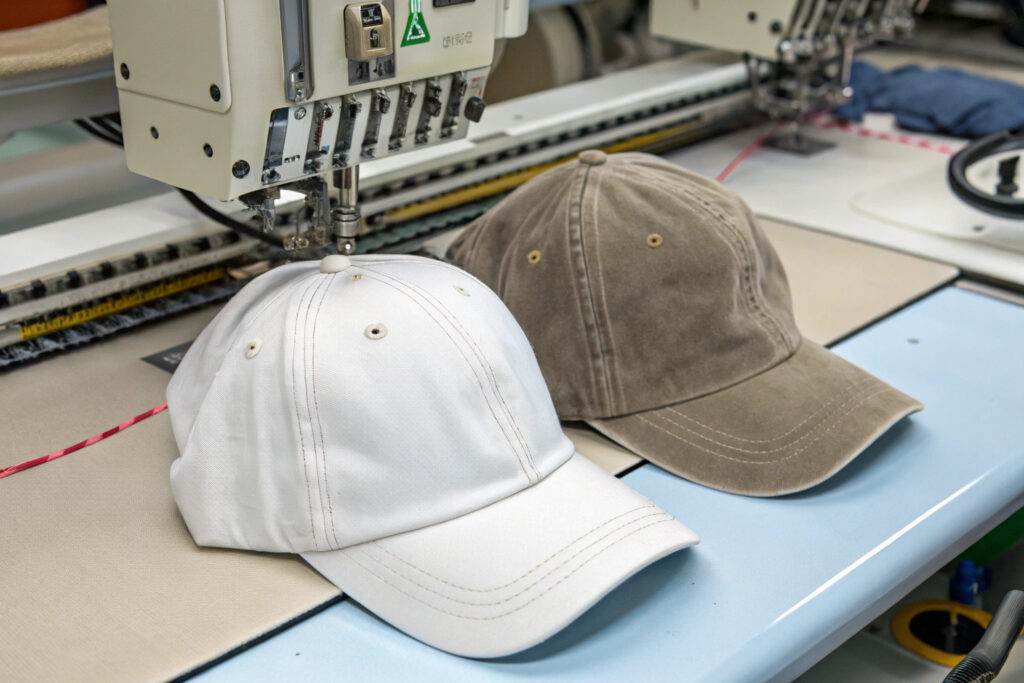
Embroidery on corduroy requires a water-soluble topping film to prevent the stitches from sinking into the wale valleys, an increased stitch density to compensate for the fabric thickness, and a digitized file adjusted for the directional pull of the pile. Cotton twill embroidery requires none of these adjustments. The smooth, flat surface allows standard embroidery parameters. Corduroy's ribbed surface creates a physical barrier to clean stitch formation. The topping film acts as a temporary flat surface that dissolves in water after embroidery, leaving the stitches sitting on top of the ribs.
My corduroy embroidery protocol mandates a clear topping film, a stitch density increase of 10%, and a sew-out approval on every new dye lot. The protocol is mandatory for all operators.
The topping film is the essential tool that many factories skip due to cost or ignorance. A skipped topping film produces a ruined logo.
What Is a Topping Film and Why Is It Essential for Corduroy Embroidery?
A topping film is a thin, transparent sheet of water-soluble plastic placed on top of the corduroy fabric before embroidery. The embroidery needle stitches through the film and the fabric. The film creates a temporary flat surface that holds the stitches above the wale valleys.
After embroidery, the excess film is torn away. The remaining film inside the stitches dissolves in warm water or steam. The stitches remain on top of the ribs, creating a clean, professional appearance. Without topping film, the stitches are pulled down into the valleys by thread tension, creating an uneven, striated look that resembles a manufacturing defect.
I stock water-soluble topping film in multiple widths for all my corduroy cap orders. The film costs pennies per cap. The visual improvement is dramatic.
Should the Stitch Density Be Increased for Wide-Wale Corduroy?
Yes. Wide-wale corduroy has deeper valleys between the ribs. The stitch tension pulls the thread deeper into these valleys. Increasing the stitch density by 10 to 15 percent compared to the standard cotton twill setting compensates for the additional depth. The stitches are packed tighter, creating a fuller coverage that bridges the wale valleys.
A standard satin stitch density of 0.4 millimeters on cotton twill is adjusted to 0.35 millimeters on wide-wale corduroy. The tighter packing prevents the valley sink effect.
My digitizing specification for corduroy includes a wale-specific density adjustment. The digitizer knows the wale count before creating the file.
Why Do Corduroy Dad Hats Command a Higher Wholesale Price?
You compare the wholesale price of a corduroy dad hat to a cotton twill dad hat. The corduroy is 50 to 80 percent more expensive. You assume the factory is overcharging for a fashion trend. You are wrong. The cost difference is in the fabric, the labor, the waste, and the embroidery complexity. The factory is not charging a trend premium. The factory is charging for a genuinely more expensive manufacturing process. The premium is cost-driven, not marketing-driven.
Corduroy dad hats command a higher wholesale price because the fabric cost is 50 to 100 percent higher than standard cotton twill, the cutting yield is 10 to 15 percent lower due to one-directional layout, the sewing labor is 30 to 50 percent higher due to slower machine speeds and specialized handling, and the embroidery requires additional materials and skilled adjustment. The total manufacturing cost is approximately 60 to 80 percent higher than an equivalent cotton twill dad hat. The wholesale price reflects this cost structure.
My cost breakdown for corduroy hats is transparent. I share the fabric cost, the cutting waste percentage, and the labor differential with my clients. No hidden fees. The price reflects the work.
The fabric utilization rate is the hidden cost driver that buyers rarely consider. A one-directional layout wastes more fabric.
How Does the One-Directional Layout Reduce Fabric Utilization Efficiency?
A standard cotton twill cutting layout is non-directional. Pattern pieces can be rotated 180 degrees and nested tightly to maximize fabric utilization. Utilization rates are typically 80 to 85 percent of the fabric is used for the product.
A corduroy cutting layout is one-directional. All pattern pieces must face the same direction relative to the pile. Pieces cannot be rotated 180 degrees. The nesting is less efficient. Utilization rates drop to 70 to 75 percent. The fabric waste increases by 10 to 15 percent. The waste is a direct cost added to the hat.
My cutting waste report quantifies the utilization difference for each fabric type. The numbers are shared with the client.
Does Corduroy Require Specialized Finishing or Brushing After Sewing?
Yes. Corduroy can develop crush marks during cutting and sewing where the pile is pressed flat by the machine's presser foot or the operator's handling. These crush marks appear as shiny, flat spots on the finished cap. They look like defects.
The finished cap may require a steam finishing process to raise the crushed pile. The steam relaxes the fibers and allows the pile to stand upright again. A soft brush may be used to restore the rib texture. This is an additional finishing step not required for cotton twill. It adds labor cost and time.
My finishing department includes a steam tunnel and a soft brushing station dedicated to corduroy caps. Every corduroy hat passes through the finishing station before packing.
Conclusion
Corduroy dad hats are more difficult to source than cotton twill versions because the fabric supply is limited, the manufacturing process is technically demanding, and the cost structure is inherently higher. The global corduroy mill capacity is a fraction of the cotton twill capacity. Custom-dyed corduroy has a longer lead time and a higher MOQ. The cutting process requires a one-directional layout that reduces fabric utilization and increases waste. The sewing process requires specialized needles, presser feet, and handling techniques. The embroidery requires topping film and density adjustments. The finishing process requires steam restoration of the crushed pile.
The higher wholesale price is not a fashion premium. It is a manufacturing cost reality. The fabric costs more. The labor costs more. The waste costs more. The embroidery costs more. A factory that quotes a corduroy hat at the same price as a cotton twill hat is cutting corners on one of these cost drivers. The result will be a hat with twisted seams, mismatched panels, or buried embroidery.
At Global-Caps, I understand corduroy. I source from a dedicated mill. My pattern room knows pile direction. My sewing line is equipped for heavy fabrics. My embroidery station uses topping film as standard. My finishing department restores the pile. My pricing reflects the true cost of making a premium corduroy hat correctly.
If you want corduroy dad hats made by a factory that understands the fabric and prices the work honestly, contact my Business Director Elaine. She can send you our corduroy swatch card with available wale counts and stock colors, and provide a transparent cost breakdown for your custom design. Email Elaine at elaine@fumaoclothing.com. Let's make corduroy correctly.