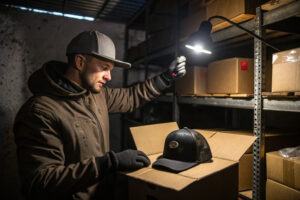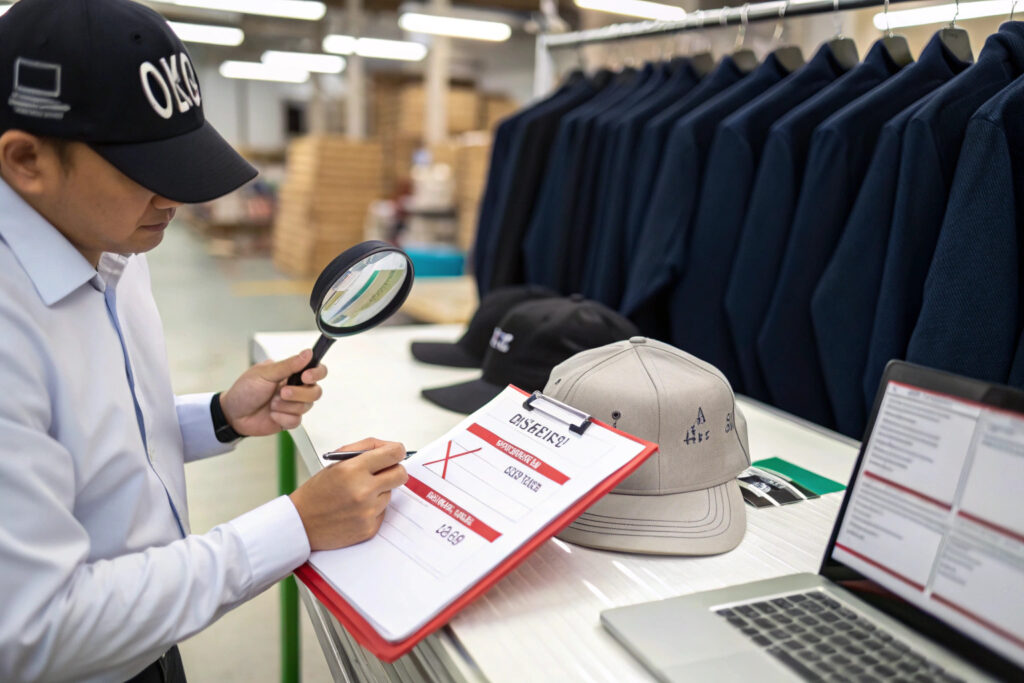
Recraft指令-- A supply chain audit scene in a textile factory. An auditor in professional attire examines a rack of finished caps with OEKO-TEX labels sewn inside. A hand holds a magnifying glass over one label, revealing a suspicious logo with blurry print quality. A clipboard with an audit checklist sits on the table. A laptop displays the OEKO-TEX Label Check database with a red "Not Found" result on screen. The atmosphere is investigative and protective. No faces. No readable text. No maps.
You order caps with OEKO-TEX labels. The factory sews them in. You ship to your EU retailer. The retailer's compliance team scans a label. They check the certificate number. It belongs to a different factory. It expired two years ago. The label is counterfeit. Your caps are seized. Your brand is flagged. You are banned from the retailer's vendor portal for twelve months. You trusted a label. You never audited the supply chain behind it. The label was a piece of woven polyester. The certification was a fiction.
A supply chain audit protects your brand from counterfeit OEKO-100 labels by independently verifying that the certificate number printed on your labels is valid, belongs to the factory that actually manufactured your caps, and covers the specific materials used in your order. The audit traces the label from the certified supplier to the sewing line. It checks the label inventory against the production quantity. It verifies that the certificate appendix lists your cap components. It confirms that the certificate is active on the OEKO-TEX database. It prevents the factory from buying a roll of counterfeit labels from a black-market printer and sewing them into your authentic caps.
At Global-Caps, I welcome supply chain audits from my clients' third-party auditors. My OEKO-TEX certificate is valid. My label inventory is traceable. My production records are available for inspection. I do not fear the audit. I prepare for it.
What Is a Supply Chain Audit and How Does It Verify OEKO-TEX Compliance?
You ask the factory for the OEKO-TEX certificate. They send a PDF. You file it. You assume you are protected. You are not. The PDF is a document that proves the factory once held a certificate. It does not prove that the specific caps in your shipment were made with certified materials under certified conditions. The PDF is the starting point of verification, not the end. The audit is the verification.
A supply chain audit for OEKO-TEX compliance is a systematic examination of the factory's documentation, material inventory, production records, and label control system to verify that the certified product claims are legitimate. The audit checks five key areas: the validity of the OEKO-TEX certificate and appendix, the traceability of certified materials from the supplier to the production batch, the mass balance between certified material input and finished product output, the label ordering and usage records, and the physical segregation of certified and non-certified materials on the production floor.
My compliance file for each order contains the certificate, the material purchase orders, the dye house lot numbers, and the label usage log.
The mass balance calculation is the most powerful fraud detection tool in the audit.
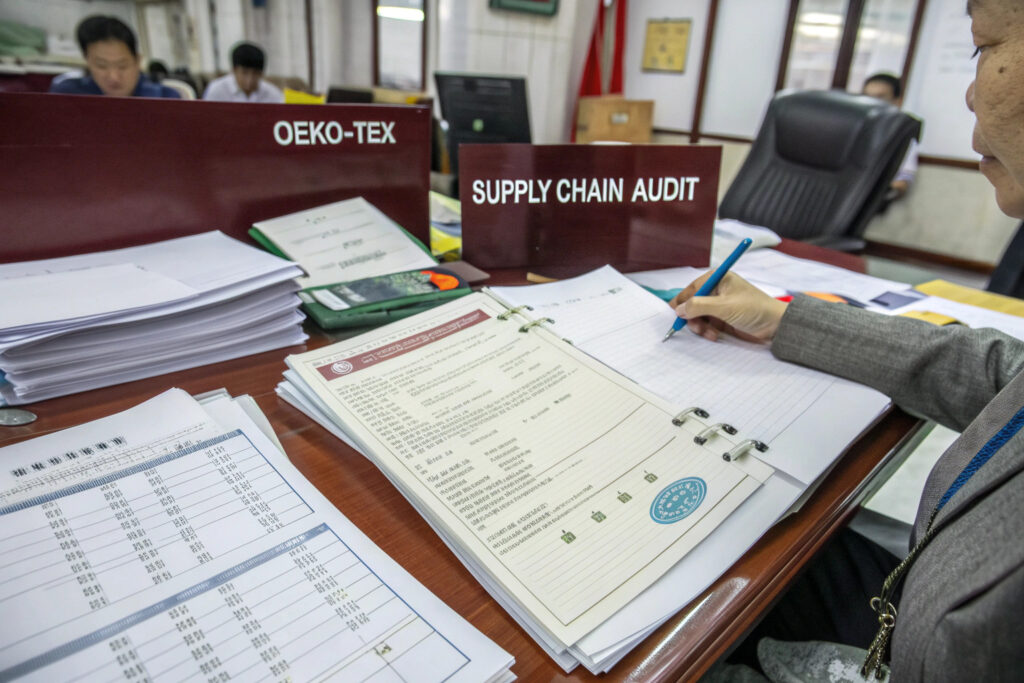
How Does the Mass Balance Calculation Detect Label Fraud?
The mass balance calculation compares the quantity of certified material purchased by the factory with the quantity of certified finished products shipped. The factory buys 500 meters of OEKO-TEX certified cotton fabric. That fabric yields approximately 1,000 cap crowns. The factory ships 5,000 caps with OEKO-TEX labels. The mass balance reveals a 4,000-unit discrepancy. The factory either used uncertified fabric for 4,000 caps or bought counterfeit labels. Either way, the fraud is detected.
The calculation is simple arithmetic. The auditor compares the certified material purchase orders with the finished goods shipping records.
My mass balance report is prepared for every certified order. The input and output quantities reconcile.
What Label Inventory Records Should an Auditor Demand to Inspect?
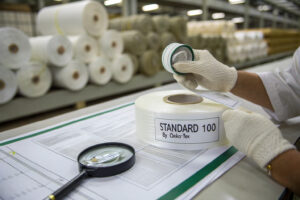
The auditor should demand the label purchase order from the OEKO-TEX approved label supplier, the label delivery receipt showing the quantity received, the label usage log showing the quantity sewn into each production order, and the current physical label stock in the inventory cabinet.
The auditor counts the physical labels in stock. The count plus the usage log total must equal the purchase order quantity. Any discrepancy indicates unauthorized label production or unauthorized usage.
My label inventory is managed with a controlled access system. Only the QC manager can issue labels.
Where Do Counterfeit OEKO-100 Labels Originate in the Supply Chain?
You assume counterfeit labels are rare. They are not. A factory can order a roll of 1,000 labels with the OEKO-TEX logo from an unlicensed label weaver for five dollars. The logo is a known design. The label weaver does not ask for a certificate. The factory sews the counterfeit labels into caps. The caps look certified. The paperwork is missing. The supply chain for counterfeit labels is a parallel, unregulated market that thrives on buyer ignorance.
Counterfeit OEKO-100 labels originate from unlicensed label weaving workshops, online marketplace sellers offering pre-printed certification labels, and factories that over-order legitimate labels on one certified order and illegally use the excess labels on uncertified orders. The labels are woven with the standard OEKO-TEX logo design, which is publicly visible and easily copied. The counterfeit label does not include a valid certificate number, or it includes a certificate number copied from another factory's valid certificate.
I source my OEKO-TEX labels exclusively from label suppliers authorized by my certification body. The purchase order references my certificate number.
The label transfer and re-use scam is the most common form of internal label fraud.
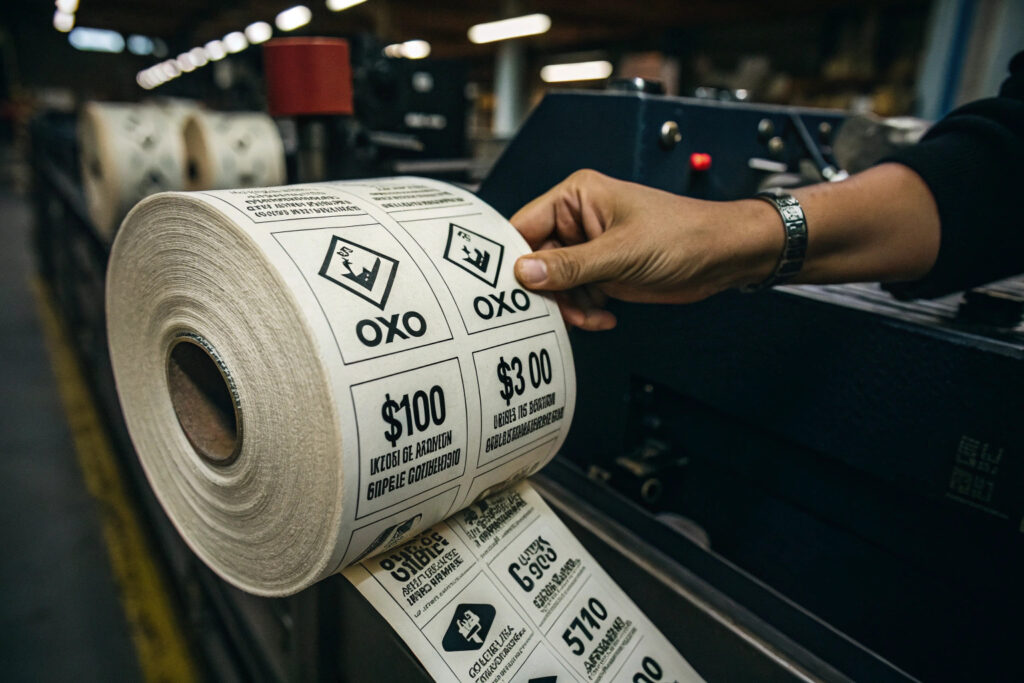
The OEKO-TEX logo is a standardized design. It consists of the text "STANDARD 100" in a specific font, a keyline border, and a space for the certificate number. The logo design is published on the OEKO-TEX website for legitimate label producers.
An unauthorized printer downloads the logo, recreates it in weaving software, and produces woven or printed labels on a standard label loom or digital printer. The equipment is the same equipment used for legitimate labels. The difference is the absence of authorization from the certification body and the absence of a valid, traceable certificate number.
The OEKO-TEX label integrity program maintains a list of authorized label suppliers. I only use authorized suppliers.
Can a Factory Legally Transfer Unused Certified Labels to Another Client's Order?
No. OEKO-TEX labels are issued to a specific certificate holder for use on products manufactured under that certificate. The labels are not transferable to another factory, another brand, or another product category that is not covered by the certificate appendix.
A factory that has excess labels from a completed order must destroy the excess labels or return them to the label supplier. Using the excess labels on an uncertified order is label fraud.
My label destruction records are documented with photos and dates. Excess labels are destroyed under QC supervision.
What Specific Checks Prevent OEKO-100 Label Fraud in Hat Production?
You rely on the factory's QC to check the labels. The factory's QC reports to the production manager. The production manager is incentivized to ship on time. A missing label delays the shipment. The production manager tells the QC to use the labels from the drawer, even though the drawer labels are for a different client. The QC complies. The labels are sewn in. The caps ship. The labels are counterfeit for your order because they belong to a different certificate.
Specific checks to prevent OEKO-100 label fraud include securing the label inventory in a locked cabinet with access limited to the QC manager, issuing labels to the sewing line in exact quantities matching the production order, reconciling the issued labels with the finished goods quantity at the end of each shift, and performing a random label verification on the finished caps using the OEKO-TEX Label Check database.
My label control procedure is a documented work instruction. The QC manager signs the reconciliation form daily.
The label-to-product traceability is the final link in the certification chain.
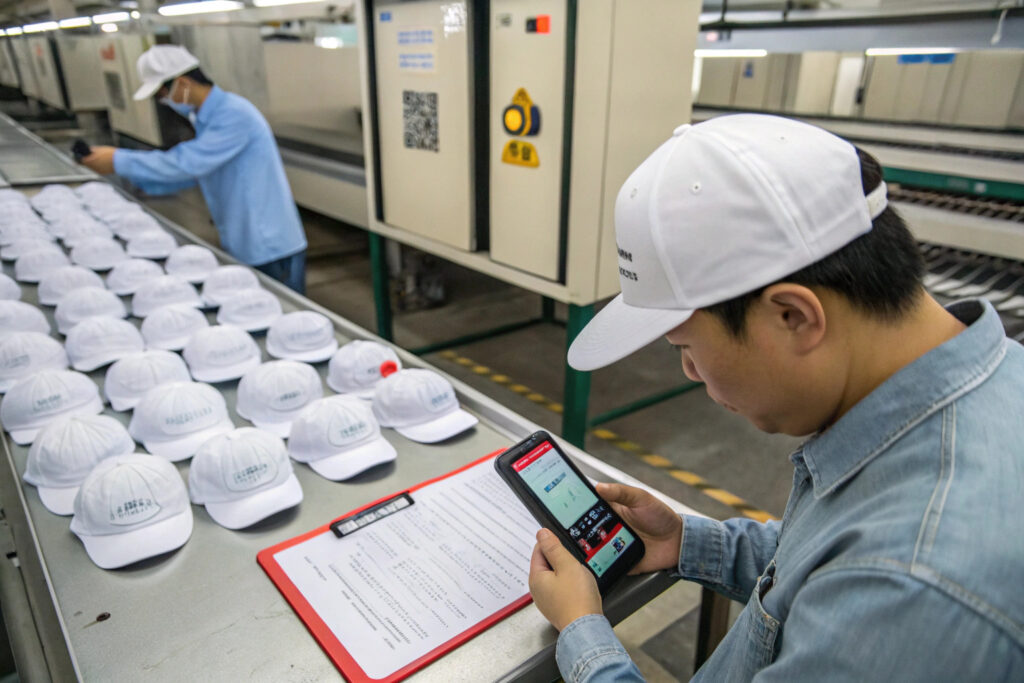
How Should the Label Issuance Quantity Match the Production Order Quantity?
The production order specifies the quantity of caps to be produced: 2,000 units. The QC manager issues exactly 2,000 OEKO-TEX labels plus a small spoilage allowance, typically 2 percent or 40 labels. The total issued is 2,040 labels.
At the end of the production run, the sewing supervisor returns any unused labels plus the spoiled labels. The QC manager reconciles: 2,040 issued minus 40 returned equals 2,000 sewn. The reconciliation matches the finished goods quantity. Any discrepancy triggers an investigation.
My label reconciliation log is reviewed by the QC manager at the end of every shift and by the production director weekly.
What Technology Exists to Verify Individual Labels via QR or RFID?
QR code integration on OEKO-TEX labels is an emerging technology. The label includes a unique QR code that links to the specific certificate record on the OEKO-TEX database. The consumer, the retailer, and the customs officer can scan the QR code and verify the certification instantly.
RFID tags can be sewn into the label or the sweatband. The RFID chip stores the certificate number and the production batch data. The information can be read with a standard RFID reader.
I am testing QR-coded OEKO-TEX labels for my premium certified product lines.
How Does a Supply Chain Audit Strengthen Your Brand's EU Retail Partnerships?
You approach a major EU retailer. They ask for your compliance documentation. You send your OEKO-TEX certificate. The buyer's compliance team replies: "This is a valid certificate. Please provide the audit report verifying the certificate application to our order." You do not have an audit report. You only have the certificate PDF. The buyer cannot distinguish your product from a competitor's product with a counterfeit label. The missing audit report is the missing trust.
A supply chain audit strengthens your brand's EU retail partnerships by providing the retailer's compliance team with independent verification that your OEKO-100 labels are legitimate. The audit report demonstrates that your factory's material sourcing, production processes, and label control systems have been examined by a qualified third party. The retailer can file the audit report in their due diligence documentation for EU product safety regulations. Your brand is classified as a low-risk supplier. The vendor approval process is faster. The purchase orders are larger.
My clients' retail audit compliance rate is 100 percent. The audit reports are available for every certified order.
The audit report is a competitive differentiator in the supplier approval process.

Why Do EU Buyers Value Independent Audit Reports Over Self-Declarations?
A self-declaration is a document written by the factory stating that it complies. It is a promise. An independent audit report is a document written by a third-party auditor who examined the factory's records and verified the claims. It is evidence.
EU buyers are legally responsible for the products they sell under the EU Product Safety Directive and the REACH regulation. A self-declaration from the factory does not satisfy the buyer's legal due diligence obligation. An independent audit report from an accredited auditor does.
My audit reports are issued by SGS and Bureau Veritas. They are accepted by every major EU retailer.
How Often Should You Schedule a Third-Party OEKO-TEX Supply Chain Audit?
A third-party OEKO-TEX supply chain audit should be scheduled at the start of a new supplier relationship, and then annually for ongoing relationships. A higher frequency, such as every six months, is appropriate for high-volume orders, products marketed for babies and children, or suppliers located in regions with a higher risk of counterfeit certification documentation.
The audit should be scheduled to coincide with a production run of the certified product so the auditor can observe the label issuance and sewing process in real time.
My audit schedule is published to my clients at the beginning of each year.
Conclusion
A supply chain audit protects your brand from counterfeit OEKO-100 labels by independently verifying the certificate validity, the material traceability, the mass balance, and the label control system. The audit detects fraud before your caps reach the retailer. The mass balance calculation reveals discrepancies between certified material input and certified product output. The label inventory reconciliation reveals unauthorized label usage.
Counterfeit labels originate from unlicensed label weavers, online marketplaces, and internal label transfer between orders. A label control procedure with locked inventory, exact-quantity issuance, and daily reconciliation prevents internal fraud. QR code and RFID integration on labels provide additional verification layers for the consumer and the customs officer.
An independent audit report strengthens your EU retail partnerships by satisfying the retailer's legal due diligence requirements. It is evidence, not just a promise. The audit is not a cost. It is an investment in market access, brand protection, and consumer trust.
At Global-Caps, my supply chain is auditable. My OEKO-TEX certificate is valid. My label inventory is controlled. My production records are transparent. My audit reports are available. I prepare for the audit before the auditor arrives. The result is a clean report and a protected brand.
If you need OEKO-100 certified caps from a factory with a fully auditable supply chain, contact my Business Director Elaine. She can provide our current audit report, our label control procedure, and a sample compliance pack for your review. Email Elaine at elaine@fumaoclothing.com. Let's protect your brand with evidence, not just labels.