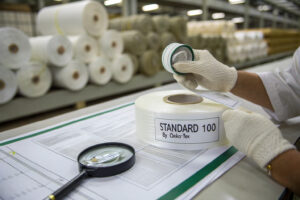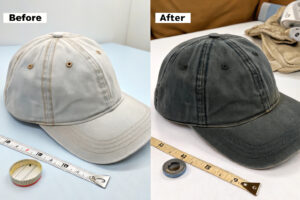
You receive the sample strapback cap. It fits. The color is perfect. The embroidery is sharp. You wear it once. You sweat. The sweatband bleeds dye onto your forehead. You wash it once in cold water. The cap shrinks. It no longer fits. The color fades from deep navy to pale blue. You approved a sample that looked good in the box. You did not test what happens when the cap meets sweat, water, and agitation. The sample was a static photograph. The cap is a dynamic product that interacts with the human body and the washing machine.
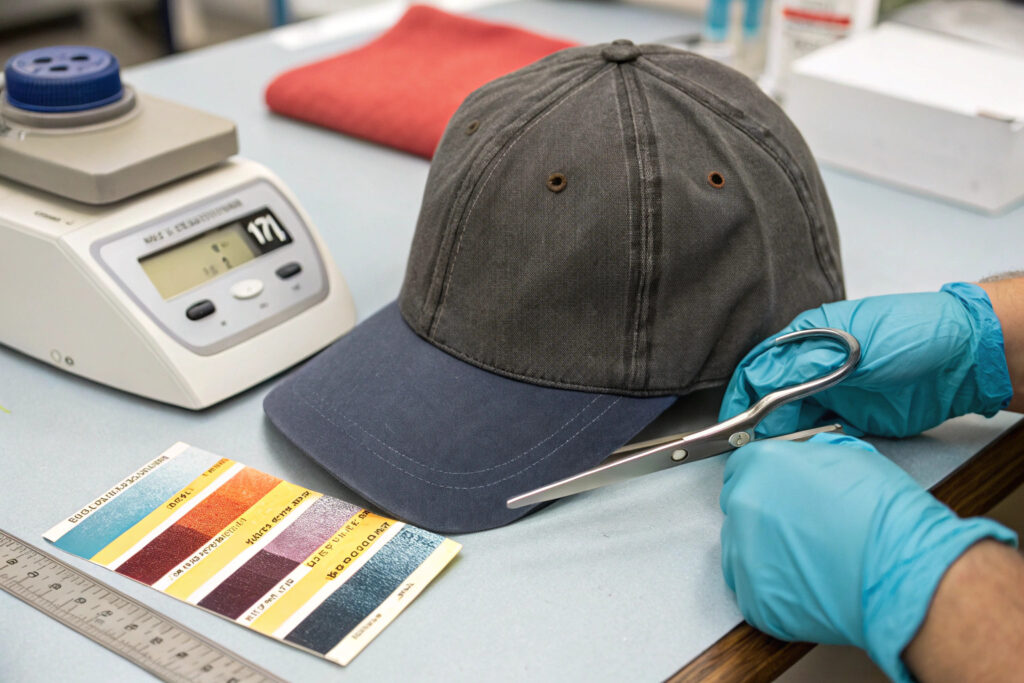
You test a sample strapback cap for color fastness and shrinkage by performing a wash fastness test, a perspiration fastness test, a crocking fastness test, and a dimensional stability test. The wash fastness test evaluates whether the fabric color bleeds or fades during laundering. The perspiration fastness test evaluates whether the sweatband dye transfers to the skin. The crocking test evaluates whether the dye rubs off onto other fabrics. The shrinkage test measures the dimensional change after washing and drying. The tests can be performed at home with basic tools or in a professional textile laboratory using AATCC and ISO standard methods.
At Global-Caps, I test every new fabric and every new dye lot before production. The test results are shared with the client. A sample that fails the color fastness or shrinkage test is not approved for bulk production. The test is the gate between the sample and the shipment.
What Is the Wash Fastness Test and How Does It Predict Fading?
You wash your cap in cold water with a gentle detergent. The water turns blue. You pull the cap out. It is two shades lighter. You are angry. You think the dye is defective. The dye is not defective. The dye has poor wash fastness. The dye molecules did not bond properly to the cotton fibers. The unbonded dye washed out. A wash fastness test before production would have revealed this failure. The test takes 30 minutes. The failure costs a customer.
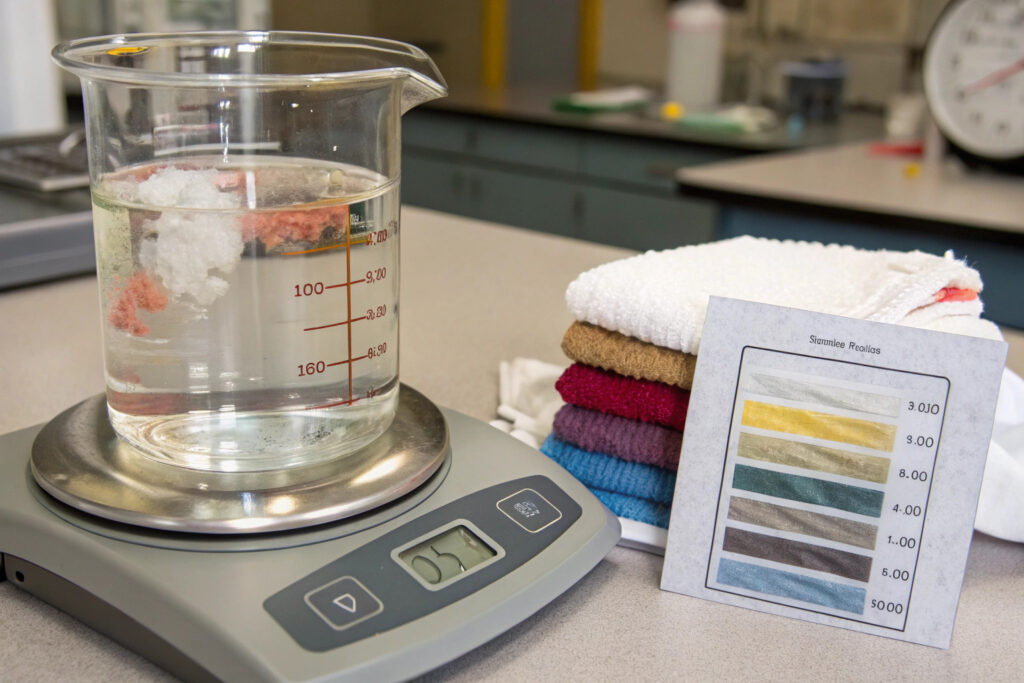
The wash fastness test predicts fading by subjecting a fabric swatch to a controlled washing process and measuring the color change. The swatch is washed in a specified detergent solution at a specified temperature for a specified time. A strip of white multifiber test fabric is included to capture any dye that bleeds. After washing and drying, the color change of the swatch is evaluated against a standard grey scale. Grade 5 means no color change. Grade 4 means a slight change acceptable for most applications. Grade 3 means a noticeable change that will likely cause customer complaints.
I use the AATCC 61 test method for accelerated wash fastness. One 45-minute cycle simulates five home launderings.
The multifiber test fabric is the most revealing part of the test.
How Do You Perform a Simple At-Home Wash Fastness Test on a Cap Swatch?
Cut a small swatch from an inconspicuous area of the cap, such as the inside of the sweatband or an inner seam allowance. Fill a clean white bowl with warm water at approximately 40 degrees Celsius. Add a small amount of standard laundry detergent. Place the swatch and a strip of plain white cotton fabric into the water. Agitate gently for 10 minutes. Remove the swatch and the white fabric. Rinse in clean water. Lay flat to dry on a white paper towel.
Observe the water color after the test. Observe the white fabric for any transferred dye. Observe the dried swatch next to an untested area of the cap. Any visible color difference or dye transfer indicates a potential customer complaint.
My home test protocol is a screening tool. A professional lab test is required for final approval.
What Grey Scale Rating Is Considered Acceptable for Strapback Caps?
The grey scale for color change is a standard set of six pairs of grey chips. Grade 5 shows no difference between the two chips. Grade 1 shows a very large difference. The grey scale for staining uses the same principle to evaluate the amount of dye transferred to the white test fabric.
For strapback caps, a wash fastness rating of Grade 4 or higher for color change is considered commercially acceptable. Grade 3-4 is borderline and may be acceptable for fashion items with a care label warning. Grade 3 or below is a failure. The staining rating on the multifiber fabric should be Grade 3-4 or higher for each fiber type.
My quality standard requires a minimum wash fastness of Grade 4 for all cap fabrics.
How Does the Perspiration Fastness Test Prevent Sweatband Bleeding?
You wear the cap on a summer run. You sweat heavily. You take the cap off. Your forehead is red. Not from the sun. From the dye that bled out of the sweatband. The sweatband was a dark burgundy color. The dye was not tested for perspiration fastness. The sweat acted as a solvent. It extracted the dye from the fabric and deposited it onto your skin. The cap looked great on the shelf. It failed on the forehead.
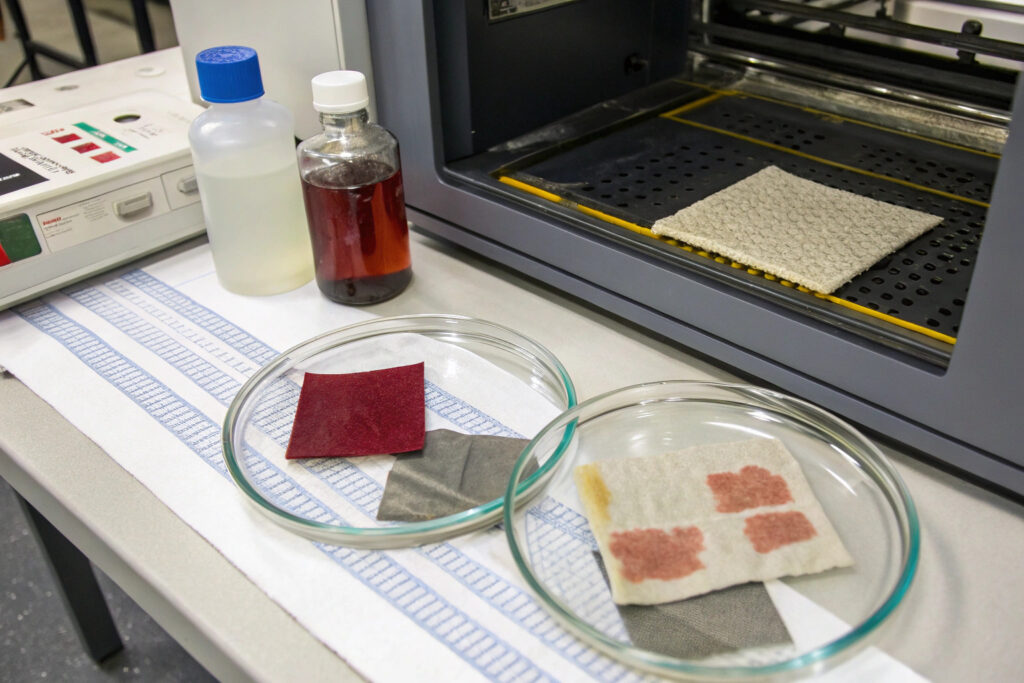
The perspiration fastness test prevents sweatband bleeding by simulating human sweat contact and measuring dye transfer. A swatch of the sweatband fabric is soaked in an artificial perspiration solution—one acidic to simulate fresh sweat and one alkaline to simulate degraded sweat. The soaked swatch is placed in contact with a multifiber test fabric under a specified pressure and heated to body temperature for four hours. The staining on the multifiber fabric is evaluated with the grey scale.
My perspiration test uses the AATCC 15 method. The sweatband is tested in both the acidic and alkaline solutions.
The artificial perspiration solution is a standardized chemical recipe.
What Is the Difference Between Acidic and Alkaline Perspiration Testing?
Fresh human sweat is slightly acidic with a pH of approximately 4.3 to 5.5. As sweat ages on the skin, bacterial action breaks down the sweat components and the pH shifts to alkaline, approximately 7.5 to 8.5. Both conditions can occur during normal wear of a strapback cap.
The acidic test uses a solution of L-histidine, sodium chloride, and sodium dihydrogen phosphate adjusted to pH 4.3. The alkaline test uses the same base solution adjusted to pH 8.0 with sodium hydroxide. Both tests are performed separately.
My lab protocol requires the sweatband to pass both the acidic and alkaline perspiration tests with a staining rating of Grade 3-4 or higher.
How Do You Isolate the Sweatband for a Targeted Perspiration Test?
Cut a section of the sweatband approximately 10 centimeters long from the sample cap. If the sweatband is sewn into the cap and cannot be easily removed, request a separate sweatband material swatch from the factory. The test requires the sweatband fabric alone, not the entire cap.
Place the sweatband swatch between two pieces of multifiber test fabric. Soak the assembly in the perspiration solution. Place it between two glass plates under a standard weight. Place it in an oven at 37 degrees Celsius for four hours.
My sample request for sweatband testing asks for a 20-centimeter strip of the exact sweatband material used in the sample cap.
What Is the Crocking Test and Why Does It Matter for Dark-Colored Caps?
You wear a dark navy cap with a white t-shirt. You take the cap off and throw it over your shoulder. The cap rubs against your shirt. You look down. Your white shirt has a blue stain on the shoulder. The cap transferred dye by friction. This is crocking. The dye was not properly fixed to the fabric. It sat on the surface. Friction rubbed it off. The cap looked fine on the shelf. It was a dye-transfer bomb waiting for a white shirt.
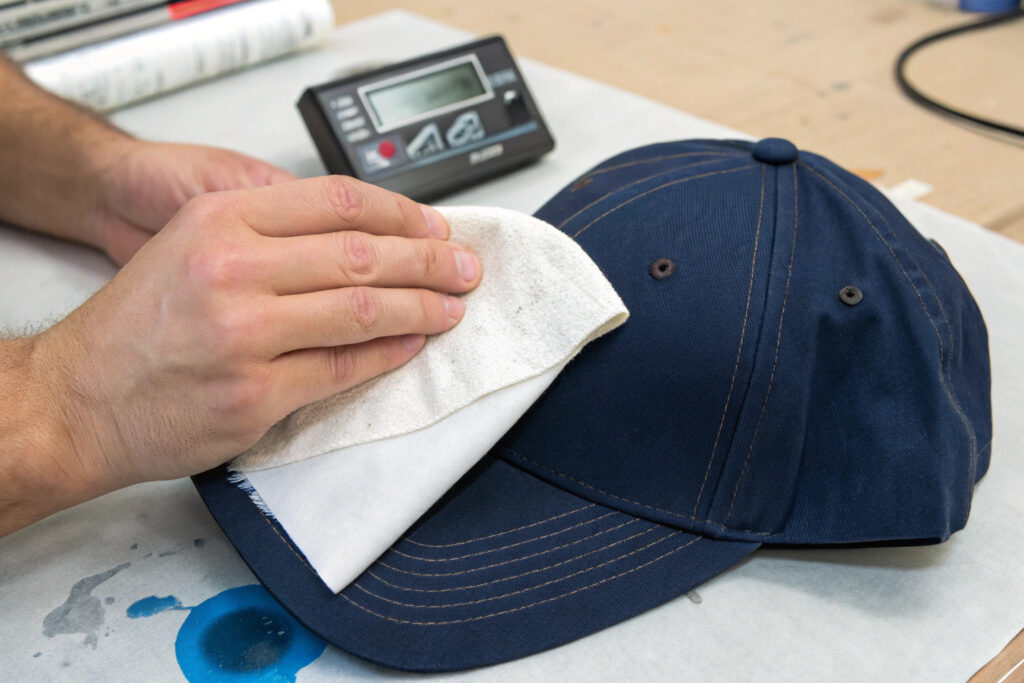
The crocking test evaluates the resistance of the dyed fabric to transferring color by rubbing. It is performed with a crockmeter, a device that rubs a standard white cotton cloth against the test fabric under a controlled pressure for a specified number of cycles. The test is performed on dry fabric (dry crocking) and on wet fabric (wet crocking). Wet crocking is more aggressive and typically produces more transfer. The stained rubbing cloth is evaluated with the grey scale for staining.
My crocking test uses the AATCC 8 method. I test both dry and wet crocking on every dark-colored cap fabric.
Wet crocking is the more stringent test because water mobilizes unfixed dye molecules.
How Do Dry Crocking and Wet Crocking Produce Different Results?
Dry crocking rubs a dry cotton cloth against the dry test fabric. It removes loosely bound surface dye. The transfer is typically light.
Wet crocking soaks the rubbing cloth in water, then rubs it against the dry test fabric. The water acts as a solvent. It dissolves unfixed dye molecules and transfers them to the rubbing cloth. The transfer is typically more intense. A fabric that passes dry crocking may fail wet crocking.
My quality standard requires a minimum dry crocking rating of Grade 4 and a minimum wet crocking rating of Grade 3-4.
Can a Color Fixative Treatment Prevent Crocking Failures in Production?
Yes. A color fixative is a chemical treatment applied to the dyed fabric that locks the dye molecules onto the fiber. The fixative forms a chemical bridge between the dye and the fiber or creates a film over the dye that prevents it from rubbing off.
The fixative is applied during the dyeing process or as a post-dyeing finishing step. It improves the wet crocking fastness by one to two grey scale grades. The treatment is standard for dark colors like navy, black, and burgundy.
My dye house applies a cationic fixative to all dark-colored cap fabrics. The fixative is tested to ensure it does not affect the fabric hand feel.
How Is the Shrinkage Test Performed on a Structured Strapback Cap?
You wash the cap. It comes out of the dryer. You try it on. It is tight. The strapback closure is adjusted to the same setting, but the cap feels smaller. You measure the sweatband circumference. It is 2 centimeters smaller. The cap shrank. The fabric was not pre-shrunk before cutting. The factory skipped the fabric relaxation step. The cap that fit perfectly out of the box no longer fits after one wash.
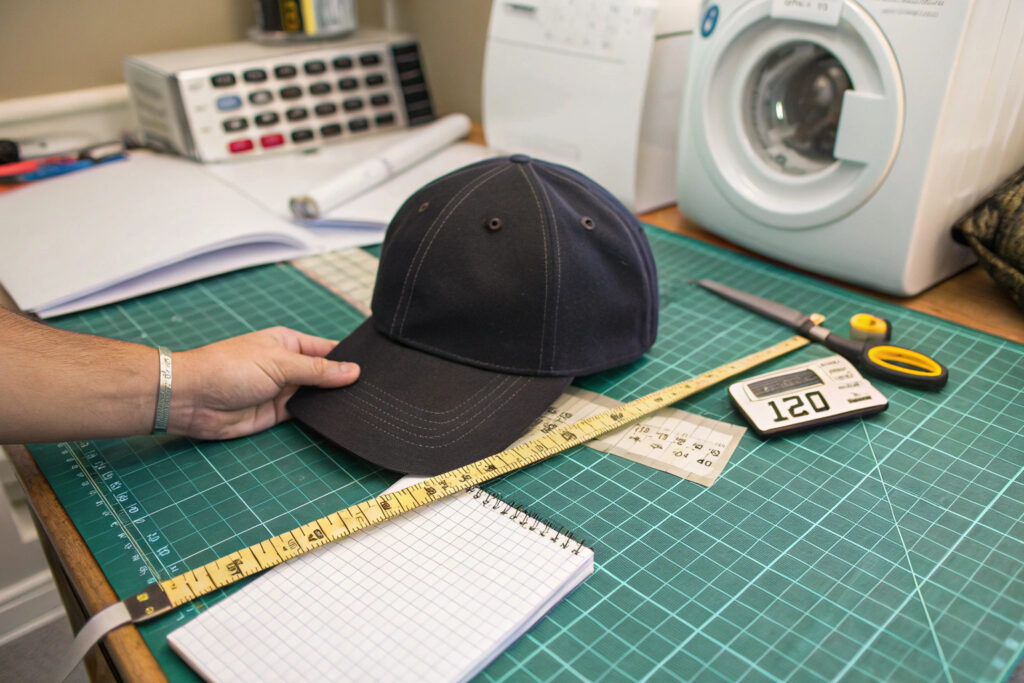
The shrinkage test on a structured strapback cap measures the dimensional change in circumference, crown height, and visor width after a standardized washing and drying cycle. The cap is measured in three dimensions before washing. It is laundered according to the care label instructions. It is dried according to the care label. It is re-measured. The percentage change in each dimension is calculated. A shrinkage of more than 3 percent in circumference is generally unacceptable for a sized cap.
My shrinkage test uses the AATCC 150 method. I test three sample caps per dye lot and report the average shrinkage.
Pre-shrinking the fabric is the most effective way to control shrinkage.
What Is the Difference Between Relaxation Shrinkage and Progressive Shrinkage?
Relaxation shrinkage occurs during the first wash. It is caused by the release of tensions introduced into the fabric during the spinning, weaving, and finishing processes. The fabric relaxes to its natural state. This shrinkage is predictable and can be removed by pre-shrinking the fabric before cutting.
Progressive shrinkage occurs over multiple washes. It is caused by the gradual felting of fibers, particularly wool and other animal fibers. Each wash cycle causes a small additional shrinkage. Progressive shrinkage cannot be fully removed by pre-shrinking.
My fabric pre-treatment includes a controlled wash and tumble dry cycle for all cotton fabrics before cutting.
How Should the Sweatband Circumference Be Measured for a Shrinkage Report?
Turn the cap inside out. Locate the sweatband seam. Measure the full circumference of the sweatband along the stitch line from the center back seam, around the front, and back to the center back seam. Record the measurement in centimeters to the nearest millimeter.
After washing and drying, re-measure the same sweatband along the same stitch line. The difference divided by the original measurement, multiplied by 100, gives the percentage shrinkage.
My measurement protocol specifies the sweatband stitch line as the reference point for circumference measurement.
Conclusion
Testing a sample strapback cap for color fastness and shrinkage is a systematic process that evaluates the cap's performance under real-world conditions of sweat, friction, and laundering. The wash fastness test predicts fading and bleeding using a controlled washing simulation and a grey scale evaluation. The perspiration fastness test prevents sweatband dye transfer to the skin using acidic and alkaline artificial sweat solutions. The crocking test prevents dye transfer to other garments by measuring dry and wet rub fastness. The shrinkage test measures dimensional change after washing and drying to ensure the cap maintains its fit.
A sample that passes these four tests is a cap that will look good and fit well after repeated wear and washing. A sample that is only evaluated visually in the box is a risk. The tests can be performed at home as a screening tool or in a professional laboratory for documented, certifiable results.
At Global-Caps, I test every new fabric and every new dye lot for color fastness and shrinkage before production. The test results are included in the sample submission package. A fabric that fails the tests is rejected. A fabric that passes is approved for bulk. The testing is not optional. It is the quality foundation.
If you need strapback caps with documented color fastness and shrinkage test results, contact my Business Director Elaine. She can provide our fabric test reports for your review and coordinate third-party lab testing for your specific order. Email Elaine at elaine@fumaoclothing.com. Let's test the sample before you buy the bulk.