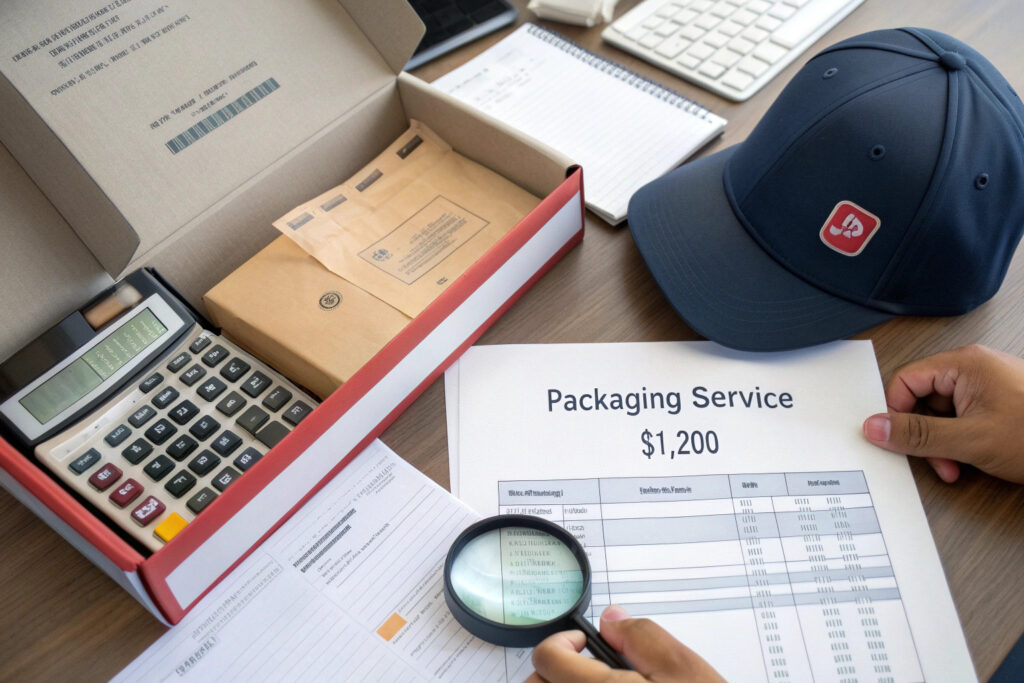
You negotiate the snapback price. You grind the factory down to $3.25 per unit. You feel victorious. The purchase order is signed. The factory sends the packaging invoice. There is a die-cut mold fee. A printing plate charge. A sample courier cost. An assembly labor surcharge. A "small order handling fee." Your $3.25 cap is now a $4.80 landed unit. The hidden packaging fees ate your negotiation victory. The cap price was a loss leader. The packaging fees were the profit center.
You avoid hidden fees when ordering custom packaging for snapbacks by requesting an itemized packaging quotation before you place the cap order. The quotation must separate one-time tooling costs from recurring per-unit costs. The one-time costs include the die-cutting mold fee, the printing plate or screen setup charge, and the structural design fee. The recurring costs include the printed paper cost, the assembly labor, the insert card, and the polybag or tissue paper. You also confirm whether the packaging sample is included or charged separately, and whether the courier cost for the packaging sample is included in the development fee. A transparent supplier lists every line item. A supplier who gives a single bundled "packaging fee" is hiding the margin in the opacity.
At Global-Caps, I treat packaging as a separate line-item quotation with the same rigor as the cap quotation. The tooling costs are one-time. The unit costs are recurring. The sample costs are stated upfront. The client sees the entire cost structure before they pay a deposit.
What One-Time Tooling Charges Should You Expect for Custom Hat Boxes?
You ask for a custom hat box. The factory quotes a unit price of $0.85. You think the tooling is included. You are wrong. The factory invoices you separately for the die, the printing plate, and the sample setup. The tooling invoice arrives after you approved the design. You are emotionally committed. The factory knows this. The tooling fees are non-negotiable at this point. You pay them.
You should expect one-time tooling charges for a die-cutting mold, a printing plate or screen, and optionally an embossing or debossing plate. The die-cutting mold is a steel rule die that cuts the paperboard into the flat box shape. It costs $100 to $200 depending on the complexity of the box shape. The printing plate or screen transfers the ink design onto the paperboard. A flexo printing plate costs $80 to $150 per color. A silk screen costs $50 to $80 per color. An embossing plate costs $150 to $300.
I list every tooling charge on a separate line in the quotation. The client owns the tooling. I store it for future reorders.
The die-cutting mold is the most expensive and most frequently hidden tooling charge.
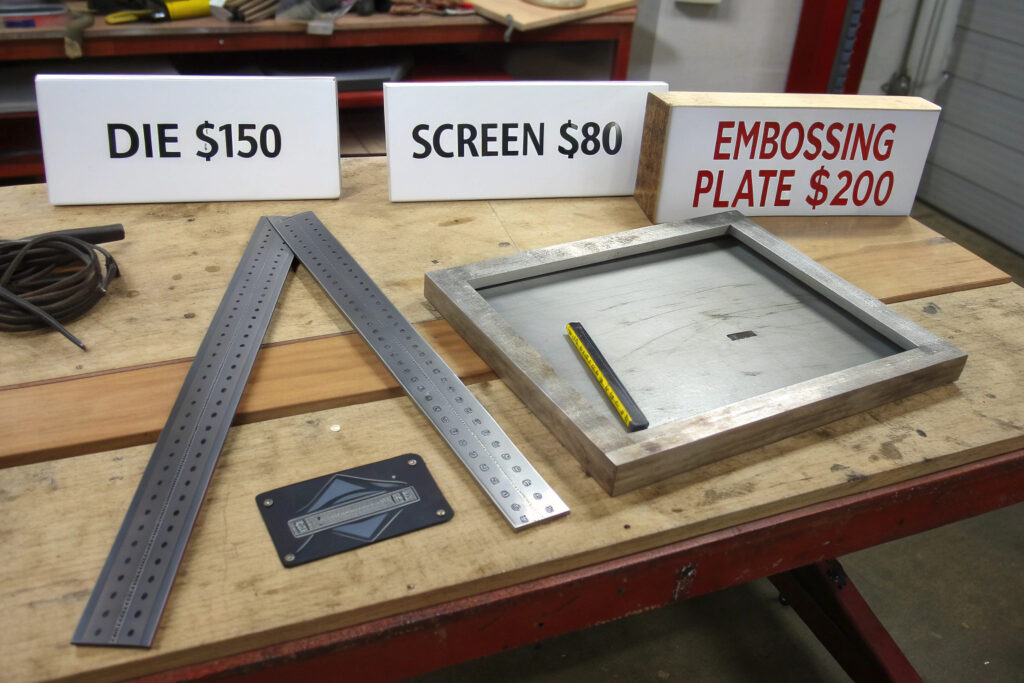
Why Is a Die-Cut Mold Fee Charged Even for "Standard" Box Shapes?
A die-cut mold is a custom tool made specifically for the dimensions of your box. Even if the box shape is a standard tuck-top or sleeve design, the dimensions are unique to your snapback size. The die must be fabricated to your specific measurements.
The die is made of sharpened steel rule blades embedded in a plywood base. A die maker bends the blades by hand to match the cutting outline. The process is skilled manual labor. The die is not an off-the-shelf item.
My die supplier fabricates each die to the client's box dimensions. The die is labeled with the client's name.
How Does the Number of Print Colors Affect the Plate Setup Cost?
Each print color requires a separate printing plate or screen. A one-color logo requires one plate. A four-color logo requires four plates. Each plate has a setup cost of $50 to $150.
The color count also affects the printing press setup time. More colors mean more press stations, more alignment time, and higher labor cost. The plate cost is additive.
I advise my clients to limit print colors on packaging to one or two to control setup costs.
How Are Recurring Per-Unit Packaging Costs Calculated for Bulk Orders?
The factory quotes $0.80 per box. You think that is the final price. The order arrives. The insert card is an extra charge. The polybag is an extra charge. The assembly of the box and the insert card is an extra charge. The $0.80 was just the printed and die-cut paper. The "packaging" was not the "finished packaging." It was the flat paper components. The assembly was a hidden recurring cost.
Recurring per-unit packaging costs are calculated by summing the printed paperboard cost, the surface finishing cost, the insert card cost, the assembly labor, and the protective outer wrap. The paperboard cost depends on the grammage and the sheet size. The printing cost depends on the number of colors and the print coverage. The surface finishing, such as matte lamination or spot UV, adds per-unit cost. The assembly labor covers folding the box, inserting the insert card, and placing the hat. The protective outer wrap is typically a polybag or tissue paper.
I break down the recurring costs per unit on every packaging quotation. The client sees the cost of each layer.
The paperboard grammage is the primary driver of the per-unit paper cost.
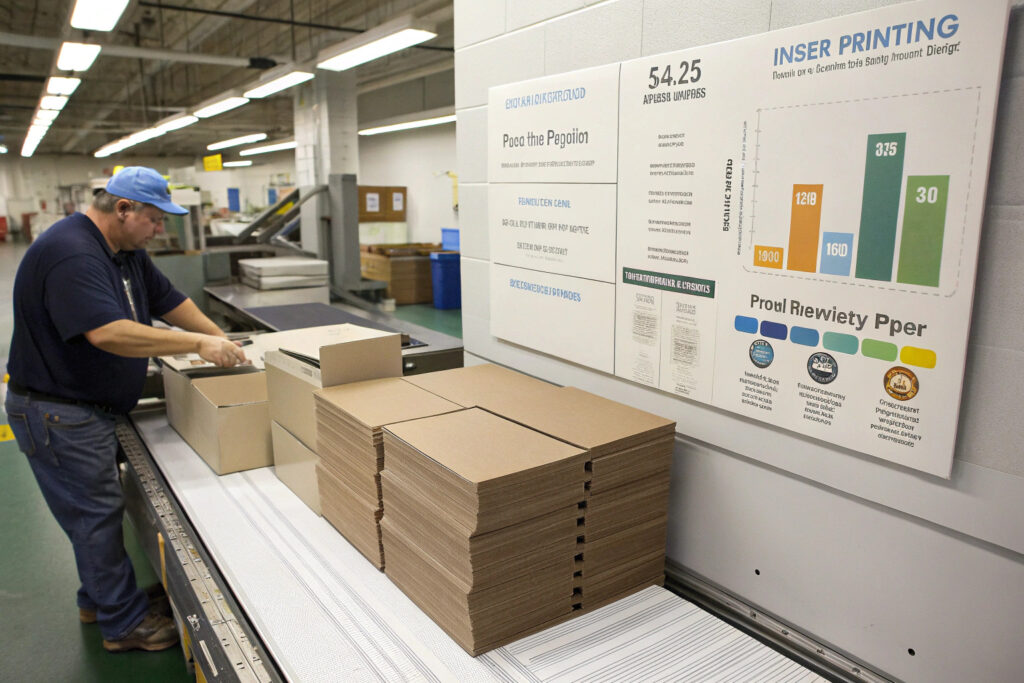
What Is the Price Difference Between 350gsm and 450gsm Paperboard?
The grammage is the weight of the paperboard in grams per square meter. 350gsm is a standard medium-weight paperboard suitable for basic tuck-top boxes. It costs approximately $0.18 to $0.25 per box for the raw paper. 450gsm is a heavy, premium paperboard with a rigid, luxury feel. It costs approximately $0.28 to $0.40 per box.
The heavier paperboard also affects the die-cutting and folding. It wears the die blades faster. It requires more force to fold. The labor cost is slightly higher.
I recommend 350gsm for standard retail packaging and 450gsm for premium gift packaging.
Does the Inner Cushion or Insert Card Add a Separate Assembly Labor Charge?
Yes. An inner cushion, foam insert, or cardboard insert card is a separate component. It must be cut, printed, and placed inside the box. The labor to place the insert into the box is an additional step in the assembly process. It is billed as a separate assembly labor charge per unit.
The insert itself has its own material cost, printing cost, and die-cutting cost.
I quote the insert card as a separate line item with its own tooling and per-unit costs.
What Sample and Courier Charges Apply to Custom Packaging Development?
You approve the digital design. You wait for the finished boxes. They arrive at your door. The color is off. The logo is blurry. The box is too small. You ask for a redo. The factory says "That will be another sample charge and courier fee." You are surprised. You thought the sample was included. You thought the courier was included. The packaging development process is iterative. Each iteration has a cost.
Custom packaging development typically involves three sample stages, each with its own sample production cost and international courier charge. The structural sample is a plain white mockup to confirm the box dimensions and fit. The printed proof sample is a flat printed sheet or a folded box with the actual artwork. The pre-production sample is the final finished box from the actual production tooling. Each sample costs $25 to $50 to produce, and $35 to $65 to courier internationally.
I specify the sample charges in the packaging quotation. The client knows how many samples to expect and what each sample costs.
The courier cost is driven by the volumetric weight of the box.
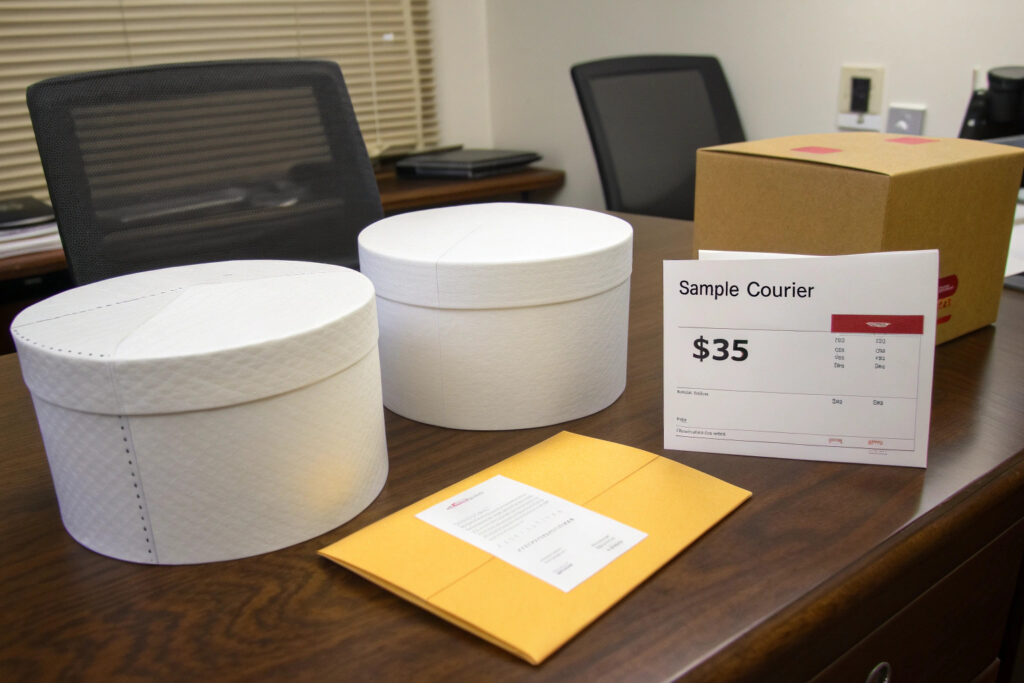
Why Does an Empty Box Often Cost More to Ship Than a Filled One?
An empty box is bulky. It occupies a large volume. The courier charges based on volumetric weight, not actual weight. The volumetric weight formula for air express is Length x Width x Height in centimeters divided by 5,000.
An empty hat box that measures 20cm x 20cm x 12cm has a volumetric weight of 960 grams, even though the actual weight is 150 grams. The courier charges for 1 kilogram. A flat, unassembled box shipped as flat sheets has a much lower volumetric weight.
I ship flat-packed samples when possible to reduce the courier cost.
Can Digital 3D Renders Replace the First Round of Physical Packaging Samples?
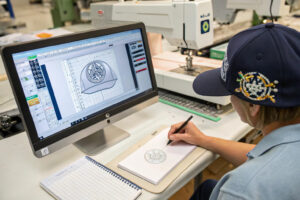
Yes. A photorealistic 3D render of the packaging design can replace the first-round structural sample. The render shows the box dimensions, the print placement, the logo size, and the overall visual impression. The client approves the render. The factory produces the printed proof sample as the first physical sample.
This eliminates one physical sample and one courier charge. The development timeline shortens by one week.
I offer 3D packaging renders as a standard part of my packaging development process.
How Should You Structure the Packaging Payment Terms to Avoid Surprises?
You pay a 50 percent deposit on the entire order, including packaging. The factory produces the packaging samples. You reject the samples. The factory demands a revision fee. You refuse. You already paid the deposit. The factory has your money. You have no leverage. The payment terms were not structured to protect you during the development phase. The deposit was a blank check.
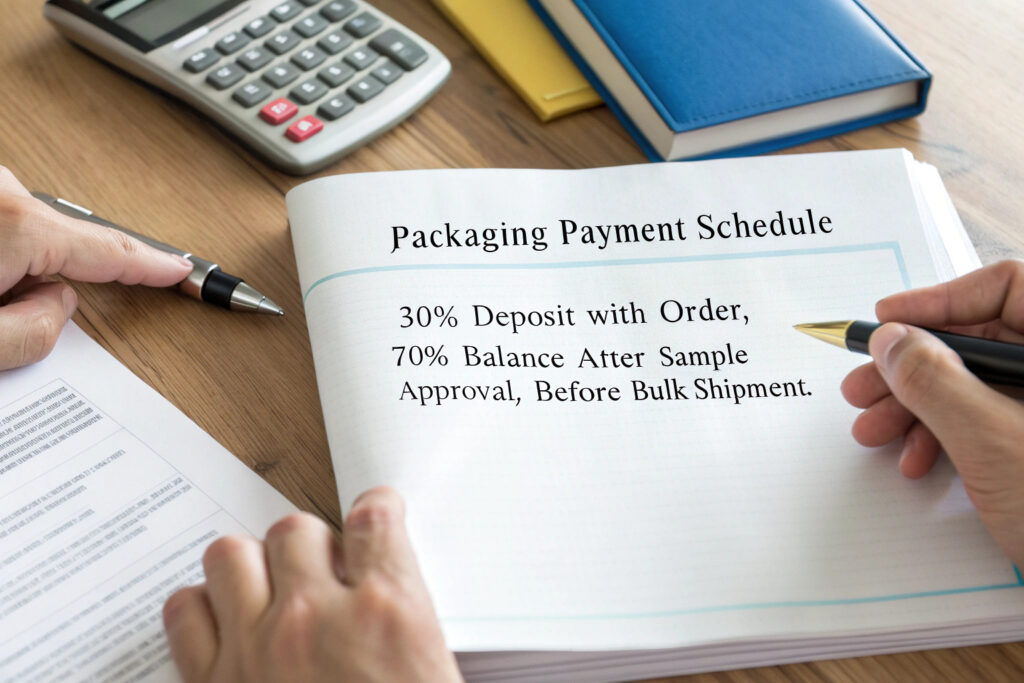
You structure the packaging payment terms by separating the tooling payment, the sample payment, and the bulk production payment. Pay the tooling costs 100 percent upfront because the factory must pay the die maker and the plate maker. Pay the sample costs as incurred, per sample, not as a lump sum. Pay the bulk packaging balance after you approve the pre-production sample, not before. Do not commingle the cap deposit and the packaging deposit.
My payment terms for packaging are separate from the cap payment terms. The tooling is upfront.
The tooling ownership clause is a critical legal detail.
Should the Tooling Fee Include a Clause That You Own the Mold and Plates?
Yes. The packaging quotation and the purchase order should explicitly state that the tooling fees are for the purchase of the tooling, and that the tooling remains the property of the buyer. The factory stores the tooling at no charge and uses it exclusively for the buyer's orders.
Without this clause, the factory owns the tooling. If the buyer switches suppliers, the tooling stays with the old factory. The buyer pays for new tooling at the new factory.
My tooling agreement states the client owns the tooling. I will ship it to the client upon request.
Why Should the Packaging Balance Be Paid Only After Sample Approval?
The pre-production sample is the final physical proof that the bulk packaging will match the approved design. Paying the bulk balance before sample approval removes the factory's financial incentive to correct any sample issues.
If the sample has a defect and the balance is already paid, the buyer must rely on the factory's goodwill to fix the problem. If the balance is pending, the factory is motivated to fix the problem quickly.
I invoice the packaging balance after the client signs off on the pre-production sample.
Conclusion
Hidden fees in custom packaging for snapbacks are avoided by demanding an itemized quotation that separates one-time tooling costs from recurring per-unit costs. The one-time tooling includes the die-cutting mold, the printing plates, and the embossing plates. These are your property. The recurring costs include the paperboard, the printing, the assembly labor, the insert cards, and the protective wrapping. Each is a line item on the invoice.
The sample and courier charges should be stated upfront. Expect three sample stages. Consider 3D renders to eliminate the first physical sample and its courier cost. Structure the payment terms so that tooling is paid upfront, samples are paid as incurred, and the bulk balance is paid only after pre-production sample approval. Keep the cap deposit and the packaging deposit separate.
At Global-Caps, my packaging quotations are as detailed as my cap quotations. I do not bundle costs. I do not hide tooling fees in the unit price. The client sees where every dollar goes. The tooling belongs to the client. The payment schedule protects both parties.
If you need custom packaging for your snapbacks with transparent pricing and no hidden fees, contact my Business Director Elaine. She can provide an itemized packaging quotation, show you our 3D render capability, and walk you through the sample and payment process. Email Elaine at elaine@fumaoclothing.com. Let's package your caps honestly.