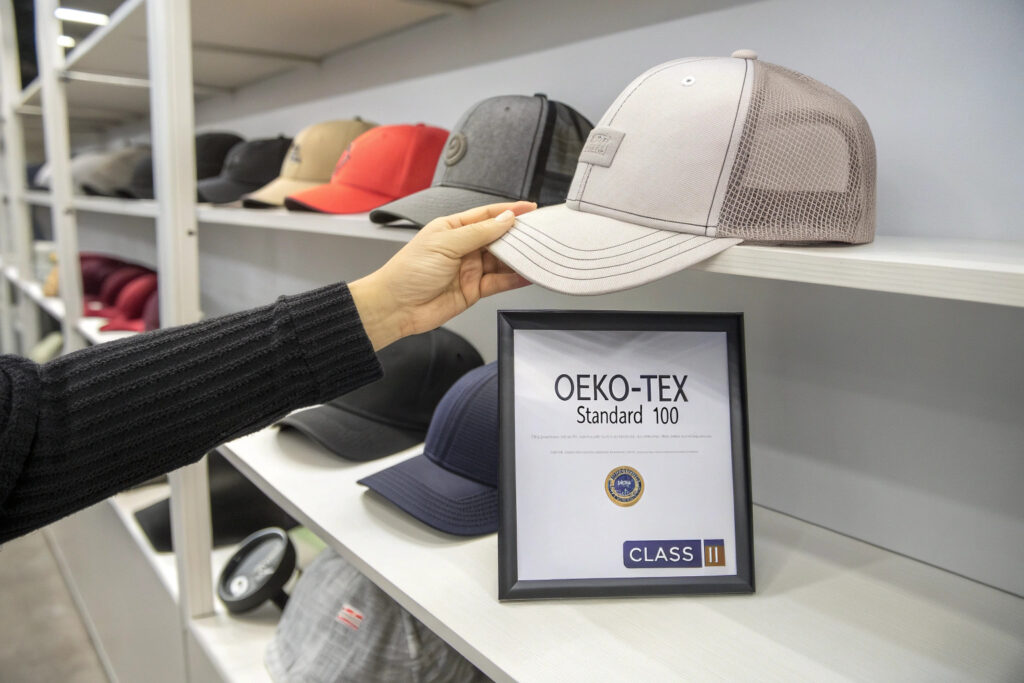
You search "low profile trucker hat OEKO-TEX" on Google. You get 12,000 results. Alibaba shows 500 suppliers. Every listing says "eco-friendly mesh" and "certified safe." You request samples. The hats arrive. Three out of five have a plastic chemical smell. The mesh is stiff and scratchy. The supplier cannot produce an OEKO-TEX certificate with a matching appendix. The certificate they show is for a different fabric from a different factory. The search results were full of greenwashing. The certified product you need is rare.
You find low-profile trucker hats made with OEKO-100 certified mesh by sourcing directly from a headwear manufacturer who holds a valid OEKO-TEX Standard 100 certificate with the mesh fabric specifically listed in the certificate appendix. The supplier must provide the certificate number for real-time verification on the OEKO-TEX Label Check database. The mesh must be certified under Class II for direct skin contact. The supplier should also provide the mesh supplier's component certificate, not just the finished hat certificate. A factory that owns the certification for the entire product—not just assembles hats from uncertified components—is the reliable source.
At Global-Caps, I hold an OEKO-TEX Standard 100 certificate that covers my polyester mesh, my cotton front panels, my stitching thread, and my plastic snap closures. The certificate is verified on the public database. I do not buy uncertified mesh and call it certified. The mesh arrives with a component certificate. The finished hat carries a valid, audited certificate.
What Defines a Low-Profile Trucker Hat Structure?
You order "trucker hats." The sample arrives. The front panel stands up like a billboard. It is 12 centimeters tall. It sits above your ears. It looks like a 2005-era Ashton Kutcher costume. You wanted a trucker hat that sits close to the head, with a relaxed, modern fit. You ordered the wrong crown profile. "Trucker hat" is a category, not a specification. The crown height defines the look.
A low-profile trucker hat is defined by a front crown height of 8 to 10 centimeters, compared to 11 to 13 centimeters for a high-profile crown. The front panels are unstructured or lightly structured with a soft buckram. The crown slope angle is more acute, sitting closer to the head rather than standing vertically. The visor is typically pre-curved. The overall silhouette is relaxed and casual, not stiff and tall. The hat conforms to the wearer's head shape rather than imposing its own architecture.
I cut my low-profile crown patterns with a 9.5-centimeter center front height. The pattern is designed for an unstructured drape.
The crown height measurement is taken from the center of the visor stitch line to the highest point of the crown seam.
How Is Crown Height Measured for a Low-Profile vs High-Profile Cap?
Crown height is measured from the center point of the visor attachment seam to the peak of the center front crown seam. A low-profile cap measures 8 to 10 centimeters. A mid-profile cap measures 10 to 11 centimeters. A high-profile cap measures 11 to 13 centimeters.
The measurement is taken with the cap laid flat, not on a head form. The tape measure follows the curvature of the front panel.
My spec sheet lists the crown height as a critical dimension. The QC team checks it on every batch.
Why Is an Unstructured Front Panel Preferred for Low-Profile Truckers?
An unstructured front panel has no stiff buckram backing. The fabric drapes naturally. It conforms to the curve of the wearer's forehead. It creates a soft, broken-in look from the first wear.
A structured front panel stands rigid. It does not conform. On a low-profile cap, a structured panel looks disproportionate. The short panel combined with stiffness creates a boxy, awkward silhouette.
I use a soft fusible interlining instead of buckram for low-profile caps. It provides minimal structure without rigidity.
How Is OEKO-100 Certified Polyester Mesh Tested for Skin Safety?
You touch the mesh on a cheap trucker hat. It feels fine. You wear it on a hot day. You sweat. The back of your head breaks out in a rash. The mesh was not tested for skin safety. The dye contained a sensitizing chemical. The pH was too acidic. The sweat leached the chemical onto your skin. The mesh passed a visual inspection. It failed the chemical safety test that matters.
OEKO-100 certified polyester mesh is tested for skin safety through a comprehensive panel of chemical analyses defined by the OEKO-TEX Standard 100. The tests include formaldehyde content, extractable heavy metals including lead, cadmium, and mercury, chlorinated phenols, phthalates, organotin compounds, and prohibited azo dyes that release carcinogenic amines. The pH value of the mesh must be between 4.0 and 7.5 to match the skin's natural acidity. The colorfastness to perspiration must be at least Grade 3-4. The mesh must pass a saliva and perspiration resistance test.
My certified mesh is tested annually with random batch testing throughout the year.
The pH value and formaldehyde are the most common failure points for uncertified mesh.
What pH Value and Formaldehyde Limits Apply to Mesh Contacting the Forehead?
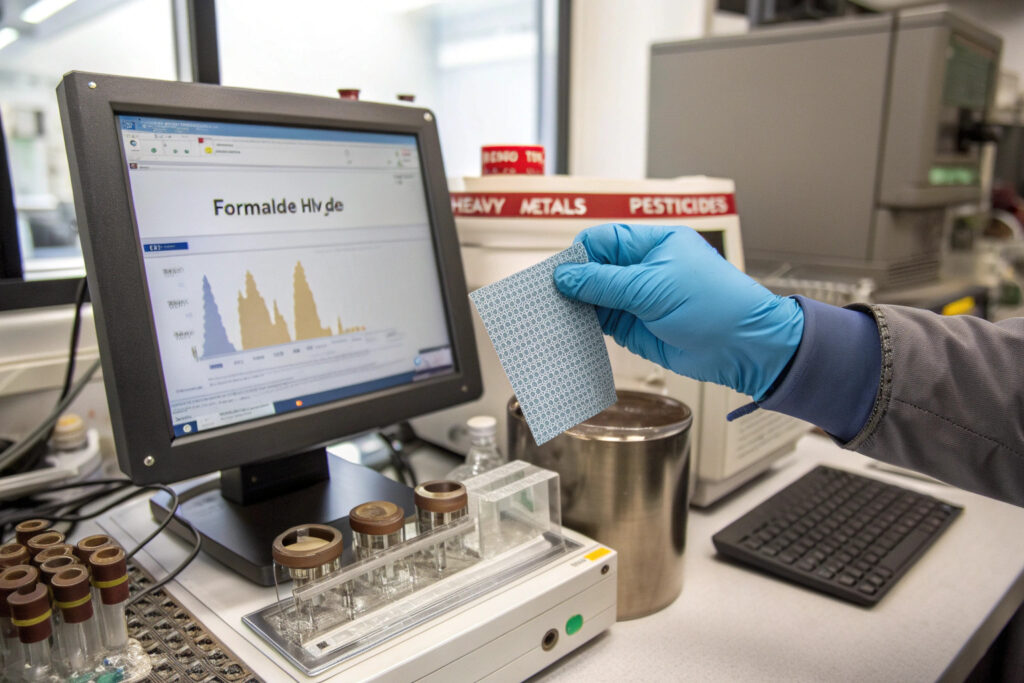
The OEKO-TEX Class II standard requires the pH value of the textile to be between 4.0 and 7.5. The skin's natural pH is approximately 5.5. A textile outside this range can cause skin irritation and disrupt the skin's protective acid mantle.
The formaldehyde limit for Class II is 75 parts per million. Formaldehyde is used in textile finishing as an anti-wrinkle agent. Residual formaldehyde on the fabric can cause allergic contact dermatitis.
I test my mesh pH with a calibrated pH meter using the aqueous extraction method.
How Is Colorfastness to Perspiration Tested for Mesh Back Panels?
The test simulates the effect of human sweat on the dyed mesh. A specimen of the mesh is soaked in an artificial perspiration solution, one alkaline and one acid. The specimen is placed between two glass plates under a specified pressure and held at 37 degrees Celsius for four hours.
After the test, the color change of the mesh and the staining on adjacent multifiber fabric are evaluated on a grey scale. The rating must be at least Grade 3-4 for color change and Grade 3-4 for staining.
I test colorfastness to perspiration on every new dye lot of certified mesh.
How to Verify the OEKO-100 Certificate of Your Trucker Hat Supplier?
The supplier sends you a certificate PDF. It has the OEKO-TEX logo. It has a stamp. It looks official. You save it to your compliance folder. You order the hats. A customer asks for proof. You send the PDF. The customer checks the certificate number on the OEKO-TEX database. "Certificate not found." The PDF was a fake. The logo was copied from the internet. The stamp was Photoshop. You were defrauded by a PDF.
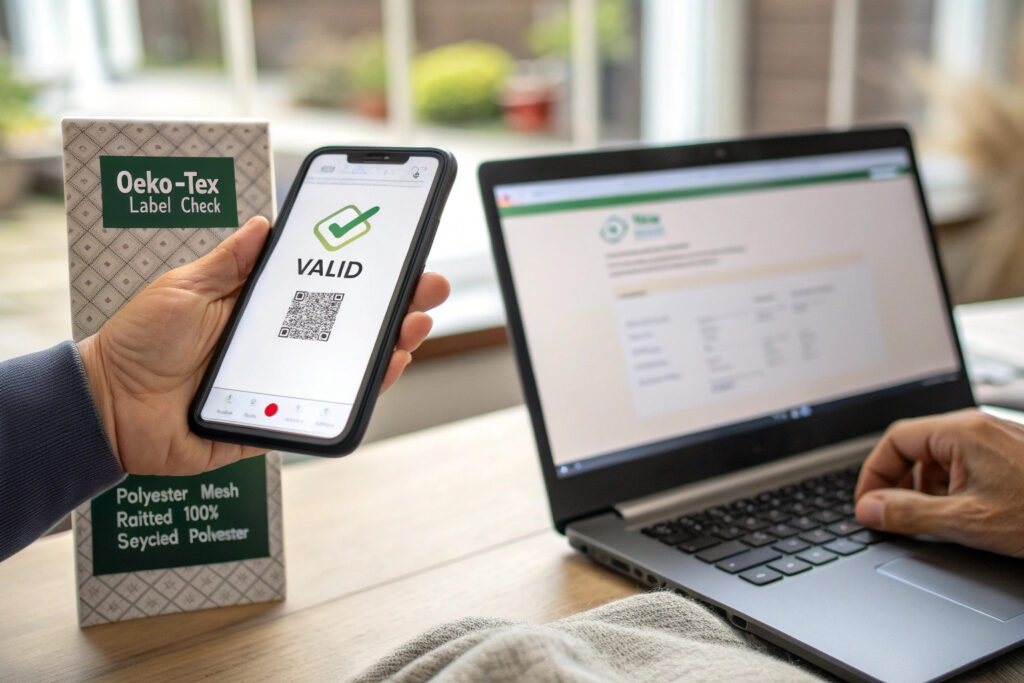
You verify the OEKO-100 certificate of your trucker hat supplier by entering the certificate number into the official OEKO-TEX Label Check database on their website. The database returns the certificate holder name, the issuing institute, the product class, the validity dates, and the product description. You confirm that the certificate holder name matches the supplier's legal entity name. You confirm that the product description includes the polyester mesh. You confirm that the certificate is active and not expired. You never trust a PDF alone.
I send my certificate number to every client before their first order. I invite them to verify it online.
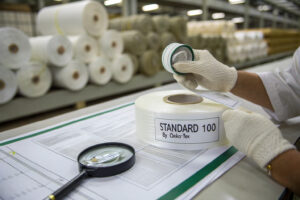
The certificate appendix is the detailed list of certified articles and components.
What Specific Details on the Appendix Confirm the Mesh Is Certified?
The appendix must list the mesh by article name, such as "Polyester Mesh Knitted Fabric" or "100% Polyester Air Mesh." It must list the fiber composition, the yarn type, and the color range. It must reference the component as part of the certified article group.
If the appendix only lists "Cotton Woven Fabric" and does not mention polyester mesh, the mesh is not certified.
I verify the appendix against the actual mesh swatch before production.
How Often Should a Supplier Update Their OEKO-100 Certification?
The OEKO-TEX Standard 100 certificate is valid for one year from the date of issuance. The supplier must undergo a re-audit and re-testing annually. The certificate must be renewed before the expiry date. A lapse of even one day invalidates the certification.
A responsible supplier renews at least one month before expiry. The new certificate is issued before the old one lapses. The certification is continuous.
My certificate renewal is scheduled three months before the expiry date.
What Are the Wholesale MOQs for Custom Low-Profile OEKO-100 Trucker Hats?
You want 50 trucker hats. You find a supplier with OEKO-100 certified mesh. They say "MOQ 500 units." You cannot afford 500. You cannot store 500. You walk away. You settle for an uncertified supplier with a lower MOQ. The certification became a barrier. The MOQ forced you into a non-compliant product. The MOQ should not be the reason your brand cannot sell safe products.
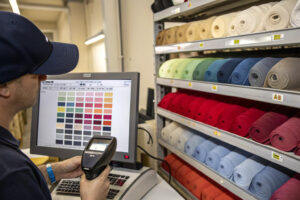
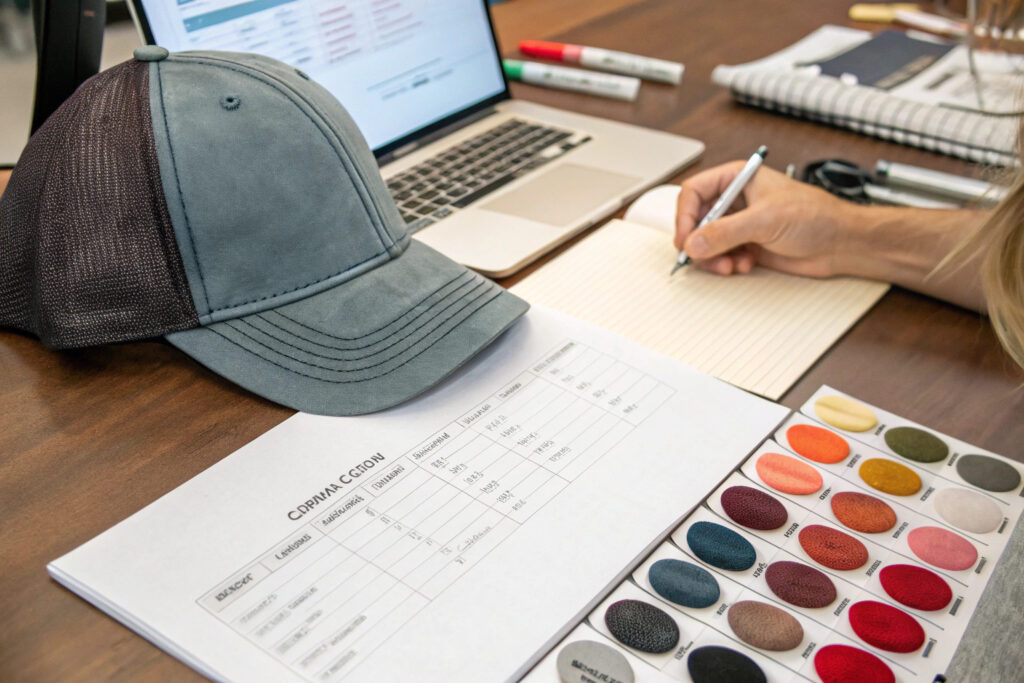
The wholesale MOQ for custom low-profile OEKO-100 trucker hats is typically 100 to 300 units per color when using the factory's stock certified mesh colors. The MOQ increases to 500 to 1,000 units per color if the mesh requires custom dyeing because the dye house has a minimum batch size for the certified dye process. Custom embroidery or printing does not significantly affect the MOQ if the base hat is a stock style. A factory that stocks OEKO-100 certified mesh in multiple colors can offer a lower MOQ than a factory that buys certified mesh on a per-order basis.
I stock OEKO-100 certified mesh in black, white, navy, grey, and beige. The stock color MOQ is 100 units.
The dye house minimum is the bottleneck for custom colored certified mesh.
Why Does Custom-Dyed Certified Mesh Have a Higher MOQ Than Stock Colors?
Custom dyeing of OEKO-100 certified mesh requires the dye house to use certified dyes and certified processes. The dye machine must be cleaned of any conventional dye residue before the certified batch is run. The cleaning cycle and the chemical testing for the certified batch are fixed costs.
The dye house requires a minimum batch size to cover these fixed costs. The minimum is typically 50 to 100 kilograms of fabric, which equates to 500 to 1,000 trucker hat mesh backs.
I work with my dye house to combine small custom color orders from multiple clients.
Can You Mix and Match Front Panel Colors Without Raising the Mesh MOQ?
Yes. The mesh back panel is the certified component with the higher MOQ. The front cotton panel can be changed per style without significantly affecting the mesh MOQ. You can order a base of 100 black mesh hats with four different front panel color options.
This strategy allows a small brand to offer color variety without multiplying the mesh MOQ.
I offer mixed front panel options on a single mesh base for qualifying orders.
Conclusion
Low-profile trucker hats made with OEKO-100 certified mesh are available from manufacturers who hold the certification for the entire product, not just the fabric. The low-profile structure is defined by a crown height of 8 to 10 centimeters and an unstructured front panel. The OEKO-100 certified mesh is tested for pH, formaldehyde, heavy metals, phthalates, and perspiration colorfastness to Class II skin contact standards. The certificate is verified on the OEKO-TEX Label Check database by entering the certificate number. The appendix must list the mesh specifically.
The MOQ for custom orders starts at 100 units for stock certified mesh colors. Custom dyed certified mesh requires a higher MOQ due to the dye house minimum batch size. Mixing front panel colors on a single mesh base is a strategy to offer variety without multiplying the MOQ.
At Global-Caps, my low-profile trucker hat uses OEKO-100 certified polyester mesh. The certificate is active, verified, and available for client inspection. I stock certified mesh in multiple colors. My MOQ is accessible for small brands. The certification is not a barrier. It is a foundation.
If you need low-profile trucker hats with genuine OEKO-100 certified mesh, contact my Business Director Elaine. She can provide our certificate number for verification, send a stock mesh color card, and quote your custom design with the appropriate MOQ. Email Elaine at elaine@fumaoclothing.com. Let's build a certified trucker hat that fits your brand and your budget.