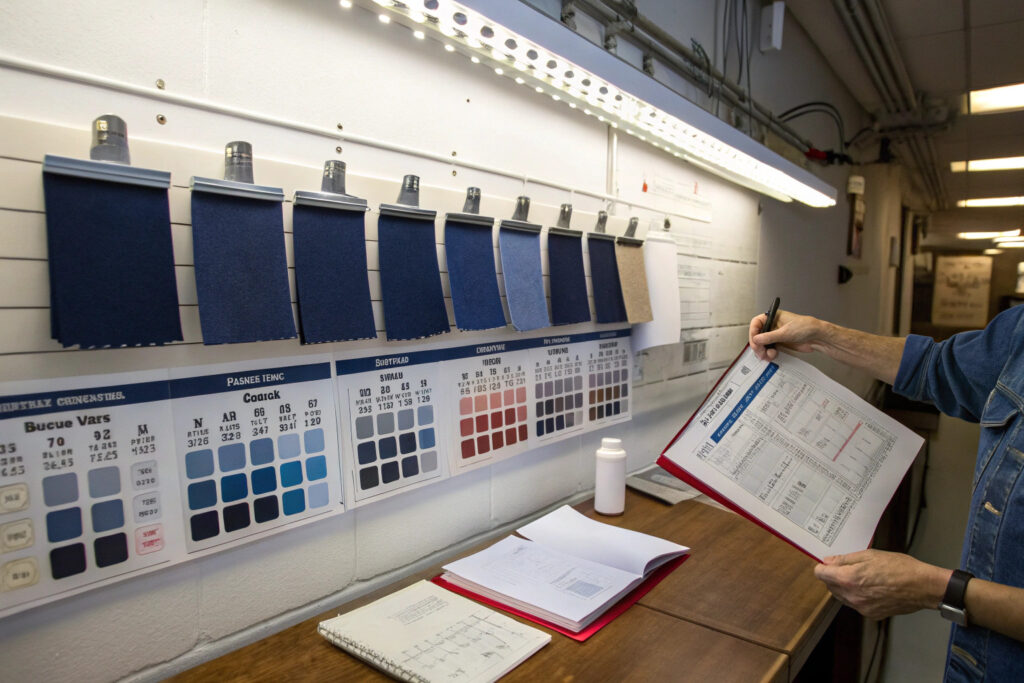
You approve the beanie design. The factory says "Lab dips in 7 days." Seven days pass. No dips. You email. The factory says "Dye house is busy. 5 more days." Five days pass. No dips. You call. The factory says "The color match is difficult. 3 more days." Three weeks have passed. Your production slot is slipping. Your retail launch date is at risk. You have not approved a single color. The bulk yarn is not ordered. The delay is not a delay. It is a supply chain failure disguised as a communication problem.
Your custom beanies supplier keeps delaying the lab dip approval because the dye house is either overloaded with bulk orders that take priority over your small development batch, or the dye house is struggling to match your target color on the specific yarn substrate and is doing multiple rounds of reformulation without communicating the technical difficulty. Other causes include the supplier not having the correct Pantone reference, the yarn lot being out of stock, or the supplier using a third-party dye house that they do not control directly. A supplier who cannot explain the specific reason for the delay and provide a revised committed date is a supplier who is hiding a capacity or capability problem.
At Global-Caps, my dye house is in the same industrial park as my knitting mill. I have visibility into their schedule. I communicate delays to my clients within 24 hours, with a specific reason and a new committed date. The lab dip is the first physical proof that the supplier can execute your design. If they cannot manage the lab dip, they cannot manage the bulk order.
What Is a Lab Dip and Why Is It the Bottleneck in Beanie Production?
You choose a Pantone color from a book. You think it is like picking paint from a hardware store. The factory takes the code, mixes the paint, and applies it. You expect the dip in a week. The dip arrives in three weeks. You are frustrated. You do not understand why matching a printed paper chip to a dyed yarn is a multi-week chemistry project. The Pantone book is printed on paper with ink. The beanie is knitted from polyester yarn with disperse dye. The translation is not direct. It is a science experiment.
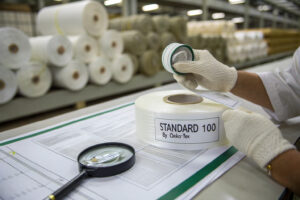
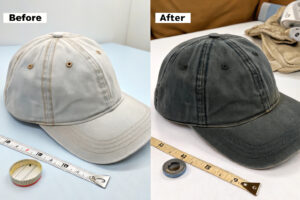
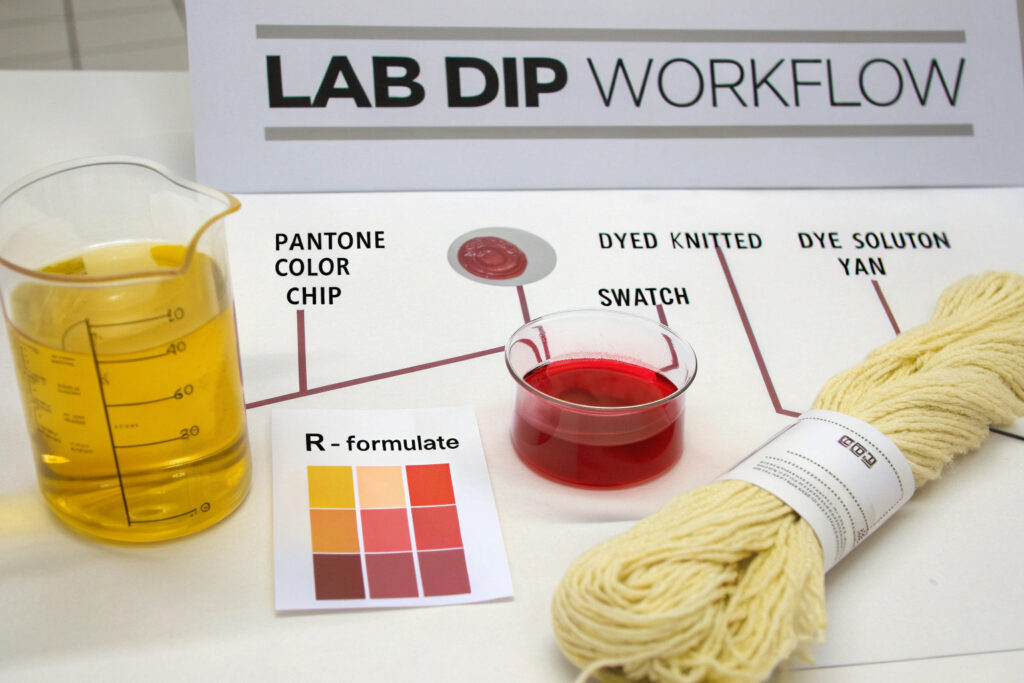
A lab dip is a small-scale dyeing test performed to match a target color on a specific yarn substrate. It is the first and most critical bottleneck in beanie production because the dye formulation must be developed, tested, and adjusted iteratively. The dye house mixes a recipe, dyes a sample yarn skein, knits a small swatch, and compares it to the target standard under a controlled light source. If the color is outside the Delta E 1.5 tolerance, the dye house reformulates the recipe and repeats the process. Each cycle takes 2 to 4 days. Three to five cycles are common for difficult colors. The process cannot be parallelized.
I explain the lab dip process to every new client during onboarding. Understanding the chemistry reduces the frustration.
The dye formula is not a universal recipe. It is specific to the yarn fiber, the yarn weight, and the dye type.
Why Can't the Dye House Just Print the Pantone Code on the Yarn?
A Pantone code is a color reference, not a dye formula. The Pantone book is printed with pigmented ink on paper. The paper substrate is white, smooth, and reflective. The yarn substrate is textured, absorbent, and has a different refractive index. The same color on paper and on yarn requires completely different chemical formulations.
The dye house must interpret the Pantone code into a dye recipe using the specific dye class for the yarn fiber. Reactive dyes for cotton. Disperse dyes for polyester. Acid dyes for nylon. Each dye class has a different color gamut. Some Pantone colors cannot be perfectly matched on certain fibers.
I manage color expectations by explaining the gamut limitations before the lab dip process begins.
How Does the Dye Type for Acrylic Yarn Differ From Cotton Yarn Dyeing?
Acrylic yarn is a synthetic polymer. It is dyed with basic or cationic dyes. The dyeing process requires precise temperature control and a retarding agent to ensure even dye uptake. The dye molecules bond to the acidic sites on the acrylic fiber.
Cotton yarn is a cellulose fiber. It is dyed with reactive dyes in an alkaline bath with salt. The dye forms a covalent bond with the cellulose molecule. The chemistry is completely different from acrylic dyeing.
My dye house runs separate dyeing lines for acrylic and cotton. The dye masters specialize by fiber type.
How Does the Dye House's Capacity and Schedule Affect Your Timeline?
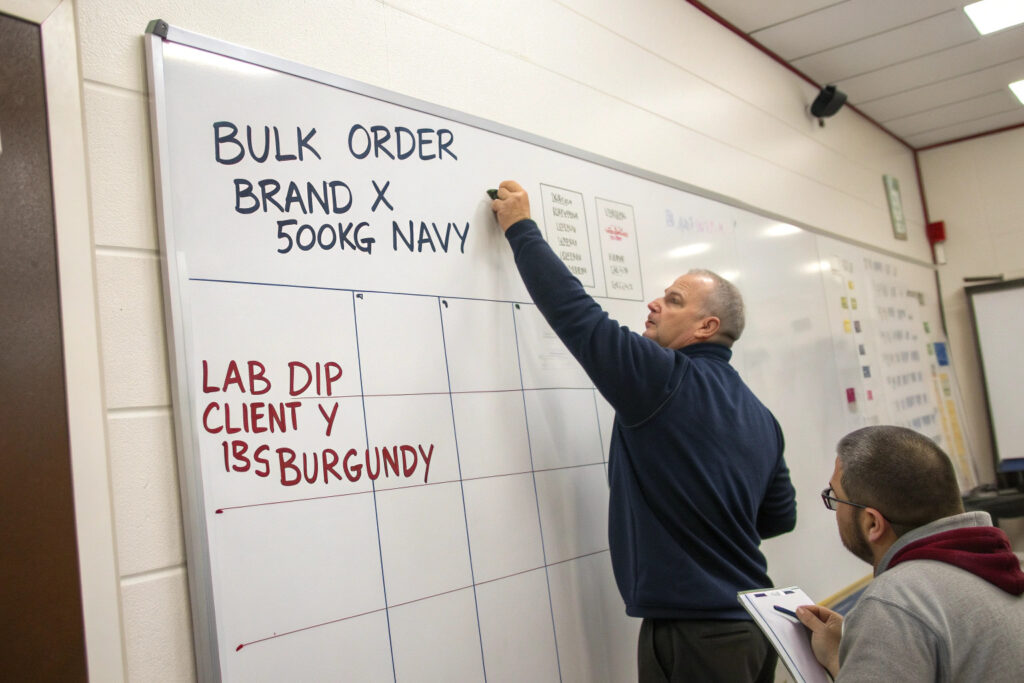
You are a new brand. Your order is 500 beanies. The dye house has a bulk order for 5,000 kilograms of navy yarn for a department store. Your 1-kilogram lab dip is small. It is low margin for the dye house. It is deprioritized. Every week, your dip is pushed to the next week. The factory does not tell you this. They tell you "the color is difficult." The color is fine. The priority is the problem.
The dye house's capacity and schedule delay your lab dip because bulk production orders generate more revenue per machine hour than development lab dips. A dye house at 90 percent capacity will prioritize the bulk orders and schedule lab dips in the gaps between bulk runs. During peak production seasons, the gaps shrink. The lab dips queue up. A lab dip that takes 7 days during a slow month takes 21 days during the peak pre-winter season.
I reserve lab dip capacity with my dye house in advance for my clients' development seasons.
The factory's relationship with the dye house determines the priority your lab dip receives.
What Is the Difference Between an In-House Dye House and a Third-Party Dye House?
An in-house dye house is owned and operated by the same company that knits the beanies. The production scheduler can allocate lab dip capacity internally. Conflicts between bulk and development are managed by one management team. The communication is direct.
A third-party dye house is an independent vendor. The beanie factory sends the yarn to the dye house and waits. The factory has no control over the dye house's schedule. The factory's project manager sends emails. The dye house responds when convenient. The factory is a customer, not an owner.
I use an in-house dye house for my core yarns. I use a third-party dye house only for specialty fibers.
How Does the Pre-Winter Bulk Season Affect Lab Dip Turnaround?
The pre-winter bulk season runs from July through September. Every beanie factory in the Northern Hemisphere is placing bulk yarn orders for winter delivery. The dye houses are at full capacity. A lab dip that takes 5 days in April takes 15 to 20 days in August.
This seasonal bottleneck is predictable. Brands that submit lab dip requests in August without understanding the season are surprised by the delay. The delay is not a supplier failure. It is a seasonal capacity constraint.
I advise my clients to submit lab dip requests in May or June for winter production, or pay a premium for priority service.
What Technical Factors Cause Repeated Lab Dip Rejections?
You reject the first lab dip. It is too dark. You reject the second. It is too green. You reject the third. It matches in the lightbox but looks different in daylight. The dye house says they cannot get closer. You are stuck. The color is not matching. You do not know if the problem is the dye house's skill, your communication, or the physical limitations of the dye on the yarn.
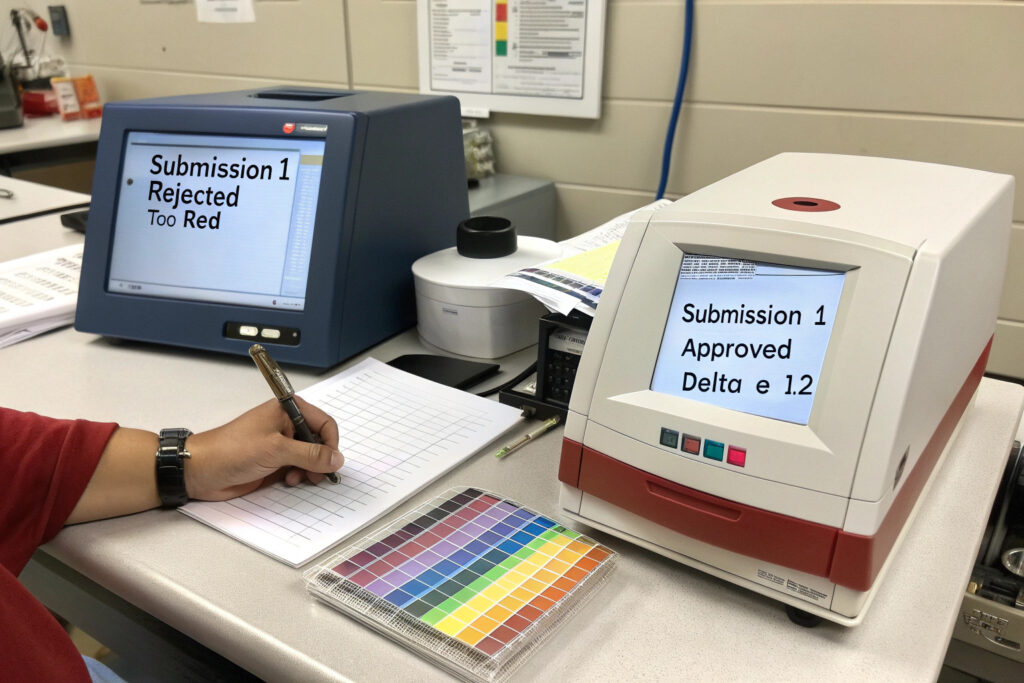
Repeated lab dip rejections are caused by metamerism, the phenomenon where two colors match under one light source but not under another. Other technical causes include the yarn lot variation, the substrate texture affecting perceived color, and the target color being outside the achievable gamut of the specific dye class. The solution is to evaluate lab dips under multiple light sources, use a spectrophotometer to measure Delta E objectively, and accept a commercial match of Delta E 1.5 or less.
I evaluate lab dips under D65 daylight, TL84 store light, and incandescent home light. A dip must pass under all three.
Metamerism is the most common technical reason for repeated rejections.
What Is Metamerism and How Does It Trick the Eye in Color Approval?
Metamerism is the optical effect where two colors match under one light source but appear different under another. It occurs because the two materials have different spectral reflectance curves. The curves intersect at the wavelength of the matching light source but diverge at other wavelengths.
A lab dip evaluated under the dye house's fluorescent tube may match perfectly. The same dip evaluated under your office daylight LED may look completely different. The dip is not wrong. The light is different.
I require metamerism testing under three light sources for every lab dip approval.
How Does the Yarn's Luster or Matte Finish Affect the Perceived Color?
A bright, high-luster yarn reflects light directionally. The color appears lighter and more saturated when viewed from the specular angle. A matte, textured yarn scatters light diffusely. The color appears darker and less saturated from all angles.
The same dye formula on a bright acrylic yarn and a matte cotton yarn produces a visibly different color. The lab dip must be on the exact yarn specified for bulk production.
I specify the yarn finish in the lab dip request form. The dip is on the bulk yarn, not a substitute.
How Can You Expedite the Lab Dip Process Without Sacrificing Quality?
You need the lab dips fast. You tell the factory to rush. The factory rushes the dye house. The dye house skips the metamerism check. They send a dip that matches under one light. You approve it based on a photo. The bulk yarn arrives. The color is wrong under retail lighting. The rush created a $10,000 mistake. Speed without process is expensive.
You can expedite the lab dip process by submitting a spectrophotometer reading of your target color, choosing a stock color that is close to your target as a starting point, approving the digital color render before requesting physical dips, and being available for same-day approval of submissions. You also consolidate your color palette to reduce the number of unique lab dips required.
I offer an expedited lab dip service for clients who need a 5-day turnaround. The cost is higher. The quality is not compromised.
The starting point for the dye formulation determines the number of reformulation cycles.
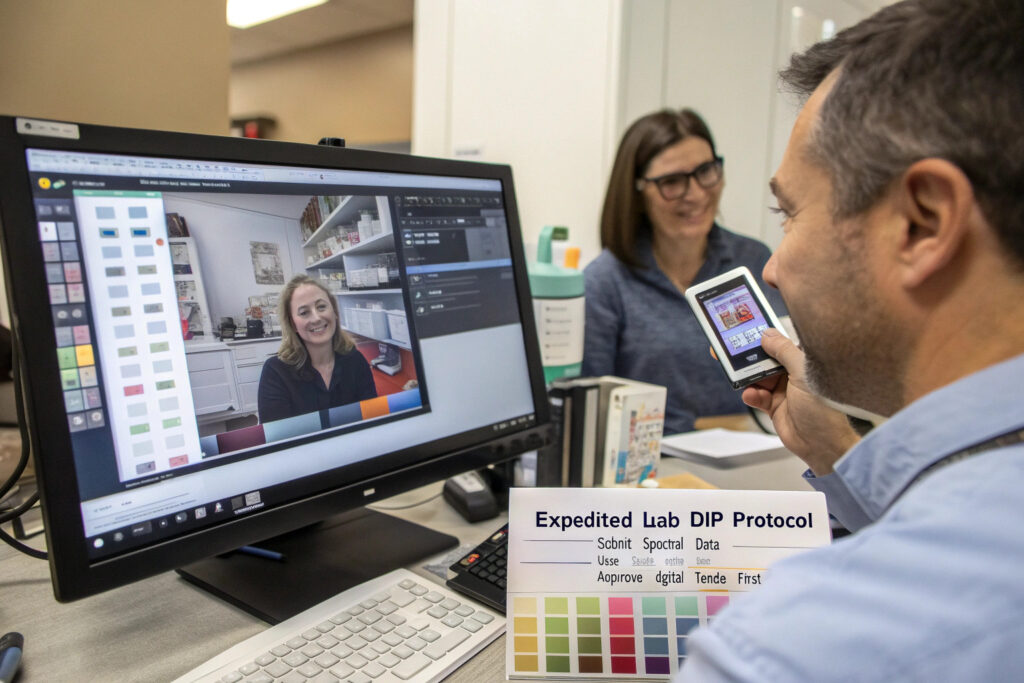
Why Does Submitting a Spectrophotometer Reading Speed Up the First Dip?
A spectrophotometer reading provides the dye house with the precise spectral reflectance curve of your target color. The dye house's computer color matching software compares this curve to its database of dye formulations. The software suggests a starting recipe that is mathematically close to the target.
Without a spectrophotometer reading, the dye master starts from visual assessment. The first dip is a guess. The guess is often far from the target. The reformulation cycles multiply.
I ask my clients to provide a spectral data file from their local spectrophotometer.
Can Choosing a Stock Yarn Color Bypass the Lab Dip Entirely?
Yes. If your target color matches one of the factory's stock yarn colors within an acceptable Delta E tolerance, you can bypass the lab dip process entirely. The stock yarn is already dyed, tested, and available. The production can start immediately.
Stock colors are typically a curated palette of 20 to 30 shades that the factory keeps in inventory. Black, white, navy, grey, and basic reds and blues are always in stock.
I offer a stock yarn color card to all new clients. Choosing a stock color saves 2 to 4 weeks.
Conclusion
Your custom beanies supplier keeps delaying the lab dip approval because the dye house is a shared resource with limited capacity, and your small development batch competes with bulk production orders for machine time. The technical difficulty of matching a Pantone paper color to a textured yarn substrate adds iterative reformulation cycles. Metamerism causes dips that match under one light to fail under another. The supplier who cannot explain the specific reason for the delay is hiding a capacity problem. The supplier who communicates the technical challenge and provides a revised timeline is managing the process.
You can break the bottleneck by understanding the lab dip chemistry, submitting spectrophotometer data, choosing stock colors when possible, and scheduling your development during the factory's slow season. The lab dip is the foundation of your beanie order. A rushed or poorly managed lab dip creates a color that fails in the retail environment.
At Global-Caps, I control the lab dip process from start to finish. My dye house is in-house. My color matching is spectrophotometer-verified. My project managers communicate delays with specific reasons and revised dates. I offer stock colors and expedited service.
If your current supplier is stuck in a lab dip delay loop, contact my Business Director Elaine. She can provide a clear lab dip timeline, a stock color card, or an expedited color match using your spectral data. Email Elaine at elaine@fumaoclothing.com. Let's get your beanie colors approved and your production moving.