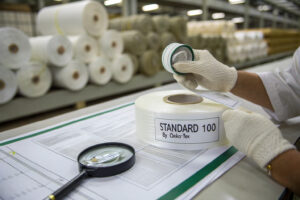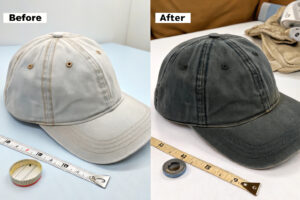
You price your visors. You factor in the FOB cost, the shipping, and your margin. You forget the tariff. Or you assume the tariff is 7.5 percent because that is what you paid three years ago. The shipment arrives. Customs demands 27.5 percent duty. Your profit margin is erased. You check the news. The tariff rate changed while your goods were on the water. You priced your product based on an expired policy.
The current US tariff rate for Chinese-made custom sports visors under HTS heading 6505.00 is a base Most Favored Nation duty rate plus an additional Section 301 tariff. The base rate for visors of cotton or man-made fibers ranges from free to 7.5 percent ad valorem depending on the specific fiber composition and construction. The Section 301 tariff on List 3 goods, which includes most headwear, is currently 25 percent ad valorem. The effective total tariff rate for a typical polyester sports visor is 27.5 percent to 32.5 percent when combining the base rate and the Section 301 rate. Some visors with specific fiber blends or special construction features may fall under different subheadings with slightly different rates.
At Global-Caps, I track the tariff rate changes daily. I update my client quotes within 24 hours of any Federal Register notice. The tariff is a moving target. You need a supplier who watches the target.
What HTS Code Applies to Custom Sports Visors Imported From China?
You let the supplier choose the HTS code. They write "6505.00" on the commercial invoice. Customs flags the entry. "Insufficient classification. Provide subheading." You do not know the subheading. The supplier does not know the subheading. The shipment sits in customs for a week. The demurrage charges accumulate. The supplier's generic code was a guess.
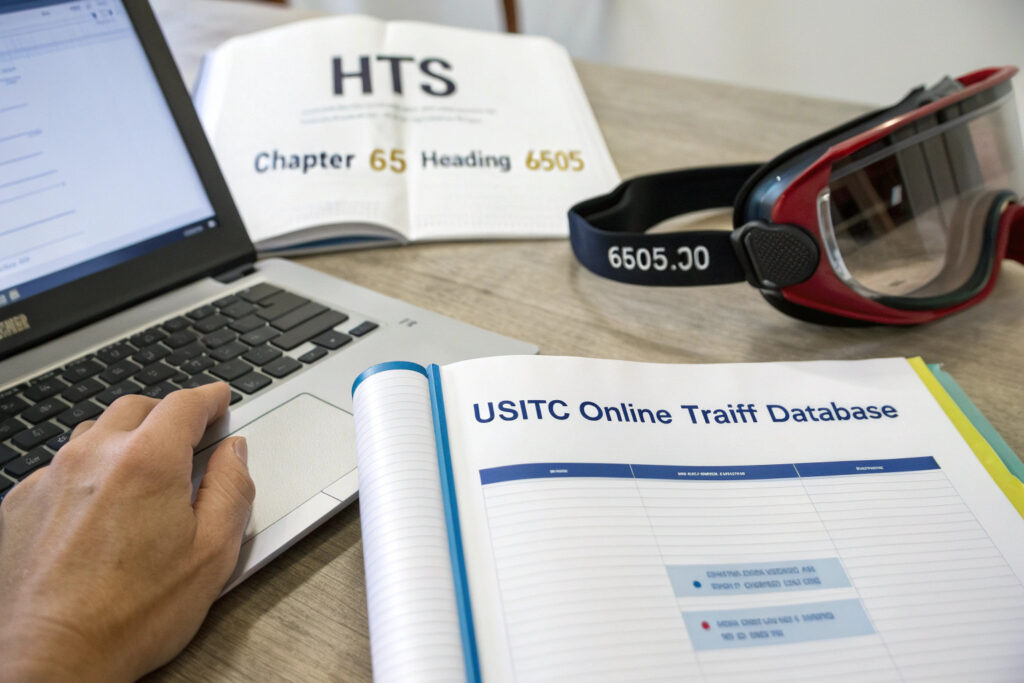
The correct HTS code for custom sports visors imported from China depends on the fiber composition, the construction method, and the gender designation. Most sports visors fall under 6505.00, which covers "Hats and other headgear, knitted or crocheted, or made up from lace, felt or other textile fabric." The specific subheading depends on whether the visor is of cotton, of man-made fibers, or of other fibers. The full 10-digit code must be determined using the General Rules of Interpretation.
I classify every visor style before production. My customs broker reviews the classification. The correct HTS code is printed on the commercial invoice and filed in the entry.
The distinction between knitted and woven construction affects the subheading level classification.
How to Distinguish Between Cotton, Man-Made Fiber, and Blend Visors?
A visor of 100 percent cotton falls under 6505.00.30 if knitted or 6505.00.40 if not knitted. A visor of 100 percent polyester falls under 6505.00.50 if knitted or 6505.00.60 if not knitted. A visor of a blend of cotton and polyester is classified by the fiber that predominates by weight.
If the visor crown is 60 percent cotton and 40 percent polyester, it is classified as a cotton visor. The base duty rate for cotton visors may be slightly different from man-made fiber visors. The Section 301 tariff applies equally.
I test the fiber composition in my lab. The test report supports the HTS classification.
Why Does the "Knitted vs. Not Knitted" Distinction Matter for Tariffs?
The HTS distinguishes between headgear that is knitted or crocheted and headgear that is made from woven or non-woven fabric. The subheading numbers are different. The base duty rates can be different.
A visor with a knitted cotton crown is 6505.00.30. A visor with a woven cotton crown is 6505.00.40. Misclassifying the construction type is a customs violation.
I verify the construction type during product development. The spec sheet states whether the crown fabric is knit or woven.
How Does Section 301 Apply to Sports Visors From China?
You read that Section 301 tariffs are "under review." You assume they will be removed. You delay your order. The review concludes. The tariffs remain. Your delay cost you two months of sales. You bet your business on a trade policy prediction. The policy did not cooperate.
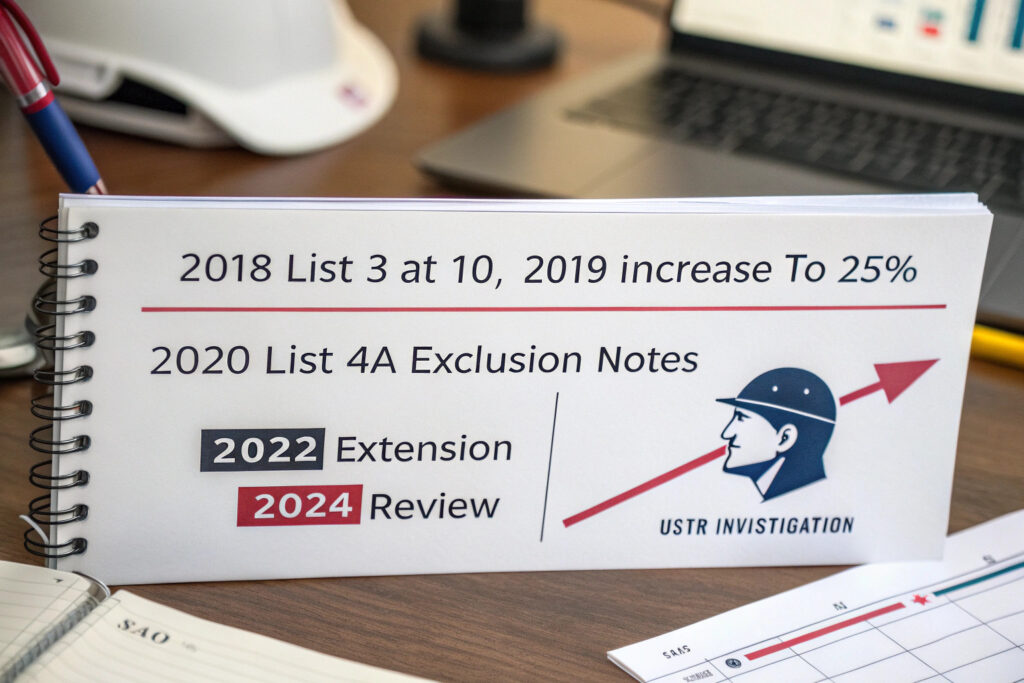
Section 301 tariffs apply to sports visors from China because visors are classified under the List 3 tariff action, which covers a wide range of products including headwear. The current Section 301 rate for List 3 goods is 25 percent ad valorem. This rate has been in effect since May 2019, with an initial 10 percent rate applied in September 2018 and increased to 25 percent in May 2019. The USTR has conducted periodic reviews of the Section 301 tariffs, but as of 2026, the List 3 tariffs remain in place.
I do not predict tariff policy. I price for the current rate and offer a DDP option for clients who want tariff certainty.
Exclusions have been granted for specific products, but sports visors have generally not been excluded.
Were Any Headwear Categories Excluded From Section 301 Tariffs?
Some specific headwear categories received temporary exclusions during the COVID-19 pandemic, primarily medical headwear and protective face coverings. Sports visors were not included in these exclusion lists.
Exclusion requests for fashion headwear, including sports visors, have been submitted by industry groups. Most have been denied. The USTR's rationale is that alternative sourcing outside of China is available for these products.
I monitor the USTR exclusion portal. I file exclusion requests on behalf of my clients when a case can be made.
How Can a Tariff Engineering Strategy Minimize the Section 301 Impact?
Tariff engineering is the legal design of a product to achieve a more favorable tariff classification. For sports visors, this could involve adjusting the fiber blend, modifying the construction, or adding a functional feature that shifts the classification.
A visor with a built-in LED light is not classified as headgear. It is classified as an electronic article. The tariff rate may be lower. This strategy requires careful analysis and a binding ruling request to US Customs.
I do not recommend tariff engineering without a customs attorney. The rules are complex.
What Is the Difference Between MPF, HMFP, and the Actual Duty Rate?
You pay the duty amount on the customs bill. You think that is the only charge. You do not notice the MPF. You do not notice the HMF. Your accounting department asks why the import cost is higher than the duty calculation. You realize there are fees on top of the tariff. The "duty rate" is not the "total import tax rate."
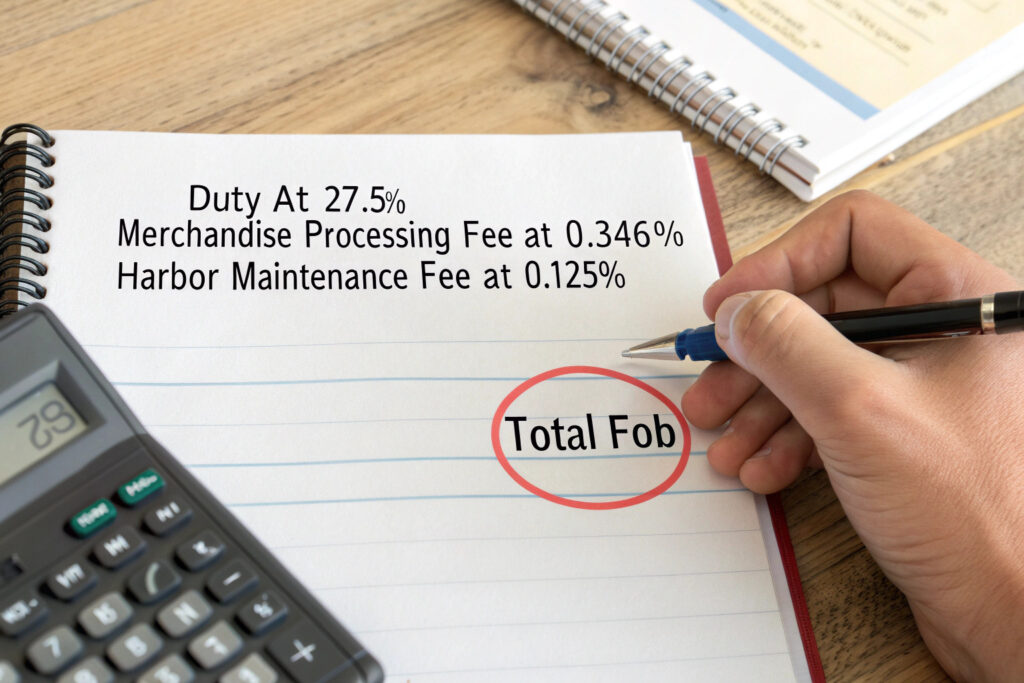
The duty rate is the ad valorem tariff assessed on the entered value of the goods. The MPF is the Merchandise Processing Fee, charged by US Customs on formal entries at 0.3464 percent of the entered value, with a minimum of $27.75 and a maximum of $538.40 per entry. The HMF is the Harbor Maintenance Fee, charged on ocean freight imports at 0.125 percent of the entered value. These fees are separate from the duty rate but are part of the total import cost.
My customs broker provides a fee breakdown with every entry. The MPF and HMF are line items on the entry summary.
The MPF applies to formal entries. Informal entries have a different fee structure.
How Is the Merchandise Processing Fee Calculated on a Visor Shipment?
The MPF is calculated as 0.3464 percent of the entered value. The entered value is the FOB value of the goods, not including freight and insurance if they are listed separately. For a visor shipment valued at $25,000 FOB, the MPF is $86.60. The minimum fee is $27.75. The maximum is $538.40.
The MPF is assessed per formal entry, not per item. A single entry with multiple HTS lines pays one MPF.
My broker files the entry and includes the MPF on the entry summary.
Does the Harbor Maintenance Fee Apply to Air Freight Visor Shipments?
No. The HMF applies only to cargo imported via ocean freight. It funds the maintenance of US harbors. Air freight shipments are not subject to the HMF.
If you ship your visors by sea, the HMF is 0.125 percent of the entered value. If you ship by air, the HMF is zero. This is a small cost advantage for air freight.
I factor the HMF into my sea freight cost comparisons.
How Can You Legally Reduce the Tariff Burden on Bulk Custom Visors?
You accept the tariff rate as fixed. You pay 27.5 percent on every shipment. You do not explore legal reduction strategies. Your competitor pays 18 percent. They have a customs attorney. They use a First Sale program. They store inventory in a Foreign Trade Zone. They are not evading tariffs. They are legally minimizing them. You are leaving money on the customs dock.
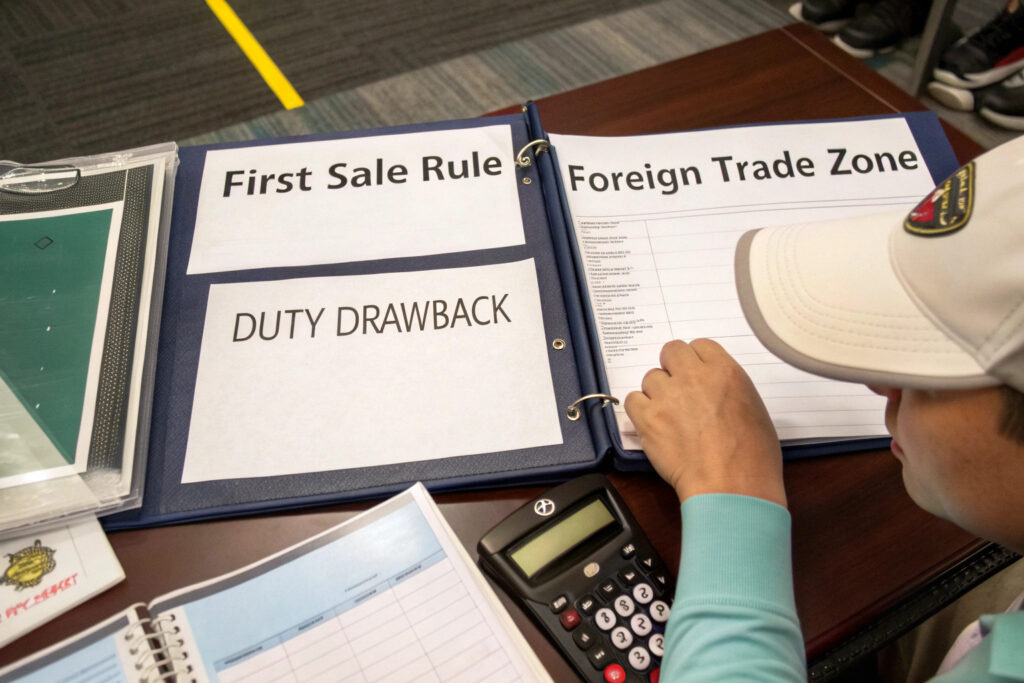
You can legally reduce the tariff burden on bulk custom visors through three primary strategies: the First Sale Rule, the use of Foreign Trade Zones, and duty drawback. The First Sale Rule allows the importer to use the factory's price to the exporter, rather than the exporter's price to the importer, as the customs value. Foreign Trade Zones allow goods to be stored without duty payment until they enter US commerce. Duty drawback allows a refund of 99 percent of duties paid on goods that are subsequently exported.
I help my large-volume clients evaluate these duty reduction strategies with their customs counsel.
The First Sale Rule is complex but powerful for multi-tier transactions.
What Is the First Sale Rule and Does It Apply to Custom Headwear?
The First Sale Rule is a customs valuation principle. In a multi-tiered transaction, the importer can use the price paid in the first sale, typically the factory's price to the middleman, as the transaction value for customs purposes, provided the sale is a bona fide arm's length transaction and the goods are clearly destined for the United States.
If a trading company buys visors from my factory for $2.00 and sells them to the US buyer for $3.00, the US buyer can declare the $2.00 price as the customs value, reducing the duty by one-third. The transaction must be fully documented.
I support First Sale documentation for clients using a trading company structure.
Can Foreign Trade Zone Storage Delay or Eliminate Visor Tariffs?
A Foreign Trade Zone is a designated area in the United States legally outside the customs territory. Visors can be shipped to a Foreign Trade Zone, stored, and even processed without paying duties. Duties are paid only when the visors leave the zone and enter US commerce.
If the visors are re-exported directly from the Foreign Trade Zone to Canada, no US duties are ever paid. This strategy eliminates tariffs on re-exported promotional merchandise.
I have assisted clients in setting up Foreign Trade Zone operations for large-scale promotional campaigns.
Conclusion
The current US tariff rate for Chinese-made custom sports visors is a combination of the base Most Favored Nation duty rate and the Section 301 additional tariff. The base rate ranges from free to 7.5 percent depending on the fiber composition and construction. The Section 301 tariff is an additional 25 percent. The effective total rate is typically 27.5 percent to 32.5 percent. Additionally, the Merchandise Processing Fee of 0.3464 percent and the Harbor Maintenance Fee of 0.125 percent on ocean freight imports add to the total import cost.
The HTS code classification is critical. The fiber composition, the knitted versus woven construction, and the gender designation all affect the specific subheading. A misclassification is a customs violation. The Section 301 tariffs on List 3 goods, which include sports visors, remain in place as of 2026. Legal reduction strategies, including the First Sale Rule, Foreign Trade Zones, and duty drawback, are available for importers who invest in customs compliance infrastructure.
At Global-Caps, I classify every product accurately. I monitor the tariff rates daily. I provide my clients with a full landed cost breakdown including duties, MPF, and HMF. I support legal duty reduction strategies with proper documentation. The tariff is a business cost. It can be managed with knowledge and discipline.
If you need custom sports visors from a supplier who understands US tariff classification and can help you manage your import costs, contact my Business Director Elaine. She can provide an HTS classification for your specific visor design and a landed cost quote with all duties and fees included. Email Elaine at elaine@fumaoclothing.com. Let's make your visors and keep your margins intact.