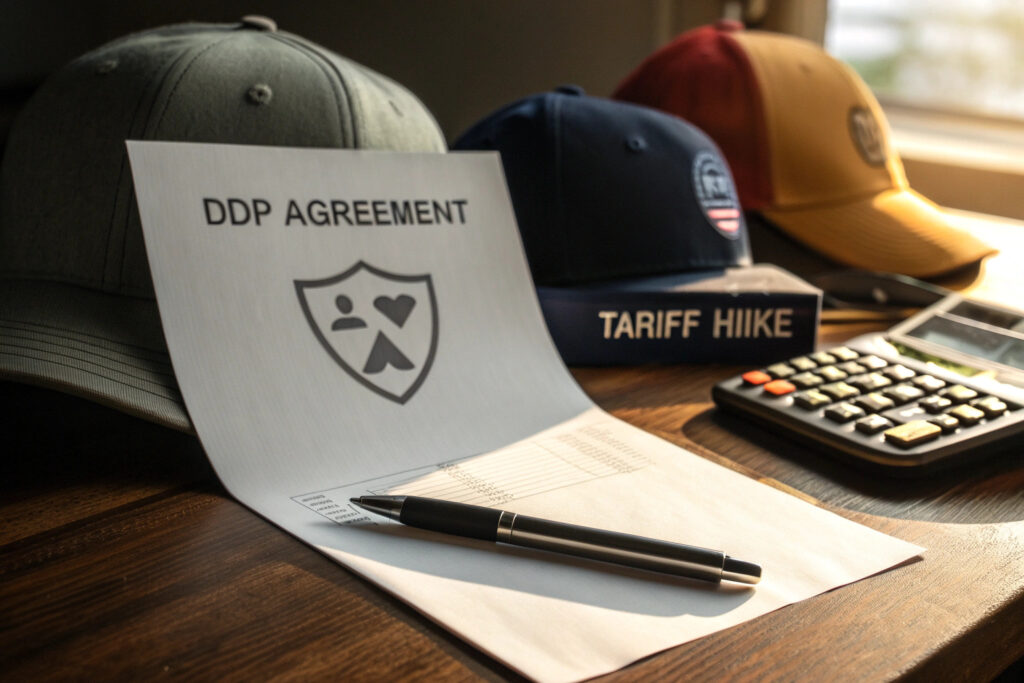
You negotiate a cap order. The unit price is $2.50 FOB. You budget 8% for duties. The ship sails. While it is crossing the Pacific, a new tariff is announced. Your 8% duty becomes 25%. You owe an extra $4,250 on a $25,000 shipment. Your margin is gone. The factory says, "Sorry, FOB terms. Your problem." You paid a low unit price. You bought a high currency risk. The FOB price was a mirage.
DDP all-inclusive pricing shields your cap order from fluctuating tariffs because the seller assumes the financial risk for all import duties, taxes, and customs clearance fees. The price you agree on the purchase order is the final price delivered to your door. If the tariff rate increases between the order date and the import date, the seller pays the difference, not you. The seller is the Importer of Record. The seller's customs broker handles the entry. The seller's balance sheet absorbs the tariff volatility. You pay one fixed price. You sleep at night.
At Global-Caps, I offer DDP pricing to my long-term clients. I build a tariff buffer into my cost model based on the futures curve of trade policy. I carry the risk. The client carries the caps. This is the partnership model that survives trade wars.
What Does DDP Mean Legally for the Importer of Record Role?
You sign a DDP contract. You think it just means free shipping. You don't read the Incoterms fine print. A customs audit happens. The authorities find a valuation discrepancy. They issue a fine. The fine is addressed to the Importer of Record. Who is that? Under DDP, it is the seller. The fine is the seller's problem, not yours. You did not just buy shipping. You bought legal insulation.
DDP means Delivered Duty Paid, as defined by the ICC Incoterms 2020 rules. The seller is legally the Importer of Record. The seller must handle export clearance in China, ocean or air freight, import customs clearance in the destination country, payment of all duties and taxes, and final delivery to the named place. The seller assumes all risk and cost until the goods are available for unloading at the buyer's dock. The buyer's only obligation is to unload the goods.
I am the Importer of Record for my DDP shipments. I hold a customs bond. My broker files the entry under my company's tax ID. The customs bill comes to me, not to my client. This is a profound legal distinction.
The liability chain is clear. The seller is liable for customs compliance, valuation accuracy, and tariff classification.
How Does the ICC Incoterms 2020 Rule Define the Seller's Customs Obligations?
The ICC Incoterms 2020 rule for DDP states: "The seller delivers the goods when the goods are placed at the disposal of the buyer, cleared for import on the arriving means of transport, and ready for unloading at the named place of destination." The seller must "carry out and pay for all export and import formalities required by the countries of export and import."
This means the seller handles the export declaration in China, the import entry in the destination country, the payment of customs duties, the payment of value-added tax or goods and services tax, and any other levies charged at the border. The ICC rule is legally binding when referenced in the sales contract.
I use DDP terms for my North American and European clients who want a true landed cost. My customs broker is licensed in the destination country. My contract explicitly references Incoterms 2020.
Who Pays the Customs Bond and the Merchandise Processing Fee Under DDP?
Under DDP, the seller pays the customs bond and the merchandise processing fee. The customs bond is a financial guarantee required by the US Customs and Border Protection. It guarantees that the duties and taxes will be paid. The bond can be a single-entry bond or a continuous bond. The seller arranges this bond.
The merchandise processing fee is a fee charged by US Customs on formal entries. It is 0.3464% of the entered value, with a minimum of $27.75 and a maximum of $538.40 per entry. The seller pays this fee as part of the DDP service.
I maintain a continuous customs bond with my US broker. The cost of the bond is amortized across all my DDP shipments. My DDP quote includes the bond fee and the MPF. The buyer does not see these line items. They see one final price.
How Do Tariff Fluctuations Impact Traditional FOB Hat Contracts?
You sign a FOB contract at $3.00 per cap. The tariff rate is 7.5%. You calculate your landed cost. You price your retail. The factory finishes production. The goods sail. While the container is mid-ocean, a new Executive Order raises the tariff to 25%. The goods arrive. Customs demands 25% duty. You cannot change your retail price. Your margin is destroyed. The FOB contract was a bet on trade policy stability. You lost the bet.
Tariff fluctuations impact traditional FOB hat contracts by shifting the duty cost from a known variable to an unknown risk after the buyer has already committed to the purchase. Under FOB terms, the buyer is the Importer of Record. The buyer pays the duty at the rate in effect on the date of importation, not the date of order. Any tariff increase between the order date and the import date is the buyer's financial burden. The seller's price is fixed. The government's price is not.
I watched this happen to dozens of buyers during the 2018-2019 trade war. FOB contracts became financial weapons. DDP contracts became safe harbors.
The section 301 tariffs on Chinese goods, including headwear, have been a political ping-pong ball. The rate changes with little warning.
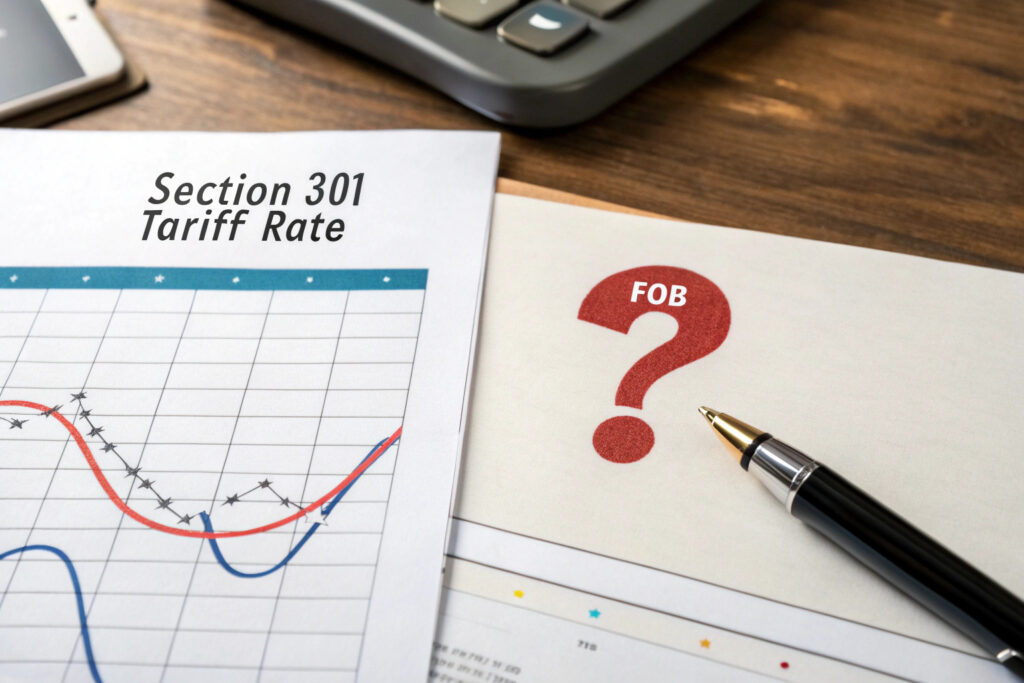
What Happened to Cap Importers During the 2018 Section 301 Tariff Surge?
In 2018, the US imposed Section 301 tariffs on a wide range of Chinese goods. Headwear classified under HTS 6505.00 was initially included on List 3 with a 10% tariff, which was later raised to 25%. Importers who placed FOB orders before the tariff announcement faced a 15% duty increase on goods already in production or in transit.
Many small brands could not afford the unexpected duty bill. They abandoned their shipments at the port. They lost their deposit with the factory. The factory was left with branded goods that could not be resold. The relationship was destroyed. The USTR tariff lists became required reading for every apparel importer.
My clients who were on DDP contracts during this period were insulated. I paid the increased tariff. My pricing model had absorbed the risk. My clients' retail prices stayed stable.
How Does the "Date of Importation" Rule Create Unpredictable Duty Costs?
Customs duties are assessed based on the rate in effect on the date of importation, which is the date the goods arrive at the port of entry and are presented to Customs. The date of the purchase order is irrelevant. The date the ship sailed is irrelevant. The date the ship arrives is the legal date that fixes the tariff rate.
A cap order placed in January with an April delivery has a four-month window of tariff risk. An election, a trade negotiation, or a geopolitical event can change the tariff rate during that window. The importer under FOB terms bears that risk entirely.
I monitor the Federal Register and USTR announcements daily. I factor the tariff futures risk into my DDP pricing. I use a customs attorney to review classification strategies.
How Do DDP Suppliers Calculate and Absorb Tariff Risk?
You receive a DDP quote. It is higher than the FOB quote plus the current duty rate. You think the supplier is inflating the price. You are wrong. The supplier is building a tariff risk buffer. They are not charging you the current duty rate. They are charging you an insurance premium against the duty rate rising. You pay a small premium for a large certainty.
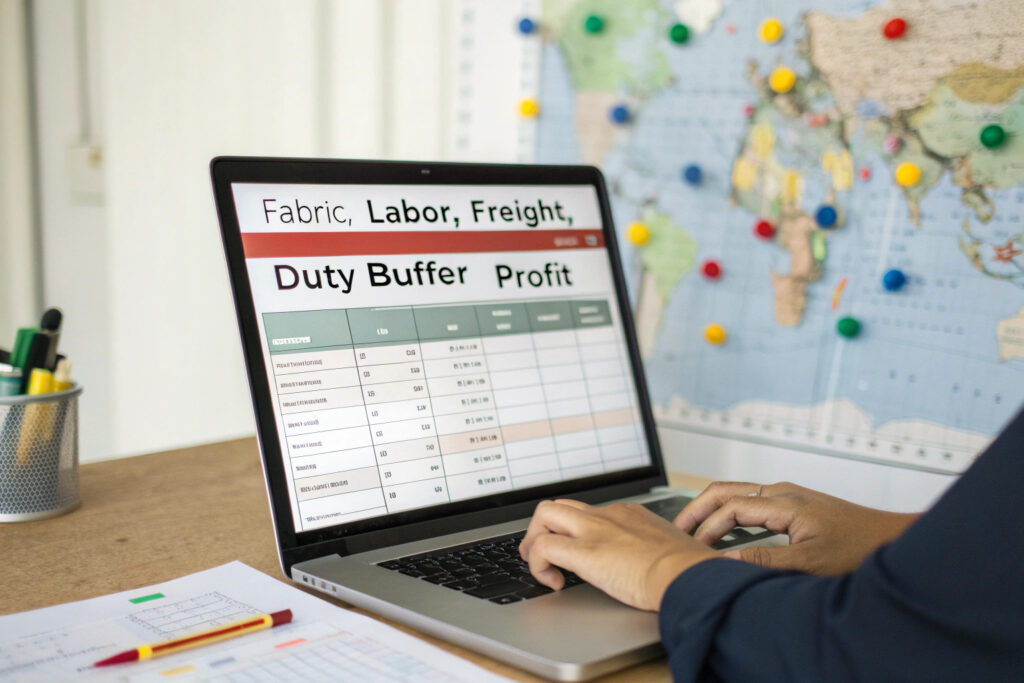
DDP suppliers calculate and absorb tariff risk by building a duty buffer into the all-inclusive price. They analyze the political risk of tariff changes, the historical volatility of the relevant HTS codes, and the time horizon of the order. They add a risk premium to the current duty rate. If the duty does not increase, the supplier retains the buffer as a risk management fee. If the duty increases, the buffer covers the extra cost. The supplier may also use currency hedging and tariff engineering strategies.
I build a risk model for every large DDP order. I look at the trade policy calendar. I look at the political rhetoric. I set a buffer. I am transparent with my clients about the buffer methodology.
The duty drawback and foreign trade zone strategies are more advanced tools for very large importers.
What Is a Duty Drawback and Can It Apply to Re-Exported Promotional Caps?
A duty drawback is a refund of 99% of the customs duties paid on imported goods that are subsequently exported or destroyed. If a DDP shipment of caps is imported into the US and then re-exported to Canada for an event, the importer can claim a duty drawback.
The drawback claim requires meticulous record-keeping. The import entry, the duty payment receipt, and the export bill of lading must be matched. The claim is filed with US Customs. The process takes months. For promotional caps that are given away, not re-exported, drawback does not apply.
I have filed duty drawback claims for clients who import caps for a US event and then ship the leftovers to a Canadian event. The drawback recovers most of the duty. This is a specialized strategy.
How Do Foreign Trade Zones Eliminate Duties on Re-Exported Cap Shipments?
A Foreign Trade Zone is a designated area within the United States that is legally considered outside the customs territory. Goods can be brought into a Foreign Trade Zone without paying duties. If the goods are re-exported, no duties are ever paid. If the goods enter the US market, duties are paid at that time.
A large cap importer can store their inventory in a Foreign Trade Zone. They pay zero duty on arrival. They only pay duty when they pull caps from the zone for domestic distribution. Caps shipped from the zone directly to Canada or Europe never incur US duties.
This strategy is for high-volume importers with a stable distribution pattern. I have helped a large promotional products distributor set up a Foreign Trade Zone for their headwear inventory. The duty savings were six figures annually.
What Are the Hidden Costs That DDP Eliminates for the Cap Buyer?
You budget the FOB price plus the duty. You forget the brokerage fee. You forget the ISF filing fee. You forget the destination terminal handling charge. You forget the disbursement fee the courier adds for advancing the duty. The nickel-and-dime fees accumulate. Your $3,000 budget becomes $4,500. The FOB price was a down payment on the real cost.
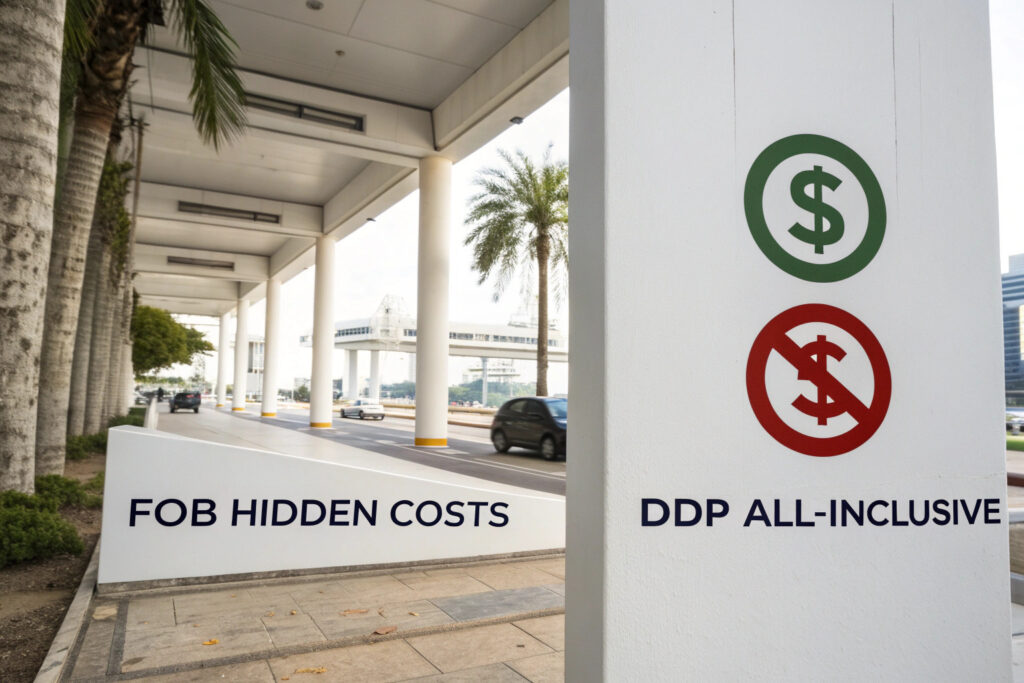
DDP eliminates hidden costs by bundling all the intermediate charges into a single, fixed price. The customs brokerage fee, the ISF (Importer Security Filing) fee, the single-entry bond fee, the merchandise processing fee, the destination terminal handling charge, and the courier or trucking delivery fee are all included. The buyer does not receive surprise invoices from the freight forwarder, the customs broker, or the port authority.
I list every cost component in my internal cost sheet. The client sees only the final number. The hidden costs are hidden from the client, not from me. I have already paid them.
The ISF filing is a specific regulatory requirement with a steep penalty for non-compliance.
What Is the ISF 10+2 Filing and Who Is Responsible Under DDP?
The Importer Security Filing, known as ISF 10+2, is a requirement by US Customs. It must be filed at least 24 hours before the cargo is loaded onto the vessel at the foreign port. It provides Customs with advance information about the shipment, including the seller, buyer, manufacturer, and country of origin.
Under DDP, the seller, as the Importer of Record, is responsible for filing the ISF. The seller's customs broker files the 10 data elements from the seller and the 2 data elements from the carrier. The filing fee is typically $30 to $50. Failure to file or late filing incurs a $5,000 fine.
I file the ISF for every DDP shipment. The cost is buried in my all-inclusive price. My client never hears about it. That is the point.
How Does DDP Handle Disbursement Fees From Express Couriers Like DHL?
When an express courier like DHL, FedEx, or UPS clears a dutiable shipment, they advance the duty payment to Customs on behalf of the importer. They then charge the importer a disbursement fee for this service. The fee is typically a flat $15 to $25 or a percentage of the duty amount, whichever is higher.
Under FOB terms, the buyer receives a separate invoice from the courier for the duty plus the disbursement fee. It is an unexpected cost weeks after the delivery. Under DDP terms, the seller's courier account is billed. The seller pays the duty and the disbursement fee directly. The buyer receives the package and no follow-up invoice.
I use a DHL DDP account for my express sample and small-batch shipments. The disbursement fee is charged to my account. It is a cost of doing business.
Conclusion
DDP all-inclusive pricing shields your cap order from fluctuating tariffs by transferring the Importer of Record responsibility from the buyer to the seller. Under Incoterms 2020 DDP rules, the seller handles all export and import formalities, pays all duties and taxes, and delivers the goods to the buyer's door. The buyer pays one fixed price. If the tariff rate increases after the order is placed, the seller absorbs the increase.
Traditional FOB contracts expose the buyer to tariff volatility. The duty rate on the date of importation is the legal rate. A container mid-ocean when a new tariff is announced creates an unbudgeted cost that destroys margins. DDP suppliers manage this risk by building a duty buffer into their pricing model, monitoring trade policy, and using strategies like duty drawback and Foreign Trade Zones for large-scale operations.
DDP also eliminates the hidden costs that inflate the landed cost under FOB terms: the customs brokerage fee, the ISF filing fee, the bond fee, the merchandise processing fee, and the courier disbursement fee. The buyer receives one invoice. The buyer pays one amount. The financial complexity is the seller's problem, not the buyer's.
At Global-Caps, I offer DDP pricing as a standard option for my North American and European clients. I am the Importer of Record. My customs broker handles the clearance. My balance sheet carries the tariff risk. My clients plan their retail pricing with certainty. In a world of trade policy chaos, certainty is a premium product.
If you want a DDP all-inclusive quote for your next cap order, contact my Business Director Elaine. She can model the landed cost door-to-door and provide a fixed-price proposal that eliminates tariff anxiety from your business. Email Elaine at elaine@fumaoclothing.com. Let's shield your caps from the tariff storm.