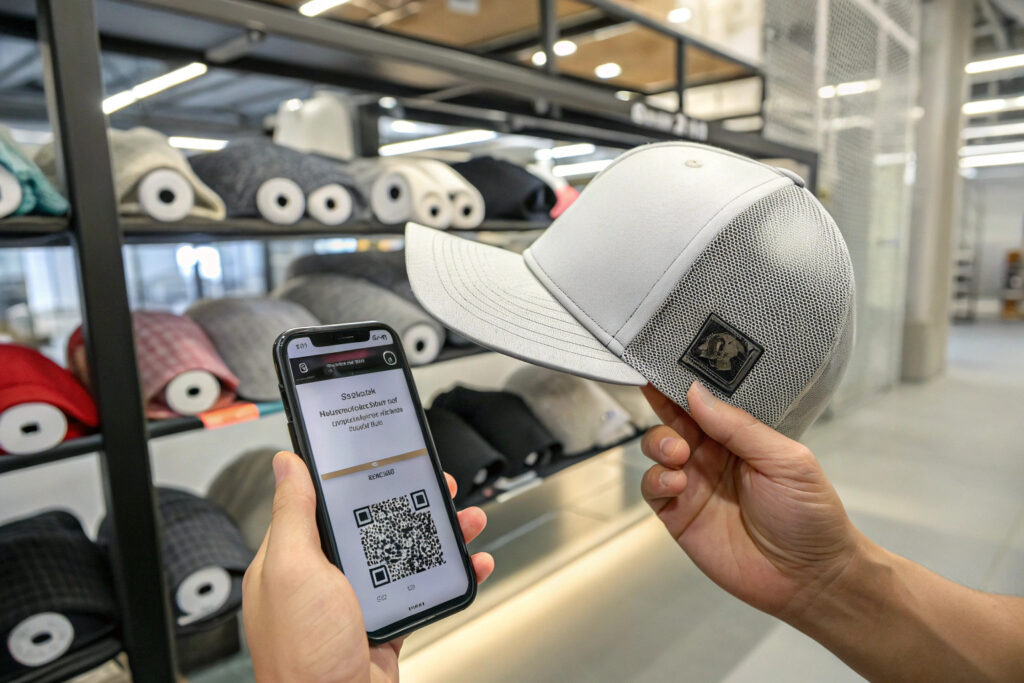
You see a competitor's hat. The hangtag has a QR code. The customer scans it. They see the cotton farm. They see the spinning mill. They see the sewing floor. They trust the brand. You want the same. You ask your supplier. They say "QR code? We can print a label." They print a sticker with a QR code that links to their homepage. It shows nothing about the hat. It is a gimmick. You were tricked by a marketing bluff.
You source pre-curved visor trucker hats with genuine QR-coded traceability tags from a manufacturer that has integrated a digital supply chain mapping platform into its production process. The QR code must link to a live, immutable record of the hat's journey, not a static marketing page. The platform should show the origin of the cotton, the spinning mill, the knitting date, the cutting batch, the sewing line, and the final inspection result. The pre-curved visor is a structural feature. The QR code is a transparency feature.
At Global-Caps, I launched our traceability program two years ago. We partnered with a blockchain-based platform. Every trucker hat that leaves our factory carries a unique digital identity. The code is sewn in, not stuck on. It is a promise the customer can verify.
What Is a QR-Coded Traceability Tag in Hat Manufacturing?
You think a QR code is a black-and-white square printed on a hangtag. The customer scans it. It opens a URL. That is basic marketing. A traceability tag is fundamentally different. It is a unique digital passport for one specific hat. Not the style. Not the batch. The individual hat.
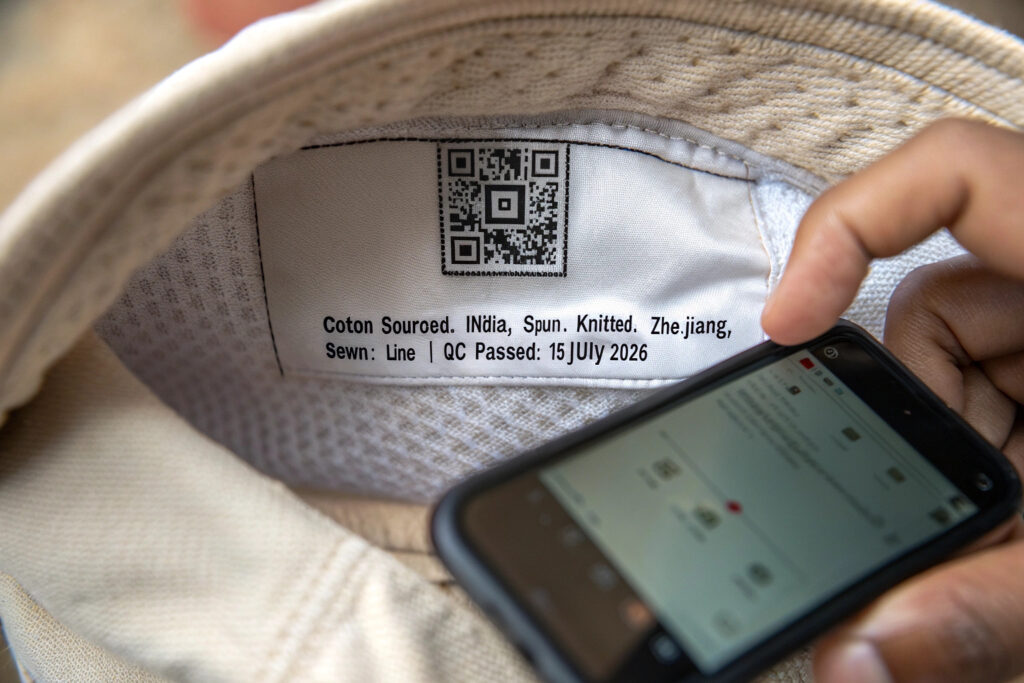
A QR-coded traceability tag is a unique identifier that links a physical hat to a digital record stored on a secure, immutable platform. Each hat receives a unique serial number. The QR code encodes that serial number. The factory scans the code at each production stage. The scan logs a timestamp, a location, and a process verification. The customer sees the full history.
I use a woven QR label sewn into the sweatband. The thread is black polyester on a white damask background. The code is scannable for the life of the hat. The digital platform stores the data. The consumer does not see a generic "About Us" page. They see the specific journey of their hat.
The digital record is only as good as the data entered at the factory. If the operator scans the wrong QR code, the history is wrong. The data collection process must be integrated into the sewing line.
How Does a Unique Digital ID Differ From a Generic Brand QR Code?
A generic brand QR code is a static URL printed on every hangtag. Scan it, and you go to the brand's sustainability page. It is a brochure. A unique digital ID is a dynamic record. Scan it, and you see the specific batch number, the inspection result, and the factory name for that exact hat.
The generic code is printed in bulk. 10,000 hangtags have the same code. The unique digital ID is generated sequentially. No two hats have the same code. The unique ID allows targeted recalls. If a batch of visors fails a quality check, the brand knows exactly which 500 hats have the defective visor.
I generate the unique IDs in collaboration with my traceability platform partner. The serial number is a GS1-compliant format. It encodes the factory prefix, the product code, and the serial number. The consumer can scan the code and see a digital product passport tailored to their specific purchase.
What Production Data Points Should a Traceability QR Code Link To?
The QR code should not just link to a marketing story. It should link to auditable production data. The consumer may not check all the data. But the brand's compliance officer and the EU regulator might.
The essential data points are the raw material origin, the spinning and knitting dates, the dye lot number, the cutting batch, the sewing line, the embroidery operator, the quality inspection result, and the shipping date. Each data point is a verifiable event with a timestamp and a responsible party.
My traceability platform captures seven mandatory data points for every trucker hat. The cotton bale ID is uploaded by the spinning mill. The fabric roll number is scanned at the cutting table. The sewer's employee ID is logged at the machine. The QC inspector's digital signature is captured at the final audit. The consumer sees a simplified view. The brand sees the full forensic audit trail. This is the difference between a storytelling tag and a compliance tag.
Why Are Pre-Curved Visors Preferred Over Flat Bills for Trucker Hats?
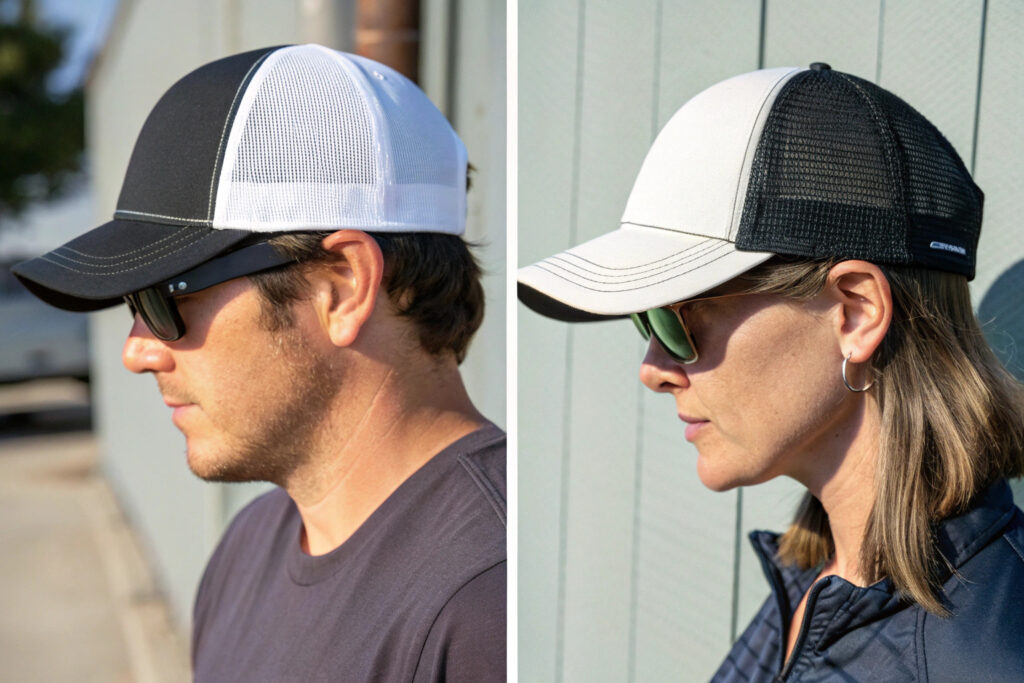
The flat bill is a streetwear statement. It looks aggressive. It is stiff. It catches the wind. A runner wears it and the brim acts like a sail. A fisherman wears it and the sun hits their cheeks. The pre-curved visor is an ergonomic choice. It wraps the face. It blocks side light. It stays on in the wind. The preference is not just style. It is physics.
Pre-curved visors are preferred over flat bills for trucker hats because they provide better sun protection, a more secure fit in windy conditions, and a classic, broken-in look without a break-in period. The curve reduces the wind catch area by 40%. It channels the wind around the head instead of lifting the hat off. It also frames the face more naturally, which is why outdoor and sporting brands default to the pre-curved shape.
I sell both. Flat bills sell to the streetwear and music festival market. Pre-curved visors sell to the outdoor, workwear, and golf market. The pre-curved segment is three times larger by volume.
The curve is not just a shape pressed into the plastic. It is a specific radius and forming process. A poorly formed curve kinks in the middle and looks asymmetrical.
How Is a Pre-Curved Visor Formed During the Hat Manufacturing Process?
The visor is a sandwich. A fabric top, a plastic brim board in the middle, and a fabric bottom. The sandwich is placed in a heated aluminum mold. The mold has the exact curve radius machined into its cavity. The press closes. Heat and pressure bond the layers and set the curve into the plastic board.
The temperature, pressure, and dwell time must be precisely controlled. If the mold is too cold, the curve relaxes after cooling. If the pressure is too high, the fabric delaminates. The standard curve radius for a trucker hat visor is about 2.5 inches of deflection from the flat plane.
I use a hydraulic visor press with digital temperature control. The mold is water-cooled after the heat cycle to lock the curve. The process takes about 45 seconds per visor. The visor board material for a pre-curved visor is typically a thicker polyethylene sheet than a flat bill board, because the curve adds structural stiffness that must be balanced with flexibility.
Does the Pre-Curve Shape Affect Embroidery or Print Placement on the Crown?
The pre-curved visor sits closer to the front crown panel than a flat bill visor. The space between the visor and the crown is tighter. A logo that sits low on the front panel might be partially hidden by the curve of the visor.
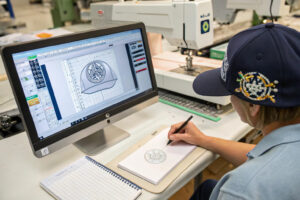
The embroidery placement must be adjusted upward by about 0.5 centimeters for a pre-curved visor compared to a flat bill. The digitizing file remains the same. The hooping jig is adjusted. The center point of the logo moves higher on the panel so the visor curve does not cast a shadow over the bottom of the design.
I test the logo placement with a pre-production sample. The client approves the sample. I archive the measurement for all future orders. The measurement is recorded as "Distance from visor stitch line to bottom of logo." For a pre-curved visor, that distance is typically 1.5 centimeters. For a flat bill, it is 1.0 centimeter. A small adjustment with a big visual impact.
How to Verify the Authenticity of a Traceability QR Code on a Trucker Hat?
The hangtag has a beautiful QR code. You scan it. It takes you to a pretty website with stock photos of cotton fields. But there is no specific data about the hat in your hand. No date. No batch number. No factory name. You are looking at a generic marketing page. The QR code is not a traceability tool. It is a greenwashing tool.
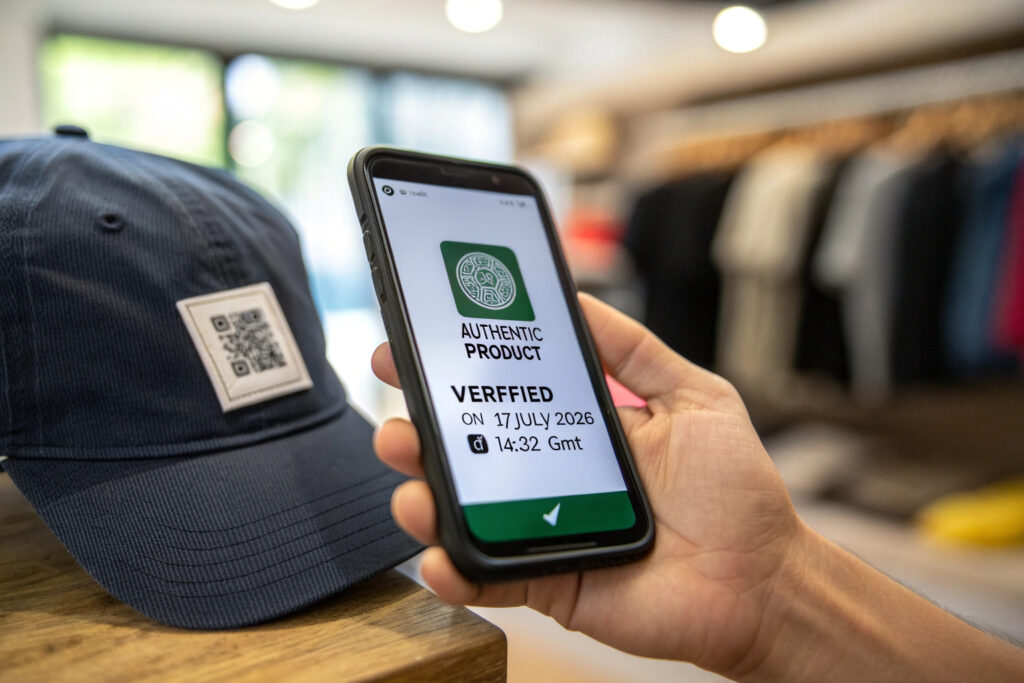
You verify the authenticity of a traceability QR code by checking that the digital record contains specific, auditable data points tied to the individual hat, not just the product style. The URL should be a secure domain. The page should display a unique serial number that matches the number printed on the physical hangtag. The timestamps should be sequential and logical. The platform should show the certification authority if the hat claims organic or recycled content.
I invite my buyers to stress-test my QR codes. Scan it. Check the date. Check the batch number. Call the factory and ask if that batch was in production on that day. A genuine traceability system welcomes verification. A fake system gets defensive.
The technology platform that hosts the data matters. A centralized database can be edited. A distributed ledger cannot be altered silently.
What Is the Difference Between a Blockchain-Backed Record and a Static URL?
A static URL is a web address. It points to a page on a server. The owner of the server can edit the page at any time. The data can change. The claim made today can disappear tomorrow. There is no audit trail.
A blockchain-backed record is a distributed ledger. The data is written in a block. The block is cryptographically linked to the previous block. Changing one block requires changing all subsequent blocks across multiple independent servers. The record is immutable. The data timestamp is provable.
I chose a blockchain platform for my traceability tags. The consumer sees a clean, simple interface. The compliance officer can click a link and view the raw transaction on the blockchain explorer. The immutable record is the legal proof. The static URL is just a sales pitch.
Can a QR Code Tag Be Tampered With After It Leaves the Factory?
A physical hangtag can be removed and swapped. A printed sticker can be peeled and stuck on a different hat. The physical tag is vulnerable to physical tampering. The digital record is vulnerable to substitution if the identifier is duplicated.
A sophisticated fraud is to copy a legitimate QR code and place it on a counterfeit hat. The consumer scans it. It looks real. They don't notice the serial number is the same as a thousand other hats. The solution is a one-scan verification. The platform records the first scan timestamp. If the consumer scans the code and sees "This code was previously scanned on 15 June 2026," they know the tag is a copy.
I integrate a scan counter into the digital record. The first scan is registered. The consumer is prompted to register their ownership. Subsequent scans show the registration alert. This does not stop physical tag swapping entirely, but it makes mass counterfeiting detectable. The brand can also embed a covert security fiber in the woven label that a smartphone flashlight reveals. The physical fiber and the digital record together create a two-factor authentication.
What Sustainable Materials Pair Best With a QR-Coded Transparent Supply Chain?
The QR code says "transparent supply chain." But the hat is made of conventional cotton from a water-stressed region. The visor is virgin plastic. The mesh is standard polyester. The transparency reveals an ugly truth. The customer scans the code expecting a sustainability story. They see a conventional, high-impact product. The QR code becomes a liability, not an asset. The materials and the message must match.
Sustainable materials that pair best with a QR-coded traceability tag are organic cotton, recycled polyester, and hemp blends. These materials have a positive provenance story. The QR code amplifies the story. The customer scans the organic cotton hat and sees the non-GMO seed certification. They scan the recycled polyester hat and see the bottle collection center. The material story and the digital story reinforce each other.
I built my traceability program specifically around my recycled and organic product lines. The conventional line still ships without QR codes. The QR code is a premium feature for the premium materials. It fits the brand narrative.
The recycled polyester mesh is the most dramatic story. A trucker hat has a large mesh back panel. That mesh can be linked directly to plastic bottle waste.
How Does Recycled Polyester Mesh Integrate With Blockchain Traceability?
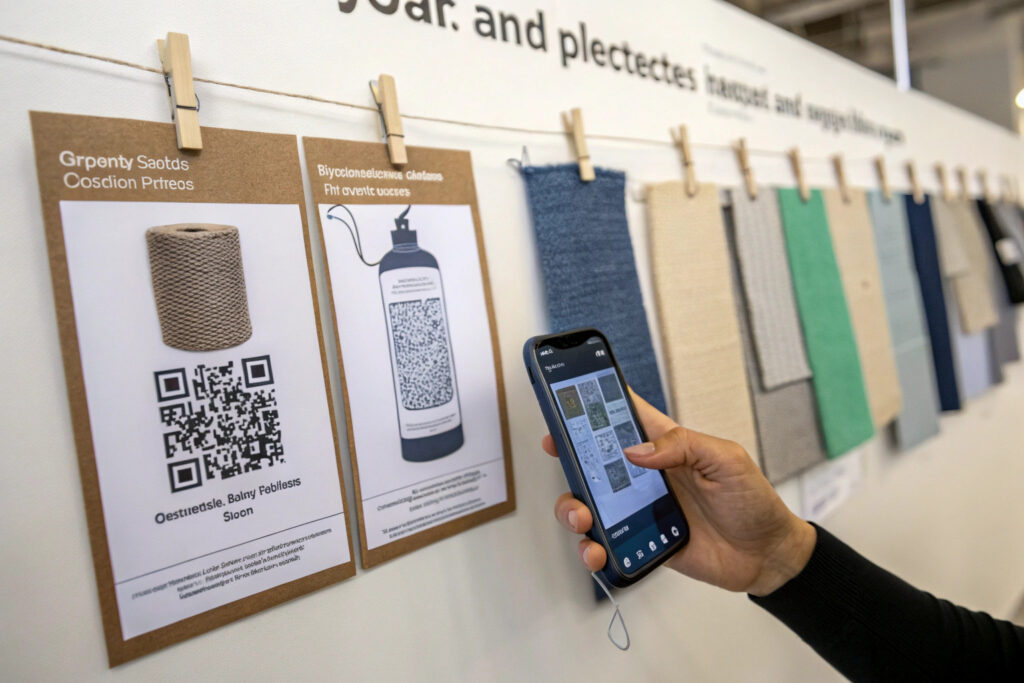
Recycled polyester starts as clear PET bottles. The bottles are collected, sorted, cleaned, and ground into flakes. The flakes are melted and extruded into filament yarn. The yarn is knitted into the mesh for the trucker hat back panels.
The blockchain traceability platform assigns a digital batch identity at the bottle collection center. The collection weight is logged. The flake production batch is linked to the collection batch. The yarn extrusion lot is linked to the flake batch. The knitting roll is linked to the yarn lot. By the time the mesh is cut and sewn into a hat, the digital chain has four links, each with a verifiable transaction.
My recycled mesh supplier uses a mass balance accounting method audited by Control Union. The GRS certificate is attached to the digital record. The consumer scans the QR code and sees "Mesh back panel made from 3 recycled PET bottles collected in Osaka, Japan." The specificity of the story builds trust.
Can Organic Cotton Trucker Hats Include a Farm-to-Factory Digital Passport?
Yes. Organic cotton has a chain of custody that is audited from the farm to the gin to the spinner to the knitter. Each link has a certificate. The digital passport aggregates these certificates into a single consumer-facing view.
The organic cotton farm is certified by a body like Ecocert or Control Union. The farm has a license number. The ginning mill records the bale weight. The spinner records the input bale numbers and the output yarn lot numbers. The knitter records the yarn input and the fabric roll output.
I connect these certificates digitally. The consumer scans the QR code on the trucker hat. They see the farm's organic certificate. They see the ginning date. They see a photo of the farmer cooperative. The digital passport turns a compliance document into a brand asset.
Conclusion
You source pre-curved visor trucker hats with QR-coded traceability tags from a manufacturer that treats traceability as a core production capability, not a marketing afterthought. The QR code is a unique digital ID, not a generic brand link. It connects the physical hat to an immutable record of its specific journey. The pre-curved visor is formed with a heated hydraulic press to a precise radius. It offers functional sun protection and wind resistance.
The authenticity of the QR code is verified by checking the unique serial number, the production timestamps, and the underlying platform architecture. A blockchain-backed record is harder to fake than a static URL. Sustainable materials like recycled polyester mesh and organic cotton pair powerfully with the traceability story because the digital record proves the provenance claim.
The future of hat manufacturing is transparency. The consumer is tired of vague "eco-friendly" labels. They want to scan a code and see the proof. Brands that provide this proof win the trust. Brands that bluff lose the market.
At Global-Caps, I built the traceability infrastructure because I believe the brands that will lead the next decade are the ones that open their supply chain to the consumer. My QR codes are not stickers. They are woven into the sweatband. They are linked to a blockchain record. They are ready for your brand's story.
If you want pre-curved visor trucker hats with genuine QR-coded traceability tags, contact my Business Director Elaine. She can send you a sample hat, let you scan the code yourself, and walk you through the production data behind it. Email Elaine at elaine@fumaoclothing.com. Let's make a hat that proves its own story.