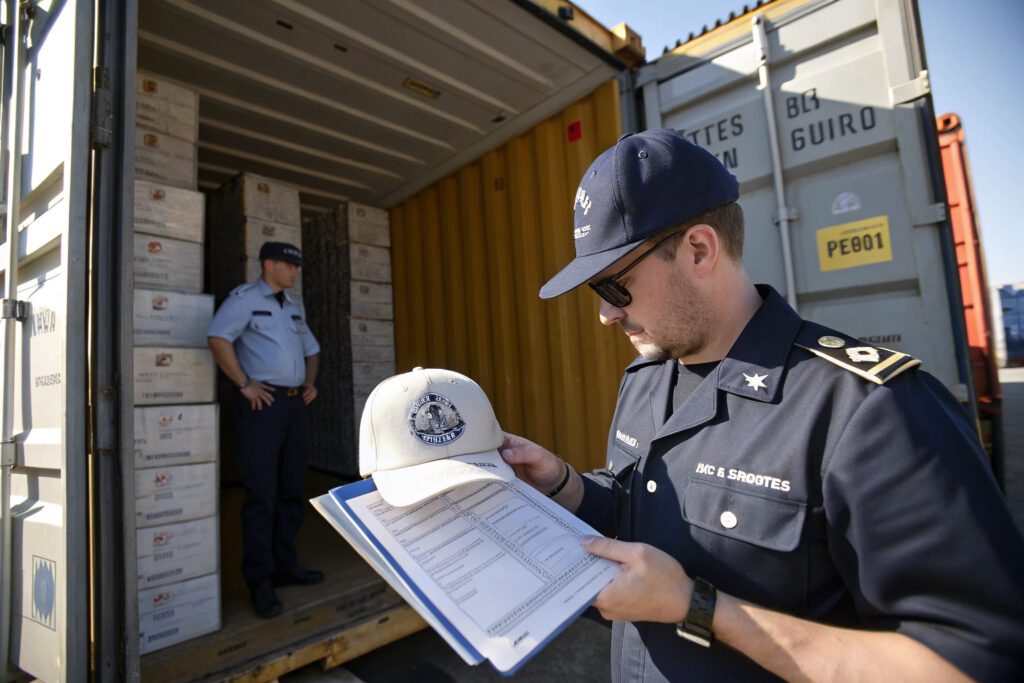
You just landed a big order from a French boutique chain. You manufactured 10,000 stylish bucket hats. They are packed and on the vessel. Then you get the email. The customs broker at Le Havre asks for the OEKO-TEX certificate. You don't have one. You call the French buyer in a panic. They say they assumed you had it. You assumed the general product safety directive was enough. Now the container sits in a bonded warehouse. Every day costs you storage fees. The French client is losing patience. You might have to ship the hats back to China or destroy them. The profit margin on this order is gone. You feel sick to your stomach because you did not check one specific regulation before shipping.
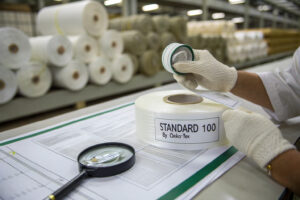
OEKO-TEX Standard 100 is not a mandatory legal requirement written into a single EU law. The European Union does not have a statute that says "Thou shalt possess OEKO-TEX certification." The mandatory part is the General Product Safety Regulation (GPSR) and the REACH regulation. These laws demand that your caps do not contain harmful levels of restricted chemicals. OEKO-TEX Standard 100 is the most recognized and efficient way to prove you meet these legal obligations. In practice, almost every major European retailer and importer makes it a mandatory contractual requirement. If you try to import caps without it in 2026, you will hit a solid wall of buyer rejections, blocked shipments, and expensive independent lab testing at the border.
This is a nuance that traps many first-time exporters. The law demands safety. The market demands this specific certificate as proof of that safety. Let me explain the exact legal framework and how you can navigate it smoothly.
What EU Regulations Require Chemical Safety Testing for Imported Caps?
You hear the acronyms REACH and GPSR thrown around. They sound like government jargon. You might think they don't really apply to a simple fabric hat. This is a dangerous mental trap. A hat is a consumer article that touches skin for hours. It falls squarely under these rules. The fear is not knowing which clause applies to your product.
The primary mandatory regulation is EU REACH. Annex XVII of REACH contains a list of restricted substances. This list includes specific azo dyes, certain flame retardants, and heavy metals like cadmium and lead. Your caps must not contain these substances above the specified limits. The second is the General Product Safety Regulation (GPSR), which mandates that all consumer products placed on the EU market must be safe. For a cap, "safe" means the dyes do not cause skin irritation and the metal adjusters do not release nickel. You can prove compliance with these laws through accredited lab testing. OEKO-TEX Standard 100 is not the law itself. It is the pre-packaged test protocol that satisfies the law.
The legal texts are broad. They say "products must be safe." But they don't tell you exactly which 100 chemicals to test for. That gap is where certification schemes become operationally mandatory.
How Does the REACH Annex XVII Apply Directly to Baseball Cap Sweatbands?
The sweatband is ground zero for compliance. It sits against your forehead. You sweat. The moisture acts as a solvent. REACH Annex XVII Entry 43 specifically targets azo dyes that release carcinogenic amines. If your sweatband is made of dyed cotton or a cotton-polyester blend, this entry applies. We test every batch of sweatband fabric before we cut and sew. We don't wait for the finished cap. We test the raw roll. This way, if the fabric fails, we reject it before we invest the labor. The law applies to the finished article, but a smart factory checks the components first. You can verify the full restricted list on the European Chemicals Agency website.
Why Is the GPSR Broader Than a Simple Chemical Test?
Chemical safety is one piece. GPSR covers physical safety too. A cap for a child cannot have small detachable buttons that cause a choking hazard. A sun visor cannot have a sharp plastic edge that cuts the forehead. The regulation also covers flammability. If you use a fluffy faux fur pom-pom on a beanie, it must resist ignition. This is not a chemical test. It is a physical burn test. An OEKO-TEX certificate does not automatically cover these physical risks. You need a separate general safety assessment. We work with a European authorized representative who reviews our physical designs and issues a GPSR compliance statement for the entire product.
Is OEKO-TEX the Only Accepted Standard for EU Cap Compliance?
You have heard of GOTS. You know about bluesign. You wonder if you can save money by using a lesser-known certification. You worry that your supplier is pushing OEKO-TEX just because they already have it, not because you need it. The confusion over "equivalent" standards can lead to a buyer rejecting your shipment even if the product is technically safe.
OEKO-TEX is not the only accepted standard, but it is the most universally recognized by European fashion buyers. You can technically use a GOTS certificate to demonstrate safety. GOTS covers both organic fiber status and chemical restrictions. If your cap is organic cotton and GOTS certified, the chemical safety aspect is generally covered. You can also use a bluesign system partner certificate. However, these are often more expensive or harder to get for a standard non-organic cap. EU buyers specifically ask for "OEKO-TEX Standard 100" in their purchase orders. If you present a different certificate, even if it's equivalent, you often have to spend time educating the buyer's compliance team. In business, time is money. Using the market's preferred standard removes friction.
The choice depends on your brand positioning. If you are selling purely organic, GOTS makes sense. If you are selling a mass-market baseball cap, OEKO-TEX is the shortest distance between your factory and the cash register.
Does a GOTS Certification Cover All REACH Chemical Requirements for Hats?
Mostly, but not perfectly. GOTS has its own list of banned substances. It is very strict on the organic supply chain. But REACH occasionally updates its restricted list. There can be a slight lag. A specific phthalate might be restricted under REACH before it appears on the GOTS update. If your hat is GOTS certified, you are likely safe. But a European customs officer is trained to look for a REACH compliance statement. If your only document is GOTS, the officer might not recognize it as a direct REACH compliance document. I tell my clients that if the cap is organic, get GOTS for the marketing story and get OEKO-TEX for the customs story. The cost difference for the extra test is minimal compared to a delayed container.
What Is the Role of the bluesign System in Headwear Manufacturing?
bluesign focuses on the factory's input stream. It certifies that the chemicals coming into the factory are safe from the start. It is a sustainable production standard. For a synthetic performance trucker cap, bluesign is excellent. It guarantees the polyester mesh was made without harmful solvents. However, bluesign is less common in the woven cotton hat world. Very few Chinese headwear factories have invested in full bluesign accreditation because the audit focuses heavily on water and energy use, not just the final fabric. If you are a high-performance outdoor brand, push for bluesign. If you are a fast-fashion hat brand, OEKO-TEX is the standard your buyers will write on the order form.
What Happens If My Caps Are Imported Without an OEKO-TEX Certificate?
You might think the risk is just a slap on the wrist. You assume you can negotiate with the customs office. This is a fantasy. The enforcement mechanism is brutal. You face a financial drain that no small brand can withstand easily.
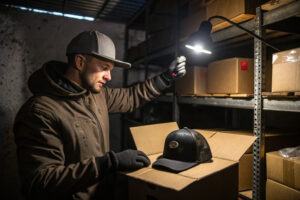
If your caps arrive without a recognized safety certificate, the customs authority in the destination country can flag the shipment for a random market surveillance check. They will take samples from your cartons. They will send these samples to an official EU laboratory. This process takes two to four weeks. You pay for the storage of the container while you wait. If the lab finds a restricted substance above the limit, your goods are denied entry. You must either re-export the entire shipment back to China at your own cost or destroy the goods. The destruction fee is also your cost. You get zero revenue. You have lost the manufacturing cost, the freight cost, and the customs penalty. Even if the lab finds nothing, you have lost the sales window and paid thousands in demurrage charges. The lack of a certificate triggers the process.
The absence of a certificate does not automatically mean the product is illegal. But it paints a target on your shipment. You are essentially asking the authorities to do the lab work you should have done.
How Do Market Surveillance Authorities Select Hat Shipments for Testing?
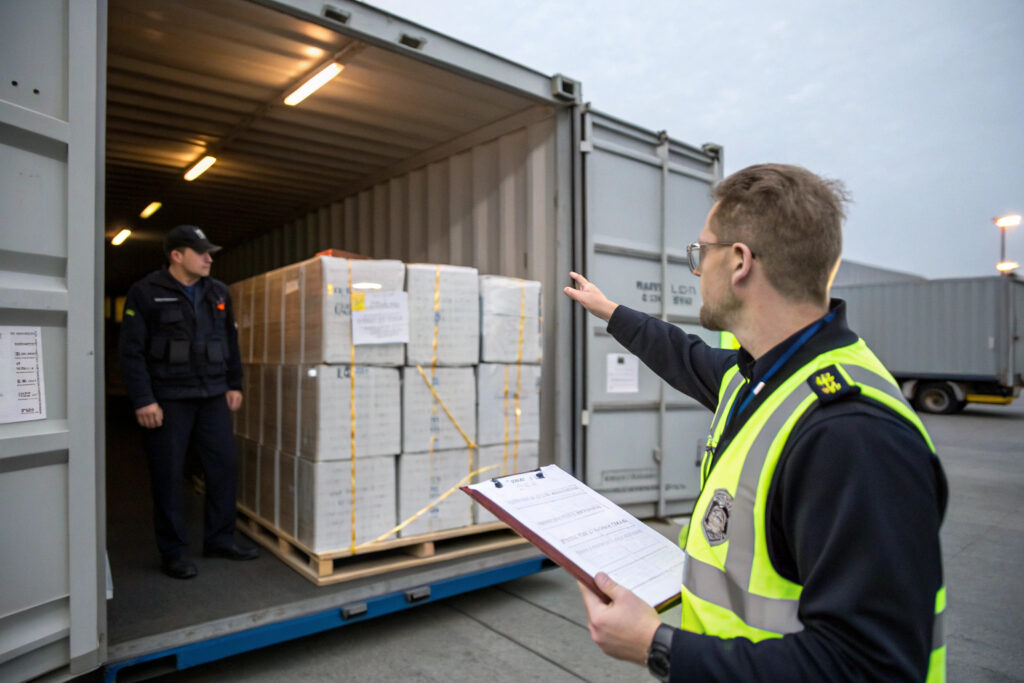
They use risk profiling. A shipment from a factory with no prior compliance history is a high-risk flag. A shipment with an incomplete commercial invoice is a flag. The product type matters too. Baby hats are highest risk. Kids' caps are high risk. If you ship unbranded caps to a German discounter without an OEKO-TEX certificate, the software might randomly select your container. We always pre-alert the customs broker with our certificate number. We submit it electronically before the vessel arrives. This pre-clearance of the safety data moves the shipment from the "risk" column to the "trusted trader" column. You can learn more about EU customs risk management on the official commission website.
What Are the Storage and Demurrage Costs for a Detained Cap Container?
The numbers are shocking. A 40-foot container sitting at Rotterdam port can incur demurrage fees starting after three free days. The cost per day can range from 50 to 150 euros. If the customs test takes 20 days, you owe 2,550 euros in storage alone. Add the examination fee. The customs officer physically moves the pallets. This costs another 500 to 1000 euros. The lab test fee is 300 to 600 euros. If the goods are destroyed, the destruction fee is around 800 euros. You can easily lose 5,000 to 8,000 euros on a shipment you cannot sell. An OEKO-TEX certificate costs a few hundred dollars per year. The math is brutal. The certificate is insurance. Check with major logistics providers for current storage rate estimates at European ports.
How Can I Verify My Supplier's Certificate Before Shipping the Order?
The final paperwork arrives from the factory. You are ready to approve the shipment. But a tiny voice in your head asks, "Is this certificate still valid?" You fear the factory let it expire three months ago and just sent the old PDF. That fear is easy to resolve if you know the steps.
You must treat every certificate with healthy suspicion. Do not rely on the digital image file. Go straight to the OEKO-TEX official website. Find their "Label Check" tool. Enter the certificate number printed on the document. The online database will show you the current status instantly. Check the company name on the database. It must match the factory's legal name exactly. Trading companies often show the certificate of a factory they don't own anymore. Check the valid until date. Check the product categories listed. If your cap type is not listed, the certificate is irrelevant. Do this check for every single bulk order. Certificates expire. Factories change their scope. A quick check protects you from an expensive assumption.
Beyond the digital check, you need to align the specific product details. The certificate is only valid for the exact materials and components that were tested. A change in lining fabric can void the coverage.

How Does the OEKO-TEX Label Check Online Portal Work?
It is a simple, free public tool. You type the label number in the search bar on the official OEKO-TEX label check page. It returns a record. The record shows the certificate holder's name and address. It shows the issuing institute, like TESTEX or Hohenstein. It lists the product classes covered. For adult caps, you need Class 2. For baby caps, Class 1. It also shows the Annex level. I always take a screenshot of the live portal result. I attach this screenshot to the final shipping approval email to the buyer. This proves I did not just forward a PDF. I verified it in real-time. This transparency builds massive trust. You can read more about the standard on the OEKO-TEX Standard 100 page.
What Specific Details on the Certificate Relate to Cap Fabrics?
Look for the "Article List" section. It might say "Outerwear fabrics, knitted, 100% cotton, dyed." If your cap is made of woven polyester, and the certificate says knitted cotton, the certificate does not cover your product. Also check the accessories. The certificate might have an annex for "non-textile parts." This covers the plastic size adjuster, the metal buckle, or the silicone logo patch. If the annex is empty, but your cap has a metal snap, the safety of that snap has not been certified. We always request our testing lab to include all the trims and accessories in the initial test scope. We send the cap fully assembled. This way the article list covers the entire product. For further guidance on testing, you can visit the TESTEX website to understand how certified labs operate.
Conclusion
OEKO-TEX Standard 100 is not printed into a single mandatory law, but it acts like one in the European cap trade. The actual laws, REACH and GPSR, demand absolute chemical safety and physical safety. OEKO-TEX is the tool the industry has chosen to prove that safety. If you show up at the border without it, the system treats you as a suspect. You risk paying thousands in storage and lab fees just to prove what a certificate would have proved in a second.
European buyers will not accept a generic lab report. They expect the specific OEKO-TEX label. It is the language they speak. Even if you use GOTS or bluesign, you must bridge the gap to satisfy the customs narrative. The smartest path is to use a factory that understands the pre-verification process. The label check portal is your best friend.
My team handles this exact documentation loop daily. We do not just give you a PDF. We show you the live portal verification. We make sure the article list matches your specific product before it leaves our floor. This is the level of care that stops shipments from being stranded at the dock.
If you want to discuss your European import strategy and ensure your next shipment clears without a single stop order, reach out to our Business Director, Elaine. She can walk you through our compliance pack. Email her at elaine@fumaoclothing.com. Let's get your caps onto the shelves, not into a customs warehouse.