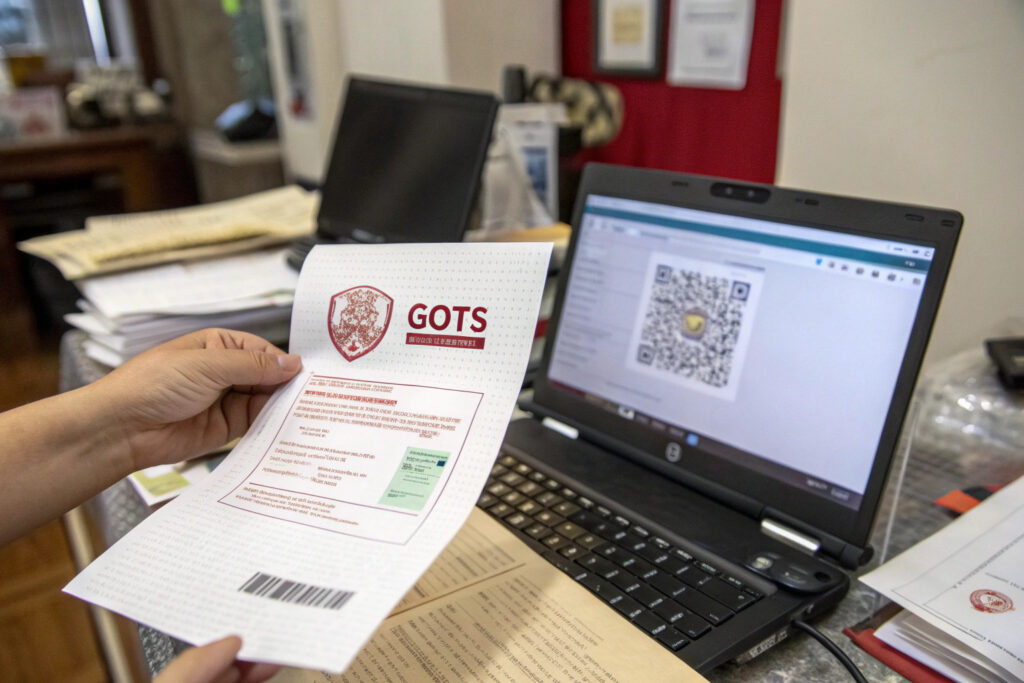
You order "certified organic cotton caps." The factory sends a GOTS certificate. You accept it. Six months later, a customer scans the QR code on the hangtag. The link leads to a dead page. They dig deeper. The certificate number belongs to a different factory. The organic cotton claim was a story printed on a piece of paper. You were not a brand. You were a victim of a paper certificate fraud. The PDF was the proof. The PDF was fake.
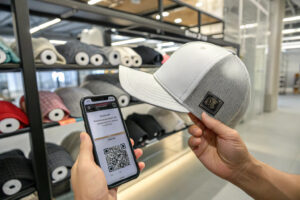
You audit your headwear supply chain using blockchain-verified certificates by onboarding your suppliers onto a traceability platform that issues digital certificates as immutable blockchain records. Each certificate—GOTS, GRS, OEKO-TEX, REACH test reports—is cryptographically hashed and stored on a distributed ledger. The certificate is no longer a PDF that can be edited with Adobe Acrobat. It is a digital asset with a unique fingerprint, a timestamp, and a verifiable chain of custody. You scan the QR code on the cap. The platform retrieves the live certificate from the blockchain. You see the issuing body, the certificate holder, the scope, the validity dates, and the transaction history. The certificate is verified against the issuing body's own digital signature. The audit takes thirty seconds. The evidence is immutable.
At Global-Caps, I have integrated a blockchain traceability platform into my certified product lines. My GOTS and GRS certificates are issued as digital assets. My clients scan a QR code on the cap and see the full chain of verified documents. The audit is not a once-a-year paper exercise. It is a live, ongoing verification that any stakeholder can perform at any time.
What Is a Blockchain-Verified Certificate for Textile Supply Chains?
You receive a certificate PDF. It has a logo, a signature, and a stamp. You think it is verified. It is not verified. It is a file format that any high school student can edit. The logo is copied from Google Images. The signature is a typed font. The stamp is a clip art. The PDF is a digital version of a paper lie. The blockchain certificate is fundamentally different. It is not a file. It is a record on a distributed database that no single party controls.
A blockchain-verified certificate for textile supply chains is a digital credential issued by a certification body that is cryptographically signed and recorded on a blockchain. The certificate data—the certificate holder, the product scope, the validity dates, the issuing body—is hashed into a unique digital fingerprint. The hash is written onto a blockchain. Any attempt to alter the certificate changes the hash. The altered hash does not match the hash on the blockchain. The verification fails instantly. The certificate is self-authenticating. The verification does not depend on trusting the certificate holder or the supplier. It depends on trusting the mathematics of cryptography and the immutability of the distributed ledger.
My blockchain traceability partner issues digital twins of my physical certificates on a public blockchain. The QR code on my caps links directly to the live certificate record.
The cryptographic hash is the core technology. It is a one-way mathematical function that creates a unique digital fingerprint of any document.

How Does a Cryptographic Hash Make a Certificate Tamper-Proof?
A cryptographic hash function takes an input—the certificate PDF or the certificate data—and produces a fixed-length string of characters called the hash. The hash is unique to that exact input. Changing a single character in the certificate produces a completely different hash. The hash is one-way. You cannot reverse-engineer the original certificate from the hash.
The hash is stored on the blockchain. When you verify the certificate, the verification platform re-computes the hash of the current certificate and compares it to the hash on the blockchain. If the hashes match, the certificate is identical to the version that was originally issued. If the hashes do not match, the certificate has been altered. The verification is mathematical, not subjective.
My certificate verification process computes the hash in real-time when a QR code is scanned. The result is displayed instantly.
What Is the Difference Between a Public and a Private Blockchain for Certificates?
A public blockchain is a permissionless network where anyone can read the data and verify the transactions. Ethereum and Polygon are examples. The immutability is very high because no single entity controls the network. The transparency is maximum. The cost per transaction is higher.
A private blockchain is a permissioned network controlled by a consortium or a single organization. The immutability is lower because the controlling entity could theoretically alter the data. The transparency is limited to authorized participants. The cost per transaction is lower.
I use a public blockchain for my certificate verification. The transparency and immutability of a public network provide the strongest trust guarantee for my clients.
How Do Blockchain Certificates Map to GOTS and GRS Standards?
You have a GOTS certificate. It is a PDF. You also have a blockchain platform. The two do not talk to each other. The GOTS certificate proves the organic status. The blockchain platform tracks the movement of goods. The integration is missing. The GOTS certificate could be fake, and the blockchain platform would not know. The certificate and the traceability system are separate silos. The audit requires checking both manually.
Blockchain certificates map to GOTS and GRS standards by digitizing the transaction certificate system that is already the backbone of these standards. Under GOTS and GRS, every sale and purchase of certified material along the supply chain is accompanied by a transaction certificate. These TCs are currently paper documents or PDFs. A blockchain platform converts each TC into a digital asset. The issuing certification body signs the digital TC with their private key. The buyer and seller both digitally sign the TC. The signed TC is hashed and recorded on the blockchain. The entire chain of TCs from the raw material to the finished cap is visible, verifiable, and immutable.
My GOTS and GRS blockchain integration links every transaction certificate from the organic cotton farm to the finished cap. The QR code on the cap retrieves the complete TC chain.
The certification body's digital signature is the trust anchor for the entire system.

How Does the Certification Body's Digital Signature Work on a Blockchain?
The certification body—such as Ecocert, Control Union, or Soil Association—holds a private cryptographic key that is securely stored and known only to them. When they issue a certificate, they use their private key to create a digital signature of the certificate data. The signature is unique to that certificate and that certification body.
Anyone can verify the signature using the certification body's public key, which is published and widely available. The verification confirms two things: the certificate was signed by that specific certification body, and the certificate data has not been altered since it was signed. The digital signature is the blockchain equivalent of the ink signature and the raised stamp on a paper certificate.
My platform displays the certification body's digital signature verification status on every certificate view.
Can a Transaction Certificate Chain Be Traced From Farm to Finished Cap?
Yes. A GOTS or GRS supply chain consists of a sequence of transaction certificates. The organic cotton farm sells to the gin. A TC is issued. The gin sells to the spinner. A TC is issued. The spinner sells to the knitter. A TC is issued. The knitter sells to the cap factory. A TC is issued. Each TC references the previous TC in the chain.
On a blockchain platform, each TC is a digital asset. The input TC is consumed. The output TC is created. The chain is unbroken. The final TC for the finished cap contains a reference to every previous TC back to the farm. The QR code scan retrieves the entire chain. The viewer can click back through each step.
My TC chain visualization shows a graphical timeline from farm to finished cap. Each node is clickable and displays the corresponding blockchain-verified certificate.
How to Verify a Factory's Blockchain Certificate During an On-Site Audit?
You visit the factory. You ask for the GOTS certificate. The factory owner hands you a framed paper certificate on the wall. You take a photo. You leave satisfied. The paper certificate on the wall is a photocopy. The real certificate expired three months ago. The factory failed the re-audit. They kept the old certificate on the wall and continued selling "certified" caps. You audited the wall decoration. You did not audit the live certificate status.
You verify a factory's blockchain certificate during an on-site audit by scanning the QR code on a finished product from the production line, not a sample provided by the factory manager. The QR code links to the live blockchain record. The auditor checks that the certificate holder name matches the factory's legal entity name, that the certificate scope covers the product being audited, that the validity dates are current, that the issuing certification body's digital signature verifies, and that the transaction certificate chain traces back to the certified raw material source. The verification takes thirty seconds. It is done on the auditor's own smartphone, using the auditor's own internet connection. The factory cannot manipulate the result.
My audit welcome protocol includes a live QR code scan demonstration. I hand the auditor a cap from the bulk carton and invite them to scan it.
The QR code scan test on a randomly pulled production cap is the most powerful verification tool in the auditor's arsenal.

What Should an Auditor Check When Scanning a Blockchain Certificate QR Code?
The auditor should check five data fields on the certificate display. The certificate holder name must exactly match the audited factory's legal entity. The product scope must include the specific product being produced. The validity dates must show the certificate is active. The issuing body must be a recognized GOTS or GRS accredited certifier. The digital signature must show as verified.
If any of these five fields does not match, the auditor must flag a critical non-conformity. The certificate is either fraudulent, expired, or applied to the wrong product scope.
My auditor checklist includes these five verification points as mandatory items.
How Does the Auditor Confirm the Physical Cap Matches the Digital Certificate?
The auditor compares the physical cap in their hand with the product description on the digital certificate. The fiber composition on the cap's care label must match the fiber composition on the certificate scope. The brand name on the cap must match the certificate holder or a licensed label user. The production batch number on the cap's internal label must be traceable to a transaction certificate in the blockchain chain.
The auditor may also check the physical label inventory. The OEKO-TEX or GOTS labels sewn into the cap must have been issued to that specific certificate holder. The label quantity on hand plus the quantity sewn must reconcile with the label purchase records.
My physical-to-digital reconciliation protocol links the internal batch number on the cap to the digital certificate record.
What Questions Should You Ask a Factory About Their Blockchain Traceability?
You ask the factory, "Do you have blockchain traceability?" The factory says, "Yes, we use blockchain." You stop asking questions. You have been sold a buzzword. The factory uses a private database that they call "blockchain" because the word is trendy. The database is a centralized spreadsheet with no cryptographic verification, no immutability, and no independent certification body signatures. The word "blockchain" on a sales brochure is not a verification system.
You should ask the factory ten specific questions about their blockchain traceability. Who is the blockchain platform provider? Is the blockchain public or private? Which certification bodies are integrated? Can I have independent read-only access to the transaction history? Can I scan a QR code on a random production cap right now and see the live certificate? Who pays the transaction fees? What happens if a supplier in the chain does not have a blockchain wallet? How do you handle a material change mid-production? How is the QR code physically attached to the cap? Can the QR code be copied or cloned?
My blockchain FAQ document answers all ten questions. I provide it to every client during onboarding.
The read-only access question is the most revealing. A factory that grants you independent access has nothing to hide.

How to Test If a Factory's "Blockchain" Is Actually a Centralized Database?
Ask for a public transaction ID and a block explorer URL. A genuine public blockchain transaction can be viewed on an independent block explorer like Etherscan. The block explorer shows the transaction hash, the timestamp, the sending and receiving addresses, and the block confirmation count.
If the factory cannot provide a public transaction ID or a block explorer link, their "blockchain" is almost certainly a private, centralized database that uses the blockchain label for marketing purposes. A centralized database can be edited by the database administrator. A public blockchain transaction is immutable. The difference is the difference between a PDF and a cryptographic proof.
I provide Etherscan links for every certificate transaction. My clients can verify the records independently without logging into my platform.
What Happens to the Blockchain Record If a Material Supplier Is Changed?
A material supplier change triggers a new transaction certificate from the new supplier. The new TC must be issued by a recognized certification body. The new TC is digitized, signed, and recorded on the blockchain. The TC chain now shows a branch. The previous supplier's TCs remain on the blockchain as historical records. The new supplier's TC is added as the new link in the chain.
The product QR code is updated to reflect the new TC chain. The old QR codes on products made with the previous supplier's material remain valid and link to the old TC chain. The traceability is maintained for both the old and new material sources. The blockchain record preserves the complete history.
My material change protocol updates the digital certificate record within 24 hours of the new supplier's TC being issued.
Conclusion
Blockchain-verified certificates transform the headwear supply chain audit from a periodic, paper-based trust exercise into a continuous, cryptographic verification process. The certificates are not PDF files that can be edited. They are digital assets cryptographically signed by the certification body, hashed, and recorded on an immutable public blockchain. The QR code on the finished cap links to the live certificate record. Any stakeholder—brand, retailer, auditor, consumer—can scan the code and verify the certification independently.
The blockchain certificate system maps directly onto the existing GOTS and GRS transaction certificate infrastructure. Each TC in the chain from farm to finished cap is digitized, signed, and recorded. The chain is unbroken and verifiable. An on-site auditor scans a random production cap, checks the five verification fields, and confirms the physical-digital match. The audit is rigorous, fast, and immune to paper fraud.
The buyer must ask specific, technical questions to distinguish a genuine blockchain system from a centralized database with a blockchain label. The public transaction ID and the block explorer link are the acid tests. Independent read-only access is the trust guarantee.
At Global-Caps, I have built my blockchain traceability system on a public blockchain with integration to my GOTS and GRS certification bodies. The certificates are live. The QR codes are woven into the sweatband. The verification is instant. The trust is mathematical.
If you need headwear from a factory with genuine blockchain-verified certification, contact my Business Director Elaine. She can provide a demonstration QR code for you to scan, a read-only access link to our blockchain platform, and a sample certificate chain for your review. Email Elaine at elaine@fumaoclothing.com. Let's audit your supply chain with mathematics, not paper.