You place your first order. The hats are perfect. The fabric is right. The color is right. The fit is right. You sell out in three weeks. You place a reorder. You assume the factory will make the same hat. Six weeks later, the reorder arrives. The color is slightly off. The crown feels different. The embroidery is a bit thinner. The factory used a different dye lot, a different fabric roll, and a different embroidery thread. The reorder hats are close, but not identical. Your customers notice. You notice. The factory says, "This is the same hat." It is not the same hat. It is a similar hat.
You build a reorder system to guarantee the same hat quality by creating a documented master standard for every component, approving and archiving physical reference samples, locking the specifications for all raw materials, and conducting a pre-production reorder review that compares the new batch against the archived master before bulk production begins. The system requires the factory to reserve a portion of the original fabric dye lot for your reorder, maintain version control on your embroidery digitizing file, and retain a sealed master standard cap for side-by-side comparison with the reorder pre-production sample.
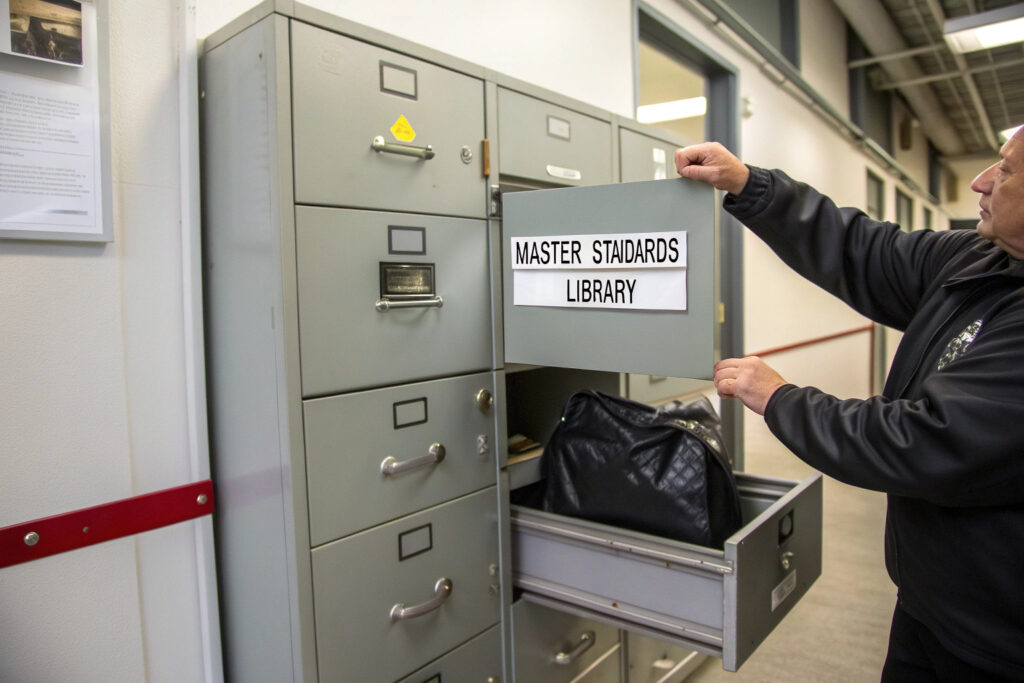
At Global-Caps, I operate a formal reorder quality system for my long-term brand clients. The master standard cap from the first order is sealed in a black bag and stored in a climate-controlled archive. The fabric lot number is recorded. The thread brand and color code are recorded. The digitizing file is version-controlled. When the reorder is placed, the archive is opened. The new production is measured against the old standard. The system removes the "factory memory" variable and replaces it with documented, retrievable specifications.
What Is a Master Standard Sample and How Does It Anchor a Reorder?
You approved a sample eight months ago. The factory made the bulk order. You received it. It was perfect. Now you want to reorder. You ask the factory, "Can you make the same hat?" The factory says yes. They make the hat from memory. The memory is faulty. The project manager who handled your order left the company. The new project manager pulls a similar spec sheet. The hat is similar, not identical. The factory's memory was the only standard. It failed.
A master standard sample is a physical cap from the approved first production run that is sealed, labeled, and stored under controlled conditions to serve as the definitive reference for all future reorders. The master standard is not the pre-production sample. It is a cap pulled from the actual bulk production that you approved and sold. It represents the exact product your customers received. When a reorder is placed, the master standard is retrieved from the archive. The new pre-production sample is placed side-by-side with the master standard. The comparison is visual, tactile, and measurable.
My master standard protocol requires the master cap to be sealed immediately after the first order is approved, signed by both the QC manager and the client, and stored in a climate-controlled cabinet.
The climate-controlled storage prevents the master standard from degrading, yellowing, or fading over time.
How Should a Master Standard Cap Be Stored to Prevent Degradation Over Six Months?
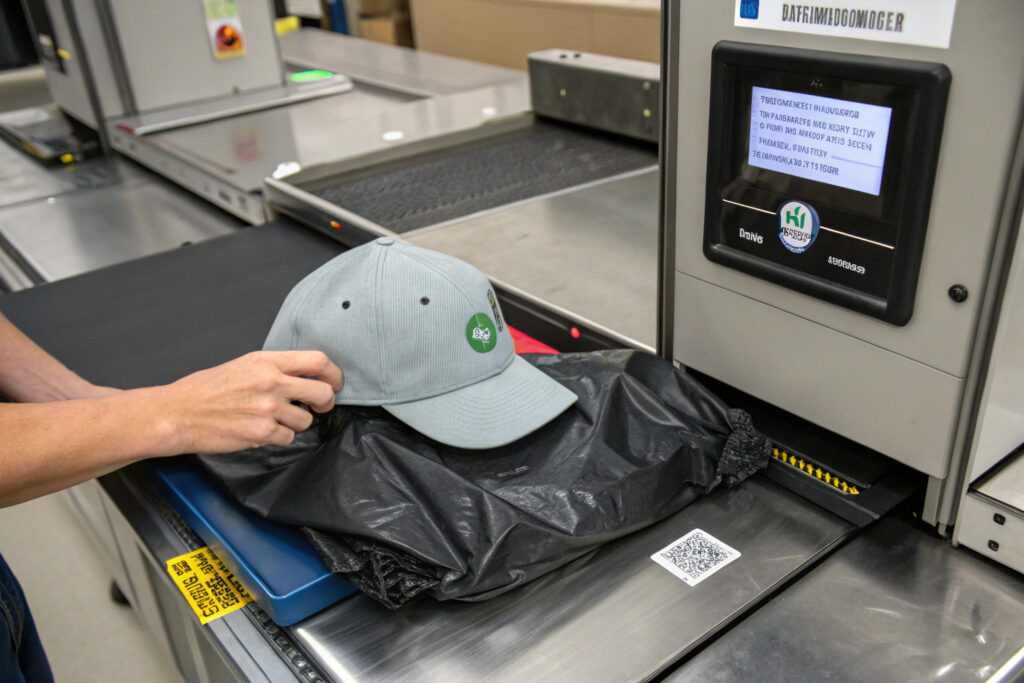
The master standard cap must be stored in a sealed, opaque black polyethylene bag to block light, which causes fading and yellowing. A silica gel desiccant sachet must be placed inside the bag to absorb moisture and prevent mold growth. The sealed bag must be placed inside a rigid box to prevent physical crushing or deformation of the cap shape.
The storage cabinet must be located in a climate-controlled room maintained at 21 degrees Celsius plus or minus 2 degrees and 50 percent relative humidity plus or minus 5 percent. The cabinet must be lockable. Access must be limited to the QC manager.
My storage specification follows the ISO 139 standard for textile conditioning atmospheres.
Who Should Authorize the Retrieval and Comparison of the Master Standard?
The QC manager must authorize the retrieval of the master standard. The retrieval must be documented with a log entry showing the date, the reason for retrieval, and the name of the person retrieving the sample. The master standard must be returned to storage within one hour of the comparison to minimize light exposure.
The client should be present for the comparison, either physically or via live video call. The QC manager and the client jointly compare the reorder pre-production sample against the master standard.
My retrieval log is a controlled document. Every access is recorded and auditable.
Why Must Raw Material Lot Numbers Be Reserved for Repeat Orders?
You reorder the same hat. The factory uses a different fabric roll from a different dye lot. The color is visually close, but not identical. Under the retail store lighting, the difference is noticeable. The fabric weight is slightly different. The hand feel is different. The factory says, "The spec is the same." The spec is the same. The material is different. The specification describes the category of material. The lot number identifies the exact material used.
Raw material lot numbers must be reserved for repeat orders because even materials that meet the same specification can vary between production lots. The same Pantone color dyed on two different dye lots will have a slight but measurable color difference. The same fabric specification knitted on two different production runs will have a slight weight and hand feel difference. The only way to guarantee an identical product is to use the identical raw material lot. If the original lot is exhausted, the new lot must be compared against the master standard and approved before use.
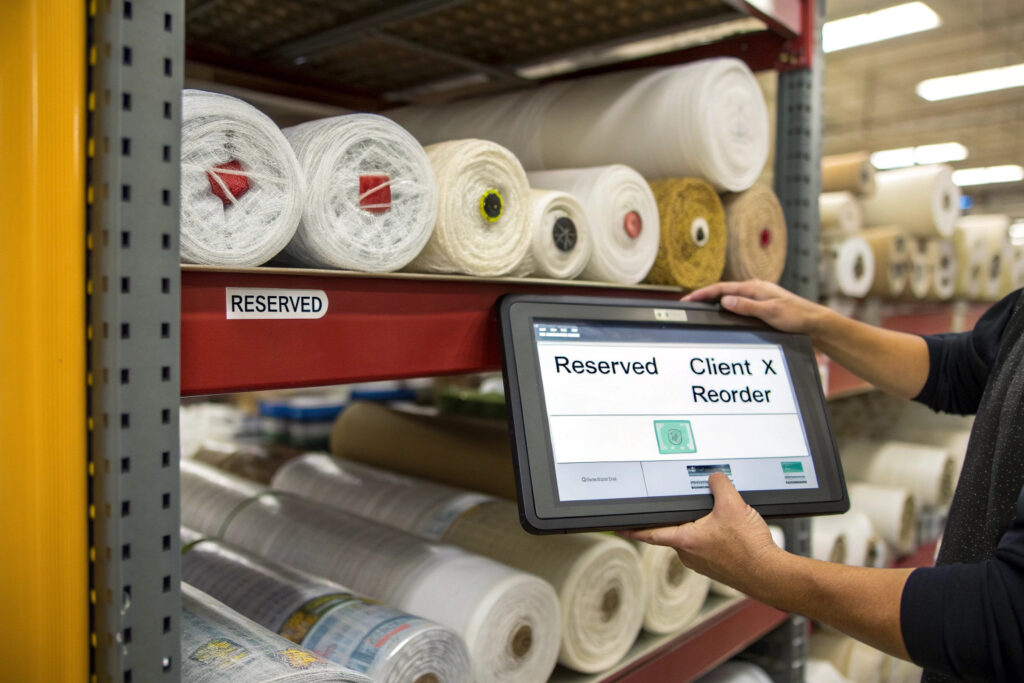
My lot reservation system allows clients to reserve a portion of the original fabric dye lot for a specified period. The reserved material is physically tagged and stored separately.
The fabric lot reservation is a physical commitment, not just a database entry. The fabric is set aside.
How Much Fabric Should Be Reserved From the First Order for a Six-Month Reorder?
The reservation quantity depends on the projected reorder volume and the fabric shelf life. Cotton twill fabric stored under proper conditions has a shelf life of 12 to 18 months. The reservation should cover the client's anticipated reorder quantity plus a 10 percent buffer for cutting waste and QC rejects.
If the client anticipates a reorder of 500 caps, and each cap consumes 0.4 meters of fabric, the reservation should be 220 meters. The client pays for the reserved fabric at the time of the first order, or the factory finances the reservation and invoices the fabric cost on the reorder.
My reservation policy offers clients a 12-month fabric hold with a 50 percent deposit on the reserved material cost.
What Happens When a Dye Lot Is Exhausted Before the Reorder?
When the original dye lot is exhausted, the factory must source a new dye lot from the same mill using the same dye formula. The new lot must be lab-dipped and compared to the master standard. A spectrophotometer reading must confirm a Delta E of 1.0 or less against the master standard fabric.
If the new lot cannot be matched within the Delta E tolerance, the client must be notified before production begins. The client approves the new lot with a physical swatch or rejects it and the factory sources from an alternative mill.
My dye lot transition protocol requires client approval before any new dye lot is cut for a reorder.
How Does a Digitized Embroidery File Version Control System Work?
You approved the embroidery on the first order. You reorder. The embroidery on the reorder looks different. The letters are slightly thinner. The outline is slightly bolder. You ask the factory. They say, "We used the same file." They did not use the same file. The original digitizer left the company six months ago. The new digitizer recreated the file from the logo artwork. The recreation is close, but not identical. The original file was not version-controlled or archived. It was lost on the old digitizer's computer.
A digitized embroidery file version control system works by saving the approved embroidery file with a unique, descriptive filename that includes the client name, the style number, the version number, and the approval date. The approved file is locked against further editing. A backup is stored on a separate server or cloud storage. The production machine loads only the approved file version. Any modification requires a new version number and a new sew-out approval.
My file management protocol uses a naming convention that is human-readable and searchable. The approved version is the only version loaded onto the production machines.
The file locking mechanism prevents unauthorized edits. Only the QC manager has the password to unlock the approved file.

What File Naming Convention Ensures the Correct Version Is Used Six Months Later?
The file naming convention must include the client brand name, the hat style code, the logo description, the version number, and the approval date. An example is "BrandX_Snapback_MainLogo_V3.1_Approved_2026-01-15.emb." The version number is incremented with each revision. The approval date is the date the client signed off on the sew-out.
The file name is embedded in the production work order. The embroidery machine operator verifies the file name on the machine screen matches the file name on the work order before starting the run.
My naming convention is documented in the QC manual. Every operator is trained on it.
Why Should the Approved Embroidery File Be Locked From Further Editing?
An unlocked file can be accidentally modified. A digitizer might open the file to check a setting and inadvertently change a parameter. The next time the file is used, the parameter change produces a different embroidery result. The change is small and may not be noticed until the reorder is complete.
A locked file can be viewed but not edited without a password. The password is held by the QC manager. Any requested change goes through a formal revision process with a new version number and a new sew-out approval.
My file locking procedure uses the software's built-in password protection feature.
What Pre-Production QC Checks Must a Reorder Pass Before Bulk Cutting?
The factory receives your reorder. They pull the spec sheet. They make the hats. They ship them. You compare them to the first order. They are different. The factory skipped the comparison step. They assumed the spec sheet was sufficient. The spec sheet is a written description of the hat. It cannot capture the hand feel of the fabric, the exact drape of the crown, or the subtle sheen of the thread. The comparison to the physical master standard is the only way to catch the differences that a spec sheet misses.
A reorder must pass a pre-production QC check that compares the new pre-production sample against the archived master standard cap before bulk cutting begins. The comparison checks the fabric color with a spectrophotometer, the fabric weight and hand feel, the crown height with a digital caliper, the visor curvature against a checking fixture, the embroidery stitch density with a loupe, the thread color and sheen, and the sweatband material and feel. The new sample must match the master standard within the defined tolerances.
My pre-production reorder checklist has 15 checkpoints. Every checkpoint must be passed before the cutting table is authorized to begin.
The side-by-side comparison is the most powerful quality tool. A difference invisible in isolation becomes obvious in direct comparison.
What Side-by-Side Comparisons Must Be Made Between the Master and the Reorder Sample?
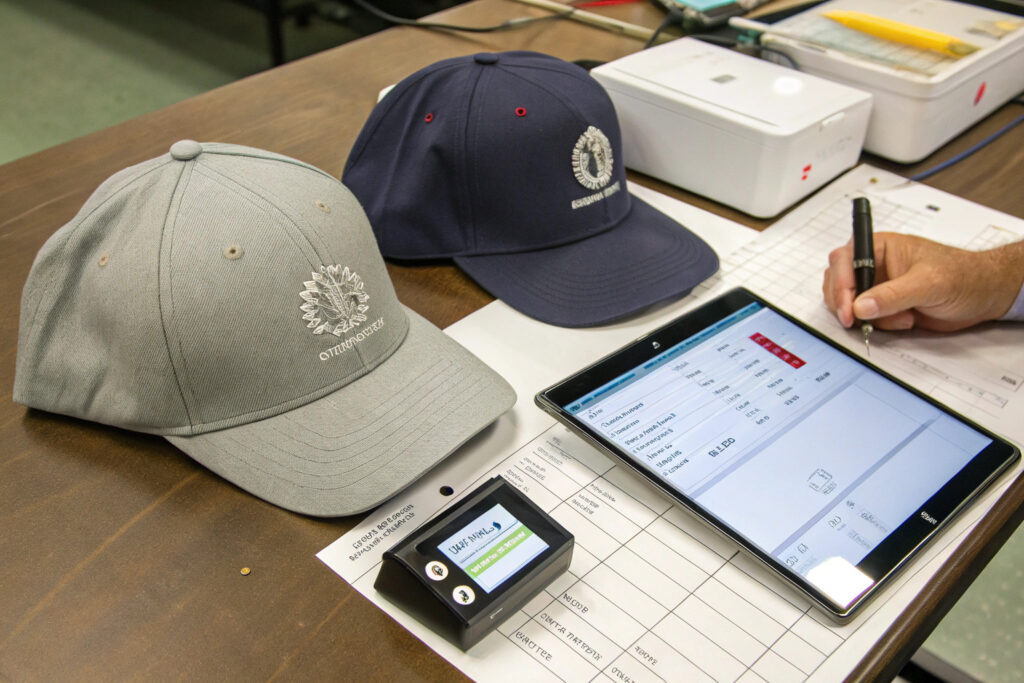
The master standard and the reorder pre-production sample must be placed side by side on a neutral grey inspection table under a calibrated D65 daylight light source. The inspector compares the fabric color, the fabric texture and weight, the crown height and profile, the visor curvature and angle, the embroidery placement and quality, the sweatband material and stitching, the closure hardware finish, and the internal seam neatness.
The inspector touches both caps. The hand feel of the fabric must match. The stiffness of the visor must match. The tension of the sweatband must match.
My comparison protocol requires both visual and tactile comparison. The inspector's hands are as important as their eyes.
How Does a Spectrophotometer Confirm the Fabric Color Matches the Original?
A spectrophotometer measures the color of the master standard fabric and the color of the reorder sample fabric. The device calculates the Delta E value, which is the mathematical distance between the two colors in the CIELAB color space. A Delta E of 1.0 or less indicates a match that is imperceptible to the human eye under standard lighting conditions.
The measurement is taken on three spots on each cap. The average Delta E is reported. If the average exceeds 1.0, the reorder sample fabric is rejected. The dye house must reformulate.
My color measurement protocol uses a calibrated spectrophotometer with a D65 illuminant and a 10-degree observer angle.
Conclusion
A reorder system to guarantee the same hat quality in six months is built on three pillars: a physical master standard sample, reserved raw material lot numbers, and a pre-production comparison gate. The master standard is a cap from the first production run, sealed in a black bag, and stored in a climate-controlled archive. The fabric dye lot, thread lot, and component lot numbers from the first order are recorded and reserved for the reorder. The digitizing embroidery file is version-controlled, locked, and backed up.
When the reorder is placed, the master standard is retrieved. The reserved materials are pulled from inventory. The reorder pre-production sample is manufactured. The sample is compared side-by-side with the master standard under a calibrated light source. The fabric color is verified with a spectrophotometer. The crown height is verified with a caliper. The embroidery stitch density is verified with a loupe. The sample must match the master standard before bulk cutting is authorized.
The system removes the factory's reliance on memory and replaces it with documented, retrievable, comparable standards. The reorder is not a new order. It is a repeat of a documented, archived, and verified process.
At Global-Caps, I operate this reorder system for my brand clients. Your master standard is sealed and stored. Your material lot numbers are reserved. Your embroidery file is locked and backed up. Your reorder passes the same 15-point pre-production QC gate as your first order. The hat you receive in six months is the same hat you sold today.
If you need a reorder system that guarantees consistent quality, contact my Business Director Elaine. She can provide our reorder protocol document, show you our master standard archive, and set up your material reservation for your next order. Email Elaine at elaine@fumaoclothing.com. Let's make your reorder identical to your first order.