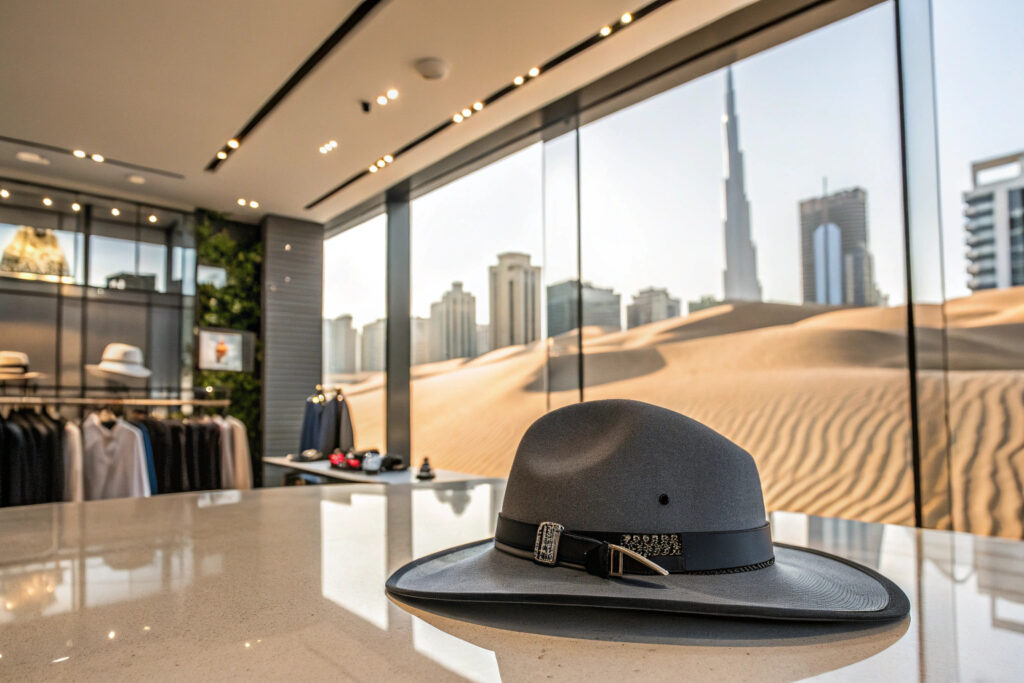
Are you looking to tap into the UAE’s unique market and wondering why a concept like geothermal-cooling apparel is generating interest? The idea intersects with several powerful drivers specific to the region: extreme climate necessity, cultural dress codes, and a national push for energy innovation. While “geothermal-cooling hats” are not currently a mainstream consumer product, the market forces, technological exploration, and underlying demand for personal cooling solutions in the UAE create a compelling case for their potential development and commercial appeal.
The primary reason interest exists is a perfect storm of extreme environmental need and cultural adaptation. The UAE, particularly Dubai, experiences brutal summer temperatures regularly exceeding 40°C, with highs that can reach a staggering 50°C. This creates an immense, continuous demand for cooling solutions. Concurrently, local Islamic culture and modesty norms encourage wearing head coverings and loose, full-body garments. Traditional fabrics have evolved for breathability, but the fundamental need for coverage remains. This combination—severe heat plus a non-negotiable dress code—forms the bedrock demand for any advanced personal cooling technology applied to headwear.
Beyond basic need, the UAE’s broader technological and economic landscape makes “geothermal” or advanced cooling concepts a logical fit. The nation is actively exploring large-scale geothermal energy for building climate control to reduce its massive HVAC energy consumption. This focus on sustainable cooling innovation creates a receptive environment for related applications. Furthermore, the market exhibits a strong appetite for luxury, innovation, and functional tech in apparel. For a high-disposable-income consumer base accustomed to premium solutions, a high-tech cooling hat would be less a novelty and more a logical, desirable tool for comfort. This trend aligns with the global growth in functional wearables, which utilize similar principles of integrating energy sources and thermal regulation into clothing.
What Drives the Demand for Advanced Cooling in the UAE?
To understand why a specialized product like a cooling hat could find a market, one must first grasp the scale and nature of the cooling challenge in the UAE. The demand is not seasonal; it's a constant, critical infrastructure requirement driven by one of the world's most extreme climates. This pervasive need for cooling manifests in every aspect of life, from the architectural to the personal, creating a cultural and economic environment where innovative solutions are not just welcomed but essential for normal function.
The core driver is the severe and prolonged heat. Dubai's climate is characterized by extremely hot, long summers where temperatures of 40-45°C are standard for months on end. This isn't just uncomfortable; it's a legitimate health and safety hazard for anyone required to spend time outdoors, from tourists to the vast population of outdoor laborers. The societal response has been to engineer a climate-controlled indoor environment—malls, walkways, and vehicles are heavily air-conditioned. However, this creates a stark dichotomy between controlled interiors and the hostile outdoors, highlighting the acute need for personal, portable cooling when transitioning between these zones.

How Does Traditional Dress Interact with Modern Cooling Needs?
The UAE's cultural dress code is often misunderstood by outsiders who assume black robes (abayas) must be unbearably hot. In reality, these garments represent a centuries-old adaptation. Loose-fitting robes made from natural, breathable fabrics like cotton create a microclimate; they shield the skin from direct solar radiation while allowing air to circulate, promoting evaporative cooling. The principle is sound, but it has limits against extreme modern heat and urban pollution. Therefore, the market opportunity lies not in replacing traditional dress, but in enhancing it. Integrating advanced cooling technology into the form factor of accepted headwear or as a discrete under-layer represents a fusion of cultural respect and technological progression, meeting an unaddressed need within an existing framework.
What Is the Broader Context of Cooling Technology Adoption?
The UAE's approach to cooling is systemic and ambitious. A significant portion of energy in commercial buildings is dedicated to air conditioning. To address this sustainably, the country is actively researching and implementing large-scale geothermal cooling systems, which use the earth's stable subsurface temperature to cool buildings efficiently. This national-level investment in geothermal and other sustainable cooling technologies demonstrates a serious commitment to cooling innovation. It establishes a technological foundation and mindset that makes the concept of a “geothermal-cooling” wearable—even if it uses a related or simplified principle like phase-change materials (PCMs)—appear credible and aligned with future-forward national goals. This context reduces market education barriers for high-tech personal cooling products.
What Cooling Technologies Are Relevant for Wearable Hats?
The term "geothermal-cooling" for a hat is likely a conceptual or marketing bridge from large-scale systems to personal wearables. True geothermal energy harnesses the earth's subsurface heat, which isn't portable for a hat. However, several established and emerging personal cooling technologies are directly applicable to headwear and align with the functional promise of "geothermal-cooling." These technologies aim to manage the significant metabolic heat load from the head, which is a major site of heat loss and therefore a high-impact area for cooling intervention.
The most feasible technologies for integration into garments fall into a few key categories: Phase-Change Materials (PCMs), active circulation systems (liquid or air), and thermoelectric (semiconductor) devices. PCMs, for example, absorb heat as they change from solid to liquid, providing passive cooling for a period of time. They are particularly suitable for wearable integration due to their lack of moving parts and power needs. Research into cooling for high-heat environments like mining has extensively reviewed these options, highlighting their respective trade-offs between cooling power, weight, duration, and complexity.

How Could Phase-Change Material (PCM) Technology Be Applied?
PCM technology is one of the most promising for initial integration into headwear due to its passive operation and simplicity. A "geothermal-cooling hat" might conceptually refer to a hat with PCM packs that are "recharged" or frozen using a stable cold source—analogous to how a ground-source heat pump uses the earth. In practice, PCM caps are already used in medical therapies. For the UAE consumer market, the design challenge would be to miniaturize and stylishly integrate PCMs (like salt hydrates or paraffin waxes) into the lining of a traditional or modern hat. The user would "charge" it in a freezer, and it would then provide several hours of cooling as the material melts. Its advantages are silence, zero power consumption, and reliability; its limitation is finite cooling duration before recharging is needed.
What Are the Prospects for More Advanced Active Systems?
For longer-duration or more powerful cooling, active systems become necessary. These could involve:
- Micro-Liquid Cooling: A miniature version of systems used in high-performance athletic or military cooling vests. A tiny, quiet pump would circulate chilled liquid through micro-tubes embedded in a hat's inner band. The cooling unit and battery could be housed in a small, separate pack.
- Thermoelectric (Peltier) Cooling: Small semiconductor chips that create a temperature difference when electricity is applied. A thermoelectric module could be placed in contact with the forehead or temples, actively pumping heat away. While precise, these systems require more power and need heatsinks to dissipate the extracted heat, adding bulk.
The development path, as we at Shanghai Fumao Clothing understand from advanced wearable projects, involves balancing cooling performance with wearability, energy efficiency, and cost—challenges that are magnified in a product as small and conspicuous as a hat.
What Would the Market and Consumer Profile Look Like?
Identifying who would buy a premium cooling hat in the UAE is key to assessing its commercial viability. The market is not monolithic; it segments into distinct consumer groups with different needs, willingness to pay, and usage scenarios. Success would depend on targeting the right early adopters and clearly communicating the product's value proposition within the context of their daily lives and cultural norms.
The primary target segments would likely be:
- Affluent Local Professionals & Fashion-Conscious Consumers: Individuals who move between air-conditioned spaces, cars, and occasional outdoor settings. For them, the product is a luxury convenience and a tech-status symbol, addressing discomfort during short exposures. This group values design, brand, and seamless integration with high-end fashion.
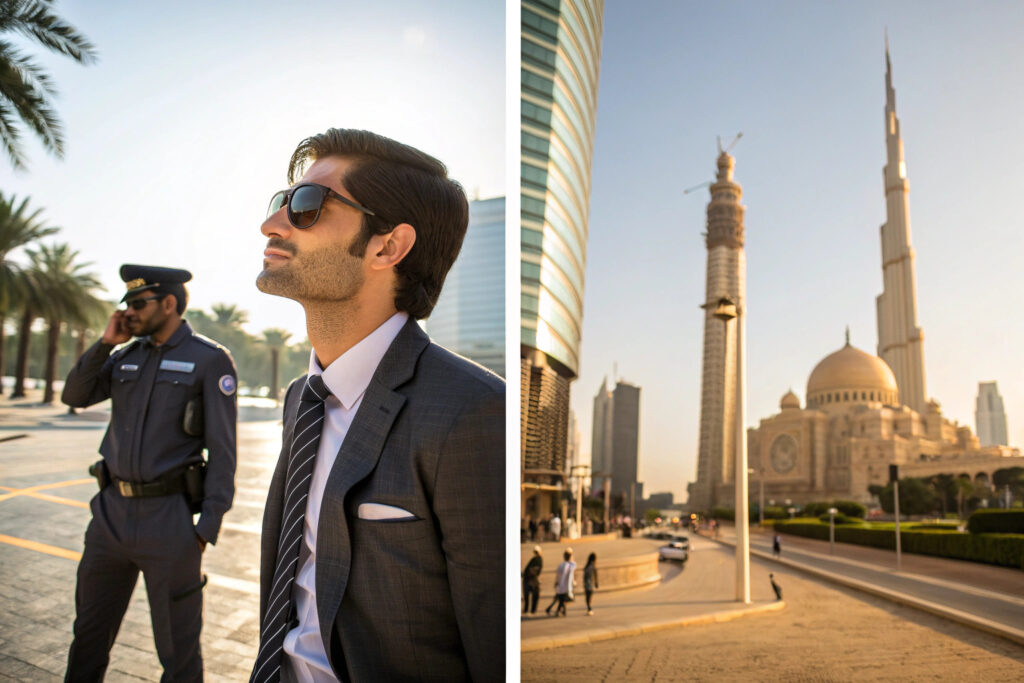
- Outdoor Workers in Tolerable Sectors: While manual laborers are a clear need segment, cost and durability are major barriers. A more viable initial segment might be security personnel, valets, event staff, or tour guides—those required to wear uniforms and be outdoors for extended periods but whose employers might invest in health and productivity tools.
- Tech-Savvy Tourists & Expatriates: Visitors unprepared for the heat and residents engaging in outdoor hobbies represent a market for a functional, novel product. The value proposition is enhanced experience and safety.
What Are the Key Purchasing Considerations and Barriers?
For a product to succeed, it must navigate several critical considerations:
- Cultural Sensitivity & Design: The product must respect local dress norms. It could be designed as a discrete inner liner, an accessory that complements the ghutra, or as a stylish standalone hat for contexts where Western attire is acceptable. It cannot conflict with modesty requirements or appear undignified.
- Performance vs. Discretion: The cooling must be effective without being cumbersome, noisy, or creating visible condensation. A bulky, dripping hat would be socially unacceptable.
- Price Point: As a novel, tech-integrated garment, it would command a premium price, likely placing it initially in the luxury or specialized professional gear category. Demonstrating clear return on investment (e.g., improved worker endurance) is crucial for B2B sales.
- Branding & Marketing: Messaging should emphasize innovation, comfort, and cultural fusion. It’s not just a “cooling hat”; it’s a tool for modern life in a hot climate, blending advanced technology with an understanding of regional needs.
How Does the Competitive Landscape Inform Strategy?
Currently, there is no dominant player in the consumer-grade "high-tech cooling hat" space for the UAE, which presents an opportunity. The competitive landscape consists of:
- Medical/Therapeutic Cooling Caps: Companies like Dignitana and Paxman dominate this clinical sector. Their technology is proven but not designed for fashion or daily wear.
- Industrial/Workforce Cooling Vests: Brands like Techniche, Glacier Tek, and others offer cooling vests for military, industrial, and sports use. These prove the technology works but are not adapted for headwear or casual aesthetics.
- Traditional Clothing: The incumbent "competitor" is simply enduring the heat or relying on traditional fabric breathability.
The strategic opportunity lies in being the first to productize and aestheticize personal head cooling for the mass-affluent consumer in this specific region, learning from the technical foundations of medical and industrial applications while mastering the design and cultural nuances of the UAE market.What Hat Styles Work Best with This Technology?
The cooling fabric is the engine, but the hat is the vehicle. The design of the hat itself must be optimized to support the technology and meet the needs of the user. You can't just sew this fabric into any old hat and expect it to work.
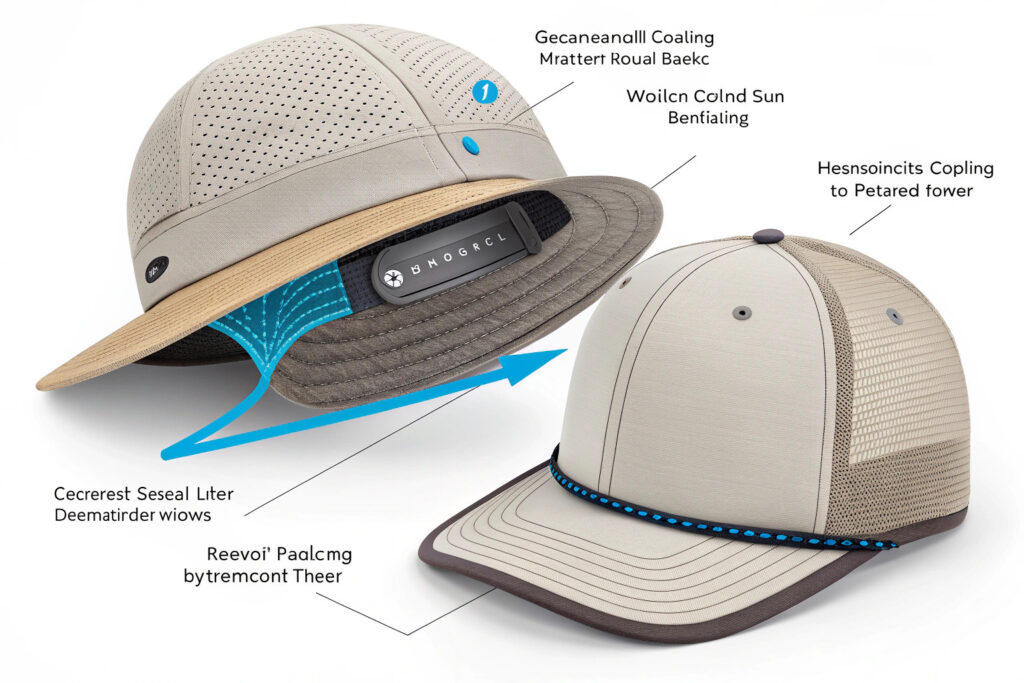
The best hat styles for geothermal-cooling technology are lightweight, highly breathable designs like the modern Baseball Cap and the wide-brimmed Sun Hat, which can have the cooling fabric integrated directly into the crown or as a removable liner. The design must maximize contact with the head while still allowing for airflow.
Our approach at shanghai Fumao Clothing is modular. For many applications, we design a dedicated cooling liner or bandanna made from the geothermal fabric. This liner can be soaked and then inserted into a specially designed Baseball Cap or Sun Hat. This has several advantages: it allows the user to wash the outer hat separately, and they can have multiple liners to swap out during a long day. It also allows us to use highly breathable, mesh-like materials for the outer hat, further enhancing overall comfort.
Why is a modular design effective?
A modular design, where the cooling element is a separate liner, offers maximum versatility. You're not just selling a single-purpose "cooling hat." You're offering a cooling system.
This approach allows the user to adapt. On a cooler day, they can wear the stylish outer hat without the liner. When the heat is intense, they can activate the liner for maximum cooling. For industrial use, it means companies can issue multiple liners per worker, ensuring they always have a fresh, charged one ready. This practicality is key for user adoption. It also simplifies the manufacturing process, allowing us to create a wide variety of outer hat styles that are all compatible with a standardized cooling liner.
What other design features are important?
Beyond the cooling fabric, other design elements are crucial for performance in an extreme climate.
- UV Protection: The outer fabric of the hat must still have a UPF 50+ rating to protect against solar radiation. The cooling tech works on heat, not UV rays.
- Light Colors: Using light-colored fabrics for the outer hat (whites, tans, light grays) helps reflect solar energy, reducing the heat load on the cooling engine within.
- Extreme Breathability: The parts of the hat not containing the geothermal fabric should be made of open-mesh materials to allow for maximum airflow and the escape of ambient heat.
Conclusion
Geothermal-cooling hats, or more accurately, advanced personal cooling headwear, are selling—or more precisely, have strong market potential—in the UAE due to a powerful convergence of extreme environmental demand, fixed cultural dress codes, and a national ethos that embraces technological innovation for climate comfort. While the specific technology may draw more from portable phase-change or micro-thermoelectric systems than from literal geothermal sources, the conceptual link to the UAE’s sustainable cooling ambitions makes it a resonant idea.
The market is driven by a fundamental need to bridge the gap between the ubiquitous chilled interiors and the harsh outdoor environment, all while adhering to cultural norms of dress. Success in this space requires more than just engineering; it demands a deep understanding of local consumer behavior, fashion sensibilities, and the ability to deliver discreet, effective, and elegantly designed solutions. The journey from a cooling vest for a miner to a desirable accessory for a Dubai professional is one of miniaturization, design integration, and smart marketing.
For companies like Shanghai Fumao Clothing, this represents a forward-looking opportunity in functional fashion. It involves leveraging expertise in garment manufacturing, material sourcing, and perhaps most importantly, the ability to collaborate on integrating new technologies into wearable, desirable products. The UAE market stands as a unique testbed for such innovation, where the price of entry is a sincere understanding of both the climate and the culture.
If you are exploring the development of innovative, climate-responsive headwear or apparel for markets with extreme conditions, partnering with a manufacturer experienced in technical garment solutions and cross-cultural design is essential. Shanghai Fumao Clothing is positioned to be that partner. Our integrated R&D and production capabilities can help translate concepts like personal cooling into viable, market-ready products. To discuss developing a line of advanced cooling hats or other technical apparel, contact our Business Director, Elaine, at elaine@fumaoclothing.com. Let's build the future of functional wear together.