Motorsports represent one of the most demanding environments for protective headwear. From Formula 1 to MotoGP, drivers and riders face extreme conditions where safety and performance cannot be compromised. Traditional materials often fall short in meeting these rigorous demands, leaving teams searching for better solutions.
Carbon fiber reinforced caps provide the ultimate combination of lightweight protection and structural integrity that motorsports demand. These advanced headwear solutions offer superior impact resistance while maintaining minimal weight, crucial for driver comfort during high-G maneuvers. The material's exceptional strength-to-weight ratio and customizable properties make it the ideal choice for professional racing applications.
Let's examine why carbon fiber technology has become the gold standard in motorsports headwear and how it outperforms traditional materials.
What Makes Carbon Fiber Superior to Traditional Materials?
Carbon fiber composites represent a significant advancement over traditional helmet materials like fiberglass, polycarbonate, or ABS plastics. The unique properties of carbon fiber make it particularly suited to the extreme demands of competitive racing.
Carbon fiber's superiority stems from its exceptional strength-to-weight ratio and directional strength properties. Unlike traditional materials that offer uniform strength in all directions, carbon fiber can be engineered to provide maximum protection where needed most. This advanced material science allows manufacturers to create helmets that are simultaneously lighter and stronger than any conventional alternatives.
How Does Weight Reduction Impact Driver Performance?
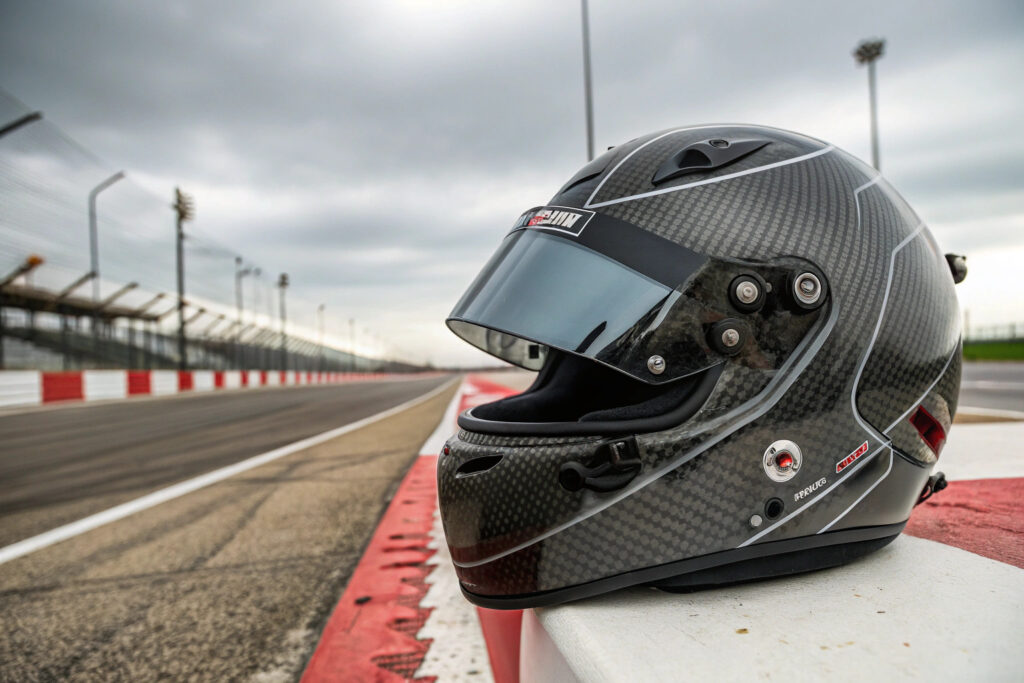
Every gram matters in competitive motorsports. Reducing helmet weight directly decreases the strain on a driver's neck muscles during high-G cornering, braking, and acceleration. Carbon fiber helmets typically weigh 30-50% less than equivalent fiberglass helmets, significantly reducing fatigue over long races. This weight savings translates to better head mobility, improved concentration in the final laps, and reduced risk of neck injuries during impacts. The performance benefits extend beyond comfort to genuine competitive advantages.
What Structural Advantages Does Carbon Fiber Provide?
Carbon fiber's tensile strength exceeds steel while being significantly lighter. The woven carbon fabric, when layered with resin in specific orientations, creates a composite material that distributes impact forces efficiently across the entire shell. This multi-directional strength prevents localized failure points and provides better protection against penetrating objects. At shanghaifumaoclothing, our carbon fiber caps utilize multiple layering techniques to optimize impact absorption while maintaining structural integrity under extreme conditions.
How Do Carbon Fiber Caps Enhance Impact Protection?
The primary function of any motorsports helmet is to protect the wearer during impacts. Carbon fiber's unique properties provide superior protection compared to traditional materials through advanced energy management and structural integrity.
Carbon fiber caps excel in impact protection through their ability to absorb and dissipate energy efficiently across the entire shell structure. The material's high stiffness-to-weight ratio ensures minimal deformation during impacts, while the composite construction manages energy transfer to reduce peak G-forces transmitted to the head. This impact management is crucial for preventing concussions and more serious head injuries in high-speed crashes.
What Energy Absorption Mechanisms Make Carbon Fiber Effective?
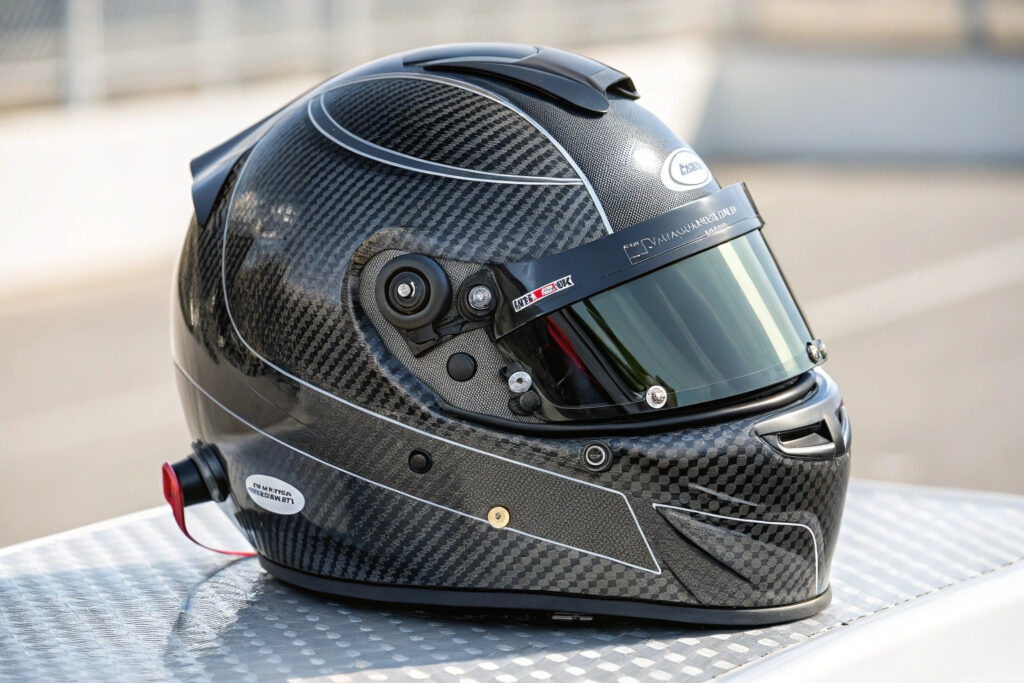
Carbon fiber composites work through controlled micro-fracturing during impacts. The resin matrix cracks and delaminates in a controlled manner, absorbing significant energy while the carbon fibers maintain structural integrity to prevent penetration. This dual-phase energy absorption is more efficient than the single-phase compression of traditional materials like EPS foam alone. The result is better management of both high-energy and low-energy impacts, providing comprehensive protection across various crash scenarios.
How Does Multi-Directional Strength Improve Safety?
Traditional materials often have weak points depending on impact direction. Carbon fiber's woven structure provides strength in multiple directions simultaneously, ensuring consistent protection regardless of impact angle. This is particularly important in motorsports where crashes involve complex, multi-vector impacts. The material's torsional stiffness also helps maintain helmet integrity during rotational impacts, reducing the risk of brain injuries from shearing forces. This comprehensive protection approach makes carbon fiber the preferred choice for professional racing organizations worldwide.
What Thermal Properties Benefit Motorsports Applications?
Motorsports environments expose drivers to extreme temperatures, from cockpit heat to potential fire hazards. Carbon fiber's thermal properties provide significant advantages in these challenging conditions.
Carbon fiber reinforced caps offer exceptional thermal stability and heat resistance compared to traditional materials. The material maintains structural integrity at temperatures where thermoplastics would soften or compromise, providing crucial extra seconds of protection in fire-related incidents. This thermal performance is complemented by better heat dissipation properties that help manage cockpit temperatures for driver comfort.

How Does Heat Resistance Enhance Fire Safety?
Carbon fiber composites can withstand temperatures up to 500°F (260°C) before beginning to degrade, significantly higher than most thermoplastic materials. This high thermal threshold provides additional protection time in the event of fire, which is a constant concern in motorsports. The material doesn't melt or drip like thermoplastics, maintaining its protective shell integrity even when exposed to direct flames. This property has proven crucial in several high-profile racing incidents where drivers escaped serious injury despite vehicle fires.
What Role Does Thermal Management Play in Driver Comfort?
Beyond extreme scenarios, carbon fiber's thermal conductivity helps manage everyday cockpit temperatures. The material conducts heat away from the head more efficiently than fiberglass or plastics, reducing heat buildup during long races. This improved thermal management helps drivers maintain focus and physical performance as race conditions heat up. Combined with advanced ventilation systems, carbon fiber helmets provide a cooler, more comfortable environment for peak performance throughout extended racing sessions.
How Does Customization Potential Benefit Racing Teams?
The manufacturing flexibility of carbon fiber allows for unprecedented customization opportunities that benefit both individual drivers and racing teams seeking competitive advantages.
Carbon fiber's moldability enables perfect anatomical fitting and team-specific customization without compromising safety or adding significant weight. The material can be layered to create variable thickness and strength zones, optimizing protection while accommodating communication systems, hydration tubes, and other essential equipment. This customization potential allows teams to develop helmets specifically tuned to their unique requirements and driver preferences.
What Fitting Advantages Does Carbon Fiber Offer?
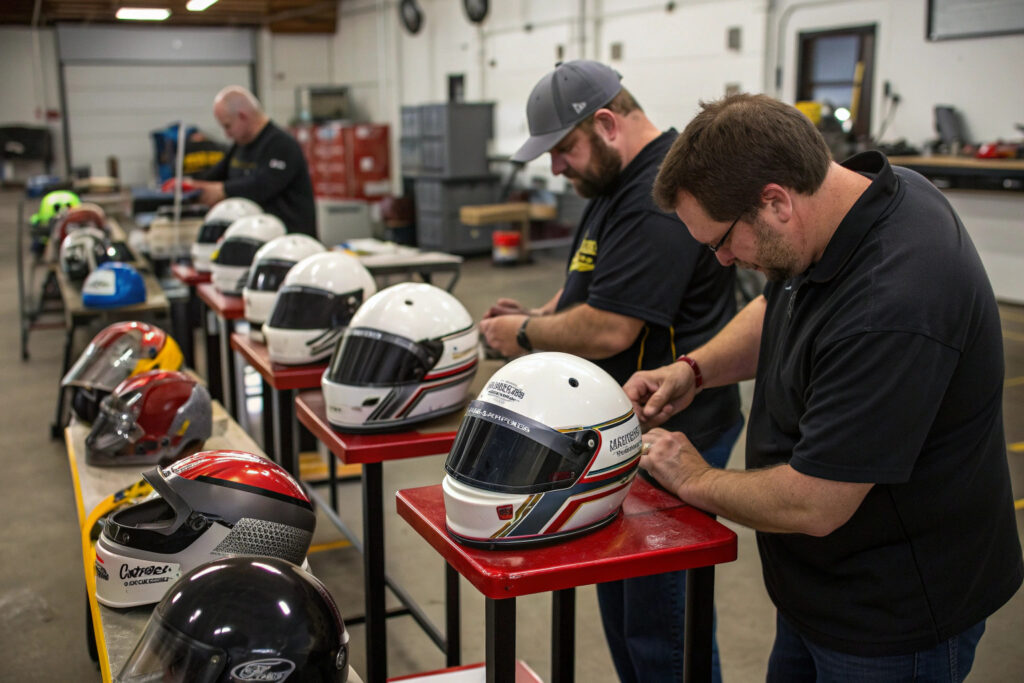
The manufacturing process allows for precise anatomical shaping that matches individual driver's head contours perfectly. Unlike mass-produced helmets that compromise fit for production efficiency, carbon fiber helmets can be custom-molded to each driver's exact measurements. This perfect fit enhances both comfort and safety, ensuring the helmet moves with the head during impacts rather than against it. At shanghaifumaoclothing, we've developed proprietary scanning and molding techniques that create truly personalized protection for professional drivers.
How Can Integration Capabilities Enhance Functionality?
Carbon fiber construction easily accommodates integrated systems that modern racing requires. Communication units, hydration systems, cooling mechanisms, and HUD displays can be seamlessly incorporated into the helmet structure without external attachments that compromise aerodynamics or safety. The material's strength allows for strategic material removal in non-critical areas to reduce weight further while maintaining crucial protection where needed. This integrated approach represents the future of motorsports headwear design.
Conclusion
Carbon fiber reinforced caps represent the pinnacle of motorsports headwear technology, offering unparalleled protection, minimal weight, and custom integration capabilities. The material's exceptional strength-to-weight ratio, superior impact management, thermal resistance, and customization potential make it the clear choice for professional racing applications where every advantage matters.
If your racing team is looking to upgrade to carbon fiber headwear technology, our specialized manufacturing capabilities can deliver the competitive edge you need. Contact our Business Director Elaine at elaine@fumaoclothing.com to discuss custom carbon fiber solutions for your specific motorsports requirements.