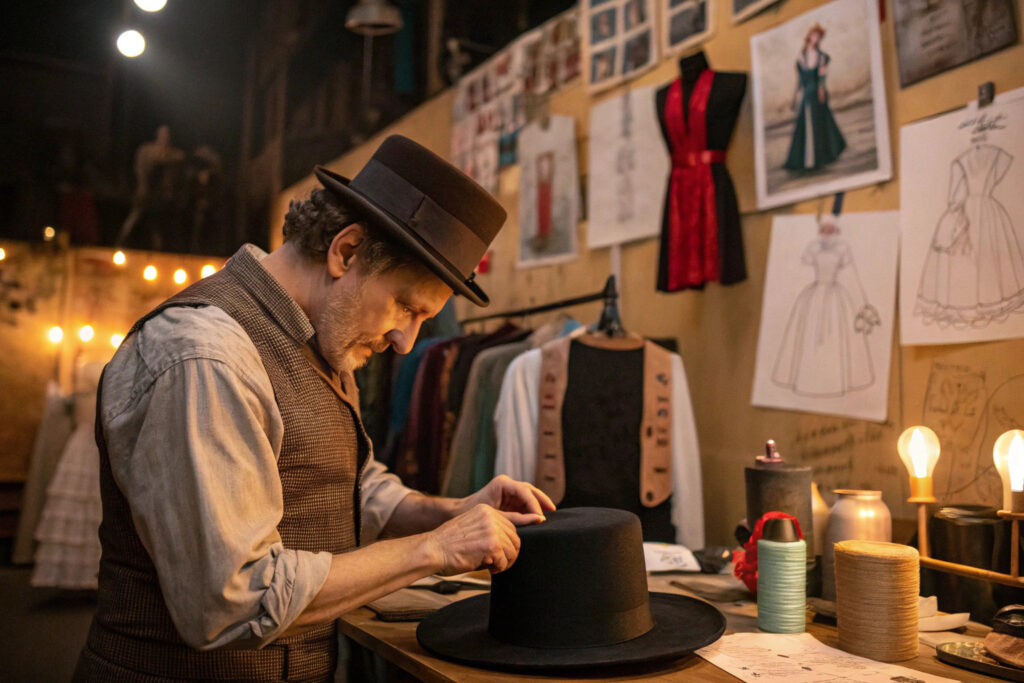
In my two decades in the hat manufacturing business, I've seen our machines produce every style imaginable, from millions of baseball caps for global brands to intricate fascinators for boutique designers. But there's a certain magic to the requests we get from the world of theater. I recently spoke with a costume director from New York, a brilliant, meticulous professional under immense pressure. He wasn't looking for 100,000 units; he needed 30 absolutely perfect, custom-made top hats for a new Broadway musical set in the 19th century. He said, "Elaine, these aren't just hats. They are character. They have to survive eight shows a week, under hot lights, on dancing actors. Where do I even begin?"
For Broadway productions, custom top hats are sourced from a combination of specialized, artisanal milliners for hero props and principal actors, and larger-scale, high-quality manufacturers for ensemble casts, with the choice depending on budget, timeline, and specific character needs. It's a two-pronged approach that balances bespoke artistry with production-line consistency.
The fear for any costume director is immense. An ill-fitting hat can fall off mid-performance, ruining a scene. A historically inaccurate silhouette can pull the audience out of the story. And a poorly made hat will simply disintegrate under the grueling conditions of a Broadway run. This isn't just about finding a supplier; it's about finding a partner who understands the unique demands of the stage. At Shanghai Fumao Clothing, while we are known for scale, our core expertise in custom development allows us to tackle precisely these kinds of complex, high-stakes projects.
Why Can't You Just Buy Top Hats Off the Shelf?
You're on a tight deadline, and the thought of just ordering 30 top hats from a standard costume website is tempting. But you hesitate, knowing it's a recipe for disaster. Why? Because a mass-market party hat is fundamentally different from a piece of professional theatrical equipment. You're worried about inconsistent sizing, flimsy materials, and a "one-size-fits-all" approach that fits no one perfectly.
Off-the-shelf top hats are unsuitable for Broadway because they lack the specific historical accuracy, custom sizing for actors, and extreme durability required to withstand the nightly rigors of a professional stage production. A stage hat is a piece of high-performance athletic gear disguised as a costume.
I learned this lesson early on. A theater group approached us to replicate a specific 1880s Top Hat style. My first instinct was to use one of our existing molds. The costume designer immediately pointed out the subtle curve of the brim and the specific "bell" of the crown were wrong for the period. It was a revelation. We had to create a completely new, custom mold. That experience taught me that in theater, authenticity isn't a luxury; it's a core requirement. A generic hat tells a generic story. A custom hat tells the right story.
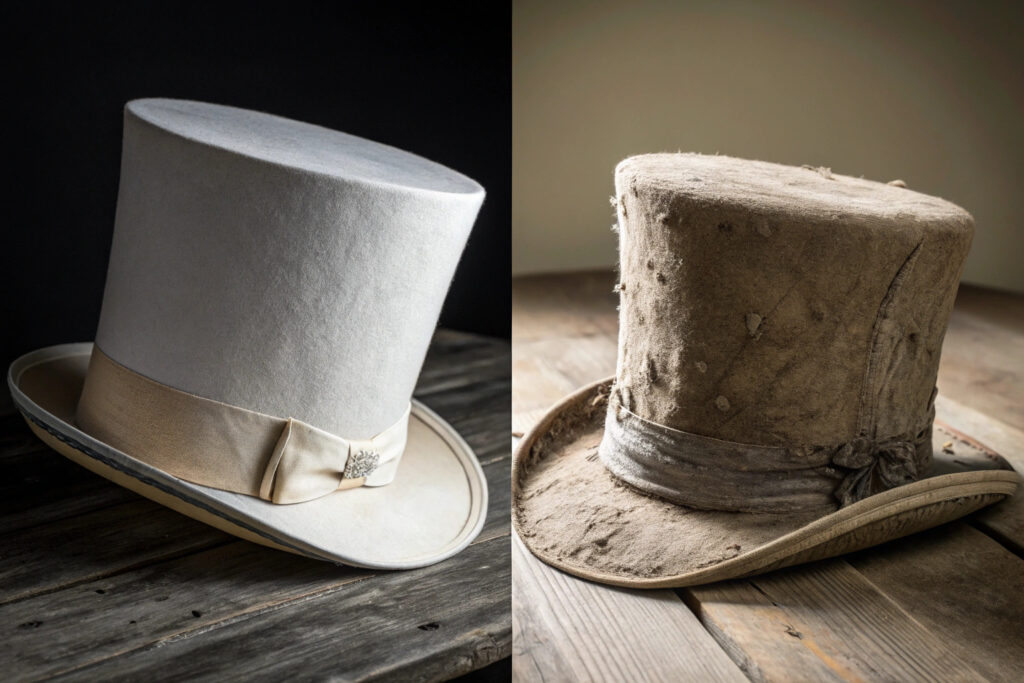
What are the specific demands of a stage hat?
A hat worn on stage is subjected to stresses that a normal hat never experiences. Understanding these demands is key to sourcing the right product.
- Durability: It will be handled, dropped, and sweated in eight times a week. Seams must be reinforced, and materials must be resilient.
- Fit: It must fit the actor's head perfectly, often secured with hidden elastic or pins, to stay in place during vigorous dancing and movement. This often requires custom sizing for each member of the ensemble.
- Weight: The hat must be as lightweight as possible to avoid actor fatigue, without sacrificing its structure or shape.
- Light Interaction: The material cannot create unwanted glare under stage lights. A matte finish, like that of traditional silk plush or felt, is often preferred over a cheap, shiny satin.
Why is historical accuracy so crucial?
You might think, "Who in the audience will know the difference between an 1870s top hat and an 1890s one?" The answer is: the people who matter. The director, the designers, the actors, and the dedicated theater lovers.
Historical accuracy is about world-building. The specific height of the crown, the curl of the brim, and the type of hatband are all visual cues that place the story in a specific time and social class. A towering "stovepipe" top hat says something very different from a more modest, curved "bowler" style Homburg. Getting these details right is a mark of a high-quality production and shows respect for the audience's intelligence. It's a detail that, when done correctly, becomes invisibly perfect, supporting the fantasy on stage. This level of detail is a hallmark of renowned costume designers like those featured in Vogue.
Where Do "Hero" Hats for Principal Actors Come From?
For your leading man, the star of the show, his top hat is a key part of his character. It needs to be flawless, a piece of art that can stand up to close-ups and command the stage. For these "hero" props, productions turn to a very special type of artisan.
The "hero" top hats for principal Broadway actors are almost exclusively sourced from bespoke, artisanal milliners who specialize in historical reproductions and theatrical headwear. These are master craftspeople, often based in cities like New York or London, who build the hat from scratch using traditional techniques.
These artisans are the wizards of the industry. They work with the costume designer, taking precise measurements of the actor's head and discussing the character's personality. They might use antique hat blocks to get the perfect shape and traditional materials like fur felt or the now-rare silk plush. A name that often comes up in these circles is Arnold Levine, a legendary name in theatrical millinery. These milliners don't have a "buy now" button on a website; they are collaborators in the artistic process.
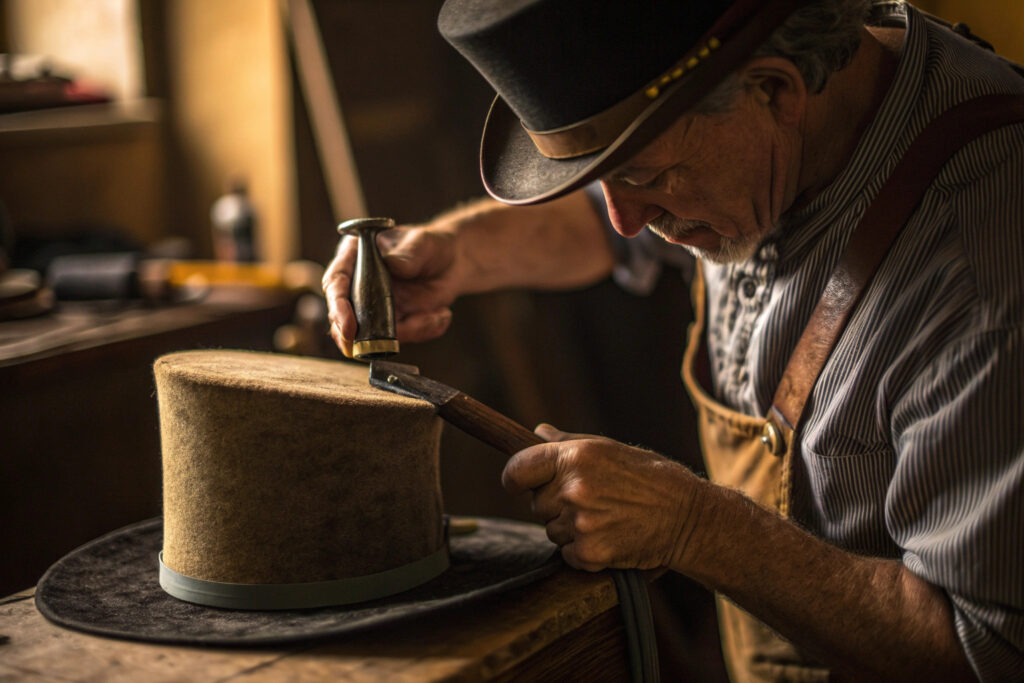
What is the process of creating a bespoke hat?
The bespoke process is a collaboration. It begins with a consultation with the costume designer, discussing the play's period, the character, and the specific needs of the actor.
- Head Measurement: The milliner takes detailed measurements of the actor's head, sometimes creating a custom mold.
- Block Selection: They choose a wooden hat block from their collection that matches the desired historical shape or carve a new one.
- Material Shaping: A high-quality fur felt or other material is steamed and meticulously stretched and shaped over the block.
- Finishing: The brim is cut and curled, the crown is finished, and the hat is lined with silk and fitted with a leather sweatband. Every step is done by hand.
This process can take weeks and is very expensive, which is why it's reserved for the most important hats in a production.
Who are these specialized milliners?
Finding these artisans is often about industry connections and word-of-mouth. They are not large factories but small, dedicated workshops. While I can't endorse specific vendors, productions often look to shops in the heart of theater districts. A search for "theatrical milliners NYC" or "custom hats for theater" will often lead to articles and interviews in publications like Playbill that mention the craftspeople behind the costumes of hit shows. These are the artists that costume designers trust with their most critical pieces.
How Are Hats for the Ensemble Sourced?
You have your stunning hero hat, but now you need 29 more for the chorus. They need to look identical, fit perfectly, and be durable, but you don't have the budget or time to have each one handmade by a bespoke milliner. This is where manufacturers like my company, Shanghai Fumao Clothing, come in.
Top hats for the ensemble are typically sourced from high-quality, large-scale manufacturers who can produce consistent, durable, and historically accurate hats in custom sizes based on a single, approved prototype. This approach ensures visual uniformity and durability at a manageable cost.
This is our specialty. The process usually starts with the "hero" hat. The production will send us the bespoke hat or a detailed design, and our job is to replicate it with precision and consistency. We create a custom mold and a streamlined production process. We take the head measurements for all 29 ensemble members and create hats in specific, numbered sizes. We use high-quality, durable wool felt that can withstand the abuse of a long run. We ensure every hat has the exact same crown height, brim curl, and finish. We provide the look of the hero hat with the efficiency of modern manufacturing.
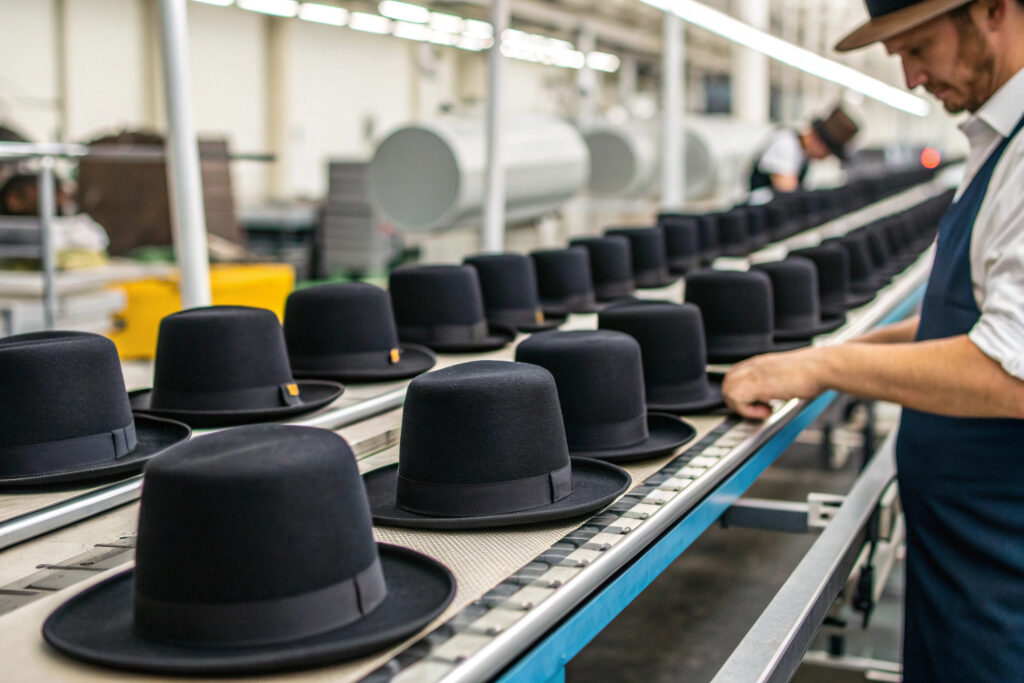
What is the manufacturing process for an ensemble?
Once we have the approved design, the process is about precision at scale.
- Custom Tooling: We create custom aluminum hat blocks based on the approved shape.
- Material Sourcing: We source high-grade, durable wool felt that can hold its shape and withstand sweat and handling.
- Molding: The felt bodies are hydraulically pressed using our custom blocks to ensure every hat has the identical shape.
- Assembly Line Finishing: A dedicated team handles the finishing touches—brim trimming, ribbon application, and liner insertion—to ensure consistency across the entire run.
- Quality Control: Every single hat is inspected to ensure it matches the prototype and meets the required quality standards before being shipped.
How do you ensure a perfect fit for every actor?
A "one-size-fits-most" approach is a nightmare for a dance ensemble. The solution is custom sizing, even in a bulk order. The production's wardrobe department will provide us with a list of actors and their precise head measurements (e.g., Actor #1: 58cm, Actor #2: 56.5cm, etc.). We then produce and label each hat for the specific actor it's intended for. This guarantees a secure and comfortable fit for everyone, preventing on-stage mishaps and allowing the performers to focus on their roles, not on their costumes. This level of detail is a standard part of professional costume production.
What Is the Role of the In-House Milliner?
You've sourced your hero hats from an artisan and your ensemble hats from a manufacturer. But the job isn't over. What happens when a hat gets damaged mid-show? Or when an understudy with a different head size has to go on? This is where the crucial, often overlooked, role of the in-house milliner comes in.
Nearly every major Broadway production has an in-house milliner or a skilled wardrobe craftsperson responsible for the daily maintenance, repair, and emergency alteration of all headwear. This person is the first responder for any hat-related crisis and is essential for keeping the show running smoothly.
I have immense respect for these backstage professionals. They work in cramped spaces, under incredible pressure. We can manufacture the most durable hat in the world, but eight shows a week is a war of attrition. We've heard stories from our clients about their in-house teams re-stitching a brim between scenes or completely rebuilding a crushed hat overnight. They are the ones who keep the magic alive, ensuring the hats we make look perfect for every single performance.
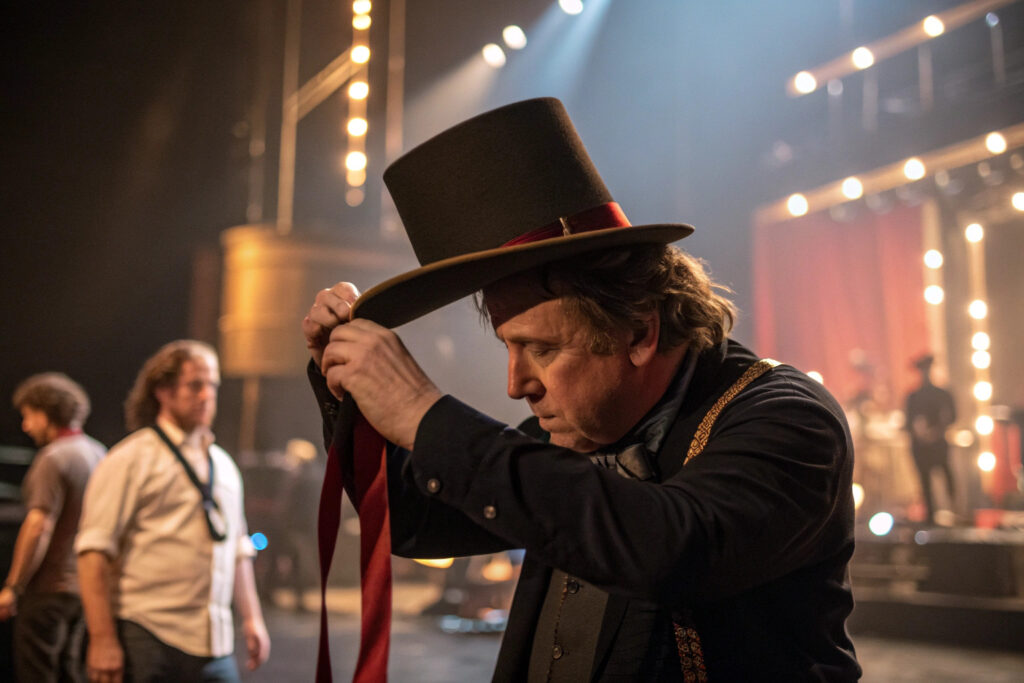
What does their daily job entail?
The in-house milliner's job is a cycle of constant maintenance. After every performance, they inspect each hat for damage.
- Cleaning: They clean out sweat and makeup from the sweatbands.
- Repairs: They fix any loose threads, detached ribbons, or minor structural damage.
- Reshaping: They may need to steam and re-shape hats that have been bent or crushed during a performance.
- Alterations: They handle alterations for new cast members or understudies, ensuring a perfect fit on short notice.
They are masters of improvisation, using their skills to solve problems quickly and effectively.
Why is this role vital for the production's longevity?
Without an in-house craftsperson, the quality of the headwear would degrade rapidly. A small tear becomes a large rip. A loose ribbon falls off completely. The show's polished look would quickly tarnish. This role ensures that the visual integrity of the costume design is maintained from opening night to the final curtain call, years later. They are the guardians of the original designer's vision and the protectors of the manufacturing investment. Their work is a critical component of the backstage ecosystem that makes a Broadway show possible.
Conclusion
Sourcing custom top hats for a Broadway show is a masterful blend of art and industry. It begins with the singular artistry of a bespoke milliner, who crafts the perfect "hero" hat that defines a principal character. That singular vision is then translated, with precision and efficiency, by a high-quality manufacturer to create a durable and uniform look for the entire ensemble. Finally, the entire collection is maintained and preserved by the skilled hands of the in-house wardrobe craftsperson. This three-pronged approach is the secret to achieving the flawless, breathtaking look of a professional stage production. It's a process that ensures every hat, from the star's to the last chorus member's, is perfect for every performance.
If you are a costume director or production manager looking for a manufacturing partner who understands the unique demands of the stage and can deliver high-quality, consistent headwear for your entire cast, my team and I are ready to help.
My name is Elaine, Business Director at Global-Caps, and my email is: elaine@fumaoclothing.com.