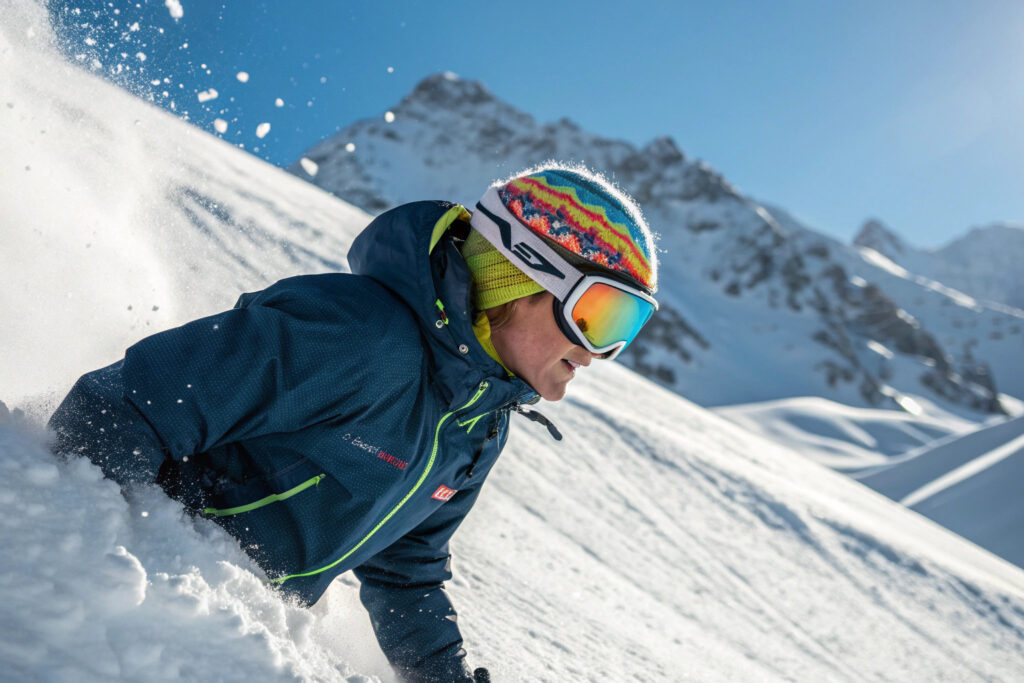
For any hat manufacturer or buyer, integrating functionality with headwear is a key way to add value. One of the most practical combinations for winter sports is headwear that pairs seamlessly with anti-glare ski goggles. However, finding or designing products that work harmoniously without compromising fit, safety, or style requires understanding specific product categories and market trends. This isn't just about making a warm hat; it's about creating a functional system for the user on the slopes.
The answer involves focusing on three primary product categories that naturally offer goggle compatibility: technical ski helmets designed for integration, versatile headwear systems with integrated visors, and specialized neck gaiters or balaclavas that act as a gasket. The market shows clear demand for this functional integration, with major retailers like JD.com reporting a significant increase in searches for related winter sports gear, indicating strong consumer interest.
Let's explore these categories in detail to guide your sourcing, design, and development strategy.
What Types of Ski Helmets are Engineered for Goggle Compatibility?
The most sophisticated solution for goggle compatibility is not a traditional hat, but a ski helmet. Modern ski helmets are engineered from the ground up to create a seamless interface with goggles, addressing the common pain points of gap, slippage, and fogging. For a manufacturer, understanding this category is crucial, as it represents the high-end, safety-focused segment of the market that often sets trends later adopted by soft-goods headwear.
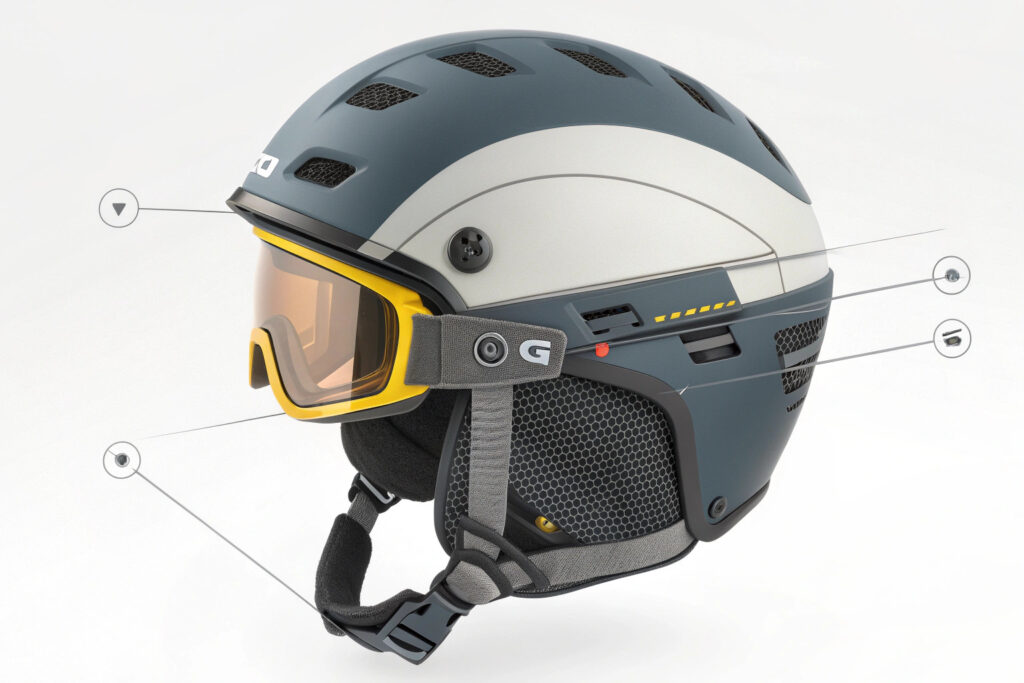
Key features to look for include dedicated goggle retention clips or hooks at the rear to secure the strap, and ventilation channels aligned with the goggle frame to prevent fogging. Many helmets also feature an "OTG" (Over-The-Glasses) design in their eye port, which inherently provides more space to accommodate the frame of goggles without pressure points.
Which helmet brands and models lead in goggle integration?
Several established brands in the winter sports industry are known for their helmet-goggle ecosystem. For instance, Giro designs its helmets with "Seamless Compatibility" in mind, often recommending specific goggle models like the Giro Axis or Blok for a perfect fit. The Giro Ledge helmet features an "Auto Loc 2 Fit System" and "Vertical Tuning" specifically to help users dial in the fit with their goggles without removing the helmet.
Other prominent brands like POC, Smith, and Oakley also invest heavily in this integration. While not all products from these brands may have explicit anti-glare properties, their design philosophy ensures that when paired with the brand's own anti-glare goggles (like those featuring Oakley's Prizm™ lens technology), the system performs optimally. This brand ecosystem approach is a significant market trend.
How does helmet design prevent goggle slippage and gap?
The technical details matter. A well-designed helmet will have a smooth, rounded transition from the brow to the back. This allows the goggle strap to lie flat without snagging on adjustment dials or vents. The rear of the helmet often includes a goggle garage—a soft, lined slot to tuck the goggle strap—or a retention clip to lock it in place.
Furthermore, the fit systems within helmets are critical. Adjustable dials at the back (like Giro's Auto Loc 2) allow the helmet to be cinched snugly to the head, creating a stable platform. This prevents the helmet from shifting independently of the goggles, which is a primary cause of gaps that let in cold air and snow. For Shanghai Fumao Clothing, studying these helmet interfaces can provide valuable insights for designing hats and beanies with integrated non-slip silicone grippers or strategic seams that mimic this stable platform.
Which Headwear Systems Feature Built-In Visors or Mask Integration?
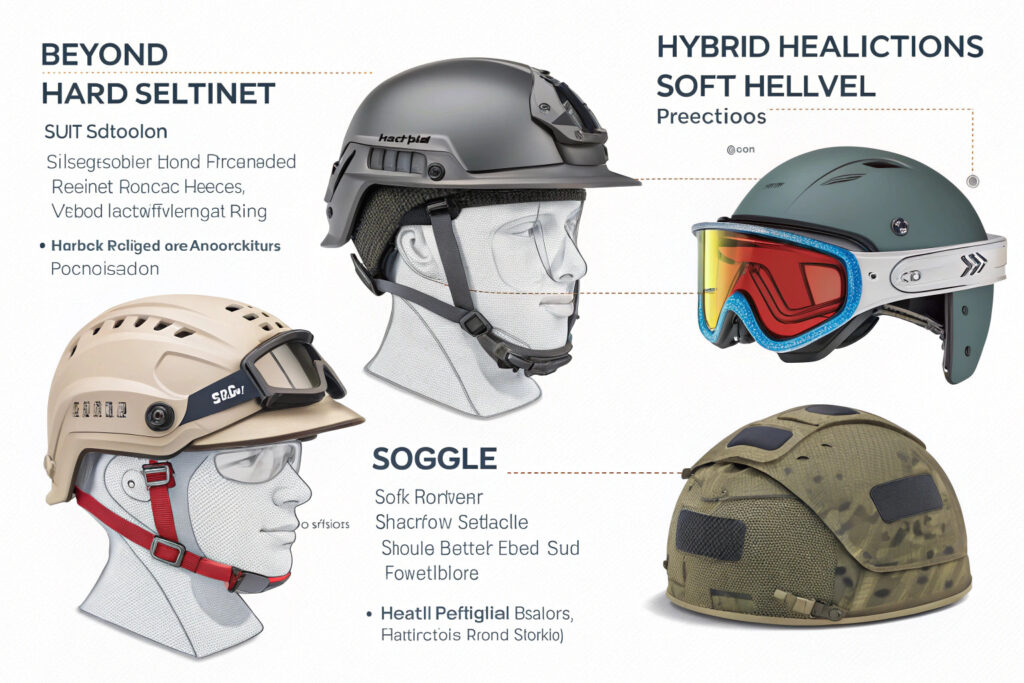
Beyond hard-shell helmets, the market offers hybrid solutions and soft headwear designed specifically for goggle wearers. These products often integrate a visor, brim, or facial covering that works in tandem with goggles. This category is ideal for buyers and brands looking for versatile, packable options that offer sun and glare protection without a full helmet.
The most relevant products here are visors with headbands and integrated mask/hat systems. A product like the Oakley Flex Scape represents a high-end hybrid, functioning as both goggles and sunglasses with a removable headstrap, showcasing the innovation in this space. More commonly, you'll find headbands with a built-in peaked visor or products that combine a beanie with a attached neck gaiter and nose cover.
What are the benefits of visor-based headwear for goggle users?
Visor-based headwear, such as a wide-brimmed cap or a headband with a stiff peak, solves a specific problem: reducing glare from above. Ski goggles protect from frontal and peripheral light, but overhead sun can still cause squinting and discomfort. A visor acts as a brim, casting a shadow over the goggle's upper frame and the wearer's eyes.
For manufacturing, these are relatively simple products to produce but require attention to material. The visor must be rigid enough to hold its shape but flexible enough for packing. The band must be smooth and low-profile so as not to create a bulky layer under the goggle strap. Using moisture-wicking, quick-dry fabrics for the band is also essential for comfort during sport. Searching for terms like "goggle compatible visor beanie" or "ski cap with brim" will reveal commercial examples and current styles.
How do integrated mask and hat systems enhance functionality?
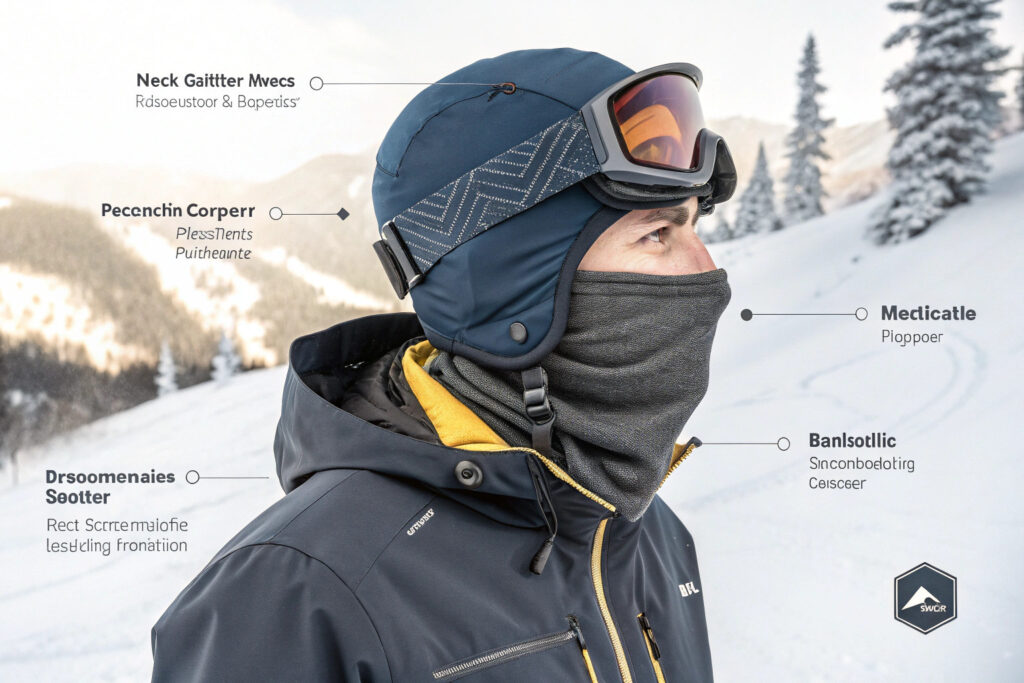
An integrated system, such as a beanie with a built-in neck gaiter that can be pulled up over the nose and mouth, serves as a gasket for the goggles. By covering the skin around the nose and cheeks, it prevents warm, moist breath from escaping upwards and fogging the goggle lenses from the outside.
From a production standpoint, these are excellent value-added products. They combine two bestsellers—a beanie and a balaclava—into one. Key considerations include:
- Seam Placement: Seams around the face should be flat-locked or absent to avoid irritation.
- Breathable Zone: The area in front of the mouth should use a mesh or highly breathable fabric if possible.
- Goggle Compatibility: The crown of the beanie must be smooth and not too thick or bulky, ensuring the goggles can sit snugly without being pushed away from the face. This is a perfect product for Shanghai Fumao Clothing to develop, leveraging expertise in knitwear and functional accessories.
How Can Neck Gaiters and Balaclavas Optimize the Goggle Seal?
Sometimes, the best "headwear" for goggle compatibility is not worn on top of the head, but around the neck and face. Neck gaiters (also called buffs) and balaclavas are critical components in the goggle ecosystem. Their primary function in this context is to create a sealed microenvironment that enhances goggle performance by managing moisture and temperature.
These products act as a barrier, preventing the "chimney effect" where body heat rises from the jacket collar and meets cold air at the goggle rim, leading to condensation and fogging. For a headwear company, offering a coordinated set—like a beanie paired with a matching gaiter—is a smart bundling strategy that appeals directly to winter sports enthusiasts.
What design features make a gaiter ideal for goggle wear?
Not all gaiters are created equal for this purpose. The ideal goggle-compatible gaiter has specific features:
- Nose Wire/Bridge: A subtle, moldable wire sewn into the top edge allows the wearer to shape the gaiter around their nose. This directs exhaled breath downwards and away from the goggles, which is the single most effective anti-fog strategy.
- Strategic Ventilation: Some high-performance gaiters have mesh panels over the mouth or nostrils to diffuse warm breath.
- Minimal Bulk: The material around the nose and cheekbones must be thin and form-fitting. A thick, bulky seam here will prevent the goggles from sealing properly against the face, allowing cold air in and causing fog. Materials like Merino wool blends or advanced polyester microfibers are excellent choices as they are warm, thin, and moisture-wicking.
Why are balaclavas a superior choice for extreme conditions?
For very cold or windy conditions, a balaclava is often the preferred choice. It provides full head, neck, and face coverage in one garment. For goggle compatibility, a well-designed balaclava will have a face opening that is precisely sized—not so large that it exposes skin, but not so small that it stretches and pulls the goggle skirt away from the face.
The best designs feature a dual-layer face panel. The inner layer, against the mouth, is a hydrophobic material that wicks moisture away. The outer layer is windproof. This combination keeps the face warm and dry while ensuring the moisture from breath is managed effectively, keeping goggle lenses clear. Developing a specialized balaclava for skiers and snowboarders, perhaps with integrated anti-glare or UV-protective fabric around the eyes, could be a niche product line with high appeal.
What are the Key Sourcing Channels and Market Trends?
Knowing what to source is half the battle; knowing where to find it is the other. The current search results point primarily to major B2C retail platforms like Amazon and eBay. While these are useful for product research and identifying bestsellers, as a business-to-business (B2B) manufacturer, you need to look deeper into the supply chain and wholesale channels.
The trends are clear: consumers are seeking technical, integrated solutions. The buzz around products like Oakley's Flex Scape—a goggle-sunglasses hybrid—shows demand for versatility and innovation. Furthermore, data from major Chinese retail platforms indicates a sustained boom in winter sports gear, with searches for related items seeing significant year-on-year growth. This confirms a robust and growing market.
Which B2B platforms and trade shows are essential for sourcing?
To move beyond retail, you should explore dedicated B2B marketplaces:
- Alibaba.com: The world's largest B2B platform. Search for suppliers using terms like "ski beanie OEM," "goggle compatible balaclava," or "winter sports headwear manufacturer." You can filter for suppliers who offer custom design, low MOQs, and specific material certifications.
- Global Sources: Similar to Alibaba, with a strong focus on electronics and hardware, but also a substantial apparel section.
- Trade Shows: Attending industry events is invaluable. Consider ISPO Munich (world's leading sports trade fair), OutDoor by ISPO, or SIA Snow Show (in the US). These shows are where you meet factory representatives, see the latest materials and technologies firsthand, and establish direct supplier relationships.
What material and certification trends should you follow?
The products in the search results highlight key material trends: TPU frames for goggles, high-density sponge for sealing, and advanced lens coatings like REVO for anti-glare. For headwear, translate this into using high-performance technical fabrics.
- Merino Wool: Naturally odor-resistant, temperature-regulating, and comfortable against the skin.
- Polartec® Fabrics: A wide range of technically advanced fleeces and insulating materials designed for active wear.
- Recycled Polyester: Meeting the growing demand for sustainability. The Findway goggles listing even highlights carbon impact certification, showing this is a selling point.
For certifications, ensure any safety-related claims (like UV protection) are verifiable. While not always required for soft goods, having fabrics tested to standards like UPF 50+ for sun protection or OEKO-TEX® Standard 100 for harmful substances adds credibility and value, especially for the EU and North American markets you serve.
Conclusion
Finding and developing anti-glare ski goggle-compatible headwear requires a shift in perspective—from viewing hats as standalone items to seeing them as key components in a functional winter sports system. The most successful products actively solve user problems: they prevent goggle slippage, manage moisture to combat fogging, seal out wind, and reduce glare.
By focusing on the interconnected categories of integrated helmets, visor-based headwear, and sealing neck gaiters/balaclavas, and by sourcing through dedicated B2B channels that offer access to technical materials and OEM manufacturing, you can build a compelling product line that meets clear market demand.
If you are ready to develop a technically advanced line of goggle-compatible headwear that combines performance, style, and smart design, our team can help. We specialize in bringing functional apparel concepts to life with quality manufacturing and efficient supply chain management. For a detailed discussion on prototyping and production, please contact our Business Director, Elaine, at Shanghai Fumao Clothing. You can reach her at: elaine@fumaoclothing.com.