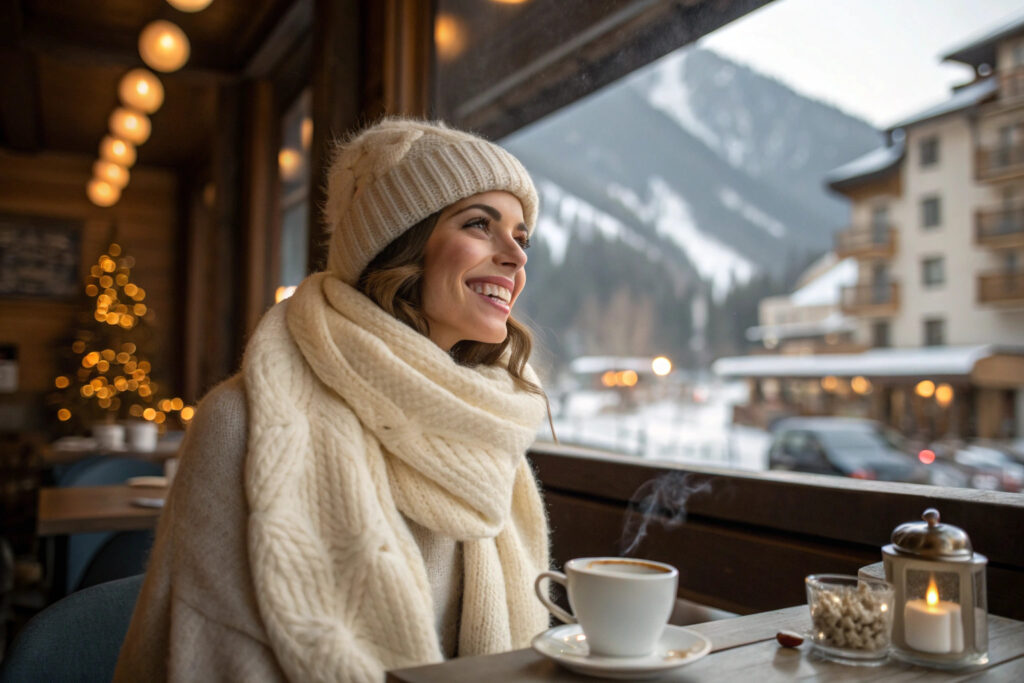
I was on a video call last week with a buyer for a high-end, eco-conscious boutique in Aspen. She's a client who, like my detail-oriented buyer Ron, knows exactly what her customers want. She didn't ask for beanies or scarves. She held up a picture of a luxurious, hooded scarf and said, "Elaine, I need this: an all-in-one alpaca scarf hat. But my customers don't just want luxury; they want proof that it's safe and clean. It must be Oeko-Tex® certified. Where in the world do I find a manufacturer who can deliver that specific combination?"
Finding a ready-made alpaca scarf hat with Oeko-Tex® certification is challenging because it requires a supplier who operates at the intersection of three niche specialties: artisanal alpaca sourcing, complex garment construction, and rigorous chemical safety certification. Therefore, the most reliable path is to partner with a custom manufacturer who can source certified yarn and manage a transparent, certified production chain specifically for you.
The core problem is that these two worlds rarely meet. Artisanal alpaca producers in the Andes are masters of the fiber but often lack the scale or resources for expensive international certifications. Large-scale certified factories, on the other hand, might not have established supply chains for high-quality, traceable alpaca. You're looking for a unicorn. At Shanghai Fumao Clothing), we specialize in building these exact kinds of custom, certified supply chains to bring our clients' unique visions to life.
What is Oeko-Tex® and Why Is It Crucial for Alpaca?
You see the Oeko-Tex® label on all sorts of textiles, but you might be wondering why it's so important for a natural, premium fiber like alpaca. Isn't alpaca naturally "clean"? You're worried it's just another certification that adds cost without adding real value.
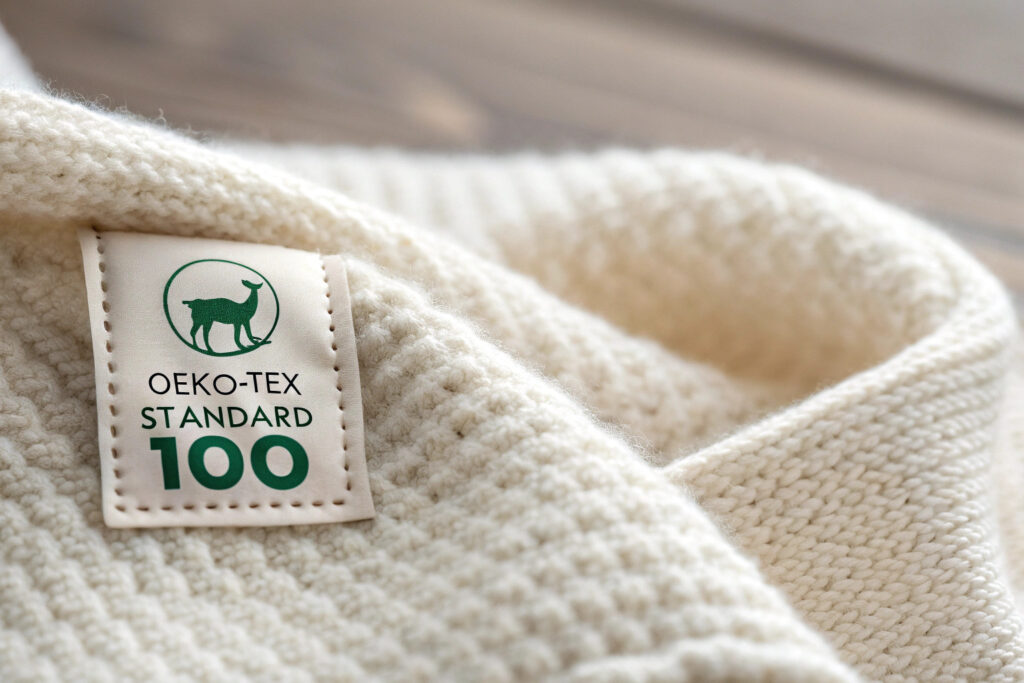
Oeko-Tex® STANDARD 100 is a globally recognized, independent testing and certification system that ensures a textile product, from the raw fiber to the final item, is free from a long list of harmful substances. For alpaca, this is crucial because the journey from fleece to finished garment involves numerous steps—scouring, dyeing, softening, and finishing—where harmful chemicals can be introduced. The certification is the customer's only guarantee that the final product touching their skin is safe.
I had a client who learned this the hard way. They sourced what they thought was "100% natural" alpaca yarn from an uncertified supplier. During testing, we found it was treated with a finishing agent containing formaldehyde to prevent mildew during shipping. The entire batch was unusable for their target market in the EU, where regulations are strict. This is why we insist on certified supply chains. The Oeko-Tex® certification isn't just a label; it's a rigorous process that protects the consumer, the brand, and the environment.
What does Oeko-Tex® actually test for?
The list is extensive and updated annually. It includes:
- Illegal Substances: Such as carcinogenic azo dyes.
- Legally Regulated Substances: Like formaldehyde, plasticizers (phthalates), and heavy metals.
- Known Harmful (but not yet legally regulated) Chemicals: Such as pesticides and allergenic dyes.
- Parameters for Health Protection: Including pH value to ensure the product is skin-friendly.
A product only gets the STANDARD 100 label if every single component—the yarn, the sewing thread, the buttons, the labels—meets these strict criteria.
Isn't "Baby Alpaca" good enough?
"Baby Alpaca" refers to the fineness of the alpaca fiber (typically 21-23 microns), not its safety from chemicals. It denotes softness and quality, but it says nothing about the dyes or finishing agents used. A customer with sensitive skin can still have a reaction to a beautifully soft Baby Alpaca garment if it was processed with harsh chemicals. Oeko-Tex® certification is the only way to guarantee both luxury and skin-friendly safety.
The Challenge: Why Is This Combination So Rare?
You've started your search, and you're finding plenty of alpaca scarves and plenty of Oeko-Tex® certified cotton hats, but not the two together. Why is this specific product so difficult to find off the shelf?
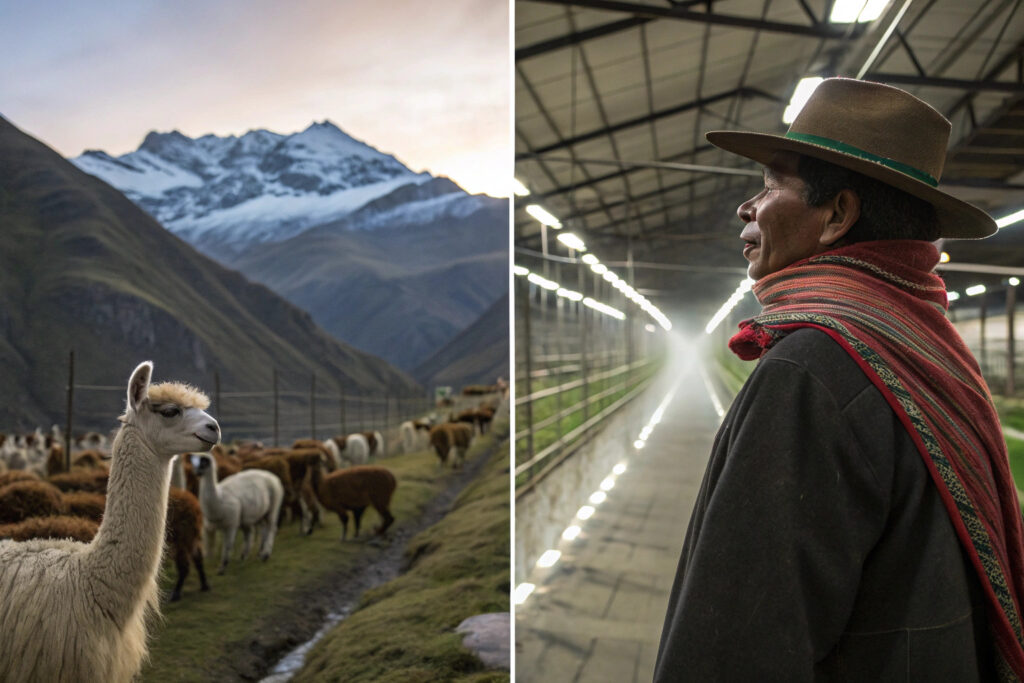
The rarity of Oeko-Tex® certified alpaca scarf hats stems from a fundamental disconnect in the global supply chain. The best alpaca fiber comes from smaller farms and co-ops in Peru and Bolivia, while Oeko-Tex® certification is most common among large, technologically advanced mills in Europe and Asia. Bridging this gap requires a dedicated, complex, and expensive effort.
Think of the journey. The raw fleece is sourced in the Andes. To be certified, it must be processed in a certified mill. This could mean shipping the raw fiber thousands of miles to a facility in Turkey or Portugal that has both the Oeko-Tex® certification and the specialized machinery for delicate animal fibers. Then, that certified yarn must be sent to a certified knitting factory to be made into the final product. Every step must be documented and audited. It's a logistical puzzle that most brands don't have the resources to solve for a single, niche product.
What are the specific hurdles?
- Chain of Custody: To be fully certified, the "chain of custody" must be unbroken. If an uncertified transporter or warehouse handles the yarn, the certification can be voided.
- Cost of Certification: The Oeko-Tex® certification process is expensive. For a small Peruvian co-op, the cost can be prohibitive.
- Specialized Machinery: Spinning and dyeing fine alpaca fiber without damaging it requires different machinery than processing cotton or wool. Not all certified mills have this capability.
- Minimum Order Quantities (MOQs): Certified mills often have high MOQs. A brand might have to commit to buying enough certified alpaca yarn to make 10,000 units, which is a huge risk for a niche product like a scarf hat.
How to make a hat that looks like a scarf?
Start by gathering soft, stretchy yarn in your preferred color—think warm neutrals like cream or deep burgundy for a cozy vibe, or vibrant hues like electric blue or sunny yellow for a playful twist. You'll also need a pair of knitting needles (size 8 US is ideal for medium-weight yarn) and a tape measure to ensure the perfect fit. Begin by casting on 30 stitches, creating a foundation row that will form the base of your hat. Knit every stitch in each row until your piece measures approximately 8 inches in length, then switch to a ribbed pattern: knit one, purl one, repeating this sequence across the row. Continue this ribbing for another 4 inches to add structure and elasticity, which will help the hat stay snug on your head.
The Solution: The Custom Manufacturing Pathway?
Since finding this product ready-made is nearly impossible, the most effective strategy is to have it custom-made. This involves finding a manufacturing partner who can act as a project manager for the entire complex supply chain.
The custom manufacturing pathway involves partnering with a full-service manufacturer who can source Oeko-Tex® certified alpaca yarn from a specialized mill and then produce the scarf hats in their own certified facility. This partner takes on the logistical burden of connecting the disparate parts of the supply chain for you.
This is the service we provide for clients with these kinds of specific, multi-layered requirements. We leverage our relationships with specialized yarn mills around the world. We might source Oeko-Tex® certified Baby Alpaca yarn from a trusted mill in Italy that specializes in noble fibers, like Filpucci. Then, we would have that yarn shipped to our own knitting facility (which also holds certifications) to produce the final scarf hat to the client's exact design specifications. We manage the sourcing, logistics, and production under one roof.
What is the step-by-step process?
- Design & Consultation: You provide the exact design for your scarf hat—the dimensions, the knit pattern, the weight.
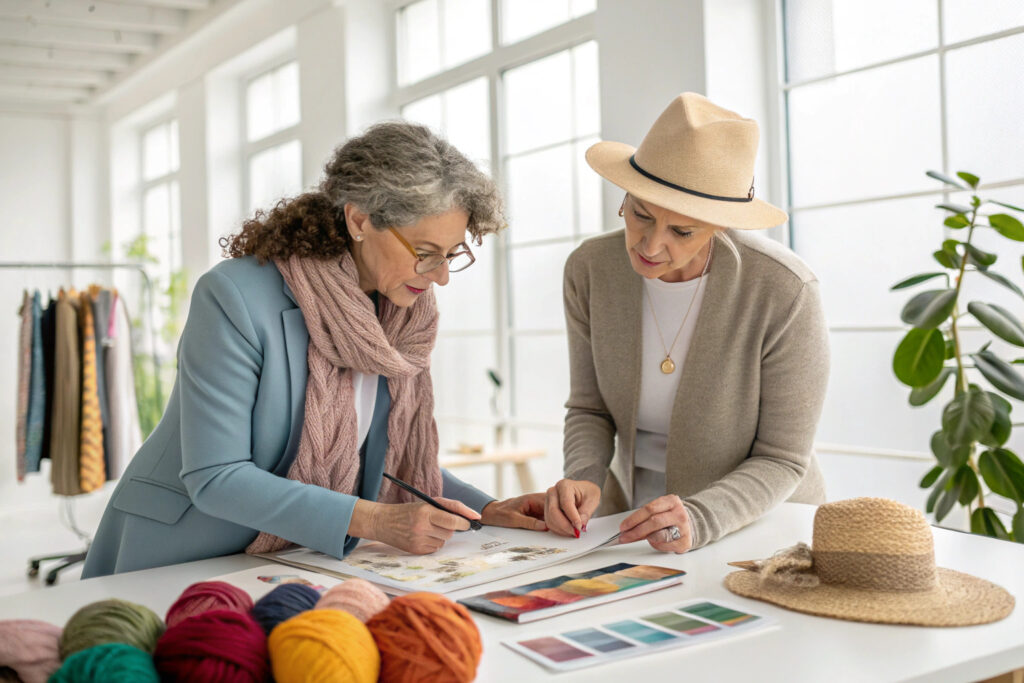
- Yarn Sourcing: Your manufacturing partner identifies a mill that produces Oeko-Tex® certified alpaca yarn in the color and quality you need. They will provide you with yarn cards and samples.
- Lab Dips & Knit-Downs: Once you select a yarn, the partner creates "lab dips" (small swatches of yarn dyed to your desired custom colors) and "knit-downs" (small squares knitted to show the pattern and feel).
- Prototype Sample: Upon approval, a full, finished prototype of the scarf hat is produced for you to inspect and approve.
- Certified Production: Once the prototype is perfect, the bulk production run begins in a facility where the processes are compliant and audited.
What questions should you ask a potential manufacturing partner?
To vet a potential partner for this complex task, ask pointed questions:
- "Can you provide certificates for the specific alpaca yarn you intend to use?"
- "From which country and mill do you source your certified noble fibers?"
- "Is your own knitting and finishing facility Oeko-Tex® certified, or do you work with a certified subcontractor?"
- "What is your process for ensuring the chain of custody for the certified materials?"
A capable partner will have ready, confident answers to all these questions.
What Are the Design Features of a Premium Scarf Hat?
You're investing in a complex sourcing process for a premium product. The design itself must reflect that quality. A great alpaca scarf hat isn't just a hood attached to a scarf; it's an intelligently designed, seamless garment.
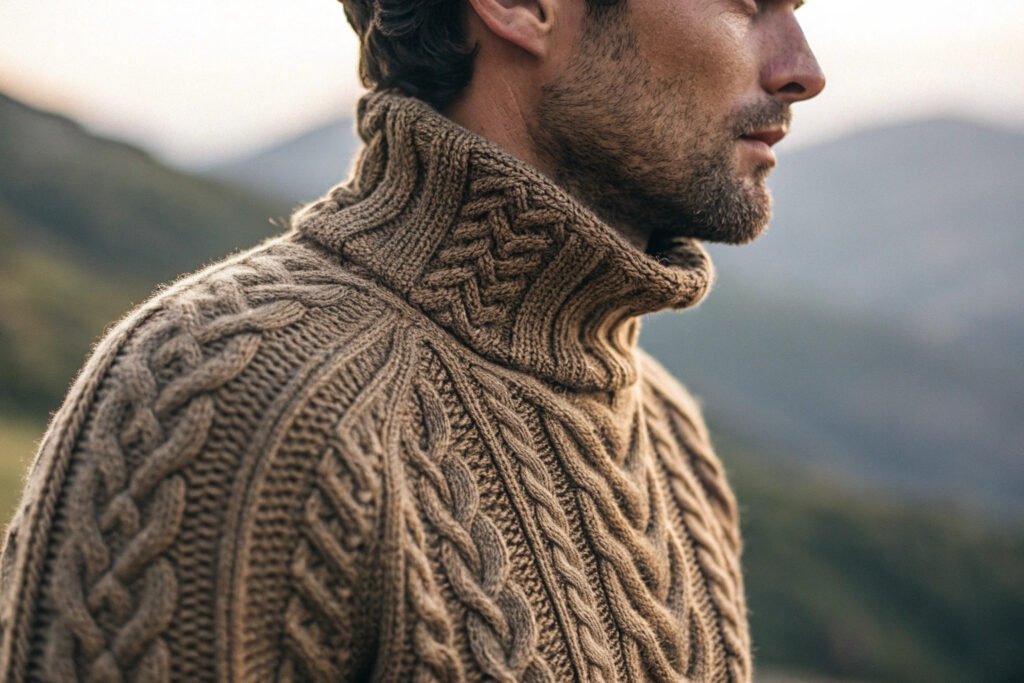
A premium alpaca scarf hat should feature an ergonomic hood shape that doesn't flatten hair, a substantial scarf length for versatile styling, and a high-quality knit structure (like a rib or cable knit) that adds texture, weight, and a sense of luxury.
When we design these for our clients, we focus on the small details that create a luxury experience. We use a finer gauge knit around the face for softness and a heavier gauge for the scarf for a satisfying drape. We might recommend a subtle cable knit pattern that runs continuously from the hood down the length of the scarf, creating a beautiful, cohesive look. These are the design choices that justify the premium material and certification.
What makes a good hood shape?
The hood should be deep enough to be comfortable and provide coverage without being overly large and floppy. It should have a gentle curve at the back, often created with short-row knitting, to conform to the head's natural shape rather than having a pointy, gnome-like seam.
How long should the scarf be?
The scarf portions should be long enough to be wrapped at least once around the neck for warmth, with enough length left over to hang elegantly. A total length of 70-80 inches (175-200 cm) is a good target for a versatile, luxurious feel. The ends can be finished simply or with a classic fringe.
Conclusion
Your search for an Oeko-Tex® certified alpaca scarf hat is a perfect example of the modern luxury market: it demands the highest quality materials, impeccable design, and verifiable proof of safety and ethical production. While finding this product off-the-shelf is a near-impossible task due to the fragmented nature of the global supply chain, it is absolutely achievable through a custom manufacturing partnership. By working with a knowledgeable manufacturer who can navigate the complexities of sourcing certified noble fibers and manage a transparent production process, you can create a truly unique, high-value product that meets the exacting demands of today's conscious luxury consumer.
If you are a brand or designer with a unique vision that requires this level of specialized sourcing and certified production, my team and I are here to build that supply chain for you.
My name is Elaine, Business Director at Shanghai Fumao Clothing, and my email is: elaine@fumaoclothing.com.