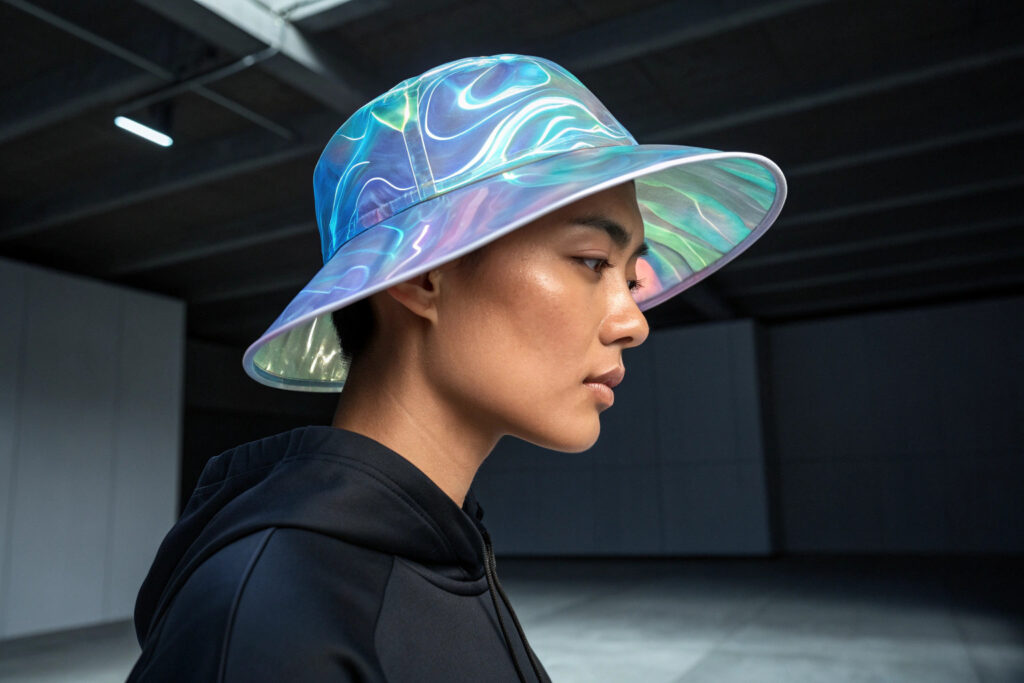
As someone who has built a career on physical hats for over 20 years, the idea of a "digital hat" might seem strange. But the metaverse is the next great frontier, a new world where identity and self-expression are paramount. And just like in the real world, what you wear on your head—even your digital head—makes a statement. The question is no longer if digital fashion is important, but what will be the next big trend.
Looking ahead to 2026, the top metaverse avatar hat trends will be a fusion of impossible physics and deep personalization, driven by advancements in AI and real-time rendering. We'll see dynamic headwear with living textures, reactive hats that change with the metaverse environment, hyper-personalized creations unique to each user, and "phygital" hats that bridge the gap between your real and digital wardrobes.
My company, Shanghai Fumao Clothing, has always been about innovation. We started with textiles and stitching, but our future lies in understanding and even participating in this new digital landscape. The principles of design, identity, and status that sell a baseball cap in the real world are the same ones that will drive the trends for avatar headwear. Let's explore what your digital self will be wearing in 2026.
Will Your Next Hat Be Alive?
Imagine a hat that isn't static. Imagine a beanie knitted from pure energy, with flames that gently flicker and dance. Or a baseball cap where the logo is a looping animation of your favorite GIF. This is the essence of the first major trend for 2026: dynamic and animated headwear. The limitations of real-world physics don't apply here.
In the metaverse, hats will become living objects. We'll see:
- Animated Textures: Instead of a solid color, a bucket hat might feature a surface of gently flowing water or a starfield with twinkling constellations.
- Particle Effects: A fedora could leave a subtle trail of glowing embers as your avatar moves, or a visor might emit a soft, pulsating neon light.
- Transforming Shapes: A simple cap could periodically unfold into an elaborate crown before retracting, adding a layer of performance to your avatar's look.
This trend is all about creating a visual spectacle and a deeper sense of immersion. It turns a simple accessory into a conversation starter. For us as manufacturers, this is a mind-bending shift. We're used to thinking about fabric and thread, but here, the "materials" are particle systems and shaders. It's a new language of design, but the goal is the same: create something that makes people look twice. This is the first step beyond simple digital replicas and into a world of truly impossible fashion.

What technology enables animated hats?
This is primarily driven by real-time 3D rendering engines like Unreal Engine and Unity, which are the foundations of most metaverse platforms. These engines have sophisticated material and particle systems (like Niagara in Unreal or VFX Graph in Unity) that allow creators to design complex, dynamic effects that can be attached to wearable items like hats. As these technologies become more powerful and accessible, the complexity and creativity of animated wearables will explode.
Will these animated hats be distracting?
Potentially, yes. Just like loud clothing in the real world, over-the-top animated hats might be considered distracting in some virtual settings (like a professional meeting). We'll likely see a "digital etiquette" develop. Users will have collections of hats, choosing a subtle, gently glowing beanie for a virtual coffee chat and a full-blown flaming top hat for a digital concert. Platforms may also give users the ability to tone down or disable others' animations to control their own experience, a feature common in many online games today like Final Fantasy XIV.
Can Your Hat React to Your World?
The next evolution of metaverse headwear is intelligence. What if your hat wasn't just animated, but alive and aware of its surroundings? The data-driven trend will see hats that react in real-time to the virtual environment, the user's actions, and even external data feeds.
This turns a hat from a static object into an interactive interface. Imagine:
- Musical Synchronization: A snapback where the graphic pulses and changes color in perfect time with the music at a virtual concert.
- Environmental Reaction: A sun hat that subtly glows brighter as you enter a dark cave in a metaverse game, acting as a personal light source.
- Social Indicators: A beanie that emits a soft, warm glow when you're in a conversation with a friend, or displays a "busy" icon when you're in a meeting.
- Real-World Data Integration: A cap that displays a live, stylized visualization of a stock's performance or the current weather in your real-world city.
This trend transforms headwear into a form of functional expression. It provides information and enhances the user's connection to the digital world. For a company like ours, this is where our thinking has to expand from "design" to "user experience." How can a hat provide utility? How can it deepen a user's immersion? This is a step beyond aesthetics and into the realm of true personalization.

How would a hat connect to real-world data?
This would be accomplished through APIs (Application Programming Interfaces). A metaverse platform could allow creators to link their digital assets to public APIs from services like AccuWeather for weather data or Coinbase for cryptocurrency prices. The hat's code would then fetch this data and translate it into a visual change, creating a live, dynamic link between the real and virtual worlds.
Is this a privacy concern?
It certainly can be. If a hat reacts to a user's biometric data (like heart rate from a smartwatch) or social interactions, there are significant privacy implications. Metaverse platforms will need to have robust privacy controls, allowing users to explicitly grant or deny access to their data on an item-by-item basis. Organizations like the Electronic Frontier Foundation (EFF) are already actively discussing the need for strong privacy frameworks in the metaverse to protect users from intrusive data collection.
What if You Could Design a Hat With Your Mind?
While the first two trends are about what creators can make, this next one is about what users can create. By 2026, generative AI will be so advanced and integrated into metaverse platforms that every user will be able to become a designer. You won't just buy a hat; you'll create one by describing it.
Imagine opening a design interface and simply typing or saying: "Design me a beanie that looks like it's made from nebulas, with my initial 'J' subtly woven in as a star constellation." An AI would instantly generate several unique, high-quality 3D models for you to choose from and tweak. This is hyper-personalization at its peak. It means no two avatars will ever have to look the same. This trend will empower users to express their unique identity in a way that's impossible with mass-produced physical goods.
This is perhaps the most disruptive trend for a traditional manufacturer like me. Our business is built on producing many copies of a single design. In this new paradigm, the value shifts from manufacturing to providing the tools for creation. The "brand" might not be the hat itself, but the AI design tool that helps you create it. This could lead to a future where companies like Shanghai Fumao Clothing license our design expertise to AI models or create curated "style packs" that influence the AI's output, bridging our legacy of design with the future of digital ownership.

What is "generative AI" in this context?
This refers to AI models like DALL-E 3, Midjourney, or more advanced future versions that are specifically trained to generate 3D models (3D generative AI). Companies like Luma AI are already making huge strides in this area. By 2026, these tools will likely be sophisticated enough to create high-quality, "game-ready" 3D assets from simple text prompts, complete with textures and basic animations.
Will this eliminate the job of a digital designer?
Not necessarily, but it will change it. The role of a designer will shift from manual creation to curation, prompt engineering, and system design. Designers will be the ones who build and train the AI models, create the foundational style guides, and work on the high-end, "couture" digital items that require a human touch. It's a shift from being a digital artisan to being a creative director for an AI, a topic frequently discussed on creative technology platforms like Ars Technica.
Can Your Wardrobe Exist in Two Worlds at Once?
The final major trend for 2026 is the one that most directly connects my world of physical hats to the digital one. "Phygital" (a blend of physical and digital) products will become commonplace. When you buy a high-end, physical hat from a brand, you will also receive a digital version for your avatar, authenticated as an NFT (Non-Fungible Token).
This creates a powerful bridge between your real-life identity and your digital one. The NFT serves as a verifiable certificate of ownership. It proves that your digital hat isn't a cheap copy; it's the official counterpart to a real-world item. This creates scarcity and value in the digital realm. Imagine:
- Limited Edition Drops: A famous designer releases only 100 physical caps. The 100 owners also get the exclusive digital version, making it a status symbol in the metaverse.
- Unlocking Experiences: Owning the NFT for a specific hat might grant you access to exclusive virtual events, clubhouses, or game content.
- A Unified Wardrobe: Your closet becomes a seamless collection of physical and digital items, allowing you to coordinate your look across realities.
This is the trend where traditional manufacturers like Shanghai Fumao Clothing have a clear and immediate role. We can produce the high-quality physical item that anchors the entire phygital experience. By partnering with metaverse platforms and blockchain experts, we can help brands create these unified products, ensuring the physical hat is as well-crafted as its digital twin.

What is the real value of an NFT hat?
The value comes from verifiable ownership and scarcity. In a world where digital files can be copied infinitely, an NFT provides a way to prove you own the "original" or an official version of an item. This creates a market for collecting and trading, just like with physical sneakers or baseball cards. As explained by tech journals like WIRED, the NFT acts as a digital deed, and its value is determined by what the community is willing to pay for that status.
Which brands are already doing this?
Several major brands have already experimented with phygital products. Sportswear giants like Nike (with their .SWOOSH platform) and Adidas have released NFT projects linked to physical merchandise. These early experiments are paving the way for what will likely be a standard feature for premium products by 2026.
Conclusion
The world of metaverse fashion is evolving at an incredible speed. By 2026, avatar headwear will be far more than a static accessory. It will be dynamic, intelligent, deeply personal, and connected to our physical lives. From animated, living hats to AI-generated creations and NFT-linked phygital twins, the trends point to a future where our digital identity is as rich and nuanced as our real one.
For a veteran of the physical manufacturing world, this is both daunting and exhilarating. It's a call to innovate, to learn a new language of design, and to find our place in this new economy. The future of hats, it seems, is not just on our heads, but also in the cloud.
If your brand is looking to navigate this new frontier and explore creating either high-quality physical anchors for a phygital strategy or simply wants to produce the best hats here in the real world, my team is ready to help. We have the manufacturing excellence and forward-thinking vision to be your perfect partner. Contact our Business Director, Elaine, at her email: elaine@fumaoclothing.com to discuss how we can build the future together.