"The sample was perfect, but the bulk order has inconsistent stitching and the logo is slightly off-center on some pieces." This is a nightmare scenario for any buyer, and a conversation I've worked tirelessly to avoid for over 20 years. As a hat manufacturer, I know that the difference between a one-time order and a long-term partnership lies in one word: consistency.
The biggest pain point for buyers like Ron is the fear of inconsistency in mass production. It's the risk that the 10,000th cap won't have the same quality as the first approved sample. This fear is justified if a factory doesn't have a robust, multi-stage Quality Control (QC) process. Without strict standards, small errors compound, leading to a shipment riddled with defects that damage brand reputation and erode profits.
At shanghai Fumao Clothing, quality isn't a final step; it's a philosophy embedded in our entire production line. We've built our reputation on delivering consistency, and that is only possible through a comprehensive set of inspection standards that are rigorously enforced at every stage. In this article, I will share the essential QC standards we follow, giving you an insider's look at how a high-quality baseball cap is truly made.
What Are the Standards for Raw Material Inspection?
The quality of a finished cap can never exceed the quality of the materials used to make it. The QC process must begin before a single stitch is sewn. Approving a production run based on a sample made with premium fabric, only to have the factory substitute a cheaper material for the bulk order, is a classic and costly bait-and-switch.
This is a huge risk for buyers. A fabric that looks similar to the naked eye might have poor colorfastness, causing it to fade quickly, or it might have a lower thread count, making it less durable. A plastic snap that feels fine initially might become brittle and break after a few uses. These latent defects are time bombs that can lead to widespread customer dissatisfaction months after the product launch.
Our first quality gate is a strict incoming materials inspection. Every roll of fabric, every batch of thread, every box of closures is scrutinized against the approved technical specifications before it's allowed onto the production floor. This prevents defects at the source.
How do you inspect fabric for quality?
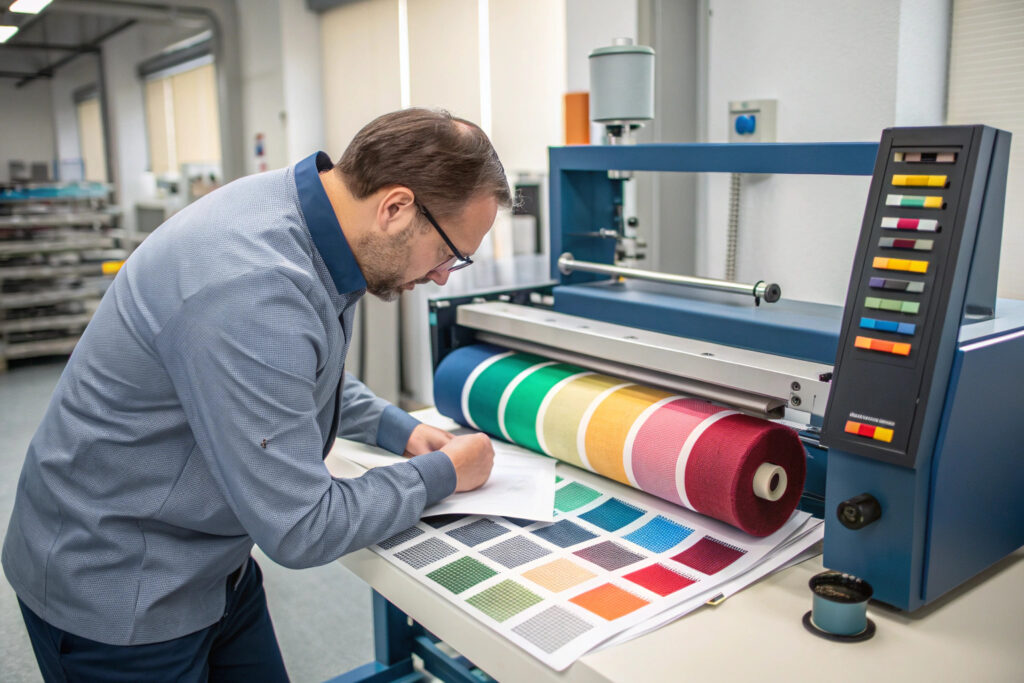
When a roll of fabric arrives, we check it against the master sample and tech pack for several key criteria. First is color consistency. We use a lightbox with standardized D65 lighting and a spectrophotometer to ensure the color matches the approved Pantone shade precisely, both across the roll and between different dye lots. Second, we check for defects: slubs, snags, stains, or inconsistencies in the weave. Third, we verify the weight (GSM) and composition to ensure it's the exact material that was ordered. For performance fabrics, we may also conduct tests for colorfastness to washing and light, as outlined by standards from organizations like the AATCC (American Association of Textile Chemists and Colorists).
What about hardware and trims inspection?
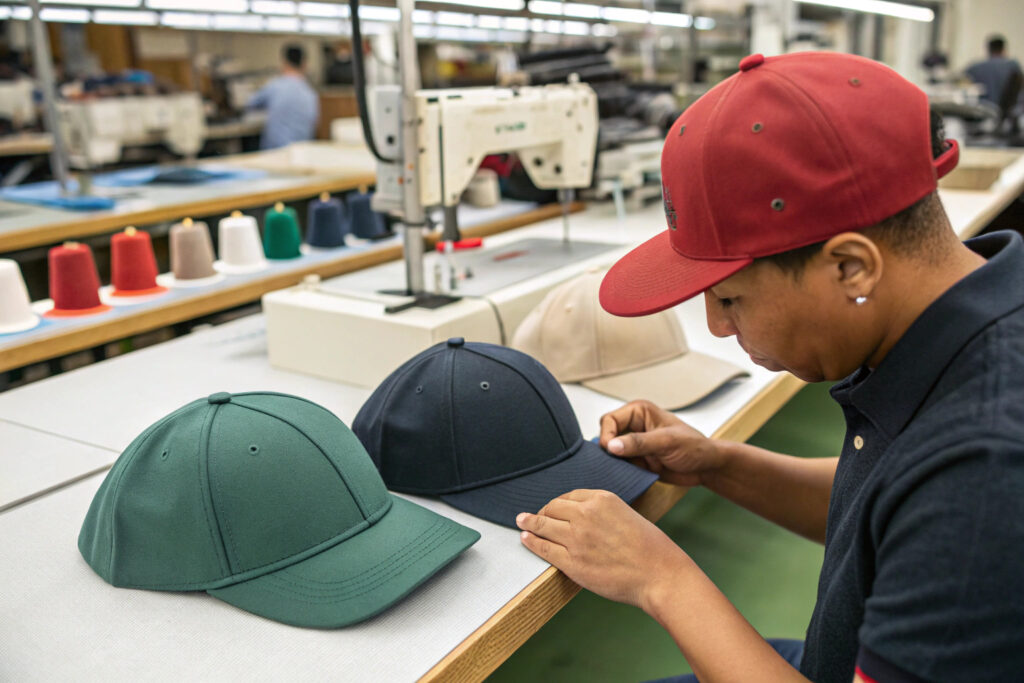
Every component is inspected. For snapback closures, we check for sharp edges (flashing) from the molding process and perform repeated snap/unsnap tests to ensure durability. For metal buckles on strap-backs, we check the plating for consistency and test for corrosion resistance. Thread is checked for color match and tensile strength. Even the buckram used to structure the front panels is inspected for correct stiffness and to ensure the adhesive will bond properly without bubbling. This meticulous inspection of every single component is a core principle of robust manufacturing quality systems, such as ISO 9001.
What Are In-Process Quality Control (IPQC) Checkpoints?
Once materials are approved, the cap begins its journey through cutting, embroidery, and assembly. Waiting until the end to inspect the finished product is a recipe for disaster. If an error is made at an early stage, like an embroidery machine being misaligned, inspecting only at the end means you could have thousands of defective caps before the problem is caught.
The pain point here is massive waste and significant delays. A factory without in-process checks is a high-risk partner. They are essentially gambling that everything will come out right at the end. This reactive approach is inefficient and costly, and those costs are often passed on to the buyer in the form of missed deadlines and inconsistent quality.
At shanghai Fumao Clothing, we implement several critical In-Process Quality Control (IPQC) checkpoints. We have dedicated QC staff who patrol the production lines, pulling items at random at key stages to check them against the specifications. This proactive approach allows us to catch and correct deviations in real-time.
What is checked after cutting and embroidery?
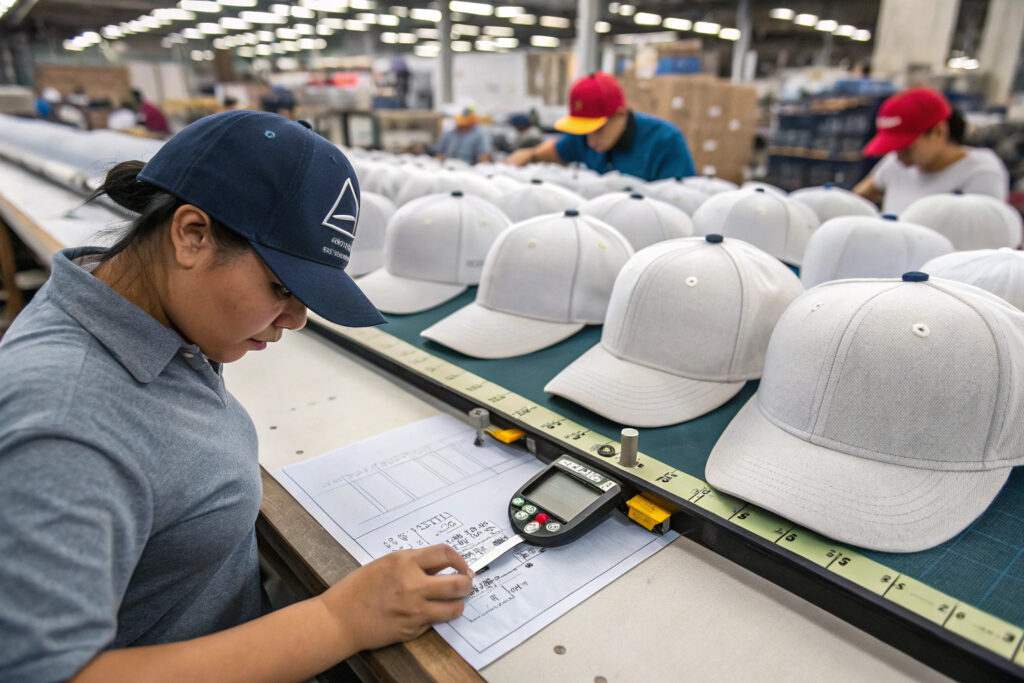
The first IPQC happens right after the fabric panels are cut. We overlay the cut panels on a master pattern to ensure dimensional accuracy. A deviation of even a few millimeters here can throw off the fit of the entire cap. After the front panels are embroidered or screen-printed, we conduct the second check. We measure the logo placement against the tech pack's specifications to the millimeter. We check for embroidery quality: thread tension, density, and any puckering of the fabric. This early check is crucial, as a logo is a core part of a brand's identity, and its execution must be perfect, a standard emphasized in the field of brand management.
What assembly checkpoints are crucial?
During assembly, we have several checkpoints. One key point is after the brim is attached to the crown. We check that it is perfectly centered and that the stitching is straight and uniform. Another critical check is during the sweatband installation. We ensure it is sewn in smoothly, without any twisting, and with a consistent stitch length. Our line supervisors are trained to be the first line of defense, empowered to stop the line if they see a deviation. This concept of empowering workers to control quality at the source is a key principle of lean manufacturing, as pioneered by the Toyota Production System.
What Does the Final Product Inspection Entail?
This is the final gate before the products are packaged. The final inspection is a comprehensive, systematic review of the finished cap to ensure it meets all specifications before it is approved for shipment. This is the last chance to catch any defects that may have slipped through the in-process checks.
The buyer's biggest fear is that this final step is rushed or skipped entirely. A factory that is behind schedule might be tempted to pack and ship products without a thorough final review, hoping the buyer won't notice the defects. This is a breach of trust and a sign of a poor manufacturing partner.
Our final inspection is a non-negotiable step, conducted by a dedicated QC team that is separate from the production staff. They follow a standardized procedure based on the AQL (Acceptable Quality Limit) standard. AQL is a statistical method used to determine the number of units to inspect from a batch and the maximum number of defects allowed.

What is AQL and how is it used?
AQL is an international standard for product inspection, detailed in ISO 2859-1. It provides a framework for random sampling. For example, for a batch of 5,000 caps, we might use AQL 2.5, which dictates we inspect a random sample of 200 caps. If we find more than 10 "major" defects or 14 "minor" defects, the entire batch is rejected and sent back for 100% re-inspection and rework. This statistical approach provides a reliable measure of the entire batch's quality without having to inspect every single piece. It's a system trusted by professional third-party inspection services worldwide.
What specific points are checked in the final inspection?
The final inspection is exhaustive. We check for:
- Symmetry and Shape: Does the cap sit straight on a head form? Is the crown symmetrical? Is the brim centered?
- Stitching Quality: We look for skipped stitches, loose threads ("untrimmed threads"), and inconsistent stitch density.
- Cleanliness: We check for any stains, dirt, or oil marks from the production process.
- Functionality: We test snaps, buckles, and any other adjustable parts.
- Labeling and Trims: We verify that the internal brand labels, care labels, and any external hangtags are correct and properly attached.
- Overall Appearance: This is a final check for any cosmetic flaws that would make the product unsellable.
What Are the Standards for Packaging and Shipping?
The QC process doesn't end when the hat is made. A perfect product can be ruined by poor packaging and rough handling during shipping. A buyer's final frustration point is opening a shipping carton to find beautifully made caps that have been crushed, creased, or damaged in transit.
This final step is often overlooked by factories trying to save money on packaging materials. Using flimsy shipping cartons, not providing enough internal support for the caps, or exposing the cartons to moisture can lead to a significant percentage of the order being damaged upon arrival. This can be a major financial loss for the buyer.
Our packaging standards are designed to protect the product all the way to the customer's warehouse. We view packaging as an extension of the product itself and a critical part of our quality promise.
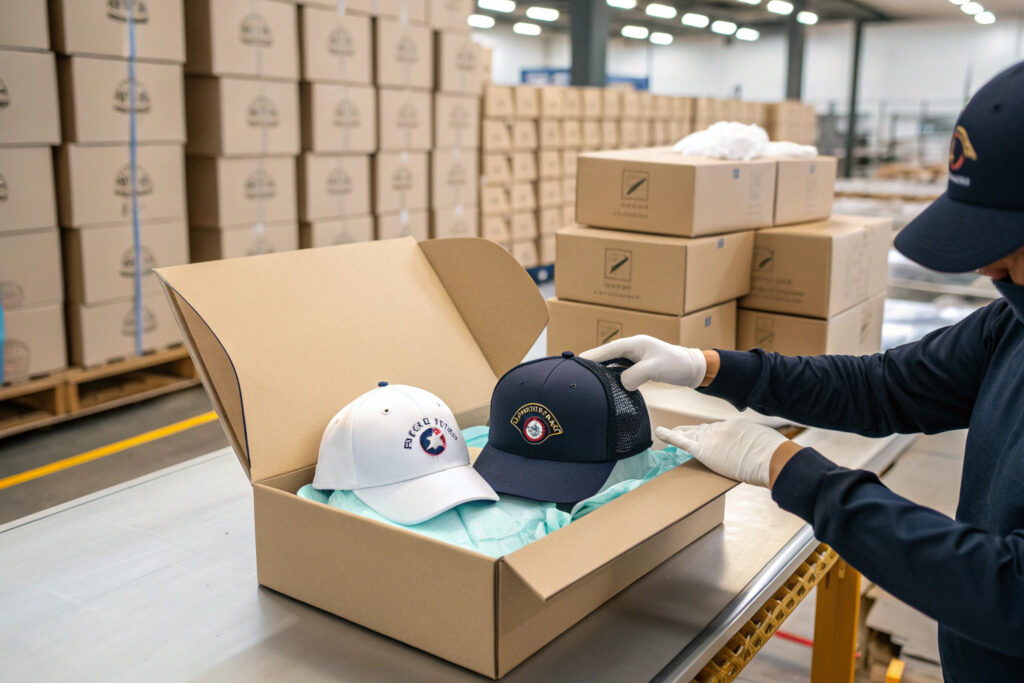
How should caps be packed to prevent crushing?
Individual caps should be packed with a cardboard or plastic insert inside the crown to help maintain their shape. They should then be placed in individual polybags to protect them from dirt and moisture. For packing into the main shipping carton, we use several methods. We can stack them carefully, or for premium products, we use custom internal dividers within the carton. The goal is to prevent the weight of the caps on top from crushing the ones at the bottom. The principles of protective packaging are crucial here to ensure products arrive in pristine condition.
What makes a shipping carton export-worthy?
The outer shipping carton must be robust. We use a 5-ply or 7-ply corrugated cardboard carton for all our exports. A weaker 3-ply carton is simply not strong enough to withstand the rigors of international shipping. The carton should be sealed securely with high-quality packing tape, and all seams should be covered. We also ensure cartons are clearly labeled with all necessary shipping marks, including handling instructions (e.g., "Keep Dry"). Finally, we conduct a "carton drop test" on a random carton to simulate rough handling and ensure its integrity. This final step ensures the quality we worked so hard to create is delivered safely into our clients' hands.
Conclusion
A comprehensive quality inspection plan is the backbone of reliable baseball cap production. It is a multi-stage process that begins with a rigorous inspection of all raw materials and continues with critical in-process checkpoints to catch errors as they happen. This is followed by a systematic final product inspection based on global standards like AQL, ensuring every cap meets the approved specifications. Finally, robust packaging and shipping standards protect the product until it reaches its final destination.
Following these four pillars of quality control is the only way to move from producing a single good sample to consistently delivering thousands of perfect caps. It's the foundation of trust between a buyer and a manufacturer.
If you are looking for a manufacturing partner who is as obsessed with quality and consistency as you are, my team at Global-Caps is ready to show you how we put these principles into practice every day.
Please contact our Business Director, Elaine, at elaine@fumaoclothing.com to learn more about our quality assurance processes and to start your next project with confidence.