When suppliers and retailers think about uniforms for major theme parks like Universal Studios, the conversation often turns to hats. These aren't just accessories; they are crucial parts of the brand storytelling and guest immersion. You might be wondering: what specific hat styles do they use, and what goes into designing and manufacturing them? The answer reveals a sophisticated intersection of narrative, practicality, and strict quality control.
The top hat styles for Universal Studios staff are not publicly detailed in a single catalog but are defined by highly themed, character-driven designs that vary by park area. These can range from wizard's caps in a magical land to sleek, futuristic visors in a sci-fi zone. Their design is governed by core principles: immersion (seamlessly fitting the story), durability (withstanding daily guest interaction), and compliance (meeting detailed safety and appearance standards). As a manufacturer, we understand that producing these hats requires more than just following a sketch; it demands a deep understanding of functional fabrics, precise branding application, and rigorous production consistency to meet the park's exacting operational demands.
Understanding these principles is key for any business looking to supply this niche market. It's a field where creativity meets uncompromising technical specifications.
What are the most common hat styles for theme park staff?
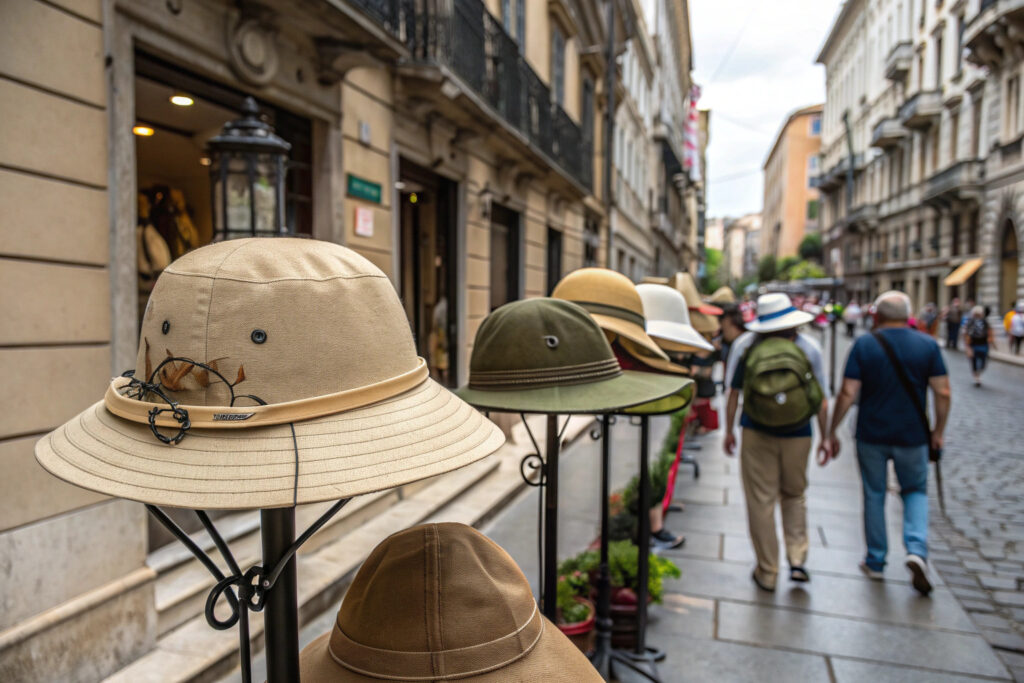
The common hat styles are dictated by the story each park area tells. Unlike a standard corporate baseball cap, these hats are custom-designed to be visual anchors for their themed environments. Think of them as wearable set pieces. A team member in The Wizarding World would wear something entirely different from a team member in a classic Hollywood backlot area.
This specialization means the most common "style" is actually bespoke theming. The goal is to eliminate the feeling of a "uniform" and instead create the illusion of authentic attire from that fictional world. This can encompass a vast range: from structured caps and berets for a European streetscape, to wide-brimmed explorer hats for a jungle adventure zone, to character-specific headpieces that match iconic IP. The style is always in service to the location and narrative.
How does the design process for themed hats work?
The process begins long before a hat is sewn. It starts with deep creative collaboration between the park's thematic designers and the manufacturing partner. We don't just receive a technical drawing; we engage in discussions about the character's role, the materials that would exist in that world, and how the hat needs to function for the staff member wearing it for 8-12 hours. For example, a hat for a outdoor greeter role requires different UV protection and breathability considerations than one for an indoor attraction operator. This phase involves creating multiple prototype samples to refine the shape, weight, and decorative elements like pins, badges, or embroidery.
What materials are typically used in production?
Material selection is critical for balancing aesthetics with the demands of daily park operation. Common fabrics include:
- Durable Cotton Twills and Blends: For structured caps and baseball-style hats, offering shape retention and easy cleaning.
- Felt and Wool: Used for softer, more classic styles like berets or certain character hats, providing a specific texture and drape.
- Performance Synthetics: Fabrics with moisture-wicking, stain-resistant, or quick-dry properties are increasingly used for comfort, especially in outdoor queues.
- Specialty Trims: This is where detail shines. Custom embroidered patches, specific dye-lot ribbons, authorized hat pins, and unique buttons are all sourced or created to exact specifications. The hardware, like the keeper and screw/post for a hat pin, must be both secure for safety and aesthetically precise.
How do park uniform standards influence hat design?
Park uniform standards transform hat design from a purely creative endeavor into a technical compliance project. Theme parks operate with military-like precision regarding employee appearance, often referred to as maintaining the "show." A hat is a major part of that show and must adhere to strict, codified guidelines that cover every visual and functional aspect.
These standards ensure that every team member, from any angle, at any time of day, presents a consistent and believable character to guests. The rules cover fit (how it sits on the head, brim elevation), condition (immaculately clean, no fading), and how it integrates with the rest of the uniform (e.g., hair must be contained, no personal adornment interfering). For manufacturers, this means building hats to incredibly tight tolerance levels and providing clear care instructions to maintain the hat's appearance over its lifespan.
What are the key rules for on-stage appearance?
The rules are exhaustive to preserve the immersive experience. They often mandate:
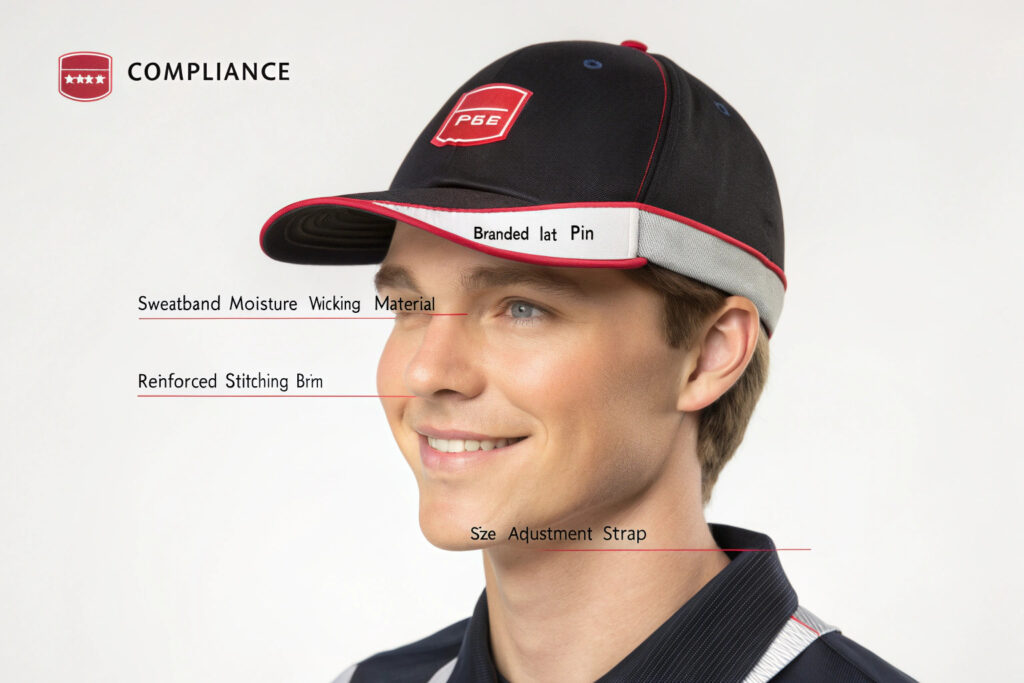
- Precise Positioning: Hats must be worn level on the head, not tilted back or to the side, with the brim at a specified height above the eyebrows.
- Branding Consistency: Any logos, patches, or pins must be the officially approved version and placed in the exact millimeter-perfect location. For instance, a policy might state that a hat pin shall be placed along the left side of the crown...centered horizontally from front to back.
- Grooming Integration: The hat must work with strict grooming standards, such as ensuring long hair is completely tucked up and not visible, or that facial hair (if allowed) fits within the hat's silhouette.
- Condition: Zero tolerance for wrinkles, stains, scuffs, or loose threads. The hat must look new for its entire service life.
How do durability and safety requirements shape the hat?
Durability and safety are engineered into the hat from the first sample. Requirements include:
- Reinforced Stress Points: Double or triple stitching at the crown join, brim base, and any strap attachments to withstand constant handling.
- Secure Attachments: Any decorative element, like a badge or feather, must be attached so it cannot be pulled off by a guest, often requiring both stitching and adhesive. The specifications for a hat pin, for example, detail the secure attachment to a keeper and screw/post.
- Material Safety: Fabrics must often be flame-retardant treated and use non-toxic dyes. Internal headbands should be hypoallergenic and absorbent.
- Weather Resistance: For outdoor roles, hats may need water-repellent coatings or UV degradation resistance to maintain color and integrity under constant sun exposure.
What are the biggest challenges in manufacturing these hats?
Manufacturing hats for a major theme park is one of the most demanding projects in the headwear industry. The challenges are multifaceted, blending the high-volume precision of uniform manufacturing with the custom detail work of theatrical costume production. The biggest hurdle is achieving absolute consistency across thousands of units while executing complex, often hand-finished details that are not typical of standard cap production.
Another significant challenge is managing the supply chain for the many unique components specified by the park. A single hat might require a custom-woven label, a specific metal pin from an authorized vendor, and a fabric available from only one mill. Synchronizing these elements so they arrive in the factory simultaneously for assembly is a complex logistical puzzle. Furthermore, the quality control (QC) standards are exceptionally high, with parks often conducting pre-shipment inspections where a minor stitching deviation or a slight color mismatch can result in the rejection of an entire batch.
How do you ensure color and detail accuracy at scale?
This is where technical rigor meets artistry. The process involves:
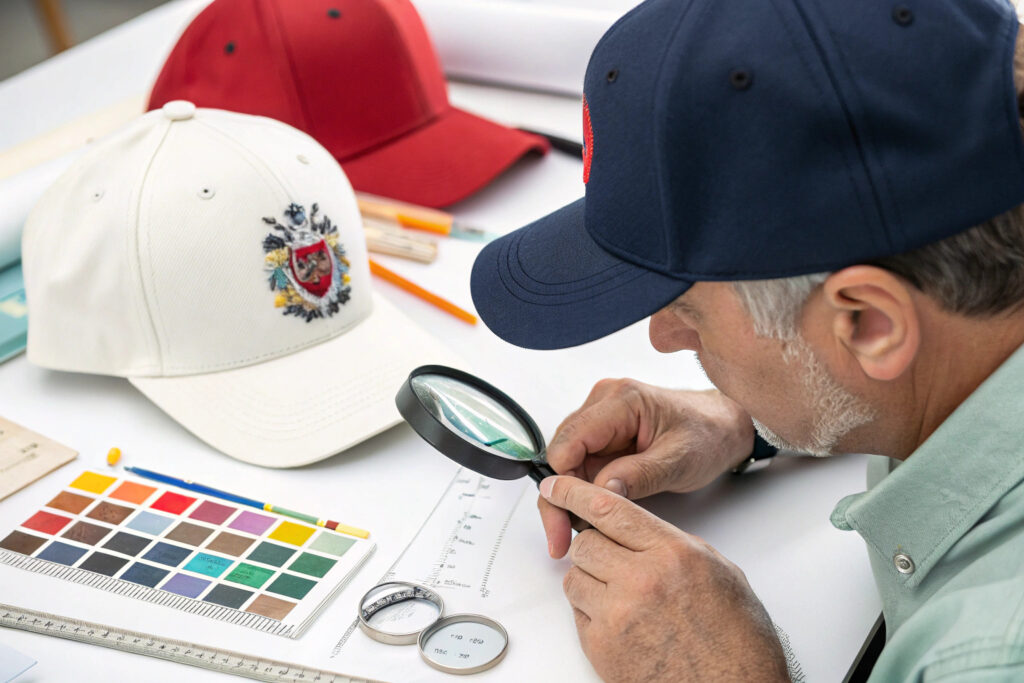
- Official Color Standards: Parks provide physical Pantone (PMS) swatches or lab-dipped fabric approvals. We maintain a controlled lighting booth to check all incoming materials against these standards.
- Approved Trim Sourcing: We work with the park's list of approved vendors for specialized items like custom hat pins, leather bands, or specific buttons to guarantee authenticity.
- Digital and Physical Prototyping: We use both digital prints and hand-made samples to get sign-off on every decorative element—the stitch density of embroidery, the sheen of a ribbon, the exact placement of a patch—before full production begins.
How do you manage rigorous park quality control audits?
Passing a park QC audit requires a documented, process-driven approach. We prepare by:
- Creating a Master Approval Sample: This sample, signed off by the park, is locked away as the absolute standard for every unit produced.
- Implementing In-Line Checks: Our own QC teams perform checks at every stage of production (fabric cutting, panel sewing, decoration, assembly, finishing) rather than just at the end.
- Conducting Pre-Audit Inspections: We perform a 100% inspection on a pilot run of hats, using the park's own checklist, to identify and correct any potential issues before the official audit. This includes checking for the precise placement of items like a hatband...placed around the base of the crown, flush with the brim.
What should a buyer look for in a hat supplier for themed uniforms?
Choosing the right hat supplier for a themed uniform program is a strategic decision that impacts brand integrity, operational efficiency, and long-term cost. Buyers should look beyond basic manufacturing capability and seek a partner that understands the unique intersection of storytelling and technical specification. The ideal supplier operates more like a costume atelier with industrial capabilities, not just a cap factory.
Key differentiators include a proven track record with complex trim and decoration, transparent and resilient supply chain management, and a proactive quality assurance philosophy. The supplier should ask detailed questions about the character's backstory, the operational environment (sun exposure, indoor/outdoor, guest interaction level), and the park's specific laundry and maintenance procedures. They should provide comprehensive material documentation and be willing to navigate the stringent compliance required for items like officially authorized hat pins or branded components.
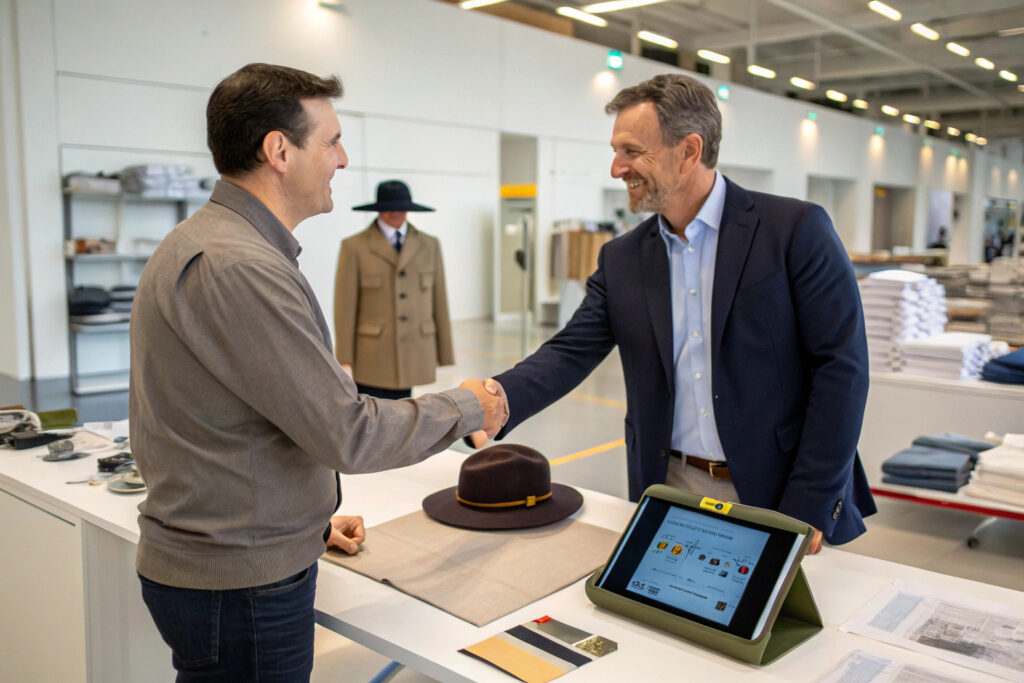
What are the essential capabilities of a qualified supplier?
| A qualified supplier must demonstrate expertise in: | Capability Category | Specific Requirements & Examples |
|---|---|---|
| Technical Design & Sampling | Ability to translate concept art into a functional, reproducible product. Expertise in creating multiple prototypes for fit and approval, handling complex pattern grading for size runs, and advising on material substitutions without sacrificing aesthetics. | |
| Material & Trim Sourcing | Established network to source or produce custom trims (woven labels, custom buttons, specific metallic threads) and the diligence to use only park-approved vendors for regulated items. | |
| Quality Systems | Documented QC processes aligned with international standards. Facilities for colorfastness, shrinkage, and durability testing. A culture of "right first time" manufacturing to pass strict client audits. | |
| Logistics & Compliance | Experience with labeling, packaging, and documentation for international shipping. Understanding of legal compliance for textiles and accessories in the destination country. |
Why is partnership approach more important than a transactional one?
Themed uniform programs are long-term commitments with seasonal updates, character additions, and repair/replacement needs. A transactional vendor sells you a hat; a partner ensures the success of your uniform program. This means:
- Collaborative Problem-Solving: When a material becomes unavailable, a partner works with you to find a compliant alternative, not just cancel the order.
- Value Engineering: A good partner can often suggest construction methods that reduce cost without compromising the look or durability, based on their production expertise.
- Long-term Support: They maintain production records and trims inventory to enable repeat orders or small-batch reorders years later, ensuring perfect color and detail matching for new hires.
Conclusion
Supplying hat styles for Universal Studios and other major theme parks represents the pinnacle of custom headwear manufacturing. It demands a fusion of creative interpretation, meticulous attention to thematic detail, and industrial-grade precision in production and compliance. From the initial design rooted in immersive storytelling to navigating the strictest uniform standards and quality audits, success hinges on a deep, partnership-oriented approach. It's about co-creating not just a product, but a vital piece of the guest experience that must perform flawlessly, day in and day out, under the most demanding conditions.
If your business is looking to develop or source high-quality, themed uniform hats that meet the exacting standards of the entertainment or hospitality industry, our expertise is at your service. For a partnership that prioritizes precision, narrative authenticity, and reliable execution, contact our Business Director Elaine to discuss your project at elaine@fumaoclothing.com.