
As a hat manufacturer shipping to over 100 countries, one of the most frequent and critical conversations I have with new clients revolves around sizing. A client from America might ask for a batch of size "7 1/2" baseball caps, while another from France requests "59" for their bucket hats. To a newcomer, it can seem like a confusing, inconsistent mess. Why isn't there just one universal standard?
This confusion is a major pain point for buyers. Ordering thousands of hats only to find they don't fit your target market is a costly mistake. The truth is, hat sizing is a remnant of regional history, with different parts of the world developing their own systems based on local units of measurement and traditions. Understanding these differences isn't just technical trivia; it's fundamental to successfully selling hats on a global scale.
At Shanghai Fumao Clothing,, we've become experts in navigating this complex landscape. We've created conversion charts, developed multi-size solutions, and guided countless clients through the process of choosing the right size scale for their brand. In this article, I'll demystify the world of hat sizing. We'll break down the major regional standards, show you how they compare, and give you the practical knowledge you need to order your next shipment with confidence.
How Do US and UK Hat Sizes Differ?
It's a classic sourcing headache: you've approved a sample based on a "Medium" size, but when the bulk order arrives, the fit is slightly off for your primary customer base. You check the specs, and everything seems right, but the hats just don't feel the same. This frustrating experience often comes down to a tiny but crucial difference between US and UK sizing standards.
While both systems are based on inches, they aren't identical. It's a common misconception that they are interchangeable, but this small variance can lead to significant fit issues and customer complaints. For any brand selling in both markets, or sourcing from a factory that serves both, understanding this distinction is non-negotiable.
The core of the issue lies in a slight difference in the formula used to calculate the size from the head's circumference. It’s a historical quirk that has persisted into the modern era. As a manufacturer, we have to be incredibly precise about which system a client is referring to. Let's dive into the specifics so you can see exactly how this plays out.
What is the basis for US hat sizing?
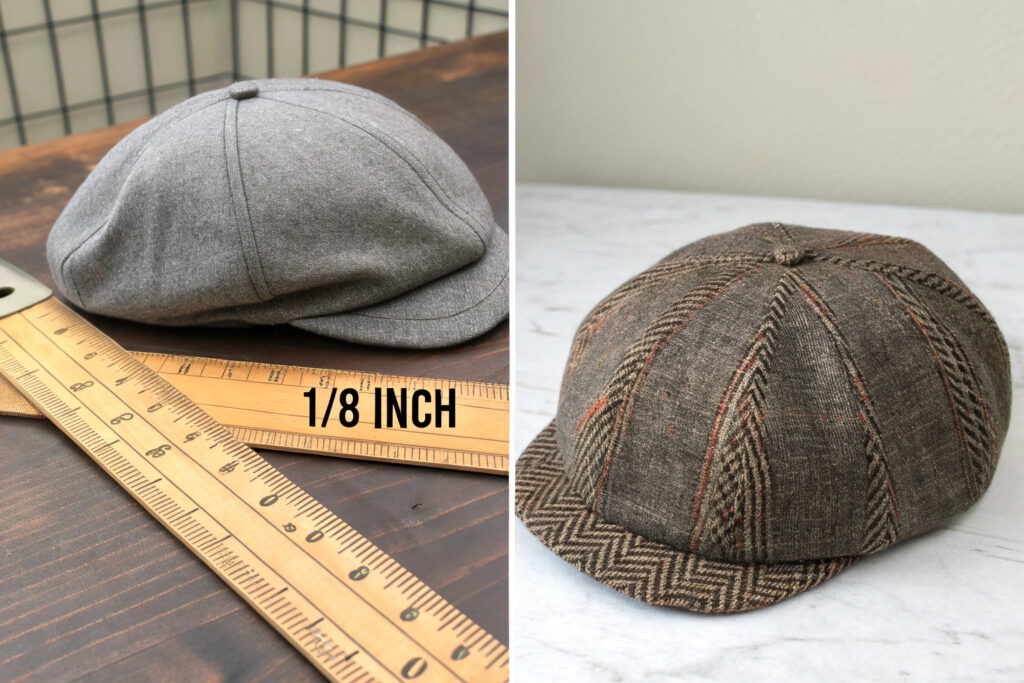
US hat sizing is derived from the diameter of the head in inches. The formula is simple: you take the circumference of the head in inches and divide it by Pi (≈3.14) to get the diameter. For example, a head with a circumference of 23.5 inches would be a US size 7 1/2 (23.5 / 3.14 ≈ 7.48). Sizes are typically marked in 1/8 inch increments (e.g., 7 1/4, 7 3/8, 7 1/2). This system is logical but requires a conversion from a direct circumference measurement. For a deep dive into measurement standards, organizations like the American National Standards Institute (ANSI) provide context on how such systems are maintained. This method is the standard for fitted caps in the United States, a key market for many of our clients at Shanghai Fumao Clothing,. Understanding this is crucial for anyone targeting American consumers, as detailed in market research by publications like Apparel Resources.
How is UK hat sizing different from the US standard?
The UK system is where the subtle but critical difference comes in. While it's also based on the head's diameter in inches, the UK size is consistently 1/8 of an inch smaller than the US size for the same head. For instance, a head that is a US size 7 1/2 would be a UK size 7 3/8. This is because the UK standard historically used a slightly different calculation. It's a small variance, but it's enough to make a hat feel too tight or too loose. When a client provides a size, one of our first questions is, "Are you using US or UK specifications?" This precision prevents costly errors. This type of regional variation in standards is common across many industries, as documented by the British Standards Institution (BSI). For brands operating in the UK, adhering to this local standard is essential for customer satisfaction, a point often emphasized by UK-based fashion trade bodies like the UK Fashion & Textile Association (UKFT).
What is the European Hat Sizing Standard?
If you've ever felt frustrated by the fractions and calculations of the US and UK systems, you'll appreciate the beautiful simplicity of the European standard. There are no formulas to remember, no diameters to calculate. The European system is straightforward, logical, and based on a direct measurement that anyone can understand.
This directness is a huge advantage in the global market. It eliminates ambiguity and reduces the chance of error. When a European client orders a size "58," we know exactly what they mean: a hat designed for a head with a 58-centimeter circumference. It's as simple as that.
This metric-based system is the most common standard used outside of the US and UK. At Shanghai Fumao Clothing,, we handle a large volume of orders using European sizing, especially for our clients in the EU, Russia, and parts of Asia. Its clarity makes it incredibly efficient for mass production and quality control. Let's look at why this system is so effective and how it compares to the others.

How is European hat size measured?
The European hat size is simply the circumference of the head measured in centimeters. To find your size, you wrap a tape measure around your head, just above the ears and across the mid-forehead (usually about 1-2 cm above the eyebrows). The resulting number, rounded up to the nearest whole centimeter, is your European hat size. For example, if your head measures 57.6 cm, your size is 58. This direct 1:1 correlation between measurement and size is a core principle of the metric system, which is governed by international bodies like the International Bureau of Weights and Measures (BIPM). This simplicity is a major reason why the system has been so widely adopted globally. Its ease of use is a frequent topic in global trade and logistics publications, such as those from the International Organization for Standardization (ISO), which works to create universal standards.
How do you convert between European and other sizes?
Converting between European (cm) and US/UK (inches) sizes requires a bit of math, which is why having a reliable conversion chart is essential. To give you a rough idea, you can convert centimeters to inches (1 inch = 2.54 cm) and then divide by Pi (≈3.14) to get the US size. However, this can be tedious and prone to rounding errors. That's why we've developed a comprehensive sizing chart that we share with all our clients. Here is a simplified version:
| Head Circumference (cm) | European Size | US Size | UK Size |
|---|---|---|---|
| 55 cm | 55 | 6 7/8 | 6 3/4 |
| 56 cm | 56 | 7 | 6 7/8 |
| 57 cm | 57 | 7 1/8 | 7 |
| 58 cm | 58 | 7 1/4 | 7 1/8 |
| 59 cm | 59 | 7 3/8 | 7 1/4 |
| 60 cm | 60 | 7 1/2 | 7 3/8 |
| 61 cm | 61 | 7 5/8 | 7 1/2 |
This table is a critical tool in our pre-production process, ensuring that a client's order for "Medium" is translated into the correct physical dimensions for their target region.
Are There Other Major Sizing Systems?
Just when you think you've mastered the big three—US, UK, and European—you encounter another system. While the imperial and metric standards cover the majority of the global market, they are by no means the only ones. Several other sizing conventions exist, often tailored to specific regions, product types, or consumer demographics.
Ignoring these other systems can mean missing out on significant market opportunities or failing to meet the specific needs of your customers. For instance, the Japanese market has its own nuances, and the rise of "one-size-fits-all" caps has introduced another layer to consider. As a full-service provider, we have to be fluent in all of them.
These alternative sizing methods often prioritize simplicity and flexibility over the rigid, fitted measurements of traditional systems. They are practical solutions designed for mass-market appeal and ease of purchase. Let's explore a few of the most important ones you're likely to encounter.
What is the Japanese sizing standard?
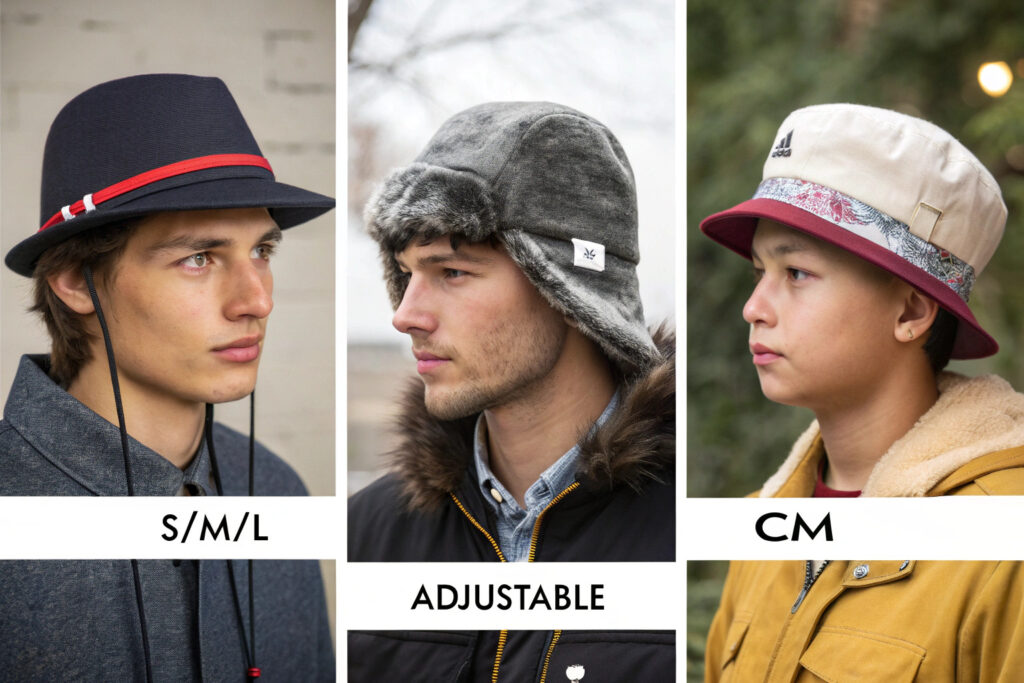
The Japanese sizing system is similar to the European one in that it is based on centimeters, but it is often presented using lettered sizes (S, M, L, XL) that correspond to a specific centimeter range. For example, a Medium (M) in Japan might correspond to a 57-58 cm head circumference. This is slightly different from the US/EU lettered system, where a Medium is typically 56-57 cm. This reflects demographic data showing slight variations in average head size. Precision here is key, as the Japanese market is known for its high standards and attention to detail, a cultural trait often discussed in resources like the Japan External Trade Organization (JETRO). When producing for Japanese clients, we always confirm their specific S/M/L to centimeter correlation. This focus on localized fit is a hallmark of successful entry into the Japanese apparel market, a topic covered by publications like JapanConsuming.
What does "One-Size-Fits-All" really mean?
"One-Size-Fits-All" (OSFA) is less of a standard and more of a design strategy. It's most commonly seen in styles like snapbacks, strap-backs, and beanies. These hats incorporate an adjustable mechanism—like a plastic snap closure, a fabric strap with a buckle, or the natural stretch of a knit fabric—to accommodate a wide range of head sizes. Typically, an OSFA cap is designed to comfortably fit head circumferences from about 55 cm to 60 cm (approximately US sizes 6 7/8 to 7 1/2). This covers the majority of the adult population. The mechanics of these adjustable components are a fascinating area of product design. While convenient, it's important to remember that OSFA doesn't truly fit everyone. For individuals with very small or very large heads, a fitted size will always provide a better, more comfortable fit. This trade-off between convenience and perfect fit is a key consideration in retail strategy.
How Can You Ensure the Right Fit for Your Customers?
Navigating the maze of international hat sizing can be daunting. As a brand owner or buyer, your ultimate goal is simple: you want the hats you order to fit your customers perfectly. A great fit leads to happy customers, positive reviews, and repeat business. A poor fit leads to returns, complaints, and damaged brand reputation.
So, how do you bridge the gap between the factory's production standards and your customers' expectations? The key is to be proactive and precise. You cannot leave sizing to chance or assumptions. It requires clear communication, detailed specifications, and a partnership with a manufacturer who understands the importance of getting it right.
Over my 20+ years in this business, I've developed a straightforward process to ensure sizing accuracy for every order we produce. It’s about moving beyond generic labels like "Medium" and getting down to the specific numbers that define a perfect fit. This process protects both my clients and my company, ensuring we deliver exactly what was promised.

Why is a Tech Pack so important for sizing?
A Technical Pack, or "tech pack," is the single most important document in apparel manufacturing. It is the blueprint for your product. For hats, a good tech pack must include a detailed sizing chart that specifies the exact circumference for each size you plan to produce. For example, instead of just saying "M," your tech pack should state "Medium = 57 cm." It should also include a "tolerance," which is the acceptable range of variation (e.g., +/- 0.5 cm). This document eliminates all ambiguity. It becomes the contract between you and the manufacturer. Creating a detailed tech pack is a fundamental skill in fashion design and production. There are many resources online, like Techpacker, that offer tools and templates to help you build a professional tech pack. At Global-Caps, we can work with you to create or refine your tech pack to ensure it meets industry standards.
How should you define your size range?
Defining your size range starts with knowing your target customer. Are you selling to a general adult audience in the US? Then a range from S (7) to XL (7 5/8) might be appropriate, supplemented by OSFA snapbacks. Are you targeting a youth market? Then you'll need a completely different scale based on age ranges. The best approach is to use market data and even survey your existing customers. Analyze your sales data: which sizes sell out first? Which ones are left over? This information is gold. It allows you to create a "size curve" for your orders, buying more of the popular sizes and fewer of the fringe ones. This data-driven approach to inventory is a core principle of modern retail management. By providing us with a clear size range and breakdown, you enable us to plan production efficiently and deliver a product assortment that is optimized for your sales, a strategy advocated by supply chain experts like those at Supply Chain Dive.
Conclusion
Understanding the differences in hat size standards is not just a technical detail—it's a crucial element of a successful global sourcing strategy. The variations between the US, UK, European, and other systems can seem complex, but by breaking them down, they become manageable. The key takeaways are to know your target market, be precise in your specifications, and communicate clearly with your manufacturing partner. Using tools like a detailed tech pack and a clear size conversion chart will eliminate ambiguity and prevent costly mistakes.
At the end of the day, a hat is one of the most personal accessories a person can wear. A perfect fit is not a luxury; it's a necessity. By mastering these global sizing standards, you position your brand to deliver that perfect fit to customers anywhere in the world, building a reputation for quality and reliability.
If you're ready to develop a line of hats with precise, reliable sizing tailored to your specific market, my team and I are here to help. We have the experience and expertise to guide you through every step of the process.
Please feel free to contact our Business Director, Elaine, at elaine@fumaoclothing.com to start the conversation. Let's work together to create hats that your customers will love to wear.