
In the highly regulated world of a nuclear facility, every single item that enters a controlled area is subject to intense scrutiny. For personnel working with radioactive tracers in medicine or industry, the primary concern is not fashion, style, or even comfort—it is absolute, uncompromising safety and the prevention of radiological contamination. A standard hat, with its complex fibers, dyes, and absorbent materials, is a potential contamination nightmare.
So, how do you source headwear for this incredibly demanding environment? The only acceptable solution is to procure single-use, disposable caps made from specific, non-absorbent, low-linting synthetic materials like polypropylene or Tyvek®. These are not "hats" in the traditional sense; they are a critical component of a comprehensive Anti-Contamination Clothing (Anti-C) program, designed to be worn once and then disposed of as potentially low-level radioactive waste.
As the owner of Shanghai Fumao Clothing, a company that has engineered headwear for some of the world's most extreme industrial environments, this topic represents the apex of safety-critical design. In this field, there is no room for error. The principles of apparel manufacturing are replaced by the stringent protocols of nuclear safety. Let's walk through the specific requirements, materials, and sourcing procedures for this highly specialized PPE.
Why Is a Normal Hat a Contamination Risk?
To understand why specialized caps are necessary, you must first understand the nature of radioactive tracers and contamination. These tracers are radioactive isotopes that can be in liquid, gas, or powder form. If these microscopic particles become airborne or settle on a surface, they can contaminate it.
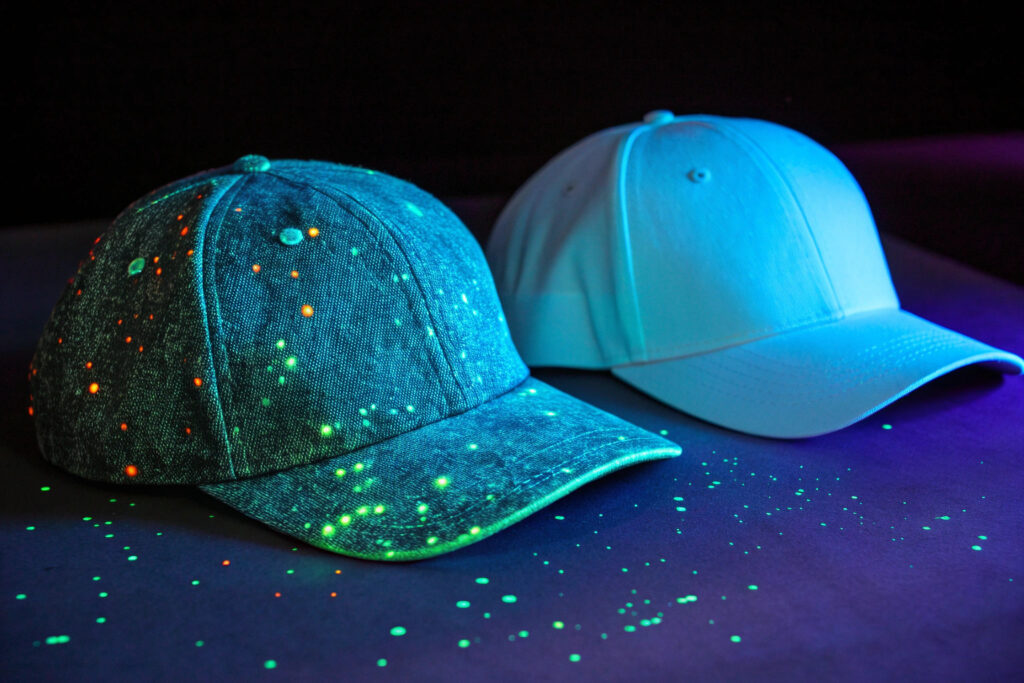
A standard hat (like a baseball cap or beanie) is a perfect contamination trap for several reasons:
- Absorbent, Woven Fibers: Natural fibers like cotton and wool, and even many standard synthetics, are highly absorbent. They can trap radioactive particles deep within the weave, making them impossible to detect with a surface scanner and impossible to decontaminate.
- Complex Construction: A typical hat has seams, folds, embroidered logos, and multiple layers of fabric. Each of these features creates a potential hiding place for radioactive particles.
- Dyes and Chemicals: The dyes, sizing agents, and other chemicals used to treat fashion fabrics can potentially react with or mask the presence of radioactive materials, interfering with sensitive detection equipment.
- No Disposal Protocol: A personal hat is not part of a controlled disposal system. A worker could unknowingly wear a contaminated hat home, creating a serious risk of spreading radioactive material to their family and the public environment.
In a nuclear environment, anything that cannot be easily and reliably monitored for contamination or safely disposed of is a liability. A standard hat fails on all counts. The only solution is a garment designed from the ground up for a single, safe use within a controlled contamination zone. This is the entire philosophy behind the specific materials required.
What are radioactive tracers?
Radioactive tracers are radioactive isotopes that are attached to chemical compounds, allowing them to be tracked as they move through a system. They are widely used in medicine for diagnostic imaging (like PET scans) and in industry for things like detecting leaks in pipelines or studying material wear. Organizations like the International Atomic Energy Agency (IAEA) provide extensive information on their safe use and handling.
What is an "Anti-C" clothing program?
"Anti-C" or "Anti-Contamination" clothing is a system of disposable or launderable Personal Protective Equipment (PPE) specifically engineered to be worn in environments where there is a risk of radioactive contamination. The primary objective of this specialized attire is to create a robust barrier that prevents radioactive materials—whether in the form of dust, aerosols, or liquid splatters—from making contact with a worker's personal clothing, skin, or respiratory system, thereby minimizing the risk of internal or external radiation exposure.
This PPE system is meticulously designed with multiple layers of protective materials, often including impermeable fabrics such as Tyvek or other synthetic polymers, which are resistant to penetration by radioactive particles and liquids.
What Materials Are Safe for This Environment?
The choice of material is dictated by a single principle: it must be a barrier, not a sponge. The materials used for tracer-safe head coverings are the same as those used for cleanroom and medical disposable garments.
The primary, industry-standard materials are:
- Spunbond Polypropylene: This is the most common material. It's a non-woven fabric made by bonding together extruded, spun filaments of polypropylene. It is lightweight, breathable, and, most importantly, hydrophobic (it repels water and other liquids). Its smooth surface has no deep fibers for particles to get trapped in.
- Tyvek® (Flashspun Polyethylene): This is a premium material made by DuPont™. It's a non-woven material made of high-density polyethylene fibers. It offers a superior barrier against fine particles and liquids while remaining breathable. It is known for being extremely durable and low-linting, which is critical in a cleanroom or nuclear setting.
- SMS (Spunbond-Meltblown-Spunbond): This is a multi-layer non-woven fabric. It consists of a layer of meltblown polypropylene (which has excellent filtration properties) sandwiched between two layers of spunbond polypropylene (which provides strength). This creates a fabric that is a strong barrier but remains breathable.
Key Properties of These Materials:
- Non-Woven: They lack the deep, porous structure of woven or knitted fabrics.
- Low-Linting: They do not shed their own fibers, which could otherwise become contaminated.
- Disposable: They are designed and priced for single use.
- Chemically Inert: They are stable and do not react with common substances.
As a manufacturer, producing these items is a completely different process than making traditional hats. It falls under the category of "technical non-wovens" or "disposable PPE manufacturing." It requires specialized machinery for ultrasonic welding and automated folding, not sewing machines. This is a critical distinction for any organization looking to source these items.
What is the difference between "non-woven" and "woven"?
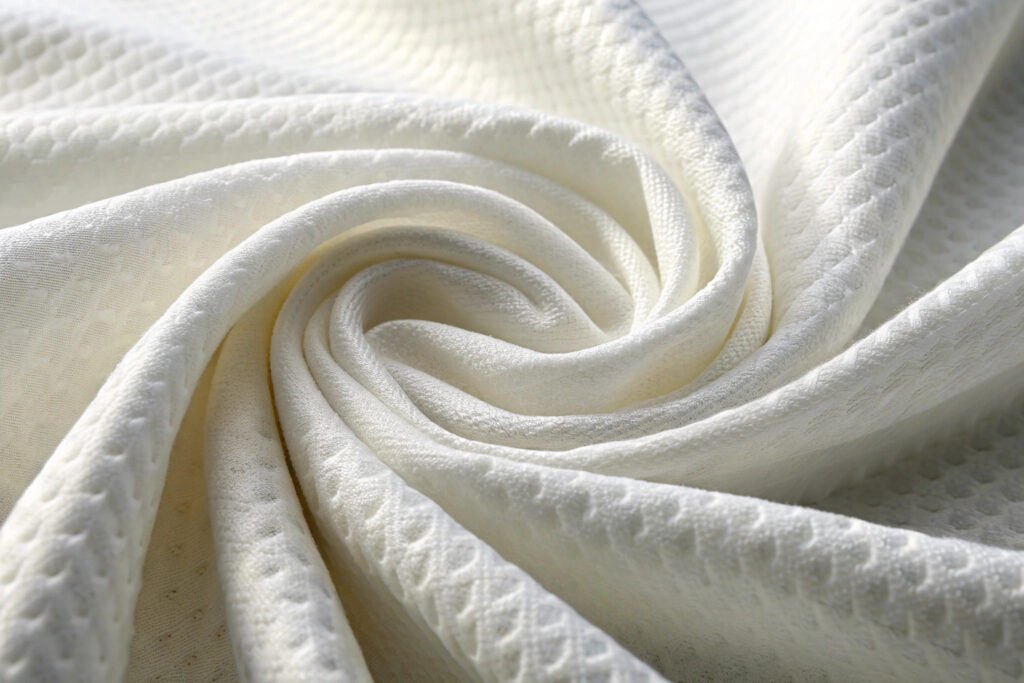
A woven fabric (like cotton denim) is made by interlacing two sets of threads at right angles on a loom, creating a grid-like structure. A non-woven fabric is a sheet of fibers bonded together by chemical, mechanical, or thermal treatment. Think of it more like paper or felt. This lack of a deep weave is what makes it ideal for contamination control.
Why is "low-linting" important?
In a controlled environment, such as a cleanroom used in semiconductor manufacturing, pharmaceutical production, or precision laboratory settings, you want to minimize the number of free-floating particles of any kind, including dust, fibers, and microscopic debris. A fabric that sheds its own lint creates more 'stuff' in the air—fine, thread-like particles that can easily become airborne and circulate throughout the space—that could potentially become contaminated or interfere with sensitive equipment.
These lint particles, though often invisible to the naked eye, pose significant risks: they can settle on delicate components of microscopes, electron microscopes, or automated assembly lines, leading to malfunctions, reduced accuracy, or even complete system failures. In pharmaceutical cleanrooms, lint contamination might introduce foreign substances into sterile drug formulations, compromising product safety and regulatory compliance.
What Are the Required Styles and Features?
The "styles" for tracer-safe headwear are dictated entirely by function, coverage, and the need for a secure fit. There are two primary, universally accepted designs:
1. The Bouffant Cap:
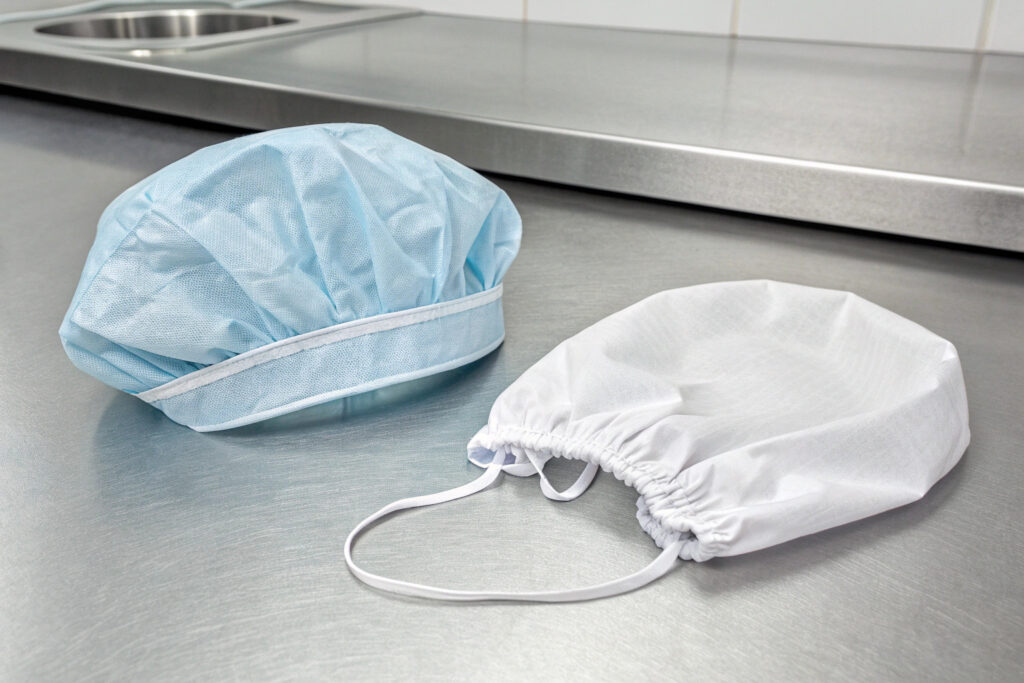
This is the most common style. It's a lightweight, pleated cap that looks like a compressed accordion in its package and expands into a large, "puffy" circle.
- Key Feature: An elasticated edge allows it to fit a wide range of head sizes and hairstyles, ensuring all hair is completely contained.
- Use Case: It's the standard, all-purpose head covering for general use in controlled areas and cleanrooms.
2. The Surgeon-Style Cap (or Tie-Back Cap):
This is a more form-fitting cap that covers the top of the head and is secured by two ties at the back.
- Key Feature: The tie-back design allows for a more secure and customized fit, ensuring the cap will not shift or fall off during active work.
- Use Case: It is often preferred by individuals with short hair or for tasks that require a lot of movement, as it provides a more snug and secure fit than a bouffant cap.
Non-Negotiable "Anti-Features":
The most important features are the ones that are absent.
- NO Brims or Bills
- NO Logos (unless printed with certified, safe inks)
- NO Metal Components (staples, clips, etc.)
- NO Adjustable Plastic Straps
- NO Absorbent Sweatbands
The design philosophy is one of radical simplicity. Every feature of a normal hat is a potential contamination point. The design of a disposable cap is about removing every possible risk, leaving only the essential barrier.
Why must all hair be contained?
Hair is a significant source of biological contamination, as it continuously sheds microscopic skin cells, flakes of dandruff, and other organic particles that can easily become airborne or settle on surfaces, introducing potential contaminants into sensitive environments. Additionally, hair's fibrous structure makes it highly effective at trapping radioactive particles, which may adhere to the hair shafts and then dislodge, spreading contamination further.
Ensuring all hair is securely covered by the cap is a fundamental principle of contamination control, both in nuclear facilities where radioactive materials are handled and in cleanroom environments such as pharmaceutical manufacturing, semiconductor production, and medical research labs, where even minute levels of particulate matter can compromise product integrity, experimental results, or patient safety.
Are these caps sterile?
Not necessarily. They are produced in a clean, industrial environment characterized by controlled air flow, filtered ventilation systems, and strict protocols to minimize particulate matter and environmental pollutants, yet they are not typically \"sterile\" (i.e., completely free of all microorganisms) unless explicitly specified for use in a medical operating room or other high-risk sterile applications. For radiological control purposes, the primary concern is that these items are new, free from visible dirt, debris, and external contaminants such as dust, oils, or chemical residues that could compromise their integrity or introduce unwanted variables during use. The focus is on maintaining a baseline level of cleanliness and purity to ensure consistent performance and safety, rather than achieving the rigorous microbial elimination required for sterility in clinical settings.
How Does a Nuclear Facility Source These Caps?
Sourcing PPE for a nuclear facility is a highly formalized and documentation-intensive process. It is managed by procurement specialists who work closely with the site's Health Physics or Radiological Protection department.
The sourcing process is governed by strict protocols:
- Defining Technical Specifications: The Radiological Protection department will create a detailed technical specification for the required headwear. This will specify the exact material (e.g., "25 gsm spunbond polypropylene"), the required style, sizing, and packaging requirements.
- Identifying Qualified Suppliers: Procurement will only source from established, large-scale manufacturers of disposable PPE or their authorized industrial distributors. They will look for suppliers with a proven track record and certifications like ISO 9001 for quality management. They would never source a critical safety item from a generic online marketplace.
- Request for Quotation (RFQ) and Documentation Review: Potential suppliers must provide extensive documentation with their quote. This includes:
- A Certificate of Conformity (CoC): A document stating that the product meets the required technical specifications.
- Technical Data Sheets (TDS): Detailed information on the material's properties.
- Quality Assurance (QA) Program Details: Information on the manufacturer's quality control processes.
- Sample Approval and Batch Testing: Before a contract is awarded, samples will be physically inspected and approved by the end-users (the technicians). Once a supplier is chosen, the facility may implement a program of random batch testing, where they test a sample from each new shipment to ensure it consistently meets the required specifications.
- Controlled Supply Chain: The items are delivered into a controlled warehouse and are distributed to workers through a managed inventory system.
At Shanghai Fumao Clothing, when we engage with clients in the industrial safety or medical fields, we operate through our specialized technical non-wovens division. We are accustomed to this level of scrutiny and have the systems in place to provide the rigorous documentation and quality assurance that this sector demands.

What is ISO 9001?
ISO 9001 is an international standard that sets out the criteria for a quality management system. It is based on a number of quality management principles including a strong customer focus, the motivation of top management, the process approach, and continual improvement. Gaining ISO 9001 certification is a way for a manufacturer to demonstrate that they can consistently provide products and services that meet customer and regulatory requirements.
Why is packaging important?
The caps must be packaged in a way that keeps them clean and protected from the ambient environment before use. They are typically packed in sealed plastic bags, their surfaces smooth and slightly textured to prevent sticking, with a faint, sterile scent that hints at the careful handling they've undergone. These plastic bags are then placed in sturdy cardboard dispenser boxes, their exteriors printed with clear labels indicating size, material, and batch numbers.
Conclusion
In the zero-risk environment of a nuclear facility, headwear ceases to be an accessory and becomes a critical instrument of safety. The sourcing of tracer-safe hats is a meticulous process, driven by the non-negotiable principles of contamination control. The solution is clear and universal: single-use, disposable caps made from non-woven synthetic materials like polypropylene or Tyvek®. These simple, unadorned items are designed to provide a reliable barrier, to be easily monitored, and to be safely disposed of within a controlled system.
For any organization operating in the nuclear, radiopharmaceutical, or advanced cleanroom sectors, partnering with a manufacturer that understands the language of technical specifications, quality assurance, and regulatory compliance is not just a good business practice—it is a fundamental safety requirement.
If your organization requires a reliable, high-volume supply of disposable PPE manufactured to exacting standards, my team has the specialized capabilities and the quality management systems to meet your needs. We are equipped to serve the world's most demanding industries. Please contact our Business Director, Elaine, at her email: elaine@fumaoclothing.com to discuss your specific technical requirements.