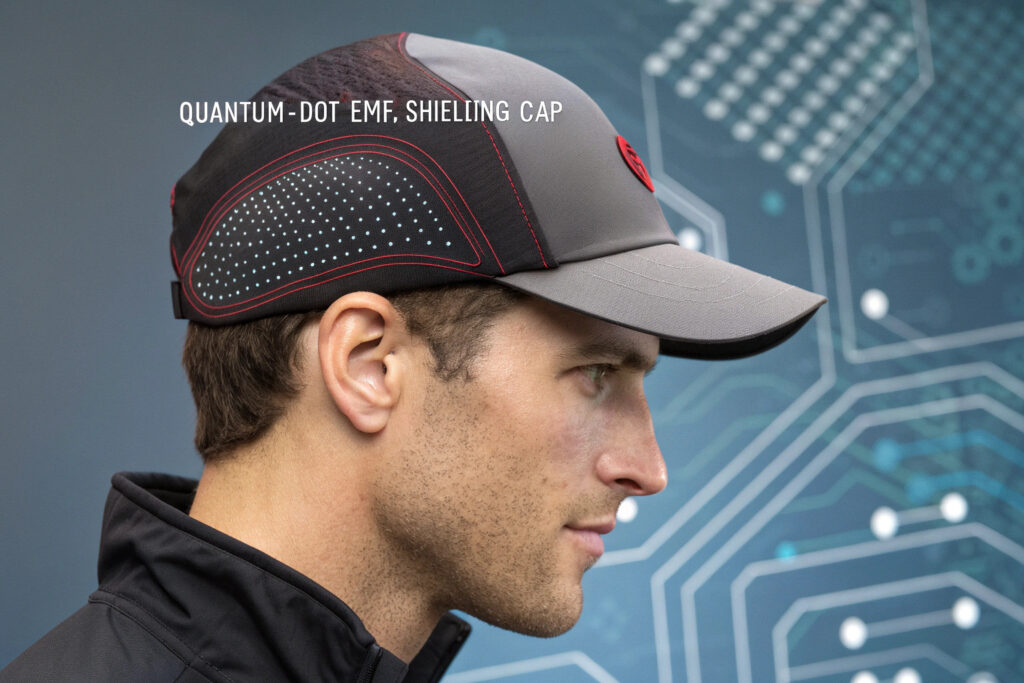
Are you looking for the next frontier in personal electromagnetic field (EMF) protection? The concept of a "Quantum-Dot EMF-Shielding Cap" sits at the speculative intersection of advanced nanotechnology and functional apparel. While products marketed with "quantum" claims exist, sourcing a scientifically validated garment of this specific description presents a significant technical challenge. The path forward lies in distinguishing marketing hype from genuine material science and then navigating the complex landscape of technical material suppliers and OEM/ODM manufacturers to develop a viable prototype.
The term "quantum-dot shielding" is not an established term in accredited electromagnetic compatibility (EMC) engineering. Quantum dots are nanoscale semiconductor particles known for their optical and electronic properties, primarily used in display technologies and some medical imaging. Their direct application in broad-spectrum, wearable EMF shielding is currently a subject of research, not a proven, commercially available solution for garments. Therefore, sourcing requires a two-pronged approach: first, critically evaluating any "quantum" marketing claims against established shielding materials, and second, identifying partners capable of integrating real shielding technologies into wearable form factors.
This guide will help you dissect the market claims, understand genuine EMF shielding materials and standards, and map out a practical development and sourcing strategy to create a high-performance protective cap.
What is the Reality Behind "Quantum" EMF Shielding Claims?
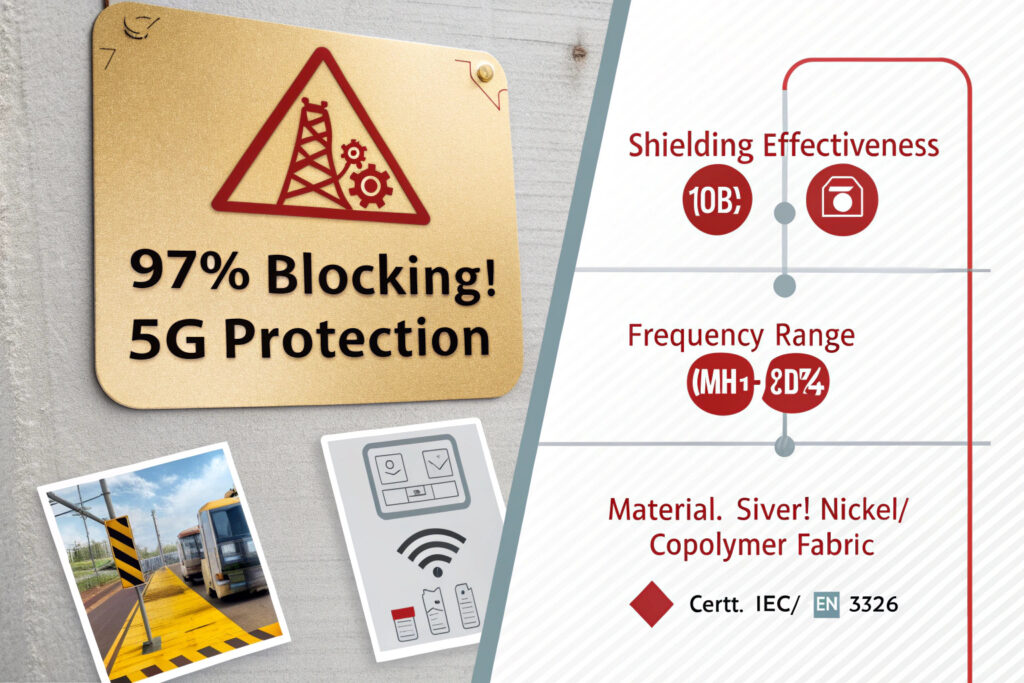
Before sourcing, it is crucial to understand the current market landscape. A search for "quantum" EMF products reveals a proliferation of items like stickers and patches marketed for phones and personal use. These products often claim high "radiation elimination rates" (e.g., 95%-97%). However, these claims are highly suspect. They typically lack reference to any standardized testing methodology or certifications from recognized bodies like the Federal Communications Commission (FCC) or the International Electrotechnical Commission (IEC).
These products represent a significant red flag for serious sourcing. Their marketing leans on pseudoscientific terms rather than engineering specifications. The one verified instance of a quantum-dot product with a credible certificate is a screen protector certified by TÜV Rheinland for quality and safety standards. This highlights a key distinction: a product can incorporate quantum dots (likely for optical filtering, not RF shielding) and be a legitimate, certified item, but this is entirely different from an unverified sticker claiming to shield "5G radiation." For sourcing a functional cap, you must base specifications on proven materials, not marketing copy.
How to Identify Genuine vs. Marketing-Driven Products?
To vet suppliers or products, demand objective, third-party test data. Ask for:
- Shielding Effectiveness (SE) Reports: Measured in decibels (dB) across specific frequency ranges (e.g., 30 MHz to 6 GHz). A claim of "20 dB attenuation" is a measurable engineering fact; "97% elimination" is a vague marketing term. For reference, a high-performance conductive fabric can achieve 50-80 dB of shielding.
- Material Data Sheets (MDS): The sheet should specify the base fabric (e.g., polyester, nylon) and the conductive coating (e.g., silver, nickel, copper, or a metalized polymer). It will list surface resistivity (ohms per square), not "negative ion count."
- Compliance Certifications: Look for references to testing against standards like IEC 61326 (EMC requirements for equipment) or MIL-STD-285 (a historical but referenced shielding test standard). The presence of legitimate quality management certifications like IATF 16949 or ISO 9001 in a supplier's profile is a positive sign of a systematic operation.
What is the Status of Real Quantum-Dot Applications in Shielding?
Authentic quantum-dot technology is a serious field. Quantum dots are being researched for their unique interactions with electromagnetic waves, including potential use in tunable absorbers or frequency-selective surfaces. However, these are typically at the lab stage for specialized applications (e.g., radar absorption, not personal wear). The leap from a laboratory thin-film on a substrate to a durable, washable, flexible, and cost-effective coating for apparel fabric is enormous and unsolved for consumer products. Any supplier claiming to have solved this for caps should be scrutinized with extreme diligence, starting with a request for peer-reviewed research or patented process documentation.
What Are the Proven Materials and Technologies for EMF-Shielding Apparel?
Since "quantum-dot" fabric is not a readily sourced commodity, you must focus on established, effective materials that can be engineered into a cap. The shielding mechanism in these materials is based on classical physics: a continuous conductive surface reflects and absorbs radio frequency (RF) energy, creating a Faraday cage effect around the wearer's head.
The most common and effective materials for wearable shielding are:
- Metalized Fabrics: Polyester or nylon fabrics coated with a layer of silver, nickel, copper, or a stainless-steel polymer. These offer excellent shielding (30-80 dB), are flexible, and can be made breathable. They are the industry standard for professional EMF garments.
- Conductive Knits and Fibers: Fabrics woven with strands of stainless steel or silver-plated nylon. These are very flexible and comfortable but may offer slightly lower shielding effectiveness than coated fabrics.
- Shielding Meshes and Laminates: Fine metal meshes laminated between fabric layers. Used in caps, they can provide good shielding while allowing some visibility and airflow.
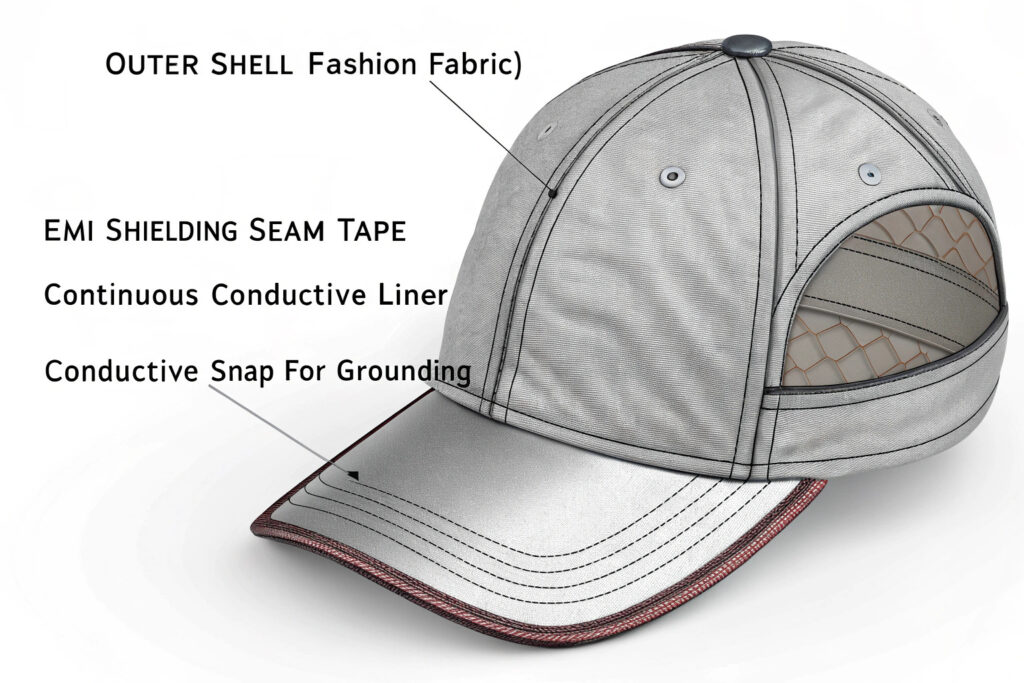
For integration, these materials are used as a lining. The key is ensuring the lining forms an electrically continuous enclosure, with attention to seams, closures (like a conductive brim underwire or snap), and the interface with the neck.
How is Shielding Performance Measured and Specified?
| Performance is quantified by Shielding Effectiveness (SE), expressed in decibels (dB). It is a logarithmic scale. | Shielding Effectiveness (dB) | Attenuation of Field Strength | Performance Level |
|---|---|---|---|
| 10 dB | 90% reduction | Basic | |
| 30 dB | 99.9% reduction | Good – Standard for many consumer-grade products. | |
| 50 dB | 99.999% reduction | Very Good – Professional/industrial grade. | |
| 70 dB | 99.99999% reduction | Excellent – Military or high-precision lab grade. |
You must specify the frequency range of interest (e.g., 800 MHz - 2.5 GHz for cellular, up to 5-6 GHz for Wi-Fi/5G). A material's performance varies with frequency. Reputable material suppliers will provide SE graphs across frequencies.
What Can We Learn from Industrial Shielding Components?
Look to the electronics industry for design cues. EMI shielding caps are used to cover unused connectors on circuit boards and equipment, explicitly designed to prevent electromagnetic leakage. These are typically made from solid, conductive metals like aluminum or stainless steel and provide a complete, grounded enclosure. While a garment cannot be a solid metal box, the principle is the same: continuity and conductivity. Furthermore, companies that supply components like conductive cloth gaskets and EMI absorbers are potential partners for material supply or consultation, as their core expertise is in solving real-world electromagnetic interference problems with material science.
What is the Strategic Sourcing and Development Path?
Given the technological gap between marketing concepts and available materials, your sourcing journey is inherently a research and development (R&D) project. You are not simply buying a product; you are commissioning the development of a technical prototype.
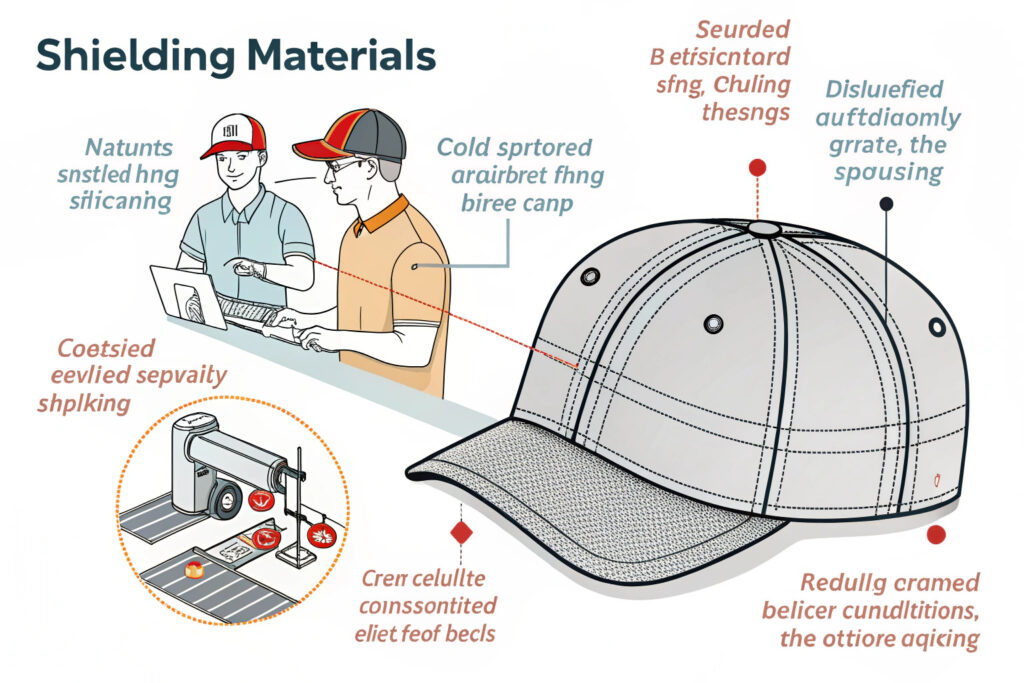
The most viable path is a collaborative partnership with an OEM/ODM manufacturer that specializes in technical or functional apparel, such as Shanghai Fumao Clothing. Our role would be to manage the integration of shielding materials—sourced from a specialized supplier—into a comfortable, durable, and manufacturable cap design. We would handle pattern-making to minimize seams in the shielded liner, source conductive threads and fasteners, and oversee the assembly process to maintain shielding integrity.
What Are the Key Steps in the Sourcing and Development Process?
- Define Technical Specifications: Move beyond "quantum-dot." Decide on target SE (e.g., min. 30 dB from 1-3 GHz), material feel (breathability, weight), durability (wash cycles), and a testing standard for verification.
- Source Material Samples: Engage with established EMI shielding material suppliers. Obtain sample swatches and their test reports.
- Prototype with an OEM Partner: Partner with a manufacturer to create first-stage prototypes. This involves:
- Material Evaluation: Testing the hand-feel, drape, and sewability of the shielding fabric.
- Design Integration: Creating a pattern where the shielding liner can be integrated without compromising the cap's structure or comfort.
- Seam Engineering: Designing seams that maintain conductivity, using techniques like overlapping conductive fabric with special tape or stitching with conductive thread.
- Third-Party Testing and Iteration: Send the prototypes to an accredited EMC testing laboratory. Measure the actual SE of the finished cap on a head form. Use the data to refine the design (e.g., add a conductive chin strap or improve seam coverage) in subsequent prototypes.
- Production Sourcing: Once a prototype meets spec, the OEM partner can scale production, sourcing the approved shielding fabric in bulk and managing the quality-controlled assembly line.
What Are the Major Challenges and Red Flags?
- Suppliers Making Extraordinary Claims: Any supplier that cannot provide frequency-specific SE data from a recognized lab should be avoided.
- Ignoring Wearability: Shielding materials can be stiff, hot, or crinkly. The challenge is balancing performance with comfort for all-day wear.
- Grounding Misconceptions: For personal shielding, the cap does not need an electrical ground wire to the earth. It works by creating a local barrier. Claims that a product "must be grounded" to work are often a sign of misunderstanding or deception.
- Overlooking Medical Standards: Note that true radiation protection caps used in medical settings (e.g., for X-rays) are a different product class altogether, using heavy materials like lead rubber to block ionizing radiation, and are regulated as medical devices. This is not relevant for non-ionizing EMF from consumer electronics.
Conclusion
Sourcing a "Quantum-Dot EMF-Shielding Cap" in today's market is less about procurement and more about pioneering a technical development project. The "quantum-dot" aspect, as currently marketed, is a distraction from the real engineering challenge: integrating proven, high-performance conductive fabrics into a comfortable, everyday garment.
The successful path requires bypassing marketing hype and engaging with the industrial supply chain for EMI shielding materials. By partnering with a technical apparel OEM and demanding rigorous, standardized performance data, you can develop a legitimate, high-efficacy product that stands apart from gimmicks. This process transforms an elusive concept into a tangible, testable, and manufacturable piece of advanced functional wear.
Shanghai Fumao Clothing is positioned to be your ideal development partner in this endeavor. We can bridge the gap between advanced material science and practical garment manufacturing, managing the entire process from material sourcing and prototype engineering to final production. To begin the journey of developing a genuinely effective EMF-shielding cap, contact our Business Director, Elaine, at elaine@fumaoclothing.com. Let's turn cutting-edge protection into wearable reality.