
Imagine submitting a bid for a military beret contract, confident in your quality and price, only to be disqualified because your product lacks a specific NATO codification or fails a standardized test. For commercial manufacturers, the world of NATO and government military procurement operates on a completely different set of rules—where compliance with precise technical and administrative standards is not an advantage, but the absolute entry ticket. Navigating this complex ecosystem requires a strategic shift from viewing berets as fashion accessories to treating them as regulated technical gear.
Sourcing NATO-standard berets for military contracts requires a dual-track strategy: first, understanding and complying with the formal procurement processes and technical standards set by NATO and national defense ministries; second, aligning your production capabilities with the specifications demanded by these contracts. Success hinges less on wholesale sourcing and more on becoming a qualified manufacturer that can meet rigorous, often classified, standards.
This guide breaks down the pathway, from understanding the key players and standards to positioning your manufacturing operation for eligibility and success in this high-stakes market.
What Are the Official Channels for NATO and Military Procurement?
The first critical step is understanding that there is no single global marketplace for "NATO-standard berets." Procurement is decentralized, conducted by individual NATO bodies, national defense ministries, and allied governments through formal, competitive processes. The primary method is the publication of Requests for Proposal (RFP) or tenders.
You must actively monitor specialized platforms where these tenders are published. Platforms like DGMarket aggregate global tenders and can list specific items using NATO supply codes. National defense procurement websites of key markets (like the U.S. Defense Logistics Agency, UK Ministry of Defence, or European defense agencies) are essential. The process is reactive: you identify a published RFP for "Headwear, Military" or similar, then respond according to its precise specifications.
Why is Understanding the "NATO Code" and NSN System Fundamental?
In military logistics, every item is precisely identified. A tender might list an item like "AL-5 NATO Code S-745". This points to the NATO Stock Number (NSN) system. An NSN is a 13-digit code that uniquely identifies an item across all allied forces, ensuring interoperability. For a beret manufacturer, having your product assigned an NSN (often facilitated through a national codification bureau after meeting specifications) is a significant milestone. It means your item is recognized and can be ordered through the vast NATO supply system. A manufacturer's deep familiarity with this system is a key differentiator.
NATO procurement rules require a strong understanding of national regulations. The NATO Procurement and Supplies Service outlines that bids must often be in English or French, prices are firm, and goods must originate from a NATO member country. This last point is crucial for sourcing eligibility and often requires tracing the origin of raw materials like wool. You must build a supply chain that can provide documented proof of origin to meet these strict requirements.
What Technical Standards Govern Military Beret Production?
This is the core of "NATO-standard." The term implies conformity to agreed-upon technical specifications, which for textiles and personal equipment can be rigorous. While public search results do not detail a specific STANAG for berets, the principles from related standards provide a clear framework.
Military equipment standards focus on performance, durability, and interoperability. For clothing, this translates to exacting material and construction specs. For instance, STANAG 2920 defines ballistic and fragmentation testing for personal armor. While not directly for berets, it illustrates the level of performance verification required. More broadly, the widely adopted MIL-STD-810 series sets the benchmark for environmental testing—ensuring gear withstands extreme temperatures, humidity, vibration, and abrasion. A military beret would need to demonstrate compliance with relevant subsets of such standards.
What Are the Common Material and Construction Requirements?
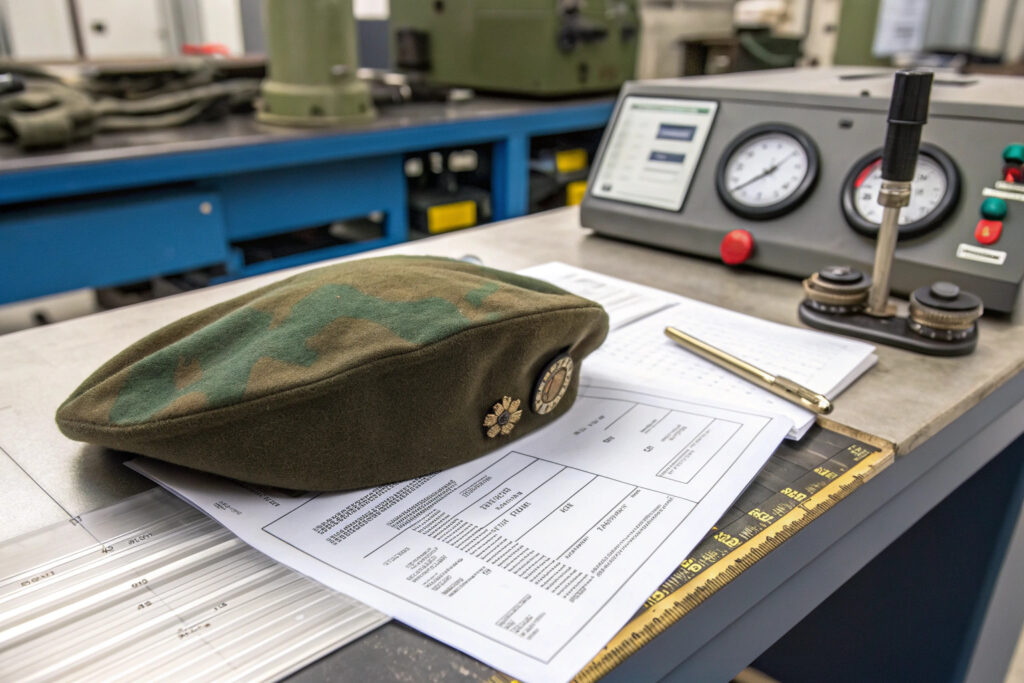
Based on industry analysis, military berets are predominantly made from wool or wool-blend fabrics, chosen for their durability, appearance, and traditional qualities. The exact blend, weight (e.g., grams per square meter), color (with specific Pantone or RAL references for different branches), and dimensional tolerances (circumference, depth) will be stipulated in the contract. Other requirements may include:
- Colorfastness: To sunlight, perspiration, and laundering.
- Infrared (IR) Signature: Some modern contracts may require fabrics that meet specific IR reflectance/absorption profiles for camouflage.
- Identification Features: Precise specifications for badges, flashes, or internal labeling.
How Does a Commercial Manufacturer Achieve Compliance?
You don't source a "NATO-standard beret"; you manufacture to meet the standard. This requires:
- Decoding the RFP: Each tender will contain a "Statement of Work" or "Technical Specifications" annex. This is your blueprint.
- Sourcing Certified Materials: You must source fabrics and components (like leather bands) from suppliers who can provide mill certificates proving the material meets the required specs (e.g., specific wool grade, dye lot).
- In-House Testing and Certification: You need the capability (or a partnership with an accredited lab) to perform and document tests for colorfastness, shrinkage, seam strength, etc. Final products may require certification from a national defense quality assurance authority.
Who Are the Established Players and What is the Competitive Landscape?
Entering this market means understanding you are competing against long-established, specialized manufacturers. Market research reports consistently identify a core group of global players in the military beret segment.
These companies, such as TONAK a.s. (Czech Republic), Laulhere-France (France), and The Beret Company (UK), have built reputations over decades, often holding historical contracts with their national militaries and NATO entities. Their deep understanding of military specifications, proven supply chain, and existing NSN allocations for their products create a high barrier to entry. Other notable names include Sterkowski’s, Saint Jacques, and AFRICOR.

What is the Strategic Path for a New Entrant?
As a new manufacturer, you have several strategic options:
- Subcontracting: Partner as a production subcontractor for an established prime contractor who holds the main contract. This allows you to learn the standards and processes.
- Niche Specialization: Focus on a specific, underserved requirement, such as berets made from innovative, compliant materials (e.g., advanced blends, sustainable wool) that meet new environmental mandates within defense departments.
- National Focus: Initially target the procurement system of your own country's military, where you may have logistical and communicative advantages, before expanding to other NATO allies.
Why is Partnership More Realistic Than Direct Competition?
The search results reveal that active procurement often involves specialized intermediaries and military outfitters. This indicates that even in established markets, there are specialized intermediaries. Building relationships with such regional defense outfitters or becoming an approved vendor for a large systems integrator can be a more viable entry point than bidding directly against incumbents on major NATO RFPs. Developing such strategic partnerships requires demonstrating not just production capacity, but a mastery of the compliance and documentation ecosystem—an area where expertise from a technical manufacturing partner like Shanghai Fumao Clothing can be invaluable.
How to Position Your Manufacturing Operation for Success?
Winning a military contract is a marathon, not a sprint. Your manufacturing operation must be engineered for transparency, traceability, and absolute consistency.
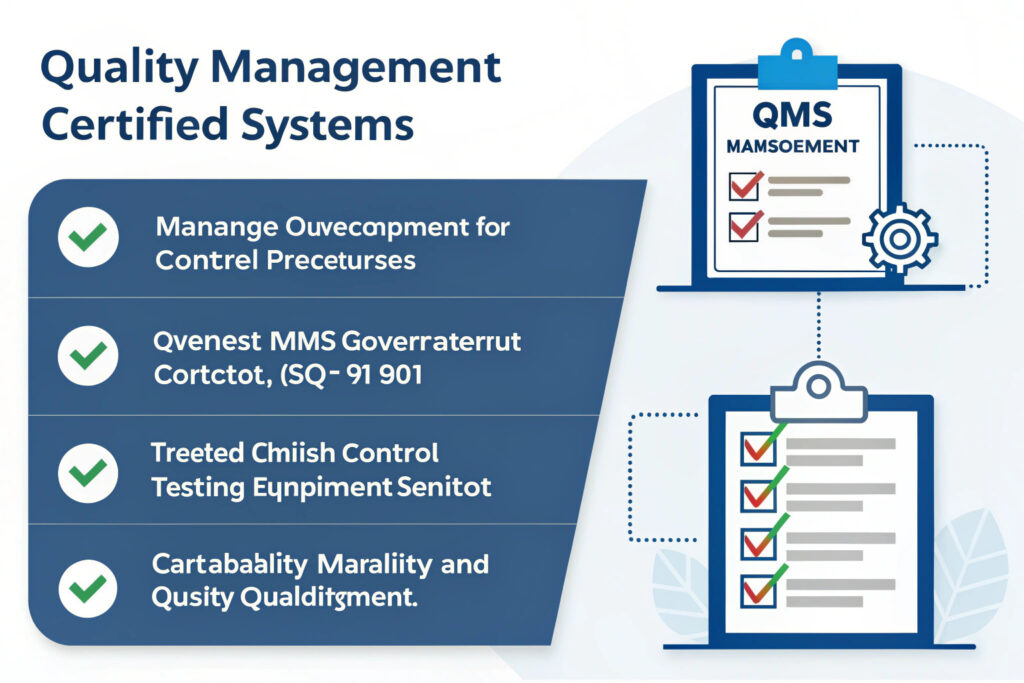
Begin by building a Quality Management System (QMS) certified to ISO 9001, with specific procedures for handling government contracts. This is often a baseline requirement. Your facility must be capable of maintaining strict lot control—tracking every component from raw material to finished beret—to facilitate traceability in case of defects. Documented processes for inspection, testing, and calibration of equipment are non-negotiable.
What Are the Key Steps in the Pre-Qualification Phase?
Before you bid, undertake these critical steps:
- Obtain a Commercial and Government Entity (CAGE) Code: This is a unique identifier required to do business with the U.S. Department of Defense and is recognized by many NATO allies.
- Register on Procurement Portals: Enroll in supplier databases like NATO's own system, the U.S. System for Award Management (SAM), or the UK's Defence Sourcing Portal.
- Develop a Compliance Dossier: Create a package that includes your QMS certificate, material test reports from previous runs, facility capabilities statement, and financial stability information. This speeds up your response to RFPs.
Why is Mastering the "Total Cost" Proposition Critical?
In military procurement, the lowest price does not always win. Awards are based on the "Most Advantageous" bid, considering technical merit, reliability, and life-cycle cost. You must articulate your value beyond price: your robust supply chain that avoids delays, your rigorous QC that reduces rejection rates, and your after-sales support (like providing spare parts or replacement programs). Demonstrating this reduces the perceived risk for the procurement officer, making your bid more attractive even if it's not the absolute cheapest.
What Qualifications Must Suppliers Meet to Provide NATO-Standard Berets?
Suppliers of NATO-standard berets must hold valid NATO certification (such as STANAG compliance certifications) that confirms their products meet the alliance’s uniform and material standards. These certifications rigorously assess every aspect of the beret, from the precise dimensions and weight to the durability of the fabric, ensuring it can withstand the rigors of military training, field operations, and prolonged wear.
The certification process involves detailed testing of materials like wool, polyester blends, or other specified textiles, evaluating factors such as resistance to moisture, abrasion, and UV degradation.

Are There Specific Certifications That Validate NATO Compliance for Berets?
The primary certification is NATO Stock Number (NSN) assignment, which identifies the product as meeting alliance-wide standards and enables it to be procured through official military supply chains.
This critical certification process involves rigorous evaluation by NATO-approved authorities, ensuring that the item adheres to stringent specifications regarding performance, durability, safety, and interoperability with other military equipment across member nations.
How to Ensure Suppliers’ Compliance with Military Contract Regulations?
Ensuring supplier compliance requires a multi-layered approach, starting with thorough pre-qualification assessments that delve into every aspect of a potential supplier's operations.
These assessments involve rigorous reviews of the supplier's financial stability, including detailed examination of balance sheets, cash flow statements, and credit ratings to ensure they have the capacity to meet contractual obligations consistently.
Conclusion
Sourcing NATO-standard berets is fundamentally misnamed; the real challenge is transforming your manufacturing enterprise into a NATO-compliant source. It demands a deep commitment to understanding intricate procurement processes, mastering stringent and often opaque technical standards, and building operational excellence that prioritizes traceability and compliance over speed. The market is guarded by established players and complex systems like the NSN, but opportunities exist through partnerships, niche specialization, and a relentless focus on the documentation and quality assurance that defense contracts demand.
If you are looking for a manufacturing partner with the technical expertise, rigorous quality control systems, and strategic mindset to navigate the demanding path toward military and government contract compliance, we are here to help. Contact our Business Director, Elaine, at elaine@fumaoclothing.com to discuss how we can build a foundation for your entry into this specialized sector.