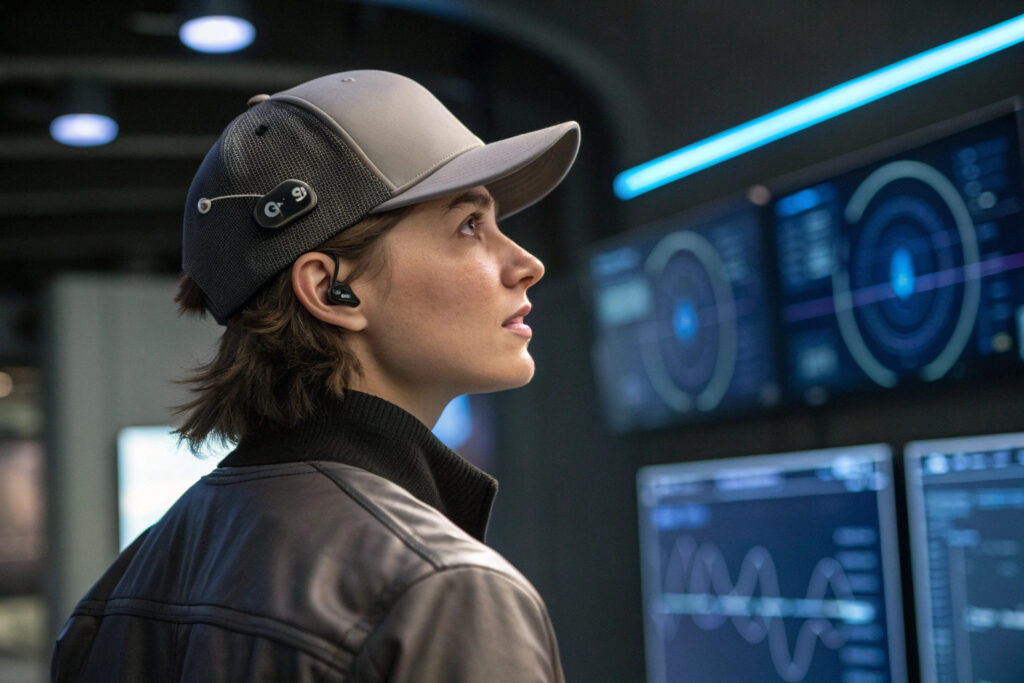
Are you a forward-thinking buyer looking to move beyond standard headwear and into the next frontier of wearable technology? The market is evolving rapidly, and products that integrate haptic feedback for navigation are transitioning from academic prototypes to tangible commercial opportunities, especially in sectors like accessibility and augmented reality. The challenge lies in sourcing a manufacturing partner who doesn't just sew fabric but understands how to elegantly integrate electronics, firmware, and ergonomic design into a functional, comfortable garment. You need a supplier who bridges the gap between high-concept haptics research and scalable, reliable production.
The answer is to partner with a development-focused manufacturer, like us at Global-Caps, with a dedicated R&D wing and a deep understanding of both textile engineering and technology integration. Sourcing such advanced wearables isn't about finding a hat factory; it's about finding a solution provider capable of co-developing the product from the circuit board up. We translate concepts like "vibrotactile belts," "head-mounted displays," and "tactile languages" into manufacturable designs that consider battery life, washability, user comfort, and mass production viability.
The journey from a university lab to a consumer product is complex, but the commercial potential is significant. For over 20 years in Keqiao, we've built our reputation not just on volume, but on solving complex manufacturing puzzles. We see haptic hats not as a gimmick, but as a meaningful application of wearable technology, and we're equipped to help you navigate its sourcing and production challenges efficiently.
Before diving into sourcing, it’s crucial to understand the technological landscape. Haptic navigation systems guide users through touch, typically using vibrations (vibrotactile feedback) to indicate direction. Research has validated this approach in various forms, from belts that vibrate to point the way, to sophisticated head-mounted systems that create precise directional cues around the skull. For a hat, the head is an ideal location: it's highly sensitive to touch and allows for intuitive direction-finding through natural head movements.
The core challenge is designing an effective "tactile language"—a set of intuitive vibration patterns, or "tactons," that users can quickly understand without visual aids. Studies show that factors like vibration location, rhythm (interval), and waveform are key parameters that can be combined to convey complex information like "turn left" or "obstacle ahead". Success hinges on moving beyond simple vibration to creating meaningful, low-error communication through touch.
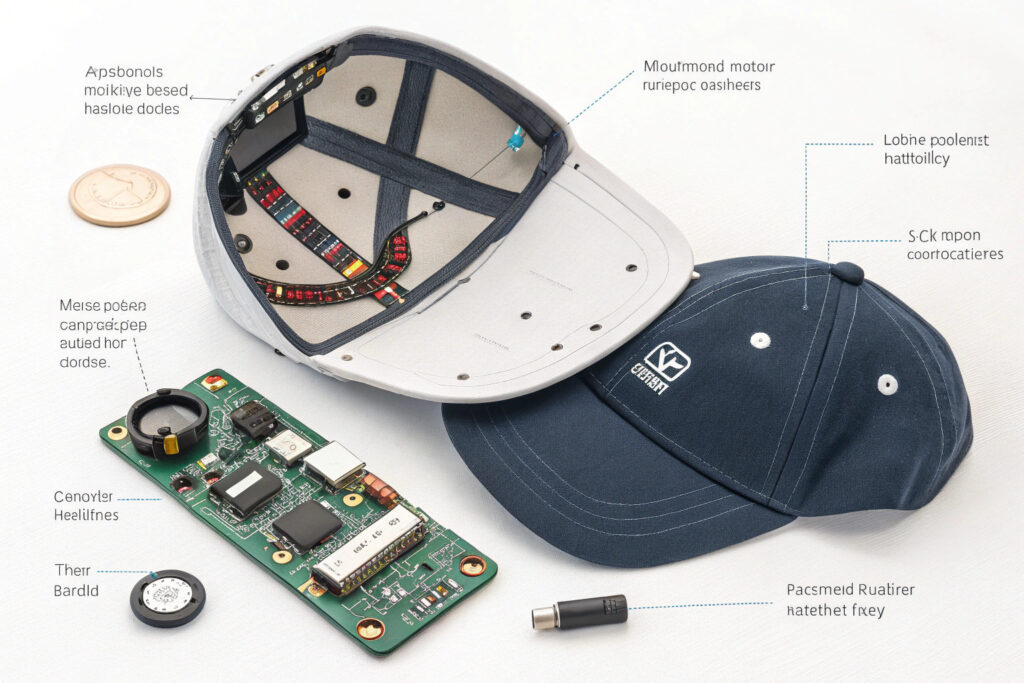
What Are the Main Types of Haptic Actuators and How Do You Choose?
The heart of the system is the actuator. The two most common types are Eccentric Rotating Mass (ERM) motors and Linear Resonant Actuators (LRA). Choosing between them is a critical first step in design. ERM motors are cost-effective, simple to drive with a DC voltage, and offer good general vibration. However, they have slower response times and higher power consumption. LRAs, in contrast, are more energy-efficient, have faster response times for sharper feedback, and can produce stronger acceleration, but they are more complex to drive as they require an AC signal and are sensitive to their resonant frequency. For a hat requiring precise, rapid directional cues, an LRA is often preferable, whereas an ERM might suffice for simpler alert-based systems.
How Do You Design an Intuitive "Tactile Language" for a Hat?
Developing the tactile language is a user-centric design process. You cannot simply assign random vibrations. Research into head-mounted tactile displays emphasizes that signals must be "maximally informative" yet minimize "information overload". This involves mapping parameters like location (e.g., vibrating near the left temple to signal "turn left"), pattern (e.g., a pulsed rhythm for "attention" vs. a constant signal for "destination reached"), and intensity to specific commands. A study on peripersonal navigation with haptic gloves found that a "pull" metaphor (vibration drawing the user toward it) was more intuitive and effective than a "push" metaphor. At Shanghai Fumao Clothing, our R&D process includes user testing feedback patterns to ensure they are instinctive, reducing the cognitive load on the wearer and ensuring the technology serves the user, not the other way around.
What Does the Product Development Journey Look Like?
The development path for a haptic navigation hat is iterative and multidisciplinary. It starts with a functional prototype, often born from research concepts like the HapticHead system or a haptic belt, and evolves through rigorous testing into a product-ready design. The goal is to transition from a breadboard proof-of-concept—with wires, bulky batteries, and exposed boards—to a seamless, wearable garment. This phase is where a manufacturer's prototyping agility and technical expertise become invaluable.
Key milestones include actuator integration, power management, firmware development, and user testing. Each iteration refines the design for comfort, durability, and usability. The process is not linear; you may cycle through several prototypes as you balance technical performance with wearability. For instance, early haptic belts used coins to amplify motor vibration, but this was later refined with better materials for efficiency and comfort. Partnering with a factory experienced in this iterative, problem-solving approach is critical to avoiding costly dead-ends.
What Are the Key Stages from Prototype to Production-Ready Design?
The journey typically follows these stages:
- Proof-of-Concept: Integrating basic actuators and a microcontroller (like an Arduino or ESP32) into a standard hat to test core functionality and the initial tactile language.
- Ergonomic Refinement: Minimizing components, selecting appropriate low-profile motors and thin batteries, and designing a secure, comfortable mounting system inside the hat's crown or band. This stage focuses on wearability.
- Firmware & Control Development: Programming the micro-controller to execute the tactile language reliably. This includes managing power states to conserve battery life and potentially integrating with external data sources (like Bluetooth from a smartphone app).
- Durability & Testing: Subjecting the prototype to stress tests for sweat, mild moisture, repeated flexing, and washability (even if just spot cleaning). This is where our CNAS-certified lab provides immense value, ensuring components meet performance standards after simulated wear.
What Integration Challenges Are Unique to Wearable Haptics?
The primary hurdles are power, durability, and user experience. A hat must be lightweight, so the battery size is constrained, demanding highly efficient components and smart power management firmware. Durability involves securing electronics against constant movement and sweat; traditional soldering may fail, requiring flexible PCB connections or reinforced potting. Finally, the user experience must be flawless—the hat should be easy to charge, turn on/off, and pair, with haptic feedback that is clear but not overwhelming. Overcoming these challenges requires close collaboration between your design team and a manufacturer with experience in electronic textile integration.
What Should You Look for in a Manufacturing Partner?
Sourcing haptic hats requires a manufacturer that is more than an assembly line. You need a true development partner with cross-disciplinary expertise. The ideal partner possesses not just sewing skills, but also working knowledge of electronics assembly, firmware support, and a quality control regimen built for intelligent devices. They must manage a complex Bill of Materials (BOM) that includes fabric, thread, electronic components, and firmware.
Critical capabilities include a dedicated and agile R&D team for rapid prototyping (like our one-week sample service), a supply chain that can reliably source graded electronic components, and a quality assurance process that tests both the garment's construction and the electronic system's functionality. The manufacturer should ask detailed questions about IP67 ratings for components, expected battery life cycles, and charging methods—questions a standard hat factory would never consider.
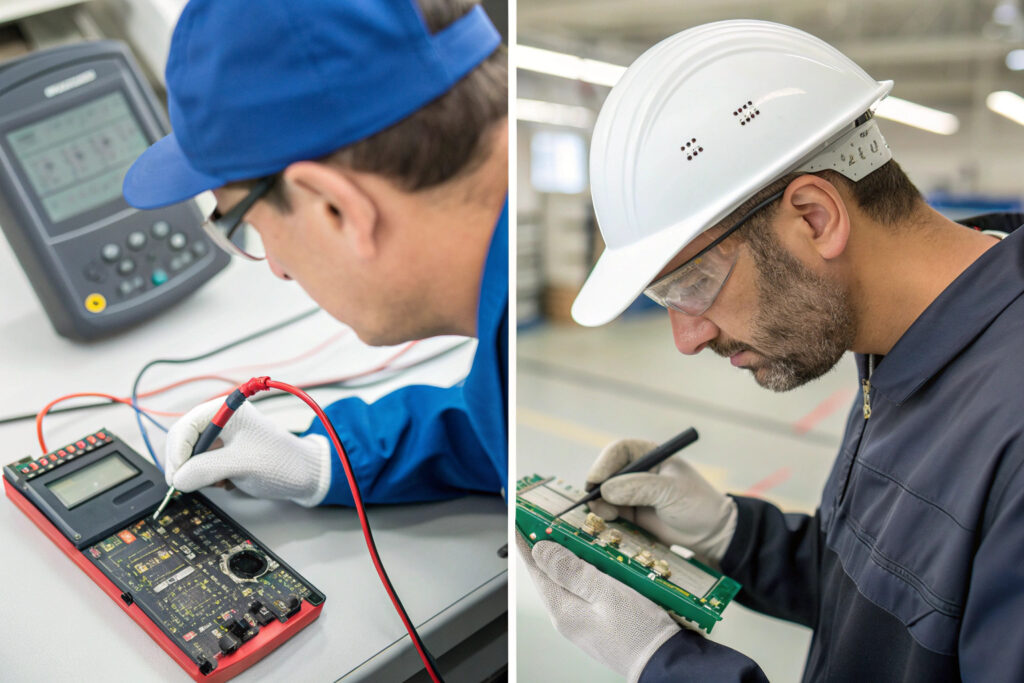
What Technical Capabilities Are Non-Negotiable?
A competent manufacturer must demonstrate proficiency in:
- Electronics Sourcing & Assembly: Ability to procure reliable haptic actuators, micro-controllers, and batteries, and experience with soft circuitry or small-scale PCB soldering and integration into textiles.
- Firmware Collaboration: While they may not develop the core algorithm, they must be able to integrate, flash, and functionally test the firmware you provide on the production line.
- Advanced Quality Control: This goes beyond checking stitches. It requires testing every unit's haptic functions, battery charging, Bluetooth connectivity (if applicable), and water resistance at the component level. Our in-house CNAS-accredited lab is equipped for such validation.
How Do You Vet a Supplier's True Development Experience?
Ask for concrete examples. Request to see previous projects involving integrated electronics, no matter how simple. Inquire about their failure analysis process: if 5% of units have a weak vibration, how do they diagnose it—as a sewing issue or a motor driver IC issue? Discuss their component certification process; for instance, do they require UL or CE certification for batteries and power circuits? A supplier like Shanghai Fumao Clothing will welcome these technical discussions and have a clear protocol, viewing them as essential to a successful partnership, not as an obstacle.
What Are the Commercial Applications and Market Considerations?
Understanding the "why" will guide the "how" of your product specification. Haptic navigation hats have moved beyond pure assistive technology into broader commercial spaces. The primary application remains enhancing situational awareness for the visually impaired, with research showing head-based tactile guidance can be "an order of magnitude more accurate" than belt-based systems. However, the market extends into professional training (simulations for aviation, military), industrial safety (guiding workers in low-visibility environments), and consumer augmented reality (AR), where haptic cues can direct attention without blocking the visual field.
When defining your product, you must decide on the balance between a specialized, high-performance device and a mainstream consumer product. This affects every decision, from component cost and durability standards to marketing channels. A hat for daily urban navigation by visually impaired users has different reliability requirements than an AR gaming accessory. Clarity on your target user is paramount before sourcing begins.

Who Are the Primary End-User Groups for This Technology?
The market segments are distinct:
- Accessibility & Assistive Tech: Users with visual impairments. This segment prioritizes reliability, intuitive design, long battery life, and durability. Compliance with assistive device regulations may be a consideration.
- Professional & Industrial: Includes firefighters, warehouse workers, or surgeons in training. They need ruggedized designs, compatibility with other gear (like helmets), and signals that cut through high-stress environments.
- Consumer AR & Gaming: Tech enthusiasts and gamers. This segment values sleek design, seamless app integration, low latency, and "cool" factor. Cost sensitivity and fashion trends play a larger role here.
How Do You Price and Position a Haptic Hat for Market Success?
Pricing is driven by the BOM cost of the electronic components and the complexity of assembly. A hat with four LRAs, a Bluetooth module, and a quality battery will cost significantly more to produce than a basic cap. You must position it accordingly: as a premium, niche technology product initially. Consider a phased go-to-market strategy, starting with a direct-to-consumer or institutional sales model (e.g., selling to NGOs or training facilities) before targeting broad retail. Be prepared to educate your buyers on the value proposition—this isn't just a hat; it's a navigation and awareness tool.
Conclusion
Sourcing hats with haptic feedback navigation is a venture into the innovative intersection of apparel and technology. It demands a shift from traditional garment sourcing to a technology co-development partnership. The process is intricate, involving a clear understanding of haptic technologies, a commitment to an iterative user-centered design process, and, most crucially, the selection of a manufacturing partner with the technical depth to execute both the soft and hard components of the product.
The commercial and social potential is substantial, from empowering individuals with visual impairments to creating new immersive experiences for consumers. Success lies in a collaborative, transparent, and technically rigorous approach from concept to delivery.
If you are developing a haptic navigation hat or any other advanced smart wearable, partnering with an experienced and agile manufacturer is the most critical step. Shanghai Fumao Clothing is equipped to be that partner. Our integrated R&D, electronics-aware production lines, and stringent quality control are designed to transform innovative concepts into reliable, market-ready products. To discuss your specific haptic headwear project, contact our Business Director, Elaine, at elaine@fumaoclothing.com. Let's build the future of wearable technology, together.