The formalwear market is experiencing a renaissance, with classic styles like the Homburg hat making a significant comeback. However, many retailers and formalwear specialists struggle to find manufacturers who can produce authentic Homburg hats with proper craftsmanship and materials. The challenge lies in balancing traditional elegance with modern production efficiency.
The most reliable way to source custom Homburg hats is through specialized formal headwear manufacturers with expertise in traditional felting techniques, quality fur felt materials, and proper blocking methods that maintain the distinctive curled brim and crown crease characteristic of this classic formal hat.Successful sourcing requires understanding traditional construction methods, identifying quality materials, and establishing relationships with manufacturers who respect the heritage of this distinguished headwear.
This comprehensive guide will help you navigate the specialized world of Homburg hat manufacturing, from identifying authentic materials and construction techniques to evaluating manufacturer expertise and managing the customization process for formalwear collections.
What defines an authentic Homburg hat construction?
The Homburg hat represents a pinnacle of formal headwear craftsmanship, distinguished by specific construction elements that separate authentic pieces from inferior imitations. Understanding these details is crucial for sourcing quality products.
Authentic Homburg construction features a rigid felt body with a single center dent crown, a precisely curled brim that's wired for stability, and reinforced edge binding. The traditional manufacturing process involves specialized blocking, steaming, and finishing techniques that have been refined over centuries.
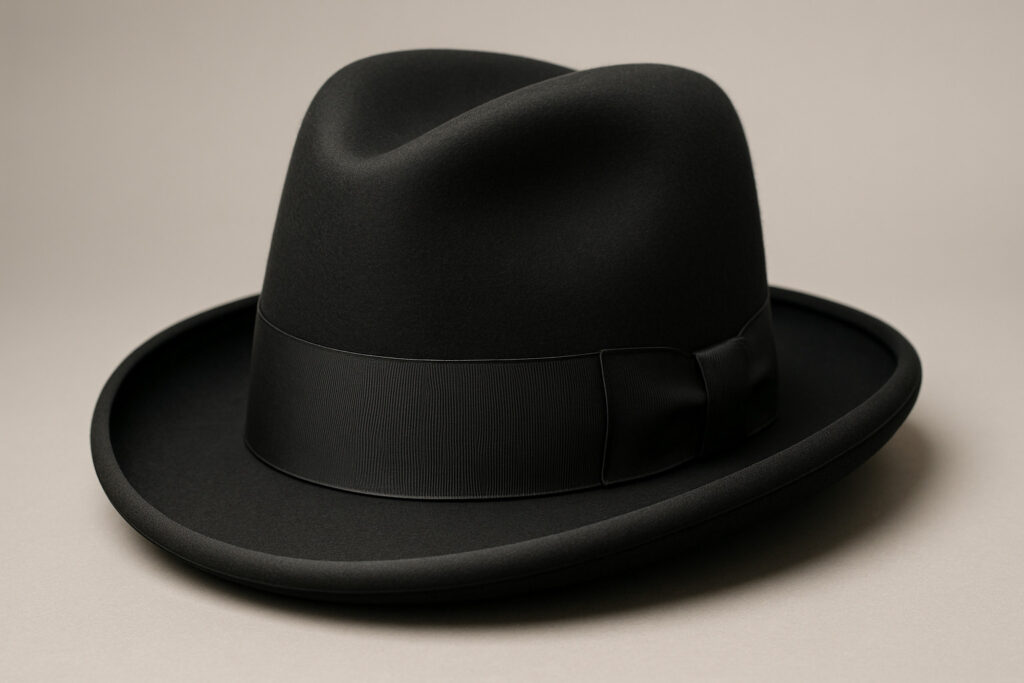
Why is fur felt essential for genuine Homburg quality?
Fur felt, particularly from beaver or rabbit blends, is fundamental to authentic Homburg hats because it provides the density, smooth finish, and structural integrity required for this formal style. Unlike wool felt which can appear fuzzy and lacks the same durability, quality fur felt maintains sharp creases and a luxurious hand feel that defines premium formal headwear. The felting process involves matting animal fibers under heat and pressure to create a seamless material that can be shaped while retaining its form. For Homburg hats, we recommend blends containing at least 30% beaver fur for optimal appearance and longevity in formal settings.
What distinguishes traditional Homburg blocking techniques?
Traditional Homburg blocking involves specific wooden forms that create the signature center dent crown and precisely curved brim. Unlike simpler hat shapes, the Homburg requires multiple blocking stages where the felt is stretched over different forms to achieve the distinctive silhouette. The process begins with a conical block for the basic crown shape, followed by specialized blocks for the center crease, and finally brim blocks that establish the characteristic curl. Master blockers use steam and pressure to permanently set the shape, a skill that requires years of training to perfect. This labor-intensive process ensures the hat maintains its form through years of wear.
Which manufacturers specialize in traditional formal headwear?
Finding manufacturers with genuine Homburg expertise requires looking beyond general headwear producers to specialists in formal felt hats. These manufacturers preserve traditional techniques while adapting to modern market demands.
True Homburg specialists typically operate smaller-scale workshops with experienced craftspeople, maintain relationships with premium felt suppliers, and demonstrate deep understanding of formalwear traditions and proper proportions for different head shapes and sizes.
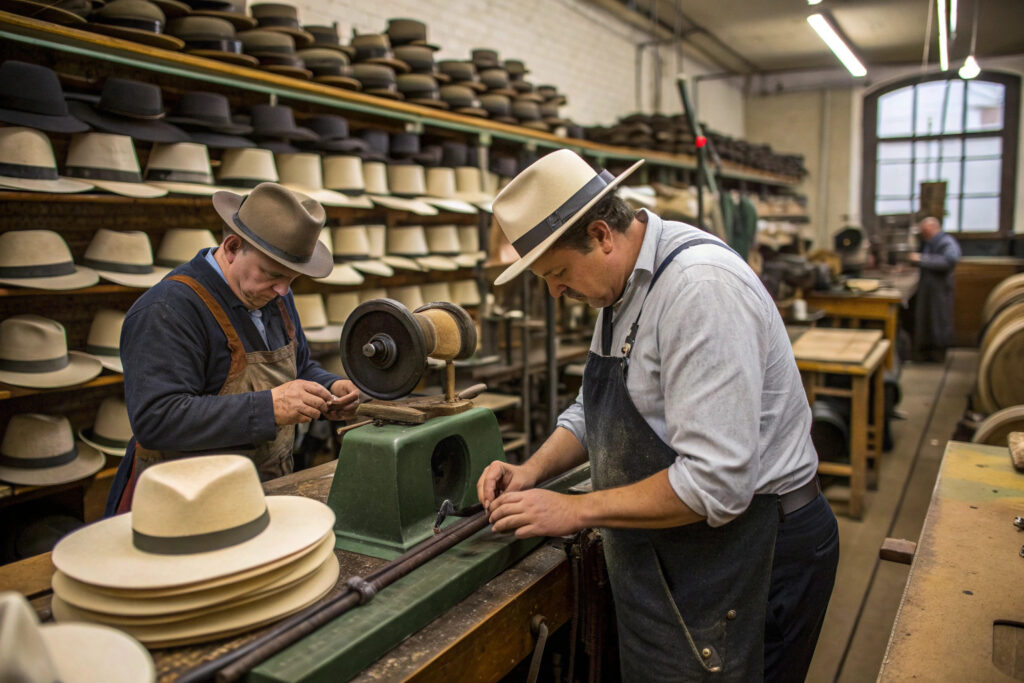
What capabilities indicate genuine Homburg expertise?
Manufacturers with authentic Homburg expertise demonstrate several key capabilities, including in-house blocking facilities with traditional wooden forms, skilled personnel trained in traditional millinery techniques, and access to quality fur felt suppliers. They should be able to produce samples with the precise brim curl and crown proportions that define the Homburg silhouette. Additional indicators include offering custom sweatband embroidery, silk linings with traditional patterns, and proper edge binding techniques. During factory visits, observe whether they maintain separate work areas for formal felt hats versus casual headwear, as this specialization often correlates with higher quality standards.
How important is scale for quality Homburg production?
Scale significantly impacts Homburg quality, with smaller batch production generally yielding superior results. Unlike mass-produced fashion hats, authentic Homburgs benefit from artisanal production methods where experienced craftspeople can devote adequate time to each hat's shaping and finishing. Manufacturers producing 50-200 Homburgs per week typically maintain better quality control than those attempting thousands. This scale allows for individual attention to details like brim wiring, ribbon setting, and final steaming. When sourcing, prioritize manufacturers who limit daily output to ensure each hat receives proper craftsmanship rather than those emphasizing high-volume production.
What customization options are available for Homburg hats?
Custom Homburg hats offer numerous personalization opportunities that enhance their formal appeal and brand differentiation. Understanding the available options helps create distinctive products that stand out in the formalwear market.
Key customization areas include felt quality and color, ribbon treatments, lining details, and dimensional variations that allow retailers to develop signature Homburg styles while maintaining the classic silhouette that defines this formal hat.
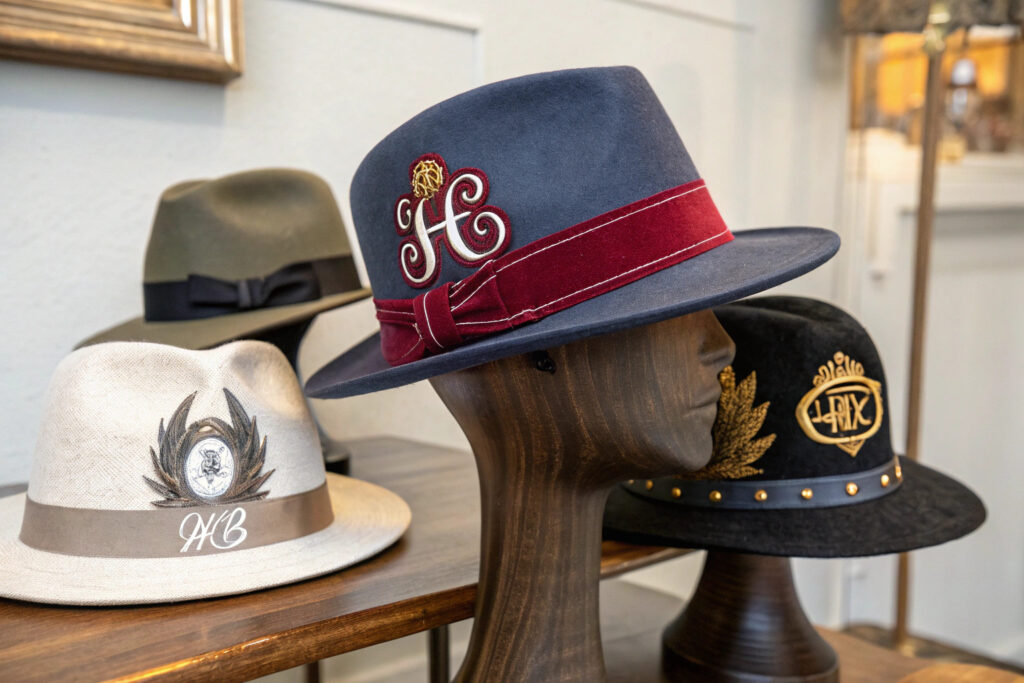
What ribbon and trim variations define Homburg style?
The grosgrain ribbon treatment is a defining Homburg characteristic, typically featuring a traditional bow design on the left side with specific folding techniques. Customization options include ribbon width (typically 1.5-2 inches), color contrasting or matching the felt, edge stitching details, and unique bow constructions. The underbrim ribbon color also offers customization potential, with traditional black or dark navy being standard but custom colors available for distinctive branding. Additionally, the edge binding can be finished with various techniques, from simple overwelt to more decorative cavanagh edges, each requiring different skill levels and affecting the final appearance.
How can lining and interior details be personalized?
Homburg hat interiors offer significant customization through silk or satin linings with printed or embroidered logos, custom sweatband stamps or embroidery, and personalized size labels. The lining construction typically involves crown tips with decorative patterns and reinforced stitching that prevents sagging over time. For premium customization, manufacturers can incorporate moisture-wicking sweatbands, anti-microbial treatments, and even discreet interior pockets for business cards. These details, while not always visible to customers, significantly impact perceived quality and allow brands to create distinctive identity markers within their formal headwear collections.
How to manage quality control for formal felt hats?
Quality control for Homburg hats requires specialized knowledge beyond standard headwear inspection. The rigid nature and formal purpose of these hats demand particular attention to symmetry, finish quality, and material consistency.
Effective Homburg quality control involves both visual inspection and physical testing of the felt density, brim symmetry, ribbon application, and interior finishing. Each stage requires specific checkpoints to ensure the hat meets formalwear standards.
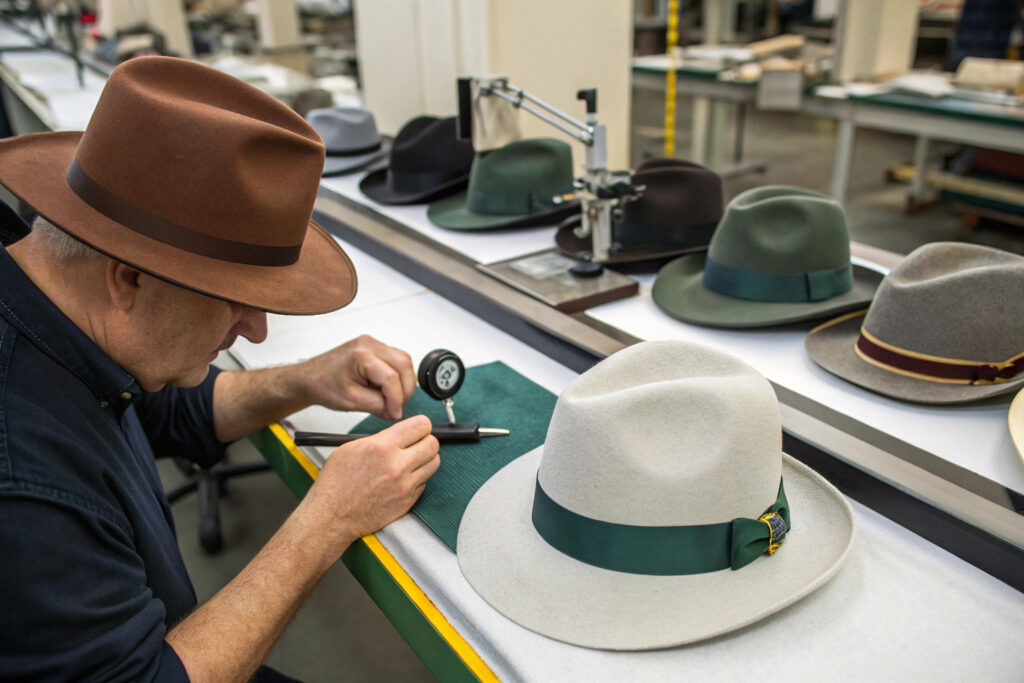
What are the critical symmetry measurements for Homburgs?
Homburg symmetry requires precise measurement of both crown and brim dimensions. The crown height should be consistent around the entire circumference, typically ranging from 4.5 to 5.5 inches depending on the specific style. The brim must maintain consistent width (usually 2-2.5 inches) and identical curl depth on all sides. Quality inspectors use specialized forms and measuring tools to verify these dimensions, paying particular attention to the transition between crown and brim, which should be smooth and symmetrical. Even minor variations become noticeable when worn, compromising the formal appearance.
How to test felt quality and finishing standards?
Testing Homburg felt quality involves both visual inspection and tactile evaluation. Inspectors should check for consistent felt density by gently pressing the crown and observing the recovery speed—higher quality felts return to shape immediately. The surface should be smooth without visible fibers or imperfections, and the color should be consistent throughout with no fading or patchiness. Finishing standards evaluation includes examining the ribbon application for secure, invisible stitching, checking the brim edge for smooth binding, and verifying that all interior components are properly aligned and securely attached. These details separate premium formal headwear from mass-market alternatives.
Conclusion
Sourcing custom Homburg hats requires partnering with manufacturers who understand both the traditional craftsmanship and contemporary formalwear market. The successful sourcing strategy balances authentic construction techniques with practical business considerations, ensuring your Homburg collection meets quality expectations while maintaining commercial viability.
At Global-Caps, we've preserved traditional Homburg manufacturing techniques while implementing modern quality control systems. Our experienced craftspeople understand the precise blocking, steaming, and finishing required for authentic Homburg hats that meet formalwear standards. To discuss your custom Homburg requirements or request samples, please contact our Business Director Elaine at elaine@fumaoclothing.com. Let us help you add this classic formal accessory to your collection with the quality and authenticity your customers expect.