Getting your hat designs from the drawing board in your studio to the hands of customers in Vietnam can feel daunting. Between navigating unfamiliar logistics, managing customs, and ensuring timely delivery, many fashion brands and retailers hesitate to tap into this vibrant market. However, with the right strategy and partners, shipping hats from China to Vietnam can be a streamlined and profitable part of your business.
This guide will walk you through the entire process. We will cover how to choose the fastest and most cost-effective shipping methods, the critical customs and compliance rules you must know to avoid costly delays, and how to leverage professional partners for a seamless operation. By the end, you'll have a clear roadmap to efficiently serve your Vietnamese customers.
How to Choose the Best Shipping Method for Hats to Vietnam?
Selecting the right shipping method is a balance between cost, speed, and the nature of your hat business. For small batches and direct-to-consumer sales, e-commerce parcel services are ideal. For bulk shipments to support retail stores or local distribution, freight solutions offer better economies of scale.
The best choice depends entirely on your order volume and urgency. For individual online orders, opt for dedicated e-commerce parcel lines. For bulk inventory replenishment, consolidated sea or road freight is most cost-effective.
What Are the Best Options for E-Commerce Parcel Delivery?
For direct-to-consumer sales or small wholesale batches, specialized cross-border parcel services are highly efficient. These are designed for the e-commerce flow, handling clearance and last-mile delivery in one package.
Major logistics providers have launched competitive services for the Southeast Asia route. For instance, Cainiao offers a "Standard Direct Line" from China to Vietnam with a transit time as fast as 3 days and claims rates about 20% below the market average. Similarly, JD Logistics is enhancing its network with direct cargo flights and plans to launch specialized China-Vietnam small parcel services. These integrated solutions are excellent for brands testing the market or operating on a drop-shipping model, as they simplify the process into a single, trackable shipment.
When Should You Use Bulk Freight Solutions?
When your order volumes grow—such as shipping seasonal collections to a Vietnamese distributor or replenishing your own local warehouse—bulk freight becomes necessary. Here, you have several options:
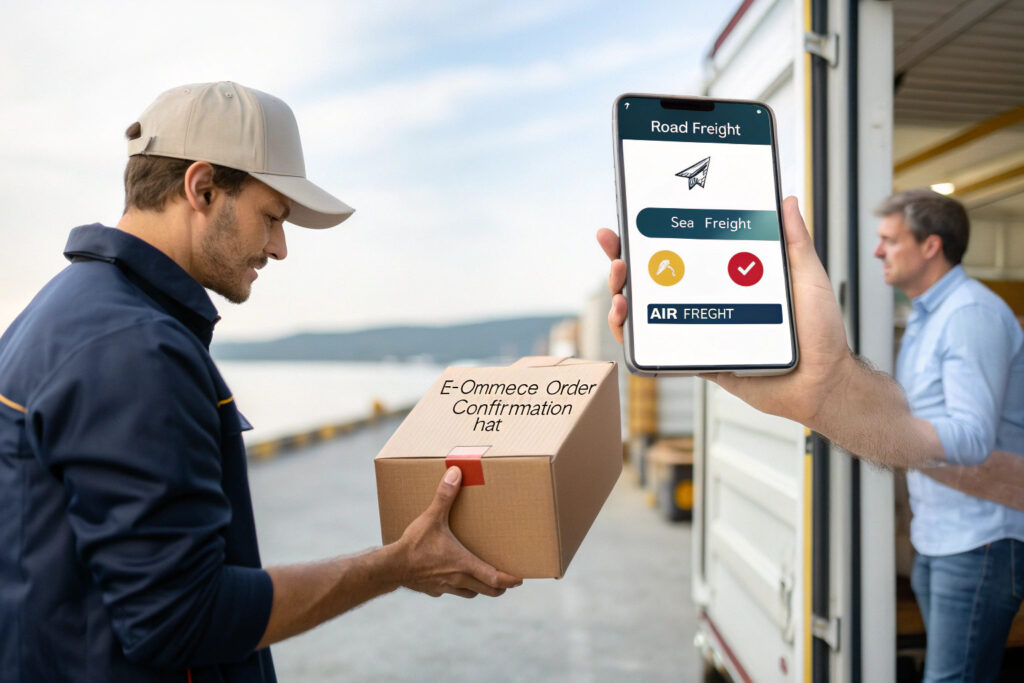
- Road Freight: This has become remarkably efficient. New cross-border road transport agreements allow Chinese trucks to drive directly to Hanoi without unloading goods at the border. This "one-truck-through" service can reduce the transit time from China to Hanoi to as little as 2 days, which is faster than traditional sea freight and more cost-effective than air freight. It's an ideal balance for time-sensitive bulk shipments.
- Sea Freight: For the largest volumes where cost is the primary driver, sea freight is the standard choice. Shipping a full container (FCL) from a Chinese port like Ningbo or Shanghai to Hai Phong in Vietnam can take 5-8 days door-to-door. For smaller volumes that don't fill a container, Less than Container Load (LCL) services allow you to share container space with other shippers.
- Air Freight: While expensive, air freight is the solution for high-value, urgent, or very small bulk shipments. It typically takes 1-3 days. Companies like SF Express have developed robust intra-Asia air networks that connect major hubs.
What Are the Key Customs and Compliance Rules in Vietnam?
Navigating Vietnamese customs is arguably the most critical step for a smooth import process. Overlooking compliance can lead to severe penalties, shipment seizures, or complete rejection at the border. Vietnam has been actively strengthening its customs enforcement, particularly regarding product origin and intellectual property.
Understanding and adhering to labeling, valuation, and import declaration rules from the start is non-negotiable for a sustainable business.
Why Are Product Origin Labels So Critical?
Vietnamese authorities are rigorously cracking down on false or missing country-of-origin labels. A national "high-pressure" campaign specifically targets counterfeit "Made in Vietnam" labels and goods without any origin marking.
Your hats must have clear, permanent, and accurate origin labels. If your hats are manufactured in China, the label must state "Made in China." Do not use mixed or ambiguous labels. Furthermore, you must have the supporting Certificate of Origin (CO) ready for customs. The provided commercial invoice should also precisely match the labeled origin. Failure to comply can result in the entire shipment being fined and ordered to exit Vietnam.
How Can You Avoid Costly Customs Delays and Penalties?
Beyond labeling, several other areas require careful attention to avoid the "Red Channel" (100% inspection) and delays:
- Accurate Valuation and HS Code: Declare the true value of your goods. Consistently under-declaring value to save on duties is a high-risk behavior that customs systems easily flag. Similarly, using the correct Harmonized System (HS) code for your type of hat is essential for proper duty assessment.
- Complete Documentation: A clean and consistent document package is your best defense. This includes the commercial invoice, packing list, bill of lading/air waybill, and the aforementioned Certificate of Origin. Inconsistencies between these documents are a major red flag.
- Special Import Regimes: If you are importing materials (like fabrics) into Vietnam for manufacturing and re-export, you might use special schemes like E31. These require strict compliance with intended use and thorough production record-keeping.
Proactive compliance is key. Consider consulting with a local legal or customs broker specializing in Vietnamese import law to audit your process before your first shipment.

How to Leverage 3PL and Supply Chain Partners in Vietnam?
You don't have to manage China-Vietnam logistics alone. Third-party logistics (3PL) providers and integrated supply chain partners exist to handle the complexity for you. They are especially valuable if you plan to scale, hold local inventory, or manage a multi-channel sales strategy in Vietnam.
Partnering with experts transforms logistics from a headache into a strategic advantage, offering scalability, local expertise, and risk mitigation.
What Services Do Integrated Logistics Providers Offer?
Leading logistics companies now offer more than just transportation; they provide end-to-end supply chain solutions tailored for cross-border trade. For example, SF Express's "China-Vietnam Smart Reach" product is designed for the "China materials -> Vietnam manufacturing -> global distribution" model, offering door-to-door road transport with full visibility. Similarly, JD Logistics operates a network of over 100 overseas and bonded warehouses globally, including several in Southeast Asia, which can be used for inventory storage and faster local delivery.
These partners can manage the entire journey: picking up from your factory in China, handling export formalities, main leg transportation, Vietnamese import clearance, and final delivery to a warehouse or store.
Is Using a Vietnamese Fulfillment Warehouse Right for You?
For growing businesses, using a fulfillment warehouse in Vietnam can be a game-changer. This model involves shipping bulk hat inventory to a local warehouse managed by a partner. When a customer in Vietnam places an order on your website or a local platform, the warehouse picks, packs, and ships the order domestically.
This approach has two major benefits:
- Drastically Faster Local Delivery: Customers get their hats in 1-2 days instead of 3-5 days cross-border.
- Simplified Customs: You clear customs once for the entire bulk shipment, rather than for every individual customer order.
Providers like Cainiao and others have established such overseas warehouse networks in key Southeast Asian markets. This model is perfect for brands with predictable demand looking to improve customer experience and operational efficiency.
What Are the Payment and Cost Considerations?
A successful shipping strategy must have a clear financial plan. Beyond the obvious freight charges, you need to budget for duties, taxes, and operational fees to understand your true landed cost per hat in Vietnam.
Transparent cost planning prevents surprises and ensures your pricing strategy maintains healthy margins in the Vietnamese market.
How Should You Structure International Payments?
Secure and efficient payment is foundational. For goods, common methods include:
- Telegraphic Transfer (T/T): A standard method, often structured with a deposit (e.g., 30%) before production and the balance before or after shipment.
- Letter of Credit (L/C): Provides more security for both buyer and seller but is more complex and costly.
- Secure Escrow Services: Platforms like Alibaba's Trade Assurance can hold payment until the buyer confirms receipt.
For integrated partners offering "trade-logistics" solutions, financial services might be bundled. For instance, SF Express's "Yiliantong" solution provides end-to-end services that include trade execution and multi-currency financial support for core enterprises.
What Are the Main Cost Components?
Your total cost includes more than just the shipping quote. Key components are:
| Cost Component | Description | Key Consideration |
|---|---|---|
| Freight Charges | Cost of transport (air, sea, road) from origin to destination port/yard. | Get quotes based on actual volume (CBM or container type). |
| Customs Duties & Taxes | Import duties, Value-Added Tax (VAT) levied by Vietnam. | Duty rate depends on the hat's material and HS code. VAT is typically 10%. |
| Insurance | Coverage for loss or damage in transit. | Highly recommended for valuable shipments. |
| Origin & Destination Fees | Handling, documentation, customs clearance agency fees. | These are often quoted as a "Local Charge" by forwarders. |
| Warehouse & Fulfillment | Storage, picking, packing, local delivery (if using 3PL). | Usually charged per unit or as a monthly storage fee. |
Always request a comprehensive "All-In" quote from logistics partners that includes as many of these components as possible. For instance, a Door-to-Door (DDP) service can provide a single price covering everything from pickup in China to delivery in Vietnam after taxes paid.
Conclusion
Shipping hats from China to Vietnam via cross-border e-commerce is a manageable process when broken down into key steps: selecting the right shipping method for your business size, rigorously complying with Vietnamese customs regulations, and considering the support of professional logistics partners. By prioritizing clear origin labeling, accurate documentation, and strategic planning around costs and fulfillment, you can build a reliable and efficient supply chain that connects your products to a growing and dynamic market.
If you are looking for a manufacturing partner in China that understands the intricacies of producing and navigating international logistics for fashion accessories like hats, we can help. At shanghaifumaoclothing, we specialize in guiding our clients through the entire process. For a discussion on how we can support your specific Vietnam market entry, please contact our Business Director Elaine at: elaine@fumaoclothing.com.