
You're probably used to thinking about shipping from China in terms of two options: slow and cheap sea freight, or fast and expensive air freight. For years, that was the reality. But what if I told you there's a new, third option that's changing the game for shipping to Southeast Asia? A land-based route that's faster than sea and cheaper than air. This isn't a future dream; it's happening right now.
The best way to ship hats to ASEAN markets like Thailand, Malaysia, and Singapore is by leveraging the China-Laos Railway. This modern railway acts as a "land bridge," connecting directly from Kunming, China, to Vientiane, Laos. From there, your goods can be seamlessly transferred to trucks or other rail lines to reach their final destination across the ASEAN region in record time.
As the owner of Shanghai Fumao Clothing, I've seen firsthand how logistics can make or break a business. For over 20 years, we've navigated the complexities of global shipping. The opening of the China-Laos Railway is one of the most significant logistical developments I've witnessed. It's a game-changer for our clients looking to tap into the rapidly growing ASEAN market. Let me explain how this "new silk road" works and why it might be the perfect solution for your business.
What Is the China-Laos Railway?
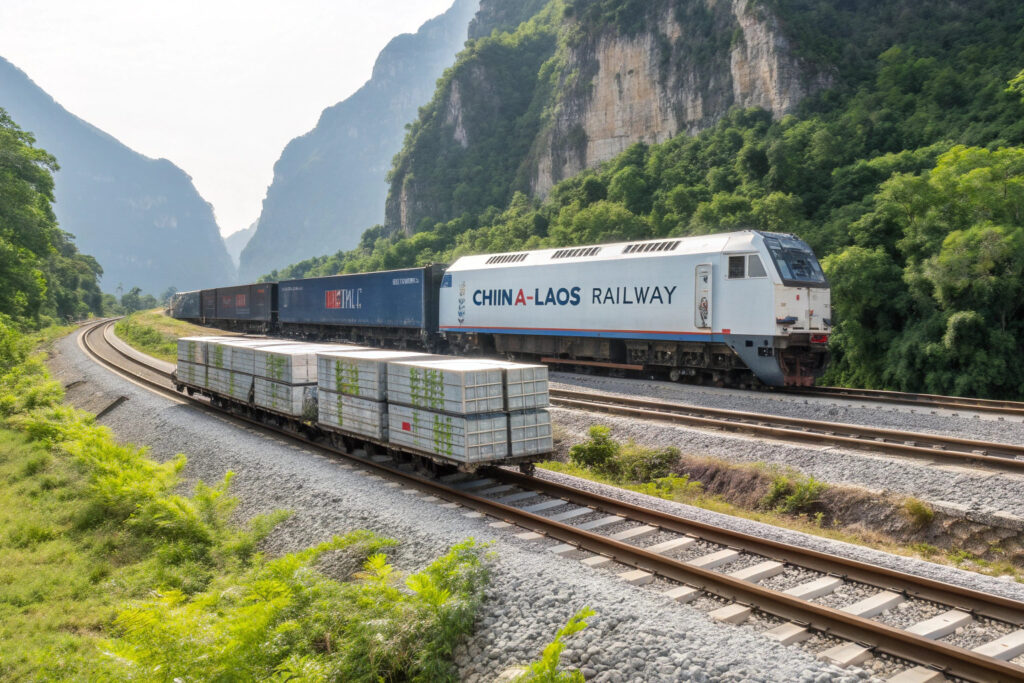
You might have heard about the "Belt and Road Initiative," and this railway is one of its most impressive achievements. It's not an old, slow-moving train line. The China-Laos Railway is a modern, standard-gauge electric railway built for speed and efficiency.
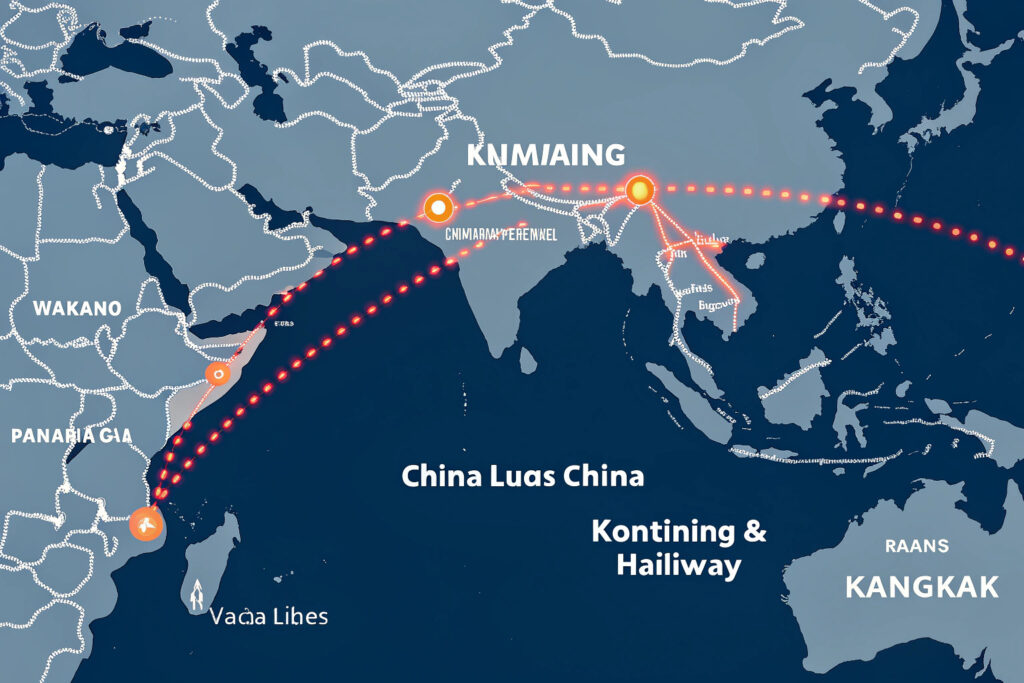
The railway stretches over 1,000 kilometers, starting in the major Chinese city of Kunming (the capital of Yunnan province) and ending in Vientiane, the capital of Laos. What makes it so revolutionary is that it cuts directly through the mountainous terrain that has historically made land transport between China and Southeast Asia so difficult and slow. Instead of long, winding roads, the train travels through a series of tunnels and over high bridges, allowing for consistent and rapid transit.
Think of it as a direct artery connecting China's manufacturing heartland with the doorstep of the ASEAN market. Before this, goods had to either take a very long sea journey around the coast or a slow, unpredictable truck journey. Now, a container of our hats can be loaded in Kunming and arrive in Vientiane in about 30 hours. This predictable, fast connection is the key that unlocks the major advantages of this route.
When did the railway open for service?
The China-Laos Railway officially opened for service on December 3, 2021. Since then, it has seen a rapid increase in both passenger and freight traffic, quickly becoming a vital economic corridor. Its success has been widely reported by international news outlets like Reuters, which have highlighted its significant impact on regional trade and the Laotian economy.
Is the railway's gauge compatible with other countries?
This is a crucial point. The China-Laos Railway uses a 1,435 mm "standard gauge," which is the same as China's railway system. This allows for seamless travel without needing to change trains at the border. Thailand's rail system is currently mostly "meter gauge," but they are in the process of building a high-speed, standard-gauge line that will eventually connect directly to the China-Laos Railway at the Laotian border. This future connection, as detailed by railway journals like the Railway Gazette International, will make the "land bridge" even more efficient.
Why Is This Railway a Game-Changer for Logistics?
For any importer, the choice of shipping method is always a balance between three factors: speed, cost, and reliability. The China-Laos Railway has created a new "sweet spot" that optimizes all three for the ASEAN market.
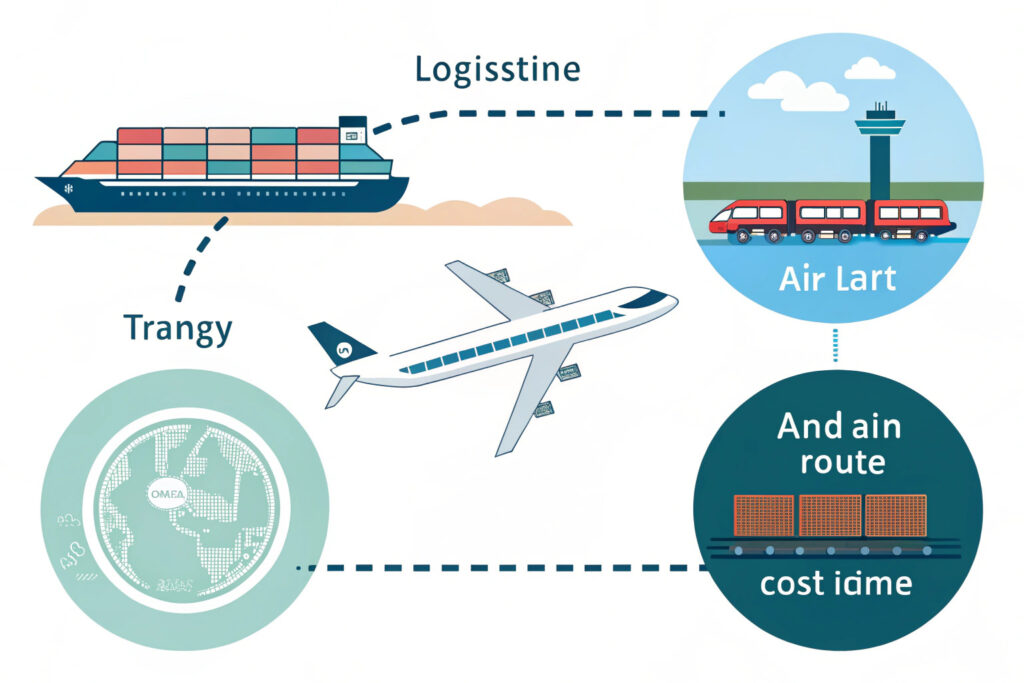
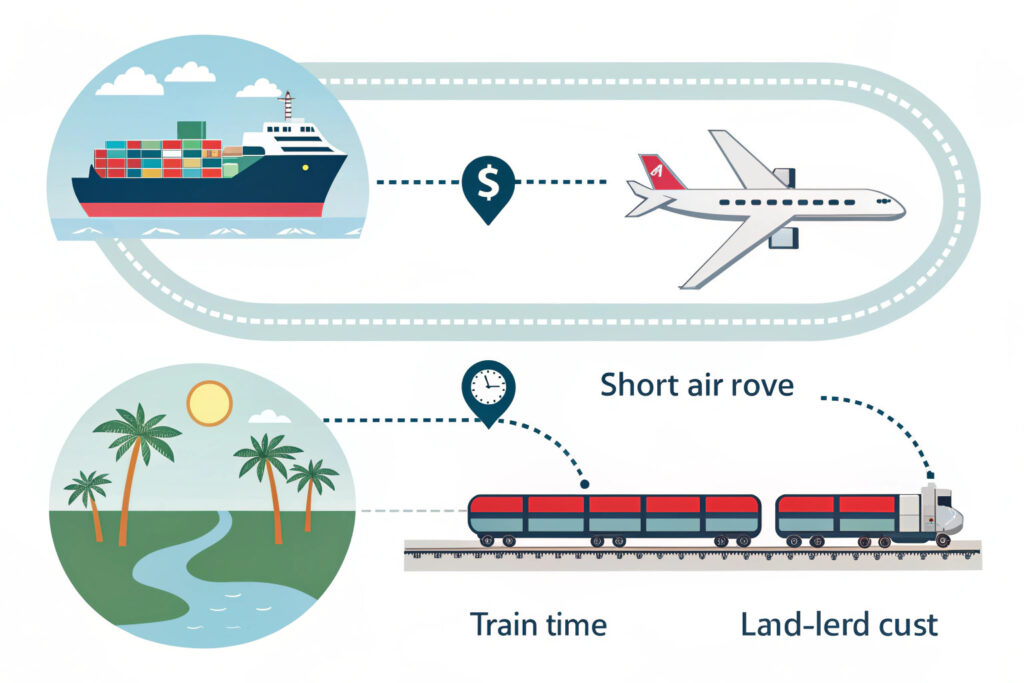
Here’s a simple comparison for shipping a container of hats from China to Bangkok, Thailand:
- Traditional Sea Freight: The container would be trucked to a major port like Shanghai or Shenzhen, wait for a vessel, and then sail all the way around Vietnam and Cambodia. Time: 20-30 days. Cost: Low.
- Air Freight: The goods would be flown directly. Time: 2-4 days. Cost: Very High.
- China-Laos Railway + Truck: The container is railed from Kunming to Vientiane (about 30 hours) and then transferred to a truck for the final leg to Bangkok (about 12 hours). Total Time: 3-5 days. Cost: Medium.
As you can see, the railway offers a speed that is comparable to air freight but at a cost that is significantly lower. It's a perfect middle ground. For fashion items like hats, where trends move fast, getting your product to market weeks earlier than by sea can be a massive competitive advantage. This new option fundamentally changes the logistical planning for ASEAN-bound goods.
How much cheaper is it than air freight?
While costs fluctuate, shipping via the China-Laos Railway can be anywhere from 50% to 75% cheaper than traditional air freight for the same route. This makes it an incredibly attractive option for goods that are time-sensitive but cannot justify the high expense of air cargo. Financial news outlets like Bloomberg have analyzed the economic impacts, noting the significant cost savings for businesses using the new rail line.
Is it more reliable than trucking?
Yes, significantly. International road transport can be subject to border crossing delays, traffic congestion, and variable road conditions. A railway operates on a fixed schedule and is not affected by traffic. This provides a much higher degree of predictability and reliability, which is crucial for managing inventory and meeting delivery deadlines. This reliability is a key selling point for logistics providers who specialize in this route.
How Do You Actually Ship Hats Using This Route?
The process of using the railway is quite straightforward and is managed by specialized logistics companies. As a manufacturer, we don't just hand the boxes to a train conductor. We work with a freight forwarder who coordinates the entire "multimodal" journey.
Here is the step-by-step process we follow at Shanghai Fumao Clothing when shipping an order of hats for a client:
- Inland Trucking: First, the finished and packed cartons of hats are picked up from our factory and trucked to a designated rail freight station in a major city like Kunming or Chongqing.
- Customs Clearance (China): Our logistics partner handles all the necessary export customs declarations in China. All the paperwork is prepared in advance to ensure a smooth process.
- Rail Transit: The container is loaded onto the train and begins its journey to Vientiane, Laos. The entire shipment can be tracked in real-time.
- Customs and Transfer (Laos): Upon arrival at the Vientiane South Station, the container goes through Laotian customs. Here, it is transferred from the train to a truck for its onward journey. This is the "multimodal" part of the trip.
- Final Mile Delivery: The truck then drives the final leg of the journey to the client's warehouse, for example, in Bangkok, Thailand. The freight forwarder also handles the import customs clearance in the destination country.
The key is to work with a freight forwarder who has experience with this specific route. They have partnerships with the railway operators and trucking companies and understand the specific customs procedures at each border. This seamless, door-to-door service is what makes the process manageable and efficient for our clients, and it's a crucial part of our full-service export solution.
What kind of documentation is needed?
The standard set of export/import documents is required: a Commercial Invoice, a Packing List, and a Bill of Lading (in this case, a Rail Waybill). Your freight forwarder will also need information to file customs declarations. Reputable logistics platforms like Flexport provide excellent checklists of all the documentation needed for international shipping.
Can you ship less than a full container?
Yes. This is called LCL (Less than Container Load) shipping. If your order of hats doesn't fill a whole container, your freight forwarder can consolidate your shipment with goods from other companies into a single container. This makes the route accessible and cost-effective even for smaller businesses and initial test orders.
What Is the Future of This ASEAN Land Bridge?
The China-Laos Railway is just the beginning. It's the first, critical piece of a much larger puzzle: the Pan-Asia Railway Network. The vision is to create a seamless, high-speed rail network that connects China with all the major economic centers in Southeast Asia.
The next major phase, which is already under construction, is the high-speed railway from the Laos border through Thailand to Bangkok. Once this is complete, a container will be able to travel directly from Kunming to Bangkok by rail without ever needing to be transferred to a truck. This will make the route even faster, cheaper, and more efficient. Further plans aim to extend the network south to Malaysia and Singapore.
For businesses like yours and mine, this means the ASEAN market is about to become more accessible than ever before. It will be possible to manufacture goods in China and have them delivered to a store in Kuala Lumpur in just a matter of days, all via land. This will revolutionize supply chain strategies for the entire region. At Shanghai Fumao Clothing, we are positioning ourselves at the forefront of this change, building the partnerships and expertise needed to offer our clients the most advanced logistics solutions.
How will this affect manufacturing in Southeast Asia?
This is a complex question. While it makes it easier to import from China, it also boosts the economies of countries like Laos and Thailand, making them more attractive for investment. It could lead to a more integrated "Factory Asia," where different stages of production happen in different countries, all connected by this efficient rail network. Think tanks like the ISEAS–Yusof Ishak Institute in Singapore frequently publish research on the economic integration of ASEAN and the role of infrastructure projects like this railway.
Are there any geopolitical risks?
As with any major international infrastructure project, there are geopolitical considerations. The project is a cornerstone of China's Belt and Road Initiative, and its strategic implications are watched closely by other global powers. However, for an individual business, the day-to-day operational benefits are clear and tangible. The key is to work with experienced logistics partners who can navigate the regulatory landscape, a point often emphasized by global trade publications like the Journal of Commerce.
Conclusion
The world of global logistics is not static. New routes and new technologies are constantly emerging, creating new opportunities for savvy businesses. The China-Laos Railway is more than just a train line; it's a paradigm shift for trade between China and the ASEAN nations. It offers an unprecedented balance of speed, cost, and reliability that can give your brand a significant competitive edge.
As a manufacturer, our job is not just to produce high-quality hats but also to ensure they get to you as efficiently as possible. By embracing innovations like this new "land bridge," we can offer our clients a smarter, faster, and more cost-effective way to reach one of the world's most exciting and fastest-growing consumer markets.
If you are looking to expand your brand into Southeast Asia and want to explore how you can leverage this new logistics route for your products, my team is ready to help. We can provide a complete, door-to-door solution, from manufacturing to final delivery. Please contact our Business Director, Elaine, at her email: elaine@fumaoclothing.com to learn more.