You're a conscious business owner. You've worked hard to source sustainable materials and ensure ethical production for your hats. But then comes the unavoidable step: shipping. You watch as your container is loaded onto a massive vessel, and you can't help but think about the environmental cost of that journey across the ocean. This feeling of "shipping guilt" is real. You're proud of your product but troubled by the carbon footprint of your supply chain, fearing it undermines your brand's commitment to sustainability.
What if you could take direct responsibility for those emissions? This is the power of carbon offsetting. Offsetting allows you to invest in environmental projects around the world that reduce or remove greenhouse gases from the atmosphere. Each investment generates "carbon credits," which are used to balance out the emissions from your shipment. By offsetting the carbon footprint of your ocean-freighted hats, you can neutralize their environmental impact and transform your supply chain into a force for positive change. At Shanghai Fumao Clothing, we are increasingly guiding our partners through this process, helping them achieve true end-to-end sustainability.
This isn't about "greenwashing"; it's about taking measurable, accountable action. As a manufacturer who has witnessed the evolution of the sustainable supply chain for over 20 years, I believe offsetting is a critical tool for responsible global trade. Let's break down exactly how you can calculate, reduce, and offset the carbon emissions for your hat shipments.
Why Should Your Business Care About Shipping Emissions?
You might think that as a small or medium-sized business, your shipping footprint is just a drop in the ocean. It's easy to feel that the problem is too big and that your individual actions won't make a difference. You might also worry that focusing on emissions will add costs and complexities that you can't afford, distracting you from the core task of running your business.
The reality is that today's consumers are more informed and value-driven than ever before. They are actively choosing to support brands that demonstrate a genuine commitment to environmental responsibility. Your shipping emissions are a part of your brand's story, whether you acknowledge it or not. Ignoring your carbon footprint is a missed opportunity to connect with your customers on a deeper level. Furthermore, proactive environmental management is quickly becoming a hallmark of a resilient, future-proof business.
Addressing your shipping emissions is not just an ethical obligation; it's a powerful business strategy. It enhances your brand's reputation, builds customer loyalty, and prepares your business for a future where carbon accountability is the norm. Let's look at the key drivers.
How does it impact brand image and customer loyalty?
In a crowded marketplace, a strong commitment to sustainability is a powerful differentiator. A 2021 study by WWF showed that searches for sustainable goods have increased globally by 71%. When you can authentically state that your products are "carbon neutral," you send a clear message to consumers that you share their values. This builds trust and fosters a level of brand loyalty that goes beyond product features or price. It transforms a simple purchase into a statement of support for a healthier planet, making your customers feel good about choosing your brand. This emotional connection is the bedrock of long-term customer relationships.
What are the future regulatory and business risks?
The regulatory landscape is changing. Governments and international bodies are moving towards stricter regulations on carbon emissions across all industries, including shipping. The International Maritime Organization (IMO) has already set ambitious targets to reduce the carbon intensity of international shipping. Businesses that start measuring and managing their carbon footprint now will be far ahead of the curve. They will be better prepared for future carbon taxes or emissions trading schemes. Proactively managing your emissions is a smart risk-management strategy that enhances your business's resilience and attractiveness to investors and partners who are increasingly using ESG (Environmental, Social, and Governance) criteria in their decision-making.
Now that you understand the "why," let's get into the "how." First step: calculating your carbon footprint.
How Do You Calculate Your Shipment's Carbon Footprint?
The idea of calculating your carbon footprint can sound incredibly complex, like you need an advanced degree in environmental science. You're a hat expert, not a data scientist. You might worry about finding the right data, using the correct formulas, and getting a number you can trust. This perceived complexity can be a major barrier to getting started.
Fortunately, you don't have to do it alone. The process has become much more accessible thanks to a variety of online tools and logistics partners who can do the heavy lifting for you. The calculation primarily depends on three key pieces of information that you already have: the weight and volume of your shipment, the distance it travels between the port of origin and the port of destination, and the mode of transport (in this case, ocean freight).
With these data points, specialized calculators can provide a reliable estimate of your shipment's CO2 emissions. Let's look at the practical tools you can use.

What tools and calculators can you use?
Several user-friendly online calculators are available to help you estimate your emissions. Many freight forwarders and logistics companies, such as Flexport and Kuehne+Nagel, have integrated carbon calculators into their platforms. If you work with them, they can often provide a precise calculation for your specific shipment as part of their service. For a more general estimate, you can use public tools provided by organizations like the Global Logistics Emissions Council (GLEC). These tools use standardized methodologies to ensure the results are credible and comparable. You simply input your shipment details, and the calculator provides an estimate of the CO2 emissions in kilograms or tonnes.
What data do you need to provide?
To get an accurate calculation, you'll need the following information, which can be found on your shipping documents (like the bill of lading):
- Port of Origin and Port of Destination: (e.g., Shanghai, China to Long Beach, USA). This determines the shipping distance.
- Shipment Weight and Volume: This is typically measured in kilograms (kg) and cubic meters (CBM). The more your shipment weighs and the more space it takes up, the higher its share of the vessel's total emissions.
- Container Type: Specify if you are using a full container (FCL) or sharing a container (LCL - Less than Container Load), as the calculation methods differ slightly.
Providing this data to a reputable calculator or your logistics partner will give you a solid, data-backed emissions figure to work with. This number is the foundation of your offsetting strategy.
With your carbon footprint calculated, the next step is to choose the right offsetting project.
How Do You Choose a High-Quality Offsetting Project?
You have your emissions number—say, 1.5 tonnes of CO2. Now you need to buy "credits" to offset it. But a search for carbon offsetting projects reveals a dizzying array of options: planting trees in Peru, funding wind farms in India, distributing clean cookstoves in Kenya. How do you know which projects are legitimate and actually making a difference? You're worried about investing in a low-quality project or, worse, a scam, which would completely undermine your sustainability efforts.
This is where third-party verification becomes your most important guide. A high-quality carbon offset project is one that has been rigorously vetted and certified by an independent, internationally recognized standard. These standards ensure that the project is real, permanent, and additional (meaning the emission reduction would not have happened without the project's existence). Look for projects certified by standards like the Gold Standard or the Verified Carbon Standard (VCS).
Choosing a certified project guarantees that your investment has a real, measurable, and positive impact on the environment. Let's look at the types of projects and the standards that verify them.
What types of projects are available?
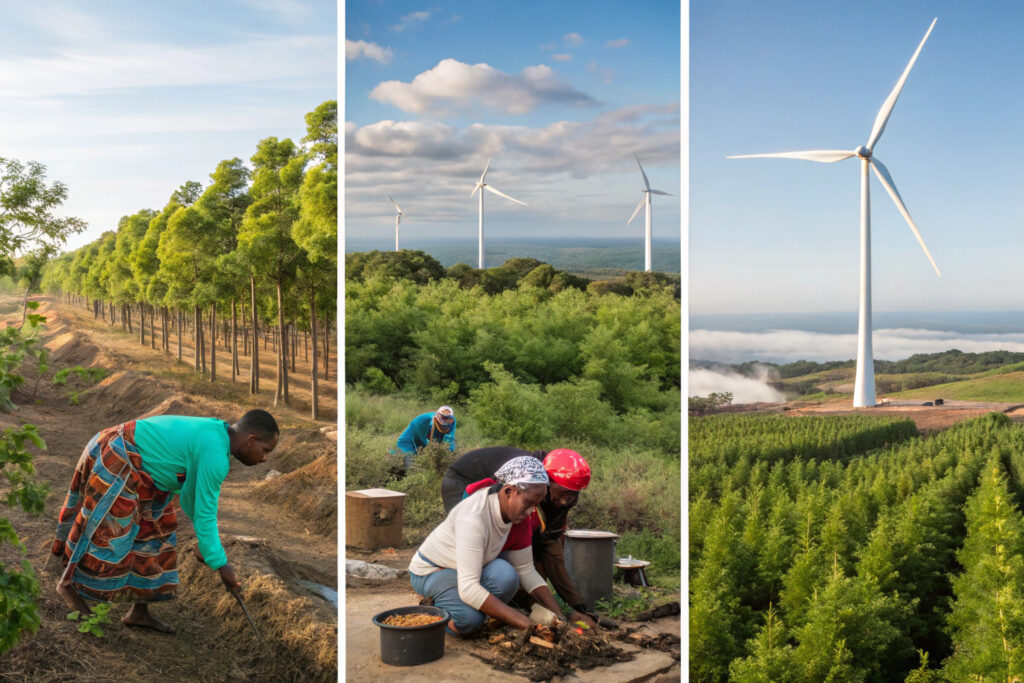
Carbon offset projects are incredibly diverse, allowing you to choose a project that aligns with your brand's values. Common project types include:
- Reforestation and Afforestation: Planting trees to absorb CO2 from the atmosphere. These projects also help restore biodiversity and support local communities.
- Renewable Energy: Funding the development of wind, solar, or hydro-power projects to replace fossil fuel-based energy generation.
- Community Projects: These often have strong social co-benefits. A great example is the distribution of clean cookstoves in developing nations, which reduces emissions from burning wood or charcoal and also improves indoor air quality and health, particularly for women and children.
- Methane Capture: Capturing methane gas from landfills or agricultural operations and converting it into energy.
What are the key certification standards to trust?
To ensure your investment is credible, only purchase carbon credits from projects certified by leading third-party standards. The two most respected global standards are:
- The Gold Standard: Established by the WWF and other NGOs, this standard is renowned for its rigorous requirements, ensuring that projects not only deliver quantifiable emissions reductions but also contribute to sustainable development goals.
- Verified Carbon Standard (VCS) Program: Managed by the non-profit Verra, VCS is the world's most widely used voluntary greenhouse gas crediting program.
Platforms like 3Degrees and Pachama act as marketplaces where you can browse and purchase credits from projects certified under these standards, making the process transparent and secure.
How Do You Communicate Your Commitment to Customers?
You've done the hard work: you've calculated your emissions, purchased high-quality carbon credits, and successfully offset your shipment. But if you don't tell anyone, you're missing out on the biggest benefit: building a stronger brand. You might feel hesitant to talk about it, worried it will sound like bragging or "greenwashing." You're not sure how to communicate this complex topic in a way that is simple, authentic, and engaging for your customers.
The key to effective communication is transparency and storytelling. Don't just say you're "carbon neutral"; show them how. Use simple, honest language to explain the steps you've taken. Tell the story of the specific offsetting project you chose to support. By being transparent and educational, you build credibility and invite your customers to be part of your brand's positive impact.
This is your opportunity to turn a logistical process into a powerful marketing story. At Shanghai Fumao Clothing, we encourage our partners to share their sustainability journey, as it's one of the most powerful ways to connect with today's conscious consumer.

Your website's "Sustainability" page is the perfect place for a detailed explanation. Create a dedicated section that outlines your process: how you calculate your emissions, the platform you use to purchase credits, and, most importantly, the story of the project you're supporting. Include photos and details about the reforestation, renewable energy, or community project. On social media, you can create engaging content like short videos or infographics that break down the concept of offsetting. Announce each time you offset a new shipment and celebrate that milestone with your followers. This creates an ongoing narrative of your commitment. This type of content marketing can be incredibly effective at building a community around your brand's values.
Why are product-level communications so powerful?
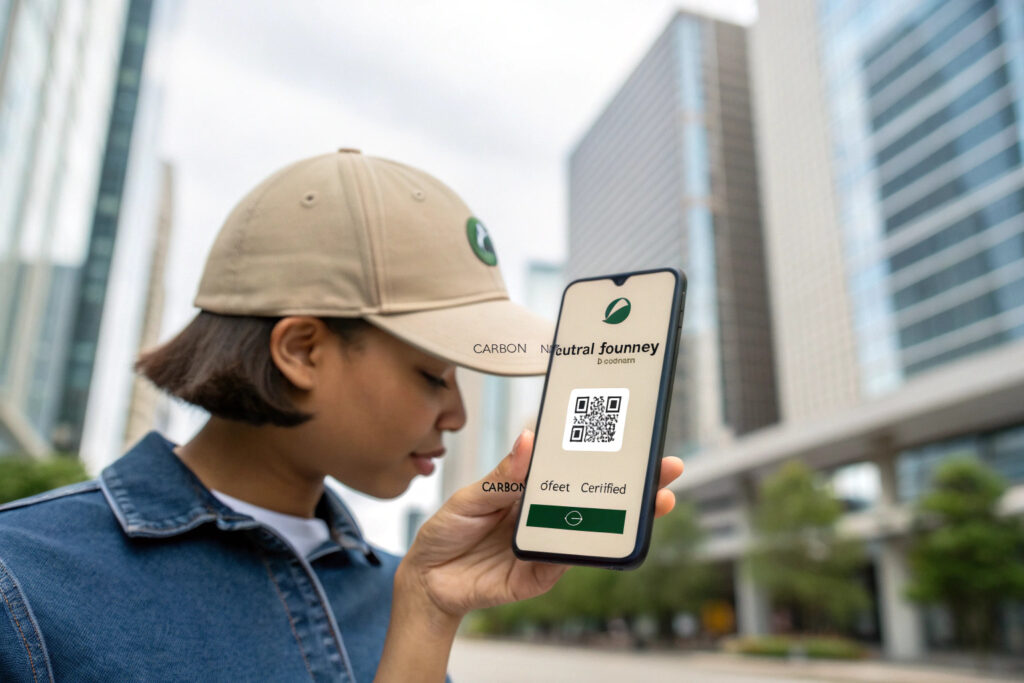
Bringing the message directly to the product is the most impactful way to communicate your efforts. A simple icon or statement on your product's hangtag, such as "This Hat's Journey is Carbon Neutral," immediately grabs attention. You can take it a step further by adding a QR code to the tag. When a customer scans the code, it can link directly to a page on your website that tells the story of the specific offset project connected to that batch of products. This creates an interactive and highly transparent experience, directly connecting their purchase to a positive outcome. It's a powerful tool for building trust and demonstrating a level of supply chain transparency that modern consumers demand.
Conclusion
The journey of a hat from our factory to your customer's head is a global one, and it comes with an environmental cost. However, by embracing carbon offsetting, you can take direct and meaningful action to neutralize this impact. The process is more accessible than ever: calculate your emissions using reliable tools, invest in high-quality, certified offsetting projects, and, most importantly, share your journey with your customers. This commitment transforms your supply chain from a source of emissions into a vehicle for positive global change.
Taking responsibility for your carbon footprint is no longer a niche concern; it is a fundamental aspect of modern, resilient, and reputable business. It's an investment in your brand, your customer relationships, and our shared planet.
If you are looking for a manufacturing partner who shares your commitment to sustainability and can help you navigate the process of creating a more responsible supply chain, we are here to help. Please reach out to our Business Director, Elaine, at elaine@fumaoclothing.com to discuss how we can build a greener future, one hat at a time.