
The bucket hat has become a year-round fashion staple, but as the weather turns cold, a standard cotton bucket hat just won't cut it. I often get this question from clients: "Our customers love the bucket hat style, but they need something warm for winter. What should we be looking for?" It's a critical question because a "winter" hat that doesn't actually keep you warm is a failed product.
The biggest pain point for buyers is navigating the sea of options and ending up with a hat that looks warm but offers no real insulation. They might choose a hat made of a thick but non-insulating material, or one that lacks the features needed to protect against wind and cold. This leads to disappointed customers who feel the product didn't live up to its "winter" promise.
A true winter bucket hat is an engineered system designed for warmth. It’s not just about using a thick fabric; it's about choosing the right insulating materials, incorporating functional design features, and ensuring a snug, protective fit. At Shanghai Fumao Clothing, we've dedicated significant R&D to developing winter headwear that delivers both style and thermal performance. In this guide, I'll share my insider knowledge on what to look for in a winter bucket hat, from the core materials to the crucial construction details.
Which Materials Provide the Best Insulation?
The most important factor in a winter hat's performance is its material. The ability of a fabric to trap air is what gives it insulating power. A material that simply looks thick might not have the right fiber structure to hold warm air, leaving the wearer feeling cold.
A common mistake is choosing a material based on weight alone. For example, a heavy, dense cotton canvas might feel substantial, but cotton is a poor insulator, especially when damp. It conducts heat away from the body. Buyers who select the wrong material end up with a product that fails in its primary function: providing warmth. This is a sourcing error that can quickly lead to negative reviews and a loss of customer trust.
At Global-Caps, our material selection process for winter hats is rigorous. We focus on fabrics with proven insulating properties that trap air effectively. It's about understanding the science of thermal dynamics and applying it to fashion. Let's break down the best material choices for a genuinely warm bucket hat.
Why is wool a top choice for warmth?
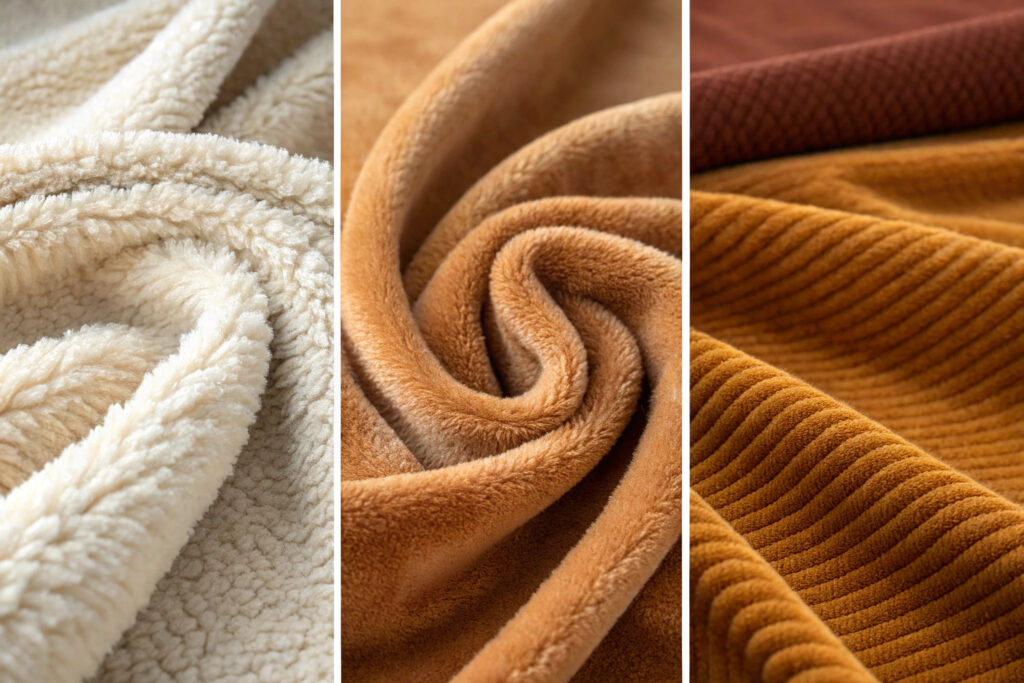
Wool is nature's high-performance insulator. The natural crimp of wool fibers creates thousands of tiny air pockets that trap body heat with incredible efficiency. This is why it has been the go-to material for cold-weather gear for centuries. Furthermore, wool can absorb a significant amount of moisture without feeling wet, and it continues to insulate even when damp—a critical advantage over cotton. Materials like boiled wool, wool felt, or a thick wool tweed are all excellent choices for a warm, structured, and weather-resistant bucket hat. The benefits of wool for insulation are a core topic for organizations promoting natural fibers, such as the International Wool Textile Organisation (IWTO).
What are the benefits of fleece and sherpa?
Fleece, and its fluffier cousin sherpa (or teddy fleece), are synthetic materials engineered specifically for warmth. Made from polyester, these fabrics have a deep, soft pile that is exceptional at trapping air, mimicking the insulating properties of natural sheep's fleece. The main advantages of fleece are that it is lightweight, soft against the skin, and hydrophobic (it repels water and dries very quickly). This makes it a fantastic, easy-care option for a cozy, casual winter bucket hat. The innovation in synthetic fleece was a major breakthrough in outdoor apparel, pioneered by brands like Polartec®, and it remains a staple for its reliable performance and comfort.
How Can Construction and Linings Boost Warmth?
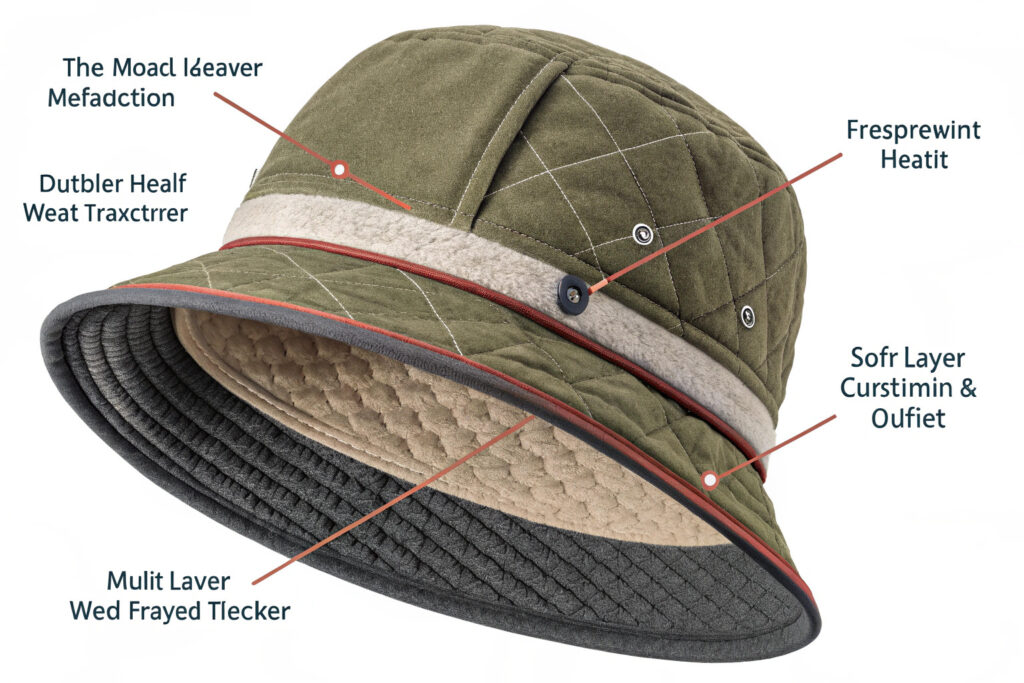
A warm outer material is a great start, but for true winter performance, you need to think about the hat's entire construction. A single layer of fabric, no matter how warm, will struggle against biting wind and deep cold. The real secret to a top-tier winter hat is a multi-layer system.
Many buyers overlook the importance of a quality lining. They might approve a hat with a great wool outer shell but not specify the lining material. The factory may then use a standard, thin polyester or cotton lining to save costs. This completely undermines the hat's thermal properties, as it creates a weak point for heat to escape and does nothing to block wind.
We approach the construction of a winter hat like building a well-insulated house. You need a weather-resistant exterior, effective insulation in the middle, and a comfortable interior. By combining different layers, we can create a hat that is significantly warmer than the sum of its parts.
What type of lining is best for a winter hat?
The lining is the layer that sits next to your hair and skin, and its job is twofold: to provide comfort and to add another layer of insulation. A fleece or microfleece lining is an excellent choice. It's incredibly soft, feels warm to the touch, and adds significant insulating power. Another premium option is a quilted satin or flannel lining. The quilting creates pockets that trap air, adding insulation, while the smooth satin feels luxurious and prevents "hat hair." The key is to avoid thin, non-insulating linings that offer no thermal benefit. The choice of lining material is a critical detail in high-quality outerwear construction.
What is the role of an interlining or insulation layer?
For maximum warmth in extreme cold, an "interlining" can be added. This is a hidden middle layer of insulation sandwiched between the outer shell and the inner lining. This is where we can incorporate high-tech materials without affecting the hat's outer style. We can use a thin layer of synthetic insulation, like Thinsulate™ or similar materials, which provide exceptional warmth with very little bulk. This technique, borrowed from high-performance ski jackets and gloves, can turn a stylish bucket hat into a serious piece of cold-weather gear. Understanding these advanced materials is part of modern apparel technology.
Do Brim and Crown Design Affect Warmth?
While material and lining are the primary drivers of warmth, the physical shape of the bucket hat can also be optimized for cold-weather protection. The classic bucket hat shape is a good starting point, but small modifications to the brim and crown can make a big difference in how well it protects you from the elements.
A common design flaw is creating a winter bucket hat with a wide, flat, or upward-angled brim. While stylish, this shape can catch wind and snow, directing it toward the face rather than away from it. It also does little to protect the ears, which are highly susceptible to cold. The design must prioritize protection over pure fashion aesthetics.
At Shanghai Fumao Clothing, we believe functional design is good design. We work with our clients to tweak traditional silhouettes for better performance. By adjusting angles and adding features, we can enhance a hat's ability to shield the wearer from wind, snow, and cold.
How does the brim shape provide protection?
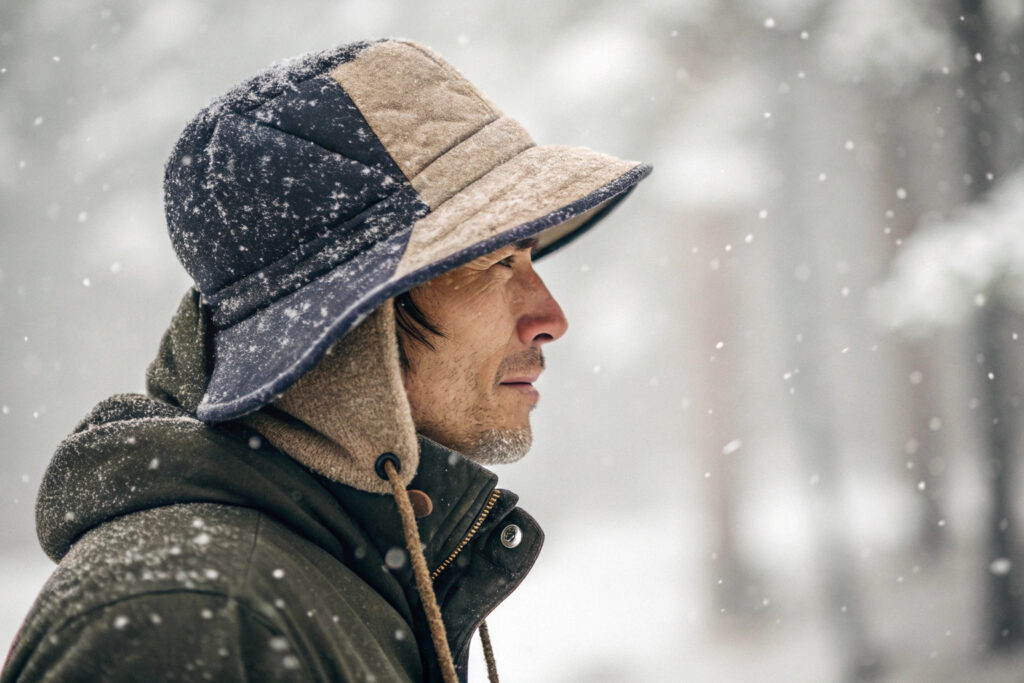
For a winter bucket hat, a brim that slopes downward at a slightly steeper angle is more effective than a flat one. This shape, sometimes called a "storm brim," helps to shed snow and rain away from your face and collar. It also provides a better shield against wind. A slightly wider brim can also offer more coverage for the back of the neck. These subtle geometric adjustments are a key part of designing functional all-weather gear, where every detail is considered for its protective qualities.
Are there features to protect the ears?
This is one of the most important features for a true winter hat. The best winter bucket hats incorporate integrated ear flaps. These can be designed to fold up discreetly inside the hat when not in use, maintaining a classic silhouette. When the temperature drops or the wind picks up, they can be folded down to provide full, insulated coverage over the ears. We often line these ear flaps with an extra-soft fleece for maximum comfort and warmth. This dual-functionality adds immense value and is a major selling point for any hat marketed for cold weather, a principle well understood in the design of convertible and modular clothing.
Why is a Snug Fit Crucial for a Winter Hat?
You can have the warmest materials and the best design, but if there are gaps between the hat and your head, cold air will get in and warm air will escape. An improper fit completely undermines all other insulating features. A hat that is too loose is a major liability in winter.
Many buyers, especially for e-commerce, are hesitant to order fitted sizes and prefer a "one-size-fits-all" approach. The problem is that a generic one-size hat is often too loose for many people, creating drafts and offering poor protection. This leads to customer dissatisfaction, as the hat simply doesn't feel secure or warm.
The solution is not to abandon one-size models, but to build effective adjustability into them. At our factory, we have several methods for creating a customizable fit that allows the wearer to seal out the cold, ensuring the hat performs as intended.
How can you ensure a gap-free fit?
A winter hat should fit snugly around the entire circumference of your head, but not so tightly that it's uncomfortable. There should be no noticeable gaps at the forehead or sides. This snug fit is the first line of defense against cold wind. A hat that rests securely on the head, covering the top of the ears even without ear flaps, will be significantly warmer than one that perches on top or wobbles around. This principle of sealing drafts is fundamental to all cold-weather clothing systems, from hats to jackets, as detailed by experts in thermal comfort.
What adjustable features should you look for?
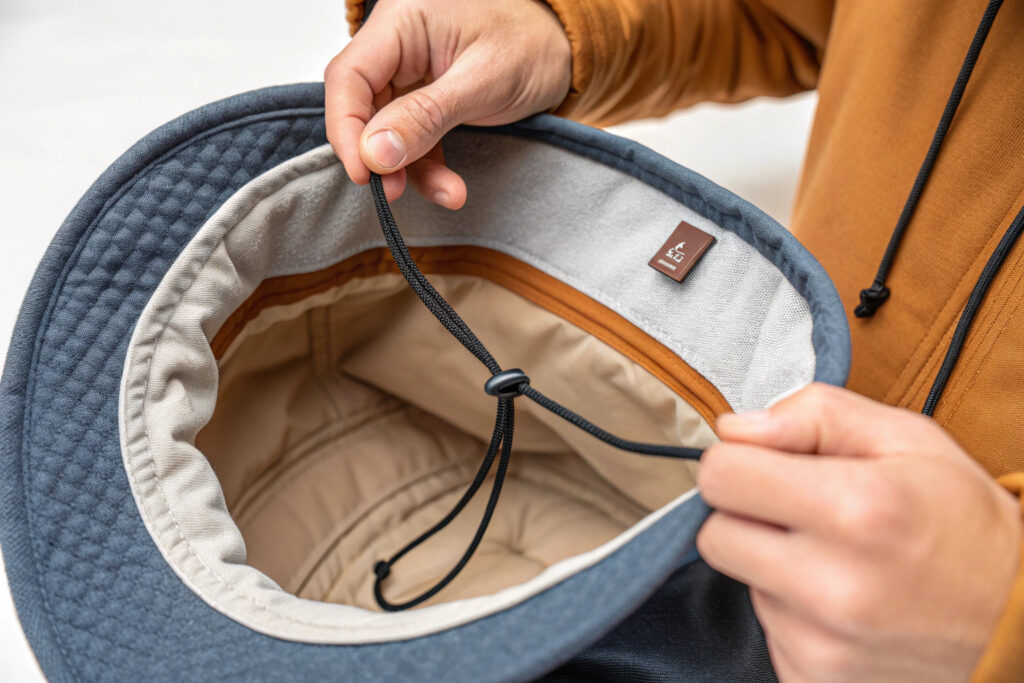
To achieve a custom, snug fit on a one-size hat, look for an internal adjustable drawstring or elastic cord. This feature is usually hidden inside the sweatband and allows the wearer to cinch the hat for a perfect, gap-free fit. It's a simple, effective, and discreet feature that dramatically improves the hat's thermal performance. Another option is a subtle elasticated section at the back of the hat. For ultimate security in windy conditions, a removable chin strap can also be a valuable addition. These adjustable fit systems are a hallmark of well-designed, user-focused products, a key topic in product design and ergonomics.
Conclusion
Finding a truly warm winter bucket hat requires looking beyond surface appearances. It's a process of evaluating the hat as a complete thermal system. It starts with selecting the right insulating materials, like wool or fleece, that are proven to trap heat. It continues with a smart multi-layer construction, incorporating warm and comfortable linings. The design itself should be functional, with a protective brim and integrated ear flaps. Finally, a snug, adjustable fit is essential to seal out the cold and lock in warmth.
By paying close attention to these four key areas, you can confidently select or develop a winter bucket hat that delivers on its promise of warmth, keeping your customers cozy and stylish all season long.
If you are looking to create a line of fashionable and functional winter bucket hats for your brand, my team at Global-Caps has the deep expertise in materials and construction to help you succeed.
Please contact our Business Director, Elaine, at elaine@fumaoclothing.com to discuss how we can build the perfect winter hat collection together.