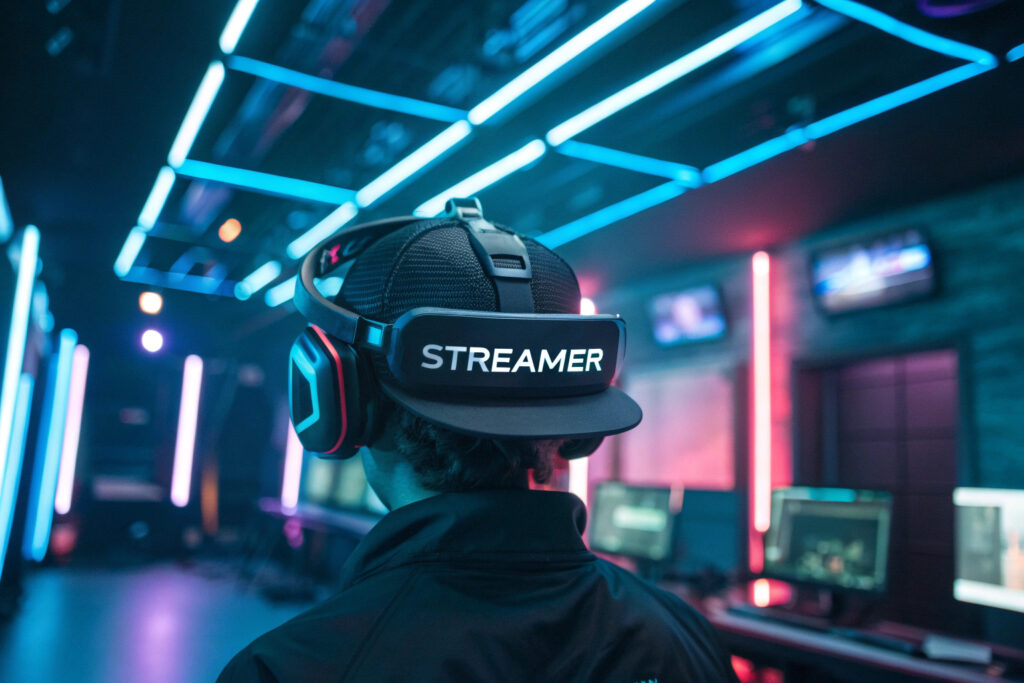
I've been in the hat business for over 20 years, and I've always believed that a hat's design should follow its function. We've made hats for deep-sea fishermen, ultra-marathon runners, and Broadway actors. But last week, I had a conversation that pushed us into a completely new reality—a virtual one. I was talking to a buyer for a major esports organization, a sharp, tech-savvy woman like my US client, Ron. She wasn't interested in traditional team hats. She said, "Elaine, our streamers are spending 8 hours a day in a VR headset. They're building communities, they're sweating under the lights, and their face is their brand. A normal hat doesn't work. How do we design a cap that's made for VR?"
Designing a cap for a VR livestreamer requires a radical rethinking of the classic baseball cap, focusing on a "headset-first" design with a reversed, short, and flexible brim, integrated cable management, and advanced sweat-wicking materials. This isn't just a branded accessory; it's a piece of performance gear engineered to solve the unique ergonomic and branding challenges of broadcasting from virtual reality.
The problems are immediate and obvious for any VR user. A standard baseball cap's brim smashes into the headset, making it impossible to wear. The hat traps heat, and the top button creates a painful pressure point under the headset's top strap. It's a design that is fundamentally incompatible with the hardware. At Shanghai Fumao Clothing, we see this not as a problem, but as a fantastic design opportunity to create a whole new category of headwear.
Why Does a Standard Cap Fail in VR?
You might think, "Can't they just wear a regular cap backwards?" It's the most common workaround, but it's a clumsy, imperfect solution that creates its own set of problems. You're worried about designing a "VR cap" that is just a regular cap with a reversed logo, a gimmick that doesn't actually solve the core issues.
A standard cap fails in VR due to three critical design flaws: the rigid front brim obstructs the headset, the top button creates a painful pressure point under the head strap, and the traditional fabric construction traps heat and sweat during intense sessions. Even when worn backwards, the fit is awkward, and the branding is completely hidden.
We prototyped this in our R&D lab. We had one of our younger designers, an avid VR gamer, wear a standard cap backwards with a popular headset like a Meta Quest. Within 20 minutes, he was complaining. The buckle at the back was digging into his head where the headset's rear strap tightened. The thick, layered fabric at the front was bunching up under the headset's interface. And his logo, the most important part for a streamer, was facing the wall behind him. It was clear: a simple reversal wasn't the answer.
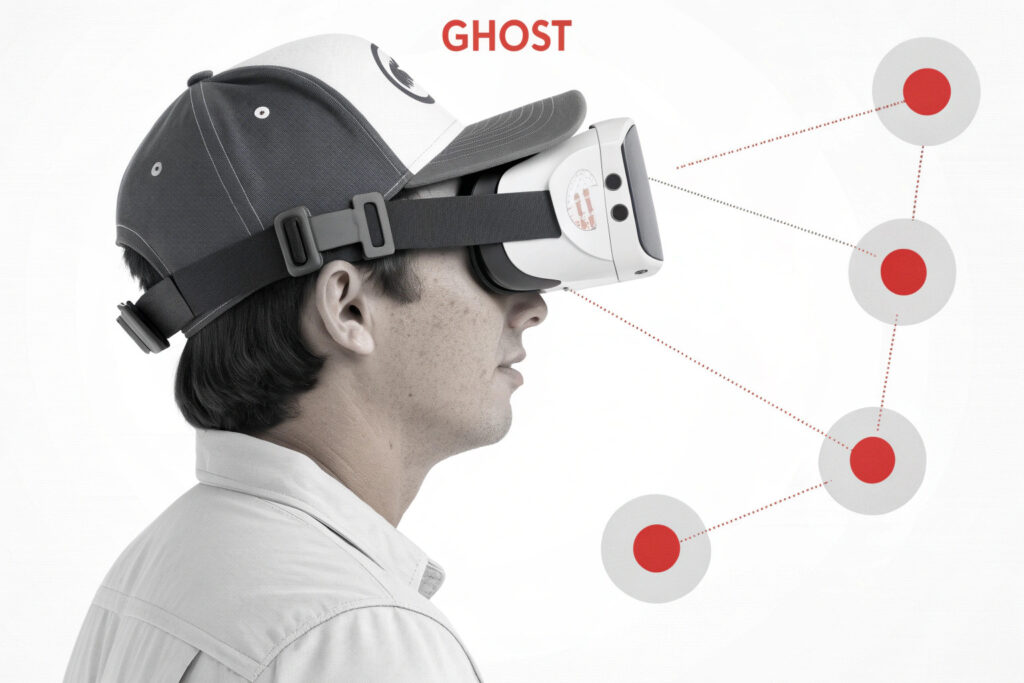
What is the "brim problem"?
The brim, or visor, is the single biggest point of failure. It's designed to stick out from the forehead to block the sun. A VR headset needs to sit flush against the forehead to ensure a clear picture and block out light. The two are in direct opposition. There is no way to wear a standard cap forwards. This is the primary design constraint that dictates the entire form of a VR cap.
What are the comfort and heat issues?
VR gaming, especially in popular games like Beat Saber, can be a serious workout.
- Pressure Points: The traditional metal button (or "squatchee") on the top of a six-panel cap sits directly under the headset's top strap, creating a focused point of pressure that becomes painful over time.
- Heat Trapping: Standard cotton or wool caps are not designed for athletic activity. They trap heat and absorb sweat, becoming hot, heavy, and uncomfortable during a long streaming session.
- Fit Interference: The thick seams and layered construction of a traditional cap can interfere with the fit of the headset's facial interface, potentially causing light leak, which ruins the immersive experience.
The Solution: The "Reversed-Brim" VR Cap
To solve these problems, you can't just modify a standard cap; you have to redesign it from the ground up with the headset as the central element. The most elegant solution is the "Reversed-Brim" VR Cap.
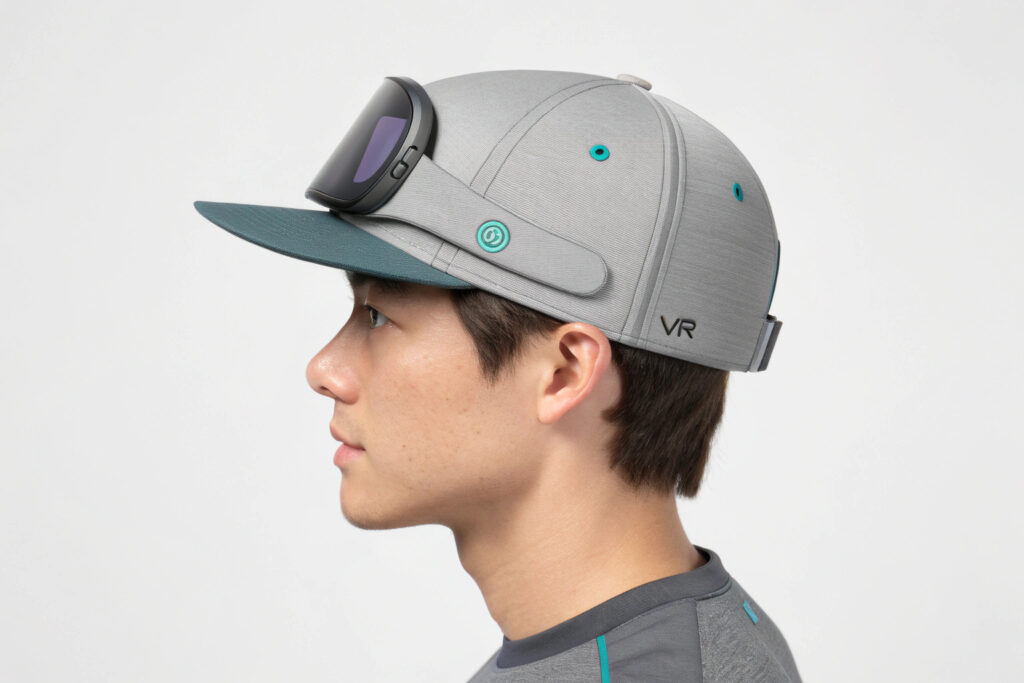
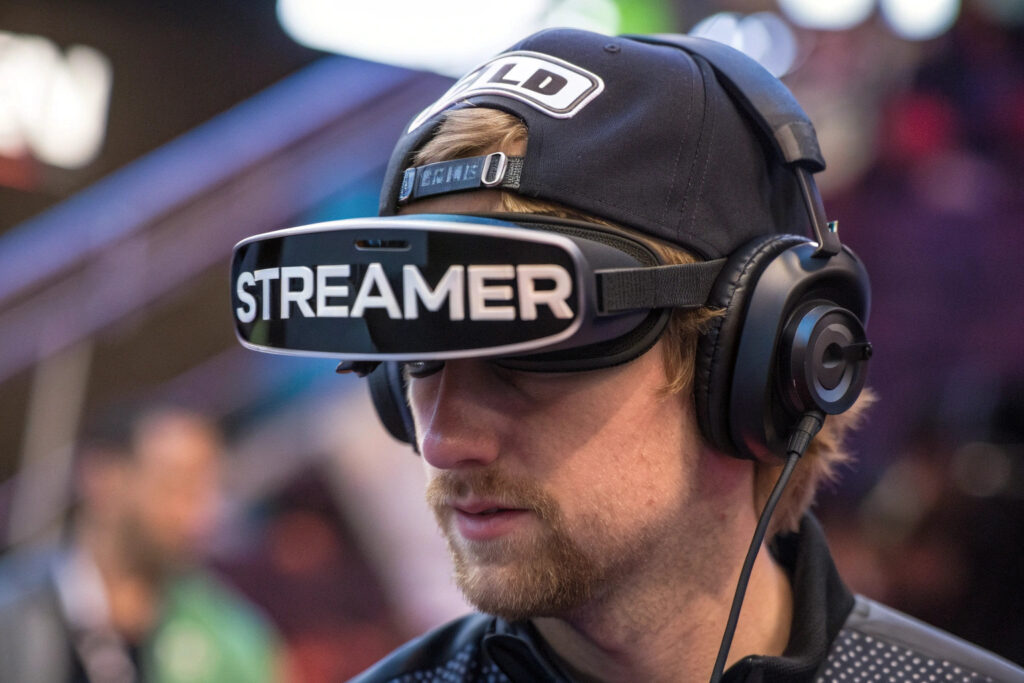
The "Reversed-Brim" VR Cap is a purpose-built design featuring a short, soft, and flexible brim on the back, a smooth, buttonless top, and a front panel optimized for branding, all constructed from lightweight, breathable performance fabrics. It's designed to be worn with the brim facing backward, keeping it completely out of the way of the headset while turning the front of the cap into a perfect billboard for the streamer's brand.
This design embraces the reality of VR use. The brim is no longer for sun protection; its new job is to provide a familiar aesthetic and a place to grab and adjust the cap, but from the back. The front of the cap, now unobstructed, becomes the main event. This is where the streamer's logo, sponsor logos, or custom graphics are displayed, perfectly framed for their face-cam.
What makes the reversed brim functional?
The design of the reversed brim is critical. It can't just be a normal brim sewn on the back.
- Short & Flexible: It should be shorter than a standard brim (around 2 inches) and made of a flexible material like EVA foam instead of hard plastic. This prevents it from digging into the user's neck when they look up.
- Downward Angle: The brim should be angled slightly downwards to follow the curve of the head, ensuring a low profile.
- Aesthetic Purpose: It maintains the familiar "cap" silhouette, making it feel like a piece of apparel rather than just a technical skull cap.
To eliminate the painful pressure point from the top strap of a VR headset, the cap's crown must be completely smooth.
- No Top Button: The metal button is the first thing to go.
- Flat Seams: We use flatlock stitching for the panels, a technique borrowed from high-end athletic wear, to ensure the seams are completely flat and don't create pressure lines on the scalp.
- Single-Panel Front: The front of the cap can be a single, seamless panel, providing a perfect, uninterrupted canvas for high-quality embroidery or heat-transfer logos.
Material and Tech Integration: Beyond the Fabric
A truly next-generation VR cap is about more than just its shape. It's an opportunity to integrate technology and use advanced materials that enhance the streaming experience. You're not just making a hat; you're building a piece of streaming equipment.
A state-of-the-art VR cap should be constructed from advanced, breathable, and sweat-wicking technical fabrics, and it should incorporate features like integrated cable management loops and even attachment points for haptic feedback devices.
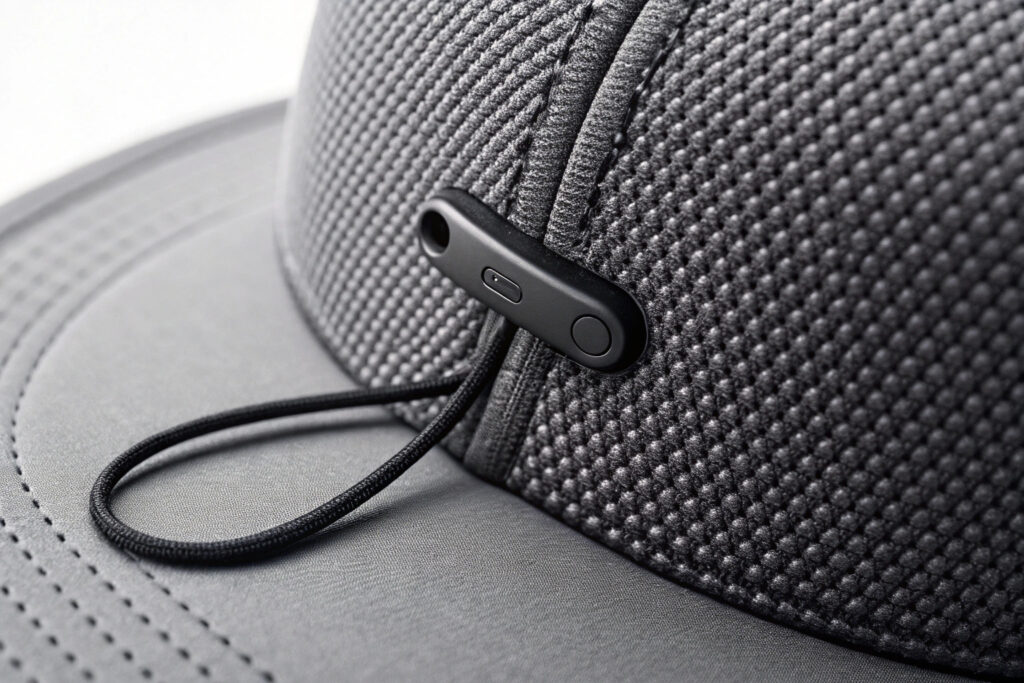
This is where we can add real value. Imagine a small, elasticated loop stitched discreetly into the side seam of the cap. The streamer can route the cable from their headset-mounted microphone or headphones through it, keeping the wire tidy and away from their hands during frantic gameplay. It's a small detail that solves a huge annoyance. We're also exploring partnerships with haptic tech companies like bHaptics to see how a cap could incorporate small feedback points, adding another layer of immersion.
What are the ideal fabrics?
The fabric choice is crucial for long-session comfort.
- Polyester/Spandex Blends: These offer excellent four-way stretch for a snug fit and are superb at wicking moisture away from the skin.
- Laser-Cut Perforations: We can use lasers to cut tiny, precise ventilation holes into the side and back panels, dramatically increasing airflow without compromising the fabric's structure.
- Probiotic, Odor-Eliminating Finishes: For streamers who wear their cap daily, treating the fabric with a probiotic finish can prevent odor build-up, keeping the cap fresh for longer between washes.
What are some "smart" integration possibilities?
The VR cap can become a central part of a streamer's setup.
- Cable Management: Simple loops or channels for routing wires.
- Attachment Points: A small, reinforced patch of loop-fabric (like soft Velcro) could allow for the attachment of a lightweight, clip-on microphone or a small branding patch.
- Haptic Integration: As mentioned, incorporating small pockets or attachment points for haptic feedback units that could vibrate in response to in-game events.
Branding: The Most Important Feature
For a livestreamer, their brand is everything. The cap is a prime piece of real estate, constantly in view of their audience. The branding opportunities on a purpose-built VR cap are far superior to a backwards-worn standard cap.
The front-facing, unobstructed panel of a "Reversed-Brim" VR Cap offers a perfect, high-visibility canvas for a streamer's logo, sponsor branding, or custom graphics, making it a powerful tool for building brand identity.
The branding is the payoff for the entire design. We can use a variety of techniques to make the logo pop.
- 3D Embroidery: Creates a bold, textured logo that stands out on camera.
- Silicone Heat Transfer: Offers sharp, clean lines and a modern, rubberized feel.
- Reflective or Glow-in-the-Dark Thread: For streamers with dynamic studio lighting, a logo that interacts with light can create a stunning visual effect.
This isn't just a hat; it's a key part of the streamer's personal brand kit.
How can streamers customize their caps?
The potential for customization is endless.
- Main Logo: The streamer's primary icon or logotype.
- Sponsor Logos: Smaller logos can be placed on the side panels.
- Custom Text: Their gamertag or a catchphrase can be embroidered on the back, above the closure.
- Interchangeable Patches: Using a loop-fabric panel on the front allows streamers to swap out different Velcro-backed patches for different games, sponsors, or events.
Why is this better than a simple beanie?
While a beanie solves the brim and top-button problem, it lacks the branding potential and structured look of a cap. A cap has a dedicated front panel that always faces the camera, presenting the logo perfectly—whether it's a bold, high-contrast emblem or a subtle, embroidered design, the front panel ensures the brand mark is prominently visible and aligned for optimal visibility in photos, videos, or promotional materials. A beanie, by contrast, is softer and can shift easily with movement, sometimes obscuring the logo as it bunches, stretches, or tilts, making it less reliable for consistent brand representation. The cap offers a more professional, consistent, and 'camera-ready' look, with its rigid structure maintaining shape and positioning the logo in a fixed, eye-catching spot.
Conclusion
Designing a cap for VR livestreamers is a perfect example of how headwear must evolve to meet the needs of new technologies and new communities. By abandoning the traditional form and embracing a "headset-first" design philosophy, we can create a product that is not only comfortable and functional but also a powerful branding tool. The "Reversed-Brim" VR Cap, with its buttonless top, performance fabrics, and integrated features, is more than just a hat. It's a purpose-built piece of gear that shows a deep understanding of the user's needs, solving their problems and empowering them to build their brand in a new reality.
If you are an esports organization, a tech brand, or a streamer looking to create headwear that is truly designed for the age of VR, my team and I are ready to help you design the future.
My name is Elaine, Business Director at Shanghai Fumao Clothing, and my email is: elaine@fumaoclothing.com.