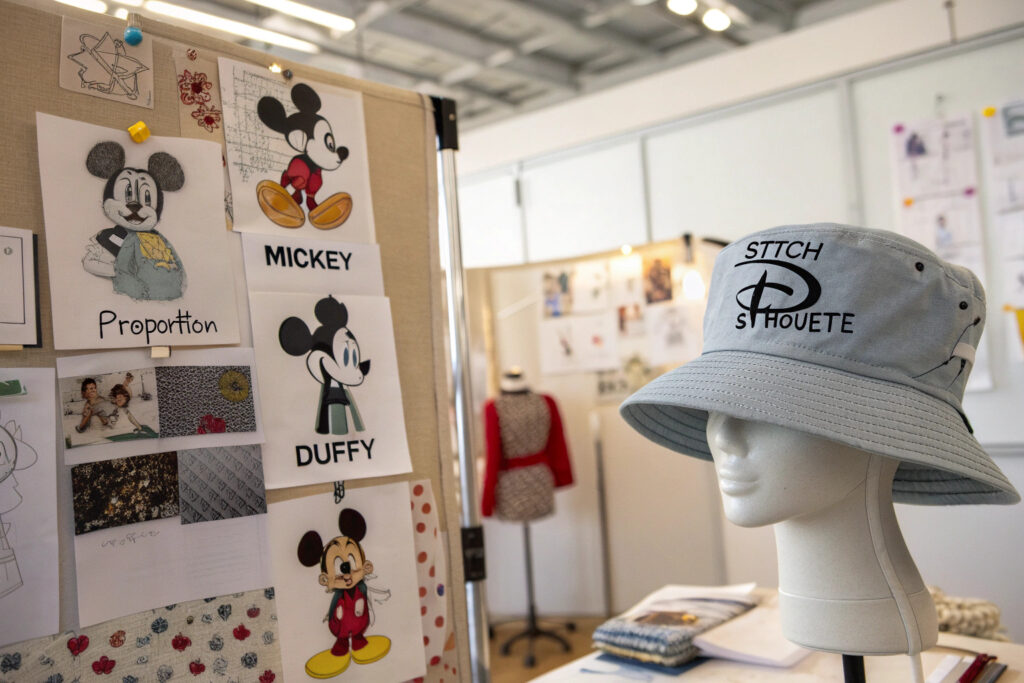
Designing a bucket hat that seamlessly integrates Disney character features is a creative challenge at the intersection of fashion, engineering, and brand identity. For a manufacturer like Shanghai Fumao Clothing, this is an opportunity to demonstrate our expertise in complex product development, advanced agile manufacturing, and deep understanding of intellectual property compliance. The goal is to create a product that is not only charming and recognizable but also durable, wearable, and commercially viable.
The key to designing Disney character ear-integrated bucket hats lies in a three-part strategy: mastering silhouette and form analysis to identify key character traits, engineering the physical integration of those features into a functional hat structure, and ensuring all designs adhere strictly to Disney's intellectual property and brand guidelines. Success requires moving beyond simple appliqués to achieve a cohesive, three-dimensional design.
Drawing on our experience in producing structured headwear and collaborating with global brands, we can outline a professional framework for developing these specialized products. The process begins not with a sketch, but with a deep dive into the character itself.
How Do You Analyze a Character for Effective Hat Integration?
The first and most critical step is to deconstruct the character into its most iconic, simplified visual elements. As seen in official Disney merchandise, successful integration often focuses on one or two key features rather than the entire character. This "less is more" approach ensures the hat remains stylish and wearable, not a cumbersome costume piece.
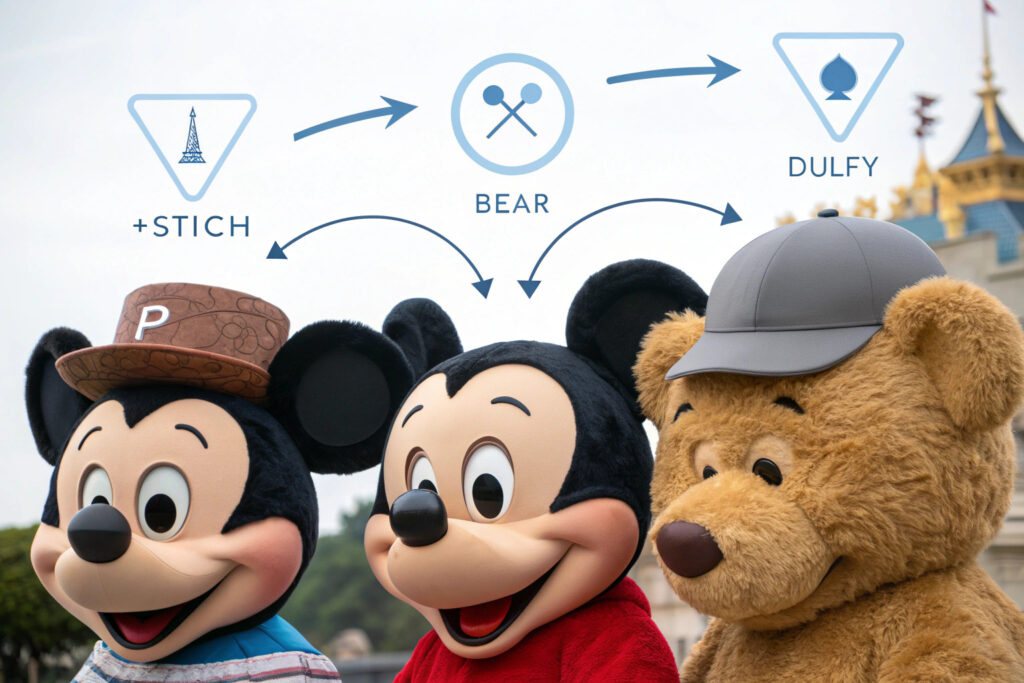
The analysis focuses on silhouette, key features, and three-dimensional form. For instance, the classic Mickey and Minnie Mouse are defined by their perfectly circular ear silhouette, which is globally recognized. For a character like Stitch from Lilo & Stitch, the key features are his large, elongated, teardrop-shaped ears that point outward. For Duffy the Bear and his friends, the defining traits are their soft, rounded animal ears, which have been successfully translated into plush, three-dimensional forms on winter hats. Identifying these core shapes is the blueprint for the entire design.
What is the "Feature-First" Design Approach?
This approach, mirrored in professional character design, means the character's most recognizable trait dictates the hat's form. For a bucket hat, the crown becomes the primary canvas. If the key feature is ear shape (like Mickey's circles), the design challenge becomes how to make those circles part of the hat's structure—should they be sewn-on patches, padded 3D forms, or a shaped crown? If the key feature is a prop or accessory (like Ariel's dinglehopper), it might become a clever embroidered or metal charm attached to the hat's brim[citation:10]. This focus ensures the design communicates the character instantly and effectively.
How Do You Ensure Wearability and Proportion?
This is where ergonomics meets product development. Character ears are often proportionally large relative to the head. A direct scale-up would create a comically large, unstable hat. The designer must artfully reduce the scale while preserving the shape's essence. The ears must be positioned so they don't interfere with the hat's fit, the wearer's peripheral vision, or its ability to be packed. They must also be lightweight; internal structuring with lightweight foam or buckram can maintain shape without adding uncomfortable heft. This balance is crucial for creating a product that is both delightful and practical for all-day wear.
What Are the Technical Methods for Integrating Ears into a Bucket Hat?
Once the design concept is clear, the focus shifts to execution. The integration method impacts the hat's aesthetics, comfort, durability, and production cost. There are several primary technical approaches, each with its own advantages.
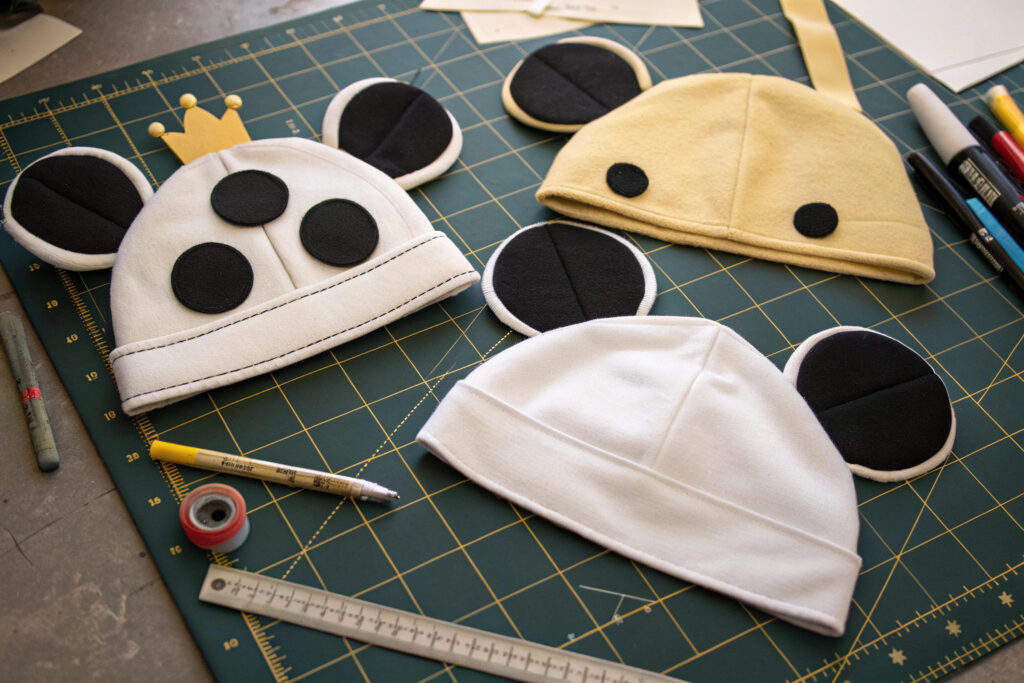
The main methods are appliqué and embroidery, three-dimensional soft sculpting, and structural integration. The choice depends on the desired visual effect, character, and target price point.
| Method | Description | Best For | Production Consideration |
|---|---|---|---|
| Appliqué & Embroidery | Sewing pre-cut fabric shapes (appliqué) or stitching detailed designs (embroidery) onto the hat's crown. | Graphic, flat designs like Mickey's ear silhouette; adding facial details. | Cost-effective for bulk. Allows complex, multi-color designs via digital embroidery. Disney offers personalization services using this method. |
| 3D Soft Sculpting | Creating padded, stuffed fabric forms that are sewn onto the hat to create stand-alone ears. | Characters with distinct, rounded 3D ears like Duffy, Stitch, or cats. | Requires precise pattern-making and stuffing to achieve uniform shape. Adds material and labor cost. |
| Structural Integration | Designing the hat's crown pattern pieces to include the ear shapes as part of the main construction. | A seamless, high-end look where the ears appear to grow naturally from the hat. | The most complex pattern-making. Requires advanced sample-making and may have higher fabric waste. |
How Do You Handle Complex Shapes and Movement?
For characters with non-rigid ears (like Stitch's floppy ears or Tinker Bell's pointed wings), achieving the right look and movement is a challenge. Techniques may include using interfacing or flexible plastic inserts within a fabric channel to allow the ear to hold a shape but still have a gentle bounce. This mimics the articulation and control seen in advanced costume design for Disney park performers, where mechanisms allow for character expression. For a consumer hat, the goal is passive movement that feels organic, not mechanical.
What About Material Selection and Durability?
Material choice is paramount. The hat fabric (often cotton, nylon, or polyester) must be compatible with the ear material. If using plush fabric for ears, it must be securely attached with reinforced stitching to withstand pulling. All materials must meet safety and durability standards for apparel. Furthermore, if the design includes color-changing elements (like thermochromic fabrics for a magical effect) or high-performance fabrics (for a sports-themed line), these must be tested for compatibility during the sampling phase to ensure color fastness and consistent performance after washing.
What Are the Legal and Commercial Imperatives?
Creating any product featuring Disney characters is a serious undertaking governed by strict legal and commercial frameworks. This is not an area for interpretation or assumption.
The foremost rule is that all designs must be created under official license from The Walt Disney Company. The search results consistently highlight that creating or selling items with Disney characters, logos, or designs without authorization infringes on copyright and intellectual property laws. For a manufacturer like Shanghai Fumao Clothing, this means we only engage in such projects when our client is a licensed vendor or when we are directly contracted by Disney or its licensees. Our role is to provide the manufacturing excellence and quality control to bring an officially approved design to life.
How Do Brand Guidelines Influence Design?
When working on a licensed product, Disney provides extensive brand guidelines. These dictate everything: the exact Pantone colors that can be used for Mickey's red shorts, the specific proportions of his ears, approved fonts for any text, and the overall "family-friendly" tone. A designer cannot freely reinterpret a character; they must work within a strict visual framework to ensure brand consistency across millions of products worldwide. This reinforces the need for precise silhouette analysis and faithful feature representation from the very first sketch.
What Does This Mean for Your Supply Chain and MOQ?
Producing licensed merchandise often involves higher scrutiny. Disney may require audits of factories for ethical and quality compliance. Minimum Order Quantities (MOQs) may be substantial. The supply chain for specialized materials (like specific shades of felt or custom embroidered patches) must be robust and transparent. Furthermore, as seen with official park merchandise, there is a market for personalization. Planning a production line that can efficiently add individual embroidery or small custom details in small batches requires an agile manufacturing setup, which is a core strength of modern suppliers.
Isn’t Character Identity the Foundation of Disney-Inspired Design?
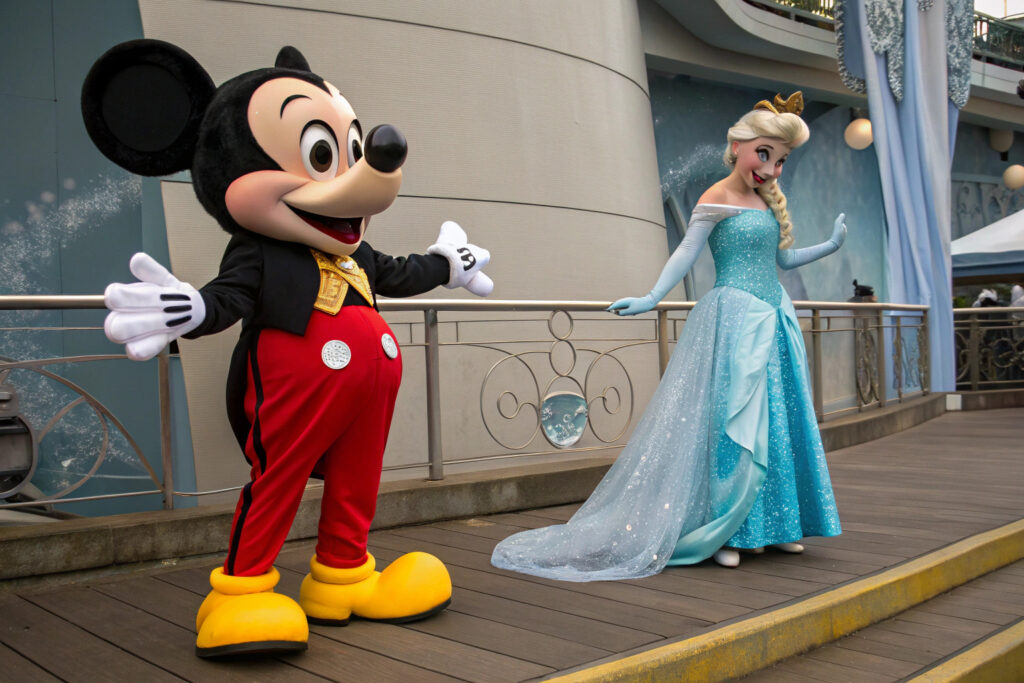
Disney fans connect deeply with character details—your design must prioritize recognizable features to evoke nostalgia and brand loyalty. From the iconic red shorts and yellow shoes of Mickey Mouse, which have become synonymous with joy and adventure, to the distinct silhouette of Elsa with her flowing ice-blue gown and crown, every element of a Disney character is meticulously crafted to resonate with audiences across generations.
Why Compromise Between Whimsy and Wearable Comfort?
Disney hats are often worn for 8+ hours at theme parks—comfort and functionality are non-negotiable to avoid sacrificing magic for practicality. Crafted with lightweight, breathable materials like soft cotton or moisture-wicking polyester, these hats feature structured brims that shield faces from the sun’s harsh rays, preventing sunburn and ensuring clear visibility of parades, fireworks, and beloved characters.
Have You Elevated the Design with Disney’s Whimsical Touches?
Small, magical details transform a basic ear hat into a coveted Disney accessory—lean into the brand’s \"enchantment\" factor. From the soft, velvety texture of the iconic Mickey Mouse ears, with their perfectly rounded tips and subtle stitching that mimics the character’s signature look, to the delicate embroidered logos or tiny sequined stars that catch the light as you move, every element is designed to evoke wonder.
Conclusion
Designing a Disney character ear-integrated bucket hat is a sophisticated process that blends artistic homage with technical precision and strict legal compliance. The journey from concept to a shelf-ready product requires a disciplined focus on iconic character silhouettes, innovative textile engineering for three-dimensional integration, and an unwavering commitment to operating within the licensed frameworks that protect these beloved brands.
For a manufacturer, it represents the pinnacle of collaborative, brand-aligned product development. It's an opportunity to showcase capability in handling complex projects from ideation through to global logistics, all while maintaining the magic and quality the end-consumer expects.
If your brand holds the appropriate licenses and is looking for a manufacturing partner with the technical expertise, quality control rigor, and agile supply chain to bring such specialized headwear to market, Shanghai Fumao Clothing is equipped to be that partner. We can navigate the intricacies of sampling, material sourcing, and scalable production to ensure your vision is realized flawlessly. To discuss a potential collaboration, please contact our Business Director, Elaine, at elaine@fumaoclothing.com.