A cooling towel-integrated neck gaiter is a smart hybrid product that combines the convenience and style of a neck gaiter with the active cooling properties of a cooling towel. This multifunctional accessory is designed for athletes, outdoor workers, and anyone needing personal heat management, providing evaporative cooling directly from the neck area to help lower body temperature during activity in hot environments.
To design a cooling towel-integrated neck gaiter, you must innovate at the material, structural, and functional levels by combining moisture-wicking fabrics with specialized polymer-infused cooling zones or pouch systems. The core design challenge is seamlessly merging two distinct functions—a comfortable, breathable neck cover and an effective, long-lasting cooling mechanism—into a single, durable, and user-friendly wearable product.
Successful design hinges on solving key technical problems: ensuring consistent water retention for cooling, maintaining structural integrity when wet, and creating a comfortable fit. A rushed design will lead to product failure; a thoughtful one creates a market leader.
How to Engineer the Core Cooling Mechanism?
The heart of the product is the cooling system. Two primary design philosophies exist, each with its own manufacturing implications: the Integrated Polymer Infusion method and the Removable Insert/Pouch system.
The Integrated Polymer Infusion approach involves treating or constructing a specific section of the gaiter fabric with superabsorbent polymer (SAP) crystals, such as polyacrylate. These crystals are engineered to absorb and retain cold water up to hundreds of times their weight, creating a gel-like substance that provides prolonged evaporative cooling as the water slowly releases. This method offers a sleek, seamless look but requires precise fabric sourcing and production control to ensure the cooling zone is effective, durable, and non-toxic.
In contrast, the Removable Insert/Pouch system uses a separate cooling element. A small pouch or sleeve is sewn into the gaiter's interior, into which a user can insert a pre-soaked, polymer-filled cooling pack or a specialized absorbent fabric insert. This method simplifies manufacturing and allows the user to replace or refresh the cooling element independently of the gaiter itself. It also makes laundry easier but adds a small step for the user and requires designing a secure, comfortable pouch.
Why is material selection non-negotiable here? The wrong polymer or fabric can lead to rapid drying, poor water retention, or even skin irritation. For the integrated method, you must work with a textile mill that can reliably produce fabric with a consistent, safe polymer application. For the pouch system, you need to source or manufacture a reliable cooling insert that won't leak.
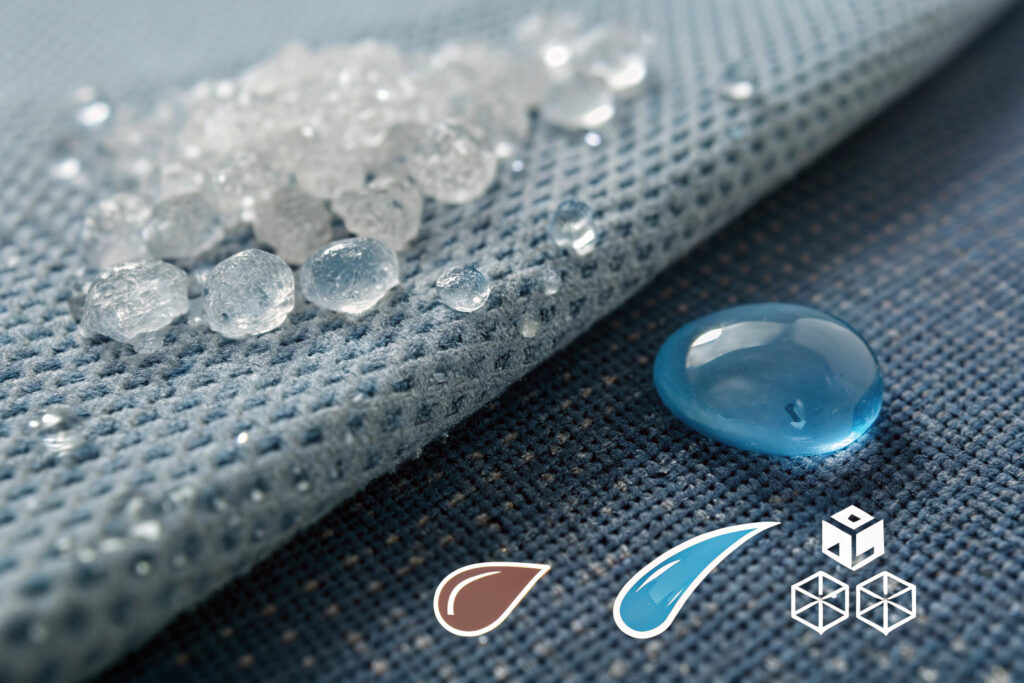
What Are the Key Specifications for the Cooling System?
Your technical specifications must be precise:
- Cooling Duration: Define a target active cooling time (e.g., "provides 4-6 hours of cooling after soaking in cold water for 2 minutes"). This depends on polymer quality, fabric weight, and ambient conditions.
- Activation & Recharge Method: Specify if activation is by cold water only, or if freezing is an option. Some polymers can be frozen for longer-lasting effects.
- Safety & Certification: The polymers and dyes used must be non-toxic and skin-safe. Require certifications like OEKO-TEX Standard 100 from your material suppliers.
- Durability: The cooling function must withstand at least 50-100 activation cycles without significant degradation in performance.
Should You Use Integrated or Removable Design?
The choice dictates your entire supply chain.
| Design Type | Pros | Cons | Best For |
|---|---|---|---|
| Integrated Polymer | Seamless user experience, sleek look, no small parts to lose. | Complex manufacturing, harder to launder, cooling performance degrades over time with fabric. | Fashion-forward brands, single-use or limited-lifecycle products. |
| Removable Insert | Easy to manufacture, insert is replaceable, gaiter is easy to wash, cooling performance is renewed. | User has an extra step, potential for insert to shift or cause a bulge. | Performance/outdoor brands, products focused on long-term durability and value. |
For a high-quality product, the removable insert system often provides better long-term performance and customer satisfaction. A factory like shanghaifumaoclothing can advise on the most producible path for your target market.
How to Design for Comfort, Fit, and Function?
The "gaiter" part of the product must excel. It needs to be comfortable against the skin, stay in place during vigorous movement, and provide basic sun and dust protection, all while accommodating the added weight and dampness of the cooling element.
Material selection for the main body is critical. You need a four-way stretch fabric with excellent moisture-wicking and quick-dry properties. Fabrics like polyester/spandex blends or advanced nylon micromesh are ideal. The inner layer touching the skin should be brushed or treated for softness to prevent chafing when wet. The fabric must also have a high UPF rating (40+) for sun protection.
The pattern and construction must account for the cooling element. If using an integrated panel, it should be strategically placed at the back of the neck or sides (major cooling arteries) and reinforced at the edges to prevent the heavy, wet fabric from sagging or tearing. For a pouch design, it must be seamlessly integrated into the lining with a secure, low-profile closure (like a hidden zipper or hook-and-loop flap) to prevent the insert from moving or falling out.
Why is ergonomic sewing crucial? All seams, especially those in contact with the skin and around the cooling zone, must be flat-locked or taped. Bulky seams will become uncomfortable when wet and can rub against the skin. The entire garment must be designed to maintain its shape and elasticity even when saturated, which requires rigorous testing during the sampling phase.
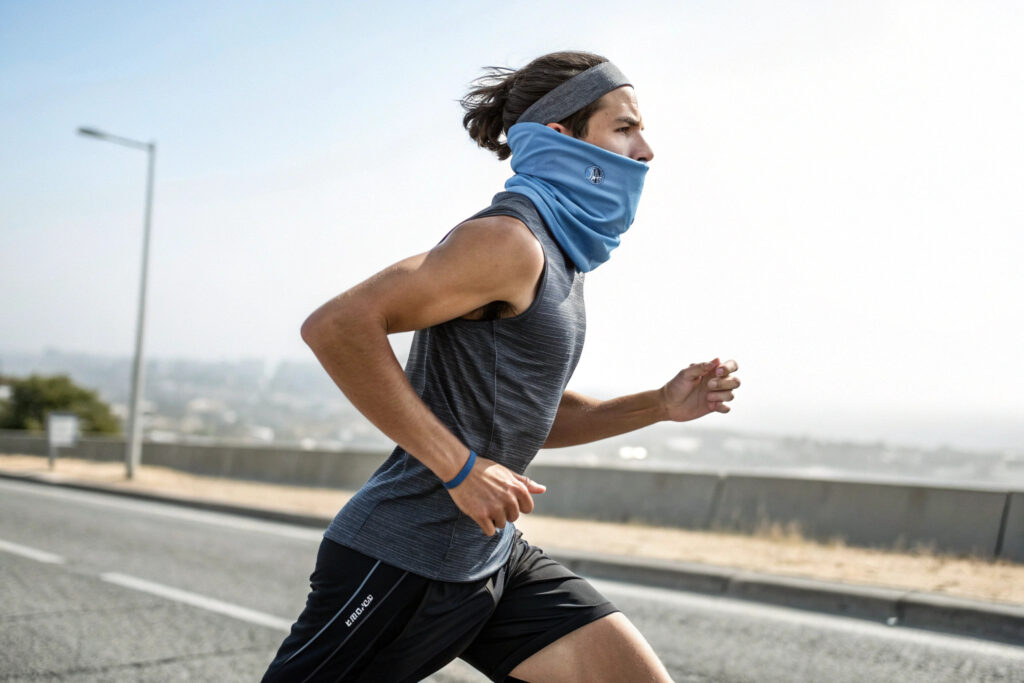
How to Optimize the Pattern for Manufacturing?
Creating an effective pattern requires collaboration between designers and factory technicians. Key considerations include:
- Gradation: The pattern must scale accurately across different sizes (S-XXL) to ensure the cooling panel or pouch remains correctly positioned on all body types.
- Stretch Factor: The pattern must account for fabric stretch, especially when designing the opening for the head. It needs to be tight enough to stay up but easy to pull on and off.
- Efficiency: The pattern layout on the fabric roll must minimize waste to control costs. Complex curved panels for cooling zones can increase fabric utilization.
What Features Enhance Usability?
Beyond the core function, consider these value-adding features:
- Multi-Wear Designs: Can it be pulled up as a face cover or balaclava? Does it have a toggle for adjustment?
- Antimicrobial Treatment: Essential to prevent odor in a product that will be repeatedly wet with sweat and water.
- Reflective Details: For safety during early morning or evening activities.
- Packability: Can it be wrung out and stuffed into a pocket? A lightweight, packable design is a major selling point.
How to Prototype and Test the Design?
The prototyping phase is where theoretical design meets practical reality. You will need multiple sample rounds to perfect the integration of form and function.
Begin with a first prototype (Proto Sample) focusing on fit, feel, and basic construction using placeholder materials. Does the pattern work? Is it comfortable? Next, move to a development sample (Dev Sample) using actual or near-actual cooling materials. This is where you test the cooling mechanism's integration, water absorption, and retention.
The most critical stage is the pre-production sample (PPS). This sample is made from all final materials on production-line equipment. You must put it through rigorous user scenario testing.
What are the key performance tests?
- Cooling Efficacy Test: Measure skin temperature under the gaiter in a controlled warm environment before and after activation.
- Durability/Wash Test: Subject the gaiter to repeated soak-activate-dry cycles (e.g., 50 cycles). Does the cooling performance drop? Does the fabric pill, fade, or lose elasticity?
- User Wear Test: Have a group of target users (runners, cyclists, construction workers) wear it during their normal activities and provide feedback on comfort, fit, and cooling sensation.
Why is a comprehensive Tech Pack vital? Your factory needs a single source of truth. This pack must include detailed diagrams of the cooling zone/pouch placement, exact specifications for the polymer or insert, seam construction details, and all material composition sheets. Ambiguity here guarantees production errors.
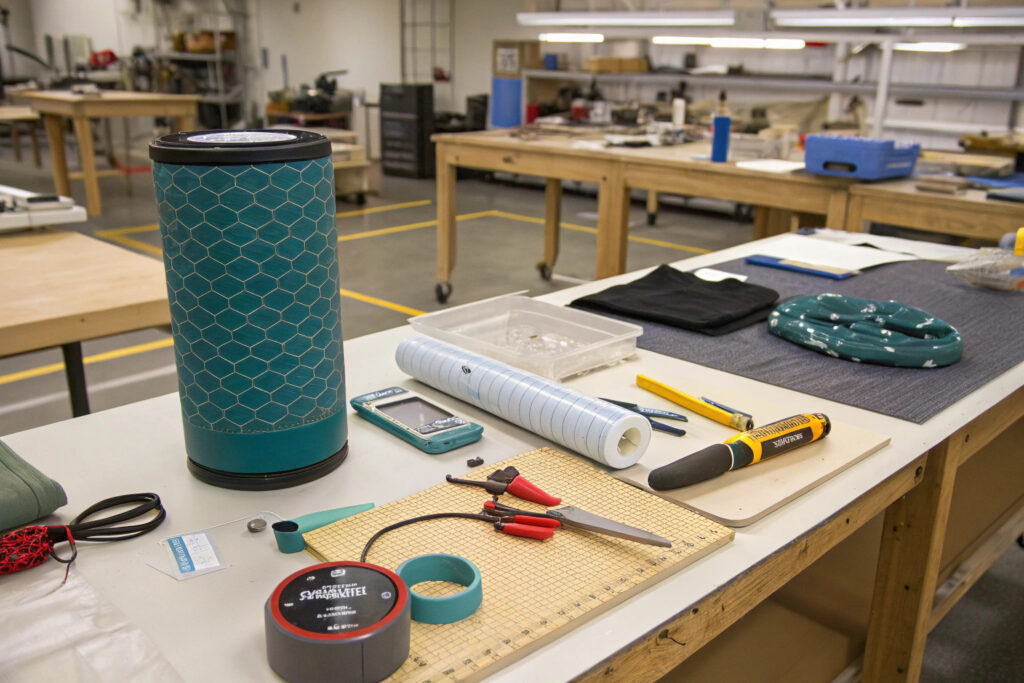
What Should the Development Timeline Look Like?
Expect a non-linear process with feedback loops:
- Weeks 1-2: Finalize design concept and create initial tech pack.
- Weeks 3-5: Factory produces first Proto Samples for fit approval.
- Weeks 6-9: Development Samples with functional cooling for performance testing.
- Weeks 10-12: Refine tech pack based on test results. Factory produces Pre-Production Samples (PPS).
- Weeks 13-14: Final approval of PPS. Begin mass production tooling.
How to Ensure Quality in Mass Production?
Before production begins, establish clear Acceptable Quality Level (AQL) standards that include functional tests. For example, a random sample from the production line should be activated and weighed to ensure it meets the minimum water absorption spec. Consider a Production Quality Assurance (PQA) visit or hire a third-party inspector to audit the first production batch. For a product involving specialized components like cooling inserts, you must also audit the insert supplier's quality control.
What Are the Costing and Market Positioning Strategies?
This is a technical, multi-component product, so its landed cost will be higher than a standard neck gaiter. You must account for:
- Specialized main fabric (wicking, UPF, stretch)
- Cooling polymer material or insert unit cost
- More complex sewing (flatlock seams, pouch/panel integration)
- Any special finishes (antimicrobial, reflective printing)
- Packaging that explains the activation process
How to position this product? It sits at the intersection of several markets: performance sports, outdoor recreation, industrial safety/comfort, and travel. Your marketing should highlight the problem it solves: "Stay cool for hours without stopping." Emphasize key benefits: continuous cooling, multifunctionality (gaiter, headband, wristband), and reusability.
Is the market ready? The demand for personal cooling solutions is growing due to climate change and increased outdoor activity. A well-designed product that genuinely works can command a premium price. Aim for a retail price 3-4x your landed cost to account for margins, marketing, and distribution.

How to Build a Compelling Brand Story?
Move beyond selling a product to selling an experience. Your story could be about:
- Innovation: The marriage of textile science and wearable design.
- Empowerment: Enabling people to push their limits in heat safely.
- Sustainability: A reusable alternative to single-use cooling products.
Content marketing through athlete testimonials, "how it works" videos demonstrating the cooling effect, and guides for different use cases (running, golf, festivals, travel) will be highly effective.
What Are the Key Legal and Compliance Considerations?
Depending on your sales regions, you may need:
- Safety Certifications: OEKO-TEX for material safety, possibly CE marking if making any medical cooling claims.
- Patent Search: Ensure your specific integration method doesn't infringe on existing patents. Consider filing for a utility or design patent for your unique solution.
- Liability Insurance: For a product that affects body temperature, especially if marketed for strenuous activity, having appropriate product liability coverage is wise.
Conclusion
Designing a successful cooling towel-integrated neck gaiter is a sophisticated project that demands expertise in material science, ergonomic apparel design, and functional product development. The path is clear: engineer a reliable and durable core cooling mechanism, design a comfortable and versatile gaiter body around it, and validate the design through rigorous real-world prototyping and testing. Success lies in creating a product where the high-tech function feels effortless and intuitive to the user.
This is exactly the type of innovative, hybrid product that benefits from a manufacturer with experience in both technical apparel and new product development. If you are ready to move from concept to prototype for your cooling gaiter, I recommend contacting the team at Shanghai Fumao Clothing. You can discuss the technical details and development roadmap with their Business Director, Elaine, at elaine@fumaoclothing.com.