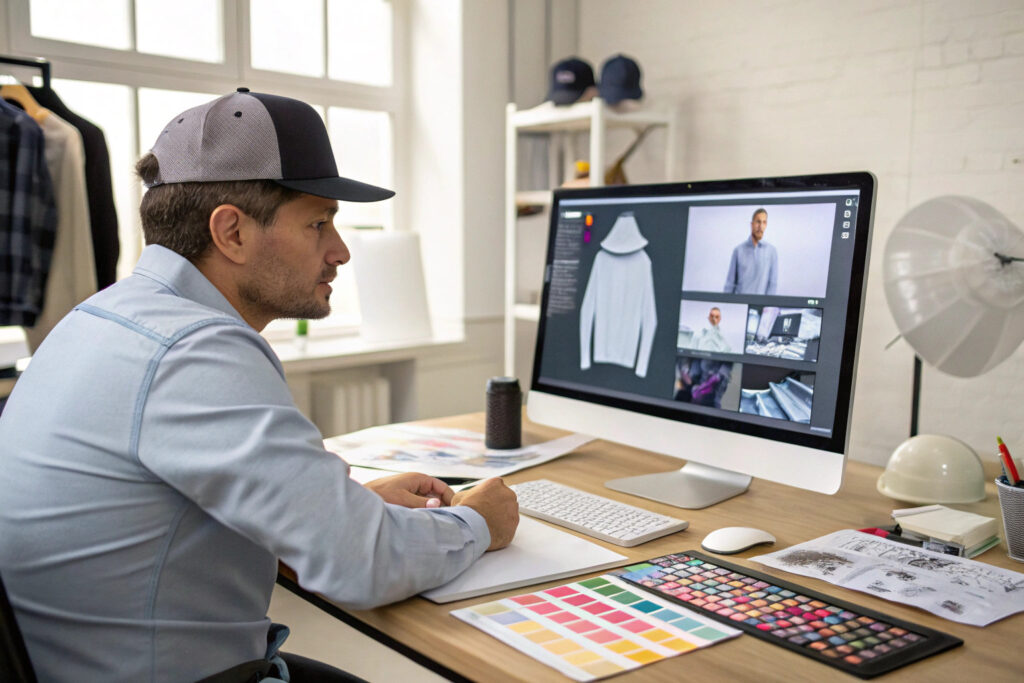
Are you frustrated with generic hat designs and long development cycles? You see the market demanding unique, trend-driven products, but your current supply chain can't keep up. You're losing sales to faster competitors and missing out on hot trends because the traditional design-to-sample process takes too long. This problem is common for buyers and brands sourcing custom hats.
Fortunately, AI-generated pattern design is revolutionizing how custom hats are created, offering a powerful solution to these exact pain points. At Shanghai Fumao Clothing (Global-Caps), we've integrated AI-driven trend analysis into our R&D to slash development time and unlock unprecedented creative possibilities. This guide will show you how to leverage this technology to design stunning, market-ready custom hat patterns efficiently and cost-effectively, without the traditional hassles.
This isn't just about using a fancy tool; it's about building a competitive edge. By understanding the workflow from AI concept to physical sample, you can streamline your product development, reduce risks, and finally bring those unique designs to your customers at the speed they expect. Let's explore how this innovative process works and how you can implement it for your next collection.
How does AI assist in custom hat pattern design?
AI has moved from science fiction to a core tool in fashion manufacturing. For custom hats, it acts as a super-powered creative assistant and data analyst combined. The pain point it solves is simple: bridging the gap between a vague idea ("a vintage-inspired bucket hat for summer") and a technically viable, production-ready pattern. Traditionally, this required multiple manual sketches and sampling rounds. Now, AI accelerates this by interpreting trends, generating visual concepts, and even predicting successful elements based on market data. This means less guesswork and more targeted, commercially viable designs from the outset.
At its core, AI assists by processing massive datasets of images, trends, colors, and historical sales information to suggest patterns that are both novel and aligned with current market preferences. For a manufacturer like us at Shanghai Fumao Clothing, this integrates directly with our CNAS-certified lab and sampling team. Once an AI-generated concept is approved, our R&D experts translate it into a technical pattern, considering fabric behavior, stitching constraints, and ergonomics—ensuring the digital dream becomes a wearable, high-quality hat.
What are the first steps to using AI for pattern creation?
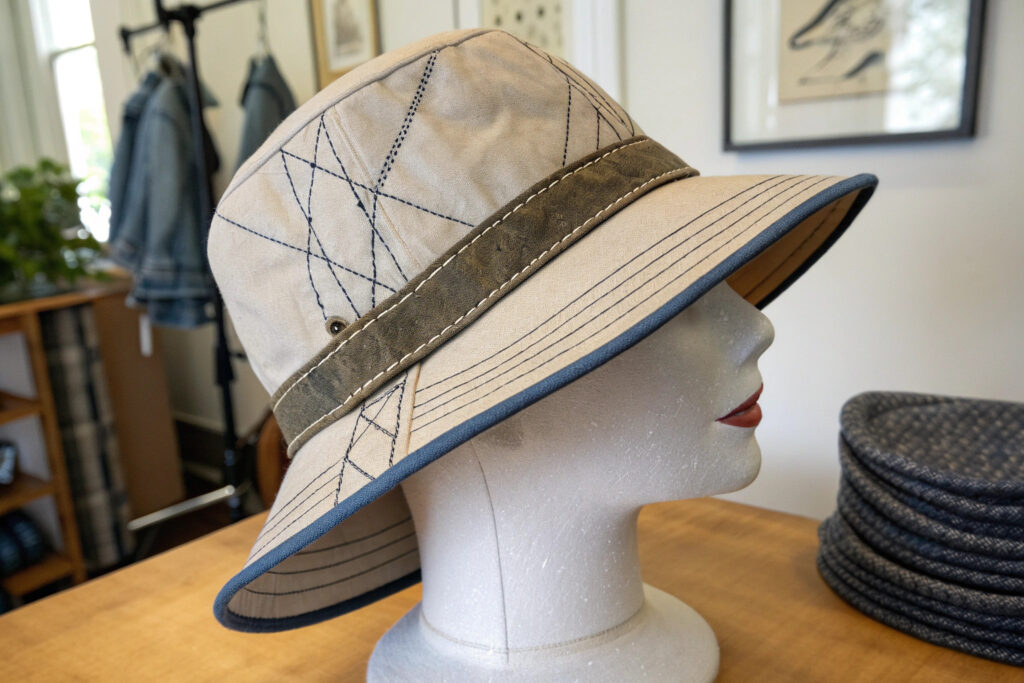
The first step is defining your creative direction with clear inputs. AI is only as good as the prompts and data you feed it. Start by gathering inspiration: compile mood boards with specific keywords like "geometric paisley," "subtle camouflage," "Art Deco florals," or "biomimetic textures." Be precise about colors, referring to systems like Pantone, and specify the hat type (e.g., 5-panel baseball cap or wide-brim sun hat). The more detailed your input, the more refined and usable the AI's output will be. Next, select an AI image generation platform suitable for textile and fashion design. Tools like Midjourney, Stable Diffusion with specialized models, or Adobe Firefly are popular starting points. The goal here isn't to get a perfect, final production file but to generate a high volume of visual concepts quickly. You can explore dozens of variations in minutes, a process that would take a human designer days. This phase is about ideation and exploration, not technical precision.
How do you turn an AI image into a producible pattern?
This is the critical handoff where manufacturing expertise becomes essential. An AI-generated image is a flat visual; a producible pattern is a set of graded, precision-cut fabric pieces that curve around a 3D head. The transition involves several key steps. First, our pattern-making experts analyze the AI image to deconstruct the design into its core repeatable elements. They determine the pattern scale, repeat type (half-drop, brick, mirror), and how it will align on the different panels of a hat (like the crown, brim, or strap). Using specialized CAD software, they then vectorize the design, creating clean, scalable lines and defining color separations. This digital pattern file is then linked with our fabric sourcing database to select the right base material—whether it's organic cotton for printing or a performance fabric for sublimation—that will best bring the AI concept to life with the intended look and feel.
What are the best AI tools for designing hat patterns?
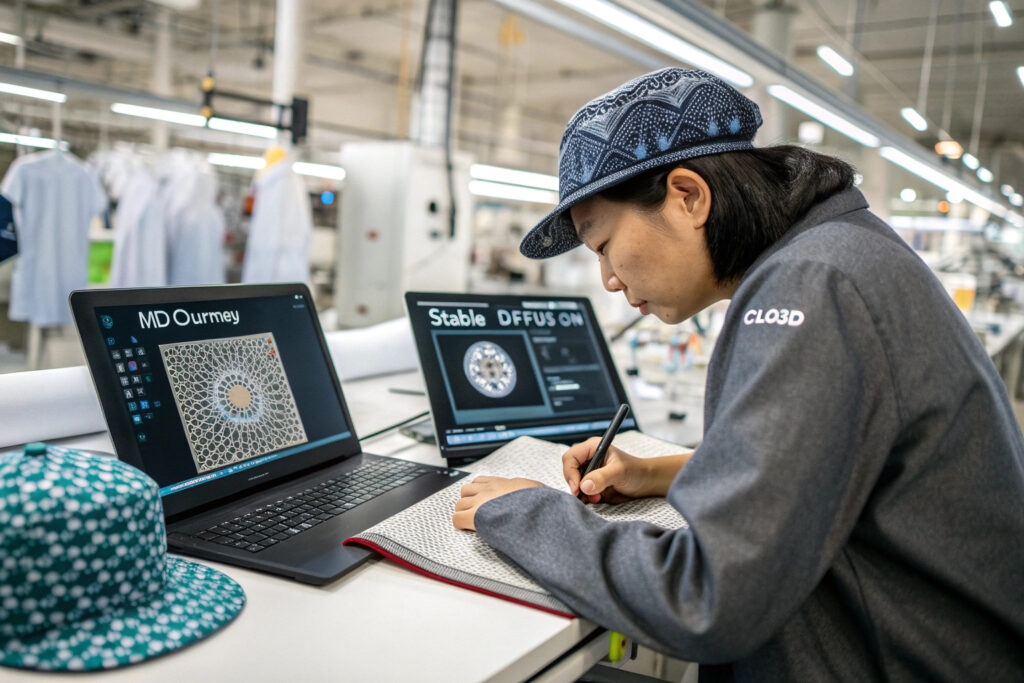
Choosing the right tool depends on your specific needs: sheer creative inspiration, technical textile patterning, or integration with production. For broad creative inspiration, Midjourney excels at generating highly artistic and detailed visual concepts based on descriptive text prompts. It's excellent for exploring unconventional styles and generating buzzworthy ideas for fashion-forward fedoras or statement bucket hats. For more control and textile-specific applications, Stable Diffusion offers open-source models that can be fine-tuned on datasets of fabric swatches and hat patterns, yielding more technically relevant results. Furthermore, dedicated CAD software for the apparel industry, like Adobe Illustrator with specialized plug-ins or CLO3D, is indispensable for the later stages. These tools allow for the precise creation of repeatable twill tape or jacquard patterns that can be directly sent to digital printers or knitting machines, ensuring the design translates accurately from screen to physical product.
Which AI platforms are best for beginners?
For newcomers, user-friendliness and clear results are key. Adobe Firefly is a strong contender due to its integration with the familiar Creative Cloud ecosystem and its focus on generating commercially safe, high-quality images. Its "Text to Pattern" feature can be a gentle introduction. Midjourney, while requiring learning prompt engineering, has a vast community and produces consistently impressive visuals that can spark immediate ideas for custom snapbacks or beanies. Many online platforms also offer pre-built templates for sublimation design, which are perfect for starting with custom baseball caps. The best approach is to start with one tool, master the art of crafting detailed prompts (including style, color, texture, and hat type), and use the outputs as a springboard for collaboration with your manufacturer's design team.
Which tools are used by professional hat manufacturers?
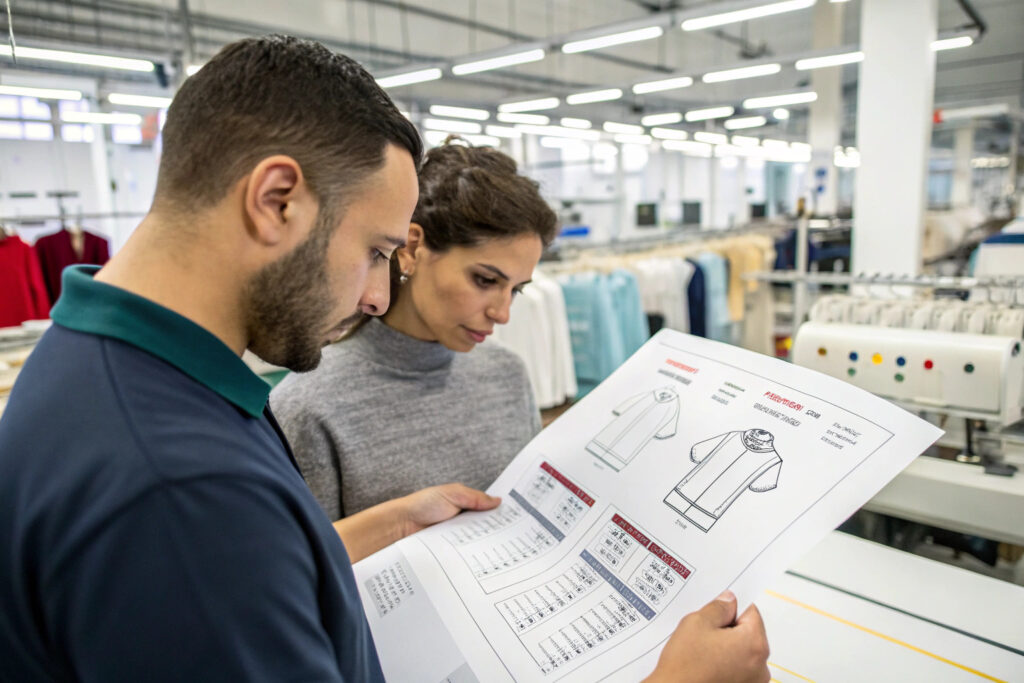
In a professional setting like ours at Shanghai Fumao Clothing, we use a hybrid tech stack. We employ generative AI for initial trend-scraping and concept generation, often using custom-trained models on our library of over 800+ seasonal designs. For technical execution, we rely on industry-standard CAD software and 3D prototyping tools. These allow us to apply the AI-generated pattern onto a digital 3D model of a hat, simulating how it drapes, where seams fall, and how the pattern aligns across different panels. This step is crucial for catching issues before cutting any fabric. We then use this digital prototype to create a precise tech pack for our production line. This end-to-end digital workflow, powered by our agile R&D team, is what enables our promised one-week sample development time, turning an AI idea into a tangible sample with astonishing speed.
How to ensure AI-designed patterns are production-ready?
A beautiful screen image does not guarantee a viable hat. The leap from digital concept to physical product involves critical manufacturing realities. The primary challenge is that AI doesn't inherently understand fabric constraints, printing techniques, or sewing limitations. A stunning, hyper-detailed pattern might be impossible to print clearly on recycled polyester or could misalign at the seams of a six-panel baseball cap. Therefore, human expertise in apparel manufacturing is non-negotiable. The AI output is the starting point for a collaborative review with your supplier's technical team. They will assess the design for manufacturability, considering factors like pattern repeat size, color count (for embroidery or woven labels), and the chosen decoration method (sublimation, screen printing, embroidered patches).
What are common pitfalls in AI pattern generation for manufacturing?
Several pitfalls can derail a project. First is ignoring the fabric base. A pattern designed for smooth satin will look very different on textured linen. Second is scale and clarity. AI might generate patterns with details too fine to be reproduced cleanly in print or embroidery. Third is seam allowance and panel matching. For structured hats like fedoras or peaked caps, the pattern must align perfectly across sewn panels; AI doesn't plan for these cuts. A fourth pitfall is color inaccuracy. On-screen RGB colors must be converted to CMYK for printing or matched to specific PANTONE thread for embroidery, which can shift the final appearance. This is why our CNAS-accredited testing center includes colorfastness and shrinkage checks, ensuring the final product matches the approved AI-inspired design as closely as possible.
How does prototyping bridge the AI-to-production gap?
Prototyping is the essential reality check. At Global-Caps, our process always involves creating a physical sample from the AI-enhanced tech pack. We use this sample to evaluate the actual fabric hand-feel, print quality, pattern alignment on the 3D form, and overall fit. We often create a small batch for wear testing to check durability. This stage may reveal that a pattern needs to be simplified, colors adjusted, or the application method changed. For instance, an all-over-print pattern for a bucket hat might need a slight shift in repeat to avoid an awkward focal point on the crown. This iterative, hands-on step, managed by our end-to-end quality control team, is what transforms a digitally-born idea into a reliable, bulk-producible product. It mitigates the risk of costly errors in a 10,000-piece order and is a core part of our value as your manufacturing partner.
Can AI help with sustainable and functional hat design?
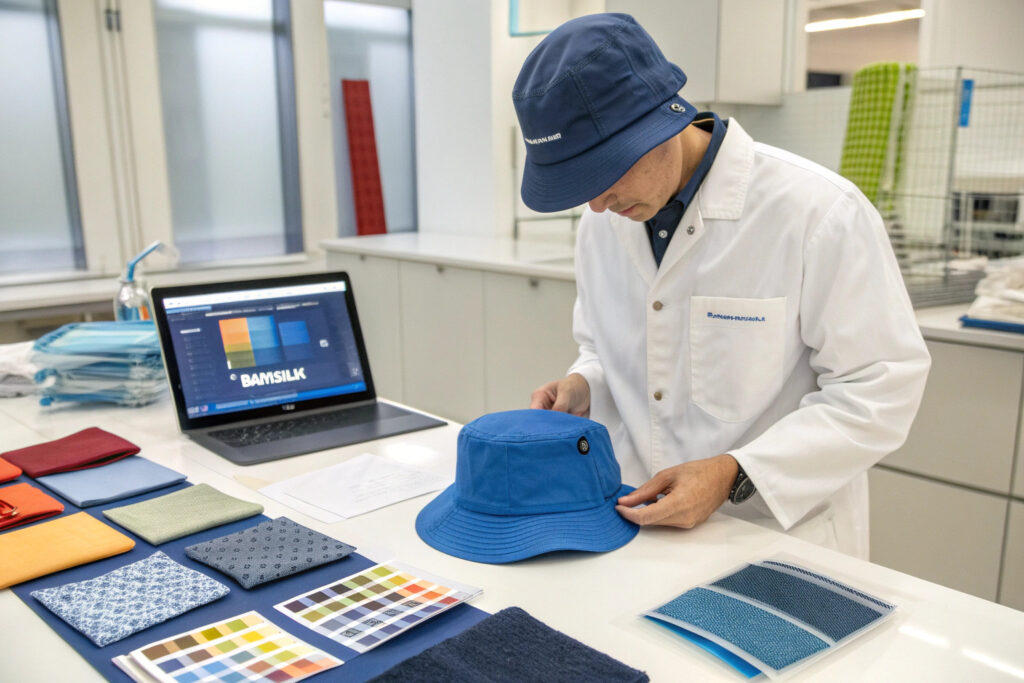
Absolutely. AI is a powerful ally in achieving sustainability and performance goals. It can optimize pattern layouts to minimize fabric waste during cutting—a process known as nesting. By analyzing thousands of cutting layout possibilities, AI can suggest how to arrange pattern pieces most efficiently on a roll of organic cotton or Tencel™ blend, reducing scrap material. For functional designs, AI can analyze data on material properties to suggest optimal pattern constructions. For example, it can help design the panel shapes for a moisture-wicking running hat that maximizes airflow, or recommend where to place UV-resistant fabric panels on a sun hat pattern for maximum protection. Our R&D experts use these AI insights to pioneer functional hats that are not only innovative but also align with our sustainability commitment and significant investment in low-carbon production and recycled fabrics.
How is AI used in eco-friendly material selection?
AI accelerates sustainable sourcing. We can train models on databases of certified eco-friendly textiles, such as Global Recycled Standard (GRS)-certified fabrics or OEKO-TEX approved materials. When you request a hat made from "ocean plastic recycled polyester," our system, powered by AI analysis, can instantly cross-reference our fabric sourcing network to find available options, compare their properties, and even predict their performance in your specific hat pattern design. This saves weeks of manual searching and helps you meet stringent EU eco-certifications effortlessly. AI can also track the carbon footprint of different material and production pathway combinations, helping us and our clients make informed decisions that support UN SDGs and appeal to the growing market of conscious consumers.
Can AI create patterns for technical performance wear?
Yes, this is a frontier where AI shines. For athleisure and outdoor wear hats, performance is paramount. AI can simulate how different pattern geometries affect heat dissipation, moisture evaporation, and wind resistance. By inputting data on elastic textiles and antibacterial treatments, AI can suggest pattern segmentation—like where to insert mesh panels in a trapper hat for breathability or how to structure a balaclava for minimal seam irritation. In our CNAS-certified lab, we validate these AI proposals with physical tests on antibacterial efficacy and UV-resistant ratings. This fusion of computational design and empirical testing allows us to develop advanced high-performance fabrics and hat constructions that truly work, giving brands a tangible technological edge in the market.
Conclusion
Designing AI-generated custom hat patterns is no longer a speculative future; it's a practical, accessible process that democratizes creativity and accelerates time-to-market. The journey involves a smart partnership: you leverage AI for explosive inspiration and initial concept generation, and then partner with a seasoned manufacturer to navigate the technical realities of materials, pattern-making, and production. This synergy allows you to bypass traditional bottlenecks, reduce sampling costs, and deliver uniquely compelling products that stand out.
The ultimate advantage lies in combining this digital agility with robust physical manufacturing. AI gives you the "what," but experienced production ensures the "how." It transforms fleeting digital pixels into durable, high-yield, and commercially successful hats that your customers will love.
If you're ready to turn these AI-inspired visions into tangible, high-quality headwear, let's collaborate. Shanghai Fumao Clothing (Global-Caps) specializes in bridging this exact gap. With over 20 years of expertise, an agile R&D team, and a full suite of services from fabric sourcing to customs clearance, we are your ideal partner for bringing innovative, custom hat designs to life. For a consultation on your next project, please contact our Business Director, Elaine, at elaine@fumaoclothing.com. Let's co-create the future of headwear, together.